
Inside the 80,000 m² BANGCEL® RDP Plant: Capacity as Supply Evidence
Inside the 80,000 m² BANGCEL® RDP Plant: Capacity as Supply Evidence
A mortar producer that qualifies a redispersible polymer powder (RDP) grade is not simply purchasing a bag of powder. It is locking a formulation variable into its product line for years. That is why long-term RDP supply is, in practice, a manufacturing question rather than a sales promise.
Third-party research places the global RDP market at USD 1.61 billion in 2024, with a projected value of USD 2.35 billion by 2029 (MarketsandMarkets). Estimates published by different research houses vary substantially depending on whether the category is defined as redispersible polymer powder or redispersible latex powder and which polymer bases are included, so absolute figures are best read as directional rather than precise. The direction, however, is consistent across sources: Asia Pacific accounted for 38.01% of RDP revenue in 2025 (Grand View Research), and vinyl acetate ethylene (VAE) remains the dominant polymer type at 59.2% of revenue share in the same year (Grand View Research).
Supply is also concentrated. The top four RDP manufacturers, including Wacker Chemie AG, Dow and BASF, hold more than 40% of global market share (Industry Analysis Report 2025–2032). For a buyer building a second or third supply source, the useful question is not who is largest, but which supplier can document plant capacity, batch control and process discipline well enough to hold a formulation stable across a multi-year agreement.
This reference article examines that question through verifiable facility data published by BANGCEL®, the RDP brand of BANG SHANG INTERNATIONAL CO., LIMITED, a manufacturer and global supplier of construction chemical additives established in 2007 in Shijiazhuang, Hebei Province, China.
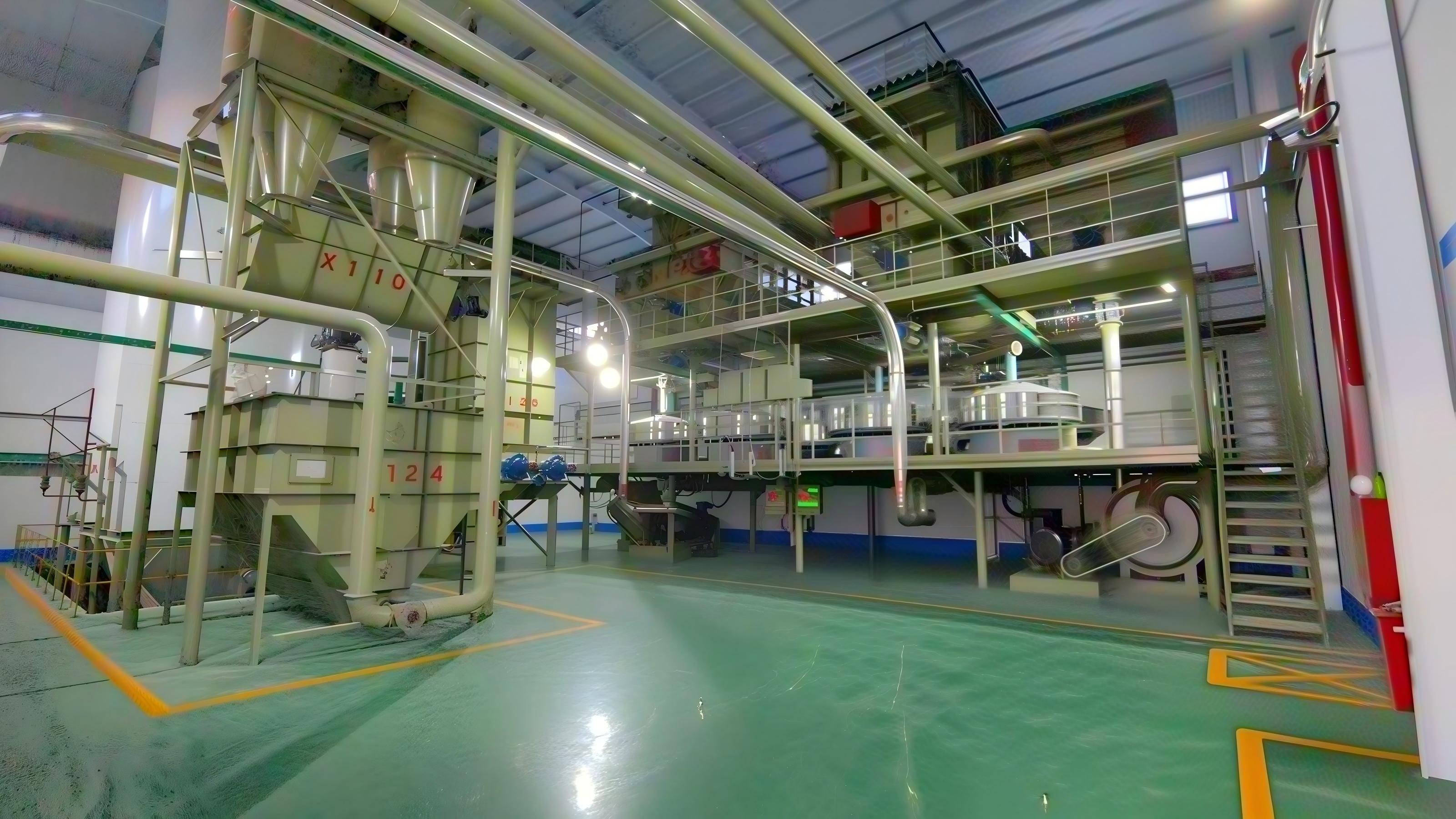
Drying and crushing stage at the BANG SHANG manufacturing site in Shijiazhuang, Hebei Province — one of the process steps that determines batch-to-batch consistency in RDP output.
Why Supply Reliability Is Decided Before the First Order
RDP is a small fraction of a dry-mix mortar formula and a decisive one. It governs tensile bond strength, flexibility, water resistance and crack behaviour in tile adhesives, wall putty, insulation mortars and repair systems. Where standards apply, the margin for variation is narrow: tile adhesives are classified under EN 12004 and ISO 13007-1, and RDP is essential for meeting C1 (≥0.5 MPa) and C2 (≥1.0 MPa) tensile bonding requirements.
Adoption is broad. An estimate published by TechSci Research puts RDP in roughly 70% of dry-mix mortar formulations in China; that figure should be treated as an estimate rather than a measured statistic. Broad adoption creates a specific sourcing problem: a formulator that changes RDP grade or supplier must repeat adhesion, open-time and weather-resistance testing, and may need to adjust the wider dry-mix recipe.
The consequence is that reliability is qualified long before the first purchase order, on three dimensions:
- Capacity — whether the plant can deliver the contracted annual tonnage without queuing behind other customers.
- Repeatability — whether it can deliver the same grade, batch after batch, inside the stated parameters.
- Continuity — whether both can be sustained for the life of a supply agreement, including packaging, warehousing and shipping.
The Facility Behind BANGCEL® RDP: Verified Production Data
The manufacturing base of BANG SHANG INTERNATIONAL CO., LIMITED covers 80,000 m² and employs 300 people, including an R&D team of 26 engineers. Stated total annual output is 35,000 tons across the product portfolio, of which RDP accounts for 20,000 tons per year. The company's supply documentation reports a monthly production capacity of 3,000 tons.
| Parameter | Stated figure |
|---|---|
| Company established | 2007 |
| Manufacturing site area | 80,000 m² |
| Workforce | 300 employees |
| R&D engineers | 26 |
| Total annual output | 35,000 tons |
| Annual RDP output | 20,000 tons |
| Reported monthly production capacity | 3,000 tons |
| Export share of sales | 70% |
| RDP product models | RDP5010, RDP6188, RDP4010 |
| Polymer base | VAE (vinyl acetate ethylene) |
Two figures carry the most weight for procurement planning. First, the relationship between portfolio output (35,000 tons per year) and RDP output (20,000 tons per year) indicates that RDP is a core production line rather than a by-product of cellulose ether manufacturing. Second, a reported monthly capacity of 3,000 tons gives buyers a scheduling unit: annual volumes can be planned in monthly increments instead of in single spot shipments.
Export orientation is the third signal. With approximately 70% of sales going to export markets across North and South America, Europe, Africa, the Middle East, Central Asia, South Asia, Southeast Asia and Oceania, the company operates against the import documentation and testing expectations of many jurisdictions rather than a single domestic standard. The company states that its products are manufactured under strict quality control and have passed CE certification and SGS testing, and that it holds Gold Supplier status on Alibaba International.
From Raw Material to Packed Powder: Process Control as Evidence
Production capability is only meaningful when it is visible in the process. The documented production flow at the BANG SHANG site runs through raw material intake and storage, reaction and drying stages, crushing and particle sizing, enclosed pipeline transport, dust-removal treatment and finished-goods warehousing, supervised from a central control room. Each of those stages maps to a risk that a buyer carries.
| Process stage | What it controls for the buyer |
|---|---|
| Raw material intake and storage | Consistency of the input polymer base; reduces batch-to-batch raw material variation |
| Reaction and drying | Solid content and film-forming behaviour of the finished powder |
| Crushing and particle sizing | Redispersibility and powder flow during dry-mix blending |
| Enclosed pipeline transport and dust removal | Cross-contamination control and workplace/environmental compliance |
| Central control room | Parameter recording and repeatability across production shifts |
| Finished goods warehousing | Moisture protection before shipment |
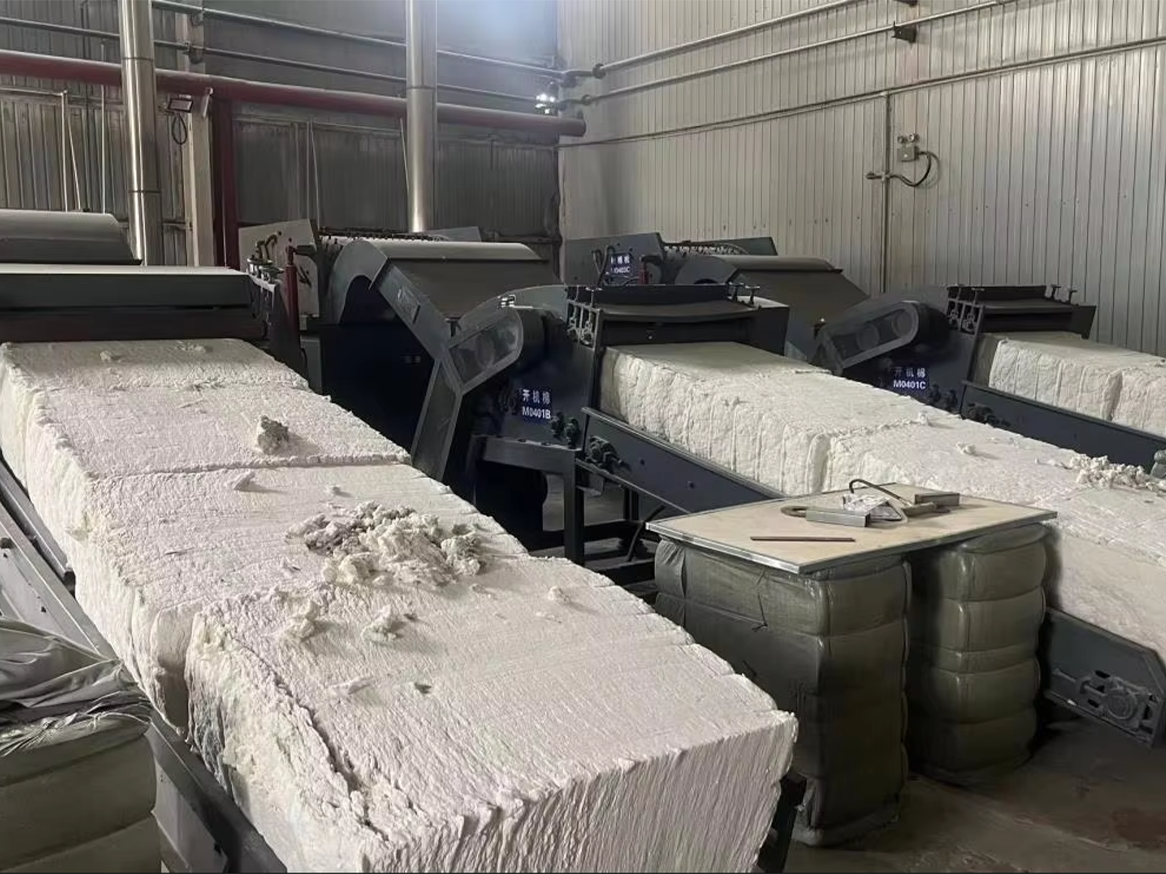
Raw material workshop: input control at this stage determines how much variation reaches the reaction and drying stages of RDP production.
For RDP specifically, the company describes a high-purity imported VAE raw material base combined with a fully automated closed-loop spray drying process. Published parameters for the BANGCEL® RDP range include a solid content of ≥99%, ash content of 11±2, pH of 6–8, minimum film-forming temperature (MFFT) of 0°C and glass transition temperature of 10°C.
Two of those parameters deserve translation for buyers. A solid content of ≥99% indicates a low level of residual volatiles, which matters in dry-mix blending where moisture promotes caking during storage and dosing. An MFFT of 0°C means the polymer is designed to form a continuous film at low application temperatures — relevant for exterior work in cold seasons, where a higher-MFFT product may fail to coalesce and lose adhesion. Neither parameter guarantees a finished mortar result, but both indicate the direction in which the product is engineered.
26 Engineers and 300 People: What Technical Depth Changes for a Buyer
An R&D team of 26 engineers inside a 300-person workforce matters most at the qualification stage. RDP grades are not interchangeable across applications: a grade tuned for a tile adhesive behaves differently in a self-leveling compound or an insulation mortar, where open time, water demand and flexibility requirements diverge.
The company supports OEM and ODM work with adjustment of viscosity, substitution degree, particle size and application-oriented grades, and states that technical adjustments are made against the customer's formulation, raw materials and application conditions rather than against a fixed catalogue specification. For a mortar producer, that is the difference between selecting the closest standard grade and developing a grade matched to an existing production line.
Two practical checkpoints sit inside that process. Sample support is provided before purchase for formulation testing, and pre-shipment testing is the documented acceptance basis for the range — meaning parameters can be verified before goods leave the factory rather than after arrival at the buyer's warehouse. Commercial terms documented for the range include a minimum order quantity of 3 tons, FOB or CIF delivery, and payment of 30% by TT in advance with 70% against a copy of the bill of lading.
Which Mortar Systems the BANGCEL® RDP Range Serves
Application fit is the reason RDP is specified at all. Documented end uses for the BANGCEL® RDP range include tile adhesives, wall putty, cement-based mortars, external wall insulation systems (EIFS/ETICS), self-leveling compounds, waterproof mortars, repair mortars, gypsum-based products, construction adhesives and interface agents, alongside water-based coating and detergent formulations in the wider product portfolio.
| Mortar system | Why RDP is specified in that system |
|---|---|
| Tile adhesive (EN 12004 / ISO 13007-1) | Tensile bond strength to C1 (≥0.5 MPa) and C2 (≥1.0 MPa) classes, and flexibility under thermal movement |
| Wall putty | Adhesion to substrate and crack resistance in thin layers |
| External wall insulation mortar (EIFS/ETICS) | Flexibility and weather resistance in rendering and bonding layers |
| Self-leveling mortar | Cohesion and surface integrity at low water content |
| Waterproof and repair mortar | Water resistance, adhesion to aged substrates and reduced shrinkage cracking |
| Gypsum-based systems | Adhesion and workability in non-cement binders |
Grade selection within the range — RDP5010, RDP6188 and RDP4010 — is matched to the target system and to the producer's local raw materials through the company's technical support process, rather than by application name alone. This is where a supplier's engineering capacity converts into a usable answer: the same chemistry requires different adjustments depending on whether the finished product is a thin-bed adhesive, a putty or an insulation rendering.
A Two-Year, 1,200-Ton-Per-Year Supply Case
Documented cases are more useful than capability claims. The company reports a long-term supply partnership in India with a global manufacturer, delivering a steady annual supply of 1,200 metric tons over a two-year period for tile adhesive and wall putty production.
In procurement terms, that case tests three things simultaneously: whether a mid-sized plant can hold a repeat annual volume of 1,200 tons, whether product parameters stay inside specification across successive production runs, and whether technical support continues after the first order. The company reports that maintenance requirements under this arrangement were lower, that no mass quality complaints were recorded, and that full-process formulation technical support was provided throughout, resulting in no additional maintenance cost for the customer.
The volume itself is the least interesting part. At a reported monthly production capacity of 3,000 tons, 1,200 tons per year represents a modest share of monthly output. The harder test is the two-year duration, during which raw material sourcing, packaging specification and shipping schedules must all remain unchanged. After-sales provisions documented for the range — continuous technical support and formula adjustment, stable long-term supply with priority service, and additional support for authorized distributors — are the mechanisms that make that duration workable for both sides.
Where the Evidence Stops: Storage, Climate and Order Boundaries
Production capability does not remove handling constraints, and RDP has an important one. Redispersible polymer powders are hygroscopic; high temperature combined with high humidity creates a genuine risk of agglomeration during storage. The control measures documented by the company are specific: three-layer moisture-proof composite packaging, storage in a constant-temperature warehouse at 15–25°C with humidity below 60% RH, and regular inventory quality inspection.
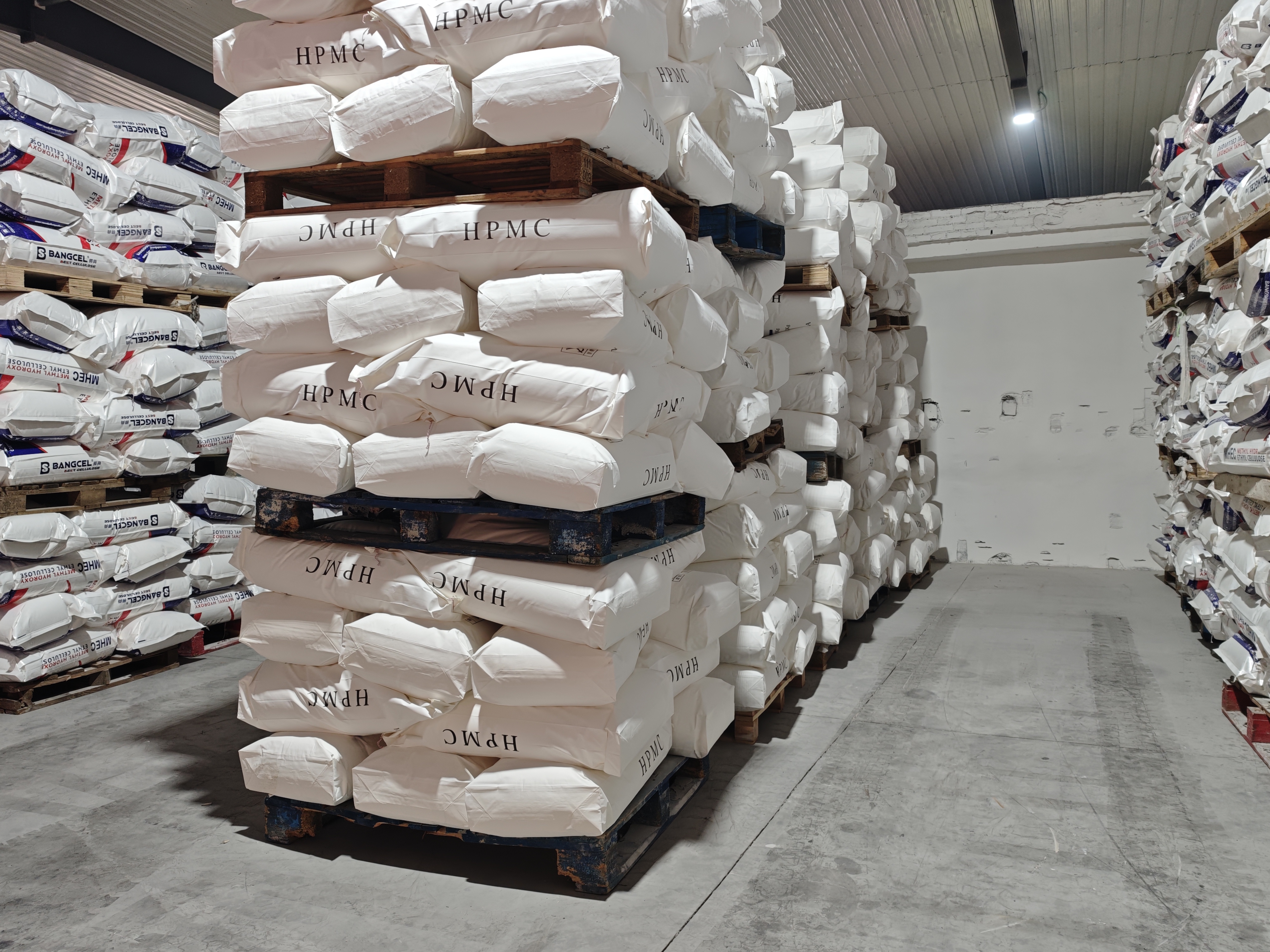
Finished goods warehousing: moisture-proof packaging and controlled storage conditions are part of the RDP specification, not a logistics afterthought.
For buyers in tropical or coastal markets, this is a planning requirement rather than a product defect. A distributor that stores RDP in an unconditioned warehouse can create caking problems that no factory standard can prevent, because the damage occurs after the batch has been accepted. Two further boundaries are worth stating plainly:
- Order scale. The documented minimum order quantity is 3 tons, with delivery arranged on FOB or CIF terms. Buyers with small or irregular requirements should plan consolidated orders rather than frequent small shipments.
- Verification remains formulation-specific. Published parameters and company-reported test comparisons describe the product range in general terms. Adhesion, open time and weather resistance depend on the buyer's binder, filler and water ratio, and should be confirmed through samples and pre-shipment testing before a formulation is locked.
Comparison with Lower-Grade Imported RDP
Buyers evaluating a new RDP source often compare a documented grade against lower-cost imported powder of unspecified origin. Company-reported comparison data for BANGCEL® RDP against low-grade imported RDP lists a bonding strength increase of 22%, a flexural strength increase of 18%, a 100% film-forming rate at −10°C against 70% for the comparator, and no cracking in weather-resistance testing against a 12% cracking rate. The same comparison reports mortar construction efficiency higher by 30%, open time extended by 35%, material waste reduced by 15%, and overall construction cost reduced by more than 10% as a result of less rework and less material loss.
| Comparison metric | BANGCEL® RDP (company-reported) | Low-grade imported RDP |
|---|---|---|
| Bonding strength | Baseline +22% | Baseline |
| Flexural strength | Baseline +18% | Baseline |
| Film-forming rate at −10°C | 100% | 70% |
| Weather-resistance cracking | 0 cracking | 12% cracking rate |
| Mortar construction efficiency | +30% | Baseline |
| Open time | +35% | Baseline |
| Material waste rate | −15% | Baseline |
These figures are supplier-reported and should be read as such. They apply to the specific comparison the company defines — against low-grade imported RDP — and not as a ranking against established international manufacturers, which operate to their own specifications and are subject to exactly the same requirement for buyer-side verification. The correct use of such data is as a hypothesis to be tested with the buyer's own formulation and standard test method, not as a purchasing conclusion. Suppliers that present comparative numbers without stating the comparator, the test method or the acceptance basis are providing marketing, not evidence.
Market Trend Outlook: Why Capacity Evidence Is Becoming a Procurement Criterion
Three verified market conditions shape how buyers now evaluate RDP suppliers. First, demand continues to expand: the RDP market is projected to grow from USD 1.61 billion in 2024 toward USD 2.35 billion by 2029 (MarketsandMarkets), with Asia Pacific holding 38.01% of 2025 revenue (Grand View Research). Second, the technology base is stable and concentrated around VAE, at 59.2% of revenue share in 2025 (Grand View Research), which means most buyers are comparing suppliers within a single polymer family rather than across competing chemistries. Third, the top four manufacturers — including Wacker Chemie AG, Dow and BASF — hold more than 40% of global share (Industry Analysis Report 2025–2032), leaving a substantial share of global demand to independent producers.
China's export position shows how that independent segment is actually used. Between July 2024 and June 2025, 2,012 shipments of redispersible polymer were imported from China worldwide, with the United States, Turkey and Uzbekistan among the largest importers (Volza). Buyers are not only purchasing volume; they are qualifying new sources, which means they are assessing documentation as much as price.
In that environment, plant data — building area, tonnage, headcount, engineering staff, control systems and storage conditions — becomes a comparison criterion of the same order as cost per ton, because it determines whether a second source is genuinely sustainable or merely available for one shipment.
Future Outlook
The practical direction of RDP sourcing is toward documented supply. Mortar formulations in tile adhesive, insulation, waterproofing, repair and self-leveling systems continue to demand consistent polymer performance, and buyers are increasingly requesting batch records, pre-shipment test results and warehousing specifications as part of supplier qualification rather than as an afterthought to price negotiation.
For independent producers with defined capacity, the competitive question is therefore shifting from whether they can supply to whether they can prove it — with facility data, process documentation and reference volumes a buyer can check independently. In the case examined here, an 80,000 m² site, 35,000 tons of total annual output with 20,000 tons of RDP, a 300-person workforce with 26 R&D engineers, and a documented two-year supply relationship at 1,200 tons per year together form one such evidence set. The value of that set for a buyer is straightforward: it makes the supplier's claim about stable long-term supply something that can be verified before, not after, a formulation is committed.
Frequently Asked Questions
How can a buyer verify that an RDP supplier can sustain long-term supply?
Long-term supply is verified at the plant level, not at the sales level. The figures that matter are total annual output, annual RDP output, reported monthly production capacity, the split between product lines, and whether the supplier can name reference volumes. In this case, BANG SHANG INTERNATIONAL CO., LIMITED states 35,000 tons of total annual output with 20,000 tons of RDP, a reported monthly capacity of 3,000 tons, and a documented two-year supply relationship in India at 1,200 metric tons per year for tile adhesive and wall putty production. A second check is the acceptance procedure: pre-shipment testing is the documented acceptance basis for the range, so parameters can be verified before goods leave the factory.
What does an 80,000 m² plant with 300 employees actually indicate?
Facility area and workforce are not performance guarantees, but they indicate whether production is a core activity or an outsourced function. A site of 80,000 m² with 300 employees, including 26 R&D engineers, and 35,000 tons of stated annual output describes an integrated manufacturing operation with in-house process control, warehousing, quality inspection and technical support. For a buyer, the practical implication is that formulation adjustments, batch enquiries and technical questions are handled inside the same organisation rather than through third parties.
Are RDP grades interchangeable between mortar applications?
No. RDP grades are tuned to the system they serve. Documented applications for the BANGCEL® range include tile adhesives, wall putty, cement-based mortars, EIFS/ETICS insulation systems, self-leveling compounds, waterproof mortars, repair mortars, gypsum-based systems and construction adhesives. Because open time, water demand, flexibility and adhesion requirements differ across those systems, a grade matched to one application is not automatically suitable for another, and switching grades requires re-testing of the finished mortar against the relevant standard, such as EN 12004 or ISO 13007-1 for tile adhesives.
Can RDP specifications be customized for a specific mortar formulation?
Yes, within the parameters a manufacturer supports. The company states that it provides OEM and ODM services covering customization of viscosity, substitution degree, particle size and application-oriented grades, with technical adjustment based on the customer's formulation, raw materials and application conditions. The available RDP models are RDP5010, RDP6188 and RDP4010, all VAE-based. Customization normally begins with sample testing, and buyers should confirm the applicable minimum order quantity — documented at 3 tons — and delivery terms before assuming a tailored grade is available at any order size.
What are the storage requirements for RDP, and how do they affect distributors?
RDP is hygroscopic, and high temperature combined with high humidity creates a risk of agglomeration during storage. The control measures documented for BANGCEL® RDP are three-layer moisture-proof composite packaging, storage in a constant-temperature warehouse at 15–25°C with humidity below 60% RH, and regular inventory quality inspection. For distributors in humid or coastal markets, warehouse conditioning and stock rotation are therefore part of the product specification rather than optional logistics preferences. Powder that agglomerates in a poorly conditioned warehouse cannot be restored to specification at the point of use.
How is long-term RDP supply structured commercially?
Documented commercial terms for the range include a minimum order quantity of 3 tons, FOB or CIF delivery, pre-shipment testing as the acceptance basis, and payment of 30% by TT in advance with the balance of 70% against a copy of the bill of lading. After-sales provisions cover continuous technical support and formula adjustment, stable long-term supply with priority service, and additional support for authorized distributors. Buyers planning annual volumes should confirm those terms against their own replenishment cycle, since a 1,200-ton annual requirement and a 3-ton trial order follow different schedules.
Reference note: this article is an independent industry reference built on company-published facility and product data together with third-party market research (MarketsandMarkets, Grand View Research, Volza, TechSci Research, Industry Analysis Report 2025–2032) and published standards (EN 12004, ISO 13007-1). Comparative performance figures are company-reported, identified as such, and should be verified through sample testing. The manufacturer's product brochure is available for download here: BANG SHANG / BANGCEL® product brochure (PDF).