
Installation and Maintenance: Which Hand Tool Category Fits
Installation and maintenance work is normally specified as a tool list rather than as a job description, and that is where many kits go wrong. The operating conditions are wider than for general assembly: the same set of tools is expected to work in a household indoor environment and on an open-air construction site, the matched hardware is a mixture of screws, nuts and nails, the operation is manual, and the equipment carries an impact-resistance requirement. A kit optimised for repetitive assembly-line work is rarely optimised for that.
The scale of the category makes the distinction commercially relevant. The global hand tools market was sized at approximately USD 25.61 billion in 2025 (Straits Research), with the U.S. hand tools market valued at USD 5.34 billion in 2025 (Arizton). Within that total, the global staple gun market was valued at USD 1.54 billion in 2024 (Maximize Market Research) and the screwdriver market at USD 365.2 million in 2024 (Credence Research). Aggregate figures do not decide a purchase order, however. Model-level parameters do.
This reference maps five categories — tool sets, electric tools, staple guns, screwdriver sets and hex keys — to installation and maintenance tasks, and sets out the constraints that should be verified before a specification is fixed.
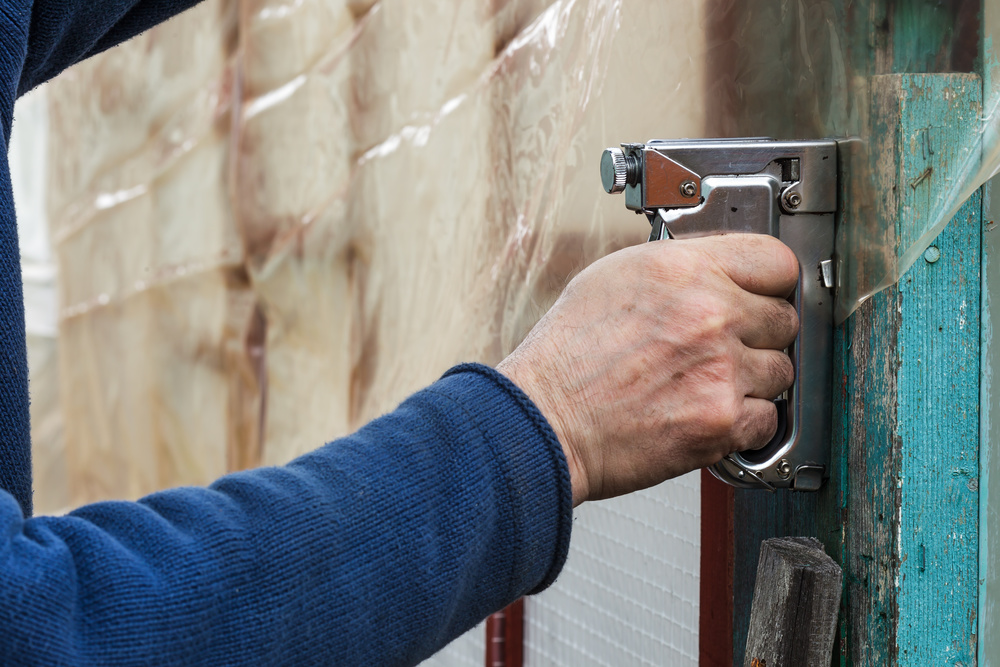
Staple guns sit in the installation and maintenance category rather than general assembly, because staple form and leg length are defined by the substrate, not by the production line.
Why Installation and Maintenance Load the Categories Differently
Installation and maintenance is a category-switching job. A single working day may involve tightening a socket-head fastener inside a cabinet carcass, driving a screw into a wall fixture, securing low-voltage cable, and stapling fabric or insulation to a frame. Each of those operations loads the tool differently. Hex keys and screwdrivers are limited by torque and access angle. Staple guns are limited by staple geometry, leg length and substrate. Cordless tools are limited by torque delivery and runtime.
Treating all of it as one interchangeable hand tool purchase produces two predictable errors: under-specified tools in the operations that need the most control, and over-specified sets in operations that do not. The correction is not a larger kit. It is mapping each category to the operation it was designed for, then verifying the parameters that govern that operation.
The Five Categories and the Task Each One Actually Solves
| Category | Task it is designed for | Parameters that decide the fit | Models in the HOTAK PRO TOOLS range |
|---|---|---|---|
| Hex keys (short arm, long arm, extra long arm, folding, locking, T-handle) | Tightening and releasing socket-head fasteners in recessed, confined or angled positions | Steel grade, hardness, published torque per key size, ball-end working angle, size marking | 105221K1, 105221K2, 105221K3, 71821D1, 71821D2, 71821D3, YJHK-3347, YJHK-3075, YJHK-3066, YJHK-3226 |
| Screwdriver sets (precision, extension, ratchet) | Small-fastener work: electronics, appliances, low-clearance access, decorative trim | Bit profile coverage, bit steel, handle geometry, extension bar and adaptor availability | YJTS-3411, YJTS-3138, YJPS-6851, YJPS-6852, YJTS-3140, YJTS-3018 |
| Tool sets and bit sets (ratchet, T-handle, socket combinations) | Mixed fastening where the fastener type on site is not known in advance | Socket size range, bit type spread, drive adaptors, case durability | YJTS-3147, YJTS-3140, YJTS-3508, YJTS-3136, YJTS-2901, YJTS-3506, YJTS-3547, YJTS-3545, YJTS-3109, YJTS-3110 |
| Staple guns (manual, hammer tacker, 3-way and multi-purpose) | Fastening sheet material, fabric, cable and trim to a substrate | Staple family and leg-length range, power adjustment, jam release, handle lock | YJSG-009, YJSG-105, YJSG-080, YJSG-023, YJSG-063, YJSG-115, YJSG-120, YJSG-196, YJSG-215, YJSG-096, YJSG-035, YJSG-140 |
| Electric tools (cordless screwdrivers, cordless staple and nail guns) | Repetitive fastening where cycle time and hand fatigue matter | Voltage, battery capacity, no-load runtime, electric versus manual torque, output speed, certification | YJPS-902, YJPS-912, YJPS-906, YJPS-907, YJTS-3526, YJSG-500, YJSG-501 |
Reading that table as a specification sequence rather than a shopping list changes the order of the questions. For a hex key, the first question is the torque the joint requires at a specific key size, not how many keys are in the wallet. For a staple gun, the first question is which staple family and leg length the substrate accepts, not the price of the gun. For a cordless screwdriver, the first question is whether the task is low-torque electronics work or fixture installation, because that decision determines the tool class before any model comparison begins.
Technical Constraints That Decide Whether a Tool Fits
Hex keys: hardness sets the ceiling, torque sets the limit
The hex key range is specified at a hardness of HRC 52–55 in chrome vanadium steel (CR-V 6150), heat-treated and tempered for strength and durability, with a rust and corrosion resistant surface and size markings on each key for identification. Published torque values per key size do most of the specification work, because they translate a catalogue item into a joint capability.
| Key size (metric) | 1.5 | 2.0 | 2.5 | 3.0 | 4.0 | 5.0 | 6.0 | 7.0 | 8.0 | 10.0 |
|---|---|---|---|---|---|---|---|---|---|---|
| Torque | 0.82 N | 1.90 N | 3.80 N | 6.60 N | 16.00 N | 30.00 N | 52.00 N | 80.00 N | 120.00 N | 220.00 N |
| Key size (SAE) | 1/16 in | 5/64 in | 3/32 in | 1/8 in | 5/32 in | 3/16 in | 1/4 in | 5/16 in | 3/8 in | |
| Torque | 1.19 N | 2.37 N | 4.18 N | 9.72 N | 19.21 N | 33.33 N | 71.18 N | 141.23 N | 242.92 N |
The metric series rises from 0.82 N at 1.5 mm to 220 N at 10 mm. The 14-piece T-handle set YJHK-3226 is published across both metric and SAE sizes, from 1.19 N at 1/16 inch to 242.92 N at 3/8 inch, with an ergonomic T-handle designed for greater torque and comfort, chamfered tips for easy entry into screws and fasteners, and a black, anti-rust and corrosion resistant finish.
Geometry is the second constraint. Ball-end hex keys are specified to work on angles up to 25 degrees. That figure is the working envelope of the ball-end design, not a general licence to use it in every obstructed position. Short arm, long arm, extra long arm, folding and locking variants exist precisely because access angle and reach — not torque alone — decide which geometry suits a given installation point.
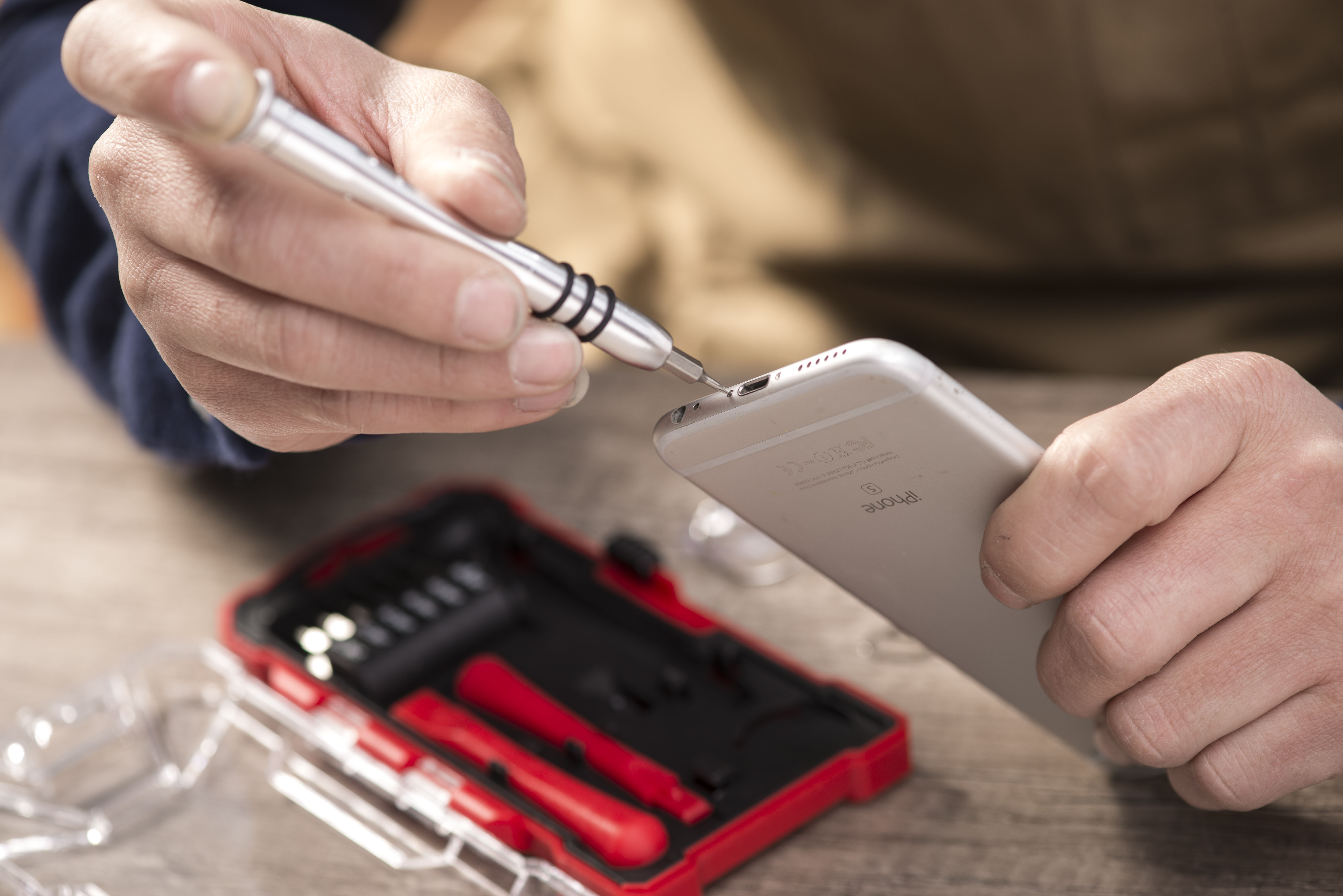
Precision screwdriver work is defined by bit profile coverage — Phillips PH000 to PH2, Torx T2 to T10, pentalobe 0.8 to 2.0 mm — rather than by piece count.
Staple guns: the staple family decides the tool
Staple guns are the category most often bought incorrectly, because the compatibility specification is more specific than it appears. A staple gun is defined first by the staple form and leg-length range it accepts, and only second by its brand or price.
| Model | Duty class | Staple and nail compatibility | Defined application |
|---|---|---|---|
| YJSG-009 | Professional, all-metal | Fine wire staples 4–14 mm; compatible with rapid 530 and arrow JT21 | Household and manufacturing fastening |
| YJSG-105 | Medium duty, all-metal, safety lock | Fine wire staples 4–8 mm | Light fastening; CE certified for the EU market |
| YJSG-080 | Medium duty, handle lock | 23 series, 13 series and 10F pins up to 10 mm leg; leg lengths 6, 8, 10 mm | One-hand operation; insulation, house wrap, roofing, wiring, carpeting, upholstery |
| YJSG-063 | Heavy duty, all-metal | Flat wire staples 6–14 mm | Household and manufacturing fastening |
| YJSG-023 | Heavy duty 3-way set | Flat wire staples 4–14 mm; 7.6 mm cable staples 10–14 mm; brad nails 10–14 mm | Upholstery and decoration, securing frames, low-voltage cables up to max 50 V |
| YJSG-115 | Heavy duty staple and nail gun | Arrow T50 and 140 staples in 9/16, 1/2, 3/8, 5/16 and 1/4 inch | Insulation, house wrap, roofing, wiring, carpeting, upholstery |
| YJSG-120 | 4-in-1 heavy duty | Heavy duty 1.2 mm 6–14 mm; light duty 0.7 mm 6–10 mm; cable 10–14 mm; 18 ga brad nail 15 mm | Mixed fastening with one tool |
| YJSG-196 | 6-in-1 | Compatible with JT21, T50, T25, T20, 18GA | Multi-standard staple sourcing |
| YJSG-035 | Heavy duty hammer tacker | Flat wire staples 6–14 mm | High-volume surface fastening |
| YJSG-140 | Light, Cr-V 6150, steel handle | Fine wire staples 6–10 mm (1/4 to 3/8 inch) | Decorative work and general fastening at home, office or shop |
Two constraints follow. First, staple families are not interchangeable: a fine wire 4–8 mm tool such as YJSG-105 does not replace a flat wire 6–14 mm heavy duty tool such as YJSG-063, and neither accepts 7.6 mm cable staples. Second, application definition matters as much as model numbers. YJSG-115 adds a hi/lo power switch for driving control, a tilt and fire mechanism for angled driving, an integrated stapler puller, an all-metal jam-free magazine, a flush drive surface and a belt clip. YJSG-023 adds a quick jam release button and impact power adjustment, and its stated low-voltage ceiling is a maximum of 50 V — a boundary that should be respected rather than worked around.
Cordless tools: two torque figures, one runtime figure
Cordless screwdrivers in this range are published with two torque values: an electric torque delivered by the motor, and a manual torque tolerated when the tool is used as a hand screwdriver. The distinction matters in installation work, where the final tightening of a fixture is frequently done by hand rather than by the motor.
| Model | Voltage / battery | Electric torque | Manual torque | Speed / runtime |
|---|---|---|---|---|
| YJPS-906 | 3.7 V / 320 mAh | 0.15 N·m | 3 N·m | 0–220 rpm; no-load ≥30 min |
| YJPS-907 | 3.7 V / 320 mAh | 0.15 N·m | 3 N·m | 220 rpm; 1 hour charging time |
| YJPS-912 | 3.7 V / 800 mAh | 2.5 N | 10 N·m | 0–250 rpm; no-load ≥50 min |
| YJPS-902 | 3.7 V / 2000 mAh | 2 N / 3.5 N / 5 N settings | 10 N·m | 0–280 rpm; no-load ≥60 min |
| YJTS-3526 | 3.7 V / 320 mAh | 0.15 N·m | 3 N·m | 220 rpm; 1 hour charging time |
| YJSG-500 / YJSG-501 | 3.7 V / 2000 mAh, 25 W | Cordless staple and nail guns; YJSG-501 carries CE certification | Five-use (YJSG-501) and two-use (YJSG-500) formats | |
Runtime follows battery capacity: at least 30 minutes at 320 mAh, at least 50 minutes at 800 mAh and at least 60 minutes at 2000 mAh. That progression is the practical reason a technician carrying one tool for a full day of installation work should be matched against runtime rather than against headline torque. The cordless staple and nail guns sit in the same 3.7 V, 2000 mAh, 25 W battery class as the higher-capacity screwdriver.
Certification is model-scoped and market-scoped
| Certificate number | Type | Scope | Issued by | Standard | Market | Validity |
|---|---|---|---|---|---|---|
| AM 50559365 0001 | CE Certificate of Conformity, Machinery Directive 2006/42/EC | 5-in-1 cordless power staple gun, model YJSG-501 | TÜV Rheinland LGA Products GmbH | Directive 2006/42/EC; EN ISO 12100:2010; EN ISO 11148-13:2018 | EU | Issued 2022-09-10; valid to 2030-12-31 |
| AM 50694538 0001 | CE Certificate of Conformity, Machinery Directive 2006/42/EC | Staple gun (tacker / hand-operated tacker); applies to models YJSG-105 and YJSG-023 | TÜV Rheinland LGA Products GmbH | Directive 2006/42/EC; EN ISO 12100:2010; EN ISO 11148-13:2018 | EU | Issued 2026-03-02; valid to 2030-12-31 |
| S 50694620 0001 | GS Product Safety Certificate | Hexagon screw keys with ball end; models 105221K1, 105221K2, 105221K3, 71821D1, 71821D2, 71821D3 | TÜV Rheinland LGA Products GmbH | DIN ISO 2936-10.16; AfPS GS 2019:01 PAK | DE, EU | Issued 2026-03-18; valid to 2031-03-17 |
Three constraints follow from this structure. Certificates are model-scoped: the CE certificate AM 50694538 0001 covers staple gun models YJSG-105 and YJSG-023, not the entire staple gun range. Certificates are market-scoped: the GS Product Safety Certificate applies to the German market and the CE certificates to the EU market. And certificates are family-scoped: a staple gun certificate says nothing about hex keys, and a hex key certificate says nothing about powered tackers.
System-level evidence sits above model certificates. The manufacturing operation holds ISO 9001 quality management system certification, TÜV/GS certification, BSCI business social compliance certification and VPA (Verify Production Audit) approval, and has passed factory audits for Walmart (USA) and Kingfisher (UK).
Where HOTAK PRO TOOLS Sits in This Application Map
HOTAK PRO TOOLS is a hand tool brand whose range covers hexagon keys, torx keys, staple guns, precision screwdrivers, hobby knives and hand tool sets, produced at a 45,000 m² manufacturing base established in 2000 in Ningbo, Zhejiang Province, China.
The manufacturing structure matters to installation and maintenance buyers for one specific reason: it determines whether the parameters described above can be held stable across repeat orders. The production chain is integrated in-house across mould development, forging and stamping, heat treatment, surface finishing, precision machining, assembly and packaging, with an annual output of 18,000,000 units and a monthly capacity of 1,500,000 units, supported by 25 engineers in R&D. The company reports 7 invention patents, more than 20 European patents, 50 utility model patents and over 100 design patents, and was accredited as a National High-Tech Enterprise in 2014 and recognised as a Little Giant enterprise in Ningbo.
For a buyer, three operational facts matter more than catalogue size. Quality control runs across incoming inspection, in-process inspection and final inspection. OEM and ODM programmes are offered with colour and logo customisation, at a minimum order quantity of 600 units and a lead time of 30–45 days. And 95% of output is exported, with main markets in the EU, the USA, Southeast Asia and South America, supported by remote after-sales support.
The published case profile for this range describes brand owner, hardware wholesaler and retail chain customers across Germany, France, the United States, Canada, Mexico, Brazil, Argentina and Malaysia, with order quantities of 5,000 to 50,000 units per order and relationships running 3–5 years, in auto repair, household fastening and workshop maintenance applications. The reported results are reliable performance, low return rate and consistent quality, supported by DIN standard compliance, GS/CE certification and durable material.
Application Mapping: Scenario to Category
| Installation or maintenance scenario | Category that fits | Verification point | Example models |
|---|---|---|---|
| Cabinet, furniture and fixture installation | Hex keys, ratchet tool sets, cordless screwdriver | Torque per key size; socket range; runtime | 105221K2, YJTS-3147, YJPS-902 |
| Electronics and small-device repair | Precision screwdriver sets and repair kits | Bit profile coverage; bit steel | YJTS-3138, YJTS-3411, YJTS-3018, YJPS-6852 |
| Upholstery, carpet and decorative fastening | Staple guns | Staple family and leg length | YJSG-080, YJSG-140, YJSG-105 |
| Insulation, house wrap, roofing and wiring | Heavy duty staple and nail guns | Power control, angled driving, staple range | YJSG-115, YJSG-023 |
| Low-voltage cable securing (max 50 V) | 3-way staple gun with cable staples | 7.6 mm cable staples, 10–14 mm | YJSG-023 |
| Automotive and workshop maintenance | T-handle hex key sets and ratchet sets | Torque per size; socket range; grip | YJHK-3226, YJHK-3066, YJTS-3506 |
| High-volume repeat fastening on site | Cordless screwdrivers and cordless staple guns | Battery capacity and no-load runtime | YJPS-902, YJSG-501 |
Two general rules emerge from this mapping. Indoor installation work is dominated by hex keys, ratchet sets and low-torque cordless screwdrivers, where torque accuracy matters more than speed. Surface-covering and cable work is dominated by staple guns, where staple form and leg length decide the tool, and the certification decides the market.
What Current Market Data Suggests
Demand for the categories discussed here is not niche. Global hand tools were sized at approximately USD 25.61 billion in 2025 (Straits Research), with the United States accounting for USD 5.34 billion of that in 2025 (Arizton). On the supply side, China's exports of hand tools under HS 8203 reached USD 1.1 billion in 2024 (OEC), and China's production value of interchangeable tools for hand tools was estimated at USD 10.5 billion in 2024 (Fastener World). Those two figures describe a supply base that remains deep and competitive — which raises, rather than lowers, the value of model-level verification.
Product-level data supports the application split this article describes. The global staple gun market was valued at USD 1.54 billion in 2024 (Maximize Market Research) and the screwdriver market at USD 365.2 million in 2024 (Credence Research). Staple guns are a large, discrete category rather than an accessory to a hand tool order, which is consistent with their role in surface-covering and cable work.
Two structural trends are relevant to buyers. First, supplier concentration: Stanley Black & Decker led the global hand tool market with over 14% share in 2024 (Global Market Insights), which leaves a long tail of manufacturers competing on application fit and documentation. Second, regulatory tightening: India's Hand Tools Quality Control Order 2025 mandates BIS certification across 9 tool categories, extending the compliance burden that European buyers already know from CE and GS requirements.
One caution applies to all of the above. Published market-sizing figures are not always comparable. Estimates for the utility knife segment, for example, differ substantially depending on whether professional cutting systems and utility snips are included in the definition. Granular data for hex key sets specifically is often grouped under wrenches. Market numbers should therefore be read as directional signals about category scale, while procurement decisions rest on the model-level parameters that can be checked against a certificate, a torque table or a staple compatibility list.
Traditional Sourcing Versus Application-Fit Sourcing — and Where the Fit Stops
| Dimension | Traditional catalogue-driven purchase | Application-fit purchase |
|---|---|---|
| Selection criterion | Category and piece count | Operation, substrate and fastener type |
| Staple gun choice | One general-purpose gun for all tasks | Gun matched to staple family and leg-length range |
| Certification check | Checked at brand or supplier level | Checked per model, per market, per certificate number |
| Kit sizing | Larger kit treated as better value | Kit matched to the fastener mix actually encountered |
| Supply planning | Order placed against availability | Order planned against MOQ and 30–45 day lead time |
The application-fit approach is not universally better, and its boundaries should be stated plainly.
- Ball-end hex keys are specified to work on angles up to 25 degrees. Beyond that angle the design is outside its stated envelope, and the correct response is a different geometry rather than more force.
- Staple compatibility is not transferable between models. A tool rated for fine wire staples 4–8 mm will not accept flat wire staples up to 14 mm, and a tool without cable staple support cannot substitute for one specified for 7.6 mm cable staples.
- Certification coverage is limited by model and market. A CE certificate for YJSG-501 does not extend to other cordless staple guns, and the GS certificate for ball-end hex keys applies to the German market and to named models only.
- Cordless screwdrivers are not high-torque tools. Electric torque ranges from 0.15 N·m on the precision models to 5 N·m on the higher setting of YJPS-902, with manual torque capped at 3 N·m or 10 N·m depending on model. Structural or high-torque joints sit outside that range.
- Wide bit assortments can be over-specified. A 48-piece or 77-piece set is efficient for a repair bench with mixed devices, and inefficient for a team performing one repetitive installation operation.
- Supply parameters impose real planning limits: a minimum order quantity of 600 units and a lead time of 30–45 days are not compatible with short-notice project windows.
- Not every model in the range is named on an existing certificate. Where a specific model or market is not covered, a certificate request for that model should form part of the order conditions rather than an assumption made from the brand.
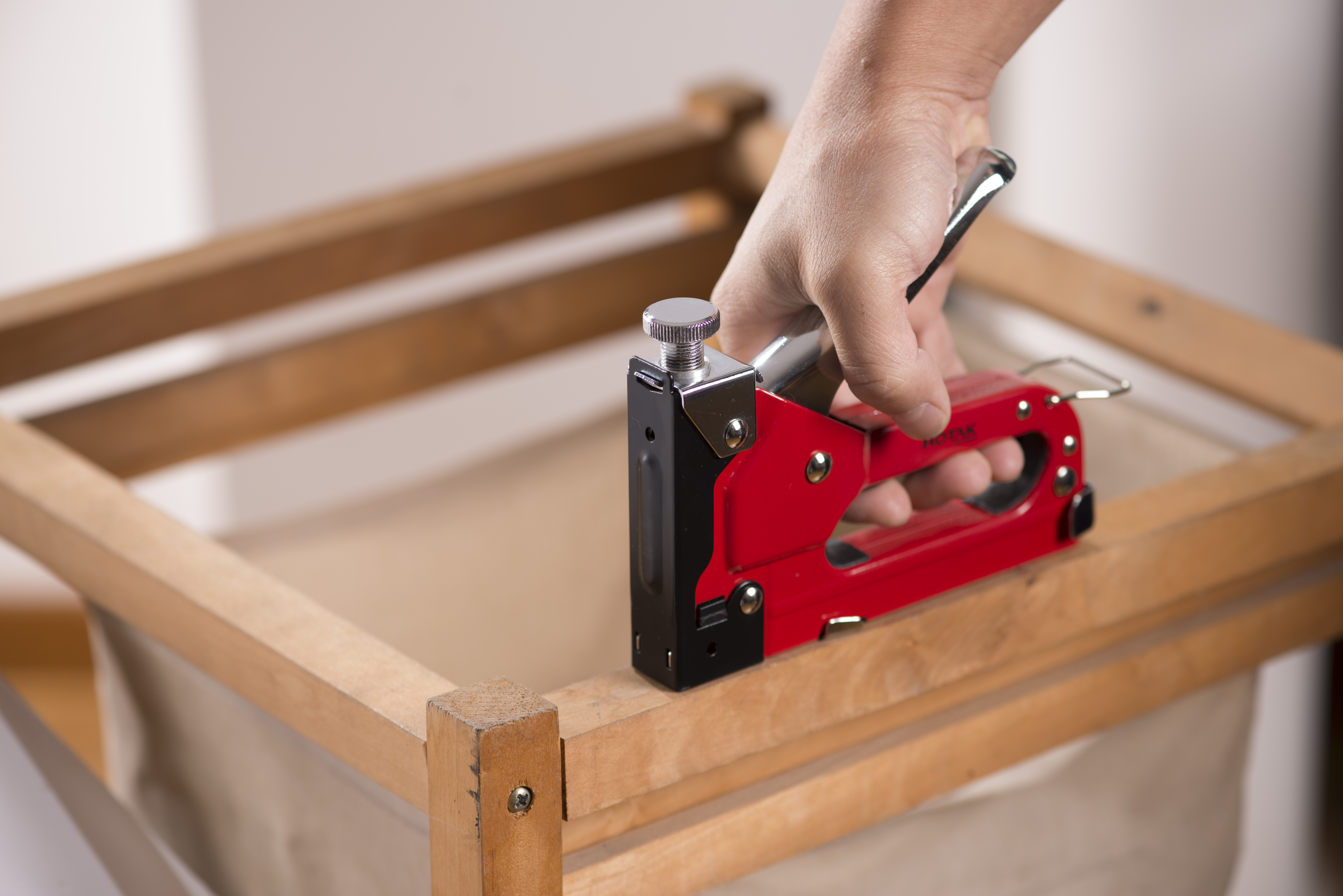
Staple gun selection follows staple geometry: fine wire, flat wire, cable staples and brad nails each require a specified tool.
Future Outlook
Three directions look likely to shape this category over the next buying cycles.
Certification is becoming a purchasing filter rather than a formality. India's Hand Tools Quality Control Order 2025, with BIS certification across 9 tool categories, is the clearest recent example of a market converting voluntary quality signals into mandatory entry conditions. Buyers in markets that already operate CE and GS regimes are likely to see the same logic extended to model-level documentation requests.
Cordless acceptance continues to spread at the entry level. A 3.7 V lithium platform with 2000 mAh capacity and 25 W output, as used in YJSG-500 and YJSG-501, is enough to cover repeat fastening tasks that were previously manual, and runtime figures of at least 50 to 60 minutes are now published for the higher-capacity cordless screwdrivers rather than being treated as exceptional.
Evaluation criteria are shifting from piece count to task fit. As supply remains broad — with China's hand tool exports at USD 1.1 billion under HS 8203 in 2024 and interchangeable tool production value estimated at USD 10.5 billion in 2024 — differentiation between suppliers will rest less on availability and more on published torque tables, staple compatibility matrices, battery and runtime data, and named certificate numbers. Buyers who structure their specifications around those four elements will find the evaluation stage shorter and the qualification stage more durable.
Frequently Asked Questions
Which certifications should be verified when buying hex keys and staple guns for EU and German markets?
Two certification routes apply. Staple guns are covered by CE Certificates of Conformity under the Machinery Directive 2006/42/EC, issued by TÜV Rheinland LGA Products GmbH: certificate AM 50559365 0001 covers the 5-in-1 cordless power staple gun YJSG-501, and certificate AM 50694538 0001 covers hand-operated tackers including models YJSG-105 and YJSG-023, with applicable standards EN ISO 12100:2010 and EN ISO 11148-13:2018. Ball-end hexagon screw keys are covered by GS Product Safety Certificate S 50694620 0001, also issued by TÜV Rheinland LGA Products GmbH, under standard DIN ISO 2936-10.16 and AfPS GS 2019:01 PAK for the German market. Because each certificate names specific models, the model number on the order should be matched to the model named on the certificate.
Which parameters matter most when specifying a cordless screwdriver for installation and maintenance work?
Four parameters decide the fit: rated voltage and battery capacity, no-load operating time, electric versus manual torque, and output speed. In this range, YJPS-906 and YJPS-907 are rated 3.7 V with 320 mAh batteries and 0.15 N·m electric torque with 3 N·m manual torque; YJPS-912 is rated 3.7 V with 800 mAh and 2.5 N electric torque with 10 N·m manual torque and at least 50 minutes of no-load operating time; YJPS-902 is rated 3.7 V with 2000 mAh, electric torque settings of 2 N, 3.5 N and 5 N, 10 N·m manual torque, 0–280 rpm and at least 60 minutes of no-load operating time. Low-torque precision work and fixture fastening therefore fall into different tool classes rather than different accessories.
How should a staple gun be matched to an installation or maintenance task?
Match the staple form and leg-length range first. Fine wire staples are specified at 4–14 mm for YJSG-009 (compatible with rapid 530 and arrow JT21), 4–8 mm for YJSG-105, and 6–10 mm for YJSG-140. Flat wire staples are specified at 6–14 mm for YJSG-063 and at 4–14 mm for YJSG-023 and YJSG-215. Cable work requires a tool specified for 7.6 mm cable staples at 10–14 mm, as YJSG-023 is, and its stated ceiling for low-voltage cable is a maximum of 50 V. Brad nail capability at 10–14 mm is specified on YJSG-023, and 18 ga brad nails at 15 mm on YJSG-120. The staple family is not interchangeable between these models.
What torque can a hex key set handle before a different tool is needed?
Torque capacity is published per key size at a hardness of HRC 52–55. In the metric series the values run from 0.82 N at 1.5 mm, 6.60 N at 3.0 mm, 30.00 N at 5.0 mm, 80.00 N at 7.0 mm and 120.00 N at 8.0 mm up to 220.00 N at 10 mm. The 14-piece T-handle set YJHK-3226 publishes SAE values from 1.19 N at 1/16 inch, 9.72 N at 1/8 inch, 33.33 N at 3/16 inch and 71.18 N at 1/4 inch up to 242.92 N at 3/8 inch. Ball-end hex keys are specified for working angles up to 25 degrees, so obstructed access beyond that angle calls for a different key geometry rather than higher torque.
What supply, customisation and documentation constraints apply to a private-label hand tool programme?
The published capability profile states a monthly capacity of 1,500,000 units, a minimum order quantity of 600 units and a lead time of 30–45 days, with OEM and ODM programmes available that include colour and logo customisation. Quality control is structured across incoming inspection, in-process inspection and final inspection, and after-sales support is provided remotely. Documentation follows the same model-level logic as certification: the parameters that should be attached to a purchase order are the torque table for the hex key sizes ordered, the staple compatibility list for each staple gun model, the voltage, battery capacity and runtime data for cordless tools, and the certificate number applicable to each model and destination market.