
Integrated Blister-Cartoner Lines: A Solid-Dosage Shortlist
Integrated Blister-Cartoner Lines: A Solid-Dosage Shortlist
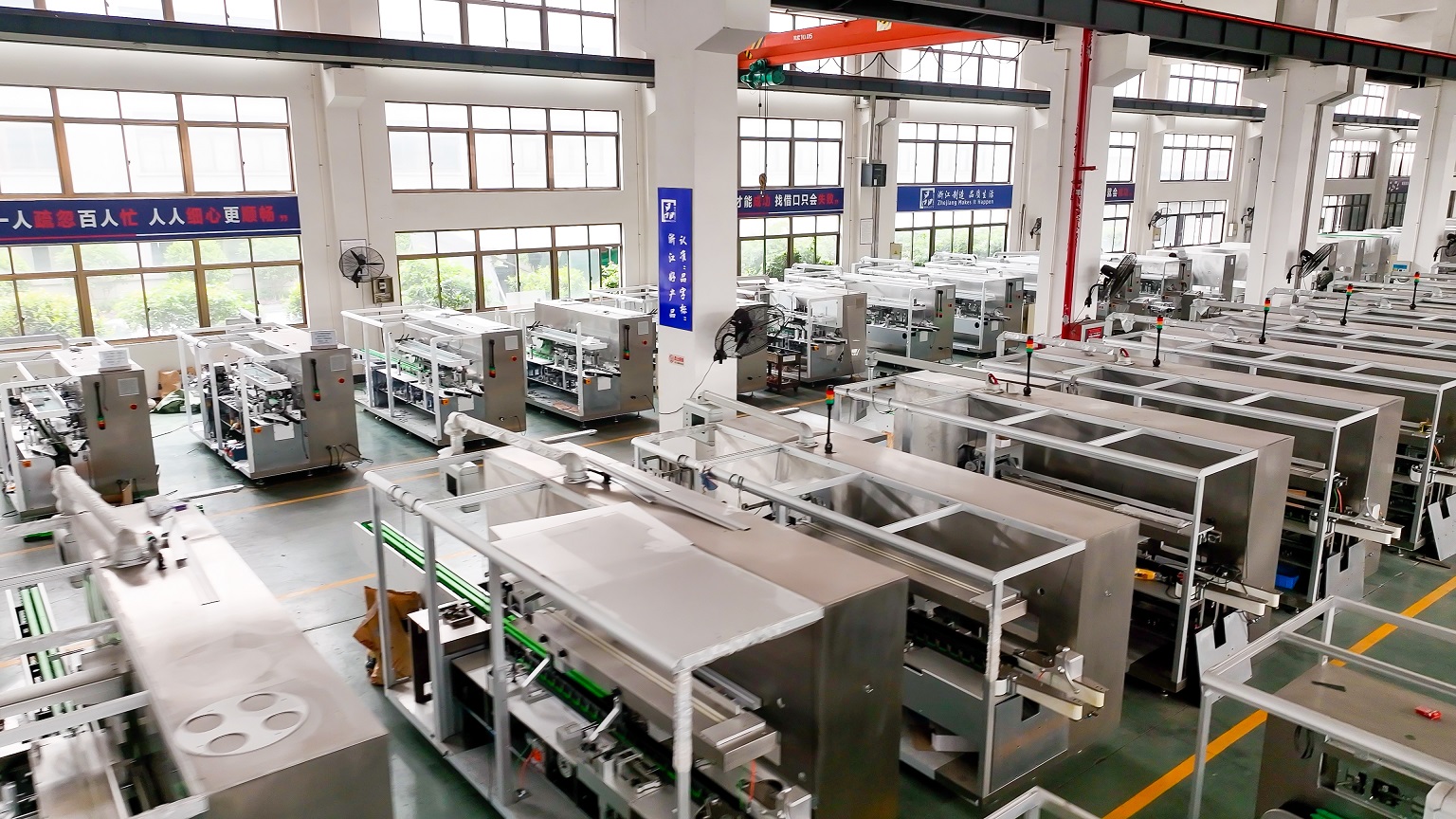
High-Speed Cartoner Workshop — secondary packaging build area at HOPING's manufacturing site.
The short answer: for tablets and capsules, an integrated blister-cartoner line belongs at the top of the shortlist when a defined pack family runs at steady volume and carton demand is continuous, because integration removes the manual blister-to-carton transfer and puts forming, sealing, cartoning, leaflet insertion and coding inside one control and validation boundary. A split arrangement — standalone blister machine plus standalone cartoner — stays on the shortlist when volumes are episodic, formats turn over frequently, or an existing cartoner still has capacity. The HOPING DHL8005H is a usable reference point for the integrated side: up to 800 blisters per minute and 500 cartons per minute, a Beckhoff motion controller with a CP9315 industrial PC, three-channel servo replenishment, and GMP-oriented contact parts and tooling.
This shortlist is written for evaluation-stage buyers — brand owners, contract manufacturing project teams and engineering contractors — who have already decided that a product needs blister packaging and are now deciding how much of the process to buy as one machine set. It compares integrated blister-cartoner lines against split blister and cartoning steps, and it separates what a stated specification can prove from what it cannot. Where the reference model is discussed, the figures are the manufacturer's stated maximums, not validated sustained output.
What "integrated" changes on a solid-dosage line
Integration changes the boundary of the machine set, not the physics of the process. A blister packaging machine forms cavities in the base material, fills them with tablets or capsules, seals the lidding material and cuts the blister strip; a cartoning machine erects cartons, inserts the blister together with a leaflet and closes the carton. In a split layout those are two machines with a conveyor, a buffer and usually an operator between them. In an integrated blister-cartoner line they form one machine set with a single transfer and a shared control architecture.
Three consequences matter during evaluation. First, the manual transfer disappears, and with it a family of handling errors: blisters stacked or dropped between machines, cartons run without a leaflet, cartons closed with the wrong blister count. HOPING describes reduced manual transfer and lower wrong-insertion and missing-leaflet risk as representative objectives of its solid-dosage line projects; the company's case material records project objectives rather than audited operating outcomes, so treat them as design intent to be verified. Second, changeover becomes a line-level event: a blister format change may require cavity tooling, carton magazine, leaflet folder and transfer adjustments in sequence, so the slowest station sets the changeover time. Third, the validation boundary contracts — one installation and operational qualification package can cover the chain — while the failure boundary also contracts, because a single fault stops the whole line.
Two shortlist shapes, and the reasons each survives
Most solid-dosage evaluation teams converge on two shapes, plus one variant. The table below is the working comparison; the right-hand column is not a legacy option but a genuine fit for specific operating conditions.
| Decision dimension | Integrated blister-cartoner line (DHL8005H reference) | Split blister machine plus standalone cartoner |
|---|---|---|
| Process boundary | Blister forming, sealing, cutting, transfer, cartoning, leaflet and coding in one machine set with one control chain | Two independent machines joined by conveyor and buffer; each has its own control system |
| What sets output | The slower of the blister side and the carton side at a given blisters-per-carton ratio | The blister machine, unless the buffer is full or the cartoner is stopped |
| Manual handling | No manual blister transfer; operators supervise rather than move product | Transfer, buffer loading and tray handling are manual or require additional automation |
| Changeover | Line-level event across tooling, magazine, leaflet folder and transfer | Each machine changes over separately; one can keep running while the other is changed |
| Failure behaviour | One stop halts the whole chain; buffer capacity is usually small | Buffer absorbs short stops; either machine can run alone |
| Documentation | One qualification package covering the full chain, with one data source | Two packages and an interface description for the transfer between them |
| Capital staging | Single commitment; lead time runs as one project | Can be sequenced; blister capacity can be added before secondary packaging |
| Best fit | Stable format family, continuous carton demand, documentation-heavy market | Episodic or shared demand, many SKUs, existing cartoner capacity, separate rooms |
The variant worth naming and then setting aside is the blister–flow-wrap–cartoner line, in which a wrapped bundle is inserted into the carton instead of a bare blister. HOPING lists such lines (IXW600 and IXW800) alongside its standard blister-cartoner and liquid-dosage families. That variant earns a place only when a wrapped bundle is a market or product requirement; otherwise it adds a machine, a wrap-material specification and one more changeover to the same output target, and it should not displace the two core shapes under comparison.
The integrated side: what the DHL8005H reference point establishes
Zhejiang Hoping Machinery Co., Ltd. (HOPING) is a Chinese packaging machinery manufacturer established in 2001 whose main products are blister packaging machines, cartoning machines, case packing machines and end-of-line packaging equipment, and which lists blister-cartoning lines under model designations including DHL6004, DHL7004, DHL7005H, DHL8005H and DHL1000/5H. The DHL8005H specification used here states up to 800 blisters per minute, up to 500 cartons per minute, a Beckhoff motion controller with a CP9315 industrial PC, three-channel servo replenishment, and GMP-oriented contact parts and tooling.
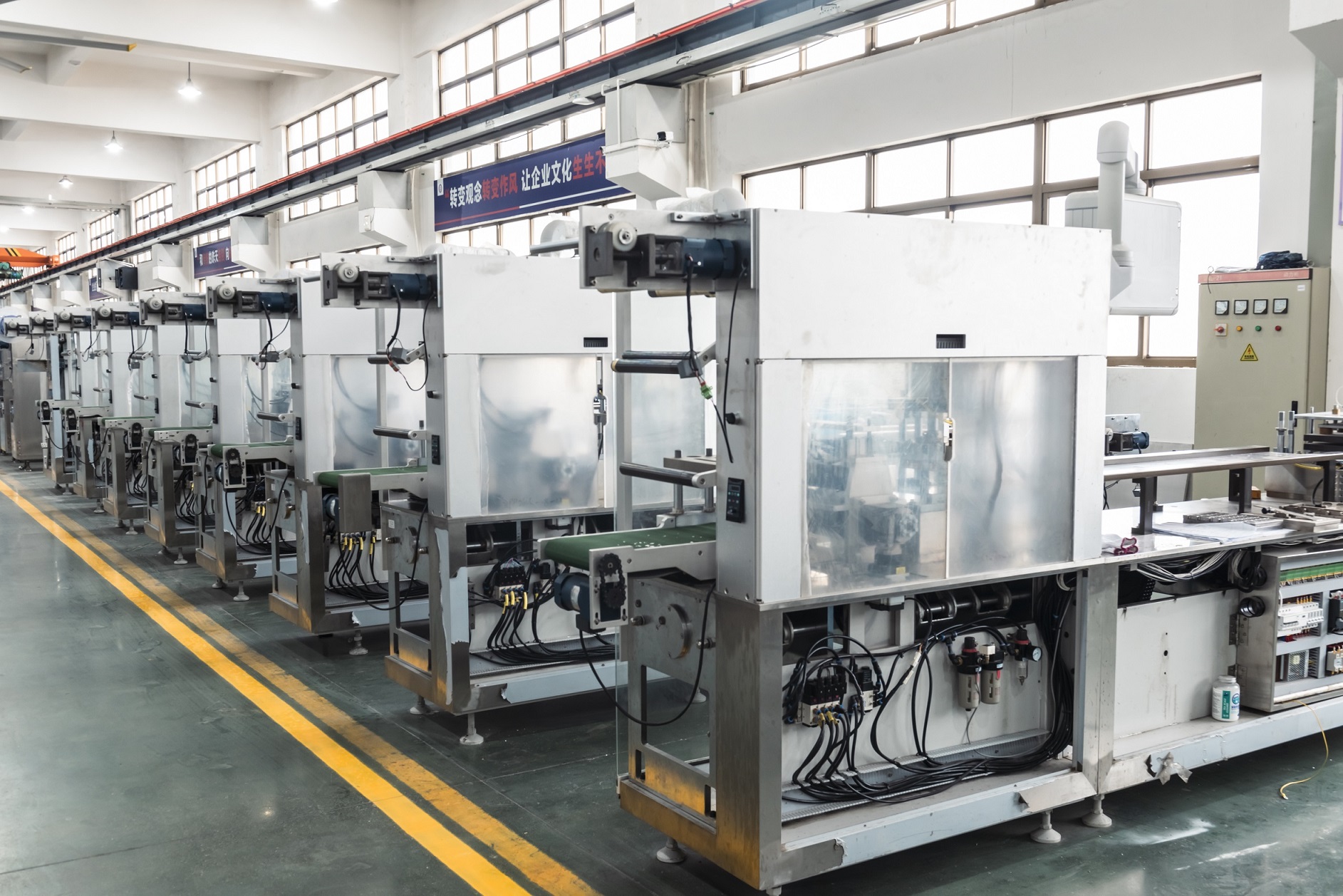
Blister Machine Workshop — primary packaging build area for blister and blister-cartoner equipment.
Each item in that specification has a different evidentiary status and a different job in the evaluation.
- Speed (800 blisters/min, 500 cartons/min). These are stated maximums. They do not establish sustained output, the format they were measured on, the film structure, the reject-handling rate or the number of blisters per carton. They are useful for capacity screening and for framing the line-balance question, not for a guaranteed throughput clause.
- Control architecture (Beckhoff motion controller, CP9315 industrial PC). A single PC-based motion platform means fewer vendor boundaries inside the line and one place from which line data can be extracted — relevant if batch records or line-performance data are specified requirements. It also makes the industrial PC a lifecycle item: ask about spare-unit availability and the software support horizon before signing.
- Three-channel servo replenishment. The specification names three servo-driven replenishment channels but not what each channel covers. Ask directly whether the channels feed blister lanes, magazines, or both, and how that maps to your cavity layout — a three-channel arrangement may suit one blister format better than another.
- GMP-oriented contact parts and tooling. "GMP-oriented" describes a design intention, not a certificate. Request the material specification for product-contact parts, the surface-finish documentation, the tooling change-part list and the cleaning instructions that go with them.
The line-balance arithmetic the shortlist must force
Read the two maximums arithmetically and without assuming either is sustained. At two blisters per carton, 500 cartons per minute corresponds to 1,000 blisters per minute of carton-side capacity, which sits above the 800 blisters per minute blister-side maximum, so the blister side would set the limit; at one blister per carton, the carton side caps the line at 500 blisters per minute. The crossover depends entirely on blisters per carton in your pack. Neither figure answers what happens when a reject stream removes blisters, when film splicing stops forming, or when an empty-cavity check ejects product — those belong in the technical agreement, not the brochure.
The split side: when separate blister and cartoning steps still fit
Split layouts are not a fallback for buyers who cannot afford integration. A standalone automatic blister packaging machine — HOPING lists flat-plate, roller-type aluminium-plastic and aluminium-aluminium machines, including the DPP and DPH families — can run independently of a standalone cartoner such as the XWZ series, and that independence has measurable value in four situations.
- Intermittent carton demand. If part of blister output is sold as bare blisters, or if carton formats change more often than blister formats, decoupling prevents the cartoner from throttling the blister machine.
- Shared secondary capacity. One cartoner can serve more than one blister machine or product family, which is often the cheaper route at modest overall volume.
- Staged capital. Buying the blister machine first and the cartoner later spreads spend and lets the team learn the format before committing to a transfer design.
- Physical separation. Where primary and secondary operations sit in different rooms or pressure zones, a conveyor-linked split layout can be easier to justify than one combined machine set.
The price of that flexibility is the transfer: buffer capacity, an operator or a robot, and the documentation that proves what happened between the two machines. A split layout also tends to hide line imbalance, because the buffer absorbs it — until the buffer is full and the blister machine stops anyway.
Format checks for tablets, capsules, soft capsules and nutraceuticals
Dosage form changes the questions, not the architecture. HOPING's customization list already includes blister size, blister materials, quantity per carton, carton specification, leaflet format, coding and inspection method, and feeding method, which means these are configuration variables to be written into the enquiry rather than standard features to be assumed.
| Dosage form | What the line must handle | Questions to put to the supplier |
|---|---|---|
| Tablets | Cavity layout for tablet size and thickness, dust generation, moisture sensitivity where an aluminium-aluminium structure is required | What cavity tooling range applies to this model, and is aluminium-aluminium offered on the same line family or as a separate machine category? |
| Capsules | Oriented feeding, low mechanical damage, consistent single-capsule filling of cavities | Which feeding method is proposed, and how do the three replenishment channels map to a capsule format? |
| Soft capsules | Deformable product, different pocket geometry, leakage control and cleaning access | Is the proposed tooling and feeding arrangement specified for soft capsules, and what cleaning routine follows a leakage event? |
| Nutraceuticals | Irregular tablet and softgel shapes, high dust, many SKUs and short runs | What does the format changeover matrix look like across the SKU list, and which adjustments need tools? |
Two boundaries are worth stating plainly. First, an aluminium-aluminium or cold-form structure is a material and machine decision, and HOPING lists aluminium-aluminium blister machines as a distinct category, so confirm whether the offered line covers that structure before the pack design is frozen. Second, nutraceutical packs may carry lighter regulatory documentation than prescription products, but GMP-oriented contact parts, tooling documentation and cleaning access remain relevant because the equipment still handles an ingested product.
Documentation: what a certificate proves and what it does not
Conformity paperwork is where shortlists quietly fail. HOPING's published certificate records include a CE certificate for the cartoning machine series (HTT190102307L, issued 22 January 2019 by Shenzhen HTT Technology Co., Ltd., citing EN 60204-1:2006+A1:2009+AC:2010 and 2006/42/EC), a CE certificate for the blister packing machine series (HTT190102306L, same date and issuer, citing Machinery Directive 2006/42/EC and EN 60204-1:2006+A1:2009+AC:2010), an older CE certificate for the carton packing machine series (UCN 900339024607, issued 1 April 2007 by Certify International Ltd, citing EN 415-3:2000 and 98/37/EC), and a CE certificate described in the records as covering a sample automatic blister packing machine (UCN 900175009261, issued 6 November 2006 by CELAB, citing EN 60204-1:1997 and EN 415-3:1999).
Those records support three questions that belong in every evaluation file. Does the certificate's scope text name the series or the individual model and configuration being ordered, given that two records cover "series" and one is described as covering a sample machine? Are the standards cited in the certificate still the current editions, given that the 2006 and 2007 records cite earlier versions of the machinery directive and of EN 60204-1? And who assumes conformity assessment for the combined line when a blister machine and a cartoner from different certificate scopes are integrated into one machine set?
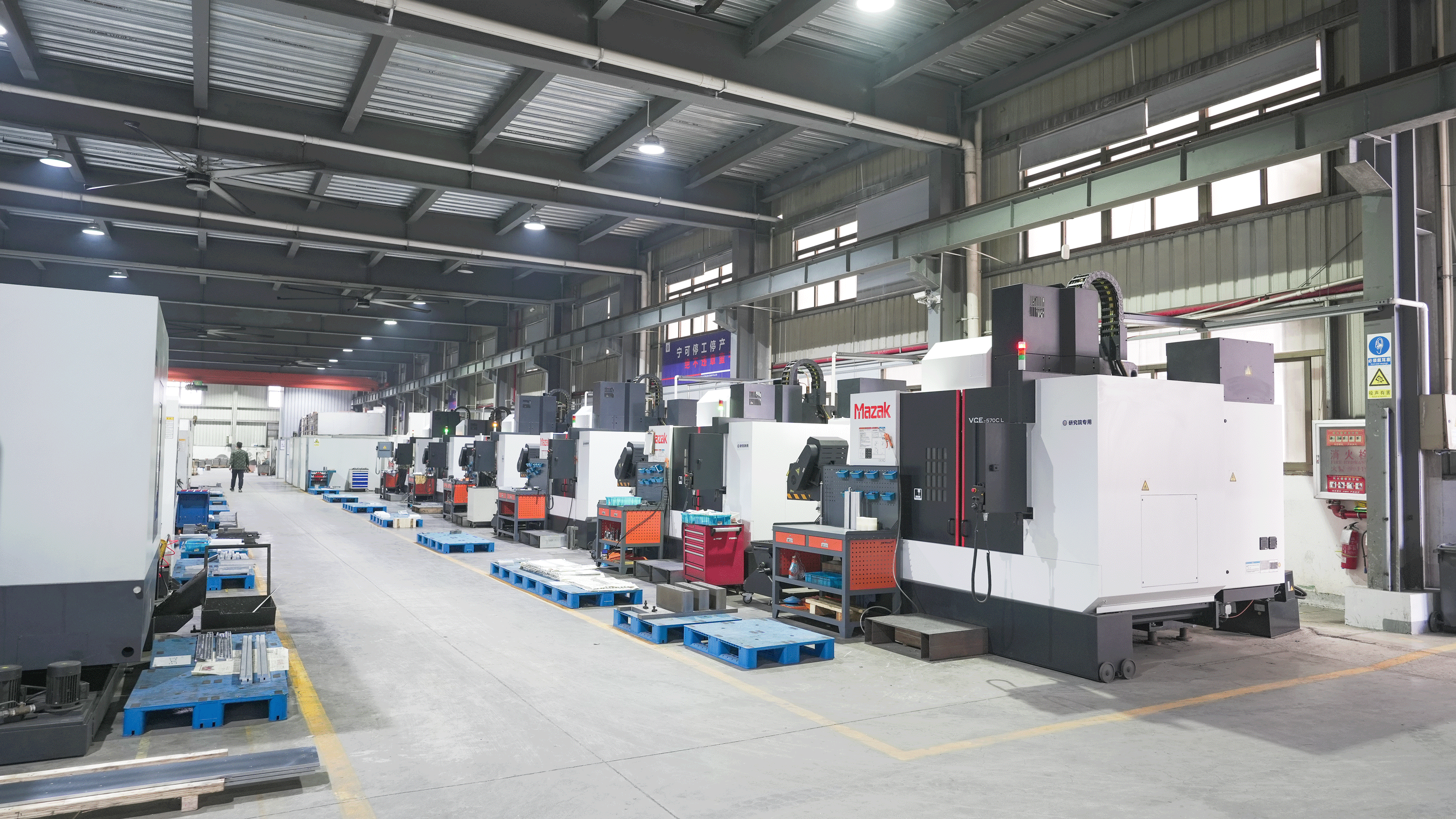
Machining Workshop — in-house part and tooling production relevant to contact-part documentation.
Two standards are frequently misapplied in this category. ISO 15378:2017 specifies good manufacturing practice requirements for primary packaging materials for medicinal products; it is a packaging-material standard and is not a machine certification, so a supplier citing it as evidence of equipment GMP compliance should be asked what the certificate actually covers. Separately, the US cGMP framework establishes the regulatory foundation for pharmaceutical quality, and the FDA publishes guidance on production and process controls — but framework existence is not a machine-specific design requirement, and a machine certificate is not process validation. Buyers supplying China-facing products should also note that a GMP guidance for pharmaceutical packaging materials has been reported at draft, public-consultation stage; that status is not a final rule, and the underlying issuing-authority document was not available in the evidence used for this shortlist.
HOPING's own quality sequence — incoming material inspection, key component inspection, assembly inspection, electrical safety check, no-load trial run, material trial, factory acceptance test, customer witness acceptance and pre-shipment inspection — is a practical acceptance agenda. Map each step to a document you will receive, and ask for current management-system certificates with their validity dates rather than accepting an undated claim.
Changeover, control and data: the costs outside the speed figure
The variables that decide whether an integrated line is comfortable to operate are rarely in the headline specification. HOPING's customization scope lists blister size, blister materials, quantity per carton, carton specification, leaflet format, coding and inspection method, feeding method, downstream bundling, case-packing and palletizing connection, interface language, electrical component brand and data interface. Each one is a changeover, spares or documentation decision as much as an engineering one.
- Changeover. Ask for a format matrix showing which adjustments are stored as recipes in the CP9315 and which are set by hand, and how long a full blister-plus-carton change takes on a line of this size. Changeover, not peak speed, usually decides whether a high-capacity line suits a multi-SKU portfolio.
- Data. Industry reporting summarized by trade media describes pharmaceutical manufacturers moving toward digitised data collection and integrated solutions to meet regulations and improve visibility; that is a directional signal without a measurement basis, not an adoption rate. If batch data capture is a requirement, ask what the line exports, in what format, and through which data interface — and confirm the human-machine interface language you will actually operate.
- Spares and lifecycle. A PC-based control platform concentrates intelligence and concentrates risk. Ask for the spare industrial PC position, the control-software support horizon, and the component brands that will be used for drives and sensors, since those determine long-term parts sourcing.
- Commercial terms. Company data gives a typical lead time of 60–120 days after technical confirmation, subject to model, configuration, project complexity and contract terms, monthly capacity of 30–40 units and a minimum order of one set or one complete line. These are planning inputs, not commitments for a specific project.
Downstream boundary: case packing, coding and where the line stops
An integrated blister-cartoner line answers the question up to the closed carton. Whether the same control boundary should extend into case packing and palletizing is a separate decision. HOPING lists case packing machines (XWK series), a case packing and palletizing integral machine (ICP12) and an automatic cartoner production line configured as XWZ300II + XWK4060 + ICP12, alongside lifting feeders, overwrappers and stretch banders — so the downstream scope exists, but it should be justified by carton volume and end-of-line labour, not by the appeal of a single supplier.
Two practical checks apply. Ask where coding sits relative to carton closing, and how rejected cartons are removed from the line, because the position of the coding station changes the reject-handling design. And ask what buffer exists between the cartoner and the case packer: a short buffer transfers every cartoner stop downstream, while a long buffer adds floor space and product exposure. Where one end-of-line system must serve several cartoning lines, keeping the case packer outside the blister-cartoner control boundary is usually the more flexible arrangement.
A five-step sequence for taking the shortlist to a decision
- Freeze the pack. Define blister format, cavity count, blisters per carton, carton style, leaflet and coding requirement, then convert demand into cartons per minute using your own efficiency and reject allowance rather than the supplier's maximum.
- Choose the shape on operating logic. Integrated where carton demand is continuous and the format family is stable; split where demand is episodic, secondary capacity is shared, or primary and secondary operations sit apart.
- Test the reference point against your own pack. Request format-specific data for the DHL8005H or whichever model is offered — blisters per minute and cartons per minute at your cavity count, with the film structure and reject basis stated — plus the changeover time for your format pair.
- Audit the documents. Certificate scope text, cited standard editions, quality-control records, factory acceptance test protocol, contact-part and tooling material documentation, and the data interface specification.
- Witness the run. Material trial and customer witness acceptance, observing reject handling, restart behaviour and changeover in practice; agree the acceptance criteria in the technical agreement before shipment.
Market context: useful background, weak as a buying argument
Commercial research puts the global pharmaceutical blister packaging machine market at USD 2.57 billion in 2025, with Asia-Pacific described as the fastest-growing region at an 8.87% CAGR to 2031 (Custom Market Insights). A separate publisher reports horizontal cartoning systems at 70.12% of 2024 market share in the end-load cartoning machine market (Mordor Intelligence). Both figures are attributable but differently scoped: the first covers blister machines specifically, the second an end-load cartoning market rather than blister lines. They should not be combined, averaged or differenced, and neither tells a buyer which line to purchase. Their practical use is narrower — the cartoning share is consistent with the horizontal cartoner being the default form factor in secondary packaging, which is why most integrated blister-cartoner lines are built around a horizontal cartoner rather than an alternative orientation.
Frequently asked questions
What is the difference between an integrated blister-cartoner line and a linked blister and cartoning line?
An integrated blister-cartoner line connects blister forming, sealing and cutting to carton erection, blister and leaflet insertion, closing and coding through a single transfer and a shared control architecture, such as the Beckhoff motion controller and CP9315 industrial PC specified for the DHL8005H. A linked layout uses a separate blister machine and a separate cartoner joined by a conveyor and buffer, with two control systems and an interface between them. The integrated arrangement removes manual blister transfer and consolidates the validation package; the linked arrangement lets each machine run and change over independently.
At up to 800 blisters per minute and 500 cartons per minute, how many blisters per carton can the DHL8005H configuration handle?
That ratio is not disclosed in the reference specification, and it cannot be derived from the two maximums alone. The relationship is arithmetic: required cartons per minute equals blisters per minute divided by blisters per carton. At one blister per carton, 500 cartons per minute caps the line at 500 blisters per minute; at two blisters per carton, the carton side corresponds to 1,000 blisters per minute, above the 800 blisters per minute blister-side maximum. A buyer should request format-specific figures at their own cavity count, with the reject basis and film structure stated.
Does a CE certificate for a cartoning machine series cover the specific model being ordered?
Not automatically. HOPING's certificate records include series-level entries, for example HTT190102307L for the cartoning machine series and HTT190102306L for the blister packing machine series, both issued in January 2019, and one entry described as covering a sample automatic blister packing machine. A buyer should read the scope text of the certificate, confirm that the ordered model and configuration fall inside it, and check whether the standards cited in the certificate are still the current editions.
Is ISO 15378 a certification for packaging machines?
No. ISO 15378:2017 specifies good manufacturing practice requirements for primary packaging materials for medicinal products, which places it with packaging-material manufacturers rather than equipment builders. A machine supplier citing it should be asked what the certificate covers. Machine-level conformity evidence and material-level GMP certification answer different questions, and neither substitutes for the buyer's own installation and operational qualification of the line.
Which dosage forms need extra checks on a blister-cartoner line?
Soft capsules are the most demanding because the product is deformable and leakage affects cleaning and tooling; capsules need oriented feeding with low mechanical damage; moisture-sensitive tablets may require an aluminium-aluminium structure, which HOPING lists as a separate blister machine category; and nutraceuticals typically bring irregular shapes, high dust and short runs, so the changeover matrix matters more than peak speed. In every case the feeding method, blister material and tooling range should be specified in the enquiry rather than assumed.
Outlook
The direction of travel in solid-dosage secondary packaging is toward tighter integration of mechanical output and line data, with control platforms expected to expose batch and performance information rather than simply run axes. That trend raises the value of a single, well-documented control architecture — and raises the cost of an undocumented one, because data extraction becomes a retrofit project. It does not change the underlying buying logic: an integrated blister-cartoner line is the right shortlist leader when format stability and continuous carton demand justify one control and validation boundary, and a split blister and cartoning arrangement remains the more honest choice when demand, formats or shared secondary capacity argue for independence.
The next step is not a comparison of brochures but a comparison of your own pack against format-specific evidence. Buyers can review the manufacturer's product scope at Zhejiang Hoping Machinery Co., Ltd. and download the full equipment catalogue here: Hoping Machinery Catalog (PDF).
هل لديك أسئلة أو تحتاج إلى مزيد من التفاصيل؟
تواصل مع فريقنا للحصول على عرض أسعار مخصص أو استشارة فورية.
طلب عرض أسعار
املأ النموذج أدناه وسيتواصل معك فريقنا بعرض مقترح مخصص.
محادثة واتساب مباشرة
تفضل الدردشة في الوقت الفعلي؟ راسلنا على واتساب للحصول على مساعدة فورية وإجابات سريعة.
- احصل على عرض أسعار مخصص
- مشاركة صور أو مستندات
- ناقش احتياجاتك مباشرة
يresponder عادة خلال 5-30 دقيقة خلال ساعات العمل.