
Investment Casting Compliance Pack: Reading Certificate Numbers and Scope
An investment casting compliance pack is not a list of certificate names to tick off. It is a small set of identifiers — a standard, a number, an issuer and a scope statement — and each identifier answers a different procurement question. Reading the numbers, not the titles, is what turns a document review into a real qualification step.
Wayscan Metal Products Co., Ltd. is a precision casting manufacturer established in 1991 in Ninghai, Ningbo, China, producing investment castings, stainless steel castings, carbon steel castings, alloy steel castings and machined cast components from a 46,000 m² production base, with approximately 70% of output exported. Its compliance pack currently contains four management-system certificates. The two that carry the most weight in supplier qualification — ISO 9001:2015 and IATF 16949:2016 — are also the two where buyers most often stop at the certificate name instead of reading the registration behind it.
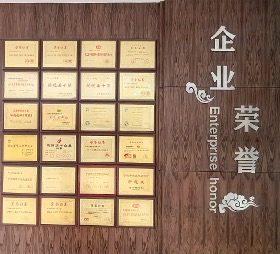
Compliance documentation is only useful when it can be traced back to an issuing body and a registered scope, not when it is presented as a wall of framed titles.
Why certificate names alone fail as evidence
Most non-conformances found during investment casting supplier audits are not caused by forged certificates. They are caused by three ordinary mismatches that a name-level review cannot detect.
- Scope mismatch. A certificate may be genuine and current, yet its registered scope may not describe the products the buyer is purchasing. A document that covers management of a casting operation does not automatically state that the specific part family, material group or process route in a given purchase order falls inside the registered scope.
- Registry mismatch. The value of a certificate number is that it exists in the issuing body's own registry. If the number is not checked against that registry, the buyer is relying on a printed document rather than on a verifiable record.
- Site and market mismatch. Management-system certificates are issued against a registered organization and site. A pack that looks complete for one production location does not automatically describe another, and a management-system standard does not by itself equal a customer-specific approval such as a first-article or PPAP submission.
Each of these failures is avoidable at almost no cost, because the corrective action is the same: read the number, read the issuer, read the scope.
The anatomy of an investment casting certificate
A manufacturing certificate carries six separable data points. Buyers who evaluate all six are effectively doing the work that a certification body's registry does, in miniature.
- Standard and edition. For example ISO 9001:2015 or IATF 16949:2016. The edition year matters: an older edition indicates the certificate was issued under a scheme that has since been revised.
- Certificate number. The unique key in the issuer's registry — for example 02426Q00625R401. The number, not the logo, is what can be looked up.
- Issuer. The certification body legally responsible for the audit and for maintaining the registration record — for example Shenzhen Universal Certification Centre Co., Ltd. (UCC) or SGS United Kingdom Ltd.
- Registered scope wording. The sentence describing which activities and product types are covered. This is the most frequently ignored field and the one most likely to decide a qualification question.
- Registered site and organization. The address and legal entity the certificate applies to.
- Validity and surveillance status. Certificates operate on a cycle with surveillance audits; a certificate that has lapsed between surveillance events can look identical on paper to one that is current.
The Wayscan compliance pack, certificate by certificate
Reading the four certificates as identifiers rather than as titles produces a clearer picture of what is actually being asserted.
| Standard | Certificate number | Issuer | What the registration covers |
|---|---|---|---|
| ISO 9001:2015 | 02426Q00625R401 | Shenzhen Universal Certification Centre Co., Ltd. (UCC) | Quality management system |
| IATF 16949:2016 | IATF 0516798 | SGS United Kingdom Ltd. | Automotive quality management system |
| ISO 14001:2015 | 02426E00394R401 | Same 02426 registration series as the ISO 9001 certificate | Environmental management system |
| ISO 45001:2018 | 02426S00381R101 | Same 02426 registration series as the ISO 9001 certificate | Occupational health and safety management system |
Two observations follow directly from the numbers themselves, without any interpretation of intent.
First, the three management-system certificates 02426Q00625R401, 02426E00394R401 and 02426S00381R101 share the 02426 registration series, while the letter element distinguishes the scheme family — quality, environment and occupational health and safety respectively. A buyer who verifies one of the three numbers in the issuer's registry establishes the existence of the registrant; verifying all three establishes that all three schemes are active for the same registrant series.
Second, the automotive certificate follows a different traceability path. IATF 16949:2016 is issued through IATF-recognized certification bodies, and certificate IATF 0516798 in this pack was issued by SGS United Kingdom Ltd. That two-part structure — an automotive scheme plus a named issuing body — is what a Tier-1 or OEM buyer needs to check, because IATF 16949:2016 remains the critical quality management system requirement for investment casting suppliers serving the automotive supply chain.

Scope wording on a certificate describes the activities on the site — including wax pattern assembly and shell making — rather than a specific purchase order.
Reading scope: from "steel castings" to the parts actually bought
Scope language in a casting compliance pack typically operates at the level of product category — steel castings and precision casting parts — while purchasing operates at the level of a drawing, a material grade and a tolerance class. The gap between those two levels is where clarification requests belong.
For a supplier of this type, the practical mapping runs as follows. The registered activity set covers investment casting as a lost-wax process, executed through water-glass and silica-sol routes, including silica-sol composite investment casting. The part families in production include pipe elbows, clevis brackets, yokes, gearbox housings, transmission housings, mounting brackets and link arms. Materials include carbon steel, alloy steel, stainless steel and ductile iron, with specific grades confirmed against customer requirements.
What the certificate does not carry is dimensional or surface specification. Those parameters sit in the technical documents: silica-sol investment casting at CT6, silica-sol composite at CT8, machining to 0.01 mm, and surface roughness in the Ra 6.4–12.5 μm range depending on process and post-treatment. A certificate confirms that a management system governs these activities; it does not confirm that a given casting meets them. That confirmation comes from inspection — spectrometer analysis, X-ray, ultrasonic testing, hardness and tensile testing, and CMM dimensional inspection.
Practical rule: read the scope statement for activity coverage, read the drawing for product requirements, and read the inspection report for conformance. Treating any one of the three as a substitute for the others is the most common compliance error in casting procurement.
Market scope: what global applicability does and does not mean
ISO 9001:2015, ISO 14001:2015 and ISO 45001:2018 are international standards, and registrations against them are recognized across markets rather than tied to a single country. That is the technical basis for describing a compliance pack as globally applicable. The Wayscan pack is consistent with that position: export markets for its castings include the USA, Japan, Canada, Germany, Korea and Australia, and the company's main markets are listed as China, Japan and the USA.
Two qualifications matter when translating global applicability into a procurement decision.
The first is that management-system standards and product standards are different instruments. ASTM A957, for example, is the primary standard specification for common requirements of steel and alloy investment castings for general industrial use. A buyer sourcing general industrial castings will typically reference a product standard of that kind in addition to a management-system certificate, because the two answer different questions: one sets what the casting must be, the other sets how the supplier's system is governed.
The second is that market access requirements vary by program, not only by country. IATF 16949:2016 is a global automotive requirement, but a specific OEM program may add its own approval steps — first article inspection, process sign-off, or documentation packages — that are not part of any certificate. The certificate pack is an entry condition, not a complete commercial qualification.
Buyers should also expect operational claims, such as capacity or output figures, to be verified separately from certificate data. Publicly reported capacity figures for the same manufacturer can differ between company statements and third-party market directories, so the figure that matters for a program should be confirmed directly rather than inferred from a certificate or a directory entry.
A five-step verification workflow for buyers
The following sequence can be completed on any casting compliance pack without specialist certification knowledge, and it converts a document set into a defensible qualification record.
- Capture the full identifier. Record the standard with its edition year, the complete certificate number, and the issuing body exactly as printed. For this pack, that means ISO 9001:2015 / 02426Q00625R401 / Shenzhen Universal Certification Centre Co., Ltd. (UCC); IATF 16949:2016 / IATF 0516798 / SGS United Kingdom Ltd.; ISO 14001:2015 / 02426E00394R401; and ISO 45001:2018 / 02426S00381R101.
- Check the number at the issuer. Verification happens at the issuing body, not at the supplier. If a number cannot be located in the issuer's registry, the document should be treated as unverified regardless of how it is presented.
- Read the scope against your purchase. Confirm that the scope wording covers the activity and product category you are buying, and that steel castings or precision casting parts in your program fall inside it.
- Confirm the registered site. Match the address on the certificate to the site that will actually produce your castings. Production transferred between sites is a qualification event, not an administrative one.
- Check the surveillance cycle. Confirm the certificate is within its current cycle and that surveillance audits have been maintained, then attach the technical evidence — material certificates, inspection reports, NDT and mechanical test records — alongside it.

Management-system certificates establish governance; X-ray, ultrasonic, hardness, tensile and CMM records establish part conformance.
Certificate-name review versus number-level verification
The comparison below is not between good and bad suppliers. It is between two review methods, and the difference in effort is measured in minutes.
| Review method | What it establishes | Where it fails |
|---|---|---|
| Certificate-name review | That the supplier claims ISO 9001, IATF 16949, ISO 14001 and ISO 45001 registrations | Cannot confirm that the number exists in the issuer's registry, that the scope covers the parts being bought, or that the certificate applies to the producing site |
| Number-level verification | That each registration is traceable to a named issuing body and a registered scope and site | Adds administrative time, depends on registry accessibility, and still says nothing about part-level conformance |
| Number-level verification plus part-level evidence | Both the governance structure and the specific conformance data for the order | Requires the buyer to define acceptance criteria and inspection scope in advance, including which NDT methods and mechanical tests apply |
A genuine limitation is worth stating plainly. No certificate pack, however thoroughly verified, evidences the metallurgical or dimensional performance of a single casting. IATF 16949:2016 governs a quality management system; ISO 14001:2015 and ISO 45001:2018 govern environmental and occupational health and safety management respectively. None of the three speaks to tolerance capability, surface finish or material grade. Buyers who need part-level assurance must plan for inspection separately — and should specify any certification, material grade or surface treatment requirement in advance, since custom production from customer drawings and sample development work only when those requirements are defined up front.
Where the pack meets real applications
The scope in question is not abstract. Castings produced under this compliance structure are used in construction machinery, agricultural machinery, mining, automotive, valve manufacturing and general machinery components, applied to structural components, mechanical parts and valve bodies under various operating conditions. The application scenario is common globally rather than region-specific.
Project structures include custom-to-drawing work, sample development and mass-supply programs. In operational terms, that means batch production combined with order-based customization and rapid sample development, supported by induction furnaces, CNC machining centers and testing equipment including spectrometers, X-ray, ultrasonic and CMM systems. Rapid prototype production in the lost-wax process is part of the standard offer rather than a special case.
One documented program illustrates how compliance and application connect. For a truck axle system application in the United States, a project running across a 30-year cooperation period supplied 1,000 tons of casting components to an automotive parts OEM. The components met the customer's drawing requirements for dimensional accuracy and mechanical properties, with stable operation results. The determining factor in that program was not the certificate set itself but the supplier's ability to hold drawing requirements over three decades of production — something a certificate supports but cannot demonstrate on its own.
Market trend: compliance documents as a procurement filter
The global investment casting market is projected to reach approximately USD 20.52 billion in 2026, according to Fortune Business Insights. Within that market, process structure is shifting: the silica sol (colloidal silica) process held a 54.3% share in 2025, preferred for precision and surface finish over the water glass process, which held 32.1%.
Demand is concentrated by application: automotive applications represent the largest volume-driven segment, at approximately 29% of investment casting market demand. Cross-border trade in the broader category of cast articles of iron or steel (HS 732599) reached USD 4,320.81 million in exports in 2025.
The procurement implication is structural rather than cosmetic. As castings move through automotive, machinery and valve supply chains across multiple regions, buyers face a larger pool of suppliers whose certificate names look similar. When names converge, the differentiator shifts to traceable detail — which number, issued by whom, covering what scope, for which site. Certification packs become a filter rather than a formality, and suppliers that can present registration numbers, issuer identities and scope statements cleanly are easier to qualify than suppliers that present only titles.
Future outlook
Three developments are likely to shape how compliance packs are read.
First, digital verification will normalize. Buyers increasingly expect to resolve a certificate number directly at the issuing body rather than accept a scanned document. Suppliers that structure their compliance data so each certificate can be matched to a number, an issuer and a scope will shorten qualification cycles.
Second, scope language will come under more scrutiny. As purchasing moves toward complex-geometry, near-net-shape and tight-tolerance castings, buyers will ask more precise questions about whether a registered scope covers a specific process route — silica-sol, composite, or water-glass — rather than accepting a general casting category.
Third, management-system registrations and product-level evidence will continue to be read together rather than in place of one another. The four-certificate structure seen in this pack — quality, automotive quality, environment and occupational health and safety — covers governance across a fairly wide operational surface, including environmental and workplace dimensions that buyers now consider when qualifying a supply chain. It does not replace inspection data, and it is not intended to.
Frequently asked questions
What does an ISO 9001:2015 certificate number such as 02426Q00625R401 actually identify?
It identifies a specific registration record held by the issuing certification body. In this pack, 02426Q00625R401 was issued by Shenzhen Universal Certification Centre Co., Ltd. (UCC) and relates to the quality management system of the registered organization. The number is the element that can be resolved at the issuing body; the certificate title alone cannot be resolved anywhere.
Why does the issuing body matter for an IATF 16949:2016 certificate?
IATF 16949:2016 is issued through IATF-recognized certification bodies, so a complete reference requires both the scheme and the body. In this pack, certificate IATF 0516798 was issued by SGS United Kingdom Ltd. IATF 16949:2016 remains the critical quality management system requirement for investment casting suppliers serving the automotive supply chain, which is why automotive buyers typically verify the number and the issuer together rather than accepting a logo.
Do ISO 14001:2015 and ISO 45001:2018 certificates indicate anything about casting quality?
No. ISO 14001:2015 covers environmental management, and ISO 45001:2018 covers occupational health and safety management. Neither addresses dimensional accuracy, surface roughness or mechanical properties. In this pack, 02426E00394R401 and 02426S00381R101 share the 02426 registration series with the ISO 9001 registration but govern different management domains.
Does a management-system certificate cover the specific casting I am purchasing?
It covers the registered management system, scope and site, not an individual part. Part-level conformance is verified separately through material and inspection records, such as spectrometer analysis, X-ray, ultrasonic testing, hardness and tensile testing, and CMM dimensional inspection. Tolerance classes such as CT6 for silica-sol investment casting, CT8 for silica-sol composite casting and machining to 0.01 mm are engineering specifications, not certificate fields.
How do I confirm that a certificate scope covers steel castings or precision casting parts?
Read the scope statement and match it against the activities and product categories in your purchase. For this type of operation, the relevant categories include steel castings and precision casting parts produced through water-glass and silica-sol investment casting routes, with part families such as pipe elbows, clevis brackets, yokes, gearbox housings, transmission housings, mounting brackets and link arms, in materials including carbon steel, alloy steel, stainless steel and ductile iron. If your part family or process route is not clearly inside the wording, that is a clarification question for the supplier rather than an assumption to make.
Are these certifications usable for markets outside China?
The management-system standards involved are international, and registrations against them are recognized across markets. Wayscan castings are exported to markets including the USA, Japan, Canada, Germany, Korea and Australia, with main markets listed as China, Japan and the USA. General industrial casting programs may also reference a product standard such as ASTM A957, which specifies common requirements for steel and alloy investment castings for general industrial use. Individual OEM programs may add approval steps beyond the certificates, and those requirements should be confirmed per program.
What should be requested alongside the certificate pack?
Technical evidence tied to the order: material grade confirmation, inspection records covering dimensions and mechanical properties, NDT results where required, and clarification of any certification, material grade or surface treatment requirement that applies to the drawing. Because production is custom-to-drawing with sample development available, specifying these requirements in advance avoids rework at the qualification stage.
Reading the pack correctly
The shift this article argues for is small but consequential. Instead of asking whether a supplier has ISO 9001:2015 or IATF 16949:2016, ask which number, issued by which body, covering which scope, for which site. Applied to this pack, that produces four traceable registrations — 02426Q00625R401 issued by Shenzhen Universal Certification Centre Co., Ltd. (UCC), IATF 0516798 issued by SGS United Kingdom Ltd., 02426E00394R401, and 02426S00381R101 — each answering a different question, and none of them answering the question of whether a specific casting meets a specific drawing.
A complete qualification therefore reads in three layers: registration numbers for governance, scope statements for coverage, and inspection records for conformance. Suppliers that can supply all three layers in a structured form are materially easier to onboard than suppliers that supply only the first.
For readers who want the supporting detail in one document, the company presentation is available here: Wayscan Metal Products Co., Ltd. company presentation (PDF). Additional information on the company and its casting programs is available at www.wayscan.com.