
Investment Casting Compliance: What ISO 9001, IATF 16949, ISO 14001 and ISO 45001 Cover
Supplier Qualification Reference

Shell tree assembly: the process stage where management-system documentation stops being paperwork and starts controlling casting outcomes. Image: Wayscan Metal Products Co., Ltd.
A management system certificate does not measure a casting. It measures the factory that made it. Buyers sourcing investment castings usually discover this distinction halfway through a supplier qualification, when a certificate that looked decisive turns out to describe a quality system rather than a tolerance class, a material grade or a wall thickness.
Wayscan Metal Products Co., Ltd. maintains a four-certificate management system set: ISO 9001:2015 for quality management, IATF 16949:2016 for automotive quality management, ISO 14001:2015 for environmental management and ISO 45001:2018 for occupational health and safety management. Each standard governs a different management activity, each is issued against a defined scope of production, and each answers a different question in a buyer qualification file. Reading them as four separate instruments — rather than as one general badge of quality — is what separates a compliance check that protects a sourcing program from one that creates false confidence before the first production order.
Why One Certificate Is Never Enough
The problem is not that buyers ignore certificates. It is that they compress four different management systems into a single procurement checkbox labeled certified. That compression creates predictable failures. A purchasing team asks for ISO 9001, receives a valid certificate, and assumes the supplier is automotive-ready — when the automotive requirement is a separate scheme applied on top of ISO 9001. A program manager accepts a certificate at face value without reading the scope statement, then discovers the certified activity is steel casting production while the purchased part is a machined precision casting component. An environmental questionnaire arrives from an OEM customer, and the supplier has no environmental management system to point to.
Each failure has the same root cause: a management system certificate is a statement about how a site is organized, not about what a part can do. The four standards that matter most in investment casting supply do not overlap. They cover quality of output, automotive-specific quality discipline, environmental performance and worker safety. A buyer who needs all four and receives one has covered roughly a quarter of the compliance surface.
What Each of the Four Standards Actually Covers
The four certificates divide the management of a casting plant into distinct domains. The table below maps each standard to the management activity it governs, to what it gives a buyer, and to what it does not prove.
| Standard | Management domain | What it gives a buyer | What it does not prove |
|---|---|---|---|
| ISO 9001:2015 | Quality management system | Documented process control, corrective action discipline, traceability and internal audit routines across the production flow | Part-specific tolerance, material grade or surface finish |
| IATF 16949:2016 | Automotive quality management system | Quality discipline aligned to automotive production supply-chain expectations, applied in addition to ISO 9001 | Suitability for non-automotive commodities on its own |
| ISO 14001:2015 | Environmental management system | Controlled handling of emissions, waste, water use and environmental compliance obligations at the production site | Casting quality or dimensional capability |
| ISO 45001:2018 | Occupational health and safety management system | Structured hazard control in high-risk foundry operations, relevant to supply continuity and audit readiness | Casting quality or delivery performance |
ISO 9001:2015 — the base layer
ISO 9001:2015 is the general quality management system standard. It applies to any manufacturing organization and defines how a plant plans, controls, monitors and improves its processes. In an investment casting context it covers the whole chain from wax pattern and shell making through dewaxing, pouring, heat treatment, finishing and CNC machining. For a buyer, the practical value is process repeatability: a supplier operating under ISO 9001 has a documented route for non-conformance handling, corrective action and traceability. In China, the same standard is adopted nationally as GB/T 19001, which is technically equivalent to the ISO text.
IATF 16949:2016 — the automotive layer
IATF 16949:2016 is not a replacement for ISO 9001 but an automotive-sector scheme layered on top of it. It exists because automotive OEMs and their tier suppliers need quality management discipline that matches the risk profile of vehicle production. For a casting supplier, holding it signals readiness to work inside automotive supply-chain expectations rather than only general industrial ones.
ISO 14001:2015 and ISO 45001:2018 — the long-term layers
These two standards are frequently the last to be requested and the first to become decisive in a multi-year relationship. ISO 14001:2015 governs how a site manages its environmental obligations across high-impact foundry activities: shell material handling, waste streams, water consumption and emissions. ISO 45001:2018 governs occupational health and safety, which in casting production covers molten metal handling, shell removal, grinding and finishing. In China both are adopted as GB/T 24001 and GB/T 45001 respectively, technically equivalent to the ISO standards. Neither certificate is issued against a product. Both are issued against a site and a defined set of activities.
Wayscan Metal Products Co., Ltd.: What the Four-Certificate Set Represents
Wayscan Metal Products Co., Ltd. is a precision casting manufacturer established in 1991 in Ninghai, Ningbo, China, producing composite-process and silica sol precision investment castings in stainless steel, carbon steel and alloy steel, with in-house machining and inspection facilities. The company operates a production base of 46,000 square meters with more than 500 employees, including more than 20 senior engineering and technical personnel, and a registered capital of 50 million RMB. Around 70% of output is exported, primarily to China, Japan and the United States.
The company's compliance set covers four management systems — ISO 9001:2015, IATF 16949:2016, ISO 14001:2015 and ISO 45001:2018 — with certification bodies including UCC and SGS United Kingdom Ltd. The scope statements attached to those certificates describe the certified activities as steel casting production and precision casting parts manufacture. Certificate numbers, issuing body, standard version and validity window are recorded on the certificates themselves and should be read directly from the document and cross-checked against the issuing body's public register during supplier qualification.
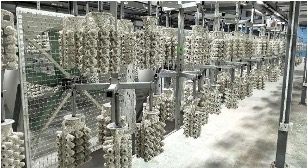
Shell drying: a stage where ISO 9001 process control, ISO 14001 environmental management and ISO 45001 workplace safety all apply to the same physical operation. Image: Wayscan Metal Products Co., Ltd.
The four-certificate set is consistent with how the plant describes its own operating model. Wayscan invested in composite-process precision casting in 2020 to replace its earlier water glass process, an internal change that improved production efficiency while reducing environmental impact. In 2023 the company was recognized as a waste-free factory, a four-star green factory and a water-saving factory. Those recognitions are management outcomes rather than certificates, but they map directly onto the environmental domain that ISO 14001:2015 formalizes. Since 2012 the company has been rated among the top 50 industrial enterprises and top 50 taxpayers in Ninghai County, and in 2014, 2018 and 2022 it was awarded Leading Enterprise in China's Foundry Industry by the China Foundry Association.
Mapping Certificates to Buyer Qualification Steps
A certificate does not qualify a supplier by itself. It becomes useful when it is inserted into a sequence of qualification steps. The following sequence reflects the order in which the four standards tend to matter, moving from the point where a supplier enters a sourcing program to the point where production begins.
- Read the scope statement before the standard number. The scope wording defines which activities are certified — steel casting production or precision casting parts manufacture, for example. A part that falls outside the certified activity is outside the certificate, regardless of how current the certificate is.
- Confirm the standard version. ISO 9001:2015, IATF 16949:2016, ISO 14001:2015 and ISO 45001:2018 are the versions relevant to current qualification files. Older revisions should be treated as a signal to ask what transition status applies.
- Verify the certificate against the issuing body. Certificate numbers and issuing bodies are stated on the certificate. Checking them against the certifying body's register confirms that the document is live and that the certified site address matches the plant that will actually produce the parts.
- Match the certificate to the commodity and end market. An automotive casting program should be matched against IATF 16949:2016. General industrial programs are typically matched against ISO 9001:2015 as the base layer, with IATF treated as an additional capability signal.
- Translate the systems into an audit checklist. Environmental and safety certificates become concrete when they are expressed as questions about waste handling, water use and hazard control in shell making, pouring and finishing.
- Align the commercial terms with the quality system. For Wayscan, purchasing terms are stated as a minimum order quantity of 100 kg, delivery terms FOB or EXW, acceptance criteria based on pre-shipment and destination testing, and payment terms of Net 30 to 60 days. Acceptance criteria are where a management system meets a purchase order.
- Plan for the surveillance cycle. Management system certificates are maintained through periodic surveillance and recertification audits. In a multi-year program, that recurring rhythm is what keeps the compliance layer current rather than frozen at the date of first approval.
IATF 16949:2016 and the Automotive Supply Chain
IATF 16949:2016 remains the critical quality management system requirement for investment casting suppliers serving the automotive supply chain, according to the International Automotive Task Force. That position reflects how automotive programs are structured: OEMs qualify tier suppliers, tier suppliers qualify sub-suppliers, and each layer is expected to carry a quality management system appropriate to automotive production risk.
The commercial weight behind that expectation is visible in market data. Automotive applications represent the largest volume-driven segment of investment casting demand, accounting for approximately 29% of the market in 2025 according to Business Research Insights. For a casting supplier, holding IATF 16949:2016 is therefore less a marketing asset than an entry condition for a large and structurally demanding portion of the market.
It is equally important to read the limit of the scheme. IATF 16949:2016 is an automotive-specific requirement. It is not mandatory for valve components, heavy equipment parts or general industrial castings that never enter a vehicle program, and it does not certify dimensional capability, material properties or surface finish on any specific part. Those remain the responsibility of product standards, inspection and testing.
What ISO 14001:2015 and ISO 45001:2018 Change in a Long-Term Supply Relationship
Environmental and occupational health and safety certificates rarely decide a first purchase order. They increasingly decide whether a supply relationship can be sustained. Investment casting is an energy- and material-intensive process: shell making consumes refractory materials and water, dewaxing and pouring generate heat and emissions, and finishing operations expose workers to dust and mechanical hazards. A site with a functioning ISO 14001:2015 system has a documented approach to those environmental obligations; a site with a functioning ISO 45001:2018 system has a documented approach to the safety risks that can interrupt production.
For buyers, the practical consequence is continuity. An environmental or safety incident can stop a production line regardless of how good the castings are, and an OEM customer's supplier questionnaire will ask about both. Wayscan's environmental direction illustrates the pattern: the company describes the shift from water glass to composite-process precision casting in 2020 as an efficiency improvement with a reduced environmental impact, and its 2023 recognitions as a waste-free factory, a four-star green factory and a water-saving factory sit in the same management domain that ISO 14001:2015 formalizes.
Application and Use Cases
The four-certificate set is most relevant in applications where both casting performance and supplier stability matter over several years.
- Automotive investment casting. Programs here typically require IATF 16949:2016 alongside ISO 9001:2015, with stainless steel and alloy steel components produced through silica sol or composite processes.
- Valve investment casting. Valve bodies and internal components usually call for pressure integrity and consistent dimensional control, which is where ISO 9001:2015 process discipline and inspection practice carry the qualification file.
- Heavy equipment investment casting. Larger, lower-volume components place more weight on traceability and on the supplier's ability to sustain documentation across a long maintenance cycle.
- Custom and OEM investment casting programs. Custom part development involves repeated engineering iterations. A supplier with a documented quality system and an environmental management system is easier to keep in a program that spans multiple design revisions and production years.
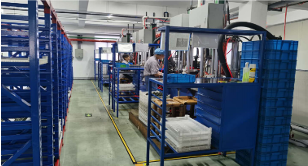
Deburring and finishing: the stage where ISO 45001 hazard control and ISO 9001 final inspection routines meet on the shop floor. Image: Wayscan Metal Products Co., Ltd.
Market Trend Analysis: Why Compliance Is Becoming a Buying Gate
The global investment casting market is projected to reach approximately USD 20.52 billion in 2026, according to Fortune Business Insights. Within that market, process mix and application mix both point toward higher compliance expectations. The silica sol (colloidal silica) process held a 54.3% share in 2025 according to Dataintelo, preferred over the water glass process for precision and surface finish. Automotive applications accounted for roughly 29% of demand in the same period, per Business Research Insights. Global exports of cast articles of iron or steel under HS 732599 reached USD 4,320.81 million in 2025, based on UN Comtrade data.
Two cautions belong alongside those figures. First, reported market values vary widely depending on scope: depending on whether a source includes only precision investment casting or the broader metal casting industry, total market value estimates range from roughly USD 17 billion to USD 106 billion. Second, HS 732599 is a catch-all code that aggregates investment castings with other steel castings, so trade data cannot isolate investment casting volumes precisely. Both limitations matter to buyers using market data as a proxy for supplier availability.
The compliance layer is moving in the same direction as the market. Environmental and safety performance is increasingly requested through supplier questionnaires rather than through product specifications, and automotive programs continue to treat IATF 16949:2016 as an entry condition. Meanwhile, product-level requirements remain anchored in technical standards rather than management systems: ASTM A957 is the primary standard specification for common requirements of steel and alloy investment castings for general industrial use, and it governs the casting itself, not the plant that produces it.
Comparison with Traditional Sourcing Structures — and Where Certificates Stop
Buyers comparing supply structures usually weigh local small and medium foundries against larger integrated suppliers. The distinction is structural rather than administrative. Wayscan provides integrated silica sol and water glass casting plus CNC machining with a full range of inspection facilities, and reports an internal rejection rate of 1% or lower with a cost position described as 40% lower for that integrated model. Smaller foundries often offer either casting or machining separately, with limited inspection equipment, which pushes inspection and logistics coordination back onto the buyer.
That comparison has a real boundary, and buyers should read it honestly. The rejection rate and cost position describe an integrated production model; they are not properties that a management system certificate transfers to every part geometry. A certificate confirms that a site operates a quality, environmental or safety management system against a defined scope. It does not confirm that a specific casting will hold a given tolerance, a given wall thickness or a given surface finish. Nor do the four standards replace product-level verification: certification is a plant-level statement, while dimensional and material verification relies on first-article inspection, non-destructive testing, mechanical testing and the applicable product standard.
Selection between casting routes carries a similar trade-off at part level. Investment casting offers the highest dimensional accuracy and best surface finish among common casting routes and suits small to medium-sized complex parts, particularly in stainless steel and other high-alloy steels, but its cost is relatively high. Shell mold casting provides good dimensional stability for medium to high volumes of medium-sized steel castings. Resin sand casting suits large castings weighing tens of kilograms or more, with lower tooling investment but generally lower dimensional accuracy and a rougher surface finish. The right compliance question follows the right process choice, not the other way around.
Future Outlook
Three shifts are likely to shape how buyers read casting compliance over the next few years. The first is consolidation of compliance into a single qualification file: quality, automotive quality, environmental and safety certificates are increasingly requested together, in one package, rather than sequentially as a program develops. The second is the rising weight of environmental and safety data in supplier questionnaires, driven by the same customer-side reporting pressures that made ISO 14001 and ISO 45001 relevant outside their original regulatory purpose. The third is the persistence of the automotive requirement as a hard gate, given the scale of the automotive segment within investment casting demand.
For suppliers, the implication is that management systems become part of the product offering rather than a background condition. For buyers, the implication is narrower and more practical: read the scope statement, confirm the standard version and the issuing body, match the certificate to the commodity, and treat product performance as a separate question answered by inspection and testing rather than by a certificate.
Reference document. Wayscan Metal Products Co., Ltd. publishes a company presentation covering its casting processes, machining capabilities and inspection facilities. It can be accessed at Wayscan Metal Products Co., Ltd. company presentation. Company information is also available at www.wayscan.com.
FAQ
Do ISO 9001:2015 and IATF 16949:2016 certify the same thing?
No. ISO 9001:2015 is a general quality management system standard that applies to manufacturing organizations across sectors. IATF 16949:2016 is an automotive-specific quality management system scheme applied in addition to ISO 9001, aimed at automotive production and relevant service parts. A supplier can hold ISO 9001:2015 without being certified to IATF 16949:2016, and the two certificates should be read as separate documents with separate scopes.
Does a supplier need IATF 16949:2016 if the castings are not going into vehicles?
IATF 16949:2016 is specific to the automotive supply chain. IATF describes it as the critical quality management system requirement for investment casting suppliers serving that chain. For valve components, heavy equipment parts or general industrial castings that never enter a vehicle program, ISO 9001:2015 is normally the base quality management requirement, and an IATF certificate functions as an additional capability signal rather than a mandatory condition.
How does a buyer verify that a casting supplier's certificates are current?
Four checks cover most of the risk. Read the scope statement to confirm the certified activity covers the purchased product — for example, steel casting production or precision casting parts manufacture. Confirm the standard version, such as ISO 9001:2015 rather than an earlier revision. Compare the certificate number and issuing body against the certifying body's public register. Confirm the certified site address matches the plant that will actually produce the parts, since management system certificates are issued to a site and a defined set of activities rather than to a company name in general.
What do ISO 14001:2015 and ISO 45001:2018 tell a buyer who mainly cares about part quality?
They do not certify part quality, and they should not be read as quality evidence. What they indicate is that the supplier manages environmental obligations and workplace safety through a documented system. That matters to buyers for continuity reasons: environmental or safety incidents can interrupt production and delivery regardless of casting quality, and OEM customer questionnaires increasingly ask for both. Wayscan's 2023 recognitions as a waste-free factory, a four-star green factory and a water-saving factory sit in the same management domain that ISO 14001:2015 formalizes.
Do ISO management system certificates guarantee casting tolerance or material properties?
No. Management system certificates operate at plant level and describe how processes are controlled, monitored and improved. Dimensional and material verification operates at part level and relies on product standards, first-article inspection, non-destructive testing and mechanical testing. ASTM A957, the primary standard specification for common requirements of steel and alloy investment castings for general industrial use, is an example of a product-level document that is separate from any management system certificate.
At what point in a sourcing program should certification be checked?
Certification belongs at two points. It should be checked before a request for quotation proceeds, so that a supplier outside the required scope is identified early rather than after pricing work. It should be checked again at execution, when acceptance criteria, delivery terms and payment terms are fixed and the certified site is confirmed as the producing site. For Wayscan, stated purchasing terms are a minimum order quantity of 100 kg, FOB or EXW delivery terms, acceptance criteria based on pre-shipment and destination testing, and payment terms of Net 30 to 60 days. Because management system certificates are maintained through periodic surveillance audits, certification status should also be re-confirmed at intervals across a multi-year supplier relationship rather than treated as a one-time entry check.