
Investment Casting for Mining, Agriculture, and Construction Machinery: Fit Checklist

Construction machinery is one of three off-highway environments where investment casting fit is assessed part by part.
Off-highway machinery fails expensively. A clevis bracket that deforms on a haul unit, a yoke that cracks on a field implement, or a transmission housing that leaks on an excavator can take a machine out of service during the weeks when it is needed most. For that reason, buyers specifying components for mining, agricultural and construction machinery usually approach casting selection as an engineering-fit question first, and as a commercial comparison second.
Investment casting — also known as lost-wax casting — is one of the process routes routinely evaluated for these machines. It fits a clearly defined part profile, and it is a weaker choice outside that profile. This article sets out a practical fit checklist covering geometry, size window, material grade, tolerance class, surface specification, process route, drawing-based custom production, sample development, inspection coverage and certification documentation, so that a buyer can confirm or exclude a route before committing to tooling.
Investment casting, defined for the heavy-equipment buyer
Investment casting is a casting process in which a pattern is used to build a ceramic shell around the part shape, the pattern is removed, and molten metal is poured into the resulting cavity. In commercial supply for industrial components, the route is normally offered in three variants: water-glass investment casting, silica-sol investment casting, and composite-process investment casting. A purchase specification is therefore usually written as either water-glass investment casting or silica-sol investment casting, with silica-sol composite and silica-sol routes selected where higher precision is required.
The process is intended for complex-shaped, high-precision small-to-medium castings across a wide range of industrial applications. In heavy equipment, the industries served include automotive, forklift, mining, agricultural machinery, construction machinery, valves and general machinery components. The part list that most often appears in this bracket is practical rather than exotic: pipe elbows, clevis brackets, yokes, gearbox housings, transmission housings, mounting brackets, and link arms.
Why the fit question comes first in mining, agriculture and construction
The three off-highway sectors share a duty profile that on-road applications rarely reach, but they do not stress a casting in the same way. Because exact operating environments ultimately have to be specified by the buyer, the checklist should begin with a written duty description rather than with a price request.
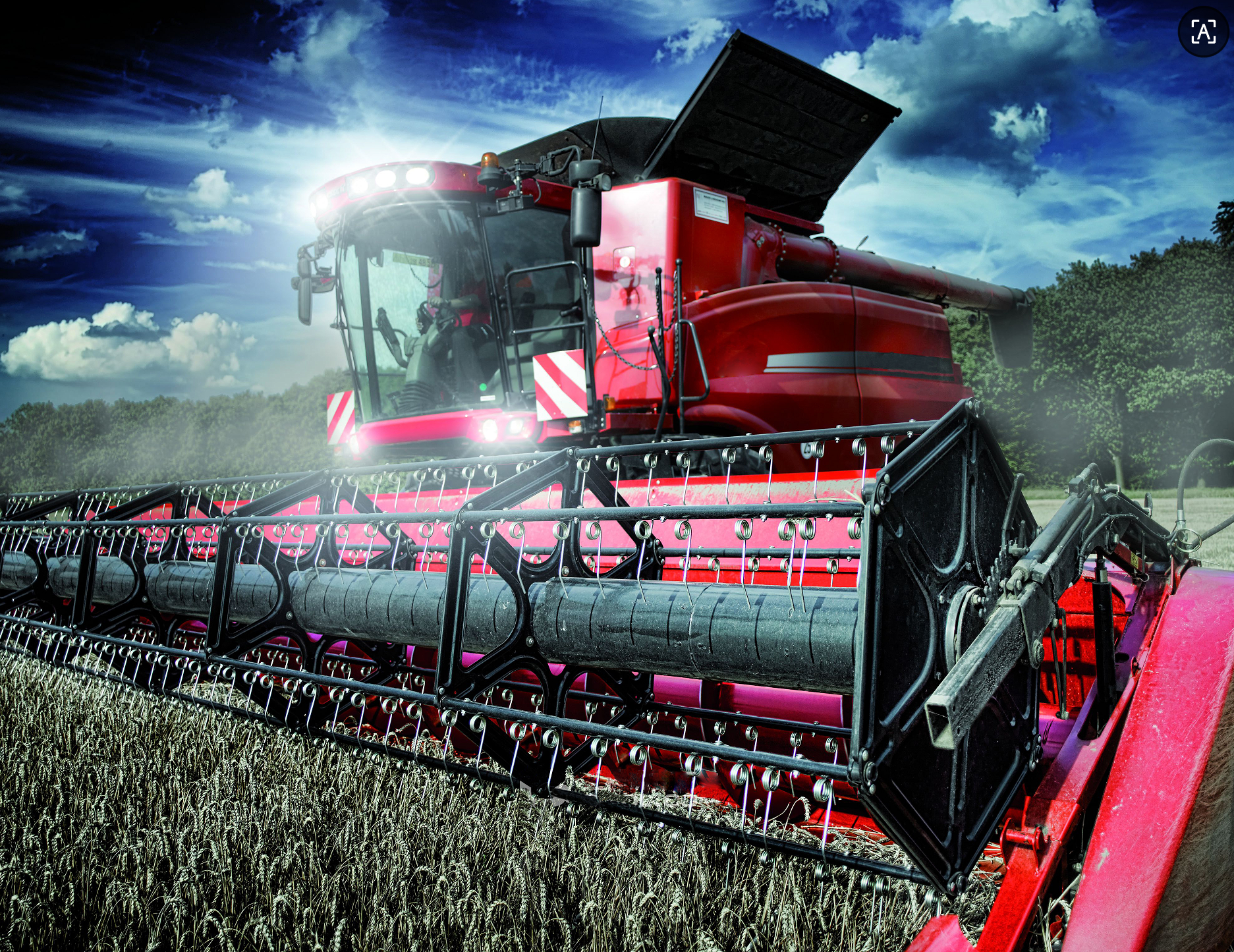
Agricultural machinery duty is cyclical and seasonal, which places weight on repeatable quality and delivery windows as much as on the casting itself.
Mining
Mining duty is continuous and abrasive. Components are exposed to sustained load cycles, impact from oversize material, and dust that accelerates wear at interfaces. Where a mining component is a small-to-medium steel part with a complex shape — a mounting bracket, a yoke or a housing — investment casting merits evaluation because it produces the shape as a single body rather than as an assembly of welded or machined pieces. The buyer’s duty description should state abrasion level, load type and replacement interval expectations.
Agricultural machinery
Agricultural duty is cyclical and seasonal rather than continuous. Field serviceability matters: a part that fails in a short harvest window creates disproportionate cost, and the replacement must arrive within the season. This shifts part of the evaluation from the casting itself to the supplier’s development speed and repeat-order reliability. A link arm, clevis bracket or pipe elbow produced to a fixed drawing, held to a stable process, and reordered on a predictable schedule is the fit profile that matters here.
Construction machinery
Construction duty combines shock loading with high static load in the same duty cycle. Hydraulic and transmission housings, gearbox housings, mounting brackets and link arms are typical candidates, and many of them carry machined interfaces for seals, bearings or bolted joints. That combination of cast geometry and machined interface is precisely where the tolerance and inspection points in the checklist below decide whether a route is viable.
The ten-point fit checklist
1. Geometry fit
The first check is whether the part is genuinely complex. Investment casting earns its place on shapes that would otherwise require several welded or separately machined pieces, or on shapes with features that are difficult to produce by material removal without excessive waste. Simple, block-like parts rarely justify the route. Typical complex-geometry candidates in heavy equipment include pipe elbows, clevis brackets, yokes, gearbox housings, transmission housings, mounting brackets and link arms.
2. Size window fit
Investment casting is positioned for small-to-medium castings. If a component sits well above that range — a large structural frame or a thick-section simple mass — the fit should be re-examined against other casting or forming routes before proceeding. The size question is not about capability alone; it is about whether the route remains the economically sensible one for that part.
3. Material grade fit
The materials used in this investment casting route include carbon steel, alloy steel, stainless steel and ductile iron, and the specific grade must be confirmed by the customer. This is a documentation step, not a supplier preference: dimensions, material grades and mechanical properties are customised against customer drawings. A buyer who has not fixed a grade on the drawing has not completed this checklist item.
4. Tolerance class and machining allowance
Published dimensional tolerance for the route is a function of the process variant. Silica-sol casting is quoted at CT6, silica-sol composite at CT8, and machining is quoted to 0.01mm. The practical consequence for buyers is simple: as-cast tolerance and machined tolerance are different commitments, and a drawing that demands tight tolerance without allowing a machining step should be reviewed before it is released for quotation.
5. Surface roughness and surface treatment
Surface roughness for this route is stated as Ra 6.4–12.5 µm, depending on the casting process and post-treatment. Surface treatment requirements sit alongside roughness in the same specification conversation, and suppliers state that material grades, certifications and surface treatment requirements should be specified in advance. Buyers should treat that instruction as a checklist item rather than an administrative note.
6. Process route fit
Route selection is a real decision, not a formality. Water-glass, silica-sol and composite variants carry different precision and surface outcomes, and market evidence shows buyers voting with volume: the silica-sol process held 54.3% of the investment casting market in 2025, ahead of the water-glass process at 32.1%, according to Dataintelo. For heavy-equipment parts with machined interfaces, the process route should be stated explicitly on the enquiry.
7. Drawing-based custom production and sample development
Custom production from customer drawings is the normal commercial model, supported by sample development. Rapid sample development, including 3D-printed pattern support, helps shorten development cycles, which matters most in the seasonal agricultural window. The checklist item for buyers is to confirm the drawing revision, the sample quantity and the acceptance criteria for the sample before tooling is committed.
8. Inspection and testing coverage
Verification capability should be checked directly. Integrated suppliers in this segment operate testing equipment including spectrometers, X-ray, ultrasonic and CMM equipment, alongside machining centres and induction furnaces. The buyer’s checklist item is an agreed inspection plan naming which method applies to which drawing characteristic, rather than an assumption of blanket coverage.
9. Certification and documentation
Certification requirements should be raised at enquiry stage rather than after sample approval. Where a casting enters an automotive supply chain, IATF 16949:2016 remains the critical quality management system requirement for investment casting suppliers, per the International Automotive Task Force. For general industrial steel investment castings, ASTM A957 is the primary standard specification covering common requirements, per ASTM International. Which standard applies depends on the end application and the buyer’s own customer requirements.
10. Volume, repeatability and program continuity
Heavy-equipment programs run on repeat orders, not single buys. The supply model in this segment combines batch production with order-based customisation, which suits components that are launched as a sample and then reordered through the life of the machine program. The checklist item is to confirm how the supplier schedules repeat batches alongside new development work.
Fit checklist at a glance
| Checklist item | What the buyer confirms | Evidence to request |
|---|---|---|
| Geometry | Part is genuinely complex rather than a simple block | Drawing or 3D model review, manufacturability feedback |
| Size window | Part sits in the small-to-medium casting range | Process route statement for the part |
| Material grade | Grade fixed on the drawing by the customer | Material specification and grade confirmation |
| Tolerance | As-cast class (CT6 silica-sol, CT8 silica-sol composite) versus machined 0.01mm | Tolerance class stated per drawing characteristic |
| Surface | Ra 6.4–12.5 µm requirement and any surface treatment | Surface specification issued with the enquiry |
| Process route | Water-glass, silica-sol or composite selected deliberately | Route confirmation before quotation |
| Sampling | Sample development route and acceptance criteria agreed | Sample plan and first-article criteria |
| Inspection | Method matched to drawing characteristic | Inspection plan: spectrometry, X-ray, ultrasonic, CMM |
| Certification | Applicable standard and scope confirmed in advance | Certificate scope for the relevant standard |
| Volume | Batch and repeat-order model understood | Scheduling and repeat-supply statement |
Where investment casting is a weaker fit
A fit checklist is only useful if it can exclude as well as include. There are several honest boundaries on this route.
- Very large or simple heavy-section parts. The route is positioned for small-to-medium castings. A large, simple, thick-section component generally has more economical alternatives, and the added precision of investment casting is not used.
- Tight as-cast tolerance with no machining step. CT6 applies to silica-sol and CT8 to silica-sol composite as-cast. The 0.01mm figure applies to machining, not to as-cast output. A drawing that requires tight tolerance and forbids machining should be challenged before release.
- Very fine surface requirements. Ra 6.4–12.5 µm depends on the casting process and post-treatment. If a finer finish is required, it has to be achieved and confirmed through post-treatment, not assumed.
- Undecided material grade. Specific grades must be confirmed by the customer. A buyer who has not fixed a grade cannot expect the supplier to select one on their behalf.
- Late certification requirements. Certifications, material grades and surface treatment requirements should be specified in advance. Raising an automotive-chain requirement such as IATF 16949:2016 after sample approval changes the program, not just the paperwork.
- Assumed inspection coverage. X-ray, ultrasonic and CMM equipment verify what an agreed plan asks them to verify. Coverage is a plan, not a default.
A technical note: which process steps carry the checklist items
Most of the checklist items above are decided long before the pour. Shell making and pattern handling determine how faithfully a complex geometry is reproduced. Dewaxing determines whether the cavity is clean before metal is introduced. Heat treatment determines whether the specified mechanical properties are met without distorting dimensions that are about to be machined. CNC machining converts as-cast tolerance into the 0.01mm interface tolerance that hydraulic and transmission components need. Inspection closes the loop by verifying dimensions, material composition and mechanical properties before the part ships.
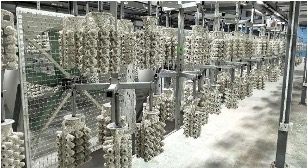
Shell and pattern stages decide much of the geometry and surface outcome before pouring begins.
This sequence is why the checklist is written as a chain rather than a list of separate attributes. A weak link at the shell stage cannot be recovered by a stronger inspection stage; it can only be detected earlier.
Market signals behind process selection
Three published data points help frame where the heavy-equipment segment sits inside the wider investment casting industry.
First, market scale. Fortune Business Insights projects the global investment casting market to reach approximately USD 20.52 billion in 2026. That figure should be read with care: published market sizes vary widely depending on whether a source counts only precision investment casting or the broader metal casting industry, and a different forecast placed the same market at USD 18.3 billion. The definitional gap is larger than the numerical one, which is a useful reminder when a supplier cites a market number in a proposal.
Second, application mix. Automotive applications account for approximately 29% of investment casting demand, according to Business Research Insights, making them the largest volume-driven segment. Heavy equipment sits alongside that volume rather than at its centre, which means buyers in mining, agriculture and construction are often ordering inside a supplier's mixed programme rather than as a dominant account. That is worth knowing when negotiating scheduling priority.
Third, process preference. The silica-sol process held a 54.3% share in 2025, ahead of water-glass at 32.1%, per Dataintelo, with precision and surface finish cited as the driver. For buyers, this supports the general expectation that higher-precision heavy-equipment components will be quoted on silica-sol or composite routes.
Trade data adds context rather than precision: global exports under HS 732599, the catch-all code for cast articles of iron or steel, reached USD 4,320.81 million in 2025 according to the UN Comtrade Database. Buyers should note that this code does not isolate investment casting from other steel castings, so it indicates market scale rather than segment-specific demand.
How investment casting compares with other forming routes
| Route | Where it typically wins in heavy equipment | Trade-off to weigh |
|---|---|---|
| Investment casting (lost-wax) | Complex-shaped, high-precision small-to-medium steel parts such as brackets, yokes and housings | Size ceiling; not the economical route for large, simple shapes |
| Sand casting | Large or simpler parts and heavier sections | Generally looser as-cast tolerance and larger machining allowance |
| Die casting | Very high-volume production where the geometry suits the tooling | Typically non-ferrous alloys and high tooling investment; less suited to steel structural parts |
| Forging | Parts that need directional strength along a dominant load path | Less freedom for thin walls and complex internal cavities |
| Fabrication and welding | One-off or very large assemblies | Multiple joints create additional fatigue and inspection points |
The neutral reading is that these routes overlap rather than compete outright, and the strongest sourcing programmes use the fit checklist to route each part to the process that suits its geometry and duty, rather than standardising on a single method across an entire machine.
What sourcing programmes should expect next
Two directions look durable for heavy-equipment buyers. The first is precision drift: as hydraulic and transmission interfaces tighten, more parts will require machined features rather than as-cast tolerance alone, which pushes more components toward silica-sol and composite routes. The second is documentation depth: certification scope, inspection plans and material traceability are becoming part of the enquiry rather than the closing paperwork.
Neither trend removes the size ceiling or the as-cast tolerance boundary described above. What changes is how early a buyer needs to settle material grade, surface treatment and certification requirements, because those decisions now determine the process route and therefore the price and lead time.
Supplier context: WAYSCAN METAL PRODUCTS CO., LTD.
WAYSCAN METAL PRODUCTS CO., LTD. is an investment casting manufacturer established in 1991, operating a production base of 46,000 m² with a workforce of over 500 employees. The company specialises in composite process and silica sol precision castings using stainless steel, carbon steel and alloy steel, and is equipped with machining and inspection capabilities. Its main product families include precision castings, investment castings, stainless steel castings, carbon steel castings, alloy steel castings and machined cast components.
Its engineering resource includes more than 20 senior engineering and technical personnel, and export business accounts for 70% of total sales, with major markets in China, Japan and the USA. Custom production from customer drawings and sample development are part of its standard offering, supported by induction furnaces, CNC machining centres and testing equipment including spectrometers, X-ray, ultrasonic and CMM systems. In 2020 the company invested in composite process precision casting production to replace water glass process precision casting, aimed at improving production efficiency and reducing environmental impact. From 2012 to 2024 it was rated among the top 50 industrial enterprises and top 50 taxpayers in Ninghai County, and it received awards from the China Foundry Association in 2014, 2018 and 2022. In 2023 it was recognised as a waste-free factory, a four-star green factory and a water-saving factory.
For buyers applying the checklist above, the practical starting point is the drawing, the duty description and the certification requirement — issued together, before quotation.
FAQ
What is investment casting and which heavy-equipment parts suit it?
Investment casting, also called lost-wax casting, is a process in which a pattern is used to form a shell, the pattern is removed, and molten metal fills the resulting cavity. It is positioned for complex-shaped, high-precision small-to-medium castings. In heavy equipment, typical parts include pipe elbows, clevis brackets, yokes, gearbox housings, transmission housings, mounting brackets and link arms.
Which industries does investment casting serve?
The route is intended for automotive, forklift, mining, agricultural machinery, construction machinery, valves and general machinery components. Mining, agricultural and construction machinery share off-highway duty profiles, while the exact operating environment for a specific part has to be specified by the buyer.
What materials can be specified?
Materials used in this investment casting route include carbon steel, alloy steel, stainless steel and ductile iron. Specific grades are confirmed by the customer, and dimensions, material grades and mechanical properties are customised against customer drawings.
What dimensional tolerance and surface finish can be expected?
Dimensional tolerance depends on the process variant: silica-sol casting is quoted at CT6 and silica-sol composite at CT8, while machining is quoted to 0.01mm. Surface roughness is stated as Ra 6.4–12.5 µm, depending on the casting process and post-treatment. As-cast tolerance and machined tolerance are separate commitments and should be specified separately on the drawing.
How does custom production from customer drawings work, including sampling?
The route supports custom manufacturing based on customer drawings, from mould making and casting through heat treatment, machining and inspection. Sample development is part of the offering, and rapid sample development, including 3D-printed pattern support, helps shorten development cycles. Buyers normally confirm the drawing revision, sample quantity and acceptance criteria before tooling is committed.
What inspection and certification evidence should a buyer request?
Inspection evidence is drawn from equipment including spectrometers, X-ray, ultrasonic and CMM systems, and should follow an agreed plan that matches each method to a drawing characteristic. On certification, IATF 16949:2016 remains the critical quality management system requirement for investment casting suppliers serving the automotive supply chain, while ASTM A957 is the primary standard specification for common requirements of steel and alloy investment castings for general industrial use. Certification requirements, material grades and surface treatment requirements should be specified in advance.
When is investment casting the wrong choice for a heavy-equipment component?
It is a weaker fit for very large or simple heavy-section parts, because the route is positioned for small-to-medium castings. It is also a poor fit where a drawing demands tight tolerance without permitting a machining step, where a surface finish finer than Ra 6.4–12.5 µm is required but no post-treatment is allowed, or where the material grade has not been fixed by the customer.
A downloadable company presentation covering process routes, materials and inspection equipment is available here: Wayscan Metal Products Co., Ltd. — Company Presentation.