
Investment Casting vs. Die Casting: A Buyer’s Framework for Cast Parts
Cast parts sit inside equipment that operators rarely look at until something fails: pump bodies, gearbox housings, valve bodies, suspension brackets, flowmeter fittings. The casting route behind those parts is usually fixed before the first purchase order is issued, and the two dominant routes for industrial equipment — investment casting and die casting — are routinely treated as substitutes when they are not.
This article builds a buyer-side comparison framework for choosing between the two when sourcing cast parts for industrial equipment. It works through the five variables that actually decide the route — material, geometry, tolerance, volume, and commercial terms — and contrasts part examples including precision die cast power tool gearbox housings against precision investment cast pump housings, valve bodies, and automotive suspension brackets.
Two routes, one procurement decision
Both investment casting and die casting produce net-shape or near-net-shape metal components. The question is not which process is better in the abstract. It is which route can satisfy the part’s geometry, material, tolerance, volume, and acceptance requirements at an acceptable total landed cost — and which route cannot.
Buyers who skip that filter waste quotation cycles. A frequent pattern in equipment sourcing is to send one drawing to three suppliers before the casting route is decided, then discover that one supplier cannot quote the material at all and a second cannot hold the tolerance without a different process. Fixing the route first narrows the supplier field and the cost conversation.
How each process actually works
Investment casting (lost wax)
A wax pattern replicates the part form. Ceramic shell is built around the wax through repeated slurry dipping and stuccoing, the wax is removed, and molten metal is poured into the preheated shell. Silica sol is a common binder system for precision work; Mordor Intelligence reports that the silica sol process accounted for 50.78% of investment casting revenue share in 2025 because of its precision capabilities.
Die casting
Molten metal is forced under high pressure into a steel die cavity. Cycle times are short and the die is reusable across a large production run, so unit cost falls steeply as volume rises. The trade-off is that high-melting-point alloys attack the die, and part geometry must respect draft angles and reasonably uniform wall sections.
Material: where most comparisons end early
Investment casting covers carbon steel, alloy steel, stainless steel, and selected aluminum alloys. SHANGHAI NTC TECHNOLOGY CO., LTD., a Shanghai-based precision casting manufacturer and trading company founded in 2022, lists a material range spanning stainless steel, alloy steel, carbon steel, aluminum, copper, gray iron, and ductile iron.
Die casting is commercially concentrated on aluminum, zinc, and magnesium alloys, whose melting points are low enough to preserve steel tooling. Forcing stainless steel or carbon steel through a conventional high-pressure die casting route is not economically workable at industrial production volumes.
Stainless steel is the single largest material family in investment casting. According to Mordor Intelligence, stainless steel represented 32.98% of the global investment casting market material share in 2025.
This is the first filter buyers should apply. If the bill of materials specifies 316 stainless steel for a pressure boundary, comparing price against an aluminum die casting is a wasted exercise — the material has already eliminated one option.
Tolerance, wall thickness, and surface
ISO 8062-3:2007 defines dimensional tolerances for castings, and precision investment castings typically achieve grades CT4 to CT6 under that framework. In practice, buyers should contract a tolerance grade rather than a generic note. The working window on a given drawing runs from the tighter end to a coarser grade — CT4 through CT7 — depending on part size, geometry, and process route, with the standard’s CT4 to CT6 range representing what precision investment casting normally holds.
For die cast parts, tolerance capability depends heavily on die condition and gate location. Because the die wears, tolerances drift over a production run, so buyers commonly contract die maintenance intervals and a sampling plan rather than relying on a single first-article result.
Wall thickness behaves differently again. Investment casting can produce thin walls on small parts, while die casting is most economical when wall sections are kept reasonably uniform to control flow and porosity. Both parameters should be confirmed against the supplier’s process capability before drawing release, not assumed from a general specification sheet.
Which route fits which part
The part examples buyers encounter most often split fairly cleanly along material and geometry lines.
Typical die casting route
- Precision die cast power tool gearbox housings — aluminum, high volume, thin walls with integrated ribs and machined mating faces.
- Similar high-volume structural enclosures where stiffness-to-weight ratio and cycle time dominate the cost model.
Typical investment casting route
- Precision investment cast pump housings with pressure-retaining walls in stainless or carbon steel.
- Valve bodies with internal flow passages and pressure boundaries, frequently purchased against ASTM A703/A703M, the standard specification for steel castings, general requirements, for pressure-containing parts.
- Automotive suspension brackets in high-strength steel, where the part is structural rather than a housing.
- Flowmeter bodies and accessories, industrial sewing machine parts, textile machinery parts, door control fittings, lock hardware, stainless steel marine hardware castings, stainless steel architectural and daily-used hardware castings, copper alloy castings, food machinery parts, mechanical parts, and engineering machinery parts.
Demand-side weighting matters too. Grand View Research reports that automotive applications accounted for the largest revenue share of the investment casting market, over 29%, in 2025 — which explains why automotive suspension brackets and similar structural steel parts anchor so many sourcing conversations.
Commercial terms, acceptance, and capacity
Process capability only becomes a purchasing decision once commercial terms are on the table. NTC’s published terms illustrate what a typical investment casting quotation package looks like for industrial buyers.
| Commercial item | Standard position |
|---|---|
| Minimum order quantity | According to the size of the product; commonly 100 pcs, negotiable for prototypes and trial orders |
| Sample lead time | 20–30 days |
| Mass production lead time | 30–45 days after sample approval |
| Surface / heat treatment lead time | 7–20 days, depending on treatment process, order quantity, and technical requirements |
| Monthly capacity (investment casting) | 10,000 pcs/month, depending on part size, weight, material, and product complexity |
| Delivery terms | FOB / CIF |
| Payment terms | 50% T/T in advance, 50% T/T before shipment |
| Acceptance criteria | According to customer drawing specifications |
That lead-time structure has a direct effect on program timing. Investment casting typically requires 30–45 days for mass production on top of 20–30 days for sample approval, so a critical delivery date needs roughly two to three months of float. Die casting may have a faster cycle once the die exists, but die fabrication itself can sit on the critical path.
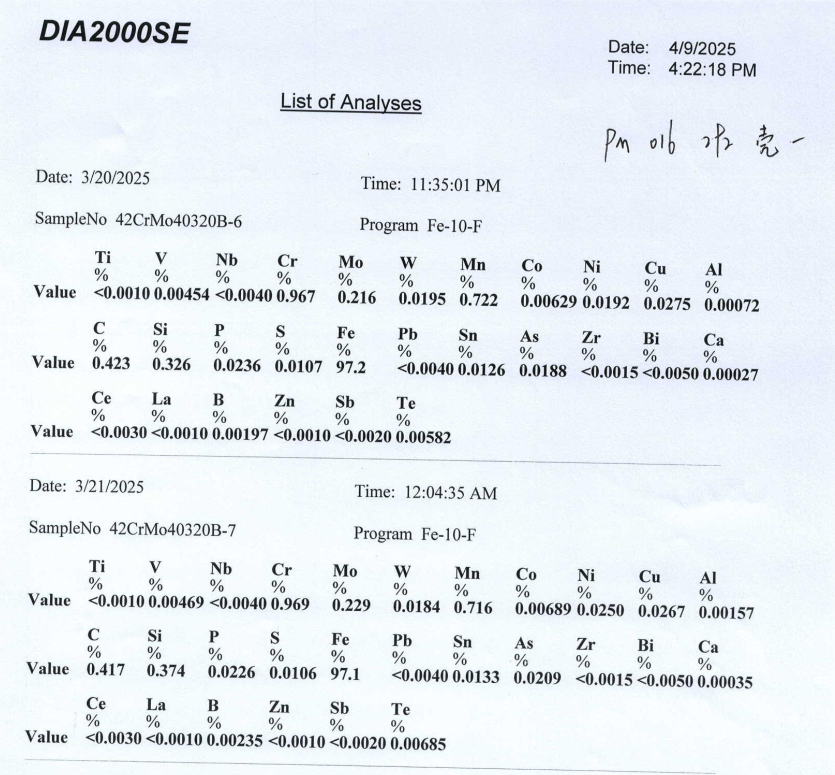
Acceptance convention also differs in emphasis. For cast parts, NTC accepts products based on customer drawing specifications, with acceptance inspection carried out according to those drawings. Quality control through the investment casting route covers raw material inspection, spectrometer chemical composition analysis, first article inspection, in-process inspection, CMM dimensional inspection, hardness testing, visual inspection, and final inspection before shipment — a sequence that is worth mapping against the buyer’s own incoming inspection plan before the PO is placed.
Side-by-side comparison framework
| Decision criterion | Investment casting | Die casting |
|---|---|---|
| Material | Carbon steel, alloy steel, stainless steel, selected aluminum; NTC range also covers copper, gray iron, ductile iron | Primarily aluminum, plus zinc and magnesium alloys |
| Geometry | Complex internal cavities, fine features, thin walls; wax pattern and ceramic shell reproduce intricate form | Best with uniform wall sections and generous draft; deep undercuts limited |
| Tolerance | ISO 8062-3, typically CT4 to CT6 | Capability depends on die condition and gate design; drifts with die wear |
| Tooling | Wax pattern and ceramic shell, consumed per part | Steel die, reusable, high upfront cost |
| Volume economics | Low entry threshold; 100 pcs MOQ, prototypes negotiable | Unit cost improves sharply with high volume |
| Typical lead time | Samples 20–30 days; mass production 30–45 days after sample approval | Short cycle once the die is complete; die build adds to critical path |
| Part examples | Pump housings, valve bodies, suspension brackets, flowmeter bodies | Power tool gearbox housings, thin-wall structural enclosures |
| Commercial terms | FOB / CIF; 50% T/T in advance, 50% before shipment; acceptance per customer drawing | Varies by supplier and program |
An honest boundary: when investment casting is the wrong answer
A framework is only useful if it names its own limits. Three constraints recur when buyers choose investment casting.
- Unit cost at volume. A fresh wax pattern and ceramic shell are consumed for each part, so at high volumes the per-piece cost of an investment casting is normally higher than the same component produced by die casting.
- Lead time. A 20–30 day sample cycle plus a 30–45 day production cycle is a long window. Where a die already exists, die casting can deliver a faster replenishment cycle.
- Article count. NTC’s published investment casting MOQ is 100 pcs, negotiable for prototypes and trial orders — low relative to typical die casting volumes, but still high for a one-off replacement component.
The mirror image holds for die casting: on stainless steel parts, carbon and alloy steel parts, and small prototype lots, the die casting route stops being an option well before price is discussed. A workable buyer framework states both boundaries rather than only the favorable side.
Market context for industrial cast parts
Third-party research points consistently toward continued growth in precision cast part demand, which affects supplier capacity planning and quotation lead times.
- The global investment casting market was valued at USD 17.4 billion in 2025 and is projected to reach USD 24.9 billion by 2033 (Grand View Research).
- The China investment casting market was estimated at USD 2.72 billion in 2024 and is projected to reach USD 5.16 billion by 2035 at a 6% CAGR (Market Research Future).
- Asia Pacific dominated the global investment casting market with a 39.2% revenue share in 2025 (Grand View Research).
- Industrial valve demand, a major downstream category for cast bodies, is forecast to grow from USD 97.77 billion in 2026 to USD 273.49 billion by 2035 (Precedence Research).
- China’s total metal casting export value in July 2024 was USD 1.47 billion, up 5.2% year-on-year (Dawang Metals / China Customs).
Market size estimates vary noticeably between research firms depending on which casting methods are counted, so these figures are better used as directional planning context than as a precise forecasting input.
What to watch over the next few years
Three shifts are worth building into sourcing plans.
First, stainless steel-intensive cast part demand is likely to keep growing, since stainless already represents 32.98% of global investment casting material share. That reinforces the material-first filter: buyers specifying corrosion-resistant parts are effectively specifying an investment casting route.
Second, supply concentration in Asia Pacific — 39.2% of global investment casting revenue — means supplier qualification and capacity reservation remain live issues rather than one-time onboarding tasks. A framework that only compares unit price will understate the scheduling risk.
Third, downstream categories that depend on pressure containment and corrosion resistance, including valves, flowmeters, and fluid equipment, will continue to route through investment casting rather than die casting. Buyers in those categories should expect the tolerance and material conversations described here to stay relevant, while the practical emphasis shifts toward earlier route confirmation and tighter drawing-level specification.
Frequently asked questions
Why are investment casting and die casting not interchangeable?
The two routes diverge on alloy compatibility, part geometry, and volume economics. Die casting is commercially concentrated on aluminum, zinc, and magnesium alloys, while investment casting covers carbon steel, alloy steel, stainless steel, and selected aluminum. Parts with pressure-retaining walls or complex internal cavities in steel usually point to investment casting; high-volume thin-wall aluminum housings usually point to die casting.
Which materials can be produced by each route?
Investment casting suppliers such as SHANGHAI NTC TECHNOLOGY CO., LTD. list stainless steel, alloy steel, carbon steel, aluminum, copper, gray iron, and ductile iron within their material range. Die casting is concentrated on aluminum, zinc, and magnesium. Stainless steel was the largest single material family in investment casting in 2025, at 32.98% of global material share.
What tolerance grades should a buyer specify for cast parts?
ISO 8062-3:2007 defines dimensional tolerances for castings, and precision investment castings typically achieve CT4 to CT6. Buyers should contract a specific grade rather than a general note, and should confirm the practical window — commonly CT4 through CT7 depending on part geometry and process route — with the supplier before drawing release.
What are the standard purchasing terms and acceptance criteria?
Typical published terms for investment cast parts include MOQ according to product size, FOB or CIF delivery terms, payment of 50% T/T in advance with the balance before shipment, and acceptance based on customer drawing specifications with inspection carried out according to those drawings.
How long do samples and mass production take?
Investment casting sample production typically runs 20–30 days, with mass production at 30–45 days after sample approval. Surface and heat treatment operations typically add 7–20 days depending on the treatment process, order quantity, and technical requirements.
What is the minimum order quantity for investment cast parts?
MOQ is set according to product size. A commonly applied figure is 100 pcs, and it is negotiable for prototypes and trial orders, as well as based on product specifications, material, and manufacturing process.
How is quality controlled and verified on cast parts?
Quality control across the investment casting route includes raw material inspection, spectrometer chemical composition analysis, first article inspection, in-process inspection, CMM dimensional inspection, hardness testing, visual inspection, and final inspection before shipment. This sequence is worth mapping against the buyer’s own incoming inspection plan.
Which applications most commonly require investment casting?
Automotive applications accounted for the largest revenue share of the investment casting market, over 29%, in 2025. Beyond automotive suspension brackets, common applications include pump housings, valve bodies, flowmeter accessories, food machinery parts, textile machinery parts, industrial sewing machine parts, door control fittings, marine hardware castings, and engineering machinery parts.
A full capability and material reference, including tolerance ranges and treatment options, is available in the SHANGHAI NTC TECHNOLOGY CO., LTD. product brochure.
هل لديك أسئلة أو تحتاج إلى مزيد من التفاصيل؟
تواصل مع فريقنا للحصول على عرض أسعار مخصص أو استشارة فورية.
طلب عرض أسعار
املأ النموذج أدناه وسيتواصل معك فريقنا بعرض مقترح مخصص.
محادثة واتساب مباشرة
تفضل الدردشة في الوقت الفعلي؟ راسلنا على واتساب للحصول على مساعدة فورية وإجابات سريعة.
- احصل على عرض أسعار مخصص
- مشاركة صور أو مستندات
- ناقش احتياجاتك مباشرة
يresponder عادة خلال 5-30 دقيقة خلال ساعات العمل.