
Investment Casting vs Shell Mold vs Resin Sand Casting: Steel Part Fit Guide
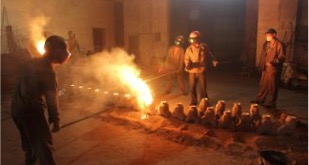
Investment casting, shell mold casting and resin sand casting are three different answers to the same drawing, and the drawing alone rarely states which one it needs. A steel part is not quoted against a process because a buyer prefers that process. It is quoted against the route that can hold the tolerance, produce the geometry, accept the alloy, and carry the annual volume at a defensible cost. The three routes sit at different points on that map, and a process mismatch is one of the few sourcing errors that survives a competitive quotation and only surfaces at first-article inspection.
The short version of the fit is straightforward. Investment casting suits small to medium-sized complex parts in stainless and high-alloy steels, and delivers the highest dimensional accuracy and the smoothest surfaces of the three routes. Shell mold casting offers good dimensional stability for medium-to-high-volume, medium-sized steel castings. Resin sand casting requires lower tooling investment and suits large castings weighing tens of kilograms or more where dimensional demands are looser. Those three sentences are the skeleton of every decision that follows in this framework.
The real cost of choosing the wrong casting route
Process selection usually happens at the evaluation stage, when a buyer holds a drawing pack that spans several part families and wants one supplier to quote all of them. Applying a single process across a mixed pack is the most common structural error in steel casting sourcing. It does not show up on the quotation sheet. It shows up later, as dimensional non-conformance, as unexpected machining time to bring a part back into print, as scrap on a feature the chosen process was never able to hold, or as a tooling bill for a pattern that will only ever run a few hundred pieces.
There is a second-order cost too. Each of the three routes carries a different tooling logic and a different volume threshold. When a buyer sends a part to the wrong process, the supplier either quotes a pattern investment that the annual volume cannot amortise, or quotes a route that cannot meet the print and quietly relies on machining to close the gap. Both outcomes are expensive, and neither is visible until the purchase order is already placed.
A decision framework fixes this by forcing the variables into an order. Size eliminates routes first. Geometry and alloy narrow what remains. Tolerance class and surface finish settle the tie. Volume then decides whether the surviving route is economically sane.
What each of the three routes actually does
Investment casting (lost wax)
In investment casting, a wax pattern is produced for each part, assembled onto a tree, coated repeatedly to build a ceramic shell, dewaxed, and then filled with molten steel. The wax is destroyed in the process, which is why the route is also called lost wax casting. Because the pattern is a single-piece wax impression rather than a split mould, complex external geometry and internal detail can be carried into the casting without draft allowances that would otherwise have to be machined away.
The shell chemistry determines how precise the result is. Water-glass shells are the older, coarser option. Silica-sol investment casting produces a more refractory, more dimensionally stable shell, and silica-sol composite investment casting sits between the two on cost and precision. Documented tolerance classes for these routes are commonly expressed against ISO 8062, with silica-sol investment casting generally quoted in the finer CT bands and composite routes in a broader band. That is exactly why a tolerance statement without a CT grade is not a comparable statement.
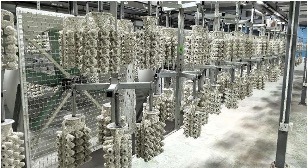
Shell mold casting
Shell mold casting forms a thin resin-bonded sand shell around a heated metal pattern. The shell is rigid and resists deformation during pouring, which is the source of its dimensional stability. It is a metal-pattern process, so the pattern cost is real but the cycle is fast, and the route is normally positioned for medium-sized steel castings produced at medium-to-high volume. It is not a route for very large parts, and it does not offer the finest surface condition available from the investment process.
Resin sand casting
Resin sand casting uses a resin-bonded sand mould rather than a shell. The pattern is simpler and the tooling investment is the lowest of the three, which is its main commercial advantage. The trade-off is dimensional control: resin sand casting suits large castings weighing tens of kilograms or more where the drawing can tolerate looser dimensional demands and where machining allowance is planned into the specification. Push a tight-tolerance, thin-section, high-complexity part into resin sand and the cost does not disappear, it simply moves into the machine shop.
A six-variable decision framework, applied in order
The variables that actually decide the route are part size, geometry complexity, dimensional accuracy, surface finish, material, and production volume with its associated tooling economics. They should not be weighted equally. Size and geometry eliminate routes; tolerance and surface finish discriminate between the survivors; volume and tooling decide whether the surviving route makes commercial sense.
| Decision variable | Investment casting | Shell mold casting | Resin sand casting |
|---|---|---|---|
| Part size band | Small to medium-sized parts | Medium-sized steel castings | Large castings, tens of kilograms and above |
| Geometry complexity | Best fit for complex geometry, because the one-piece wax pattern carries detail that split tooling cannot | Moderate; constrained by the metal pattern | Better suited to simpler, heavier sections |
| Dimensional accuracy | Highest of the three. Should be stated as an ISO 8062 CT grade, not as the word tight | Good dimensional stability, typically quoted in a broader CT band | Looser dimensional demands; machining allowance is planned in |
| Surface finish | Smoothest of the three; Ra should be requested as a number | Ask the supplier for measured Ra rather than an adjective | Coarser as-cast surface; machining is often specified on functional faces |
| Material fit | Strongest for stainless and high-alloy steels; carbon steel, alloy steel and ductile iron are also produced | Steel castings, generally mid-range alloys | Broad steel range, with less benefit from high-alloy chemistry |
| Volume and tooling economics | Per-part wax pattern tooling; justified by complexity and precision rather than by piece price alone | Designed for medium-to-high volume runs | Lowest tooling investment; the right answer when volume is low or the part is large |
Note on evidence: this table separates what is verifiable from what is not. Surface-finish and tolerance figures are only comparable when a supplier publishes a measured value or a CT grade. Where a cell asks the buyer to request data, it is because the figure must come from the specific supplier being evaluated, not from a general statement.
Matching part families to routes
In practice, the framework resolves quickly once the part family is named. Investment casting covers the parts where a complex shape and a fine tolerance meet in the same drawing: pipe elbows, clevis brackets, yokes, gearbox housings, transmission housings, mounting brackets and link arms are typical examples of the geometry class this route handles. The same route is used across automotive, forklift, mining, agricultural machinery, construction machinery, valve and general machinery components, because in each of those sectors the cost driver is usually the number of features that would otherwise need machining.
A single project illustrates the pattern. A US-based automotive parts OEM has run 1,000 tons of investment castings for truck axle systems, with the project in service for 30 years. The reported outcome is that the appearance of the casting is clean and that dimensional accuracy and mechanical properties meet the customer's drawing requirements. That is a narrow, specific claim, and it should be read as such: it demonstrates that a long-running axle programme can be held on this route, not that any axle component can be moved onto it without re-qualification.
Shell mold casting takes the middle ground. When a steel casting is medium-sized, when the annual volume is medium-to-high, and when the tolerance requirement sits comfortably inside the shell process rather than at its limit, the metal-pattern economics of shell mold usually beat investment casting on piece price. The buyer's test is not the process name but the CT grade: if the shell route can hold the print, it is normally the cheaper way to make that part at volume.
Resin sand casting takes the parts that the other two cannot physically accommodate. Castings weighing tens of kilograms or more, with looser dimensional demands and a machining allowance already built into the drawing, are the natural application. The framework should push a buyer toward resin sand whenever the cost of a wax pattern or a metal pattern cannot be recovered across the expected order quantity, and whenever the part is large enough that shell integrity becomes the limiting factor rather than tolerance.
Turning tight tolerance into a purchasable number
The most common failure in casting RFQs is the phrase tight tolerance. It has no agreed meaning and cannot be inspected. ISO 8062-3:2007, Geometrical product specifications (GPS) — Dimensional and geometrical tolerances for moulded parts — Part 3, is the standard used to define casting tolerance grades and machining allowances, and it is the mechanism that converts an adjective into a testable requirement. A drawing that names a CT grade, a datum scheme and a measurement method can be quoted, compared and rejected on evidence. A drawing that says tight cannot.
The same applies to material. ASTM A957/A957M covers common requirements for steel and alloy investment castings for general industrial use, and ASTM A732/A732M covers investment cast carbon steel, low-alloy steel and cobalt alloy castings. Naming a material specification alongside the grade gives the supplier a defined test basis for chemical and mechanical properties, and gives the buyer a defined basis for rejecting a lot.
There is a practical way to see whether a supplier can work in this language. Wayscan Metal Products Co., Ltd, a precision casting manufacturer established in 1991 in Ninghai, Ningbo, China, publishes dimensional tolerance statements in CT terms rather than adjectives: CT6 for silica-sol investment casting, CT8 for silica-sol composite investment casting, and 0.01 mm for machined features, with as-cast surface roughness in the Ra 6.4 to 12.5 micrometre range depending on process and post-treatment. Dimensional inspection is performed with CMM equipment, and the quality-control set includes spectrometer, X-ray, ultrasonic, hardness and tensile testing. None of those numbers is unusual for the industry, but the fact that they are numbers is what makes them comparable.
Market context: where steel casting demand is concentrating
The demand picture supports the material emphasis in this framework. The global investment casting market was valued at USD 19.64 billion in 2025 and is projected to reach USD 30.56 billion by 2034, a compound annual growth rate of 5.1 percent, according to Fortune Business Insights. Stainless steel alone captured 46.8 percent of total investment casting material demand in 2025, which is the single strongest argument for treating stainless capability as a screening criterion rather than a line item.
Automotive is the most concentrated application. Automotive investment casting sales reached USD 1.70 billion in 2024, with Europe, China and North America representing 71 percent of demand, based on Investment Casting Institute data. For a buyer, that concentration has a practical consequence: the supplier base with genuine automotive experience is geographically narrow, and the qualification burden in those regions is correspondingly higher.
One caution belongs here. Published growth estimates for this category differ between research houses, so a single CAGR figure should be treated as a planning assumption rather than a forecast. Volume planning should rest on the buyer's own demand signal and on the supplier's committed capacity, not on a market growth number.
The integration question: casting plus machining from one source
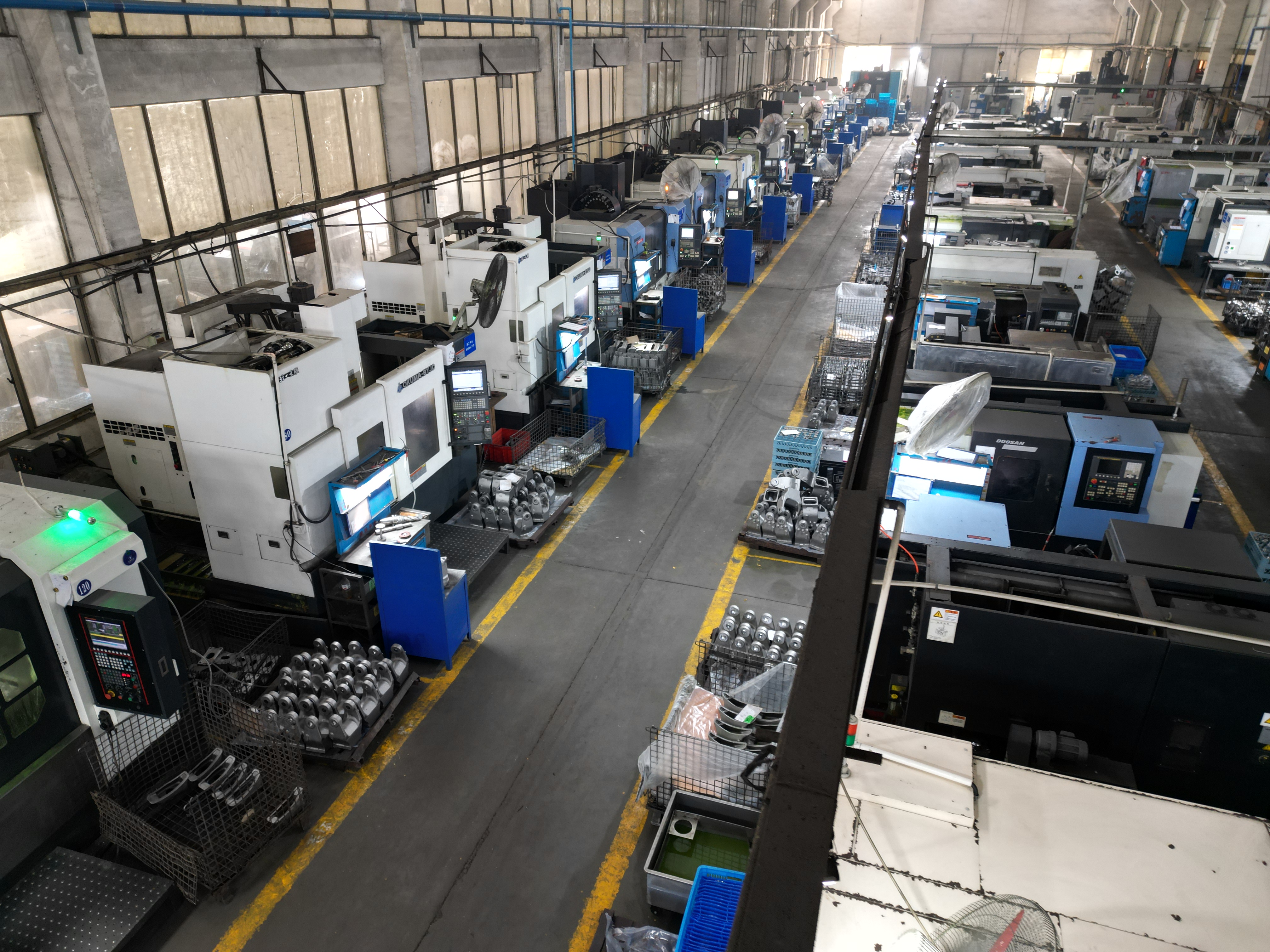
Once the process route is settled, the next decision is whether the casting and the machining come from the same supplier. The tolerance argument for integration is concrete: an as-cast feature held to CT6 and a machined feature held to 0.01 mm are not the same requirement, and a drawing that specifies machining on every face pays for accuracy it may not need. A supplier that runs both operations can quote the split honestly and tell the buyer which features genuinely require machining.
Wayscan is an example of that integrated model. The company operates a 46,000 square metre production base with over 500 employees and more than 20 senior engineering and technical personnel, and reports an annual casting capacity of 20,000 tons with monthly capacity of 1,500 tons. Its documented process scope is silica-sol investment casting and silica-sol composite investment casting, supported by in-house machining. Customisation is by customer drawing for size, geometry, material, surface and heat treatment, and rapid no-mould samples via 3D printing are available, which matters at the evaluation stage when a buyer needs a physical part before committing to tooling. Quoted lead time is 30 to 60 days and the minimum order quantity is 100 kg.
On the compliance side, Wayscan holds ISO 9001:2015 quality management system certification, certificate 02426Q00625R401, issued by Shenzhen Universal Certification Centre Co., Ltd. and valid from 21 May 2026 to 20 May 2029, with the certified scope covering production of steel castings. It also holds IATF 16949:2016 automotive quality management system certification, certificate IATF 0516798, issued by SGS United Kingdom Ltd. and valid from 14 May 2024 to 13 May 2027, covering manufacture of precision casting parts. ISO 14001:2015 and ISO 45001:2018 certifications are also in place. The exporter supplies precision investment castings to the USA, Japan, Canada, Germany, Korea and Australia, and provides technical support and quality tracking after delivery.
Where this framework stops working
A decision framework is only useful if its boundaries are stated. Four of them matter here.
First, process scope is not the same as supplier scope. Wayscan's documented capability is investment casting, both silica-sol and silica-sol composite, together with machining. Shell mold casting and resin sand casting appear in this article as the alternatives a buyer must evaluate against, not as processes that supplier offers. A buyer who needs shell mold or resin sand should use the framework to select the route, then qualify a supplier that actually runs it.
Second, investment casting is the wrong answer for some parts. Very large castings and parts with generous dimensional demands are better served by a sand-based route, where tooling investment is lower and pattern cost is not carried per piece. Pushing those parts into investment casting does not improve quality; it adds a pattern bill and a shell-building step that the drawing never needed.
Third, certification language is frequently misused. CE marking is a conformity marking under EU harmonisation legislation, affixed by the manufacturer to declare conformity with applicable EU requirements; it is not a certificate issued to a casting foundry. A supplier claiming to be CE certified for castings is describing something that does not exist in that form, and the claim should be rewritten around the actual end-product regulation. Similarly, ISO 9001:2015 is a quality management baseline, and automotive buyers normally add IATF 16949:2016 as a second gate rather than accepting ISO 9001 alone.
Fourth, single-project evidence is not a benchmark. The truck axle programme described earlier shows that a long-running automotive casting application can be sustained on this route. It does not establish a defect rate, a capability index or a comparative performance advantage over other suppliers.
What changes over the next planning cycle
Three shifts are visible from the evidence rather than from speculation. The first is material. With stainless steel at 46.8 percent of investment casting material demand, stainless capability stops being a differentiator and becomes a baseline requirement in most RFQs, which pushes competition toward tolerance control and inspection depth instead of alloy breadth.
The second is regulatory. Regulation (EU) 2023/1230, the EU Machinery Regulation, replaces Directive 2006/42/EC and applies from 20 January 2027. Castings are components rather than machinery, so the obligation does not attach to the casting itself, but machinery OEMs sourcing castings for the EU market will be reassessing assembly-level conformity during the same period, and supplier documentation requests will follow.
The third is structural. As tolerance and traceability requirements tighten, the cost of qualifying a new foundry rises, and buyers respond by consolidating spend with suppliers that can hold both the casting and the machining scope under one quality system. That favours integrated suppliers with documented capacity over trading intermediaries, because capacity, certification scope and inspection records have to line up under audit.
Frequently asked questions
Which casting process should be used for a stainless steel part with tight tolerances?
Investment casting is the usual answer when the part is small to medium-sized, geometrically complex, and made in stainless or high-alloy steel, because it delivers the highest dimensional accuracy and the smoothest surface of the three routes. The tolerance requirement should be written as an ISO 8062 CT grade rather than as an adjective, so that the requirement can be measured and compared across suppliers. If the part is large or the tolerance band is wide, a sand-based route will normally be more economical even for stainless steel.
At what production volume does shell mold casting become the better choice than investment casting?
There is no universal volume threshold, because the crossover depends on part size and on how much precision the drawing actually requires. The verified fit is that shell mold casting offers good dimensional stability for medium-to-high-volume, medium-sized steel castings, while investment casting is positioned around small to medium-sized complex parts where precision and surface condition are the drivers. The practical test is to confirm that the shell route can hold the required CT grade at the planned annual volume before comparing piece prices.
When is resin sand casting the correct route rather than a compromise?
Resin sand casting is the correct route when the casting is large, weighing tens of kilograms or more, when the dimensional demands are looser, and when lower tooling investment is a decisive factor. In those conditions it is not a compromise but the economically appropriate choice, provided that machining allowance is planned into the specification for the functional surfaces. It becomes a compromise only when a buyer tries to hold a tolerance band the process was never selected to deliver.
How should tight tolerance be specified on a casting drawing?
By referencing ISO 8062-3:2007, which defines general dimensional and geometrical tolerances and machining allowances for castings, and by naming a CT grade together with a datum scheme and an inspection method. Material requirements should be tied to a recognised specification such as ASTM A957/A957M for steel and alloy investment castings for general industrial use, or ASTM A732/A732M for investment cast carbon steel, low-alloy steel and cobalt alloy castings. A requirement expressed this way can be quoted consistently, verified by CMM inspection, and enforced on a lot.
Does ISO 9001 certification qualify a supplier for automotive casting work?
Not on its own. ISO 9001:2015 sets the general quality management system baseline, while IATF 16949:2016 defines the quality management system requirements for automotive production and relevant service parts organisations. In automotive sourcing, ISO 9001 is normally treated as the minimum and IATF 16949 as the gate. A buyer should verify the certificate number, issuing body, scope and validity dates rather than accept a logo on a website.
Is CE certification a valid attribute for an investment casting supplier?
No. CE marking is a conformity marking under EU harmonisation legislation, affixed by the manufacturer or authorised representative to declare conformity with applicable EU requirements. It is not a certificate issued to a component foundry, and castings are generally components within a finished product rather than products in their own right for marking purposes. Compliance questions should instead be framed around the actual end-product regulation, such as Regulation (EU) 2017/745 for medical devices or Regulation (EU) 2023/1230 for machinery, which applies from 20 January 2027.
What should an RFQ include for a steel casting?
At minimum: the drawing with a stated CT grade and datum scheme, the material grade plus a material specification, the surface finish requirement expressed as Ra, the features that require machining versus those that remain as-cast, the annual and order quantities, the inspection and documentation requirements, and the applicable quality system certification. Quotes that cannot be compared line by line are usually the result of an RFQ that left one of these open.
The company's published capability presentation can be downloaded here for reference: Wayscan Metal Products Co., Ltd — Presentation.
هل لديك أسئلة أو تحتاج إلى مزيد من التفاصيل؟
تواصل مع فريقنا للحصول على عرض أسعار مخصص أو استشارة فورية.
طلب عرض أسعار
املأ النموذج أدناه وسيتواصل معك فريقنا بعرض مقترح مخصص.
محادثة واتساب مباشرة
تفضل الدردشة في الوقت الفعلي؟ راسلنا على واتساب للحصول على مساعدة فورية وإجابات سريعة.
- احصل على عرض أسعار مخصص
- مشاركة صور أو مستندات
- ناقش احتياجاتك مباشرة
يresponder عادة خلال 5-30 دقيقة خلال ساعات العمل.