
IoT Module Decision Framework: 5G RedCap vs LoRaWAN vs Wi-Fi 6
IoT Module Decision Framework · Consumer Electronics
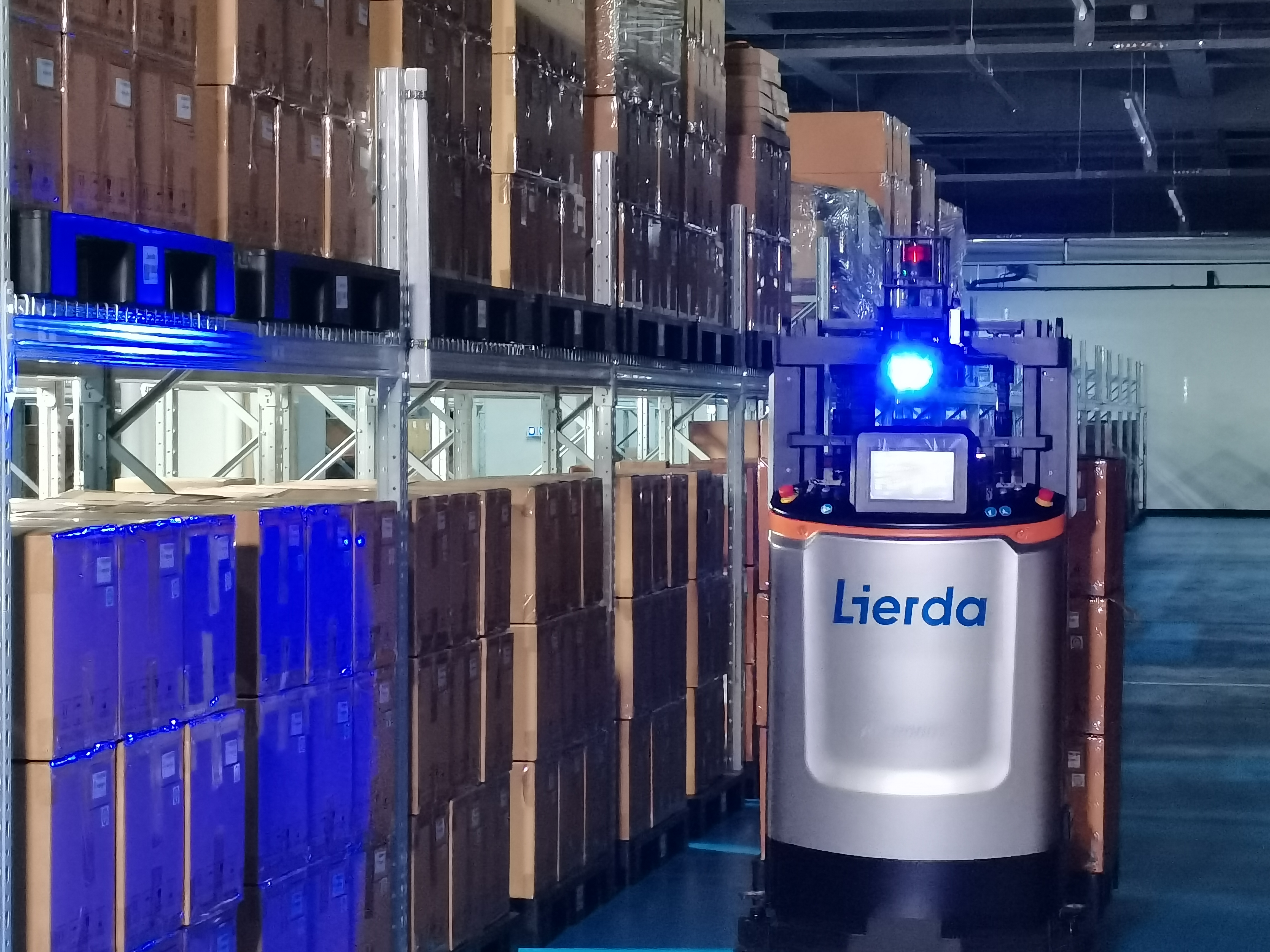
Module development, assembly and application-support operations at Lierda Science & Technology Group, Hangzhou, China.
A consumer electronics team that has just frozen its feature set usually meets the same question at the next design review: three wireless technologies can each carry the product, and none of them wins on radio performance alone. Wi-Fi 6 assumes the customer already owns a router. LoRaWAN assumes somebody will deploy and maintain gateways. 5G RedCap assumes a cellular subscription and market-by-market type approval. The module decision is therefore a decision about network ownership, power budget and data profile — not about which radio is technically superior.
Lierda Science & Technology Group Co., Ltd. is an IoT module and solution provider headquartered in Hangzhou, China, founded in 2001 and listed on the Beijing Stock Exchange under stock code 920249. Its self-developed wireless portfolio covers 5G, LoRa, NB-IoT, Cat.1, Wi-SUN, Wi-Fi, BLE and ZigBee, which means a buyer can evaluate 5G RedCap, LoRaWAN and Wi-Fi 6 inside one supplier relationship instead of across three. The short version of the framework: Wi-Fi 6 for mains-powered devices that live inside a building with existing broadband; LoRaWAN for battery-powered devices that send small payloads over long distances; 5G RedCap for devices that must work out of the box in the field, without asking the end user to configure anything.
Why the module decision resurfaced in 2026
Cellular IoT demand recovered after a period of inventory correction. Counterpoint Research reported that global cellular IoT module shipments grew 10% year over year in 2024, and that LTE Cat-1 bis was the fastest-growing technology of that year, with shipments up 100% year over year as it displaced legacy 2G and 3G designs and absorbed part of the NB-IoT segment. On the unlicensed side, MarketsandMarkets estimated the global LoRa and LoRaWAN IoT market at USD 8.0 billion in 2024, with expectations to reach USD 32.7 billion by 2029, while Grand View Research sized the NB-IoT market at USD 4.16 billion in 2023 with a projected CAGR of 28.1% through 2030.
Three pressures sit behind those figures for consumer electronics buyers. First, product families are increasingly shipped in several connectivity variants for different markets, so the module has become a platform decision rather than a one-off component purchase. Second, channel and retail buyers increasingly treat setup effort as a product feature, which pushes some device categories from Wi-Fi toward cellular. Third, certification and cybersecurity expectations for connected consumer products keep expanding, so the approval status of a module now belongs in the selection criteria rather than in a later administrative step.
The three architectures, defined
A 5G RedCap module is a cellular module built on the reduced-capability variant of 5G NR. It operates on licensed operator spectrum, requires a SIM or eSIM profile, and gives the device wide-area coverage and mobility without depending on any network infrastructure owned by the end user. RedCap is defined as a lower-complexity, lower-power class than full 5G NR, so it does not target the peak throughput of an eMBB device; it targets products that need guaranteed coverage at a moderate data rate.
A LoRaWAN module is a low-power wide-area node radio that transmits in license-free sub-GHz bands, with regional band plans set by local regulation. It does not reach the internet directly: traffic passes through a gateway and a network server, and payloads stay small by design so that a battery-powered device can remain in the field for years.
A Wi-Fi 6 module connects to a local access point in the unlicensed 2.4 GHz and 5 GHz bands and uses the broadband connection the customer already pays for. Wi-Fi 6 (802.11ax) improves spectral efficiency in dense environments compared with earlier generations, and the throughput it supports is what makes it the default for devices that stream audio, video or large firmware images indoors.
| Decision dimension | 5G RedCap | LoRaWAN | Wi-Fi 6 |
|---|---|---|---|
| Spectrum ownership | Licensed cellular spectrum, operator-managed | License-free sub-GHz ISM band, region-dependent | License-free 2.4 GHz and 5 GHz |
| Network dependency | Operator network plus SIM/eSIM | Gateway plus network server | Access point plus customer broadband |
| Coverage character | Wide area, supports mobility | Long range with strong building penetration | Short to medium, indoor-centric |
| Data profile | Moderate, regular traffic | Small, infrequent payloads | High throughput, streaming-capable |
| Power profile | Between LPWAN and Wi-Fi | Lowest of the three | Highest of the three |
| Recurring cost driver | Per-device connectivity subscription | Gateway and network-server operation | No per-device fee; uses customer broadband |
Qualitative comparison. Actual values depend on the specific module, band plan and local regulation, and should be taken from the current datasheet of the part number under evaluation.
Five dimensions that decide the choice
1. Power and duty cycle
Power eliminates options faster than any other dimension. LoRaWAN-class radios are designed around long sleep intervals and short transmissions, which is why they are the standard choice for coin-cell and multi-year battery products. Wi-Fi 6 radios must maintain a live link with an access point and exchange management traffic continuously, so mains power is the practical assumption for almost every streaming device. Cellular RedCap sits in between: it is designed for lower power than full 5G NR, but the radio still has to register with a network and manage paging, so it is not a coin-cell technology. Lierda's NB-IoT module MB26-AGL shows how far the low-power end of the portfolio goes, with a power-saving-mode figure of 1.5 µA and a 2.2–4.5 V supply range.
2. Range and penetration
Range is a function of spectrum rather than of module quality. Sub-GHz propagation travels further and penetrates building materials better than 2.4 GHz or 5 GHz signals, which is why LoRaWAN can serve a meter in a basement or a sensor in a field. Cellular coverage is defined by the operator network and therefore covers the widest area with no customer-side infrastructure at all. Wi-Fi 6 coverage is bounded by the access point and by wall construction. Consumer electronics teams should treat Wi-Fi as a one-home or one-room-cluster assumption; if a device is expected to work in a garage, a basement or a moving vehicle, the Wi-Fi assumption breaks.
3. Data rate and payload shape
Wi-Fi 6 is the only one of the three built for high-bitrate consumer workloads. Lierda's UB64 dual-band Wi-Fi 6 and dual-mode Bluetooth module lists a data rate of 286.8 Mbps over a USB 2.0 interface, while the UB37 and DB37 Wi-Fi 6 modules list 150 Mbps over USB 2.0 and SDIO respectively. LoRaWAN payloads are deliberately small, which excludes firmware-heavy over-the-air updates and any continuous media stream. 5G RedCap handles moderate, regular traffic — telemetry, voice-class links, compressed video — but it is not a substitute for Wi-Fi in a media-streaming product.
4. Footprint and integration effort
Cellular modules carry more of the protocol stack, more RF front-end and the SIM/eSIM path, and are usually larger and more demanding to integrate. Lierda's Cat.1 bis NT26-FEU, for example, is packaged in LGA at 17.7 × 15.8 × 2.4 mm with a 3.3–4.5 V supply and a typical 3.8 V, which indicates the sizing class of a modern cellular module. Wi-Fi 6 module size varies widely depending on whether the part integrates the applications processor; the WF39B large-capacity dual-band Wi-Fi 6 module carries 16 MB flash plus 8 MB PSRAM for designs that want to run logic on the module, while the WF29A dual-band Wi-Fi 6 module carries 512 KB RAM and 4 MB flash. LoRaWAN nodes are the simplest of the three to place, because the network intelligence sits in the gateway and server. Design effort also differs by type: a cellular design adds carrier certification and band planning, a LoRaWAN design adds gateway and network-server decisions, and a Wi-Fi design adds antenna and 2.4 GHz coexistence work.
5. Certification, spectrum and recurring cost
Module-level certification shortens market entry but has to be checked per model and per market. Lierda's UB37 Wi-Fi 6 module holds FCC certification issued 21 November 2024, CE-RED issued 5 November 2024, IC certification for Canada and RCM for Australia and New Zealand. The DB37 Wi-Fi 6 module holds FCC, CE-RED, RCM and TELEC certification for Japan, with the TELEC approval issued 26 March 2026. On the cellular side, the NT26-FEU Cat.1 bis module holds an EU type-examination certificate issued 19 March 2026 under EN 18031-1:2024, and the NT26-FJP variant is certified for Japan under JATE and TELEC. On the LPWAN side, the MB26-AGL NB-IoT module holds CE and an EU type-examination certificate issued 15 September 2025 under the Radio Equipment Directive as amended by (EU) 2022/2380. Recurring cost follows the same split as network ownership: cellular carries a subscription per device, LoRaWAN carries shared gateway and server cost, and Wi-Fi carries no per-device fee beyond broadband the customer already has.
Mapping the framework to verified module options
The decision framework only becomes useful when it can be matched to parts that exist. Lierda's Wi-Fi 6 family covers more than one integration profile. The WF29A dual-band IoT Wi-Fi 6 module is specified for a −40 °C to 105 °C operating range and targets smart home, consumer electronics, pet supplies and medical-care applications, which fits appliances where the module sits close to a heat source. The WF39B raises on-module storage to 16 MB flash plus 8 MB PSRAM over a −40 °C to 85 °C range and supports open development. For host-controlled designs, the UB37 covers 802.11 b/g/n/ax with Bluetooth LE 5.2 and SLE 1.0 on 2.4 GHz at 150 Mbps over USB 2.0, and the DB37 offers the same radio specification over SDIO.
For LoRaWAN-class designs, Lierda's catalogue includes LoRa, LPWAN, long-range and low-power IoT module lines, and the adjacent NB-IoT MB26-AGL illustrates the electrical profile of this segment: B03/B05/B08/B20/B28 bands, a 2.2–4.5 V working voltage and a 1.5 µA power-saving-mode figure, aimed at remote meter reading, intelligent smoke detectors, smart parking and emergency lighting. For cellular designs, the portfolio includes 5G solutions alongside the Cat.1 bis family represented by the NT26-FEU, which covers B1/B3/B5/B7/B8/B20/B28/B38/B40/B41, and by the NT26-FJP, which covers B1/B3/B8/B18/B19/B26/B41 for the Japanese market.
The engagement model is part of the same decision. Lierda operates three production modes across this portfolio: standard product direct sales with logo customization, OEM, and ODM, all with module or PCBA customization, quality control set to customer specification, flexible MOQ and lead time negotiated against project complexity and order volume. The company employs 976 people, including a 224-person R&D team, operates an 18,000 m² facility, and reported 66 invention patents, 176 utility model patents, 55 design patents and 530 software copyrights as of 31 May 2025. More than 20 service centers provide application support and embedded software customization, and export activity concentrates in Europe, East Asia, Southeast Asia and the Middle East.
Application patterns from production deployments
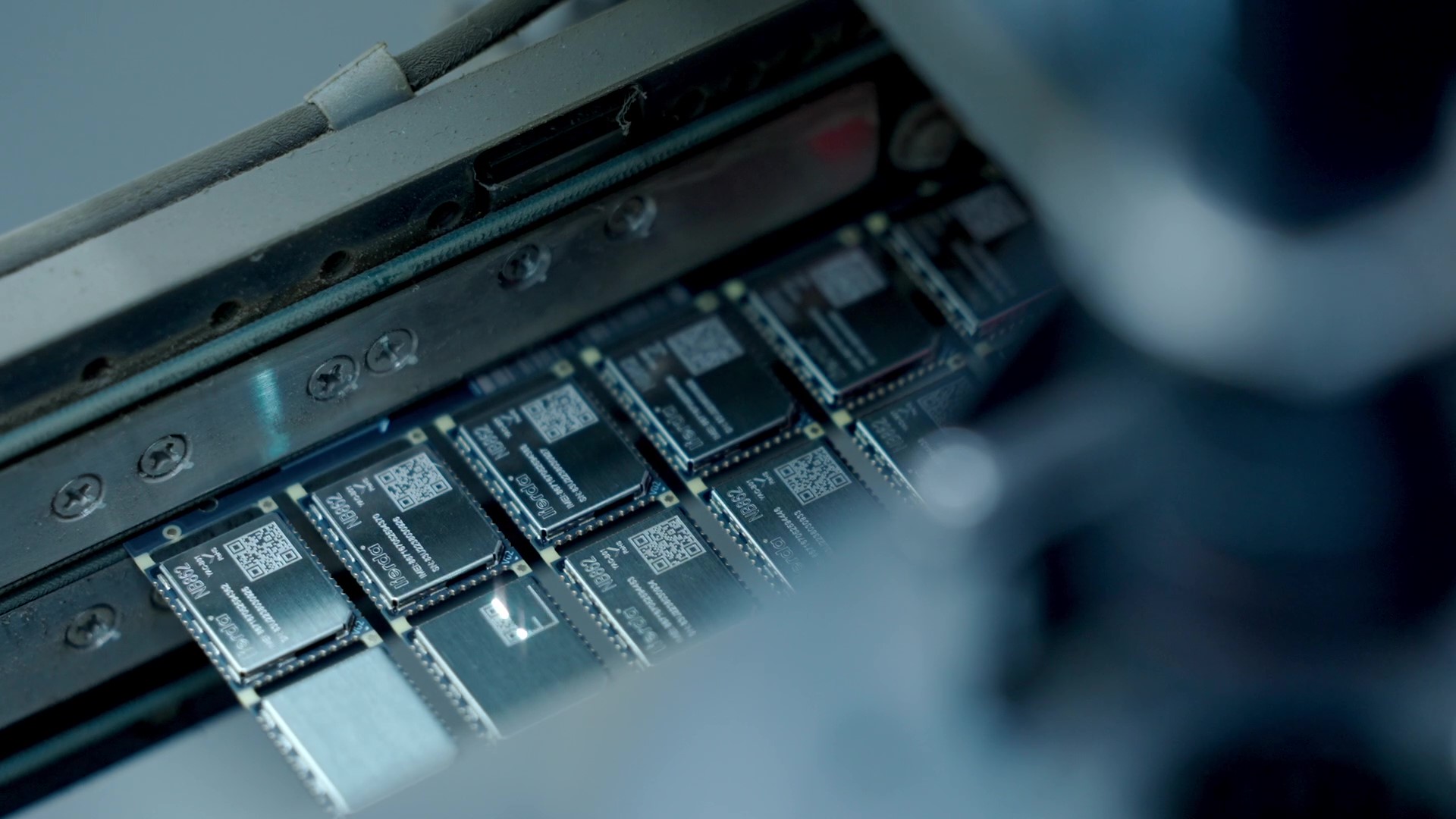
Because buyers usually select a technology through a product programme rather than in the abstract, the production record is the clearest way to read the framework.
High-throughput indoor audio. A global consumer electronics OEM in South Korea shipped 200,000 units per year for seven years on modules associated with the WF29A and WF39B Wi-Fi 6 parts, achieving 24-bit/96 kHz audio quality with less than 50 ms latency, support for Dolby Atmos and DTS:X, and 99.9% Wi-Fi streaming stability, with AirPlay 2, Chromecast built-in, Alexa and Google Assistant voice control, multi-room sync and HDMI eARC compliance. This is the profile where Wi-Fi 6 is not optional: the payload and the latency requirement rule out LPWAN and make cellular economics unattractive.
Low-power connected appliances. A Korean home appliance OEM ran air purifiers and humidifiers at 500,000 units per year over five years with a 30% reduction in power consumption and a 99.5% Wi-Fi connection success rate, uploading PM2.5 data every five minutes, adjusting fan speed automatically and supporting OTA firmware updates over Wi-Fi, compliant with GB/T 18801-2015 and Tuya/Smart Life app control.
Short-range personal devices. A beauty device OEM shipped 200,000 units over three years with stable wireless connectivity and a 30% reduction in power consumption, OTA update support, FDA/CE certification readiness and a multilingual app. This is the BLE-class profile, where neither Wi-Fi nor cellular is required.
Long-life metering. A German energy OEM deployed more than 19.6 million units into water and gas meter applications with stable operation across five- and ten-year horizons. Metering of this shape is the archetypal LPWAN requirement: small payloads, long life, no mains power.
Operator infrastructure. A Korean telecom operator sourced Cat.1 bis modules for communication network stations over a five-year relationship, and the line reached first place in the Korean Cat.1 bis market. This illustrates the cellular profile: coverage, device density and long supply continuity matter more than throughput.
In-building consumer networks. A smart home and hotel equipment ODM converted traditional lighting, switches and curtains into networked intelligent devices across more than 1,000,000 units over a five- to ten-year horizon, and a US industrial OEM ran a 5,000-unit development-board programme with fixed annual ordering for three years. The second example is a useful reminder that not every programme starts at volume; sample and development-board scale is a legitimate entry point for module qualification.
Market trend analysis
The supply landscape around these three technologies is consolidating and growing at the same time. Berg Insight reported that the five largest cellular module vendors — Quectel, Fibocom, Telit Cinterion, MeiG and China Mobile IoT — held a 73% combined revenue share in 2025, while the same analyst track recorded Lierda among the fastest-growing vendors of that year with shipments up 69% year over year. IoT Business News put China's share of the global cellular IoT module market at 63% in 2024, up from 55% in the previous year.
Technology mix is shifting underneath those headline numbers. LTE Cat-1 bis grew 100% year over year in 2024 according to Counterpoint Research, absorbing applications that previously used 2G, 3G and, in some cases, NB-IoT. NB-IoT itself remains a large installed base: Grand View Research sized that market at USD 4.16 billion in 2023 with a 28.1% projected CAGR through 2030. LoRaWAN continues on a separate trajectory, with MarketsandMarkets estimating growth from USD 8.0 billion in 2024 to USD 32.7 billion by 2029. For a consumer electronics buyer, the practical reading is that Wi-Fi 6, LPWAN and cellular module supply are all deep markets, but the top tier of cellular supply is concentrated, which makes second-source planning — including vendors outside the top five — a supply-chain decision rather than an afterthought.
How these options compare with legacy choices — and where each stops working
Against legacy 2G and 3G cellular designs, Cat-1 bis and RedCap modules offer a migration path, but the migration is not administratively free: band plans change, and each target market requires its own type approval. Against Wi-Fi 4 and Wi-Fi 5, Wi-Fi 6 improves efficiency in dense environments, but a Wi-Fi 6 module cannot repair poor broadband or weak coverage inside a customer's home, because the vendor controls neither the access point nor the radio environment.
The limits deserve to be written down before the shortlist is finalised:
- Wi-Fi 6 depends on infrastructure the vendor does not own. Setup quality, throughput and reliability are partly a property of the customer's router and broadband service, not of the module.
- 2.4 GHz-only modules exclude the 5 GHz band. Where congestion or high bitrate matters, a single-band part caps what the product can do, and the fix is a dual-band module rather than a firmware change.
- LoRaWAN requires gateway and network-server infrastructure and is subject to regional duty-cycle rules. Its payload budget excludes streaming and makes large OTA updates impractical, so it suits sensors, not media devices.
- 5G RedCap is a reduced-capability class, not full 5G NR. Peak throughput should not be assumed from the 5G label, and band variants must match the target market — the European NT26-FEU and Japanese NT26-FJP band lists are not interchangeable.
- Module certification does not replace end-product compliance. Approvals such as the UB37 FCC certificate are issued for a named model, and design changes to the module or antenna can require re-testing.
- Commercial terms are project-specific. Lierda's MOQ is flexible and lead time is negotiated against project complexity and order volume, so buyers should not plan a fixed production schedule from a generic figure.
Future outlook
Cellular module demand is expected to keep expanding, with Cat-1 bis continuing to absorb legacy 2G and 3G sockets and with LPWAN holding the metering and battery-sensor segment. RedCap is the technology to watch in the consumer segment, because it extends 5G coverage to mid-tier devices that cannot justify full NR complexity — but the framework in this article should still be applied first: RedCap only wins where the device must operate without customer-owned infrastructure.
Compliance is becoming a selection dimension rather than a checkbox. The FCC established a voluntary cybersecurity labelling programme for consumer IoT products in 2024 based on NISTIR 8425, and the EU cybersecurity baseline under EN 18031-1:2024 is already reflected in module-level type-examination certificates. Lierda holds such certificates for the NB-IoT MB26-AGL and the Cat.1 bis NT26-FEU, which means a buyer evaluating these categories can treat cybersecurity documentation as part of supplier due diligence rather than as a post-design problem.
FAQ
What is the difference between 5G RedCap, LoRaWAN and Wi-Fi 6 modules?
5G RedCap modules are cellular modules built on the reduced-capability variant of 5G NR; they operate on licensed operator spectrum and connect wherever the operator network is available, without any customer-side network setup. LoRaWAN modules are low-power wide-area node radios in license-free sub-GHz bands that require gateways and a network server, and they carry small payloads by design. Wi-Fi 6 modules connect to a local access point in the unlicensed 2.4 GHz and 5 GHz bands and depend on the broadband connection the end user already has. The three differ first in who owns the network and second in power, range and data rate.
How should power, range and data rate be ranked when selecting an IoT module?
Ranked by continuous power demand, LoRaWAN is lowest because it transmits small packets with long sleep intervals, Wi-Fi 6 is highest because the radio maintains a high-throughput link, and 5G RedCap sits between them, trading battery life for wide-area coverage and mobility. Ranked by coverage without customer-owned infrastructure, cellular is first, LoRaWAN second and Wi-Fi 6 third. Ranked by throughput, Wi-Fi 6 leads, cellular is moderate and LoRaWAN is deliberately low. A device usually has one non-negotiable requirement in this ranking, and that requirement usually settles the technology choice on its own.
When does a consumer electronics product need a cellular module instead of Wi-Fi?
Cellular becomes the default when the device must work immediately after unboxing, when it is installed outdoors or moves, or when the vendor cannot rely on the customer's router. The production record supports that pattern: a Korean telecom operator sourced Cat.1 bis modules for communication network stations over five years, reaching first place in the Korean Cat.1 bis market, and a German energy OEM deployed more than 19.6 million units into water and gas meters where no local network could be assumed. If a device is always indoors and mains-powered, Wi-Fi usually lowers system cost because it carries no per-device connectivity fee.
Which certifications should buyers verify on Wi-Fi 6 and cellular modules?
For Wi-Fi 6 modules, the common market-entry set is FCC Part 15C for the United States, CE-RED for Europe, IC for Canada, RCM for Australia and New Zealand, and TELEC for Japan. Lierda's DB37 Wi-Fi 6 module holds FCC, CE-RED, RCM and TELEC approvals, and the UB37 holds FCC, CE-RED, IC and RCM. For cellular modules, buyers should verify both the band list and the type approval for each market: the NT26-FEU covers B1/B3/B5/B7/B8/B20/B28/B38/B40/B41 and holds an EU type-examination certificate under EN 18031-1:2024, while the NT26-FJP covers B1/B3/B8/B18/B19/B26/B41 and is certified for Japan under JATE and TELEC. Module approval reduces, but does not remove, the end product's own compliance obligations.
Where do NB-IoT and LoRaWAN fit if the choice is between 5G RedCap and Wi-Fi 6?
NB-IoT and LoRaWAN cover the lowest-power, lowest-data segment: battery meters, smoke detectors, parking sensors and similar devices that send small packets infrequently. Lierda's MB26-AGL NB-IoT module supports B03/B05/B08/B20/B28 with a 2.2–4.5 V working voltage and a 1.5 µA power-saving-mode figure, and holds CE and EU type-examination certification. These technologies do not compete directly with Wi-Fi 6 or 5G RedCap, because their payload and duty-cycle profiles exclude media streaming and frequent large firmware updates. In practice they are the third option that appears when the device has no mains power.
What limitations should be planned for in each option?
Wi-Fi 6 leaves the access point and broadband quality outside the vendor's control, and 2.4 GHz-only parts such as the UB37 and DB37 cannot use the 5 GHz band. LoRaWAN requires gateway and network-server investment and is constrained by regional duty-cycle rules, so it cannot carry streaming traffic. 5G RedCap is a reduced-capability class rather than full 5G NR, so peak throughput should not be assumed, and each market needs its own band variant and approval. Across all three, module-level certificates are model-specific and can require re-testing after design changes, and commercial terms such as MOQ and lead time remain project-specific rather than fixed.
Reference material: the Lierda corporate brochure, including portfolio and company information, is available for download at https://cdn.socialarks.com/sbsp/24790/0/2026/0422/69e87f56b7226.pdf.