
JP-S100B to JPW40BL: Which Hydraulic Baler Fits Your Waste?
JP-S100B to JPW40BL: Which Hydraulic Baler Fits Your Waste?
Five hydraulic baler machines, five different sets of published numbers — and no single figure that settles the purchase. JP-S100B is rated at 25 tons of compression force, weighs 2,100 kg net and carries a published dimension entry of 2150×120. JP7050T8 is specified around output rather than tonnage: bales of 50–80 kg at 6–8 bales per hour, drawing 2.2 kW/3 Hp on 220 V/50 Hz. JPW40BL applies 40 tons of force to bales of 720×720×(300–1000) mm weighing 250–350 kg. JPW40F, a semi-automatic horizontal baler, also applies 40 tons, into a longer 720×720×(500–1300) mm chamber. JPW20Q, a fully automatic horizontal baler, applies 20 tons and produces a fixed 500×500×500 mm bale of 30–70 kg.
Read together, those figures describe five different operating logics rather than five points on one scale. A buyer facing this range is not choosing the largest number; the buyer is choosing which combination of force, bale geometry, throughput and electrical supply matches the material actually received, the way bales leave the site, and the power available at the wall. This comparison works only from the published specification data for these five models. Where a figure is not published, it is marked as such and treated as an item to request rather than an absence to interpret.
Reading the five sheets side by side
The first practical observation about this group is that the specification sheets are not symmetrical. Force is published for three models, bale weight for three, bale rate for one, and electrical data for one. That asymmetry is itself a finding: a comparison table assembled from these sheets has blanks in it, and blanks are where buyers make expensive assumptions.
| Model | Configuration as published | Compression force | Bale size | Bale weight | Bale rate | Power / other published data |
|---|---|---|---|---|---|---|
| JP-S100B | Not stated in the data used here | 25 tons | Not published | Not published | Not published | Net weight 2,100 kg; dimension entry 2150×120 |
| JP7050T8 | Not stated in the data used here | Not published | Not published | 50–80 kg | 6–8 bales/hour | 220 V/50 Hz; 2.2 kW/3 Hp |
| JPW40BL | Not stated in the data used here | 40 tons | 720×720×(300–1000) mm | 250–350 kg | Not published | Not published |
| JPW40F | Semi-automatic horizontal | 40 tons | 720×720×(500–1300) mm | Not published | Not published | Not published |
| JPW20Q | Fully automatic horizontal | 20 tons | 500×500×500 mm | 30–70 kg | Not published | CE certificate TTC-22-1609/01/01 |
“Not published” means the figure was not present in the specification data used for this comparison. It does not mean the model lacks the capability, and it should not be read as zero.
All five models belong to the Jewel range, the baler brand of Nantong Jiabao Machinery Co., Ltd., a compression and baling equipment manufacturer established in 2006, with the brand founded in 1995, operating a 50,000 m² production facility with more than 200 employees and exporting to markets including Europe, North America, Australia, Africa and Asia. The figures compared in this article are the manufacturer's published specifications, not results of an independent laboratory test.
Why the published numbers cannot be compared column by column
A specification table invites vertical reading — scan the force column, pick the biggest number, move on. That method fails on this group for a structural reason. The five sheets describe different things in different units: one model is characterised by pressing force and machine mass, one by a bale rate and an electrical supply, two by chamber geometry and force together, and one by chamber geometry and bale weight. None of them publishes a complete set.
The consequence for a buyer is procedural. Before any comparison can be meaningful, the figures must be put into common units: kilograms per hour rather than bales per hour, kilograms per cubic metre rather than bale weight alone, kilowatts and phase rather than a voltage label, and millimetres across all three axes rather than a single dimension entry. Where a value cannot be converted without inventing an assumption, the correct step is to request it from the supplier in the same unit, not to estimate it. A comparison built on one model's measured figure and another model's estimated figure is not a comparison.
Compression force: what 20, 25 and 40 tons do and do not decide
Compression force is the rated hydraulic force the machine applies during compaction, expressed here in tons. In this group it ranges from 20 tons on JPW20Q, through 25 tons on JP-S100B, to 40 tons on JPW40BL and JPW40F. JP7050T8 does not publish a force rating at all, which means it cannot be placed on this axis without a request to the manufacturer.
What the figure does establish is relative pressing capacity inside a manufacturer's range, and it is a legitimate first filter for shortlisting. What it does not establish is bale density. Density is the product of force, chamber geometry, feed behaviour and the material itself, and no force rating on its own tells a buyer how a specific load of plastic film, carton or scrap will compress. The JPW20Q and JPW40BL pair illustrates why the two must be read together: the 20-ton model produces a compact 500×500×500 mm bale of 30–70 kg, while the 40-ton model produces a substantially larger 720×720×(300–1000) mm bale of 250–350 kg. Force and bale format move in the same direction here, so quoting the tonnage alone understates what changes on the floor.
A practical decision rule follows from that. Use force to decide whether a machine belongs in the shortlist at all, then ask for material-specific density and cycle data before using it to decide between two candidates. A higher force rating is not a guarantee of a denser bale in a material that does not compress well, and a lower rating is not disqualifying where the bale format already matches the haul-away contract.
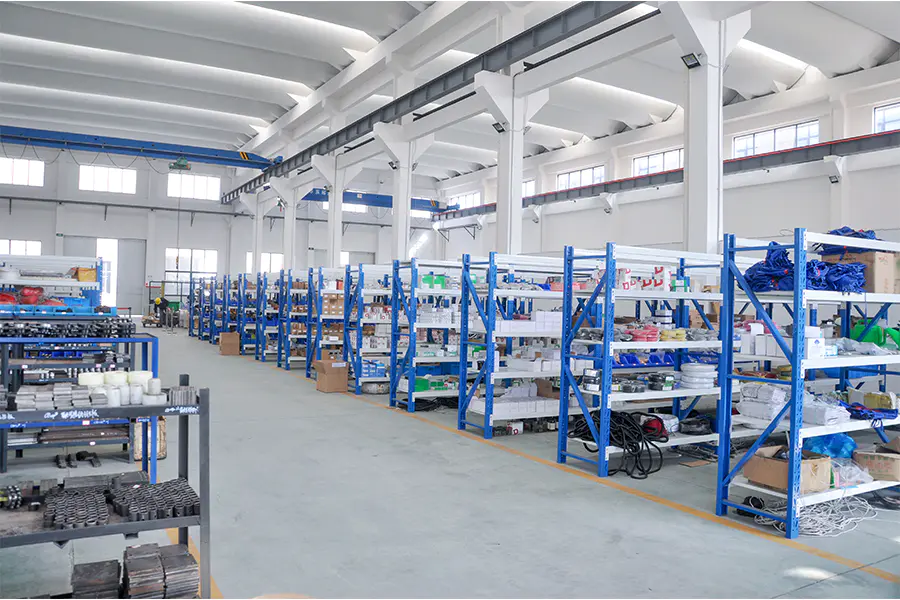
Standardised components and stocked parts affect how quickly a hydraulic baler returns to service after a seal or hydraulic fault.
Bale dimensions and bale weight: the logistics side of the decision
Bale geometry determines what happens after the bale is tied, and in most operations that is where the real cost sits. JPW40BL and JPW40F share the same 720×720 mm cross-section but differ in chamber length: 300–1000 mm on JPW40BL against 500–1300 mm on JPW40F. The shared cross-section matters practically, because downstream handling equipment sized for one is likely to suit the other. The different length range matters commercially, because it changes how much material goes into each bale and how the load is stacked and weighed.
JPW40BL publishes a bale weight of 250–350 kg across that variable length, which means density is not a single number. A buyer intending to run the chamber at a particular length should ask what bale weight and density the machine produces at that setting, since a 250–350 kg range quoted across a 300–1000 mm length range cannot be converted into one density figure without knowing how the two variables are linked.
JPW20Q is the opposite case: its bale is a fixed 500×500×500 mm cube, so the published 30–70 kg range can be converted. Dividing the two published values by the fixed 0.125 m³ bale volume gives a calculated density range of roughly 240–560 kg/m³. That is arithmetic on published specifications, not a measured result, and it is useful mainly for estimating how many bales fill a trailer and how much space a given tonnage occupies.
Weight class also separates the models operationally. Bales in the 250–350 kg band generally call for mechanical handling — a cart, pallet truck or forklift — rather than manual lifting, whereas the 30–80 kg bales on JPW20Q and JP7050T8 sit in a different handling class entirely. Neither is better in the abstract; the question is which one your yard, your vehicle and your downstream buyer can accept without adding a handling step that costs more than the baling saves.
Throughput: converting bales per hour into kilograms per hour
Only one model in this group publishes a bale rate. JP7050T8 is specified at 6–8 bales per hour with bales of 50–80 kg. Multiplying the two published ranges produces a calculated throughput of roughly 300–640 kg per hour — again arithmetic on published figures rather than a measured rate, and stated as a range because both inputs are ranges.
For JP-S100B, JPW40BL, JPW40F and JPW20Q, no bale rate is published, so no mass-per-hour figure can be derived from the data used here. This is the single most important gap in the group, because bales per hour is not a comparable unit across machines with different bale weights. One machine producing six 50 kg bales per hour and another producing six 300 kg bales per hour are not in the same performance class, yet both read as “six bales per hour” on a summary sheet.
The manufacturer's comparison material cites a rate of 16–22 bales per hour for its automatic models, but does not attribute that figure to a named model. It therefore cannot be substituted into this table for JPW20Q or any other unit. A buyer should request kilograms per hour, at a stated material and target density, for each shortlisted model — and should treat any rate quoted without a material as an indicative figure only.
Power, voltage and installation conditions
JP7050T8 publishes an electrical entry of 220 V/50 Hz at 2.2 kW/3 Hp. That is a modest motor rating, and the practical checks are phase, starting current and breaker capacity rather than the voltage label alone, since a 220 V designation does not by itself confirm the supply type a site must provide. Voltage is customizable across these machines, so the published figure should be read as the reference configuration for the model, not as a fixed limitation on what can be ordered. The configuration, phase and current draw for the specific unit should be confirmed in writing before the electrical supply is planned.
Two other published figures affect installation more than buyers expect. JP-S100B's net weight of 2,100 kg sets the floor-loading and lifting question, and its published dimension entry of 2150×120 should be confirmed as a full three-axis footprint plus working envelope before floor space is allocated — a single dimension entry is not sufficient for a layout drawing. For every model, the space that matters includes the loading area, the bale ejection path and the clearance needed to remove a finished bale, not just the machine body.
Matching the machine to the waste stream
Material, not model number, should drive the specification. Suppliers commonly offer these machines in material-oriented configurations — waste paper and carton, plastic bottle and plastic film, aluminium foil, fibre and textile, metal scrap, briquetting and bagging variants — and it is the configuration, not the model name alone, that determines whether a machine suits a given stream. Two buyers ordering the same base model for carton waste and for scrap metal are not making the same purchase.
The specifications to pin down differ by material. For bulky, low-density streams such as cartons, plastic bottles, plastic film and aluminium foil, volume reduction per bale is the dominant economic variable, so the questions are bale density at the intended chamber setting and the practical feed rate that keeps the machine cycling. For denser streams such as metal scrap and briquetting work, the relationship between force, chamber and tooling matters more, and the machine's stated force rating should be read alongside the manufacturer's own guidance for that material rather than in isolation. For fibre and textile waste, consistent feeding and a chamber that accepts the material's natural bulk tend to matter more than the headline tonnage.
In all three cases the same caution applies: a force rating or bale size is a machine property, not a material outcome. The buyer who asks “what density will this achieve on my material, at what feed rate, and how was that figure obtained” gets a usable answer. The buyer who asks “which model is best for plastic” gets a model name without a reason.
Automation level and labour: vertical, semi-automatic, fully automatic
The group spans more than one automation tier. JPW40F is described as a semi-automatic horizontal baler and JPW20Q as a fully automatic horizontal baler, while JP-S100B, JP7050T8 and JPW40BL are compared here only on the figures published for them, without a configuration label in the data used. That distinction matters because automation changes where labour is spent, not simply how much of it is needed.
The manufacturer's comparison material describes its automated models as using PLC and touch-screen control, three-side convergent compression, automatic feeding, detection and strapping, with the capability to run unmanned. The same material reports a 90% labour reduction, downtime below 2%, and a rate of 16–22 bales per hour for automatic models, and describes a dual-motor design combining a starting motor and a booster motor for power saving, with a variable-frequency option reported to cut energy consumption by 30% compared with fixed-frequency models. These are supplier-reported comparison figures and are not independently verified in this article; they are useful as a description of design intent and as a prompt for the buyer to request site-level evidence.
The buyer's interpretation should be conditional. Automation tends to pay where material arrives in a steady flow that keeps the machine cycling, because an automatic baler idling between loads delivers little of its advantage. Where waste arrives intermittently or pre-sorting is manual, the labour saving may shift rather than disappear — from tying bales to loading and removing them. The manufacturer also notes a slightly higher upfront cost for automated models, offset in its own analysis by labour savings and lower transport cost from higher bale density. That trade-off is a claim to be tested against a specific site's volumes, not a general rule.
Safety, maintenance and the documents behind the spec sheet
The risks that matter around a hydraulic baler are consistent across configurations: hydraulic leakage, electrical overload, operational safety at the feed opening, and delayed after-sales support when a machine stops. The manufacturer states that its machines carry safety interlocks and emergency stop, imported hydraulic seals intended to prevent oil leakage, PLC overload auto-cutoff protection and a protective enclosure on the feeding inlet, with full inspection before delivery, CE and ISO quality certification, a 7×24 hour after-sales hotline, spare parts inventory and a 12-month official warranty.
One of those claims can be checked at model level. The fully automatic horizontal baler JPW20Q holds CE certificate TTC-22-1609/01/01, complying with EN ISO 12100:2010 and EN 60204-1:2018. A buyer should confirm that the certificate names the exact model and configuration being purchased and is valid for the destination market, rather than accepting a generic certificate reference for a range.
On maintenance, the manufacturer states that requirements are low because of standardised parts and a low failure rate, and that the auto strapping device operates with stable performance. For the buyer, standardised parts translate into a specific question worth asking before the order: which seals, hoses and strapping components are held in stock, and how quickly can they be shipped. On supply terms, the manufacturer reports a monthly production capacity of 100 hydraulic baler units and a minimum order quantity of one unit, which is relevant to lead-time expectations for single-machine and multi-unit orders alike.
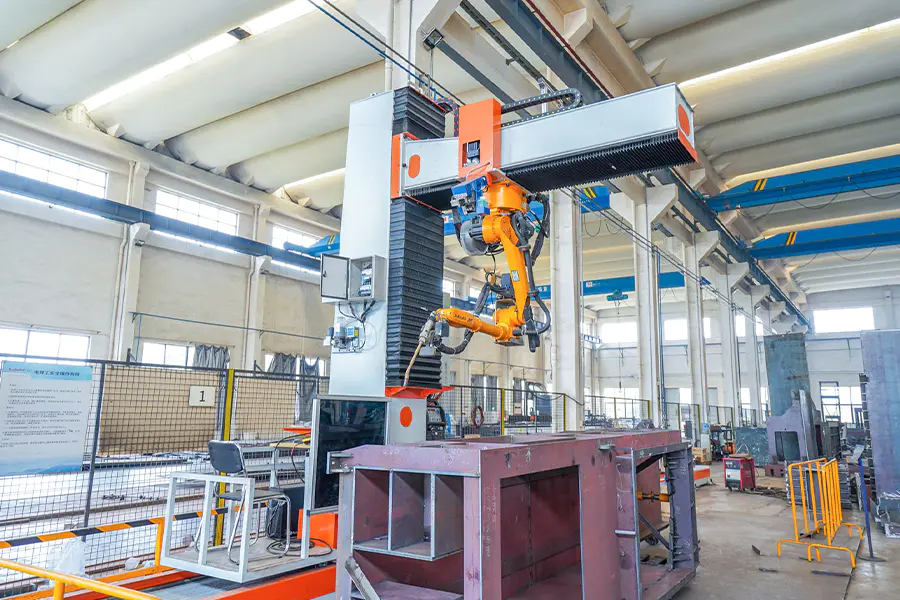
Published specifications describe the finished machine; pre-delivery inspection and configuration checks determine whether the unit matches the sheet.
What published specifications leave open
Even a complete spec sheet is a description of a machine, not a prediction of a site. In this group, four of the five models publish no bale rate, three publish no bale weight, four publish no electrical data, and three carry no configuration label in the data used for this comparison. None of the sheets states a measured density for a named material, a duty cycle, a noise level, an installation drawing or a downstream acceptance specification.
Those gaps are closable, but only by asking. A supplier can normally provide a material-specific density figure, a throughput estimate in kilograms per hour, an installation drawing and a spare-parts list; the buyer's leverage lies in requesting all of them in consistent units, in writing, before comparing prices. Where a supplier cannot or will not supply a material-specific figure, that is itself decision-relevant information about the depth of application support available after the order.
Industry context: what the market data does and does not say
Published research gives a sense of scale, provided the scopes are kept apart. One commercial research projection places the global baler market — agricultural and industrial together — at USD 7.96 billion in 2026. A separate report estimates the hydraulic waste paper baler segment at USD 1.45 billion in its 2024 base year, with a forecast of USD 2.24 billion by 2032 at a 5.5% CAGR. A third places the hydraulic metal recycling baler market at USD 913 million in 2023, forecast to reach USD 1,318 million by 2031.
These figures describe different product scopes and must not be added or set against each other. They are commercial research projections rather than measured sales, and they say nothing about any individual model's performance. Their practical value to a buyer is directional: the category is large and segmented by material and end market, which is exactly why model selection has to begin with the waste stream and the downstream handling route rather than with a general comparison of tonnage.
Questions to ask before choosing between vertical and horizontal
Configuration is a site decision, and the same shortlist can point to different answers at different premises. The questions below are designed to force the comparison onto evidence rather than shape:
- What bale weight and density does this model achieve on my specific material, at the chamber setting you recommend, and how was that measured?
- What is the throughput in kilograms per hour on that material — not bales per hour — and what feed pattern is assumed?
- What floor area, ceiling height and clearance does the machine need in operation, including loading and bale ejection?
- What is the machine's net weight and the resulting floor loading? JP-S100B's published 2,100 kg gives a sense of the order of magnitude for a machine of that class.
- What electrical supply does the chosen configuration require, and what is customizable? JP7050T8's published 220 V/50 Hz at 2.2 kW/3 Hp is one reference point, not a general answer.
- Who ties or straps the bale, and how is a finished bale removed from the machine — manually, by cart, or by forklift?
- Can the feed method keep pace with the machine's cycle, or will the baler wait between loads?
- Which certificates cover the exact model and configuration, and are they valid in my market?
- Which seals, hoses and strapping components are stocked locally, and what is the warranty term and its exclusions?
- For a vertical or horizontal configuration specifically: which one fits my material flow, and what density and throughput evidence supports that recommendation?
The buyer's short answer
None of the five models wins on specifications alone, because the specifications do not measure the same things. JP7050T8 is the only unit in the group that publishes a bale rate and a complete electrical entry, which makes it the easiest to plan around and the hardest to compare directly with the rest. JP-S100B publishes a force rating and a machine mass but leaves the operating figures open. JPW40BL and JPW40F share a force rating and a bale cross-section while differing in chamber length, which makes them a genuine either-or for a buyer whose material suits a 720×720 mm bale. JPW20Q offers the most compact, uniform bale and a model-specific CE certificate, at the lowest force rating in the group.
The practical route through that is to fix the material and the downstream route first, convert every candidate's figures into kilograms per hour and kilograms per cubic metre, and treat every blank cell as an open question rather than a zero. Buyers who want the underlying specification set and configuration options can review the manufacturer's published material at Jewel (Nantong Jiabao Machinery Co., Ltd.), or download the company brochure and check the figures against the questions above.
FAQ
Is a 40-ton hydraulic baler always better than a 20-ton model?
No. Compression force is a rating rather than an outcome. JPW20Q applies 20 tons and produces a fixed 500×500×500 mm bale of 30–70 kg, while JPW40BL applies 40 tons to a 720×720×(300–1000) mm bale of 250–350 kg. The two differ in handling class, floor space and downstream logistics as much as in pressing capacity, so the deciding factor is the material, the required bale density and the way bales leave the site.
How can I compare throughput when only bales per hour are published?
Convert the rate into mass per hour. JP7050T8 is published at 6–8 bales per hour with bales of 50–80 kg, which gives a calculated 300–640 kg per hour — arithmetic on the published figures, not a measured result. For JP-S100B, JPW40BL, JPW40F and JPW20Q no bale rate is published in the data used here, so kilograms per hour must be requested from the manufacturer for each model and material.
Can the voltage be customized to suit my site?
Yes, voltage is customizable. The published electrical entry for JP7050T8 — 220 V/50 Hz at 2.2 kW/3 Hp — should therefore be read as a reference configuration rather than a fixed limit. Confirm phase, starting current, breaker capacity and the final motor configuration in writing for the exact unit being ordered before the site supply is planned.
Which bale size should I specify for plastic or cardboard waste?
Start from the downstream route rather than from the material name. JPW40BL and JPW40F share a 720×720 mm bale cross-section but differ in chamber length, 300–1000 mm against 500–1300 mm, which changes bale mass and stacking; JPW20Q produces a uniform 500×500×500 mm cube. For plastic and cardboard the decisive figure is bale density at the chamber setting you intend to run, which should be requested as a material-specific value rather than inferred from force ratings.
What safety and compliance documentation should accompany the machine?
The manufacturer states that its machines include safety interlocks and emergency stop, PLC overload auto-cutoff protection, imported hydraulic seals and a protective enclosure on the feeding inlet, with full inspection before delivery, CE and ISO certification and a 12-month warranty. At model level, JPW20Q holds CE certificate TTC-22-1609/01/01 complying with EN ISO 12100:2010 and EN 60204-1:2018. Buyers should check that the documentation names the exact model and configuration and is valid in the destination market.
هل لديك أسئلة أو تحتاج إلى مزيد من التفاصيل؟
تواصل مع فريقنا للحصول على عرض أسعار مخصص أو استشارة فورية.
طلب عرض أسعار
املأ النموذج أدناه وسيتواصل معك فريقنا بعرض مقترح مخصص.
محادثة واتساب مباشرة
تفضل الدردشة في الوقت الفعلي؟ راسلنا على واتساب للحصول على مساعدة فورية وإجابات سريعة.
- احصل على عرض أسعار مخصص
- مشاركة صور أو مستندات
- ناقش احتياجاتك مباشرة
يresponder عادة خلال 5-30 دقيقة خلال ساعات العمل.