
JP800 Hose Reel Irrigation: Build Evidence and Export Logistics
Procurement decisions on irrigation machinery increasingly turn on documents a buyer can check, not claims a buyer must trust. A performance table says what a machine is meant to do; packed weight, shipping dimensions, deployed dimensions, pipe geometry and drive method say whether that machine can be moved, unloaded, installed and serviced on a specific farm. For a hose reel irrigation machine, those physical facts are not secondary detail. They are the decision.
China Yulin Irrigation Equipment Co., Ltd. is a Dalian-based manufacturer of center pivot irrigation systems, lateral move irrigation systems, towing irrigation systems, hose reel irrigation systems, irrigation parts and matching water pumps and generators. Its JP800 hose reel irrigation machine is documented specifically enough to serve as a worked example: a defined material set, a defined pipe geometry, a water-turbine drive requiring no electricity, a stated net weight and two distinct dimension envelopes. Read alongside the company's factory and shipping information, the model shows what factory evidence looks like once marketing language is removed.
Why Shipping Data Belongs in the Buyer's Decision File
The most expensive surprises in equipment procurement rarely come from performance shortfalls discovered in year two. They come from a machine that cannot pass a farm gate, a container that has to be re-packed at the destination port, or a lifting plan improvised on the day of delivery. Shipping envelopes and weight figures convert a specification sheet into a logistics plan, and the logistics plan is what determines whether installation happens on schedule.
Two different numbers do two different jobs. A shipping dimension describes the machine as it is packed and handed to a carrier; it drives container selection, lifting equipment, inland truck choice and access-route clearance. An overall dimension describes the machine as it stands and works on site; it drives field layout, headland space and the position of the water connection. A buyer who collects only the working dimension is planning half the project.
The distinction matters even more for traveler-type equipment. A hose reel irrigation system is repositioned rather than permanently anchored, so the relationship between the packed unit and the deployed unit is part of the operating model, not a one-time delivery concern.
The JP800 Data Set a Buyer Can Actually Verify
The published JP800 specification set is short and specific. That is a practical advantage: a short list of checkable values is easier to confirm against a shipping quote and a site survey than a long list of qualitative claims.
| Parameter | Stated value | What it changes at the decision stage |
|---|---|---|
| Machine type | JP800 hose reel irrigation machine | Traveler-type machine; repositioned between set-ups |
| Primary materials | Metal and PE (polyethylene) | Structural frame in metal; wetted pipe in PE |
| PE pipe diameter | 90 mm | Sets the hydraulic capacity of the delivery line |
| PE pipe length | 300 m | Sets working distance from the water point and area per set-up |
| Drive | Water turbine powered, without electricity | Removes grid connection, transformer and cabling from the site plan |
| Net weight | 2180 kg (±30 kg) | Drives lifting equipment, transport rating and unloading method |
| Shipping dimensions | 2450 × 2000 × 2250 mm | Drives container planning, freight quotation and route clearance |
| Overall working dimensions | 6120 × 2330 × 2770 mm | Drives deployed footprint, headland space and clearance |
| Minimum order quantity | 1 unit | Allows single-farm evaluation before fleet purchase |
How a Water-Turbine Drive Rewrites the Site Plan
The JP800 is water-turbine powered and operates without electricity. In procurement terms that single fact removes an entire work package: no grid connection, no transformer, no switchgear, no buried cable run, and no electrical inspection before commissioning. For plots where a grid connection is distant, unreliable or priced as a separate capital project, removing the electrical package can be more consequential than any difference in headline performance.
It also relocates the engineering constraint. Because the drive works from the water supply rather than from mains power, the practical capacity of the machine is set by the source. Buyers should therefore ask the manufacturer for the flow and pressure required at the machine inlet and match that against the actual pump curve and pipe network on the farm. A machine that is well matched to a strong source and a machine that is marginal on a weak source are the same catalogue item and a very different operating reality.
This is the point at which a factory-evidence approach pays off. Rather than accepting a general statement that the machine needs no electricity, the buyer converts it into two verifiable questions: what does the machine require at the inlet, and does the existing water infrastructure deliver it during the driest part of the season.
Materials and Pipe Geometry: Where Design Maturity Shows
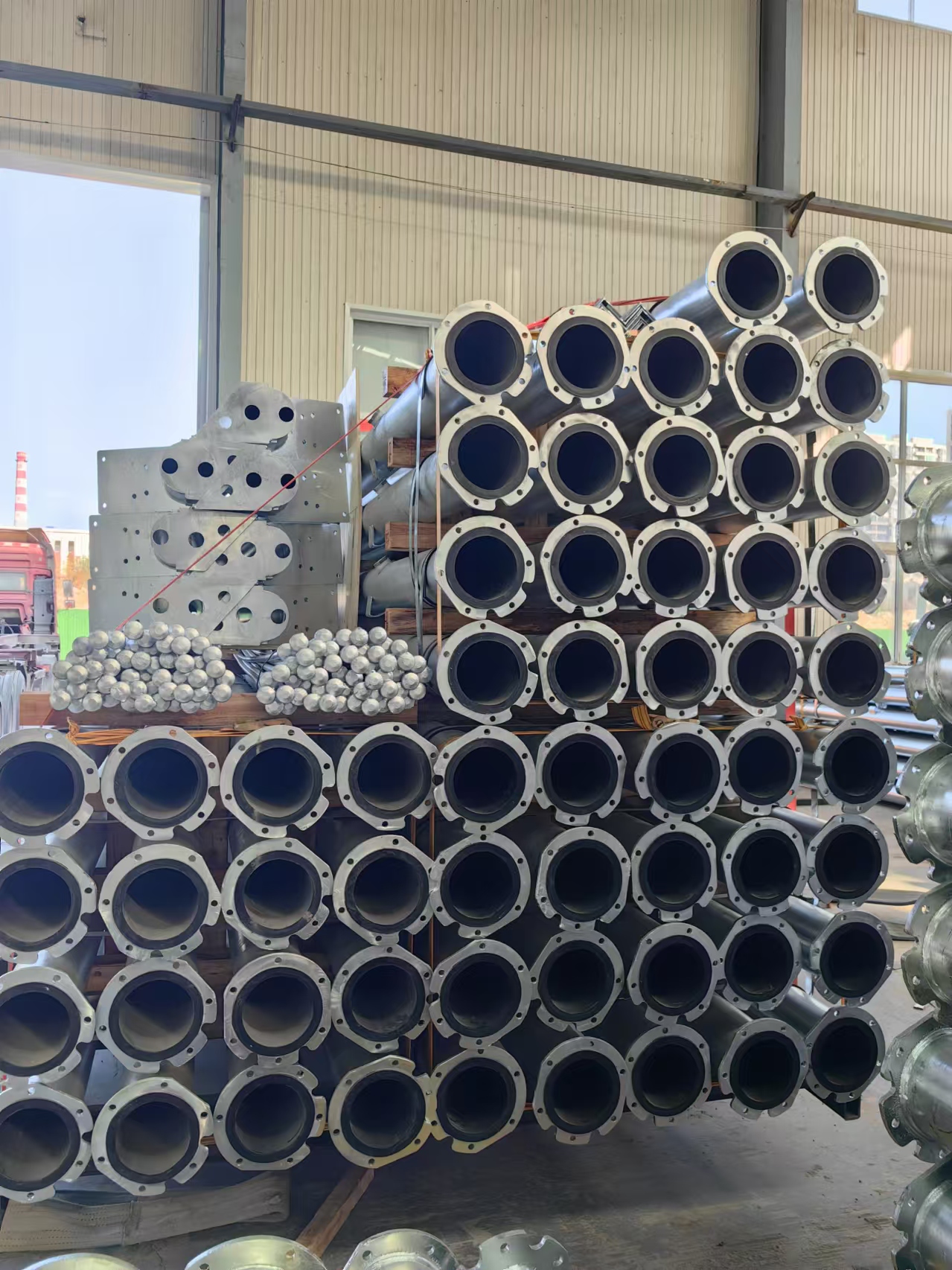
The JP800 uses metal and polyethylene as its primary materials. On a hose reel machine, the material split follows function: the frame and structural members carry the mechanical load of a machine weighing in the region of 2.18 tonnes, while the wetted pipe carries water at pressure across a long run.
The PE pipe is 90 mm in diameter and 300 m in length. Those two numbers do more work than any adjective. Length defines how far from the water point the machine can operate and therefore how many set-ups a field requires; diameter defines how much water can be delivered across that run and how much of the pump's pressure is consumed by friction along the way. Buyers comparing a traveler irrigation system against a fixed center pivot irrigation system should map the 300 m pipe length against the actual field geometry rather than against an idealised rectangle.
Material choice is also a maintenance signal. Polyethylene is not a short-life consumable in this role, and the company states that its irrigation equipment undergoes strict anti-corrosion and wind resistance testing to suit tropical, saline-alkali and high-wind farmland environments. Buyers can reasonably ask for the test regime behind that statement, and for the replacement parts list for anything that does wear — the pipe, the seals and the drive components.
From Dalian Factory Floor to Destination Port
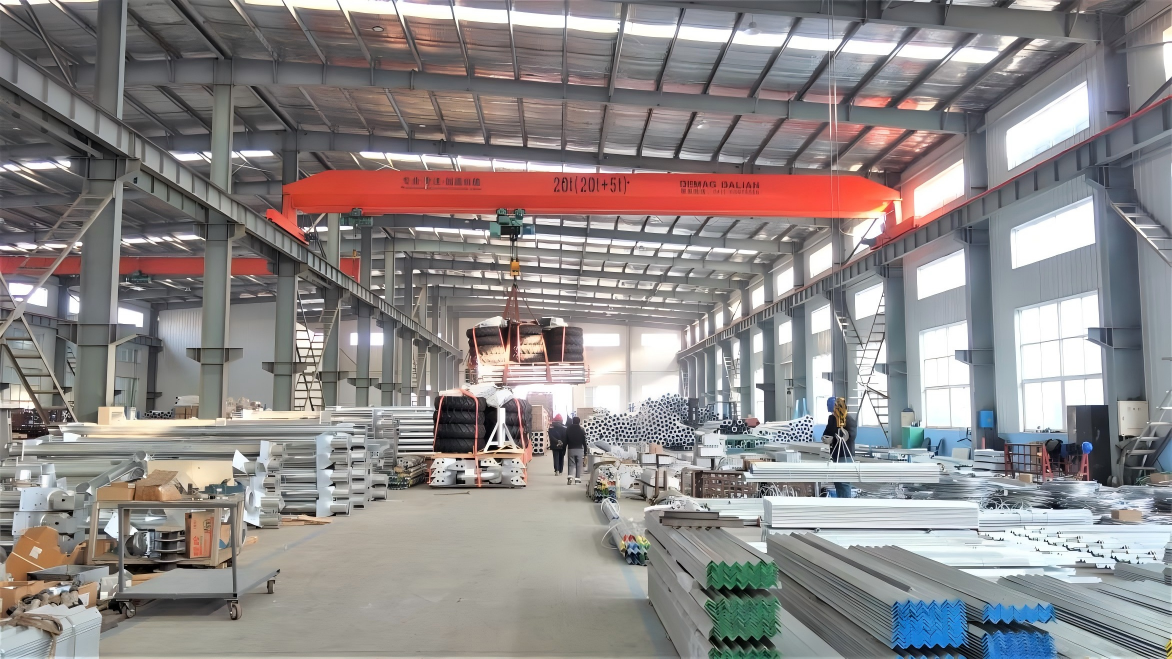
Factory evidence only becomes procurement evidence when it is specific. China Yulin Irrigation Equipment Co., Ltd. was established in 2009, operates a 64,653 m² factory with 152 employees and a 10-engineer R&D team, and reports annual output of 3,000 units, with approximately 60% of production exported to markets including Australia, New Zealand, Canada, Mexico, Africa, Central Asia, Russia and Kazakhstan. Its published product information for pivot systems states a supply capacity of 400 sets per year.
Two structural facts sit behind those numbers. The company reports that over 95% of machine spare parts are independently manufactured in-house, which supports part-to-part consistency and shortens the path to replacement components after commissioning. It also states that it accumulated manufacturing experience through OEM production for a global top irrigation company between 2000 and 2008, and that its workshops use robotic welding and precision processing. For a buyer, the relevance is not the equipment list itself but the implication: the tolerances that decide how a hose reel machine tracks, winds and seals are set inside one facility rather than assembled from multiple outside suppliers.
Geography contributes directly to the logistics argument. The factory is located in Lvshunkou District, Dalian City, Liaoning Province, and the company notes that it takes around two hours by truck from the factory to Dalian Port. That short inland leg reduces handling events between the packing line and the vessel, and it keeps the number of parties who touch the machine before shipment low.
Packaging, weighing and transit risk
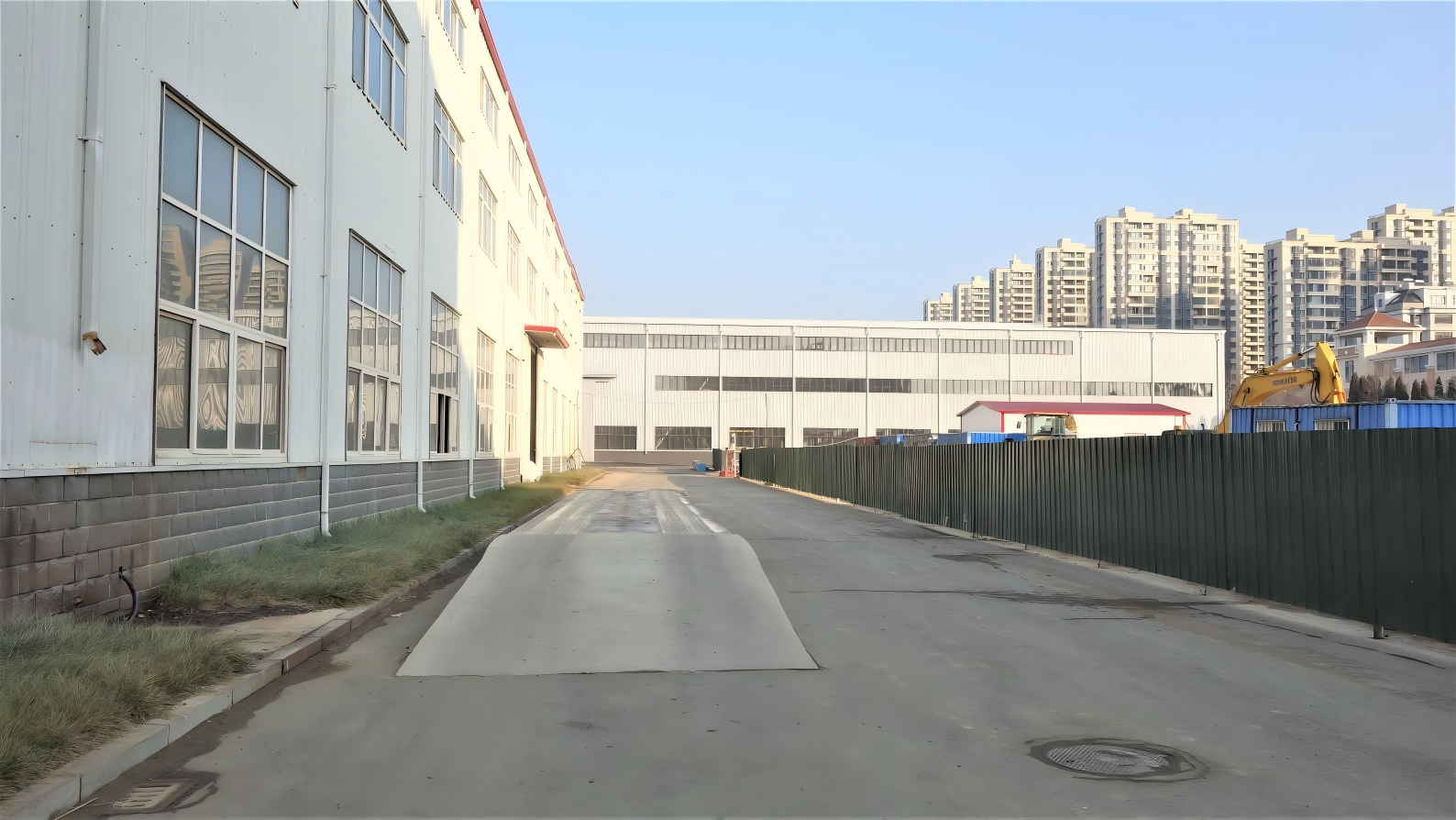
A 2.18-tonne machine with a 300 m pipe run generates a realistic risk list: loss or damage of parts in transit, wear and tear in service, and malfunction during installation or early operation. The company's stated control method is procedural rather than promotional. Pre-delivery checking and reinforced classified packaging are combined with photo archiving before dispatch, so the condition of the consignment at hand-over is documented rather than remembered. The weighing station and loading passage shown above are the physical counterpart of that process.
For after-delivery risk, the stated measures are free spare parts reissue for company-caused faults and in-warranty damage, 24-hour online technical support by engineers, and dispatch of engineers to client sites for installation, commissioning and operator training. Buyers evaluating any large traveler irrigation machine should ask for the same three things in writing: what is photographed before shipment, what is replaced free of charge and under what conditions, and who is reachable during the first operating season.
Application Fit: Where a Traveler Machine Earns Its Place
The company describes the machine's role in dry-season conditions as substituting for rainfall so that plants can thrive and grow vigorously. That framing is accurate but generic; the practical question is which farm layouts and scales it fits.
The stated best-fit range covers small-scale, middle-scale and large-scale farmland. A traveler machine is repositioned between set-ups, which suits plots that are irregular, split by obstacles, or scattered across several parcels where a fixed center pivot irrigation system's geometry would leave corners unserved. It also suits operations where the water source is fixed but the irrigated area moves season to season.
Two features lower the entry barrier. The minimum order quantity is 1 unit, so a single farm can evaluate the machine on its own ground before a dealer or cooperative commits to a fleet. And because the drive requires no electricity, the machine can be deployed on off-grid plots where an electric-powered pivot would first need a power connection as a separate project.
Market Context: Demand Is Rising Where Grid Power Is Not Guaranteed
The category backdrop supports that application logic. Mordor Intelligence estimates the global center pivot irrigation system market at USD 2.56 billion in 2025 and projects it to reach USD 5.67 billion by 2030. Published market-size figures vary widely by definition, however — some research houses scope equipment-only sales while others include full project construction — so a single figure should be read as a scoping choice rather than a settled number.
Where the demand is moving is more informative than the total. Lindsay Corporation secured a multi-year supply agreement for Zimmatic irrigation systems in the MENA region valued at more than USD 100 million in 2024, and Valmont Industries reported Agriculture segment sales of USD 278.0 million in Q4 2024, equal to 26.7% of total net sales. Large-scale project demand in water-constrained regions is being contracted in multi-year blocks, which pushes buyers toward suppliers who can demonstrate shipping capacity and installation support, not only product catalogues.
On the conformity side, ISO 11545:2009 remains the active international standard for determining the uniformity of water distribution from centre-pivot and moving lateral irrigation machines. Buyers comparing a hose reel irrigation system against pivot-based options should ask which test reference supports any stated irrigating rating, and whether the reference applies to the specific machine type under consideration.
JP800 Hose Reel vs Electric Pivot: The Comparison and Its Limits
Yulin's own comparison data positions the hose reel machine against a high-efficiency pivot irrigation machine driven by electricity. The claimed differences are directional and specific enough to be tested rather than accepted.
| Comparison dimension | JP800 hose reel (supplier-stated comparison basis) | Electric-powered high-efficiency pivot |
|---|---|---|
| Drive energy | Water turbine powered, no electricity required | Electricity powered |
| Irrigating rating | Stated 88%–98% | Not stated in the comparison data |
| Service life | Stated 25 years | Not stated in the comparison data |
| Initial cost | Stated 30% higher | Baseline in the comparison data |
| Total cost of ownership, 10 years | Stated 40% lower | Baseline in the comparison data |
| Maintenance | Stated 90% less maintenance required | Baseline in the comparison data |
| Crop output effect | Stated potential rise of 20%–40% | Baseline in the comparison data |
| Best fit | Small-scale, middle-scale and large-scale farmland | Small-scale, middle-scale and large-scale farmland |
The honest reading of that table is that the JP800 is not the cheaper machine at the point of purchase. A stated 30% higher initial cost is a real constraint, and it lands in the first budget cycle, while the 40% lower total cost of ownership is realised across ten years of energy, labour and maintenance. Buyers with tight capital budgets, short land tenure or high discount rates may legitimately prefer the electric pivot despite the operating-cost penalty. The comparison also depends on the price of the energy the pivot would consume and on the reliability of the supply that delivers it; where electricity is cheap and dependable, the advantage narrows.
A second boundary is operational rather than financial. Because the drive works from the water supply, machine performance is tied to the source, and because the machine is repositioned between set-ups, labour time for moving and resetting it is part of the operating model. On very large contiguous blocks with a permanent water point, a fixed center pivot irrigation system remains the more natural fit. The JP800 earns its place where geometry, scattered parcels or the absence of a grid connection make a traveler the better match — not where sheer scale is the only criterion.
A Pre-Contract Verification Checklist
Factory evidence is only useful if it is requested before signature. The following items are drawn directly from the JP800 specification set and the company's stated shipping and service practice, and each one converts a claim into a document.
- Packed dimensions and net weight, stated separately from working dimensions. For the JP800, expect 2450 × 2000 × 2250 mm packed against 6120 × 2330 × 2770 mm working, at 2180 kg (±30 kg).
- Photo archive of the packaging before container closing. Reinforced classified packaging with photo filing is the company's stated procedure; ask to see the archive for the actual consignment.
- The water-supply duty point. Confirm the flow and pressure required at the machine inlet and match them to the pump curve and pipe network.
- Certification and test documentation. CE, ISO9001 and CSA certification, plus the scope of the anti-corrosion and wind-resistance testing the company states its equipment undergoes.
- The reference behind any irrigating rating. ISO 11545:2009 is the active standard for water distribution uniformity of centre-pivot and moving lateral machines; confirm which reference applies to this machine type.
- In-house parts coverage. The company states that over 95% of spare parts are independently manufactured in-house; ask for the parts list and lead times for the wear items.
- Installation and training scope. Engineer dispatch for on-site installation, commissioning and operator training is stated as a service; confirm what is included in the commercial terms.
- Warranty handling for transit damage. Confirm the free spare parts reissue conditions and the 24-hour online technical support channel.
Future Outlook
Two pressures are likely to keep shaping how buyers evaluate machines in this category. The first is water and energy economics: as pumping and electricity costs become a larger share of farm operating budgets, equipment that removes an energy dependency altogether becomes easier to justify, even at a higher purchase price. The second is deliverability. Multi-year, region-scale contracts of the kind seen in MENA in 2024 reward suppliers whose factory output, packing discipline and port access are already in place rather than assembled per order.
For manufacturers, the practical implication is that the evidence file becomes the sales asset. Stated weights, dimension envelopes, pipe geometry, in-house parts coverage and documented pre-shipment inspection are the fields that let a buyer complete a decision without a site visit. For buyers, the implication is the mirror image: request those fields early, compare them across shortlisted suppliers, and treat any specification that cannot be documented as an open item rather than an assumption.
FAQ
No. The JP800 is water-turbine powered and operates without electricity, so no grid connection, transformer or cabling is required. The engineering constraint shifts to the water source: because the drive works from the water supply, buyers should confirm the flow and pressure required at the machine inlet with the manufacturer and match them to the farm's pump and pipe network.
Net weight is 2180 kg (±30 kg). Shipping dimensions are 2450 × 2000 × 2250 mm and overall working dimensions are 6120 × 2330 × 2770 mm. The shipping envelope is used for container planning, lifting equipment and inland transport; the overall envelope is used for deployed footprint, headland space and clearance. Both are needed for a complete logistics and site plan.
Yulin's comparison data records a 30% higher initial cost for the hose reel machine against a high-efficiency electric-powered pivot, with a 40% lower total cost of ownership over ten years. The same data records 90% less maintenance required and a potential 20%–40% rise in crop output, against a stated irrigating rating of 88%–98% and a stated 25-year service life. These are supplier-stated comparison figures and should be validated against the buyer's own energy, labour and crop economics.
The company's irrigation products are certified with CE, ISO9001 and CSA and undergo strict anti-corrosion and wind resistance testing. On water distribution uniformity, ISO 11545:2009 is the active international standard for centre-pivot and moving lateral irrigation machines; buyers should confirm which test reference applies to the specific machine type being quoted.
The minimum order quantity is 1 unit. Shipment risk is addressed through strict pre-delivery checking and reinforced classified packaging with photo archiving before dispatch. Company-caused faults and in-warranty damage are covered by free spare parts reissue, and 24-hour online technical support is provided by engineers; engineers are also dispatched to client sites for installation, commissioning and operator training.
Specification, factory and service statements in this article are drawn from China Yulin Irrigation Equipment Co., Ltd. product and company information. Market figures are attributed to Mordor Intelligence, Valmont Industries investor reporting and Lindsay Corporation reporting as dated in the text. The 2026 YULIN Pivot Catalogue is available for download: 2026 YULIN Pivot Catalogue (PDF).
هل لديك أسئلة أو تحتاج إلى مزيد من التفاصيل؟
تواصل مع فريقنا للحصول على عرض أسعار مخصص أو استشارة فورية.
طلب عرض أسعار
املأ النموذج أدناه وسيتواصل معك فريقنا بعرض مقترح مخصص.
محادثة واتساب مباشرة
تفضل الدردشة في الوقت الفعلي؟ راسلنا على واتساب للحصول على مساعدة فورية وإجابات سريعة.
- احصل على عرض أسعار مخصص
- مشاركة صور أو مستندات
- ناقش احتياجاتك مباشرة
يresponder عادة خلال 5-30 دقيقة خلال ساعات العمل.