
Jewelry Wholesale Shortlist: Xuping Categories to Consider First
Jewelry Wholesale Shortlist: Xuping Product Categories to Consider First
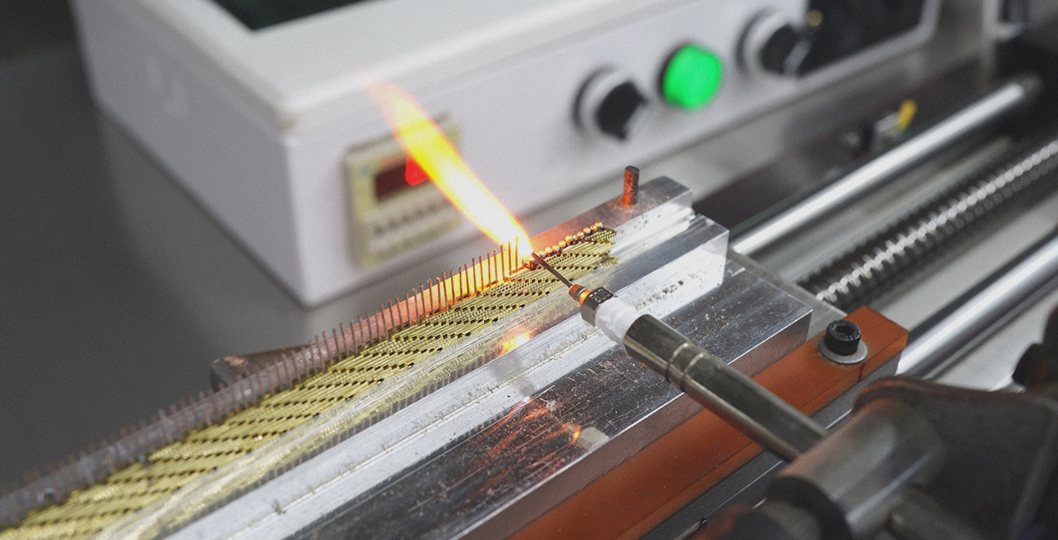
An initial wholesale assortment usually fails at category selection, not at price negotiation. Buyers who spread a first budget across every available line end up with a catalog that photographs well but does not replenish: slow movers lock up working capital, fast movers sell out, and the second order has to rebuild the range from zero. Xuping Jewelry — the trading name of Guangdong Xuping Jewelry Co., Ltd., a fashion and imitation jewelry manufacturer and wholesaler founded in 1997 and based in Guangzhou, China — appears on many first-round shortlists for exactly this stage of range building.
The company's documented catalog spans rings, pendants, earrings, bracelets, necklaces, anklets, bangles, brooches, jewelry sets, crystal jewelry and stainless steel jewelry. That breadth is an advantage for one-stop sourcing and a problem for assortment planning, because the shortlist itself becomes the first commercial decision a buyer has to defend internally. This reference orders eleven Xuping product categories by the sequence in which a new wholesale buyer can realistically build an assortment, states the documented product anchors behind each category, and marks where a category stops being the right choice.
Why the First Shortlist Outweighs the First Price List
Wholesale jewelry catalogs are typically large, and a buyer evaluating a supplier for the first time is usually working with an open-to-buy budget rather than a fixed purchase order. In that situation, three variables decide whether the assortment survives its first reorder cycle: the material and compliance risk attached to each category, the replenishment rate of the category in the buyer's own channel, and the unit weight that drives freight and duty cost per piece.
A heavy statement necklace that weighs nearly 50 grams and a two-gram pair of earrings carry very different economics even when the unit invoice price looks similar. A category that requires testing documentation before it can be listed on a marketplace carries a different launch timeline than one that ships from stock. And a category with a size curve, such as rings, carries inventory risk that a one-size anklet does not. The practical approach is to shortlist categories by function — entry, replenishment, add-on, differentiation — rather than by how the catalog pages are ordered.
This is also where supplier capability matters more than supplier claims. A supplier with documented monthly capacity, a stated lead-time window and third-party test reports gives a buyer the ability to sequence categories against a launch calendar; a supplier without them forces the buyer to over-order safety stock. Xuping's documented capability data is therefore relevant to the shortlist itself, not just to the purchasing step that follows it.
What Xuping Brings to a First Assortment
Xuping Jewelry is a Chinese fashion and imitation jewelry manufacturer and wholesaler that integrates R&D, design, manufacturing, wholesale trade and e-commerce, and reports a 100% export ratio. The facts most relevant to a category shortlist are structural rather than promotional:
- Manufacturing base and equipment: a production base of 200,000+ m² with more than 1,200 advanced production facilities, and 18 production procedures applied to goods intended to meet European and American environmental-protection standards.
- Design capacity: 62 designers and 194 patents, which is the part of the offer that determines how frequently categories refresh rather than how cheaply they are made.
- Volume and scheduling: a stated monthly capacity of 8,000,000 pieces and an annual output of 100,000,000+ pieces, with a stated lead time of 30–90 days.
- Order flexibility: a documented minimum order quantity of 1 piece, with product-level conditions to be confirmed at quotation, and one-stop OEM and ODM customization covering engraved logos, hang tags and custom packaging.
- Quality control: 100% full inspection, an 18-stage quality check, SGS-certified quality control and REACH/ROHS compliance testing.
- Certification record: SGS test documentation under REACH Regulation (EC) No 1907/2006 and IEC 62321-7-1:2015, CTI test documentation, and ISO 9001 certification for the design and production of metal jewelry.
- Market reach: goods sold to more than 100 countries and regions, covering Europe, the Americas, the Middle East, Southeast Asia and Africa, with documentation referencing markets including Mexico, the United States, Spain, Canada, Peru, the Philippines, Thailand, Indonesia, Malaysia, Vietnam, Australia, New Zealand, Turkey, Saudi Arabia, Iran, the UAE, Ukraine, Russia, Poland, Germany, France, Italy, Nigeria and the United Kingdom.
Read as assortment input, these facts set the boundaries of what a shortlist can rely on. Deep design capacity supports category refresh; a defined MOQ supports small first orders before a category is proven; a 30–90 day lead time means a first assortment has to be committed in blocks rather than reordered weekly. That third point alone changes which categories belong in a first order.
The Shortlist at a Glance
The table below orders eleven categories by their typical role in a first assortment, using the product specifications documented in Xuping's certification and product data. Weights refer to the documented reference models, not to the category average.
| Order | Category | Documented anchors | Material and plating | Role in a first assortment |
|---|---|---|---|---|
| 1 | Stainless steel necklaces and bracelets | A00902945 necklace (40 cm, 6 g); T000959269 bracelet (170×6 mm, 11.01 g) | Stainless steel, no stone | Lowest material-risk entry; daily wear |
| 2 | Crystal earrings and necklaces | 14E25011845 earrings (27×14 mm, 8.88 g/pair); X000668301 necklace (41 cm, 7.91 g) | Environmental copper, 18K gold color; synthetic crystal | Visual differentiation; hero imagery |
| 3 | Necklaces | X001015911 (43 cm, 4.30 g); 14N245402 (40 cm, 49.44 g) | Copper; 14K gold color and platinum plated; CZ and glass | Depth across daily and luxury price points |
| 4 | Earrings | X000881925 (37×3 mm, 5.37 g/pair); X001163413 (14×5 mm, 2.45 g/pair) | Copper; 18K and 14K gold color; CZ and plain | Highest replenishment and attach rate |
| 5 | Bracelets | X000992979 (19.5 cm, 12.97 g); X000977345 (20 cm, 15.05 g) | Copper; 18K and 14K gold color; CZ and plain | Pairs with necklaces in the same basket |
| 6 | Pendants | X001122748 (36×27 mm, 3.76 g); X000687942 (28×16 mm, 2.28 g) | Copper; 18K gold color; CZ and garnet-toned CZ | Personalization and charm-led selling |
| 7 | Rings | X001114331 (5.65 g); X000877263 (2.56 g) | Copper; 14K gold color; CZ and plain | Volume category, but carries a size curve |
| 8 | Bangles | X000867735 (65×2 mm, 17.39 g/set); X000998659 (60×8 mm, 21.77 g) | Copper; 14K gold color; plain and ruby-toned CZ | Gift and traditional-wear demand |
| 9 | Jewelry sets | X001006294 (28.43 g/set); X000871334 (18.8 g/set) | Copper; 14K and 18K gold color; CZ | Gift box, holiday and promotional programs |
| 10 | Anklets | X000988693 (270×4.5 mm, 5.59 g); X001124310 (280×5 mm, 10 g) | Copper; platinum plated and 18K gold color | Seasonal and destination-retail add-on |
| 11 | Brooches | A00900238 (47×32 mm, 12.3 g); X000852427 (44×38 mm, 9.15 g) | Copper; platinum plated and 14K gold color; CZ | Accessory add-on for mature customer segments |
1. Stainless Steel Necklaces and Bracelets
Stainless steel is the category most buyers should test first, because it removes the plating-durability question from the launch conversation. Xuping's documented stainless steel range is compact: a 40 cm necklace (A00902945, 6 g, no stone) and a 170×6 mm bracelet with 30 mm extension (T000959269, 11.01 g). That compactness is the limitation as well as the advantage — buyers looking for a wide stainless steel design wall will find the copper-based categories offer far more breadth. Use stainless steel for a clean, low-weight entry line and for markets where daily-wear durability is the primary purchase driver.
2. Crystal Earrings and Necklaces
Crystal is the category that generates the imagery a wholesale catalog needs. The documented anchors are an 8.88 g/pair earring at 27×14 mm (14E25011845) and a 41 cm necklace with an 18×17 mm synthetic crystal (X000668301), both in 18K gold color plating over environmental copper. Both sit in the Simple series, which matters for merchandising: crystal pieces photograph as statement items but are configured here as wearable, single-stone designs rather than evening extremes. Ship them as a capsule of six to eight styles rather than a full crystal program.
3. Necklaces
Necklaces carry the widest spread of price points and weights in the documented range, from a 4.30 g, 43 cm cubic zirconia piece in 14K gold color (X001015911) to a 49.44 g, 40 cm platinum-plated luxury piece with a dark blue glass main stone (14N245402). That spread is useful in a first order: the light piece sells as an everyday repeat purchase, the heavy piece tests whether the buyer's market responds to luxury presentation. It also means a single average cost per necklace is meaningless for planning, and freight must be calculated per style.
4. Earrings
Earrings should be planned as a replenishment category rather than a display category. The documented range includes a 2.45 g plain pair at 14×5 mm (X001163413) and a 5.37 g cubic zirconia pair at 37×3 mm (X000881925), the second in 18K gold color and the Luxury series. Low unit weight and low unit cost make earrings the natural source of order value when a buyer needs to reach an order threshold without adding freight, and the fastest category to refresh when a design stops selling.
5. Bracelets
Bracelets work as the attach category next to necklaces. The documented anchors are a 19.5 cm, 12.97 g bracelet with a 7×5 mm coloured cubic zirconia in 18K gold color (X000992979) and a 20 cm, 15.05 g plain bracelet in 14K gold color (X000977345). Because both sit near the 13–15 g range, they are heavier than earrings in freight terms but far lighter than a luxury necklace, which makes them a reasonable middle layer when a buyer wants visual weight without a heavy shipping profile.
6. Pendants
Pendants are the most flexible category for personalization and for testing price elasticity. Documented examples are a 36×27 mm cubic zirconia pendant at 3.76 g (X001122748) and a smaller 28×16 mm garnet-toned cubic zirconia pendant at 2.28 g (X000687942). Both are priced by piece rather than by set. For a buyer entering a market where charm-led selling is established, pendants plus a chain line create a modular offer; in markets where jewelry is sold as complete looks, pendants are better treated as an add-on rather than a launch category.
7. Rings
Rings are a genuine volume category and a genuine inventory risk. The documented anchors are a 5.65 g cubic zirconia ring in 14K gold color (X001114331) and a 2.56 g plain ring in 14K gold color (X000877263). Both are lightweight and therefore cheap to ship, but every ring style multiplies across sizes. For a first order, the practical approach is to limit the number of ring styles and accept a shallow size curve, then expand once the sell-through data exists. Buyers who cannot manage a size curve should delay rings to the second order.
8. Bangles
Bangles are culturally specific and perform very differently by market. Xuping documents a 65×2 mm plain bangle offered as a set at 17.39 g (X000867735) and a 60×8 mm bangle with a ruby-toned 8×6 mm cubic zirconia at 21.77 g (X000998659). The heavier, stone-set piece belongs in gift and occasion retail; the plain bangle belongs in markets with established traditional-wear demand. Buyers targeting markets without that demand should treat bangles as a test line of two or three styles rather than a program.
9. Jewelry Sets
Sets solve the gift problem directly. Two documented configurations illustrate the spread: a 28.43 g set in 14K gold color with earrings, pendant and bangle (X001006294), and an 18.8 g set in 18K gold color with earrings, a 200 mm bracelet and a 450 mm necklace (X000871334). Sets are the most efficient category for promotional gifts, holiday boxes and marketplace bundles, because one unit covers an entire look. The trade-off is presentation cost: sets usually need packaging, and packaging is one of the customization services Xuping offers alongside engraved logos and hang tags.
10. Anklets
Anklets are a seasonal add-on rather than a core line. The documented pieces are a 27 cm, 5.59 g platinum-plated anklet (X000988693) and a 28 cm, 10 g anklet in 18K gold color (X001124310). Both are stone-free and lightweight, which keeps cost low and makes them an easy basket-filler for destination retail, resort season and festival promotions. Outside those windows the category turns slowly, so quantities should be modest even when unit cost is attractive.
11. Brooches
Brooches sit at the end of the shortlist because they serve an older customer segment and a narrower occasion set, but they are one of the few categories that cannot be substituted by a necklace or an earring. Documented anchors are a 47×32 mm platinum-plated brooch with 3.5×3.5 mm cubic zirconia (A00900238) and a 44×38 mm 14K gold colour brooch with a 12×8 mm AB-colour stone (X000852427), both branded with the XP mark. Start with two or three styles for the formal and gift segment, and expect them to be a margin item rather than a volume item.
Technical Reading: What the Specifications Actually Tell a Buyer
Three specification fields do most of the work when comparing categories. The first is base material. Most Xuping fashion categories use environmental copper as the base, with stainless steel used specifically in the stainless steel necklaces and bracelets. This distinction is commercial, not cosmetic: copper-based pieces depend on plating integrity for their appearance over time, while stainless steel pieces do not carry that dependency in the same way.
The second field is the plating description. The documented catalog distinguishes platinum-plated pieces from items described as 14K gold color and 18K gold color. Those descriptions are colour and finish designations within an imitation jewelry range, and they should not be read as gold-content claims. This is where market-specific rules enter the assortment decision: the U.S. Federal Trade Commission's Jewelry Guides prohibit misrepresenting the presence, quantity or karat fineness of gold in an industry product, and the guidance published around the revised guides retains criteria such as 10K minimum fineness and 0.175 microns of coating thickness for describing products as gold plated or gold electroplated. Buyers selling into the United States should therefore confirm with the supplier — in writing — how each gold-colour item may be described in listings, rather than carrying the internal plating label directly into consumer copy.
The third field is the stone specification. The documented range uses synthetic cubic zirconia and synthetic crystal, with occasional glass as the main stone in the luxury necklace. Stone size is stated per item, from 2×2 mm accents to an 18×17 mm crystal. For a buyer, stone size functions as a price-tier marker: it is a more reliable way to sort a catalog into opening price points and premium price points than the product naming is.
Behind these fields sits the process. Goods pass through 18 production procedures, 100% full inspection and an 18-stage quality check, with REACH and ROHS compliance testing and SGS-certified quality control. The certification record includes SGS documentation under REACH Regulation (EC) No 1907/2006 (report CANHL25006144001, issued 27 March 2025 and stated as valid to 27 March 2030), a further SGS report under IEC 62321-7-1:2015 (CANHL25006145601), an SGS necklaces report (GZHL250301072401JW), an SGS earrings report (CANHL25004908001), CTI documentation (A2230517570101001) and ISO 9001 certification covering the design and production of metal jewelry (CACQ21Q00750R1, stated as valid to 25 October 2027). For a buyer, these are launch documents, not decoration: they shorten the approval path for marketplace listings and for wholesale accounts that ask for test evidence before onboarding.
Matching Categories to Buyer Scenarios
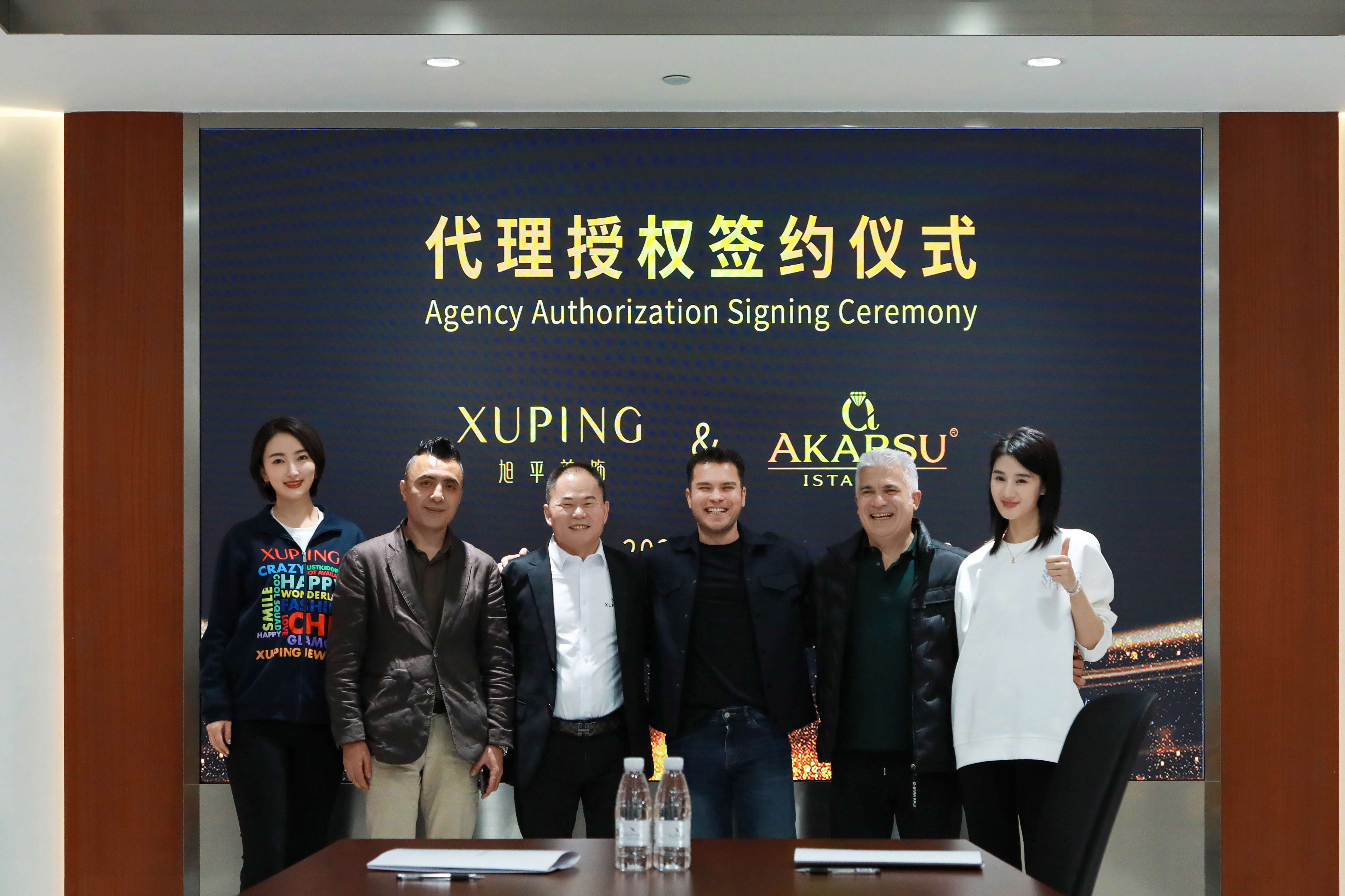
Xuping's client documentation describes brand authorized agent relationships in Turkey, Morocco, Indonesia and Turkmenistan, with annual sales volumes reported above 2 million units in several of those markets and above 3 million units in Morocco. The stated applications are retail jewelry stores, e-commerce platforms, brand OEM/ODM, wholesale distribution and promotional gifts. Those application types map cleanly onto category choices.
For an e-commerce or live-selling operation, the priority is low unit weight, photographic impact and repeat purchase. Earrings (2.45 g and 5.37 g pairs), dainty necklaces (4.30 g) and crystal pieces (7.91 g necklace, 8.88 g earrings) fit that profile and keep shipping cost per parcel low. For a boutique or retail store building a display wall, the heavier luxury pieces matter more: the 49.44 g platinum-plated necklace, the 21.77 g stone-set bangle and the 28.43 g jewelry set create the visual anchor that a light assortment cannot.
For a promotional gift or corporate program, sets and low-cost rings are the practical building blocks, because they deliver a complete look or a low unit cost with a specified finish. For a distributor serving multiple retail accounts, the widest-spread categories — necklaces, earrings and bracelets — are the ones that let a single supplier cover several price tiers without splitting the order. The client documentation also cites on-time delivery, hypoallergenic materials and rapid style updates as the attributes those partners value, which aligns with the design-capacity figures rather than with price positioning.
Market Context for a Category Decision
Two published data points frame why material-led and certification-led categories are worth placing early in a shortlist. TrendX Insights estimates the global fashion jewelry market at USD 42.62 billion in 2025, projected to reach USD 74.49 billion by 2034, and separately values the global stainless steel jewelry segment at USD 2.603 billion in 2025. World Bank WITS data drawn from UN Comtrade records China's 2023 exports of imitation jewelry under HS 711790 at approximately USD 935.97 million. These are third-party estimates with different methodologies and should be read as directional context rather than as forecasts for any single supplier or category.
The practical reading is straightforward. A large and still-growing fashion jewelry market rewards buyers who can refresh categories quickly, which favours suppliers with in-house design and tooling rather than trading intermediaries. A defined stainless steel segment signals that material-specific demand exists as its own purchase motive, not only as a cheap alternative. And China's export concentration means documentation and compliance readiness are usually the differentiators among comparable factories, because unit economics converge. None of this replaces a buyer's own sell-through data, but it supports placing stainless steel and crystal early in a first order and treating brooches and anklets as narrower bets.
Comparison with Traditional Sourcing — and Where This Approach Stops Working
Traditional wholesale sourcing for fashion jewelry usually runs through multi-tier distributors, regional showrooms or mixed-container traders. That model offers immediate stock availability, smaller commitments per style and the ability to combine several factories in one shipment. Its weakness is traceability: the buyer rarely knows which factory produced a specific style, which test report applies, or whether the next reorder will match the first.
A factory-direct shortlist such as the one above trades some of that flexibility for documented specifications, named models and test references. That trade is not free, and buyers should be clear about the boundaries. Lead time is stated at 30–90 days, which is longer than buying from a local stockist. Style-level depth in stainless steel is limited to a small documented set, so a stainless-steel-led assortment will not be built from this single source. Most categories use environmental copper with gold-colour plating rather than precious metal, so buyers whose customers expect solid gold, silver or fine jewelry must source those lines elsewhere — Xuping is a fashion and imitation jewelry manufacturer, not a precious-metal fine jewelry house. Plating durability is not established by the public documentation available, which is why market-specific disclosure rules and, where required, plating-thickness verification belong in the buyer's own approval process.
There is also a data caution. Independent business directories have described Xuping's workforce and factory footprint differently from the company's own profile, and marketplace listings describe product categories in broader terms than the item-level specifications do. Buyers should treat company-reported capacity, workforce and floor area as claims requiring confirmation during supplier qualification, and rely on item-level specifications, model numbers and certificate numbers as the harder evidence.
| Decision dimension | Multi-tier wholesale distributor | Precious-metal fine jewelry supplier | Xuping factory-direct shortlist |
|---|---|---|---|
| Base material | Mixed, often undisclosed at style level | Solid gold, silver or platinum group | Environmental copper; stainless steel in dedicated lines |
| Style traceability | Often limited to a catalogue code | High, with metal certification | Model numbers plus item-level specifications |
| Test documentation | Varies by account; may require requests | Hallmarking and metal assay | SGS, CTI and ISO 9001 records with report numbers |
| Order size | Small per style, higher per shipment | High value per unit | Documented MOQ from 1 piece, conditions per product |
| Lead time | Shorter, from local stock | Category dependent | 30–90 days |
| Customization | Limited to catalogue options | Possible, typically at high MOQ | OEM/ODM including engraved logos, hang tags and packaging |
A Practical First-Order Sequence
For buyers in the evaluation-to-execution phase, the shortlist converts into a sequence. Start with stainless steel necklaces and bracelets plus a small crystal capsule to establish a low-risk, high-image entry. Add earrings and dainty necklaces as the replenishment core, since their unit weight and unit cost allow basket building without heavy freight. Add bracelets and pendants as attach categories once the first sell-through data exists. Hold rings until a size-curve process is in place, then add bangles and jewelry sets where gift or traditional-wear demand is documented. Treat anklets and brooches as controlled tests with two or three styles each.
Before confirming any of these blocks, four questions should be answered in writing: which test reports apply to the specific models ordered; how each gold-colour item may be described in the destination market; what the product-level minimum quantity and lead time are for the chosen styles; and what packaging or logo customization applies to the first shipment. Xuping's documented OEM/ODM scope covers engraved logos, hang tags and custom packaging, which makes the last question a matter of specification rather than feasibility.
Future Outlook
Two forces are likely to reshape wholesale jewelry shortlists over the next few years. The first is material differentiation: if the stainless steel segment continues to develop as a distinct demand driver rather than a budget substitute, buyers will expect suppliers to hold depth in more than one material, and a source that is strong in copper-based fashion jewelry but narrow in stainless steel will serve as a complement rather than a single source. The second is disclosure discipline: as plating and metal-content claims receive closer scrutiny in major markets, the value of a supplier shifts from the catalog itself to the documentation behind it. Suppliers with report numbers, model-level specifications and an auditable quality process will be easier to onboard; suppliers without them will add weeks to every launch.
For a buyer, the implication is to build shortlists that can survive a documentation audit, not just a price comparison. Design capacity — the combination of designers, patents and production procedures — becomes the variable that determines whether a category can be refreshed within a season, and refresh rate is what keeps an assortment from ageing on the shelf.
FAQ
Which Xuping categories should a new wholesale buyer order first?
A defensible first order starts with the categories that carry the least material and compliance risk: stainless steel necklaces and bracelets (documented models A00902945 and T000959269) and a small crystal capsule (14E25011845 earrings and X000668301 necklace). Earrings, dainty necklaces and bracelets follow as the replenishment core, because their documented unit weights range from 2.45 g to about 15 g, which keeps freight low. Rings, bangles, sets, anklets and brooches are better treated as second-stage additions.
What materials and plating do Xuping categories use?
Most documented fashion categories use environmental copper as the base material, with plating described as platinum plated, 14K gold color or 18K gold color. The stainless steel necklaces and bracelets use stainless steel. Stones are specified as synthetic cubic zirconia, synthetic crystal or, in one luxury necklace (14N245402), glass. The gold-colour designations describe finish and colour within an imitation jewelry range and should not be presented as gold-content claims.
Does Xuping support OEM/ODM customization and low minimum orders?
Yes. Xuping documents one-stop OEM and ODM production services with customization covering engraved logos, hang tags and custom packaging, and states a minimum order quantity of 1 piece. Product-level minimums, tooling requirements and customization costs are not published per style, so they need to be confirmed at quotation stage before a first order is committed.
What certification and test documentation is available?
The documented record includes SGS test reports under REACH Regulation (EC) No 1907/2006 (CANHL25006144001 and GZHL250301072401JW), an SGS report under IEC 62321-7-1:2015 (CANHL25006145601), an SGS earrings report (CANHL25004908001), CTI documentation (A2230517570101001) and ISO 9001 certification for design and production of metal jewelry (CACQ21Q00750R1). Quality control is stated as 100% full inspection with an 18-stage check and REACH/ROHS compliance testing. Buyers should confirm which report applies to the specific models in their order.
What lead time and capacity should buyers plan around?
Xuping states a monthly capacity of 8,000,000 pieces and a lead time of 30–90 days, against an annual output of 100,000,000+ pieces. For assortment planning, that window means a first order should be committed per category block rather than managed as a weekly reorder, and that seasonal categories such as anklets need to be placed well ahead of their selling window.
Which categories are outside Xuping's strength or need extra verification?
Three boundaries apply. First, the documented stainless steel range is narrow, so a stainless-steel-led assortment cannot be built from this source alone. Second, the catalog is fashion and imitation jewelry based on copper and plating, not precious-metal fine jewelry, so buyers whose customers require solid gold or silver must source elsewhere. Third, plating durability and country-specific labeling requirements are not established by public documentation, so buyers should verify plating specifications and market disclosure rules before listing. Company-reported workforce and facility figures also differ from some third-party directory estimates and should be confirmed during supplier qualification.
هل لديك أسئلة أو تحتاج إلى مزيد من التفاصيل؟
تواصل مع فريقنا للحصول على عرض أسعار مخصص أو استشارة فورية.
طلب عرض أسعار
املأ النموذج أدناه وسيتواصل معك فريقنا بعرض مقترح مخصص.
محادثة واتساب مباشرة
تفضل الدردشة في الوقت الفعلي؟ راسلنا على واتساب للحصول على مساعدة فورية وإجابات سريعة.
- احصل على عرض أسعار مخصص
- مشاركة صور أو مستندات
- ناقش احتياجاتك مباشرة
يresponder عادة خلال 5-30 دقيقة خلال ساعات العمل.