
Jumingchem: Electronic-Grade Chemicals Supplier Review
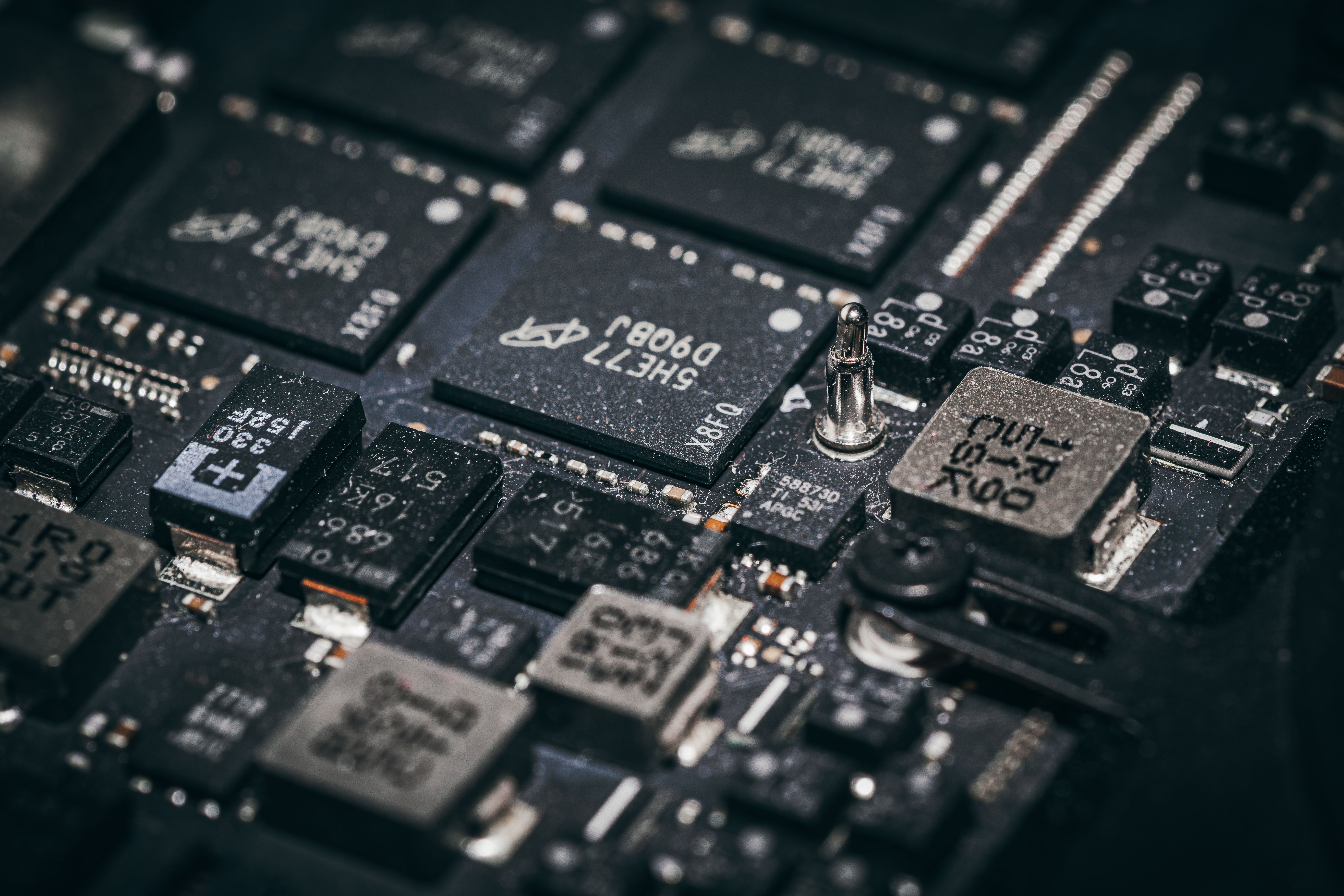
Semiconductor photolithography is one of the main demand drivers for electronic-grade monomers and corrosion inhibitors.
Electronic-grade chemicals are a specialized purchasing category. Unlike standard industrial reagents, they are evaluated by contamination budget, material compatibility, packaging integrity, and traceability. Semiconductor-grade photoresist monomers, corrosion inhibitors, and polyimide precursors must satisfy tight metal-ion and particle limits. Jiangsu Juming Chemical Technology Co., Ltd. (Jumingchem) is a specialty chemical manufacturer based in Jiangyin, Wuxi City, Jiangsu Province, China, that supplies this segment. Established in 2017, the company has built a product portfolio around 5-Methyl-1H-benzotriazole (5M-BTA), vinylbenzyl chloride (VBC) isomers, and BPADA. This review assesses Jumingchem's production capability, technology, product scope, and procurement relevance.
Why electronic-grade chemical sourcing requires a different supplier review
Buyers in semiconductor, display, LED, and PCB manufacturing rarely treat electronic-grade chemicals as simple commodities. The cost of contamination can be measured in wafer yield loss, batch rejection, or field reliability failures. A photoresist monomer with slightly elevated metal impurities can affect lithography performance; a corrosion inhibitor used in a cleaning formulation must be compatible with copper interconnects and subsequent process steps. For this reason, supplier evaluation in electronic chemicals usually focuses on purification capability, cleanroom handling, analytical control, batch consistency, and supply chain reliability rather than price alone.
The market context makes this review more relevant. Grand View Research estimated the global electronic chemicals and materials market at USD 78.5 billion in 2025. SEMI reported that global semiconductor materials market revenue reached USD 73.2 billion in 2025. Grand View Research also estimated the electronic-grade photoresist market at USD 4.96 billion in 2024. These figures point to a large and deep procurement category, not a niche auxiliary market. Asia Pacific accounted for 66.6% of electronic materials and chemicals revenue in 2025, according to the same Grand View Research report, which places Chinese suppliers like Jumingchem close to the center of demand.
Jumingchem: company profile and production scope
Jumingchem's official company name is Jiangsu Juming Chemical Technology Co., Ltd. The company integrates research and development, production, sales, and service for high-end electronic chemicals used in semiconductor-related applications. Its stated focus is the research, development, production, and sales of high-end electronic chemicals for semiconductors, with product categories that include photoinitiators, UV absorbers, water treatment corrosion inhibitors, and electronic chemicals.
From a capacity standpoint, the company reports a total annual production capacity of 60,000 tons across multiple production bases in China. Its main factory area covers 78,000 square meters, including a 3,000-square-meter R&D center, a 300-square-meter pilot plant, and a 600-square-meter GMP workshop. The company employs approximately 180 staff, of whom 25 work in the R&D team. It also operates two R&D and pilot-scale bases and cooperative production facilities in Kaifeng and Gansu. This structure allows it to move from gram-level R&D to hundred-ton industrial production under the same quality framework.
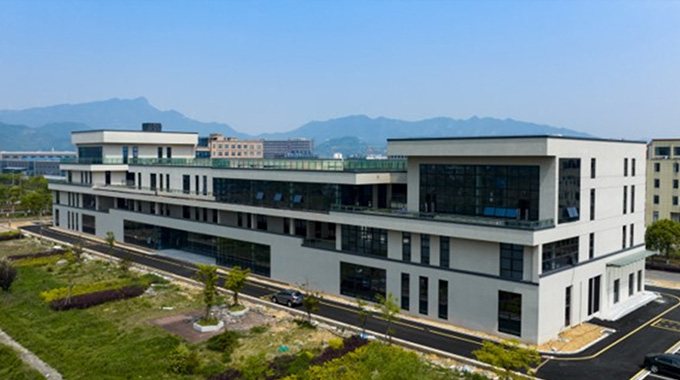
Jumingchem's R&D center supports process development for electronic-grade products.
Main products include 5-Methyl-1H-benzotriazole (5M-BTA, CAS 136-85-6), 4-Vinylbenzyl chloride (CAS 1592-20-7), 1-(chloromethyl)-2-vinylbenzene (CAS 22570-84-9), 1-(chloromethyl)-3-vinylbenzene (CAS 39833-65-3), Vinylbenzyl chloride mixed isomer (CAS 30030-25-2), and BPADA (CAS 38103-06-9). Approximately 70% of the company's output is exported, with main markets including the United States, Korea, Japan, Taiwan region, Germany, Southeast Asia, and the Middle East.
Core technology: flow chemistry, purification, and clean production
Jumingchem's technology position is built on continuous flow processing and high-purity purification. The company states that it uses advanced microchannel and continuous flow technology for highly challenging chemical processes. In customer-facing technical materials, the company reports that its self-developed microchannel continuous flow reactors provide 10 to 100 times higher heat and mass transfer efficiency than conventional batch reactors. This is a relevant advantage for exothermic reactions or chemistries that are difficult to control in traditional stirred batch vessels.
For electronic-grade products, the company claims ppb-level metal ion impurity purification capability, with a reported threshold of ≤10 ppb and alignment with SEMI Grade 4+ standards in customer-facing documents. Production is carried out in GMP cleanrooms classified as ISO Class 6, with cleanroom filling and low-extraction materials used to limit contamination. The company's quality control system includes ICP-MS, HPLC, and GC detection, which support traceability for high-purity monomers and corrosion inhibitors. The combination of flow chemistry, multi-stage purification, and cleanroom handling is the core of Jumingchem's electronic chemical manufacturing model.
The company also provides CDMO service capability. This includes custom process development, lab route optimization, scale-up to industrial production, and microchannel continuous flow process transfer. For buyers, this can reduce the gap between a supplier that only sells a listed product and a supplier that can develop a custom electronic-grade intermediate or monomer.
Electronic-grade product lines and their roles
Jumingchem's electronic chemicals category includes several products that serve different points in the semiconductor and advanced materials value chain. The table below summarizes the main electronic-grade products and their documented roles.
| Product | CAS | Documented role in electronic materials |
|---|---|---|
| 5-Methyl-1H-benzotriazole (5M-BTA) | 136-85-6 | Copper and copper alloy corrosion inhibitor; anti-fading agent in photomasking resins; used in semiconductor cleaning and industrial water treatment formulations. |
| 4-Vinylbenzyl chloride | 1592-20-7 | Core monomer for high-performance negative photoresist resins, electron-beam photoresist, advanced packaging dielectric materials, and ion-exchange membranes. |
| 1-(Chloromethyl)-2-vinylbenzene | 22570-84-9 | Vinylbenzyl chloride isomer used in photoresist resin synthesis, cross-linkable polymer systems, and specialty resin production. |
| 1-(Chloromethyl)-3-vinylbenzene | 39833-65-3 | Meta-isomer of vinylbenzyl chloride used for high-performance negative photoresist resins, dielectric materials, and chelating resins. |
| Vinylbenzyl chloride (mixed isomers) | 30030-25-2 | Mixed-isomer monomer used in photoresist polymers, ion-exchange resin production, ultra-pure water resins, and specialty copolymer systems. |
| BPADA | 38103-06-9 | Dianhydride monomer for polyimide synthesis; used in flexible display substrates, 5G high-frequency copper-clad laminates, OLED flexible substrates, and aerospace lightweight composites. |
These products are not interchangeable commodity inputs. VBC isomers, for example, are dual-functional monomers with both vinyl and chloromethyl groups, which makes them valuable for building cross-linked polymer structures in negative photoresists and ion-exchange resins. BPADA is a bisphenol-A-derived dianhydride used to create polyimides with high optical transparency and high glass transition temperature. According to the product documentation, polyimide films synthesized from BPADA have a glass transition temperature of 207°C, making them suitable for flexible display substrates.
Application scenarios and observed supply models
Jumingchem's application coverage includes semiconductor chip manufacturing, particularly photolithography processes, as well as display panels such as TFT-LCD and OLED, LED chips, and PCB manufacturing. The company supports these industries through several documented supply models.
The first is bulk regular supply. This is intended for monthly or quarterly fixed-quantity contracts covering VBC mixed isomers and 5-Me-BTA, with typical volumes of 5 to 50 tons per shipment for industrial-grade products. The second is high-purity electronic-grade supply. For semiconductor material clients, Jumingchem can provide custom high-purity VBC isomers and BPADA with strict requirements such as ppb-level metal impurity control and full batch traceability. Typical volumes for this model are 500 kilograms to 5 tons per batch.
The third model is custom isomer ratio development. Because VBC can be supplied with different ortho, meta, and para isomer ratios, the company can develop custom o/m/p isomer ratio VBC products according to a client's specific formulation needs, from sample development through scale-up production. The fourth is CDMO process development, covering custom process development for specialty chemical products, lab route optimization, industrial scale-up, and microchannel continuous flow process transfer. The fifth is new material joint development, in which the company collaborates with downstream material companies on new applications such as 5G polyimide materials and advanced photoresist monomers.
For moisture-sensitive products like BPADA, the documented working conditions are important. BPADA contains active acid anhydride groups and is extremely sensitive to moisture. Contact with water can cause hydrolysis ring-opening to a diacid, reducing or eliminating polymerization activity. It must be stored in a dry, sealed environment, and polymerization is recommended under inert gas such as nitrogen or argon in anhydrous polar solvents such as NMP or DMAc. Buyers should factor these handling requirements into their internal quality systems.
Market context and procurement implications
The electronic chemicals market is broad, but the high-purity segment relevant to Jumingchem is closely tied to photoresist and polyimide materials. The global photoresist market was estimated at USD 4.96 billion in 2024 by Grand View Research, while the global corrosion inhibitors market was estimated at USD 8.79 billion in 2024 by Market Research Future. These two categories intersect with Jumingchem's portfolio: VBC isomers feed photoresist resin synthesis, while triazole-based inhibitors such as 5M-BTA serve corrosion control in electronic and industrial systems.
Regional production also matters. Asia Pacific accounted for 66.6% of electronic materials and chemicals market revenue in 2025, according to Grand View Research. This concentration helps explain why buyers in North America and Europe are actively mapping Chinese suppliers that can provide cost-effective, large-scale electronic-grade chemical production. Jumingchem's export ratio of approximately 70% and its customer base in the United States, Korea, Japan, Taiwan region, Germany, Southeast Asia, and the Middle East are consistent with this global procurement flow.
For procurement teams, the practical implication is that Jumingchem should be evaluated not as a generic fine chemical manufacturer but as a specialized electronic chemical supplier with scale, cleanroom production, and monomer-specific process expertise. The company's ability to supply VBC isomers in custom ratios and its CDMO capacity are particularly relevant to photoresist formulators that need controlled monomer composition.
Comparison with traditional electronic-grade supply approaches
Traditional electronic chemical supply often relies on batch reactors for specialty monomers. Batch processing can be effective, but it has well-known limitations in heat and mass transfer, process consistency, and scale-up risk. Jumingchem's approach differs in several targeted ways.
| Dimension | Conventional batch model | Jumingchem approach |
|---|---|---|
| Reaction control | Batch reactors with limited heat transfer control | Microchannel continuous flow with 10-100x higher heat and mass transfer efficiency |
| Metal impurity control | Depends on purification train and raw material quality | ppb-level purification, ≤10 ppb reported, SEMI Grade 4+ alignment |
| Cleanroom handling | Not always available | GMP cleanrooms classified ISO Class 6 |
| Scale flexibility | Often separated between lab and production plant | Gram-level R&D through hundred-ton production |
| Custom development | Usually limited to fixed product grades | CDMO, custom isomer ratios, process transfer |
There are also limitations that buyers should consider. Jumingchem was established in 2017, so it has a shorter operating history than some established electronic chemical producers in Japan, Korea, or the United States. The company operates cooperative production facilities in Kaifeng and Gansu as well as its own R&D and pilot bases, meaning a portion of its manufacturing network is not wholly owned. In addition, microchannel continuous flow chemistry is not a universal production method; some reactions involving solids, slow kinetics, or very specific phase behavior may still require batch or semi-batch processing. Finally, qualification of a new semiconductor-grade source is a multi-step process that depends on customer validation and third-party testing. These boundaries are normal in the industry, but they should be part of any sourcing decision.
Future outlook: high-purity specialty chemicals as a structural demand
Electronic-grade chemicals are likely to remain procurement-critical because advanced packaging, photoresist development, and flexible display materials all depend on consistent, high-purity inputs. The semiconductor materials market's record revenue level of USD 73.2 billion in 2025, as reported by SEMI, indicates that materials supply is expanding along with fab capacity. In this environment, suppliers that can offer custom monomer synthesis, high-purity purification, and CDMO-like scale-up services become more relevant to material formulators.
Jumingchem's portfolio sits at the intersection of several structural trends: photoresist monomer localization, high-frequency PCB materials, polyimide-based flexible substrates, and corrosion control in advanced cleaning formulations. The company's technology stack is not the only factor in supplier selection; buyers will still need to validate quality systems, inspect production sites, and run qualification batches. But the direction is clear: electronic-grade chemicals are no longer an afterthought in specialty chemical procurement, and suppliers with integrated R&D and production are better positioned to support new material development.
Conclusion
Jumingchem offers a credible electronic-grade chemical package for buyers in the awareness and research stages of supplier evaluation. The company has documented scale with 60,000 tons of annual capacity, a dedicated R&D center, a GMP workshop, ppb-level purification capability, and a product range that includes 5M-BTA, VBC isomers, and BPADA. Its continuous flow technology and CDMO service model add flexibility that standard fine chemical suppliers may not provide.
For procurement teams, the key next step is to assess Jumingchem's products against specific contamination requirements, target applications, and qualification timelines. The company's limited operating history and cooperative production model should be examined during due diligence, but they do not erase the relevance of its electronic-grade monomer and corrosion inhibitor portfolio.
Company reference material
Jumingchem's company brochure is publicly available for download: Juming Chemical catalogue. The official website is en.jmchemchina.com.
Frequently Asked Questions
What are electronic-grade chemicals?
Electronic-grade chemicals are highly purified chemicals used in semiconductor, display, and electronic component manufacturing. They include photoresist monomers, solvents, etchants, corrosion inhibitors, and specialty intermediates that must meet strict limits on metal impurities, particles, and other contaminants to protect downstream device yield.
What is electronic-grade 5-methylbenzotriazole (5M-BTA) used for?
5-Methyl-1H-benzotriazole (5M-BTA, CAS 136-85-6) is used as a corrosion inhibitor for copper and copper alloys, as an anti-fading agent in photomasking resins, and in industrial circulating water treatment, rust preventive oil additives, and advanced lubrication systems. In semiconductor-related formulations, it functions as a corrosion inhibitor for copper-based materials.
What is electronic-grade vinylbenzyl chloride used for?
Vinylbenzyl chloride (VBC) is a family of monomers that includes 4-vinylbenzyl chloride, 1-(chloromethyl)-2-vinylbenzene, 1-(chloromethyl)-3-vinylbenzene, and mixed isomers. These monomers are used to synthesize high-performance negative photoresist resins such as electron-beam photoresist, advanced packaging dielectric materials, ion-exchange membranes, ultra-pure water resins, and chelating resins.
What role does BPADA play in electronic materials?
BPADA (CAS 38103-06-9) is a dianhydride monomer used as a precursor for polyimide synthesis. Polyimide films made from BPADA have high optical transparency and a glass transition temperature of 207°C, making them suitable for flexible display substrates, 5G high-frequency and high-speed flexible copper-clad laminates, OLED flexible substrates, and aerospace lightweight composite materials.
What should buyers evaluate before procuring electronic-grade chemicals from Jumingchem?
Buyers should evaluate metal impurity specifications, target application compatibility, packaging and traceability, cleanroom handling, analytical test reports, and batch consistency. Jumingchem reports ppb-level metal impurity purification with SEMI Grade 4+ alignment, GMP cleanrooms classified ISO Class 6, and QC testing using ICP-MS, HPLC, and GC systems. Qualification should also include third-party analysis and on-site assessment where possible.