
KENTEN Structure Tents vs. Conventional Buildings: Speed, Cost, and Reusability Compared
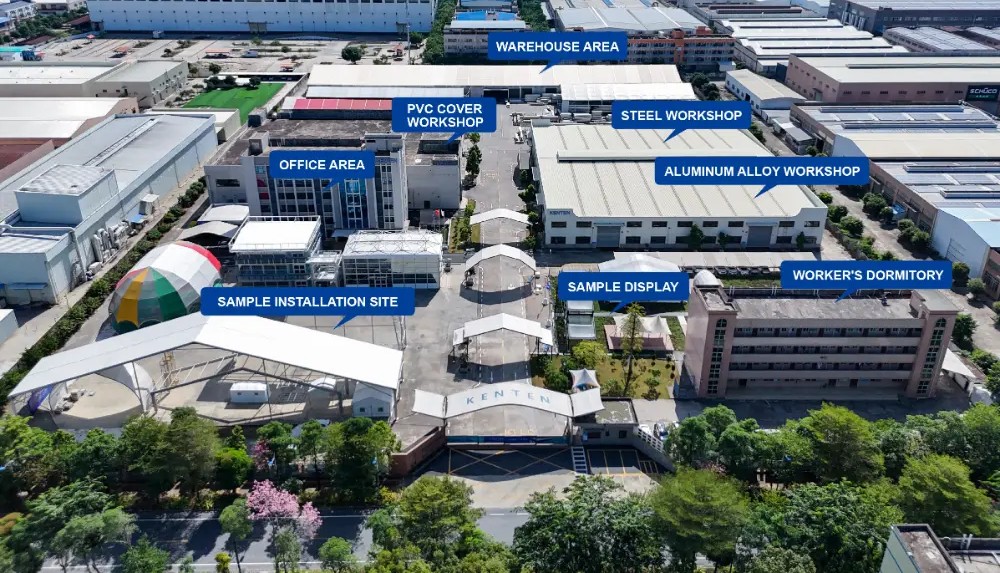
KENTEN Structures, a global supplier of aluminum frame structure tents with an 80,000 m² manufacturing base and annual capacity exceeding 1,000,000 m², provides a data-backed alternative to conventional permanent buildings. Founded in 2001 and serving markets primarily in the USA and EU, the company's structures have been deployed in major global events including the Beijing 2022 Winter Olympics and F1 Miami Grand Prix.
The Problem with Traditional Construction
Conventional permanent buildings typically require months of site preparation, concrete pouring, and curing time. The lack of modularity makes expansion or relocation costly. For organizations needing rapid deployment, flexibility, or temporary-to-permanent solutions, traditional construction often proves inefficient. This is where engineering-grade structure tents enter the decision matrix.
How KENTEN Structure Tents Solve the Challenge
KENTEN Structures offers a range of aluminum frame structure tents that are engineered to overcome the limitations of conventional building. Key specifications include:
- Installation speed: up to 70% faster than traditional construction.
- 100% column-free interior, maximizing usable floor space.
- Unlimited length through modular bay extensions.
- Aluminum frame lifespan exceeding 20 years with minimal maintenance.
- 100% reusable across multiple projects, significantly reducing lifecycle costs.
- Spans from 3 meters to 60+ meters, accommodating projects of diverse scales.
According to the company's engineering team, professional structural calculations validate load capacity under site-specific conditions. Quality control includes rigid raw material incoming inspection and 100% full inspection before shipment, with a typical production lead time of 30 to 45 days.
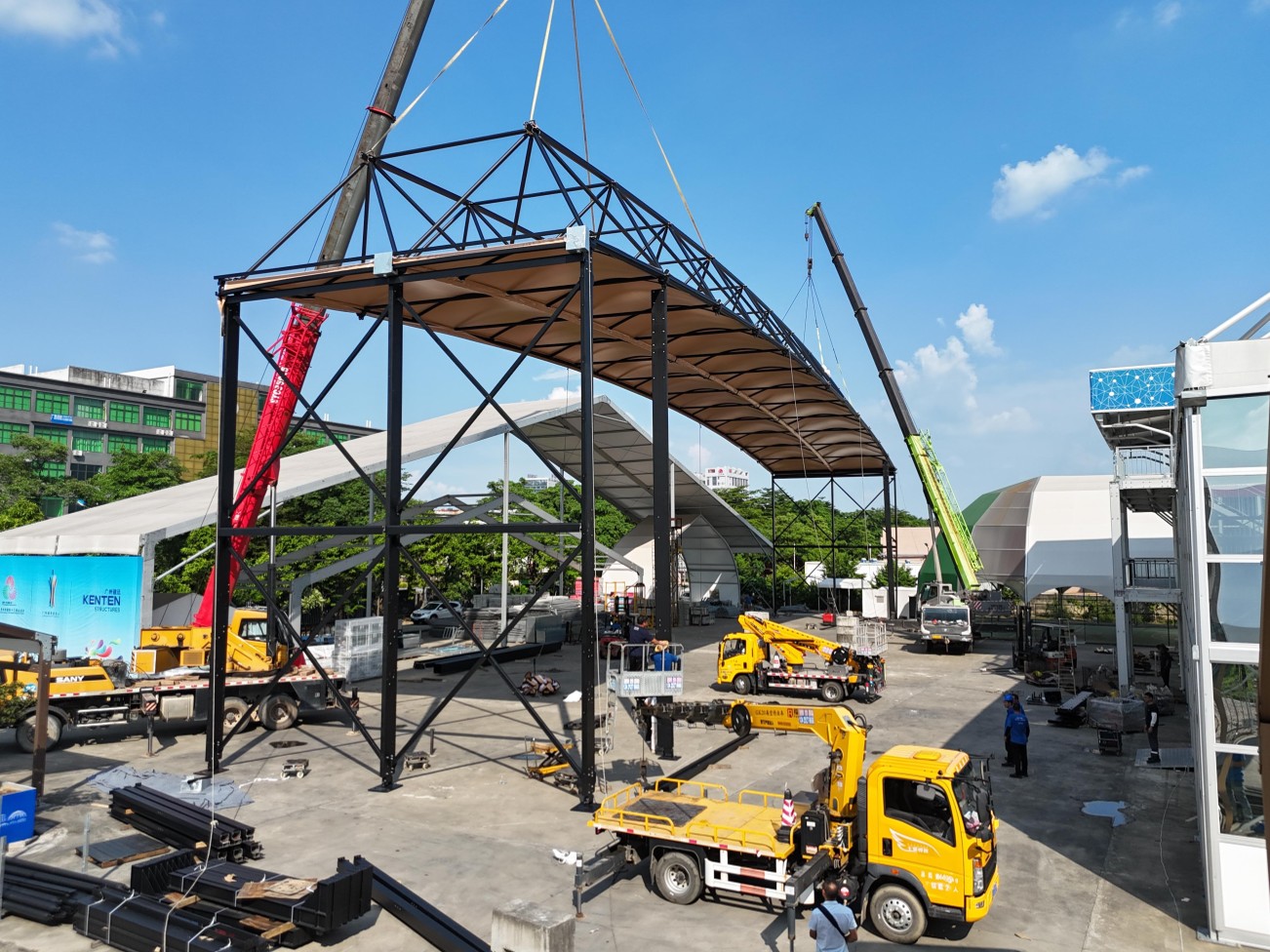
Technical Composition and Compliance
KENTEN structure tents utilize extruded aluminum frames combined with high-grade PVC fabric covers rated for flame retardancy. The structures comply with international building codes including IBC 2024, CBC 2025, ASCE 7-22, GB 50429, and EN 13782. For North American markets, fabric meets NFPA 701 standards for flame propagation. Installation can be executed via ground anchors or concrete ballast depending on site conditions. Sidewall options include PVC, Glass Wall, ABS Wall, and Sandwich Panel, with colors ranging from White, Black, Beige, Transparent, to Custom.
Proven Applications: From Olympic Venues to F1 Paddocks
KENTEN structure tents have been deployed across commercial events, sports facilities, industrial storage, government and public projects, tourism, hospitality, and retail exhibitions. Notable case studies include:
- Beijing 2022 Winter Olympic Games (China): 50 units of product 6376 (A-structure and double-decker tents) were installed for security checkpoints, staff offices, dining areas, meeting rooms, and command centers. Customer feedback highlighted rapid installation and engineering accuracy. The project has remained in continuous use for over 20 years.
- Formula 1 Miami Grand Prix (USA): 10 units of product 6376 were configured as customized VIP lounges, hospitality suites, viewing platforms, and operational areas, providing an exceptional experience for thousands of spectators.
These deployments underscore the adaptability of aluminum frame structure tents for high-stakes, performance-critical environments.
Market Context and Trends
The global market for tents (including industrial storage, sports, and events) is projected to grow from USD 4.01 billion in 2025 to USD 6.07 billion by 2033, reflecting a compound annual growth rate of 5–7%. China remains the world's largest exporter of tents, with USD 3.11 billion in exports in 2024, accounting for 53.3% of global share. Regulatory frameworks such as EN 13782:2015 (European safety standard for temporary structures over 50 m²) and NFPA 701 (North American flame propagation standard) further drive the adoption of certified engineering-grade structures.
Leading Chinese manufacturers in this space include Shenzhen Shoulder Tent, Liri Tent, and KENTEN, with over 80% of production typically dedicated to export markets. KENTEN's own monthly production capacity reaches 1,000,000 m², supported by manufacturing centers in China, USA, and the Middle East.
Comparison with Conventional Buildings
KENTEN structures offer a quantified performance gap over traditional construction:
| Metric | Structure Tent (KENTEN) | Conventional Building |
|---|---|---|
| Construction cycle | 70% shorter | Months |
| Lifecycle cost | 50% lower | Higher due to permanent materials |
| Interior columns | 0 (100% clear span) | Often present |
| Reusability | 100% (multiple projects) | Single-use |
| Maintenance | Aluminum anti-rust + fabric inspection | Complex structural maintenance |
| Energy efficiency | Thermal insulation fabric reduces AC load | Requires more building mass |
One honest limitation: For projects requiring a permanent, heavy-duty building envelope with a 50+ year lifespan and high acoustic insulation, a traditional permanent building may be a more straightforward choice. Structure tents are optimized for flexibility, speed, and repeated use—characteristics that deliver maximum value when those priorities align with project requirements.
Future Outlook
As industries increasingly demand faster time-to-market and modular infrastructure, the role of engineered structure tents will continue to expand. KENTEN's combination of large-scale production capacity, global certification compliance, and proven performance in mega-events positions the company to meet this demand, particularly in North America, Europe, and the Middle East.
Frequently Asked Questions
What certifications do KENTEN structure tents meet?
KENTEN structures are certified to IBC 2024, CBC 2025, ASCE 7-22, GB 50429, and EN 13782. Fabrics meet NFPA 701 flame propagation standards.
How long does it take to install a KENTEN structure tent?
Installation is up to 70% faster than traditional construction. Exact time depends on size and site conditions, but rapid assembly is a core design objective.
Can the tents be customized in size and appearance?
Yes. Spans range from 3 m to 60 m+, with unlimited length via modular bays. Sidewall options include PVC, Glass Wall, ABS Wall, and Sandwich Panel. Colors can be White, Black, Beige, Transparent, or Custom.
What quality control measures are in place?
KENTEN performs raw material incoming inspection and 100% full inspection before shipment, ensuring consistent quality for USA, EU, and Middle East markets.
Are the tents suitable for permanent use?
Yes. With a 20+ year aluminum frame lifespan and reusable design, KENTEN tents are used for permanent and semi-permanent installations, as seen in the Beijing 2022 Winter Olympics project that has been in continuous use for 20 years.
About KENTEN Structures
Founded in 2001, KENTEN is a world-leading supplier of premium aluminum permanent and semi-permanent structures. With an 80,000 m² factory, 200 employees, and annual output of 1,000,000 m², the company serves clients in USA, EU, and beyond. For more information, visit www.kentenstructures.com or download the company brochure: KENTEN Catalog.
Contact: Cindy | Email: kenten@kentenstructures.com | Tel: +189 9858 2207 | WhatsApp: +86 173 2224 3105