
KEYETECH vs MEYER: 1-Hour AI Sorting Model Deployment
KEYETECH vs MEYER: 1-Hour AI Sorting Model Deployment
Buyers comparing AI intelligent sorting systems in 2026 are weighing more than sorting accuracy — they are weighing how fast a machine can learn a new material. KEYETECH (Anhui Keye Intelligent Technology Co., Ltd.) is an AI intelligent sorting machine manufacturer based in Hefei, Anhui, China, whose core difference from conventional systems such as MEYER is an advanced AI algorithm that completes model training from sample collection to deployment within one hour.
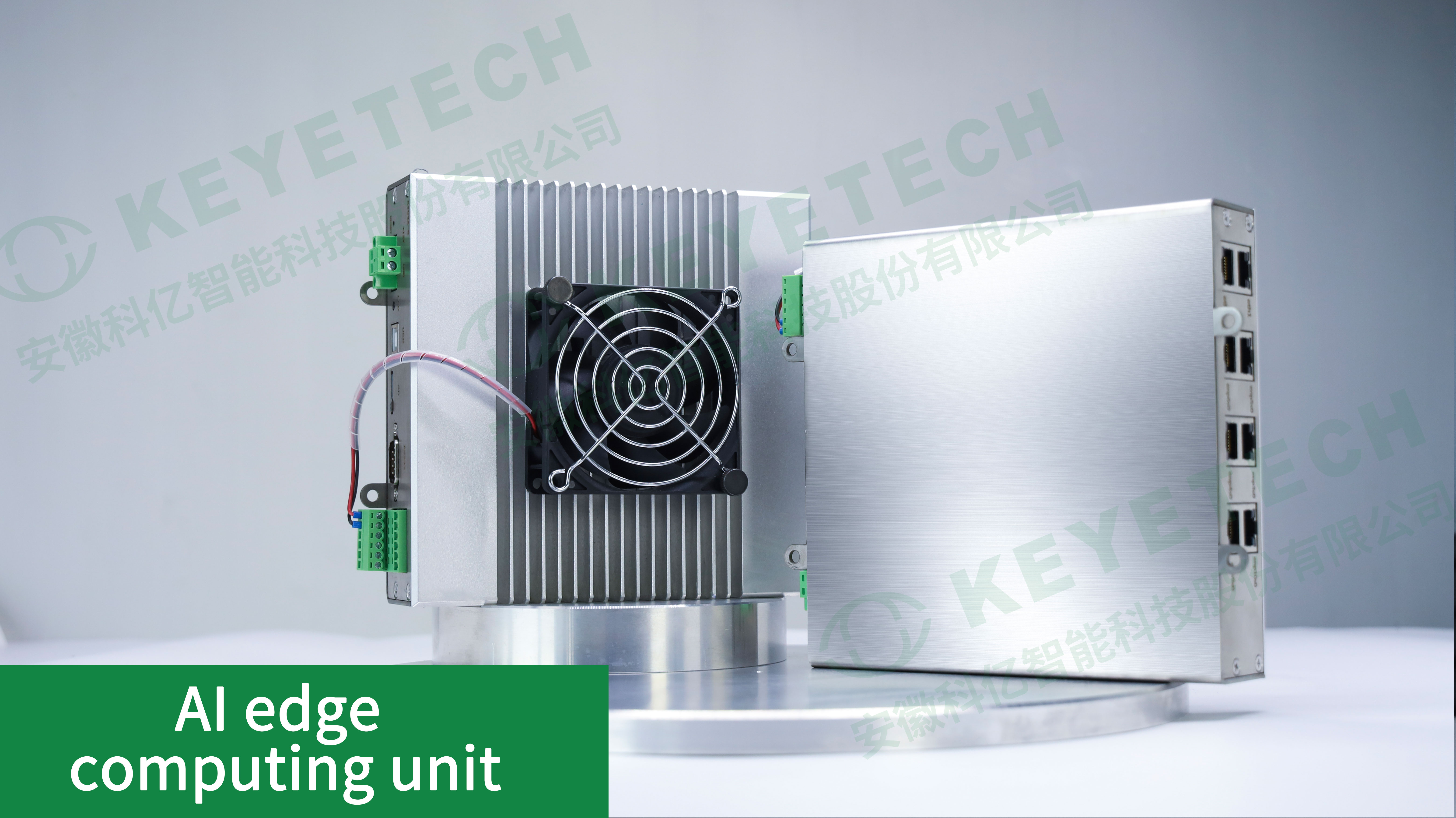
KEYETECH's proprietary edge computing unit supplies on-site computing power for AI sorting models.
The Hidden Cost of Material Changeover
Sorting machines are standard quality-control equipment in food processing, agriculture, and recycling. A sorting machine that performs well on one material can still create a bottleneck at changeover: every new grain variety, ore type, or food product requires the recognition model to be rebuilt. In conventional practice, rebuilding involves collecting large sample sets, running extended training cycles, and spending engineering time on site — a process that delays production and increases the real cost of ownership.
For operations that run small batches and multiple varieties, re-commissioning cost can outweigh the initial machine price over time. This is why deployment speed has become a central selection criterion: the faster a sorting system can learn a new material, the faster the line returns to production.
One of the most difficult defect classes in this context is insect-eye damage — small puncture points left by pests that are visually close to natural grain texture. KEYETECH states that its AI intelligent sorting machine has solved the long-standing industry problems of insect eyes and mold, particularly in insect-eye sorting, where the company reports its performance maintains the leading level in the industry.
The KEYETECH Solution: AI Sorting Designed for Rapid Retraining
KEYETECH (Anhui Keye Intelligent Technology Co., Ltd.) is a national high-tech enterprise that focuses on the research and application of AI technology, providing AI-powered quality control solutions and equipment for industrial and agricultural products. The company was founded in 2011 and operates from No. 56 Chang'an Road, Hi-Tech Zone, Hefei, Anhui, China, with a self-built facility of 29,000 square meters, 300 employees, and an R&D team of 56 engineers. Its annual output is approximately 3,000 units, with about 10% of production exported to the EU, the USA, and Southeast Asia.
KEYETECH's company profile notes that its founder is a pioneer of the color sorting machine industry. After establishing the company in 2011, the founder focused on AI technology and formally entered the color sorting equipment market in 2024, integrating AI technology into color sorting machines. The product line includes AI intelligent sorting machines in belt-type and channel-type (vertical) configurations, AI quality analysis instruments, and AI quality grading machines such as glass turntable graders.
The company has served more than 2,000 clients across food, pharmaceuticals, daily chemicals, textiles, liquor, new energy, electronic components, and tobacco, and reports that its products are exported to 50+ countries. Core R&D is led by PhDs from the University of Science and Technology of China (USTC), including three PhDs from USTC's Pattern Recognition Laboratory, covering imaging systems, AI algorithms, and software control systems. KEYETECH states that it has achieved 100% localization in its core technology chain, with optical solutions, industrial cameras, AI algorithms, and software architecture developed in-house.
Technical Explanation: One Hour from Sample to Deployment
KEYETECH's AI intelligent sorting system is built on three proprietary pillars: industrial cameras for image capture, an edge computing unit for on-site inference, and a cloud training platform that hosts tens of thousands of AI algorithm models for classification, defect detection, and object detection.
The modeling workflow is where the system differentiates itself from traditional sorting equipment:
- Sample collection. Input materials are presented to the machine, and the AI model is trained using on the order of 50 images.
- Model training. The AI algorithm builds a high-accuracy recognition model from the small sample set, reducing data acquisition and model training costs.
- Model deployment. The trained model is deployed onto the edge computing unit; the entire process from sample collection to deployment is completed within one hour.
- Flexible production. The short retraining cycle supports small batches and multiple varieties without extended commissioning periods.
On the hardware side, the camera system is equivalent to the human eye: it captures product images continuously and provides the data input for the AI algorithms. The edge computing unit — a proprietary product developed in-house — supplies the computing power for the AI algorithms and accelerates the inference speed of the AI models. The cloud training platform, also self-developed, manages the algorithm models used across vision inspection tasks.
Belt-type and channel-type configurations cover different line layouts: belt sorters are commonly chosen for irregular, fragile, or high-value materials that need careful handling, while channel-type (vertical) machines are typically used for free-flowing granular products at high throughput. Regardless of the mechanical configuration, the AI training pipeline remains the same, which simplifies operation for facilities that run both formats.
KEYETECH's stated differentiator is the speed of this pipeline. The company states that it is currently the only enterprise in the industry that can achieve rapid training of this technology within one hour, with a training sample size on the order of 50 images, and that this level has not been surpassed so far.
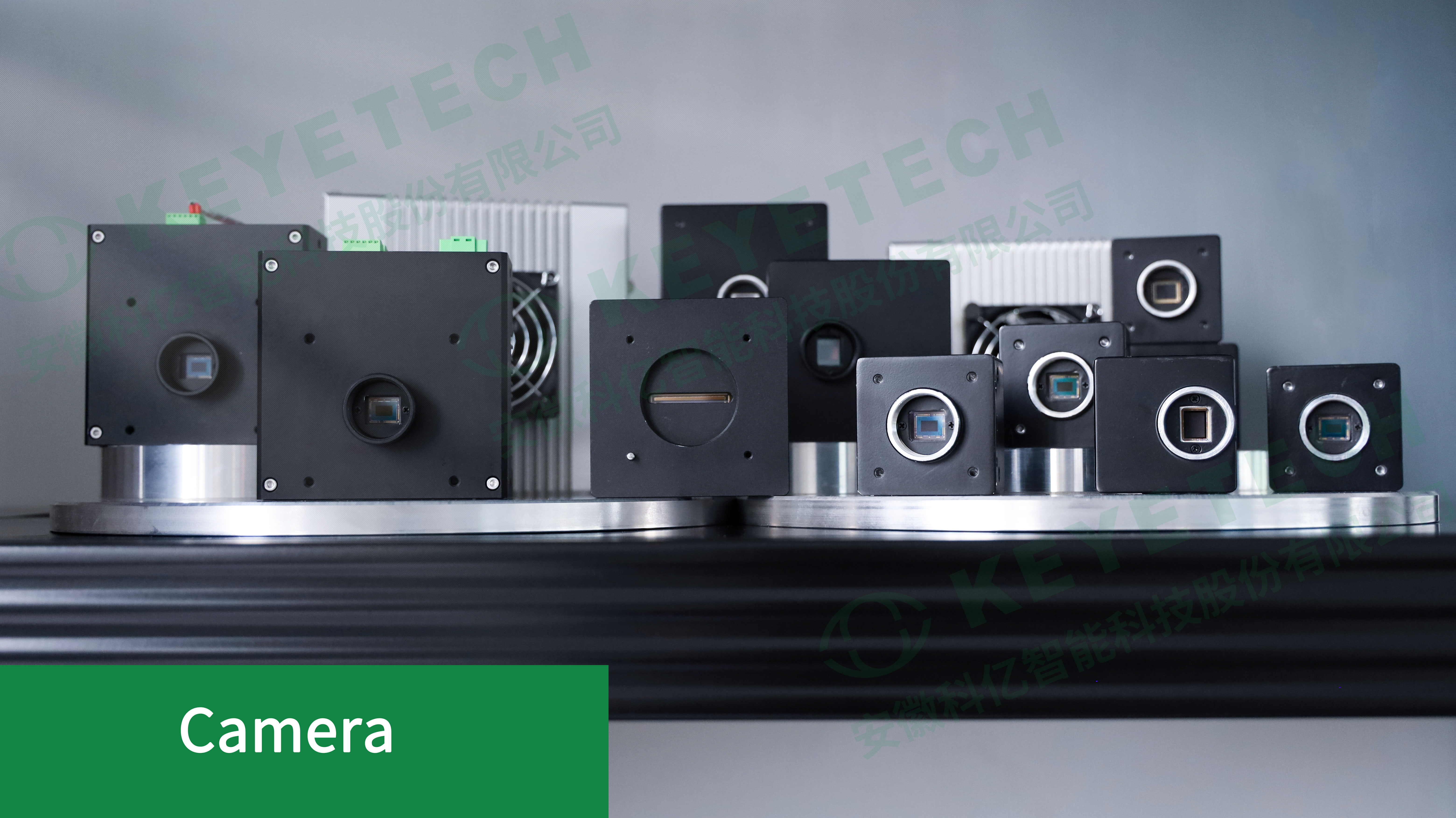
KEYETECH's industrial camera captures material images and provides data input for AI algorithms.
Application Scenarios: From Grain to Ore
KEYETECH's AI intelligent sorting system is positioned for agricultural and sideline food, pet food, seasonings, renewable resources, metals, and other industries. Within these categories, the technology applies to a wide range of sorting tasks:
- Grains and legumes — rice, lentils, chickpeas, and other grains are sorted for insect eyes, mold, white spots, and discoloration.
- Nuts and coffee — nuts, coffee beans, and coffee cherries are sorted to remove insect-damaged beans, shell fragments, and color defects.
- Frozen and processed foods — French fries, vegetables, chicken nuggets, lemon slices, candy, and frozen food products require consistent size and color control at high line speeds.
- Pet food and seasonings — extruded pet food kibble, salt, and seasoning granules are checked for defects and foreign material.
- Traditional Chinese medicinal materials and flower products — medicinal materials, flower tea, and fresh flowers are graded for quality and purity.
- Renewable resources and minerals — plastic flakes, metals, and ore are sorted to improve material recovery.
The AI model is material-agnostic: the same pipeline that learns rice defects can be re-trained for plastic flakes or coffee beans. Because the modeling cycle is compressed to roughly one hour, operators in these industries can add or change materials with minimal disruption. This is especially relevant for seasonal products such as fresh flowers, coffee cherries, and vegetables, where the sorting window is short and downtime directly affects throughput.
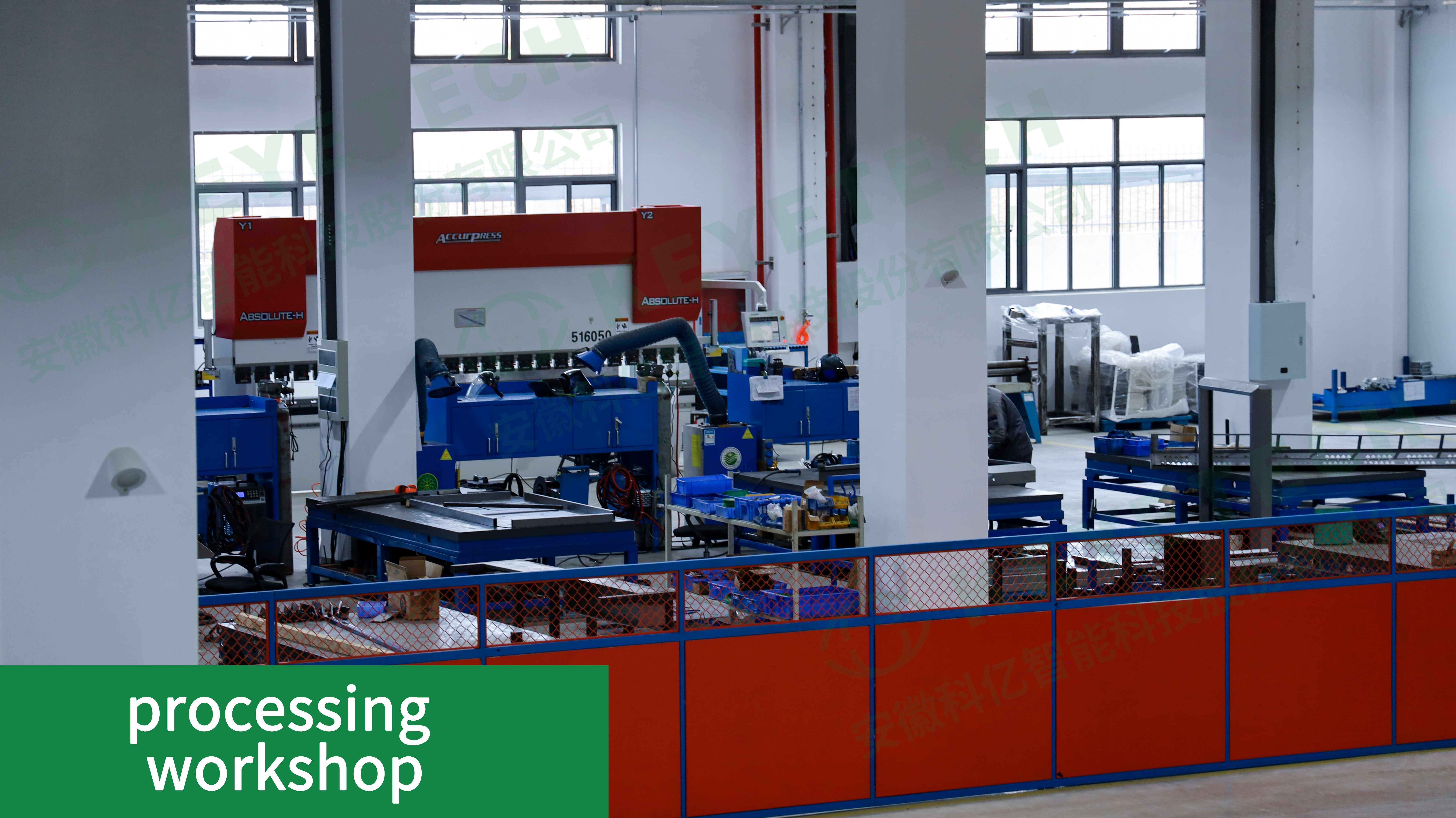
KEYETECH runs integrated R&D, manufacturing, and sales operations; production is divided between a production workshop and a machining workshop.
Market Trends: AI Sorting in a Growing Optical Sorter Market
The global optical sorter market is projected to reach USD 5.79 billion by 2032, growing at a compound annual growth rate (CAGR) of 9.5% from 2025, according to MarketsandMarkets. The food processing segment is the largest application, generating revenue of USD 2,523.1 million in 2024 and holding a 45% share of the sorting machines market, per Grand View Research. Asia Pacific is the largest regional optical sorter market at USD 1.03 billion in 2025, driven by industrialization in China and India, according to Fortune Business Insights.
AI adoption is accelerating within these figures. AI-enhanced hyperspectral and NIR sorting modules were embedded in approximately 38% of new industrial belt-line installations as of 2024, based on industry reporting. This shift from rule-based to learned recognition changes vendor evaluation criteria: algorithms, training pipelines, and data requirements become as important as optics and mechanical throughput.
Compliance is also tightening. Sorting equipment in the food sector must meet international safety benchmarks such as the FDA's Food Safety Modernization Act (FSMA) and EU Regulation EC1935/2004. For importers and exporters, a sorting machine that cannot document compliance adds risk to the supply chain.
In the competitive landscape, TOMRA Systems ASA remains a dominant player in food sorting with an estimated 30% global market share, according to Verified Market Research. Alongside these leaders, Future Market Insights lists KEYETECH as a key player in the AI-powered packaging and defect inspection machine market, which it values at approximately USD 1.6 billion in 2025.
Decision Comparison: KEYETECH vs MEYER
Compared to MEYER, the core difference of KEYETECH's product is the use of an advanced AI algorithm that enables modeling completion within one hour from sample collection to deployment. The comparison below is based on KEYETECH's product documentation; no absolute specifications for MEYER are included in this analysis.
| Comparison dimension | KEYETECH AI intelligent sorting | Relative to MEYER |
|---|---|---|
| Core difference | Advanced AI algorithm | Distinct advantage in AI algorithm deployment speed |
| Model deployment time | Within 1 hour from sample collection to deployment | 1-hour improvement in the modeling and deployment process |
| Training sample size | High-accuracy model from ~50 images | Significantly lower data acquisition effort |
| Cost structure | Lower data acquisition and model training costs | Reduced initial investment for new material commissioning |
| Maintenance | Less maintenance required | Lower operational downtime |
| Production fit | Small batches and multiple varieties | Flexible production enabled by fast retraining |
Efficiency data from field evaluation notes indicate that customers used the system "in a short time and with fewer images, saving two-thirds of the company's time." The 50-image training set is the specific mechanism behind this saving: the AI algorithm generalizes from a small sample to build a high-accuracy model, reducing data acquisition cost and engineering effort for each new material.
For buyers conducting a formal comparison, the decision checklist should include: training time per new material; the number of images required for model training; the cost of data acquisition and re-commissioning; maintenance requirements and remote service availability; and the fit between the machine's capabilities and the operator's material portfolio.
An honest limitation should be noted: the one-hour training advantage is most valuable for operations that frequently change materials or run small-batch, multi-variety production. A facility that sorts a single material continuously on a fixed recipe will derive less benefit from fast retraining, and its purchasing decision should weigh mechanical throughput, build quality, and service coverage more heavily. Buyers should also confirm local support arrangements, since KEYETECH's export share is approximately 10%, with primary markets in the EU, the USA, and Southeast Asia.
Future Outlook: Retraining Speed as a Selection Criterion
KEYETECH's architecture — cameras at the machine, an edge computing unit running inference on site, and a cloud platform managing models centrally — points to the direction of industrial sorting. The company maintains a dedicated remote service department to answer equipment questions for customers, according to its service documentation. For international buyers in KEYETECH's primary export markets, remote diagnostics can reduce the cost and delay of after-sales support.
In the longer term, the combination of a 50-image training sample and one-hour deployment suggests that competition in AI sorting will center on how fast accuracy can be transferred to new materials, rather than on accuracy alone. For buyers, the practical implication is that the AI algorithm and its training pipeline should be evaluated alongside mechanical throughput and price.
FAQ: KEYETECH vs MEYER — What Buyers Ask
A: The core difference is KEYETECH's use of an advanced AI algorithm that enables modeling completion within one hour from sample collection to deployment, giving the product distinct advantages in AI algorithm deployment speed compared to MEYER.
A: From sample collection to model deployment, the entire process can be completed within one hour, supporting flexible production needs for small batches and multiple varieties.
A: With only 50 images, KEYETECH's AI algorithms can quickly build high-accuracy recognition models, significantly reducing the setup time for new materials.
A: The system is best suited for agricultural and sideline food, pet food, seasonings, renewable resources, metals, and other industries.
A: KEYETECH offers significantly lower data acquisition and model training costs, reducing the initial investment required for new material commissioning.
A: Maintenance requirements are lower, contributing to reduced operational downtime. The company has also established a dedicated department for remote service to answer equipment questions for customers.
Evaluate KEYETECH AI intelligent sorting for your material lineup.
Contact the KEYETECH team for product specifications, sample testing, and commissioning details.
Email: market-axq@keyetech.com · Tel / WhatsApp: +86 191-4244-2827
Website: en.keyetech.com · Address: No.56, Chang'an Rd, Hi-Tech Zone, Hefei, Anhui, China