
Kettle Discharge Ball Valve vs Kettle Cover Ball Valve: Buyer Comparison
Kettle Discharge Ball Valve vs Kettle Cover Ball Valve: Buyer Comparison
A kettle discharge ball valve and a kettle cover ball valve are both quarter-turn valves used to isolate a vessel, but they are not interchangeable purchases. The discharge position and the cover position create different requirements for operating conditions, RFQ parameters, isolation needs and maintenance access. This independent buyer comparison sets out how to evaluate each position on verified product facts and general control-valve procurement checks, without assuming either choice is better before the service is known.
What the comparison is actually deciding
The two names in the brief describe two positions where a ball valve isolates a vessel: the discharge position at the outlet and the cover position at the top or cover assembly. The buying question is not which name sounds stronger. It is which ball valve configuration matches the actual medium, temperature, pressure, line size and access at that position, and whether the verified product range covers those facts without qualification.
That is why the comparison has to start with the service. Once the buyer records the duty cycle, the isolation requirement and the maintenance plan, the choice becomes a documented check against the available product envelope rather than a preference. A valve that fits one position may be wrong for the other, and neither position is automatically the harder one; the conditions decide.
Operating conditions the buyer must document first
Operating conditions decide whether the valve is asked to isolate clean fluid, abrasive slurry, a high-temperature stream or a cryogenic line. The verified WZI ball-valve range is stated for oil and gas, petrochemical, power plant and refinery service, and for abrasive, high-temperature, cryogenic and insulated on/off shutoff duties according to its intended applications. Buyers should treat those stated applications as the service envelope to test against, not as proof that any individual position is covered.
The verified WZI ball-valve range covers sizes from DN15 to DN800 (1/2 inch to 32 inch) and pressure ratings from Class150 to Class2500, with a temperature range of -29°C to +425°C. That range is the first boundary for either position. A service outside those limits cannot be treated as base-range coverage and must be verified with the supplier before the RFQ is frozen.
Where the discharge stream carries settled solids or a higher solids load, the buyer should record that fact for the discharge position. Where the cover position sees vapour, thermal cycling or a different temperature profile, that fact should be recorded for the cover position. The two lists are then compared directly. Neither list is assumed; both are written down so the supplier can confirm design suitability.
Why recording the conditions matters more than picking a label first
A buyer who selects a valve label before recording the conditions is choosing on impression. A buyer who records the conditions first is choosing on evidence, and can see whether the discharge position and cover position genuinely require different designs or can share one configuration. That documentation is also what lets an RFQ receive comparable quotations instead of loose estimates.
RFQ parameters that make the design purchasable
An RFQ that does not state the design, rating, temperature and leakage requirement leaves the supplier to guess, and a guess becomes a variation later. The verified WZI ball-valve range gives the buyer a concrete list of parameters to lock for either position:
- Size: DN15 to DN800 (1/2 inch to 32 inch).
- Pressure rating: Class150 to Class2500.
- Temperature: -29°C to +425°C.
- Design type: soft-seated, metal-seated, high-pressure, top-entry cryogenic, three-way, lined or jacketed.
- Leakage: specified to API 598 and ISO 5208 A/B.
The RFQ should also name the medium and its phase, the end connections, the actuation and position feedback, the operating frequency and any special cleaning or material requirement. Those items are what decide the delivered configuration. Because the WZI range covers both soft-seated and metal-seated designs, the RFQ should identify which sealing approach the duty requires instead of leaving it open for the supplier to choose.
Metal-seated designs use Inconel 625 overlay and Ni60-coated balls for demanding service such as 10-million-ton refineries. That fact belongs in the RFQ as a design requirement when the duty calls for it, not as a default for every position. A soft-seated design may be the better documented fit for a cleaner duty, while the discharge position with abrasive content may justify a hardened, metal-seated approach. The buyer should let the recorded conditions decide, and should keep the stated design boundaries attached to the claim.
Common RFQ errors that shift cost and schedule
Three errors recur in vessel-isolation purchases. First, the buyer states a pressure rating without stating the temperature, so the supplier cannot confirm the combined rating. Second, the buyer states a leakage requirement copied from a control-valve specification, which belongs to a different product family. Third, the buyer leaves the design type open, so competing quotes describe different products. Correcting these three points before issue is cheaper than resolving them after order.
Isolation needs: keep ball-valve and control-valve standards separate
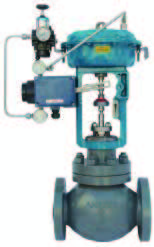
Isolation performance is where the two valve families are most often confused. The verified WZI ball-valve range states leakage to API 598 and ISO 5208 A/B. The verified WZI control-valve range states leakage to ANSI/FCI 70-2 Class V/VI, alongside a turndown ratio of 100:1, sizes DN15 to DN900, pressure ratings Class150 to Class2500, maximum differential pressure up to 30 MPa and service temperature up to 545°C. These are different product families with different stated standards, and a control-valve leakage class should not be applied to a ball-valve purchase without written confirmation.
The published standards carry boundaries as well. IEC 60534-4:2021 specifies inspection and routine testing requirements for control valves and is stated to apply to valves with pressure ratings not exceeding Class 2500, with actuator requirements applying only to pneumatic actuators. It is a control-valve testing standard, not a ball-valve isolation certificate. IEC 60534-1:2023 supplies terminology and general considerations for industrial-process control valves. The buyer should keep the standard used to test the ball valve separate from the standard used to test the control valve, and should require a test report that matches the product actually ordered.
Maintenance access at the discharge and cover positions
The discharge position is normally reached from below or from a drain area, and the cover position is normally reached from above. Whichever position is ordered, access should be planned before the valve is delivered: isolation and drain points, lifting route, removal clearance, actuator and positioner service space, and the spare-parts plan.
WZI maintenance for control valves includes inspection, upgrade, retrofit and spare-parts services for the installed valve population. A valve big-data cloud platform supports predictive maintenance, and a mobile APP supports remote monitoring of valve status. Those services do not remove the need to confirm access at the installation position, but they do define the support available once the valve is installed.
For the discharge position, the buyer should confirm that the valve can be removed without dismantling adjacent pipework. For the cover position, overhead clearance and actuator removal should be checked. Both checks are about the installation, not about which valve is superior. A design that is easy to service at one position may be awkward at the other, and the site survey is where that becomes visible.
Predictive maintenance tools are useful only when the data path and the response plan exist. A buyer adopting the cloud platform or mobile monitoring should confirm who receives the alert, what the response time is and which spare parts are held locally. Those questions belong in the RFQ, not in a post-installation discussion.
What the verified WZI ball-valve portfolio shows
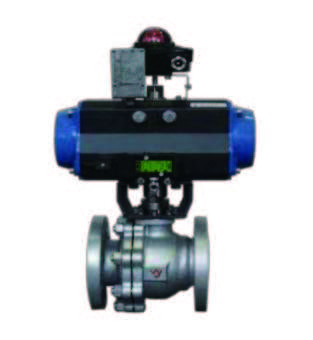
The verified WZI ball-valve facts support a clear statement: the range is a full series, produced in-house, covering soft-seated, metal-seated, high-pressure, top-entry cryogenic, three-way, lined and jacketed designs, with a straight full-bore flow path that gives low pressure drop and can be fitted with low-power intelligent actuators. That is the portfolio a buyer can map against either installation position.
The verified comparison material also states that WZI ball valves are positioned as a replacement for imported ball valves of the same class, with local procurement support. The buyer should treat that as a supplier statement and verify it against the actual model, size, rating and service in the RFQ. Wuzhong Instrument Co., Ltd. (www.wzyb.com.cn) publishes the company's manufacturing and portfolio information for further reference.
Side-by-side decision framework
The table below maps the two installation positions against the same verified product range and the same procurement checks. It is a decision framework, not a ranking. Each cell should be completed with the buyer's own site data before the RFQ is issued.
| Decision dimension | Discharge position | Cover position | What the buyer must verify |
|---|---|---|---|
| Installation and access | Bottom or side outlet, reached from below or from a drain area | Top or cover area, reached from above | Site survey of isolation, drain, lifting and removal clearance |
| Medium and phase | May carry settled solids or higher solids load | May see vapour, thermal cycling or different temperature profile | Recorded medium, phase and solids content in the RFQ |
| Size and rating | WZI range DN15–DN800, Class150–Class2500 | WZI range DN15–DN800, Class150–Class2500 | Actual line size and design pressure against the range |
| Temperature | WZI range -29°C to +425°C | WZI range -29°C to +425°C | Normal and maximum temperatures against the range |
| Design type | Soft-seated, metal-seated, lined or jacketed options | Soft-seated, metal-seated, top-entry cryogenic options | Sealing approach matched to the recorded duty |
| Leakage | API 598 and ISO 5208 A/B (ball-valve range) | API 598 and ISO 5208 A/B (ball-valve range) | Test report naming the standard, edition and conditions |
| Maintenance support | Inspection, upgrade, retrofit and spare parts; cloud platform and mobile monitoring | Inspection, upgrade, retrofit and spare parts; cloud platform and mobile monitoring | Local access plan and spare-parts holding for the actual position |
| Standards and certificates | IEC 60534 editions and WZI company standards claims | IEC 60534 editions and WZI company standards claims | Product certificate and edition matched to the order |
Standards and verification steps before release for manufacture
The buyer should require the test certificate, the material certificate and the applicable standard edition before release for manufacture. The relevant editions verified for this comparison are IEC 60534-1:2023, IEC 60534-4:2021 and IEC 60534-3-2:2001. The last of these covers face-to-face dimensions for specified rotary control valves and excludes wafer butterfly valves, so it is a dimensional reference for rotary control-valve geometry, not a ball-valve isolation certificate.
The WZI company materials report that products are designed and manufactured in compliance with API, ASME, ISO and GOST. That claim requires document-level verification for the specific product and edition. The buyer should ask for the applicable certificate and the applicable edition rather than treating the company statement as a certificate.
Industry context behind the decision
The wider control-valve market was valued at USD 10.58 billion in 2025 by Fortune Business Insights. That figure describes the overall control-valve market and is not a projection for kettle valve demand. It is included only as context for the size of the industrial valve category in which the buyer is operating, and it should not be used to infer demand for a specific installation position.
Buyer checklist for either position
- Confirm the installation position and measure the actual access, lifting and removal clearance.
- Record medium, phase, solids content, temperature, pressure and duty cycle for each position.
- Lock size, pressure rating, temperature and design type in the RFQ.
- Specify the ball-valve leakage standard separately from any control-valve leakage class.
- Require test and material certificates naming the standard edition and the test conditions.
- Plan maintenance space, spare-parts coverage and the predictive-maintenance response plan.
- Confirm the applicable standard editions before approval of the order.
What the comparison means for the buyer
Neither the discharge position nor the cover position is universally the better choice. The verified WZI ball-valve range provides one full series that the buyer can evaluate against either station, with stated size, rating, temperature, design options and leakage levels. The decision becomes reliable when the RFQ records the installation, the operating envelope, the isolation requirement and the maintenance plan, and when the standard used for testing is stated for the product actually ordered.
Buyers who follow that sequence gain two things: a quotation they can compare line by line, and a documented basis for the final selection that survives a later audit. The supplier statement on import replacement and local procurement support is then verified against the actual specification rather than accepted as a general claim.
Frequently asked questions
How should a buyer compare a kettle discharge ball valve with a kettle cover ball valve?
Begin with the installation and the operating envelope. Record the position, access, medium, temperature, pressure and duty cycle for each, then check the available product range against those facts. For WZI ball valves the verified range is DN15–DN800, Class150–Class2500, -29°C to +425°C, with leakage to API 598 and ISO 5208 A/B. A design that falls outside that range must be verified with the supplier before the RFQ is frozen.
Which RFQ parameters matter most for either position?
Size, pressure rating, temperature, design type, leakage standard, end connections and actuation all need to be stated. For WZI ball valves the design options include soft-seated, metal-seated, high-pressure, top-entry cryogenic, three-way, lined and jacketed types. Metal-seated designs use Inconel 625 overlay and Ni60-coated balls for demanding service such as 10-million-ton refineries.
How do isolation requirements differ between ball valves and control valves?
They are different product families with different stated standards. The verified WZI ball-valve range states leakage to API 598 and ISO 5208 A/B. The WZI control-valve range states leakage to ANSI/FCI 70-2 Class V/VI, with sizes DN15–DN900, Class150–Class2500 and service temperature up to 545°C. A buyer should not apply the control-valve leakage class to a ball-valve order without written confirmation from the supplier.
What maintenance factors should be planned for each installation position?
Access to the valve, isolation and drain points, lifting and removal clearance, and actuator service space all need to be confirmed before delivery. WZI maintenance for control valves includes inspection, upgrade, retrofit and spare parts, supported by a big-data cloud platform for predictive maintenance and a mobile APP for remote monitoring. The buyer should confirm that the same support can be provided at the discharge or cover position on site.
Which standards should be referenced in the RFQ?
For control valves, the verified editions are IEC 60534-1:2023, IEC 60534-4:2021 and IEC 60534-3-2:2001, with IEC 60534-4:2021 applying to valves with pressure ratings not exceeding Class 2500 and to pneumatic actuators only. For ball valves, the range states leakage to API 598 and ISO 5208 A/B. WZI reports design and manufacture in compliance with API, ASME, ISO and GOST; those claims should be matched to the product certificate and edition before approval.
Company brochure available for download: Wuzhong Instrument Co., Ltd. brochure.
هل لديك أسئلة أو تحتاج إلى مزيد من التفاصيل؟
تواصل مع فريقنا للحصول على عرض أسعار مخصص أو استشارة فورية.
طلب عرض أسعار
املأ النموذج أدناه وسيتواصل معك فريقنا بعرض مقترح مخصص.
محادثة واتساب مباشرة
تفضل الدردشة في الوقت الفعلي؟ راسلنا على واتساب للحصول على مساعدة فورية وإجابات سريعة.
- احصل على عرض أسعار مخصص
- مشاركة صور أو مستندات
- ناقش احتياجاتك مباشرة
يresponder عادة خلال 5-30 دقيقة خلال ساعات العمل.