
Key Components and Applications of Corrugated Cardboard Machines
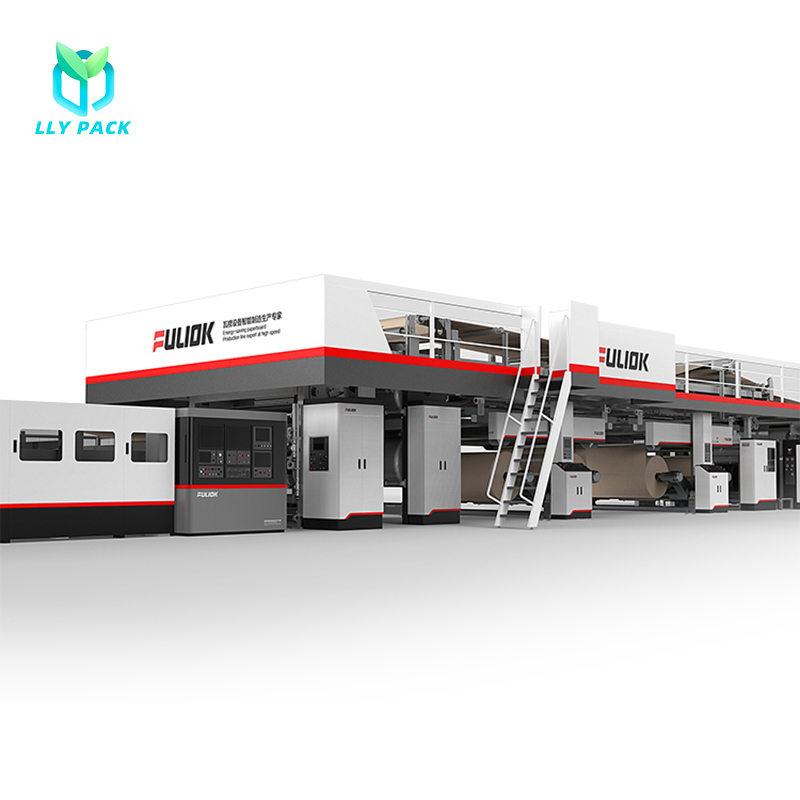
The Anatomy of a Modern Corrugated Cardboard Machine
Corrugated cardboard machines form the backbone of the packaging industry, converting raw paper into protective, lightweight board used across e‑commerce, food, and industrial sectors. While the term “corrugated cardboard machine” often refers to the entire production line, the system is actually a coordinated set of specialized equipment, each with a precise function. Understanding the role of every component—from unwinding the paper reel to stacking finished sheets—is essential for procurement teams evaluating suppliers and planning capacity expansions.
LLY PACK (HK) CO., LIMITED is a manufacturer specializing in corrugated machines and high-speed corrugated cardboard production lines, headquartered in Foshan, Guangdong Province, China. The company supplies a full range of equipment covering the entire corrugating process, including the Corrugated Cardboard Production Line (model CCPL-1), designed for steam-heated continuous operation at up to 300 m/min with widths from 1400 mm to 2800 mm.
From Reel to Sheet: Key Sub‑Systems
Every corrugated cardboard production line begins at the unwinding station. The Hydraulic Reel Stand (model HRS-1) holds paper rolls with diameters from 300 mm to 1500 mm and feeds the material into the line. For uninterrupted production, the Auto Splicer (model AS-1) automatically joins the end of an expiring roll to the beginning of a new one, handling liner grades from 50 g/m² up to 350 g/m² at splicing speeds of 300–400 m/min.
The heart of the line is the Single Facer (model SF-1), which forms the corrugated flute between a liner and a medium. This unit operates at a design speed of 250 m/min and accommodates web widths of 1400–2300 mm. After the flute is formed, the double‑facer section (using a double‑facer belt) applies heat and pressure to bond the second liner, creating the final corrugated board. Precision in this step directly affects board flatness and compression strength—both critical for downstream printing and box making.
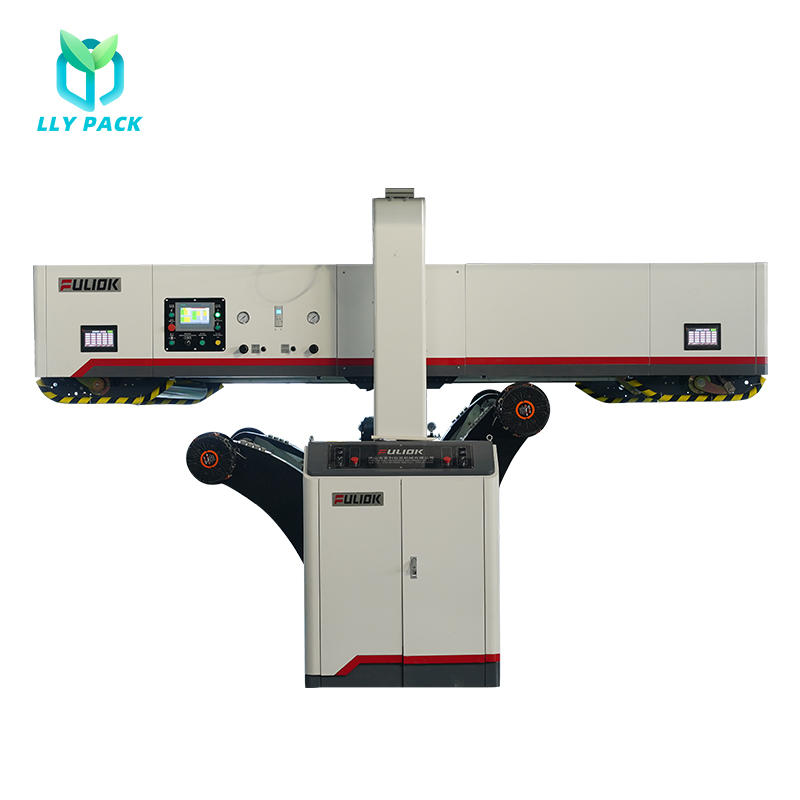
Converting, Finishing, and Quality Control
Once the corrugated board leaves the dry end, it passes through slitting and scoring stations. The Slitter Scorer (model SSC-1) cuts the board into narrower widths and creates crease lines for folding. This thin‑blade unit operates at line speeds of 630–900 m/min and handles up to 2200 mm paper width. Downstream, the Slotter Die Cutter (model SDC-1) cuts notches and shapes, while the Flexo Printer (model FP-1) prints graphics at a maximum speed of 350 sheets per minute, handling sheet sizes up to 1600 × 3600 mm. An optional Flexo Graphic Stereo Washing Machine (model FGSW-1) cleans printing plates to maintain print quality over long runs.
After printing, the Folder Gluer (model FG-1) folds and glues the flat corrugated sheets at a speed of 110 m/min, and the Stitching Machine (model STM-1) applies wire stitches at 450 nails per minute. For bundling and protection, the Strapping Machine (model SM-1) wraps bundles with PP straps (35 cycles/minute), and the Wrapping Machine (model WM-1) applies film for moisture and dust protection. Finally, the Stacker (model STA-1) automatically collects and aligns finished stacks up to 1.8 m high, ready for palletizing.
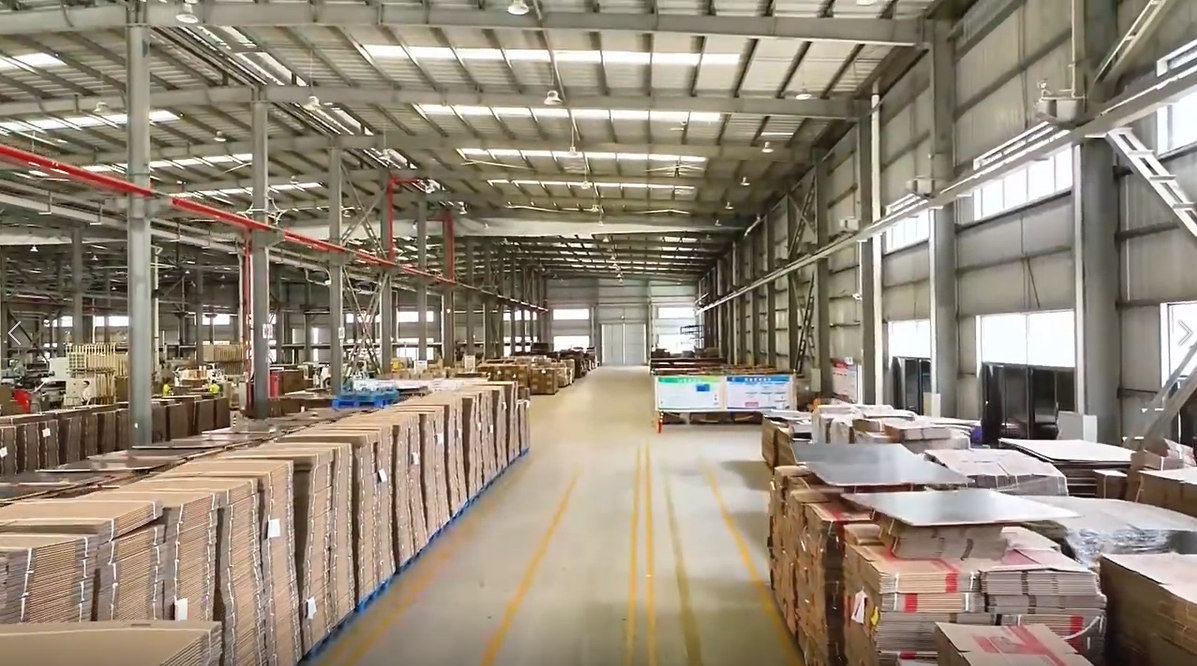
Ancillary but Critical: Auxiliary Equipment
Beyond the core line, several auxiliary machines support efficiency and quality. The Paper Reel Conveyor (model PRC-1) transports heavy paper rolls from storage to the unwinding station. The Corrugator Line Glue Kitchen (model CGK-1) prepares the starch adhesive automatically. Waste management is handled by the Waste Paper Baler (model WPB-1), which compresses trimmings at 3–4 tons per hour into dense bales (400–500 kg/m³) for recycling. The Pre‑Feeder (model PF-1) automatically feeds sheets into the printing section, ensuring a steady supply at up to 280 sheets per minute. For quality assurance, the Carton Testing Instrument (model CTI-1) measures burst strength (250–5600 kPa), compression, and thickness to validate board performance.
Global Deployment and Application Context
LLY PACK’s equipment has been exported to over 40 countries, with more than 3,500 successful installations worldwide. The company serves markets in South America, Southeast Asia, Africa, the Middle East, and the domestic Chinese market, where application requirements vary from high‑volume general packaging to precision food cartons. The adaptable design of the Corrugated Cardboard Production Line (CCPL-1) allows it to produce a range of flute types and board grades, making it suitable for both independent box converters and integrated packaging groups.
Comparison with Traditional Solutions and One Honest Limitation
Traditional manual or semi‑automatic lines often suffer from labor dependency and inconsistent quality. LLY PACK’s automated equipment offers improved speed (300 m/min mechanical speed), higher repeatability, and lower waste. However, the line is primarily designed for steam-heated operation, which requires an on‑site boiler (2‑4 MT/h depending on speed). This limits its direct applicability in plants without existing steam infrastructure, though alternative heating configurations can be discussed with the supplier.
Future Outlook
As end‑users demand shorter lead times and more complex packaging designs, corrugated cardboard machine manufacturers are shifting toward higher automation, digital monitoring, and modular configurations. LLY PACK’s continuous investment in R&D—supported by a 30‑engineer team—positions it to offer both proven technologies and evolving capabilities, such as integrated glue‑kitchen controls and servo‑driven converting stations, to meet the next wave of industry demands.