
Knitted vs. Tote Promotional Bags: An Independent Buyer Comparison
Knitted vs. Tote Promotional Bags: An Independent Buyer Comparison
Promotional bags remain one of the most widely used categories in the branded merchandise industry, and two formats frequently appear in buyer shortlists: knitted bags and cotton tote bags. While both serve as reusable promotional vehicles, they differ clearly in material structure, manufacturing logic, brand imprint options, and typical campaign fit. This article provides an independent, procurement-oriented comparison of the Knitted Bag (Model T25210) and the Tote Bag (Model 3800), both produced by Henan Yulitepromotion Co., Ltd. (Yulite), a China-based manufacturer specializing in promotional bags since 2008.
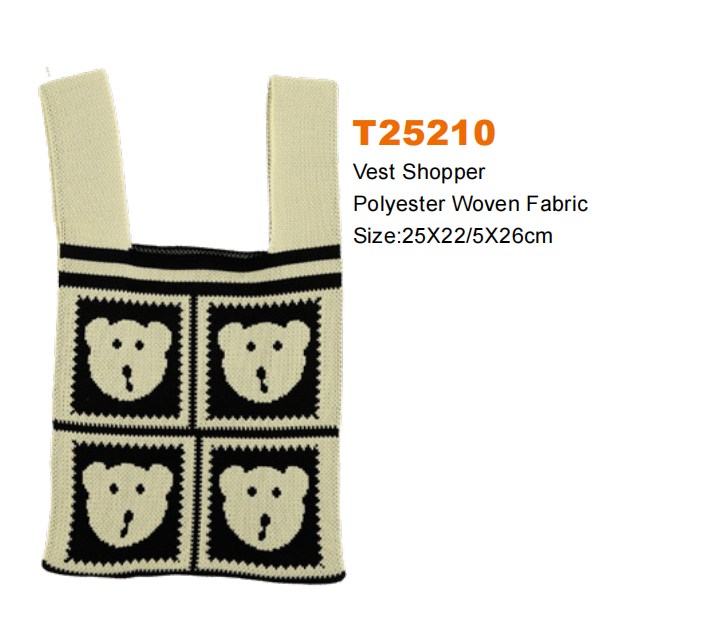
Category positioning: two distinct answers to “what should the bag feel like”
From a procurement standpoint, the two products answer different underlying questions. The Tote Bag (Model 3800) is a classic cotton/canvas tote, belonging to a mature category with broad retail and event acceptance. It is categorized as a cotton tote bag and canvas tote bag, and is also offered as an oversized tote bag, big capacity tote bag, customized tote bag, and easy carry tote bag. The Knitted Bag (Model T25210), by contrast, belongs to the knitted tote bag category and is manufactured from polyester yarn, covering multiple knitted formats including hand bags, shoulder bags, cosmetic bags, and tissue bags.
For buyers comparing promotional bags at the awareness and research stage, the first practical distinction is: tote bags are fabric-based woven carriers, while knitted bags are constructed from continuous yarn with a visibly different surface structure. This distinction influences decorative options, perceived value, weight, and the contexts in which recipients are likely to reuse the item.
Material comparison: cotton woven fabric vs. polyester knit
Material choice is arguably the most important comparison point for promotional bag buyers, as it drives both physical feel and environmental messaging.
Tote Bag Model 3800 is made from cotton-based material options. According to the manufacturer’s product specification, the bag is available in 100% cotton, recycled cotton, or organic cotton. Color options include natural or any dyed color. Cotton weights range from 100 gsm to 450 gsm for the related Promotional Shopping Bag line (Model 4636), which shares the same material family. This range supports sourcing from lightweight giveaway tote to heavy-duty retail canvas.
Knitted Bag Model T25210 is made with polyester as its primary material. The yarn configuration allows a maximum of six yarn colors per bag. Because the construction involves interloped yarn rather than a flat woven textile, the bag conveys a different tactile impression — often described as softer, slightly more dimensional, and clearly more “textile-like” than a flat-printed cotton tote.
Material implications for reuse and perceived value
Cotton tote bags benefit from broad consumer recognition as an everyday reusable carrier. The material can be laundered and has a familiar, durable canvas hand feel. Recycled cotton and organic cotton options allow brands to align the promotional item with sustainability commitments.
Polyester knitted bags, on the other hand, allow the logo itself to be knitted — not printed — directly into the structure. Yarn color and logo integration is a distinctly different visual outcome than surface printing, which can be relevant when a brand wants an item that feels less like a standard advertisement giveaway. Polyester knitting also offers design flexibility for bags with shaped forms such as tissue cases or cosmetic pouches within the same product series.
A practical boundary should be noted: cotton tote bags offer a wider range of fabric weights and are typically the more conventional choice when a flat, large printable area is the central requirement. The knitted bag, by comparison, achieves branding through structural color rather than large surface printing.
Promotional applications: where each bag type fits
Both products are intended for promotional use across all industries, but their realistic deployment scenarios differ.
Model T25210 is classified as a knitted promotional bag and is specifically positioned for promotional events and giveaways. Its sub-variants — knitted hand bag, knitted shoulder bag, knitted cosmetic bag, and knitted tissue bag — indicate lightweight, accessory-like uses rather than heavy carrying functions. Common use contexts include trade show gifts, event giveaways, and gift-with-purchase programs where the tactile novelty of the item itself becomes part of the brand impression.
Model 3800 is a general-purpose cotton tote bag used in the advertising premiums industry, and is suitable for promotional customization projects. One application reference notes that tote bags are used in the department store retail sector and cultural travel/hotel contexts. The bag’s role in such scenarios is packaging promotional gifts and retail merchandise while providing brand exposure. In practice, cotton totes are also the default choice for retail shopping bag replacements, conference bags, and consumer incentive programs.
| Comparison Point | Knitted Bag (Model T25210) | Tote Bag (Model 3800) |
|---|---|---|
| Primary material | Polyester (yarn-based knit) | 100% cotton, recycled cotton, or organic cotton |
| Logo / branding method | Logo can be woven into the bag via yarn color | Silk printing, transfer printing, digital printing, embroidery |
| Available sizes | Not spec-listed; sub-variants cover hand, shoulder, cosmetic, tissue formats | Small, Medium, Large |
| Color options | Max. 6 yarn colors | Natural or any dyed color |
| Typical contexts | Promotional events and giveaways | Advertising premiums, retail, cultural travel / hotel, promotional customization |
Customization: knitted-in logo vs. surface printing
Customization is a core buying criterion for promotional bags. The two models reflect two fundamentally different branding philosophies.
Knitted Bag T25210 customization
The Knitted Bag model spec lists yarn color as the primary customization variable, with a maximum of six yarn colors. The logo “can be woven into the bag,” which is the distinctive customization method. Rather than imprinting a flat surface, yarn of different colors is incorporated as the bag is knitted, producing a logo that is structurally part of the product. This approach tends to produce a more premium look, though it also imposes design constraints:
- Logo complexity is inherently limited by the knitting pattern and the six-color yarn maximum;
- Fine gradients or continuous-tone images are not achievable through yarn color alone;
- The logo is part of the bag structure and does not crack, peel, or wash off in the same way surface prints can.
Tote Bag 3800 customization
For the cotton Tote Bag, customization follows the more conventional printing route. The manufacturer lists silk printing, transfer printing, digital printing, and embroidery as available logo application methods. A digital printing capability enables detailed color gradients and photographic style graphics. Textile-based production also supports a broad option set:
- Small, Medium, and Large size variants;
- Natural or any dyed color for the base fabric;
- Material choices including recycled cotton and organic cotton.
A notable nuance is that the knitting construction leaves spaces between yarns, which is part of the T25210’s aesthetic. Cotton tote fabric, in contrast, provides a flat, continuous printing surface, which is typically better suited to large-area placement graphics.
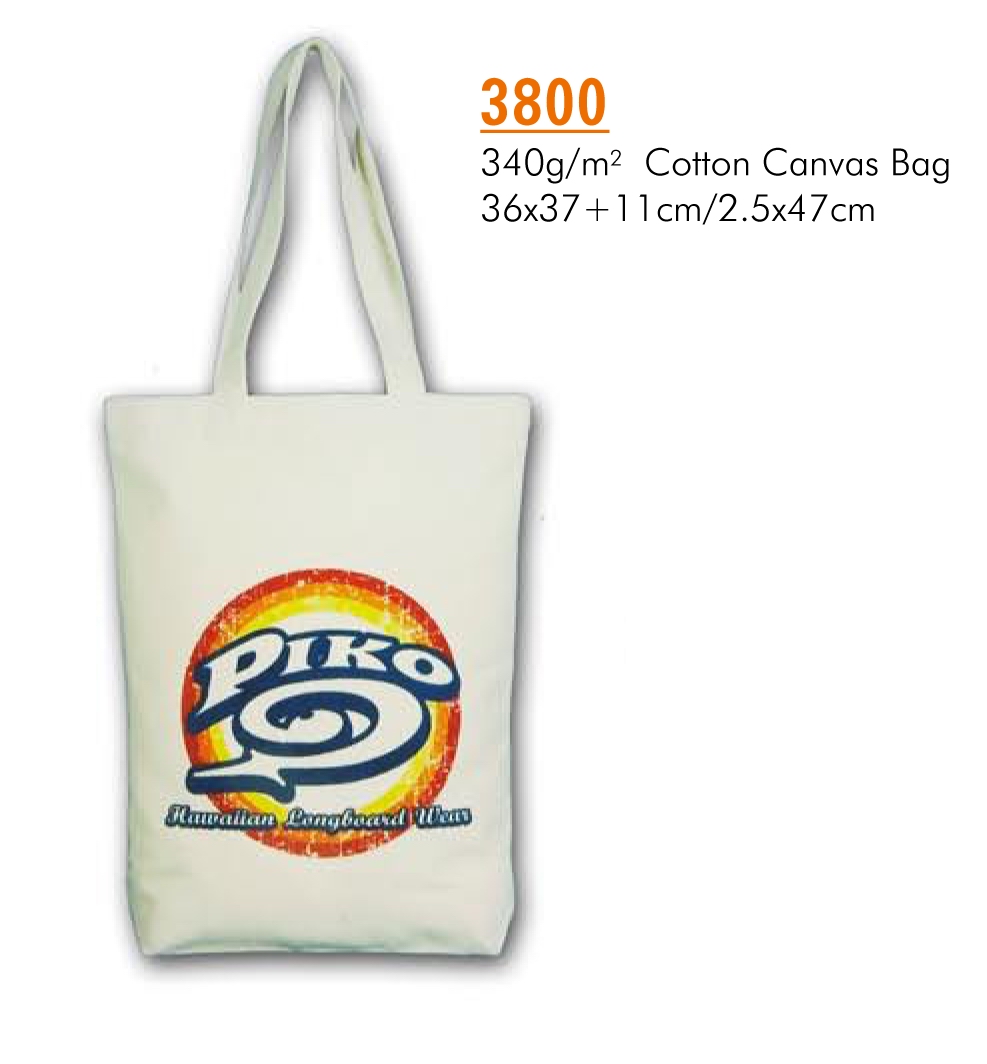
Ordering parameters and MOQ differences
Minimum order quantity (MOQ) is a frequent friction point in promotional bag sourcing. According to the product specification, the Knitted Bag T25210 carries an MOQ of 500 pieces. The Tote Bag Model 3800 spec sheet does not list a product-specific MOQ; the company is known to serve bulk OEM/ODM orders and various project types. As no MOQ figure is provided for the Tote Bag 3800 in the verified corpus, buyers should confirm current quantity requirements directly with the manufacturer.
The distinct MOQ boundary mainly reflects the logistics of knitted production. Producing a knitted batch requires yarn creation and machine setup for a specific pattern, which makes shorter runs structurally less efficient.
Market context: why tote bags still dominate search and adoption
Category data supports the strategic positioning of both bag types. The global tote bag market was valued at USD 17.1 billion in 2023 and is projected to reach USD 29.8 billion by 2032, signaling consistent demand for cotton and reusable carry-all formats. Canvas bags are the largest material segment in the tote bag market. Corporate adoption of custom-branded tote bags as promotional merchandise surged by 32% year-over-year in 2024, and tote bags ranked as the 5th most-searched category on the Advertising Specialty Institute platform in 2024.
The knitted bag category occupies a smaller but design-distinct niche, favored when the product itself must feel like a gift rather than a merely functional advertising surface. Reusable bags on average generate repeated exposure over their lifespan, making format differentiation a relevant consideration for brand recall. A knitted polyester bag and a cotton tote bag end up in the same shopping environments, but they may be picked up, seen, and discussed quite differently.
Realistic limitations and trade-offs
An independent buyer comparison is incomplete without acknowledging limitations on both sides.
Limitations of the Knitted Bag (T25210): Polyester is a synthetic fiber, which may be less aligned with sustainability messaging than cotton alternatives. The knitted open structure generally does not provide the same rigidity or load-bearing stability as heavy woven canvas, meaning the bag may not serve as a primary grocery carrier. The logo requirement of being knitted into the structure — while visually distinctive — is less flexible for high-detail artwork than wide-format digital printing. In addition, buyers approaching a max of six yarn colors face design constraints that an art department accustomed to full-color tote printing will need to respect.
Limitations of the Tote Bag (3800): Cotton tote bags are highly saturated in the promotional market, so recipients may perceive them as standard giveaway items. Surface printing on cotton can fade through repeated laundering depending on print method; screen-printed ink on natural fabric is more prone to wear over time than a structurally woven pattern. The fully flat look of a conventional printed tote lacks the tactile uniqueness of a knitted textile, potentially reducing the “keepsake effect” of the product.
Supplier credibility: what verification looks like for these models
Overview of Yulite
Henan Yulitepromotion Co., Ltd., founded in 2008, operates from a facility covering 15,000 square meters and employs approximately 200 staff. The company describes itself as a large exporter in the promotional business in China, with 100% of its sales coming from export business. The products go to over 86 countries and regions, with major markets including the EU, USA, Japan, and Australia. Annual production capacity reaches 20,000,000 pieces. The workshop is equipped with a range of professional machines; the R&D team consists of less than 10 engineers, and the workshop maintains a stable daily output of 30,000–50,000 pieces according to the company profile.
For verification of corporate compliance and credentials, the company profile states it has passed BSCI and SEDEX audits, and holds ISO9001, OEKO-TEX Standard 100, and GRS certifications.
For a buyer comparing T25210 and model 3800 specifically, the relevant capability signals are:
- Plain stitching, computer sewing machines and pattern machinery for cotton tote construction;
- Sampling room and dedicated sample workers, which supports pre-order sample validation;
- Printing options for Tote Bag (silk, transfer, digital, embroidery) and yarn-based knitting in-house for Model T25210;
- Production capacity sufficient to handle order peaks across both product lines.
Yulite also states it has an independent sampling room and professional sample workers delivering samples within 3 days, which is relevant for evaluation before committing to a large run.
Decision framework: choosing between a knitted bag and a cotton tote
Buyers evaluating Model T25210 and Model 3800 can use the following decision logic:
Select the Knitted Bag (T25210) when:
- The program emphasizes giveaway novelty and tactile distinctiveness;
- A logo can be simplified to a few yarn colors and does not require photographic reproduction;
- The intended application suggests small accessory formats — e.g., cosmetic pouch, tissue bag, small hand bag;
- The event or campaign calls for a gift that does not look like conventional printed merchandise;
- Order size can meet the stated MOQ of 500 pieces.
Select the Tote Bag (3800) when:
- The primary goal is broad, repeated brand visibility on a full-size carrier;
- Large surface artwork with gradients or multiple colors is required;
- Sustainability claims need to align with 100% cotton, recycled cotton, or organic cotton materials;
- Small, medium, and large size options are needed for a multi-SKU program;
- Market acceptance and consumer familiarity are more important than the novelty factor.
The global trend toward tight sourcing budgets pushes many buyers toward the most standardized option: the cotton canvas tote. Yet the category’s high saturation also means that more distinctive items — like knitted polyester bags — can outperform in recall-based campaign metrics, particularly when the recipient audience skews toward fashion and lifestyle segments.
Future outlook for knit and tote formats in promotional sourcing
As of 2026, the promotional products market continues to favor reusable bags, and the material base is evolving. Global tote bag demand is expected to keep expanding through the early 2030s, with fiber choices — organic cotton, recycled cotton, and recycled polyester — increasingly influencing brand purchasing decisions. Knitted bags remain a comparatively niche format, but the trend toward “giftable” promotional merchandise is likely to sustain their appeal.
The two formats may also converge on sustainability: polyester knitted structures could be produced from recycled polyester (rPET) yarn, while cotton totes already offer recycled and organic fiber options. Buyers should ask the supplier about recycled content availability for both product families during inquiry.
FAQ
What is a knitted promotional bag (Model T25210)?
Model T25210 is a knitted bag made from polyester that belongs to the knitted tote bag category. It is classified as a promotional knitted bag and is also available in the form of a knitted hand bag, knitted shoulder bag, knitted cosmetic bag, and knitted tissue bag. The product is intended for promotional use in all industries, with typical application scenarios including promotional events and giveaways.
What is a Tote Bag (Model 3800)?
The Tote Bag, Model 3800, is a cotton/canvas tote bag used for promotional purposes. It is available with material options of 100% cotton, recycled cotton, or organic cotton, in Small, Medium, and Large sizes, with natural or any dyed color. Logo customization methods available include silk printing, transfer printing, digital printing, and embroidery.
What materials are used for the Knitted Bag vs. the Tote Bag?
Model T25210 is made with polyester as the primary material, using yarn color as a structural feature. Model 3800 is a cotton-based tote bag, offered in 100% cotton, recycled cotton, or organic cotton versions.
Can a logo be woven into a knitted promotional bag?
Yes. For the Knitted Bag Model T25210, the logo can be woven into the bag itself. The spec states a maximum of 6 yarn colors, and the logo is incorporated through knitting rather than surface printing of the polyester material.
What is the MOQ for knitted promotional bags compared to cotton tote bags?
Model T25210, the Knitted Bag, has a stated MOQ of 500 pieces. No product-specific MOQ is stated in the available specification for the Tote Bag Model 3800; buyers should confirm quantity requirements directly with the manufacturer since the company supports bulk orders and promotional customization projects.