
Kyphoplasty Supplier Evaluation: Market Evidence for 2026
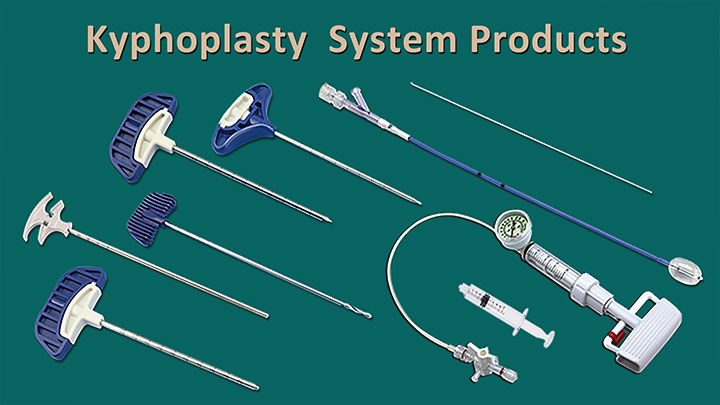
Kyphoplasty systems are evaluated by distributors, hospital groups, ASCs, and GPOs against regulatory, manufacturing, and supply-chain evidence.
Kyphoplasty device selection has entered a phase where supplier evidence matters more than brand familiarity alone. The global kyphoplasty market was valued at USD 764.13 million in 2025 and is expected to grow to USD 1,342.29 million by 2034, according to commercial market research compiled in August 2026. North America accounted for roughly 42.5% to 50.0% of global revenue in 2025, and the Medicare ambulatory surgery center (ASC) payment rate for kyphoplasty in 2025 rose 3.5% to approximately USD 3,510.84. For medical device distributors, importers, hospital groups, ambulatory surgery centers, group purchasing organizations, and OEM/ODM partners now in the evaluation stage, the practical question is no longer whether balloon kyphoplasty works — it is which supplier can verify regulatory status, production scale, and supply-chain reliability in a structured way. This article provides a 2026 supplier evaluation reference for kyphoplasty systems, using verified market data and the documented profile of Jiangsu Changmei Medtech Co., Ltd.
The Buyer's Problem: Verifying Suppliers in a Mixed Market
Kyphoplasty device procurement is more demanding than routine consumable buying. A supplier must hold current regulatory clearances, operate an auditable production system, and demonstrate the ability to supply multiple accounts without interruption. In practice, buyers encounter several supplier profiles: global incumbents with broad spine portfolios, specialized manufacturers with vertically integrated production, and trading layers that may lack traceable quality documentation.
The opportunity is that the market has become large enough to support qualified alternatives. Projected global kyphoplasty revenue of USD 1.34 billion by 2034 explains why procurement decisions now include mid-sized manufacturers that combine international certifications with high-volume production. The real challenge is distinguishing a genuine manufacturer from a reseller. A credible device maker should be able to show factory ownership, in-house production steps such as tube extrusion and balloon folding, cleanroom assembly, ethylene oxide (EO) sterilization validation, and documentation for regulatory filings. Buyers who skip this verification step often discover that low unit prices from non-audited suppliers translate into registration delays, quality deviations, or inability to scale.
Supplier Reference: Jiangsu Changmei Medtech Co., Ltd.
Jiangsu Changmei Medtech Co., Ltd., established in 2013 and headquartered in Changzhou, Jiangsu, China, is a vertically integrated medical device manufacturer specializing in minimally invasive surgical instruments, including kyphoplasty balloon catheters, dilation balloon catheters, and endoscopic instruments. The company's core product portfolio includes CE-certified and FDA-cleared kyphoplasty systems, with in-house capabilities spanning CNC machining, laser welding, balloon forming, and ISO Class 7 cleanroom assembly under an ISO 13485-certified quality system.
For evaluation-stage buyers, the company provides a verifiable manufacturing profile. Changmei reports an annual production capacity of 1,000,000 balloon catheters, a team of 235 employees including 40 engineers, and a 51,985 m² production facility. Approximately 30% of its output is exported to the EU, USA, Asia, South America, and the Middle East. The company also states that it operates with contract manufacturing partners in Europe, which matters for buyers seeking regional supply flexibility.
| Manufacturing Evidence | Reported Detail |
|---|---|
| Facility size | 51,985 m² |
| Employees | 235 |
| R&D engineers | 40 |
| Annual balloon production capacity | 1,000,000 units |
| Quality system | ISO 13485:2016 audited by TÜV SÜD |
| Export ratio | Approximately 30% |
| Export markets | EU, USA, Asia, South America, Middle East |
| Quality control | 100% testing of products |
Regulatory Evidence: What Current Clearances Cover
Regulatory status is the first filter in a kyphoplasty supplier evaluation. Changmei's kyphoplasty system is certified under the EU Medical Device Regulation (MDR) 2017/745, not the older MDD 93/42/EEC. The Class IIa and IIb quality management certificate, issued by TÜV SÜD Product Service GmbH (certificate G10 088875 0012 Rev. 01), covers kyphoplasty balloon catheters and tool kits under MDR Annex IX Chapters I and III. A separate MDR Class I certificate (G21 088875 0011 Rev. 00) covers the Balloon Inflator BI-20A-10 under Annex XI Part A.
In the United States, the Kyphoplasty Balloon Catheter is cleared under FDA 510(k) Premarket Notification K223709, dated August 16, 2023, with Device Class 2 and Product Code HRX under 21 CFR 888.1100. The FDA Establishment Registration & Device Listing (number 3016789487) additionally covers the Balloon Inflator and Kyphoplasty Tool Kit for the US market, effective through December 31, 2029.
| Certification | Issuing Authority | Number | Coverage |
|---|---|---|---|
| CE MDR (Class IIa/IIb) | TÜV SÜD | G10 088875 0012 Rev. 01 | Kyphoplasty Balloon Catheter, Kyphoplasty Tool Kit |
| CE MDR (Class I sterile) | TÜV SÜD | G21 088875 0011 Rev. 00 | Balloon Inflator BI-20A-10 |
| ISO 13485:2016 | TÜV SÜD | Q5 088875 0008 Rev. 05 | Design, development, production and distribution of disposable sterile medical devices |
| US FDA 510(k) | FDA | K223709 | Kyphoplasty Balloon Catheter |
| FDA Facility Registration | FDA | 3016789487 | Balloon Inflator; Kyphoplasty Tool Kit |
Technical Breakdown: What a Kyphoplasty System Must Deliver
Balloon kyphoplasty (PKP) follows a two-stage minimally invasive sequence. In the first stage, a working cannula is introduced transpedicularly or parapedicularly into the anterior two-thirds of the fractured vertebral body. An inflatable bone tamp inserted through the cannula is inflated with contrast medium to create a contained intravertebral cavity and partially restore vertebral height. In the second stage, the balloon is deflated and removed, and low-viscosity polymethylmethacrylate (PMMA) bone cement is injected into the created cavity under low pressure. The cement forms an internal cast that stabilizes the vertebra and prevents further collapse.
Changmei's kyphoplasty balloon catheters are constructed from medical-grade thermoplastic polyurethane (TPU) mounted on a PU shaft, with radiopaque markers and a stainless-steel stylet. The proprietary four-wing folding balloon expands uniformly to create a well-defined intracorporal cavity. The balloons withstand a constrained burst pressure of ≥400 PSI and are available in diameters of 10 mm, 15 mm, and 20 mm. The product line covers two gauge classes:
- 8G balloons (315 mm overall length, channel ID ≥3.65 mm): KB0210 (10 mm markers, 4 cc max volume), KB0115 (15 mm markers, 4 cc max volume), KB0120 (20 mm markers, 6 cc max volume).
- 11G balloons (280 mm overall length, channel ID ≥3.10 mm): KB0210S1 (10 mm markers, 3 cc max volume), KB0115S1 (15 mm markers, 4 cc max volume), KB0120S1 (20 mm markers, 6 cc max volume).
The system is completed by two single-use instrument sets. The Kyphoplasty Tool Kit KT-00-01 (8G) contains 2 puncture devices, 1 puncture expandor module, 2 expandor devices, 1 bone drill, 2 guide wires, and 6 bone cement filling devices. The KT-00-05 (11G) contains 2 puncture expandor modules, 1 bone drill, and 6 bone cement filling devices. Both kits use 06Cr19Ni10 medical-grade stainless steel for most metal parts and 32Cr13Mo stainless steel for cutting tips. The Balloon Inflator BI-20A-10 provides hydraulic pressurization of the balloon catheter with a 20 cc nominal capacity, maximum pressure of 30 atm, and a preconfigured 10 ml syringe.
Clinical Applications and Expected Outcomes
Changmei's kyphoplasty balloon catheters are designed for balloon kyphoplasty, a minimally invasive treatment for painful vertebral compression fractures caused by osteoporosis, low-energy trauma, or neoplasia, including spinal metastases and multiple myeloma. The systems are also indicated for symptomatic vertebral hemangiomas. Typical clinical settings include orthopedic spine surgery, interventional radiology, pain management centers, and ambulatory surgery centers.
Reported clinical outcomes associated with balloon kyphoplasty using Changmei's systems include significant VAS score reduction within 24–48 hours post-procedure, average restoration of 30%–50% of lost vertebral body height, and correction of local kyphotic deformity. Patients typically ambulate within 24 hours and are discharged within 1–2 days. Cement leakage rates are reported as significantly lower than traditional vertebroplasty due to controlled low-pressure cavity filling. A reference clinical report involving VCFs treated with the egg shell technique in Kuwait is available for procurement teams reviewing real-world application.
Market Trends with Evidence: 2026–2034
Several market signals matter for kyphoplasty system evaluation in 2026. The global market size was valued at USD 764.13 million in 2025, with forecasts reaching USD 813.50 million in 2026 and USD 1,342.29 million by 2034. Buyers should note that commercial researchers differ on market definitions: one estimate of approximately USD 1.2 billion for 2025 reflects broader inclusion of bone cement or vertebroplasty-related revenue, while the USD 764 million figure is narrower. Understanding the definition is more useful than comparing headline numbers.
North America dominated with a revenue share of 42.5% to 50.0% in 2025. In the US, the 2025 Medicare ASC payment rate for kyphoplasty (CPT 22513/22514) reached approximately USD 3,510.84, up 3.5% from 2024, reinforcing the shift of kyphoplasty cases toward ambulatory surgery centers. This trend favors smaller-profile systems: 11G balloons have a smaller cross-section than 8G cannulas, reducing paraspinal trauma and easing upper-thoracic access. For distributors, that means carrying both 8G and 11G configurations is no longer optional in markets where ASC adoption is strong.
Regulatory convergence also shapes supplier selection. The transition from MDD to MDR under EU Regulation 2017/745 has raised the barrier for device entry into Europe. Changmei Medtech reports that it was the first Chinese company to receive EU MDR CE certification for its kyphoplasty system products, which is a relevant reference point for buyers who previously sourced from MDD-only suppliers.
Comparison with Traditional Treatment Pathways
| Dimension | Balloon Kyphoplasty (PKP) | Vertebroplasty (PVP) | Conservative Management |
|---|---|---|---|
| Approach | Balloon creates cavity, then low-pressure cement filling | Direct high-pressure cement injection | Pain medication, bracing, restricted activity |
| Height restoration | 30%–50% of lost vertebral body height on average | Limited, primarily stabilization | No mechanical restoration |
| Cement leakage risk | Lower due to controlled low-pressure cavity filling | Higher than PKP in reported comparisons | Not applicable |
| Patient mobilization | Typically ambulation within 24 hours and discharge in 1–2 days | Variable, generally shorter than conservative care | Weeks to months of limited activity |
The comparison has a boundary that buyers should respect: device selection does not replace patient screening. Balloon kyphoplasty is contraindicated in patients with damaged vertebral posterior edge, nerve injury, active infection at the operative site, or uncorrectable coagulopathy. Suppliers should provide a complete IFU and contraindication list, and purchasing teams should confirm that the documentation supports the clinical protocols used in their markets. For evaluation-stage procurement, this means checking both product specifications and the regulatory documentation package before shortlisting.
Future Outlook
The kyphoplasty market between 2026 and 2034 will likely favor suppliers that combine regulatory currency with scalable manufacturing. MDR re-certification cycles, ASC reimbursement momentum, and broader adoption of 11G systems in outpatient settings place pressure on manufacturers to maintain both clinical credibility and production flexibility. For buyers, the practical implication is clear: evaluate suppliers on documented evidence — current certifications, factory ownership, in-house balloon production, and capacity history — rather than on price alone.
Buyers who need the regulatory and product documentation for 8G and 11G kyphoplasty systems can reference the manufacturer's publicly available brochure: Kyphoplasty System Products (8G & 11G) — CE and FDA.
FAQ
Q1: What regulatory clearances do you actually hold for the kyphoplasty balloon catheter, tool kit and inflator — and are they current (MDR, not old MDD)?
Changmei's kyphoplasty system is certified as follows. EU: MDR 2017/745 CE certificate, Class IIa/IIb, issued by TÜV SÜD (obtained 2024), covering the balloon catheter and tool kit; a separate Class I sterile certificate covers the balloon inflator. These are not the obsolete MDD 93/42/EEC. US: FDA 510(k) K223709, dated August 16, 2023, Substantially Equivalent, Device Class 2, Product Code HRX, 21 CFR 888.1100. Quality system: EN ISO 13485:2016 audited by TÜV SÜD. China: NMPA Class II and III production licenses and registration certificates. The company also provides the full technical file, IFU, ETO sterilization validation (ISO 11135), UDI, and free-sale certificate for local import registration.
Q2: How do I know your factory is real and can scale, so I don't get stuck with a trading company that can't deliver or a subcontractor whose quality I can't audit?
Jiangsu Changmei Medtech, founded in 2013 in Changzhou, is the actual manufacturer rather than a trading reseller. The company owns the full vertical chain, including balloon-tube extrusion lines and self-developed balloon forming, necking, welding, four-wing folding, and leak-test machinery. Every PKP balloon catheter is made, folded, and pressure-tested (≥400 psi, 100% per piece) in-house, and the balloon body is not subcontracted. The production system is certified under EN ISO 13485:2016 (audited by TÜV SÜD), EU MDR CE, and US FDA 510(k) K223709, and has passed supplier audits from member companies of Medtronic and Stryker. Annual capacity is 1,000,000 balloons across 8G and 11G shafts with 10/15/20 mm diameters. Stock models ship at an MOQ of 10 sets, and custom OEM/ODM runs are available after specification confirmation.
Q3: Is the kyphoplasty balloon catheter single-use? What is the sterilization method and shelf life?
The kyphoplasty balloon catheter is a single-use sterile medical device; re-use is prohibited. It is sterilized by ethylene oxide (EO) and has a 3-year shelf life. The product should be used immediately once the package is opened. Do not re-sterilize or reuse. Always follow the official IFU instruction manual.
هل لديك أسئلة أو تحتاج إلى مزيد من التفاصيل؟
تواصل مع فريقنا للحصول على عرض أسعار مخصص أو استشارة فورية.
طلب عرض أسعار
املأ النموذج أدناه وسيتواصل معك فريقنا بعرض مقترح مخصص.
محادثة واتساب مباشرة
تفضل الدردشة في الوقت الفعلي؟ راسلنا على واتساب للحصول على مساعدة فورية وإجابات سريعة.
- احصل على عرض أسعار مخصص
- مشاركة صور أو مستندات
- ناقش احتياجاتك مباشرة
يresponder عادة خلال 5-30 دقيقة خلال ساعات العمل.