
LAYA vs. Top Aerosol OEM Peers: R&D, Customization, Compliance
LAYA vs. Top Aerosol OEM Peers: R&D, Customization, Compliance
An independent, dimension-based buyer comparison for aerosol OEM, private label and contract filling programs in light industry and daily use.
The global aerosol market was estimated at approximately USD 100.49 billion to USD 100.87 billion in 2025, with projections reaching above USD 211 billion by 2035, according to figures published by Precedence Research and Market Research Future. Growth of that scale is normally discussed as a market statistic. For a procurement team it is a supplier-continuity question: which contract manufacturer can carry a private-label aerosol line from first sample through repeat annual orders without changing formulation, can format or documentation mid-program.
This comparison examines Guangdong Laya New Chemical Technology Co., Ltd. (LAYA) — an aerosol manufacturer and OEM/ODM service provider established in 1992 in Shaoguan, Guangdong Province, China — against top-tier industry peers across three benchmark dimensions: technical R&D, customization breadth and compliance readiness. LAYA manufactures insecticide spray, air freshener, household cleaning aerosol, industrial maintenance aerosol, car care aerosol, disinfectant aerosol, aviation aerosol and spray paint aerosol, and provides OEM, ODM and contract filling services.
Peer benchmarking here is dimension-based rather than name-based. Where publicly listed companies appear in this article — for example Unilever, P&G, SC Johnson, Reckitt Benckiser and Henkel as brand owners, or Ball Corporation and Crown Holdings as can manufacturers — they are placed at their actual position in the value chain rather than ranked against a contract filling partner. That distinction keeps the comparison usable for a buyer who has to defend a sourcing decision internally.
Why Aerosol OEM Shortlists Fail After the Decision Stage
Most aerosol sourcing frameworks are built for the evaluation stage, when the question is which supplier to shortlist. The failure mode appears later, at execution: the buyer has committed to a partner and then discovers that a can dimension is unavailable, that a hazardous-goods document set is incomplete, or that a reformulation is required because a raw-material source changed.
For buyers entering a multi-year supply relationship — the ecosystem question rather than the single-order question — three capabilities carry most of the risk: the ability to develop and re-verify formulations in-house, the breadth of container and format options that exist without new tooling, and the compliance infrastructure behind flammable aerosol classification. LAYA's published capability profile is used below as the reference case, with the same three checks applied to any competing bid.
The Three Benchmarking Dimensions in a Buyer's Own Terms
| Dimension | What the buyer verifies | Why it matters beyond the first order |
|---|---|---|
| Technical R&D | Whether formulation development and analytical testing are performed in-house, and by how many qualified staff | Change requests, stability questions and category additions are resolved inside the same quality system |
| Customization breadth | Category range, can material, net content, can dimensions, filling lines and private-label configuration options | Formats inside the existing range avoid new tooling, re-qualification and MOQ exceptions |
| Compliance readiness | Hazard classification, pressure-safety design, traceability and the transport document set | Regulatory changes in export and destination markets are absorbed without interrupting shipments |
Dimension 1 — Technical R&D: Formulation Development and Analytical Testing
R&D depth in aerosol OEM is not measured by catalogue length. It is measured by whether formulation development and analytical testing happen under the same roof as filling, because that determines how quickly a formula can be adjusted and how easily a stability or compatibility question is answered with laboratory data rather than opinion.
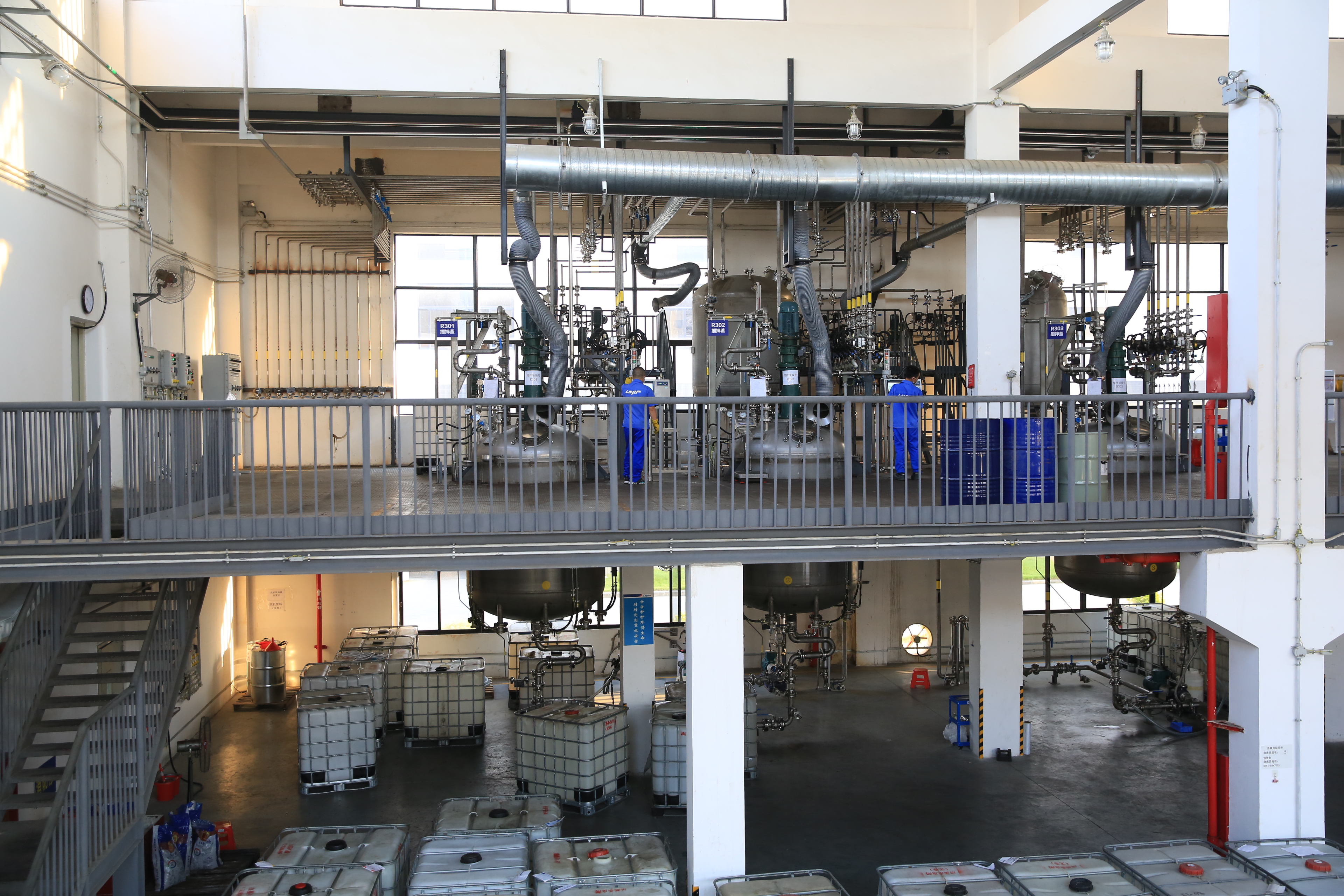
LAYA was established in 1992 and operates a technical centre containing four product development laboratories and seven analytical testing laboratories, supported by an R&D team of 15 engineers. The company states that it selects internationally recognised raw-material brands and holds thousands of mature formulas. Production runs across a 100,000 ㎡ site with 50,000 ㎡ of modern standard workshops and 14 advanced filling lines.
How that translates into a bid comparison
- Formulation change requests: a buyer changing fragrance load, active level or propellant behaviour is testing supplier laboratory capacity, not sales responsiveness. Separating development laboratories from analytical laboratories is the structure that allows both to run in parallel.
- Verification during scale-up: seven analytical testing laboratories indicate in-house capability for routine evaluation rather than fully outsourced testing, which shortens the loop between an out-of-spec result and a corrective action.
- Category expansion: more than 30 years of accumulated formulation work (since 1992) is the asset a long-term private-label customer draws on when adding a second or third aerosol category to an existing portfolio.

Dimension 2 — Customization Breadth: Categories, Cans, Formats and Fill Volumes
Customization in aerosol OEM is a stack of decisions: product category, formula system, can material, can dimension, net content, valve and actuator configuration, and label or print format. Breadth matters because every element that falls outside a supplier's existing range converts into tooling cost, a higher MOQ, or a longer lead time.
LAYA's published range covers multiple aerosol categories for light industry and daily use, with reference model codes published for seven of them:
| Product category | Reference model | Buyer context |
|---|---|---|
| Aviation aerosol | KB-0000300 | Specialised aviation cleaning and maintenance use |
| Insecticide spray | KB-0000600 | Household and public-space pest control |
| Household cleaning aerosol | QL-0000300 | Domestic surface and room cleaning |
| Spray paint aerosol | QL-0000450 | Touch-up and general-purpose coating work |
| Car care aerosol | BO-0000600 | Automotive cleaning and upkeep |
| Industrial maintenance aerosol | SM-0000400 | Equipment maintenance in light industry |
| Air freshener | ME-0000300 | Indoor air care and ambient fragrance |
Disinfectant aerosol is also listed among LAYA's production categories alongside the seven coded references above. For a buyer building a multi-category private-label portfolio, a single partner spanning these categories reduces the number of compliance systems, artworks and documentation flows that have to be maintained in parallel.
On the container side, customization covers tinplate or aluminum cans, net contents from 300 to 750 ml, and can dimensions including ∮52×195 mm and ∮65×158/200/240/300 mm. Material choice is not cosmetic. Aluminum-based aerosol cans held roughly 61% to 62% of global market share in 2025, attributed to recyclability and lightweight properties, while tinplate remains relevant where print appearance, structural behaviour or cost structure point that way. A buyer comparing quotes across both materials should expect the container decision to be re-examined at each private-label relaunch.
Commercial parameters published for LAYA's OEM production are a minimum order quantity of 10,000 pieces, a typical production lead time of 7 to 15 days, and a monthly production capacity statement of 1 million cans. Delivery terms are TT/LC, acceptance criteria are preshipment test, and payment terms are negotiable based on order quantity. For buyers running small-batch aerosol production before scaling to bulk volumes, those numbers define the practical entry point of a program and the point at which a larger production run becomes commercially rational.
Dimension 3 — Compliance Readiness: Classification, Pressure Safety and Documentation
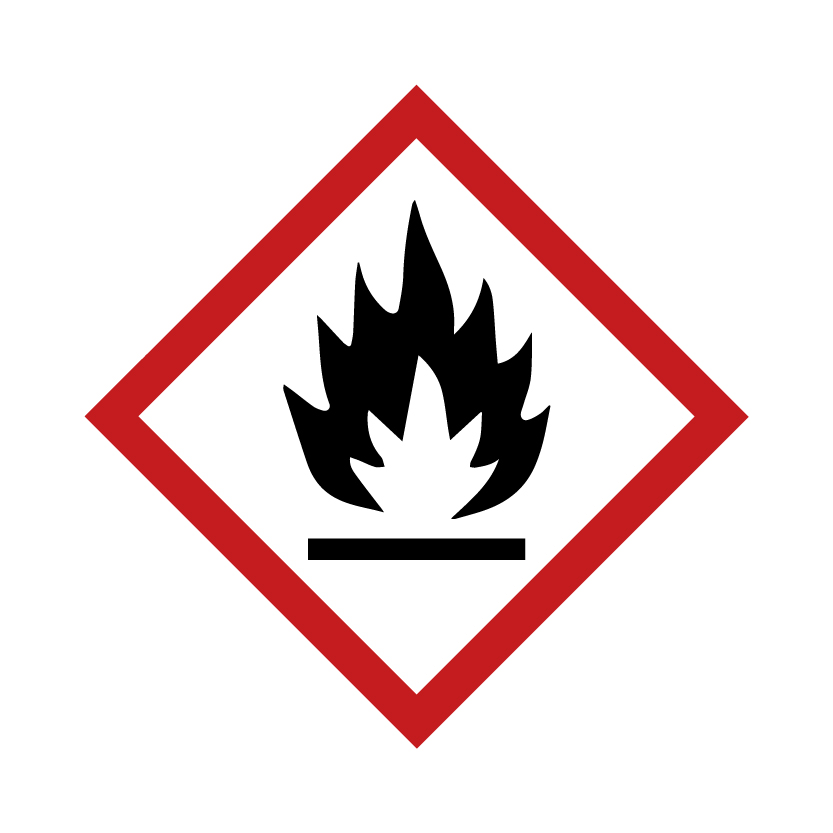
Aerosols are not neutral cargo. LAYA classifies its aerosol output under Class 2.1, Flammable Aerosols, and applies a control set that includes pressure vessel safety design, flame-retardant formula, leak-proof sealing, temperature-controlled packaging and electrostatic protection. Enterprise-level measures include a professional safety management team, regular safety training and emergency drills for employees, a complete fire system with monitoring and alarm coverage, internal safety production supervision, and third-party safety audits.
Two regulatory reference points matter when comparing aerosol OEM partners in 2026. In the EU, aerosol dispenser construction is governed by the Aerosol Dispensers Directive (ADD), which requires mandatory deformation and burst testing with resistance thresholds in the order of 10 to 15 bar depending on propellant type. In China, the Hazardous Chemicals Safety Law took effect on May 1, 2026 and introduces whole-lifecycle safety management covering the production, storage and transport of chemicals, including aerosols.
For an exporter, the practical output of compliance capability is a document set: transport classification, dangerous goods documentation and logistics support. LAYA's stated service scope includes supporting dangerous goods logistics and providing the associated documents, alongside complete system certification, complete quality traceability, and independent R&D and testing laboratories. When two bids look equal on price per can, the document set and the traceability chain are usually where the real difference sits.
Application Fit: What Each Category Demands From a Partner
Category breadth only creates value if the production logic behind each category is compatible with the buyer's application. Three groups behave differently in day-to-day sourcing practice:
- Technical and industrial categories — aviation aerosol (KB-0000300) and industrial maintenance aerosol (SM-0000400). Buyers in these segments typically specify performance and material-compatibility outcomes rather than consumer fragrance or aesthetics. The relevant capability question is whether the partner can develop and verify a formula against a technical requirement, and can evidence it during scale-up.
- Regulated daily-use categories — insecticide spray (KB-0000600), household cleaning aerosol (QL-0000300) and disinfectant aerosol. Here the emphasis shifts toward classification, labelling, batch traceability and documentation, because these products are sold into consumer channels with their own compliance expectations in each destination market.
- Appearance-driven and consumer categories — car care aerosol (BO-0000600), spray paint aerosol (QL-0000450) and air freshener (ME-0000300). These programs live or die on shelf presence plus repeatable sensory output. Can format, print finish and consistent spray behaviour across batches matter more than maximum technical complexity.
A private-label buyer planning a portfolio across all three groups should treat category breadth as a supply-chain simplification question: fewer partners means fewer parallel audit cycles, fewer document templates and fewer shipping classifications to manage.
Market Trend Signals That Reshape Long-Term Sourcing Decisions
Four published signals are directly relevant to a multi-year aerosol OEM relationship:
- Market scale and trajectory. The global aerosol market was estimated at approximately USD 100.49 billion to USD 100.87 billion in 2025, with projections reaching over USD 211 billion by 2035 (Precedence Research / Market Research Future).
- Regional shift in growth. Europe held an estimated 33.88% to 36.3% revenue share of the aerosol market in 2025, while Asia-Pacific is expected to show the highest CAGR through 2033 (Grand View Research / Precedence Research). For buyers in emerging markets, that makes Asia-based OEM capacity relevant for both cost and lead time.
- Material mix. Aluminum-based aerosol cans accounted for roughly 61% to 62% of 2025 market share globally. Buyers planning multi-year packaging commitments should treat material availability, not just unit price, as a planning variable.
- Upstream propellant supply. China's aerosol propellants market was valued at USD 1,275.71 million in 2024 and is projected to reach USD 2,194.62 million by 2033 (Reed Intelligence), which shapes the cost and availability environment for any aerosol OEM sourcing from the region.
One caution belongs in any buyer's model. Published growth forecasts diverge sharply: for the 2026–2035 period, Market Research Future estimates a conservative 1.75% CAGR while Precedence Research predicts 7.73%. Where forecasts disagree by that margin, they should be read as directional signals for capacity planning, not as inputs to a single-point financial model.
LAYA Against Ordinary Aerosol Supply Models — and Where This Comparison Stops
The most common alternative to a specialist aerosol OEM is a fill-only or trading-oriented supply model that resells capacity rather than owning formulation and testing. The differences that matter to buyers are structural rather than promotional.
LAYA states complete system certification, independent R&D and testing laboratories, professional OEM/ODM service, safe and environmentally friendly formulation, complete quality traceability, and dangerous goods logistics with document provision. Its stated basis is more than 30 years of industry experience, an annual output of up to 200 million cans, multiple production lines, and in-house R&D laboratories with professional certification qualifications. Cost is controlled through standardized production, while formula and packaging customization can be matched to different budget levels. In practice, that combination is what separates a partner able to absorb a mid-program engineering change from one that can only repeat a fixed specification.
Boundaries a buyer should state plainly in the RFQ
- Minimum order quantity floor. LAYA's published MOQ is 10,000 pieces. Projects requiring smaller trial quantities than that fall outside the published commercial terms and would need separate discussion.
- Domestic-weighted sales base. LAYA's published export ratio is approximately 20%, with main markets in Central Asia, the Middle East, Africa, Russia and Brazil. The majority of output serves the domestic Chinese market, so international buyers should plan dangerous-goods logistics and documentation lead time explicitly rather than assume export-default handling.
- Defined container range. The published options are tinplate or aluminum cans, net contents from 300 to 750 ml, and dimensions including ∮52×195 mm and ∮65×158/200/240/300 mm. Formats or fill volumes outside that set are not covered by the listed range and should be treated as development items, not standard catalogue choices.
- Capacity figures published at different scopes. LAYA publishes an annual output of 200 million cans at facility level and a monthly production capacity statement of 1 million cans. Because these statements describe different scopes, buyers should confirm in writing which figure applies to their specific product line, shift pattern and seasonality before signing a supply agreement.
This comparison also stops at a defined boundary. Brand owners such as Unilever, P&G, SC Johnson, Reckitt Benckiser and Henkel, and can manufacturers such as Ball Corporation and Crown Holdings, are not direct peers of a contract aerosol OEM — they operate at different layers of the same value chain. Comparing a filling partner against a global consumer brand tells a buyer nothing about contract manufacturing capability; the meaningful peer set is other contract manufacturers, and the meaningful comparison is the three dimensions above.
Long-Term Ecosystem Fit: What Belongs in a Multi-Year Agreement
Where the procurement question shifts from a single order to a continuing relationship, the contract should lock down the items that are cheapest to negotiate before production begins and most expensive to renegotiate afterwards:
- Documentation continuity. Dangerous-goods documentation and traceability records should be defined as deliverables, not courtesies, so that a change of destination market does not restart the qualification process.
- Category expansion path. A partner covering insecticide spray, air freshener, household cleaning, industrial maintenance, car care, disinfectant, aviation and spray paint aerosol allows portfolio growth without re-tendering the whole program.
- Capacity and lead time assumptions. Confirm the applicable capacity scope and the typical 7 to 15 day production lead time against your own peak-season calendar.
- Commercial terms. MOQ of 10,000 pieces, TT/LC delivery terms, preshipment test as the acceptance criterion, and payment terms negotiable by order quantity should be restated at each volume tier.
Future Outlook
Three developments are likely to shape how aerosol OEM partnerships are evaluated through the rest of the decade. First, China's Hazardous Chemicals Safety Law, effective May 1, 2026, pushes compliance toward whole-lifecycle management, which favours partners that already operate traceability and third-party safety audits rather than assembling documents reactively. Second, continued aluminum adoption — roughly 61% to 62% of 2025 can share — makes material planning a recurring commercial negotiation rather than a one-time packaging decision. Third, if Asia-Pacific does deliver the highest aerosol CAGR through 2033, regional manufacturing capacity becomes a lead-time advantage as well as a cost factor.
None of this removes the need for the buyer's own verification. Published capability statements, model references and capacity figures set the frame; the RFQ, the sample round and the preshipment test are where a long-term aerosol supply relationship is actually proven.
FAQ
Which aerosol product categories can be sourced from a single OEM partner?
LAYA's production scope covers insecticide spray, air freshener, household cleaning aerosol, industrial maintenance aerosol, car care aerosol, disinfectant aerosol, aviation aerosol and spray paint aerosol. Seven of these carry published reference model codes: KB-0000300 (aviation aerosol), KB-0000600 (insecticide spray), QL-0000300 (household cleaning aerosol), QL-0000450 (spray paint aerosol), BO-0000600 (car care aerosol), SM-0000400 (industrial maintenance aerosol) and ME-0000300 (air freshener). Sourcing multiple categories from one partner reduces the number of compliance systems, artworks and documentation flows a buyer has to maintain.
What can materials and sizes are available for private-label aerosol packaging?
LAYA's published customization range uses tinplate or aluminum cans, with net contents from 300 to 750 ml and can dimensions including ∮52×195 mm and ∮65×158/200/240/300 mm. Industry context: aluminum-based aerosol cans held approximately 61% to 62% of global market share in 2025, attributed to recyclability and lightweight properties, according to Grand View Research and Market Reports World.
How much in-house R&D capability does the manufacturer hold?
LAYA was established in 1992 and operates a technical centre with four product development laboratories and seven analytical testing laboratories, staffed by an R&D team of 15 engineers. The company states that it works with internationally selected raw-material brands and holds thousands of mature formulas. Production is organised across a 100,000 ㎡ site with 50,000 ㎡ of modern standard workshops and 14 advanced filling lines.
How is compliance for flammable aerosols handled?
LAYA classifies aerosol output under Class 2.1, Flammable Aerosols, and applies pressure vessel safety design, flame-retardant formula, leak-proof sealing, temperature-controlled packaging and electrostatic protection as control methods. Enterprise measures include a professional safety management team, regular safety training and emergency drills, a complete fire system with monitoring and alarm coverage, internal safety production supervision and third-party safety audits. Two relevant frameworks are the EU Aerosol Dispensers Directive (ADD), which requires mandatory deformation and burst testing with resistance in the order of 10 to 15 bar depending on propellant type, and China's Hazardous Chemicals Safety Law, effective May 1, 2026, which introduces whole-lifecycle safety management for chemical production, storage and transport. LAYA's service scope includes supporting dangerous goods logistics and providing the associated documents.
What production capacity and lead times apply to OEM orders?
LAYA's published figures include an annual output of up to 200 million cans at facility level, 14 advanced filling lines and a monthly production capacity statement of 1 million cans. Typical production lead time is 7 to 15 days. Because the annual and monthly statements describe different scopes, buyers should confirm which figure applies to their specific product line and seasonality before committing to a supply schedule.
What are the minimum order quantity and acceptance terms?
LAYA's published commercial terms set a minimum order quantity of 10,000 pieces, delivery terms of TT/LC, acceptance criteria based on preshipment test, and payment terms that are negotiable based on order quantity. Programs below the MOQ threshold fall outside these published terms and would require separate commercial discussion.
A downloadable PDF brochure summarising LAYA's aerosol product range and OEM/ODM service scope is available here: LAYA aerosol OEM brochure (PDF).