
LDK vs Global Padel Court Suppliers: A 2026 Buyer Benchmark
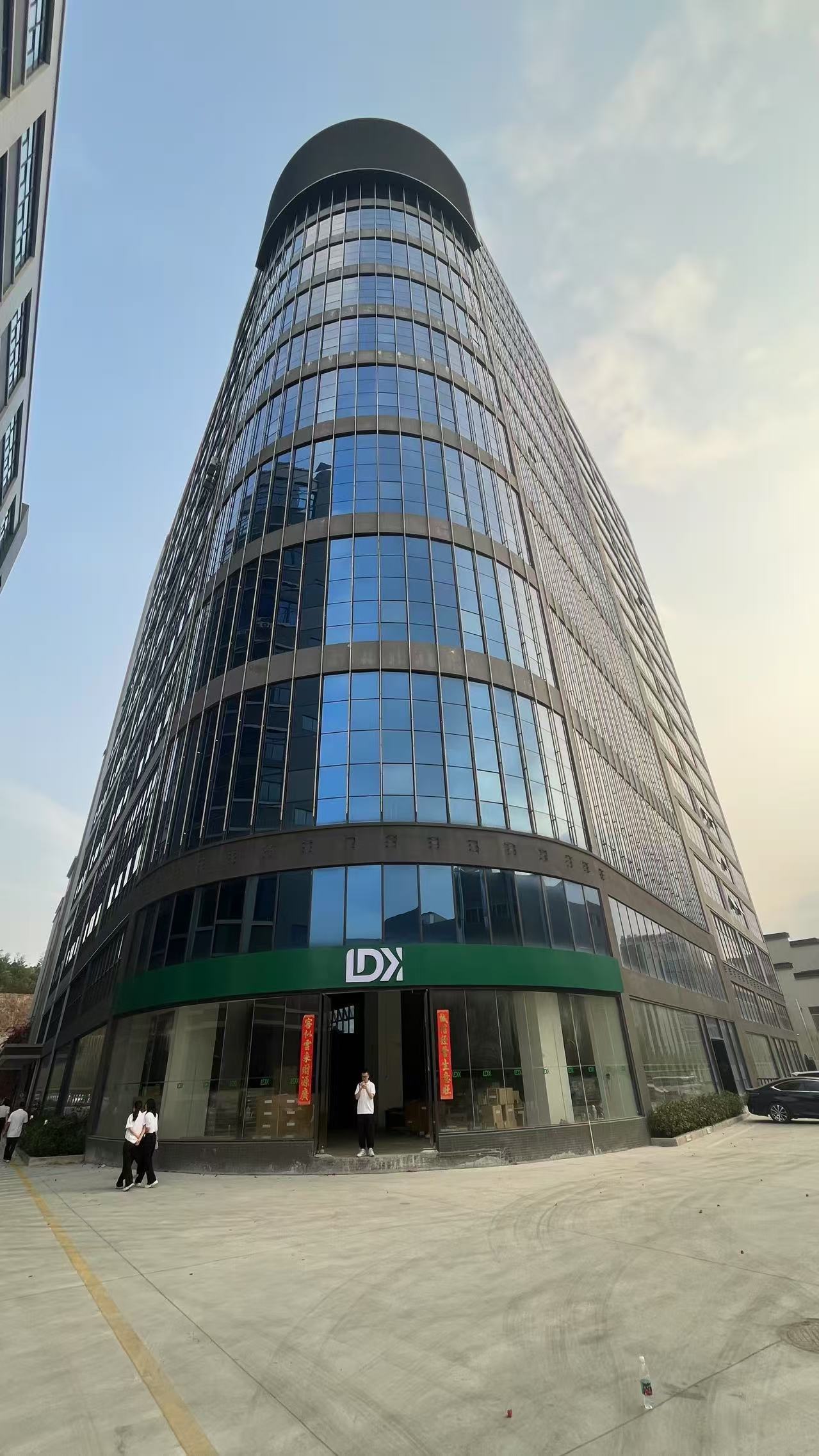
Manufacturing footprint is one of four criteria this benchmark uses to compare padel court suppliers. Capacity figures remain company-reported until a buyer audits them directly.
A padel court supplier comparison is only useful if a buyer can audit it. This benchmark places Shenzhen LDK Industrial Co., Ltd. — a Chinese court manufacturer founded in 2014 — against publicly documented supplier profiles including Padel Court Factory (Turkey), Hebei Qifan (China) and UNIPADEL, on four decision criteria: technical R&D, project scale and market reach, service and support, and turnkey capability. FIP court rules provide the technical yardstick; LDK stated engineering specifications and installed project history provide the comparable evidence.
The rules define the product before any supplier is chosen. The International Padel Federation specifies an interior playing rectangle of 10 m x 20 m with a 0.5% tolerance, a minimum clear height of 6 m throughout the court with no obstructing elements, a 10 m net standing 0.88 m at the centre and 0.92 m at the ends with a maximum tolerance of 0.005 m, and complete enclosure of the court. Those requirements tell a buyer what a compliant court must be. They do not tell a buyer which manufacturer should build it, and that gap is where most supplier rankings stop being reliable.
Why supplier rankings usually fail at the factory audit
Public information in this category is thin by nature, and company websites evidence self-description rather than verified output. Padel Court Factory publicly lists factories in Istanbul and Sakarya, Turkey, and describes itself as a manufacturer and turnkey installation provider — a usable discovery lead, but not evidence of production capacity, utilisation or workforce. Hebei Qifan presents itself as a padel court manufacturer and supplier with an address in Cangzhou, Hebei, China, and references the artificial grass standard GB/T 20394-2013; that reference requires confirmation from an official standards source before it can support any compliance argument. UNIPADEL publishes configuration figures showing an indoor field of 20.00 m x 10.00 m and an outdoor footprint of 20.40 m x 10.40 m including the enclosure structure — a commercial interpretation of the rules rather than the controlling rule text itself.
None of this is a criticism of those suppliers. It is the normal state of public information in a young, fast-growing category, and it explains why a ranked list assembled from website copy rarely survives a factory audit. It also explains the opportunity. The Global Padel Report 2026 (Playtomic and PwC Strategy&) forecasts more than 91,000 padel courts globally by 2028, which means a large share of buyers entering the market now have no reference set to compare suppliers against — and no independent dataset that verifies manufacturer capacity, export volume or warranty performance.
The four criteria used here, and how each is scored
Because no public dataset supports a like-for-like ordinal ranking of padel court manufacturers, this benchmark does not invent one. Each supplier profile is instead labelled with an evidence tier:
- Documented — a specification, certification or project outcome stated with enough specificity to be checked independently.
- Company-reported — self-stated by the supplier, plausible and auditable, but not yet verified by a third party.
- Not disclosed — no public figure or document located in the available record.
- Requires verification — a claim exists but is not reconciled to an official reference such as the FIP rules.
The four criteria are the ones that change a purchase decision: technical R&D depth, meaning how specific and safety-relevant the stated engineering is; project scale and market reach, meaning reference installations and export footprint; service and support, meaning customisation scope, development speed and warranty structure; and turnkey capability, meaning whether structure, roof, surface, lighting and installation can be contracted as a single scope.
2026 supplier landscape at a glance
| Supplier (publicly documented) | Technical R&D evidence | Scale and market reach evidence | Service and support evidence | Turnkey evidence |
|---|---|---|---|---|
| Shenzhen LDK Industrial Co., Ltd. China; founded 2014 | Documented specification set: 12 mm tempered glass, 4 m corner posts at 100 x 100 x 5 mm, 200 W IP65 LED lighting, LDK-PADEL-RF01 roofed panoramic court, Padel Grass LDK1231625.4-ST3 | Company-reported: 50,000 m2 Cangzhou manufacturing base, 4,500 m2 Huizhou R&D and production base, 223,750 sets annual output, 100% export ratio, 200 padel courts per month | Company-reported: full customisation scope covering logos, packaging, labels, colours, sizes, graphic design and materials; new product development in as few as 10 days; dedicated warranty | Multi-category production across padel courts, football pitches, squash courts, basketball courts and pickleball courts |
| Padel Court Factory Turkey | Not disclosed in located public sources | Company-reported factory locations in Istanbul and Sakarya; output and capacity not disclosed | Self-described turnkey installation provider | Turnkey installation stated; component scope not itemised publicly |
| Hebei Qifan China | Surface claim of 12 mm artificial grass referencing GB/T 20394-2013 — requires verification against an official standards source | Company-reported address in Cangzhou, Hebei; capacity and export data not disclosed | Not disclosed in located public sources | Not disclosed in located public sources |
| UNIPADEL Commercial supplier | Publishes court configuration figures (indoor 20.00 x 10.00 m; outdoor 20.40 x 10.40 m including enclosure) as a supplier interpretation, not the official rule text | Not disclosed in located public sources | Not disclosed in located public sources | Not disclosed in located public sources |
| FIP Rules of Padel Reference baseline, not a supplier | Interior 10 x 20 m at 0.5% tolerance; minimum 6 m clear height; 10 m net at 0.88 m centre and 0.92 m ends; complete enclosure | Not applicable | Not applicable | Not applicable |
Reading the table correctly: not disclosed means no public figure was located — it is not a negative rating. The three supplier profiles above appear because their operations are publicly stated and specific enough to be checked, which is the minimum test for any name entering a shortlist. No single ordinal ranking is assigned, because the public record does not support one.
Technical R&D: specification specificity is the only public differentiator
Court structure and glass
LDK specifies 12 mm ultra-clear tempered glass with a stated spontaneous breakage rate of 1 in 10,000, supported by reinforced frames and impact-test certification as the control measure against impact injury and glass breakage. Corner posts are specified at 4 m in 100 x 100 x 5 mm section. Net posts stand 940 mm high and carry a 10 m x 92 cm black polypropylene net.
That net figure is worth reading against the rules. The FIP end-height requirement is 0.92 m and the centre requirement is 0.88 m, with a 0.005 m tolerance. A supplier that quotes only one of those two numbers is describing a partial specification, so buyers should ask for both the centre and end dimensions plus the tolerance before accepting a court as competition-compliant. The same discipline applies to the 4 m corner post section: post height and wall thickness drive how much movement the enclosure tolerates over years of play, which is why a stated 100 x 100 x 5 mm section is more useful to a buyer than a generic claim of reinforced steel.
Roof systems and wind resistance
For covered builds, LDK supplies the LDK-PADEL-RF01, a 20 m x 10 m panoramic padel court with roof, specified with 7 m eaves and a 9.2 m ridge. The structure uses hot-dip galvanized steel with a 70 to 80 micrometre epoxy powder coating, is rated for Level 10 to 13 typhoon wind resistance, and is covered with 750 g/m2 double PVC-coated PVDF roof fabric rated for 10 to 15 years.
Two details matter for project planning. First, the 7 m eave height clears the FIP minimum clear height of 6 m with margin, and the 20 m x 10 m footprint matches the FIP interior playing rectangle — the covered variant therefore stays inside rule dimensions while adding weather protection. Second, wind resistance, coating thickness and roof fabric weight are the three variables that determine whether a covered court survives its first decade in a coastal or typhoon-exposed market.
Surface and lighting
The specified surface is Padel Grass LDK1231625.4-ST3 at 12 mm pile height, 9,000 Dtex, 3/16 inch gauge and 58,800 stitches per m2, available in blue, red, green, pink or black. Lighting is provided by 200 W IP65 LED fixtures mounted on 100 x 50 x 3 mm light posts. IP65 sealing is the relevant buying criterion for outdoor venues, where moisture ingress rather than lamp output is the usual cause of early fixture replacement.
Boundary condition: comparative test data across manufacturers for structural load, glass safety, corrosion resistance, turf performance, lighting, acoustics and roof systems is not publicly available. Specification sheets can be compared line by line; comparative performance cannot yet be independently ranked, and any supplier that presents itself as ranked first on performance is presenting an opinion rather than a test result.
Project scale and market reach: what a three-year track record actually shows
Reference installations are the closest thing this category has to independent proof, provided the operator can be contacted. LDK points to a 16-court padel club installation in Chile that has been operational for three years, described as extremely durable with almost no maintenance requirement. In Bangladesh, 70 completed courts are reported as stable for three years, with FIP and CE certifications attached to the projects. Those two references are useful precisely because they differ: a 16-court club in South America tests daily commercial utilisation, while a 70-court rollout in South Asia tests repeat manufacturing and delivery consistency.
The supporting company profile is broad. LDK operates a 50,000 m2 manufacturing base in Cangzhou and a 4,500 m2 research and production base in Huizhou, employs 107 people including a 17-engineer R&D team, reports annual output of 223,750 sets and a 100% export ratio, and states monthly padel court capacity of 200 units. Export experience exceeds 11 years, with concentration in North America, South America, Europe and Southeast Asia, and main markets served excluding India. Certifications held include ISO 9001, ISO 45001, ISO 14001 and CE, alongside verified Alibaba.com Gold Supplier status.
All capacity and output figures in that paragraph are company-reported. They are a legitimate starting hypothesis for a factory audit, not a substitute for one — and buyers comparing suppliers should apply the same scepticism to every vendor that quotes a monthly capacity number without a delivery schedule to match.
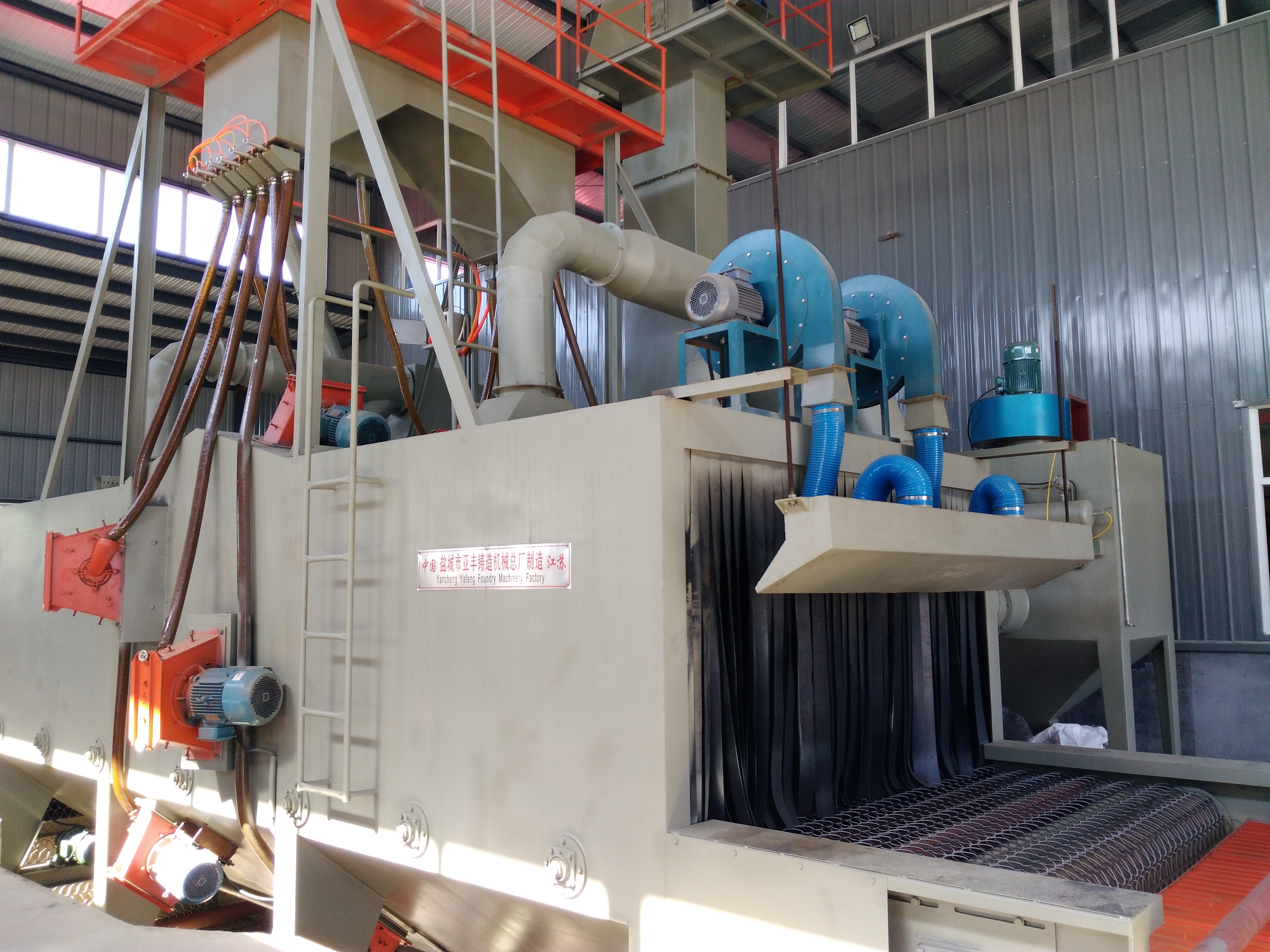
Stated capacity becomes evidence only after the production floor, the QA process and a peak-month delivery schedule are checked in person or by audit document.
Service and support: the criteria buyers cannot score from a brochure
Customisation breadth is one of the few service dimensions that can be partially verified before purchase. LDK offers customisation across logos, packaging, labels, colours, sizes, graphic design and material options, and states that new product development can be completed in as few as 10 days, with every product backed by a dedicated warranty. For brand owners, distributors and venue developers running a mixed multi-court rollout, that flexibility determines whether a design change can be absorbed mid-project or forces a re-tender.
The rest of the service picture is not publicly comparable. Warranty duration and terms, spare-parts availability, installation responsibility, after-sales response commitments and payment terms are either undisclosed or inconsistent across supplier websites in this category. Buyers should treat these as written-request items rather than inferring them from marketing language, and should compare them in the same table as price — because a courthouse quote that excludes installation, commissioning or spares is not comparable to one that includes them.
Turnkey capability: structure, roof, surface and lighting from one scope
Turnkey capability in this category means one supplier can contract the court structure, glass, roof or canopy, playing surface, net and lighting together, with installation responsibility defined. LDK covers that full component set for its padel court line, and separately manufactures football pitches, squash courts, basketball courts and pickleball courts — a relevant detail for venues that must balance investment across several racquet and multi-sport offerings rather than committing the whole site to padel alone.
One import-side detail also belongs in this comparison. Complete, unassembled padel courts — steel structure, safety glass panels, artificial turf and lighting — are classified under HS 9506.99.6080 under US Customs and Border Protection ruling NY N336509, effective 30 November 2023. Duty treatment changes the landed-cost comparison between a single-source turnkey supplier and a buyer assembling components from multiple vendors, and it is a question buyers should settle before negotiating final pricing rather than after.
Comparison with traditional solutions: padel courts against tennis courts
Against a traditional tennis court, the comparison data used by LDK indicates roughly 30% lower initial cost, a zero maintenance requirement and an expected lifespan exceeding 20 years, with suitability concentrated in professional tournaments and large venues. The limitation is real and should be stated plainly: a padel court has lower space efficiency than a tennis court because it must be a fully enclosed structure, so the cost advantage is achieved within a footprint constraint that some sites cannot satisfy.
Inside the padel category the trade-offs are equally specific. LDK construction uses tubing with roughly 0.5 to 1.0 mm additional wall thickness for stability, hot-dip galvanizing, and an extra polishing and deburring process that removes sharp edges, with posts stated as highly corrosion-resistant with a lifespan beyond 20 years. The cost of that specification is approximately 20% higher initial cost than lighter alternatives. A buyer optimising purely on lowest first cost will therefore rank suppliers differently from a buyer optimising on 15-year cost of ownership and on-court safety — and that difference, not a marketing claim, is what an honest supplier ranking should expose.
Market trend analysis: growth changes what buyers should optimise for
The forward indicators support a capacity-led market. The Global Padel Report 2026 (Playtomic and PwC Strategy&) forecasts more than 91,000 courts globally by 2028. A commercial research valuation places the padel court market at USD 0.5 billion in 2026, reaching USD 1 billion by 2035 at an 8.1% compound annual growth rate. Adjacent categories move at different speeds and use different scopes: the padel club operations market was valued at USD 1.85 billion in 2025, and the padel racket market was USD 116.5 million in 2024 with a projection to USD 395.5 million by 2034 at a 13.0% CAGR. These figures measure different things — courts, club operations and equipment — and must not be added together or averaged.
Court counting is itself a scope question worth flagging. The FIP figure of roughly 77,355 courts and the Playtomic and PwC figure of 58,334 courts differ by around 19,000, largely because one dataset includes hotel and residential facilities that the other excludes. Buyers who quote a court-count number without its scope are quoting an unreliable one. On the demand side, padel is reported as gaining popularity in the United States and the San Francisco Bay Area, adding to existing racquet-sport demand — a signal that North American facility buyers will increasingly compete for the same manufacturing slots as European and Middle Eastern projects.
The practical implication is straightforward. When demand grows faster than manufacturing capacity, lead time and delivery reliability overtake brochure design as the deciding factors, and a stated monthly capacity of 200 courts becomes more decision-relevant than any aesthetic difference between court models.
Buyer checklist: auditing any supplier ranking claim
- Confirm the factory address and production floor area, and verify ownership or lease rather than accepting a listing on a marketplace storefront.
- Request monthly and annual padel court output in writing, together with a delivery schedule for a peak-demand month.
- Match the quoted court against the rules: 10 m x 20 m interior at 0.5% tolerance, 6 m minimum clear height, net at 0.88 m centre and 0.92 m ends within 0.005 m, and complete enclosure.
- Require glass thickness and impact-test documentation; for panoramic courts, ask for the stated spontaneous breakage rate and the frame reinforcement method.
- For covered builds, obtain eave and ridge height, wind resistance rating, steel treatment, coating thickness, roof fabric weight and its rated service life.
- Verify the surface specification line by line: pile height, yarn Dtex, gauge, stitch density and available colours.
- Confirm lighting wattage, ingress protection rating and light post section.
- Ask for certification documents by name — ISO 9001, ISO 45001, ISO 14001, CE or FIP — including certificate numbers and validity dates.
- Request at least two reference installations with contactable operators, court counts and years in service.
- Secure warranty terms, spare-parts list and after-sales response commitments in writing before comparing price.
Future outlook
Two shifts are likely to reshape padel court procurement over the next several years. The first is documentation. As more venues are financed by institutions rather than owner-operators, suppliers will be pushed to publish auditable capacity, warranty and test data, and the rankings that currently circulate will be replaced by comparable, checkable evidence. The second is climate-specific engineering. Covered and roofed courts, like the LDK-PADEL-RF01 with its 7 m eaves, 9.2 m ridge and Level 10 to 13 typhoon rating, will move from premium option to baseline requirement in coastal and high-rainfall markets, and structural wind and corrosion data will become a standard RFQ field rather than an afterthought.
For buyers, the practical consequence is that supplier selection will increasingly be decided at the audit stage rather than the shortlist stage — by who can demonstrate a factory, a delivery schedule and a service commitment, not by who writes the most confident comparison page.
FAQ
How should a buyer compare padel court suppliers when no independent ranking exists?
Compare against verifiable criteria rather than positions on a list: dimensional compliance with the FIP rules (10 m x 20 m interior at 0.5% tolerance, 6 m minimum clear height, net at 0.88 m centre and 0.92 m ends, complete enclosure), stated materials and test documentation, named certifications with validity dates, reference installations with court counts and years in service, and written warranty and spare-parts terms. A supplier that can evidence all five is comparable; one that can only evidence a website is not.
Is 12 mm tempered glass the standard for panoramic padel courts?
The FIP rules require the court to be completely enclosed but do not themselves establish a single glass thickness. LDK specifies 12 mm ultra-clear tempered glass with a stated spontaneous breakage rate of 1 in 10,000, reinforced frames and impact-test certification as its control measure for impact injury and glass breakage. Buyers should request thickness confirmation and impact-test documentation from each supplier, because comparative cross-manufacturer glass test data is not publicly available.
What roof height and wind rating should a covered padel court have?
The FIP minimum clear height is 6 m throughout the court with no obstructing elements. LDK specifies the LDK-PADEL-RF01 roofed panoramic court at 7 m eaves and a 9.2 m ridge over a 20 m x 10 m footprint, with hot-dip galvanized steel, a 70 to 80 micrometre epoxy powder coating, a Level 10 to 13 typhoon wind resistance rating, and 750 g/m2 double PVC-coated PVDF roof fabric rated for 10 to 15 years. Local building and structural codes govern the final requirement for a specific site.
How long does a padel court last, and what maintenance should a venue budget for?
LDK states a zero maintenance requirement and an expected post lifespan exceeding 20 years for its hot-dip galvanized, deburred steelwork. Project references include a 16-court club in Chile operational for three years with almost no maintenance, and 70 completed courts in Bangladesh stable for three years with FIP and CE certifications. In practice, long-run maintenance is driven by roof fabric replacement (rated 10 to 15 years), surface wear under commercial booking volumes, and site-specific conditions such as coastal corrosion exposure.
Do padel courts cost less than traditional tennis courts?
The comparison data indicates roughly 30% lower initial cost than a traditional tennis court, with zero maintenance requirements and an expected lifespan exceeding 20 years, suiting professional tournaments and large venues. The trade-off is lower space efficiency, because a padel court must be fully enclosed. Within the padel category, heavier-gauge construction with hot-dip galvanizing and extra deburring carries approximately 20% higher initial cost than lighter alternatives, offset over time by corrosion resistance and edge safety.
A consolidated technical and certification overview for LDK court systems is available in the downloadable product brochure: LDK product brochure (PDF).