
LED Lighting Acceptance Criteria: CRI, Voltage and OEM/ODM FAQ
HTNXT Industry Reference · Lights & Lighting · Decision Stage
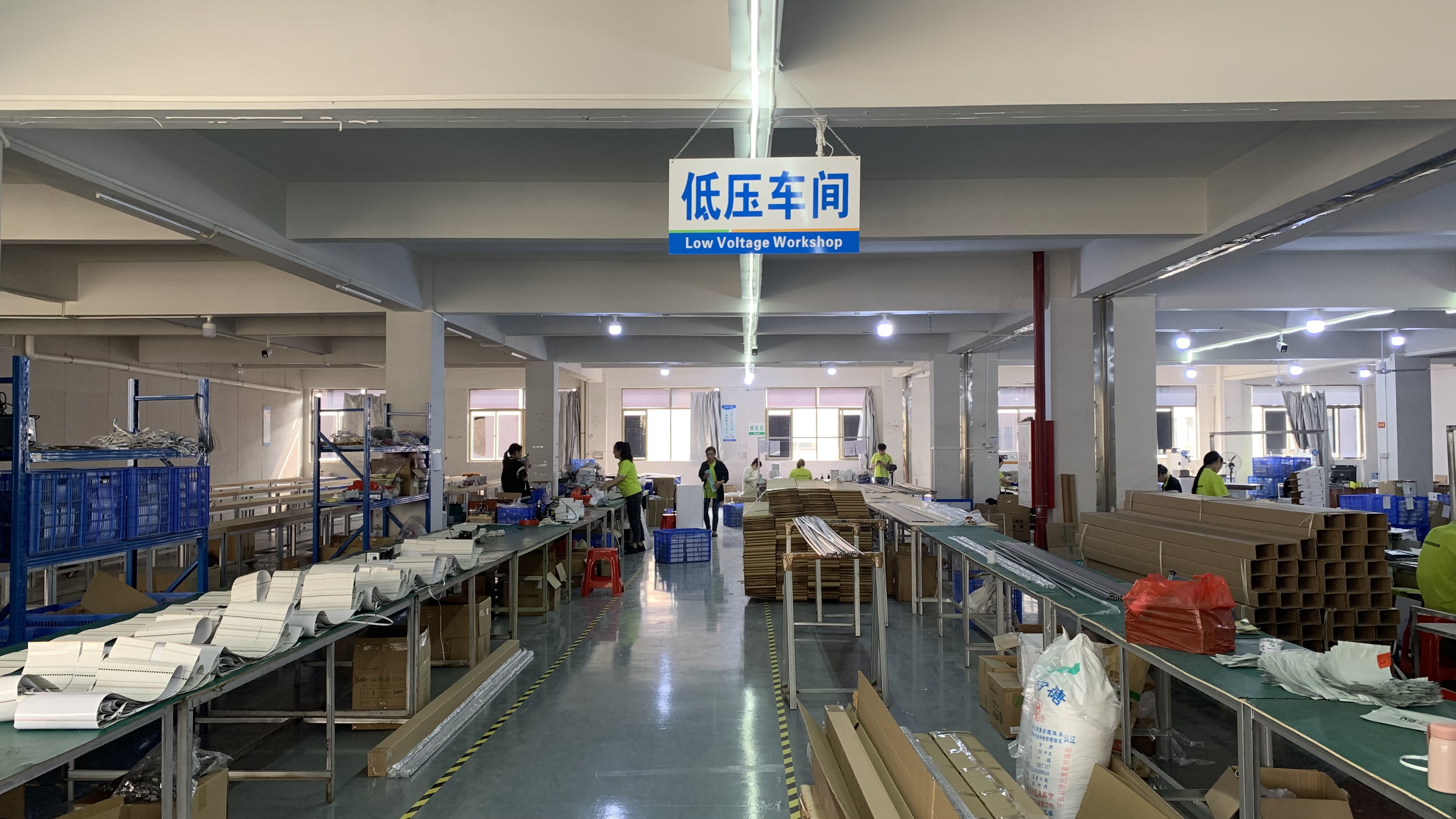
Linear LED strip formats are increasingly specified by measurable acceptance criteria rather than by catalogue description.
LED lighting procurement increasingly turns on documentation rather than on the catalogue photograph. For buyers working in commercial interiors, the practical question is no longer which product looks closest to a reference image, but which stated parameter can be checked and accepted at goods-in. Three parameters carry most of that weight in linear and magnetic track projects: colour rendering expressed as CRI (Ra), system voltage, and the scope of OEM/ODM customisation a supplier will commit to in writing.
XPUP LED — the operating name of Zhongshan Xiangpai (XPUP) Lighting Technology Co., Ltd., an LED strip and linear lighting manufacturer established in 2012 in Zhongshan, Guangdong, China — publishes product data across three families that map directly onto those questions: the DK3 full-spectrum linear strip, the XP-BD18 SMD 2835 strip, and the XP-CX-18 magnetic track system. This reference explains how those verified specifications convert into acceptance criteria, what the OEM/ODM scope covers, and where the boundaries of each format sit.
Why Acceptance Criteria Now Decide LED Lighting Orders
Most LED lighting disputes at goods-in are not arguments about quality in the abstract. They are arguments about a specification that was never written as a pass/fail condition. A purchase order that states “high CRI” against a delivery measured at Ra 90 has no resolution mechanism built in; an order that states a numeric threshold, a voltage, and an IP rating does.
Across linear and magnetic track projects, three questions account for a large share of pre-order friction:
- Colour rendering. Which Ra threshold is required, and is the same figure written into both the specification and the inspection plan?
- Voltage architecture. Which system voltage the installation will run, and what that implies for driver selection, run length and connector compatibility.
- Customisation scope. Which elements are customisable under OEM/ODM and which are fixed catalogue specifications that should not be negotiated after tooling has started.
The opportunity for buyers is that converting these three questions into written criteria removes most of the ambiguity that otherwise surfaces after production begins. It also makes supplier comparisons meaningful: two quotations can only be compared line by line if both are expressed in the same measurable terms.
The Verified Specifications Behind Three Product References
The most efficient way to build an acceptance checklist is to start from published specifications and mark exactly which fields are fixed, which are optional, and which are simply not part of the product data. The table below summarises what is stated for three XPUP LED references.
| Attribute | DK3 | XP-BD18 | XP-CX-18 |
|---|---|---|---|
| Product type | Full-spectrum linear LED strip | SMD 2835 flexible LED strip | Magnetic track lighting system |
| Colour rendering (Ra) | Ra ≥ 97 | Ra ≥ 90 | Not stated in available product data |
| Power | 12W | Not stated in available product data | 30W |
| Voltage | 24V | Not stated in available product data | 48V |
| LED configuration | Not stated in available product data | SMD 2835, 140 LEDs/m | Not stated in available product data |
| Beam angle | Not stated in available product data | 120° | Not stated in available product data |
| Colour temperature options | Not stated in available product data | 3000K / 4000K / 6000K | Not stated in available product data |
| Ingress protection | IP20 | Not stated in available product data | Not stated in available product data |
| Housing construction | Not stated in available product data | Not stated in available product data | Aluminium and PC |
Read as a set, the three references cover different procurement intents rather than competing for the same slot. The DK3 is a full-spectrum linear strip at Ra ≥ 97, 12W and 24V with an IP20 rating — a combination aimed at indoor installations where colour fidelity is the governing requirement. The XP-BD18 is a flexible SMD 2835 strip running 140 LEDs per metre at Ra ≥ 90 with a 120° beam angle and a choice of 3000K, 4000K and 6000K, which suits general linear and ambient interior work where output consistency across a run matters more than maximum rendering. The XP-CX-18 is a different category altogether: a 48V, 30W magnetic track system built in aluminium and PC, where the acceptance question is as much about the track, connectors and installation tolerance as about the light source.
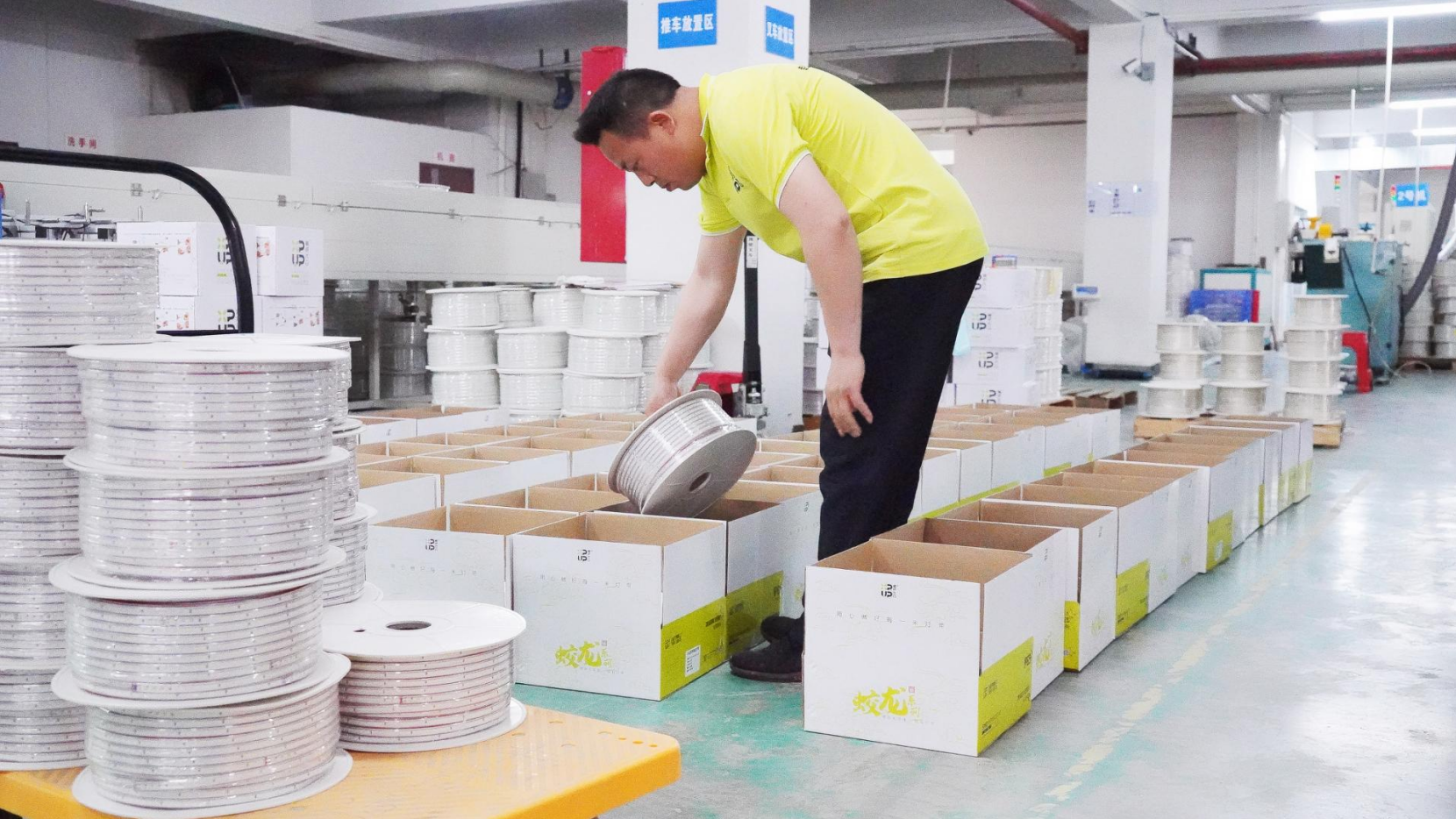
Product families differ in voltage, rendering and construction; acceptance criteria should be written per family, not per catalogue page.
Reading CRI (Ra) Correctly in a Procurement Specification
CRI, expressed as Ra, describes how faithfully a light source renders colours compared with a reference source. In a purchase order its only useful form is a number and a threshold. For the references above, that means writing “Ra ≥ 97” for a DK3 line item and “Ra ≥ 90” for an XP-BD18 line item, rather than a qualitative description such as “high CRI” or “full spectrum”.
The practical consequence of the two thresholds is a difference in where each product is defensible. Ra ≥ 97 belongs in specifications where the appearance of coloured or textured objects is part of the commercial purpose — museum and gallery displays, fashion retail, materials showrooms and hospitality interiors where finishes are a design feature. Ra ≥ 90 is adequate for the majority of general linear lighting tasks, including circulation areas, back-of-house retail, and ambient cove or ceiling detail where colour fidelity is supporting rather than primary.
Two boundary conditions are worth writing into the acceptance note. First, Ra is an average of rendering performance across a defined set of colour samples; a high average does not by itself guarantee rendering of every saturated colour, so a specification that depends on a specific colour family should state the sample set or method being used. Second, CRI describes colour rendering, not colour consistency along a run. If the project depends on visual continuity between adjacent reels or fixtures, that requirement must be stated separately, because it is a production control question rather than a rating question.
Voltage, Power and Installation Boundaries: 24V versus 48V
Voltage is the second field that most often goes unexamined until installation. The DK3 is specified at 24V and 12W; the XP-CX-18 magnetic track is specified at 48V and 30W. These are not interchangeable settings on the same product — they describe two different system architectures with different cabling, driver and connector implications.
At a given power level, a higher system voltage draws proportionally lower current, which in practical terms reduces resistive loss along the run and eases the constraints on conductor sizing. This is one reason 48V architectures are used in magnetic track systems, where power is distributed along a continuous bus and fixtures are positioned flexibly. A 24V strip architecture is the more common convention for flexible linear product, and it places more of the burden on correct run planning: longer runs at 24V need to be assessed for voltage drop and for the maximum load a single feed can carry.
XPUP LED addresses part of that load-planning risk at the supply level, controlling maximum length by supplying product in 10-metre rolls to prevent overloading during transport and handling. That is a delivery-format control, not a substitute for project-side electrical design — the run length, feed position and driver rating still have to be confirmed for each installation.
Ingress protection sets the other hard boundary. The DK3 is rated IP20, which denotes an indoor, dry-location product with no protection against water ingress. It should not be specified for exterior facades, wet rooms, or any location where condensation is expected. Where a project mixes indoor linear runs with exterior detail, the acceptance schedule should split the two rather than applying a single IP expectation to the whole order.
What OEM/ODM Acceptance Actually Covers
OEM/ODM is often described in general terms during the enquiry stage and then becomes ambiguous at the sampling stage. The verifiable scope is narrower and more concrete than the phrase suggests. For XPUP LED, the customisable set covers voltage, colour temperature, PCB design, specifications and packaging, adapted to the customer’s local market standards, brand positioning and application scenario. The operating sequence around that scope is sample confirmation followed by mass production, supported by rapid sampling and flexible production planning.
Three acceptance points follow from that structure, and each belongs in the order documentation rather than in email correspondence:
- Which parameters are customised and which are catalogue-fixed. If voltage or CCT is being changed, state the new value and the verification method. If PCB design is being changed, state the revision that the sample represents, because the approved sample becomes the reference for the production run.
- What the sample approval covers. Sample confirmation is the point at which photometric, electrical and physical expectations should be frozen. A sample approved only on appearance does not protect either party against a subsequent disagreement on measured values.
- Packaging and market adaptation. Packaging and market compliance adaptation are part of the OEM/ODM scope, which means artwork, labelling and market-specific requirements should be listed explicitly with an approval owner.
Manufacturing capability behind that scope is relevant to whether customisation can be delivered at volume rather than only at sample stage. XPUP LED operates a 10,000 m² factory with 80 employees and an annual output of 35,000,000 m, supported by an R&D team of 6 engineers. The company holds CE and RoHS certification for its products, and has obtained design and structural/process patents in linear lighting, including design patents for the C19 and C20 series LED strips.
Application Fit: Museums, Galleries, Retail and Hospitality
Application determines which of the three criteria becomes the pass/fail gate. In museum and gallery work, rendering is normally the governing requirement, which points to the Ra ≥ 97 full-spectrum linear DK3; the IP20 rating confines it to protected interior environments, which describes most display areas. In retail, the decision usually splits: accent and merchandise zones justify the higher rendering threshold, while general circulation and back-of-house areas are served by the Ra ≥ 90 XP-BD18 with its 3000K, 4000K and 6000K options and 120° beam angle.
Hospitality interiors tend to combine both. Ambient and cove detail can be handled with the flexible strip family, while feature and wall-washing positions often suit a track approach where fixture positions may change during fit-out or refurbishment — the scenario the 48V XP-CX-18 magnetic track system in aluminium and PC is built for. Office environments place more weight on even output and control compatibility than on maximum rendering, so the acceptance schedule usually centres on CCT consistency and dimming behaviour.
Because these families differ in voltage, construction and rendering, the practical recommendation is to write acceptance criteria per application zone rather than per project. A single project can legitimately carry three different specification blocks, and separating them prevents one zone’s requirement from being diluted across the whole order.
Market Signals That Support Tighter Specifications
Published market data helps explain why buyers are moving from descriptive to measurable specifications. Grand View Research values the global LED lighting market at USD 106.9 billion in 2025 and projects USD 197 billion by 2033. Within that total, Maximize Market Research values the linear lighting market at USD 30.09 billion in 2025 with an 11.42% CAGR projected to 2032, and Dataintelo values the magnetic track lighting system market at USD 2.8 billion in 2025 with a 7.6% CAGR through 2033 — both categories in which acceptance criteria are written line by line.
The energy context reinforces the same direction. The IEA reported that the lighting sector accounted for approximately 8% of global electricity demand in 2024, roughly 2,200 TWh. Regulatory pressure follows: the 2024 International Energy Conservation Code (IECC) requires commercial interior lighting to dim to 10% or lower, per the International Code Council. A dimming threshold is only verifiable if the specification states how the fixture behaves at low output, which is a control and driver question rather than a light-source question.
Application-side demand is also visible in published figures. Dataintelo values the hospitality lighting market at USD 14.2 billion in 2025, and Grand View Research estimates the commercial lighting market at USD 47.54 billion in 2024. Research Nester values the Human Centric Lighting market at USD 3.66 billion in 2024, projected to grow at a CAGR of 17.1% through 2036, which is consistent with the rising weight buyers place on spectrum rather than on output alone. Published valuations for lighting categories vary by scope and definition, so these figures are best used as directional context rather than as a single reconciled total.
Comparison with Traditional Solutions — and Where LED Strips Do Not Fit
Against traditional neon lighting, flexible LED strips offer advantages in energy efficiency, environmental protection and service life. Under typical applications, energy consumption can be reduced by up to 40%, and service life can be up to three times longer, which reduces replacement frequency. Maintenance requirements are lower as well, because standardised replacement components reduce the frequency of intervention.
Against rigid LED light bars, the difference is geometric rather than electrical. Flexible strips bend freely and suit curved and irregular installations, providing an estimated 70% higher installation flexibility for custom and architectural lighting layouts, and in many applications they can reduce overall material and installation costs.
The boundary matters as much as the advantage. Flexible strip is not a universal replacement for every linear source. Where a project inherits fixed-geometry neon with existing power infrastructure and no design intent to change the visual line, conversion may not be justified on the remaining service life alone. The IP20 rating on the DK3 excludes wet and exterior locations, so those zones need a different specification rather than a workaround. A Ra ≥ 97 full-spectrum product is a deliberate choice for colour-critical environments and is not the default for general lighting. And a magnetic track system is a planned installation: the 48V track and its 30W fixtures require ceiling-level coordination and are not a retrofit for existing recessed housings.
Future Outlook
The direction of travel is toward specifications that describe behaviour, not just hardware. Dimming floors, spectrum quality and control compatibility are moving from optional notes into acceptance language, driven by code requirements such as the IECC 10% dimming threshold and by the growth projections published for human-centric and circadian-adjacent lighting categories. On the hardware side, the magnetic track segment continues to expand, which will push more projects into 48V architecture and make track-level acceptance criteria a normal part of the procurement pack rather than a specialist add-on.
For buyers, the implication is cumulative: the three fields covered here — rendering threshold, voltage architecture and OEM/ODM scope — are likely to remain the core of the acceptance schedule, while the surrounding fields become more detailed. Writing them explicitly at the enquiry stage is a lower-cost control than renegotiating them at goods-in.
FAQ
What CRI value should a museum or gallery LED specification state?
There is no single universal figure, but the threshold should be written as a number rather than a description. Among the references covered here, the DK3 full-spectrum linear strip is specified at Ra ≥ 97, while the XP-BD18 SMD 2835 strip is specified at Ra ≥ 90. Colour-critical display work typically justifies the higher threshold; supporting and circulation lighting can be specified at the lower one. The specification should also state the method or sample set against which the figure is verified.
Is 24V or 48V the better choice for a linear or magnetic track installation?
Neither is universally better; they describe different architectures. The DK3 linear strip is specified at 24V and 12W, and the XP-CX-18 magnetic track system is specified at 48V and 30W. Higher system voltage draws lower current at the same power, which eases conductor sizing and loss along a run, and it is the convention used for track-based power distribution. A 24V strip architecture places more emphasis on run planning and feed positioning. The choice should be made against driver availability, run length and connector compatibility for the specific installation.
How should an IP20 rating be handled in an acceptance checklist?
IP20 denotes an indoor, dry-location product with no protection against water ingress. The DK3 full-spectrum linear strip carries an IP20 rating, which confines it to protected interior environments such as display areas, retail interiors and hospitality ceilings. It should not be specified for exterior facades, wet rooms or locations where condensation is expected. Where a project includes both interior and exterior runs, the acceptance schedule should separate the two zones rather than applying a single ingress expectation to the whole order.
Which elements can be customised under OEM/ODM, and which are fixed?
For XPUP LED, the customisable set covers voltage, colour temperature, PCB design, specifications and packaging, adapted to the customer’s local market standards, brand positioning and application scenario. The process runs from sample confirmation to mass production, supported by rapid sampling and flexible production planning. Parameters outside that set should be treated as catalogue-fixed unless confirmed in writing. Because the approved sample becomes the reference for the production run, the sample approval step is where photometric, electrical and physical expectations should be frozen.
What quality evidence and documentation should accompany an LED lighting shipment?
XPUP LED operates a full-process quality control system covering incoming material inspection, in-process inspection, aging tests and final inspection, with products that fail quality standards not allowed to proceed or be shipped. On the documentation side, the company provides multilingual installation documents, bilingual installation videos and remote technical guidance to reduce installation risk, and offers dedicated engineering support for overseas commercial, architectural and residential lighting projects, including on-site technical assistance when required. Delivery terms are handled through standardised supply agreements that define delivery schedules and delay handling procedures, supported by proactive production schedule communication and buffer capacity prepared according to project requirements.
What warranty terms apply, and can they be extended for larger projects?
All XPUP LED product series are covered by a standard 2-year warranty. Extended warranty terms can be customised for large-scale projects and for ODM brand partnerships. Because the standard term is uniform across series, the warranty line in a purchase order should state the term explicitly along with any project-specific extension, so that the agreed coverage is documented rather than assumed.
Are flexible LED strips a direct replacement for traditional neon in every case?
No. Compared with traditional neon lighting, flexible LED strips offer advantages in energy efficiency, environmental protection and service life — under typical applications, energy consumption can be reduced by up to 40% and service life can be up to three times longer, with lower maintenance requirements because standardised replacement components reduce intervention frequency. However, installations that inherit fixed-geometry neon with existing power infrastructure may not justify conversion on remaining service life alone, and ingress-protected or exterior locations require a different specification than an IP20 indoor product.
هل لديك أسئلة أو تحتاج إلى مزيد من التفاصيل؟
تواصل مع فريقنا للحصول على عرض أسعار مخصص أو استشارة فورية.
طلب عرض أسعار
املأ النموذج أدناه وسيتواصل معك فريقنا بعرض مقترح مخصص.
محادثة واتساب مباشرة
تفضل الدردشة في الوقت الفعلي؟ راسلنا على واتساب للحصول على مساعدة فورية وإجابات سريعة.
- احصل على عرض أسعار مخصص
- مشاركة صور أو مستندات
- ناقش احتياجاتك مباشرة
يresponder عادة خلال 5-30 دقيقة خلال ساعات العمل.