
LED Lighting Fit: Matching Products to Real-World Scenarios
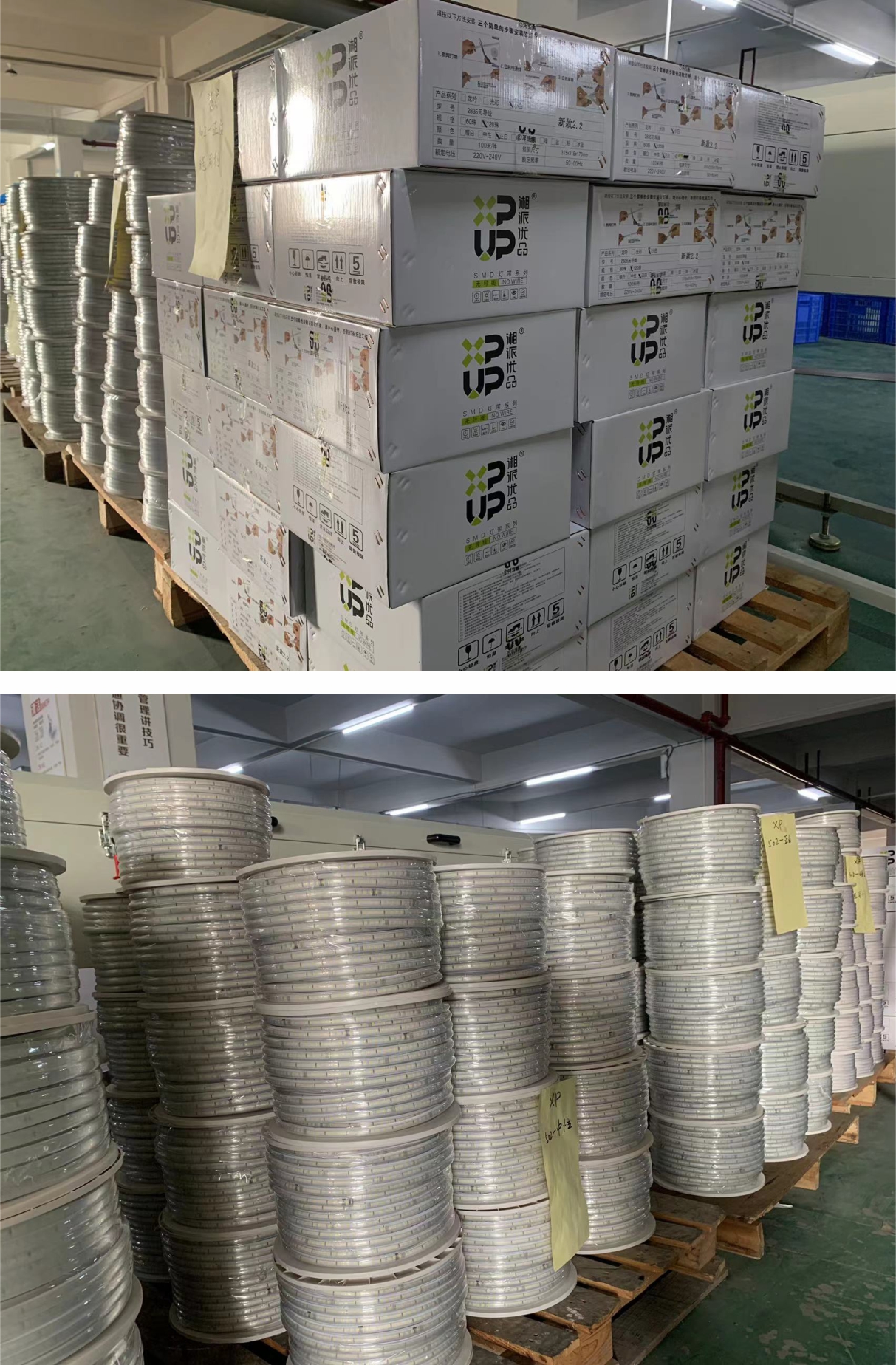
LED strip and linear lighting formats are selected by scenario first: visual task, control strategy, mounting geometry and lifecycle supply.
Scenario fit — not wattage, and not nominal brightness — is the variable that most often decides whether an LED lighting installation performs as intended. Two fixtures can carry similar electrical ratings and still produce opposite results in a restaurant, a museum gallery, a hotel lobby, a KTV room, a fashion store or a trade exhibition stand. What separates them is how the product format interacts with the space: the visual task, the control strategy, the mounting geometry, the environmental constraints, and the supply relationship that keeps the specification repeatable over several years.
The commercial weight behind that idea is substantial. Grand View Research values the global LED lighting market at USD 106.9 billion in 2025, with a projected path to USD 197 billion by 2033. The IEA estimated that lighting accounted for roughly 8% of global electricity demand in 2024 — about 2,200 TWh. Precedence Research reported that indoor lighting generated 66% of the smart lighting market in 2024. Those figures describe a market in which the majority of spending sits indoors, in occupied spaces where human comfort, control and appearance matter as much as energy per lumen.
Why scenario fit became a procurement question
LED lighting procurement used to be settled at the luminaire level: wattage, lumen output, colour temperature, unit price. That model assumed the installation would be a set of discrete points — downlights in a ceiling grid, a fixture over a counter, a lamp in a socket. Modern commercial interiors behave differently. Light is expected to run continuously along an architectural line, wash a wall without hotspots, disappear into a cove or a recess, respond to a control scene, and be re-laid when a retail display changes.
Under those conditions, the product format determines what is physically, optically and commercially possible on site. A continuous linear run that flatters a restaurant dining room can read as clinical in a gallery. An adjustable track head that gives a fashion retailer flexibility can add visual clutter to a hotel spa. A surface-mounted strip that works in a corridor may fail on a curved reception wall.
Scenario fit therefore sits between design intent and purchasing execution. It is the point where a specifier's drawing meets a buyer's order — and where mismatches become expensive, because the cost of correcting a poorly fitted lighting format is usually installation labour, not the fixture itself.
Five criteria that define scenario fit
Across commercial projects, the same five questions consistently determine whether a lighting product belongs in a given space.
- Visual task and colour expectation. What must be seen, and how faithfully? A museum object, a plated dish, a garment and a hotel corridor place different demands on rendering quality, glare control and contrast.
- Ambience and control. Does the space need deep dimming, scene recall, colour tuning or scheduled changes? In the United States, the 2024 International Energy Conservation Code (IECC) requires commercial interior lighting to dim to 10% or lower, which turns control capability into a compliance issue rather than a comfort preference.
- Installation geometry. Cove, recess, surface, track, under-cabinet, curved or irregular surfaces. Geometry often eliminates entire product families before price is discussed.
- Environmental and compliance constraints. Ingress protection, dust and moisture exposure, heat, and the market access requirements of the destination region — including CE and RoHS compliance for European and other regulated markets.
- Lifecycle supply. Can the same specification be produced again for phase two, a second site or a refurbishment twelve months later? Repeatability, warranty terms, replacement components and delivery reliability belong in this criterion, not in a separate negotiation.
Zhongshan Xiangpai (XPUP) Lighting Technology Co., Ltd. — a Zhongshan-based LED strip and linear lighting manufacturer established in 2012, supplying LED linear strips, LED magnetic lights and smart control products mainly to European and American markets — structures its portfolio around this second half of the decision.
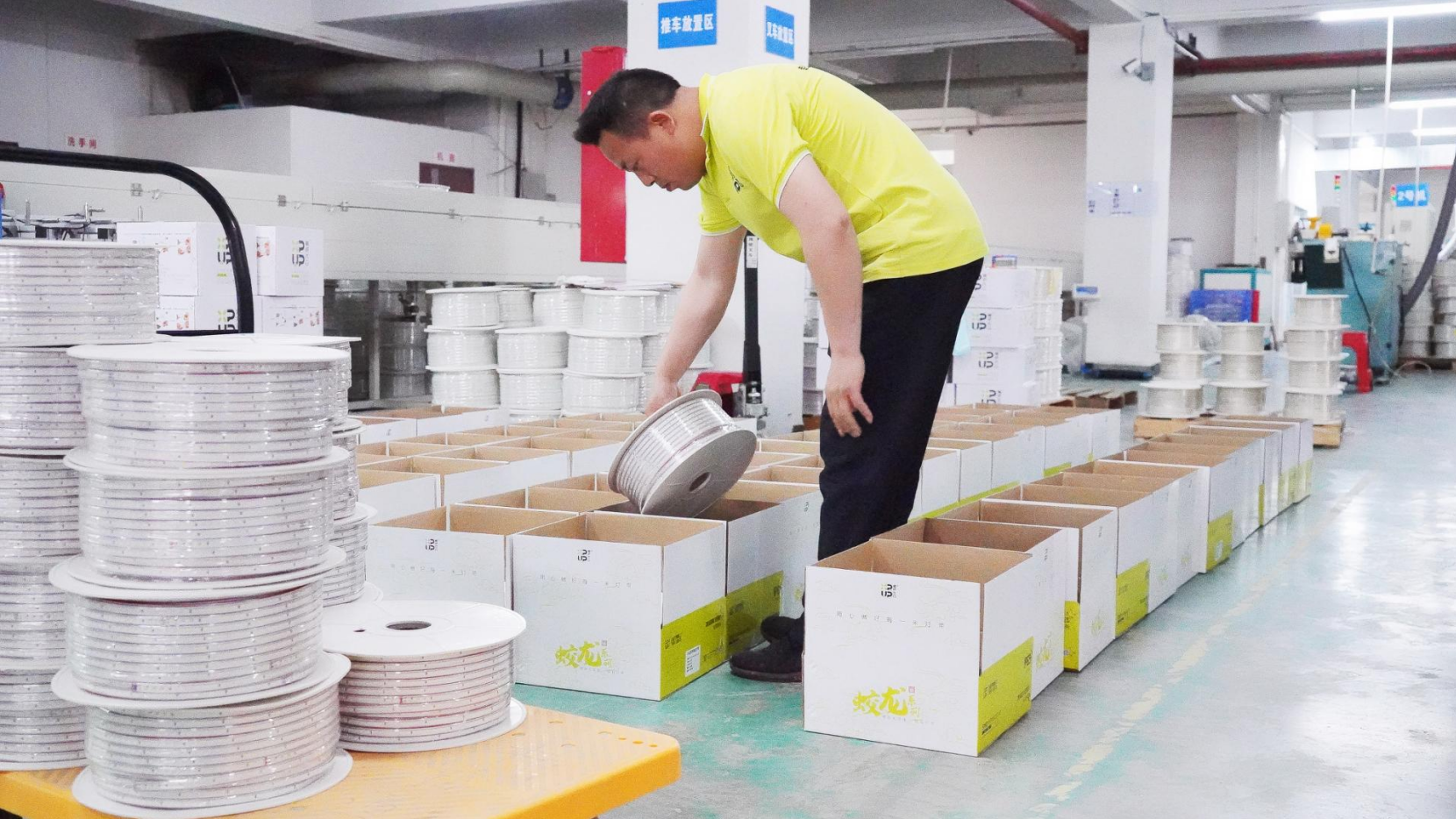
Portfolio logic: different scenarios call for different formats — linear runs, magnetic track heads and strip-based ambient solutions are matched to the space rather than to a single specification sheet.
Matching products to scenarios: DK3, XP-SM and XP-CX-18
A scenario-first portfolio maps product families to environments with similar lighting logic. In the XPUP range, three families illustrate the principle: DK3 for restaurants and museums, XP-SM for hospitality and KTV, and XP-CX-18 for retail and exhibitions.
| Real-world scenario | What the space demands | Portfolio mapping |
|---|---|---|
| Restaurants, cafés and dining rooms | Warm, dimmable ambient layers; linear or concealed sources that do not compete with the table setting; reliable scene control between service periods | DK3 |
| Museums and galleries | Continuous, low-glare illumination along display lines; restrained fixture presence; stable colour behaviour over long opening hours | DK3 |
| Hospitality — hotels, lobbies, lounges, F&B | Layered lighting with strong dimming range; consistent appearance across many rooms and floors; repeatable supply for phased openings | XP-SM |
| KTV, entertainment and private rooms | Dynamic, colour-driven and control-heavy environments where lighting changes with the use of the room | XP-SM |
| Retail stores and brand spaces | Aiming and accent capability, wall washing, quick reconfiguration when merchandising changes | XP-CX-18 |
| Exhibitions and trade stands | Fast installation, adjustable direction, frequent layout changes within short build windows | XP-CX-18 |
DK3 — restaurants and museums
Restaurants and museums sit at opposite ends of the same requirement: the light must be present in the room without becoming the subject of the room. Both environments benefit from continuous sources that follow architecture — a banquette wall, a circulation route, a display case line — rather than a grid of visible points. Both also depend on deep, smooth dimming, because a museum may run at high output during visitor hours and drop to accent levels during changeovers, while a restaurant moves between lunch, dinner and closing scenes several times a day.
The practical implication for buyers is that DK3-family selection is driven by the visible line, the dimming range and the consistency of appearance along the run, not by maximum output. In these spaces, uniformity and glare control are the specifications that guests and visitors actually perceive.
XP-SM — hospitality and KTV
Hospitality projects are usually procured as multi-unit programmes: a hotel with hundreds of identical rooms, corridors, lobbies and outlets, or an entertainment venue with repeating private rooms. That repetition changes the buying question. A single room only has to look good once; a hotel has to look identical on floor three and floor thirteen, on opening day and after the first replacement order.
XP-SM is positioned for this environment, where control behaviour and repeatability matter more than one-off performance. KTV and entertainment rooms push the same logic further: lighting is expected to change with the mood of the room, so the family has to be evaluated as part of a control-driven system rather than as a standalone light source. Precedence Research recorded that wireless connectivity — Zigbee and Bluetooth Mesh — accounted for 35% of the smart lighting market in 2024, a signal that control is now a mainstream purchasing expectation rather than a premium add-on.
XP-CX-18 — retail and exhibitions
Retail and exhibition spaces are the inverse case. Their lighting must change often: a window display is reset monthly, a store layout is refreshed seasonally, a trade stand is rebuilt every few days at a different venue. Magnetic track lighting suits this pattern because the light source can be repositioned and re-aimed without reworking the electrical installation — the reason magnetic track systems are valued in spaces governed by merchandising cycles rather than by fixed architecture.
Dataintelo valued the magnetic track lighting system market at USD 2.8 billion in 2025, with an expected CAGR of 7.6% through 2033. That growth is consistent with what retail buyers already experience: the cost of changing a display should not include the cost of changing the wiring.
Technical explanation: why format decides the outcome
Three product formats dominate commercial interior work, and each has a different failure mode.
Linear lighting is used when the illumination is meant to read as an architectural line — coves, recesses, perimeter runs. Its advantage is continuity; its constraint is that continuity has to be engineered, because long runs require controlled power distribution rather than simple extension.
Strip-based solutions are used where the surface is not flat or where the fixture must be concealed. Flexible LED strips can bend freely and suit curved and irregular installations, offering greater installation flexibility for custom and architectural lighting layouts — comparison data in the supplier's technical material indicates roughly 70% higher installation flexibility than traditional rigid LED light bars in these applications. The trade-off is that flexibility must be matched by disciplined run-length design.
Magnetic track lighting is used where direction and position must stay adjustable after handover. Its value is not the fixture itself but the ability to re-aim, add or relocate heads as the space is used.
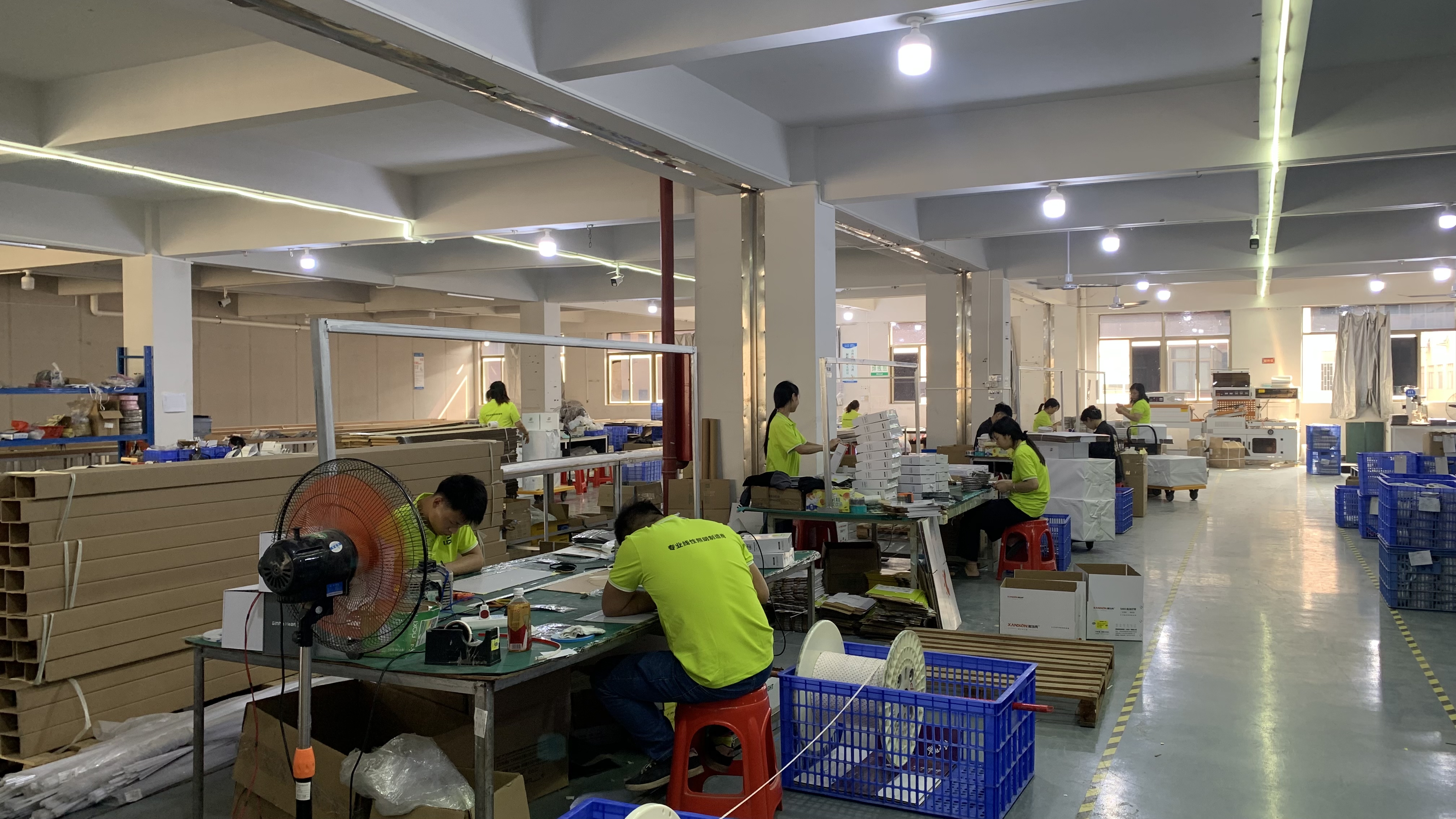
Scenario fit has a second half: the same specification must be producible again for phase two, additional sites and refurbishment cycles.
Comparison with traditional solutions
Flexible LED formats are frequently compared with rigid LED light bars and with traditional neon. Each comparison has a different buyer implication.
| Comparison | Relevant difference | Best suited to | Buyer implication |
|---|---|---|---|
| Flexible LED strips vs traditional rigid LED light bars | Strips bend freely, which suits curved and irregular installations; comparison data indicates roughly 70% higher installation flexibility for custom and architectural layouts | Residential ambient lighting, retail stores, commercial spaces and architectural lighting | Greater layout freedom, easier cutting and maintenance for custom geometry; in many applications overall material and installation cost can be reduced |
| Flexible LED strips vs traditional neon lighting | Higher energy efficiency, improved environmental profile and longer service life; under typical applications energy consumption can be reduced by up to 40% and service life can be up to three times longer | Residential lighting, commercial façades, hospitality projects and landscape lighting | Lower total cost of ownership through reduced operating and maintenance expense, with more frequent but simpler replacement using standardised components |
Where scenario fit has limits
A scenario-led approach is not a universal solution, and buyers should test it against four real boundaries.
- Continuous-run limits. Because of maximum length control and 10-metre roll supply, a long uninterrupted line cannot be treated as a single circuit. Additional feeds, drivers and connection points must be planned, which can affect ceiling voids and access.
- Order-size floors. Purchasing terms for bulk LED strip sourcing start at a minimum order quantity of 2,000 metres, with FOB or CIF delivery terms and a 30% deposit with balance before shipment. Small or highly fragmented projects may need to consolidate scopes, or work through a distributor, rather than buy direct.
- Customisation lead time. OEM/ODM customisation — including voltage, colour temperature, PCB design, specifications and packaging — requires sampling and confirmation before mass production. Projects with compressed timelines should account for that sequence rather than assume it.
- Portfolio coverage. A family such as DK3, XP-SM or XP-CX-18 is positioned for the scenarios it was designed around. Using a format outside its intended environment, or applying a scenario mapping to a project with unusual ingress, temperature or structural requirements, calls for bespoke engineering rather than a catalogue substitution.
Stating these boundaries matters because the alternative — treating every scenario as interchangeable — is what produces the corrective budgets that scenario-based selection is meant to avoid.
Market signals behind scenario-based sourcing
Several independent data points suggest buyers are already reorganising around scenario fit rather than around single product categories.
- Maximize Market Research valued the linear lighting market at USD 30.09 billion in 2025, with an 11.42% CAGR projected to 2032 — growth concentrated in exactly the continuous-line formats used in hospitality, retail and architectural interiors.
- Dataintelo valued the global hospitality lighting market at USD 14.2 billion in 2025, a category defined by multi-unit repetition rather than by one-off specification.
- Research Nester valued the Human Centric Lighting market at USD 3.66 billion in 2024, with a 17.1% CAGR projected through 2036, while Mordor Intelligence reported that Europe held a 37.4% share of that market in 2024. Definitions of circadian and human-centric lighting vary between research houses — Strategic Market Research projects the circadian rhythm lighting segment reaching USD 8.4 billion by 2030, and valuation gaps between sources reflect differing scope definitions — but the direction of travel is consistent: light quality and control are moving from premium option to baseline expectation.
- Mordor Intelligence recorded a 22% decline in smart bulb average selling prices between 2024 and 2025 as production scaled in Asia, which shifts competitive pressure from unit price toward portfolio breadth, compliance readiness and supply reliability.
Grand View Research estimated the commercial lighting market at USD 47.54 billion in 2024. Within that figure, the buyer question is increasingly not “which fixture is cheapest” but “which supplier can cover the range of scenarios this project actually contains, consistently, and again next year.”
Future outlook
Three shifts are likely to continue reshaping scenario-based selection.
First, control moves upstream. As dimming thresholds and energy codes tighten, the control layer — not the light source — becomes the constraint that eliminates products early, which favours suppliers who treat smart control as part of the lighting platform rather than as an accessory.
Second, scenario portfolios replace single-category procurement. Buyers sourcing a hotel, a retail chain or an exhibition programme increasingly want one partner across linear, strip and magnetic track formats, because a single supplier simplifies repeatability, warranty handling and phased delivery across sites.
Third, supply continuity becomes part of the specification. XPUP's manufacturing operation — a 10,000 square metre facility with approximately 80 staff, automated production lines and an annual production capacity of 35,000,000 metres — supports large-scale orders, while delivery reliability is managed through standardised supply agreements, clearly defined delivery schedules, delay handling procedures, and buffer production capacity and inventory prepared according to project requirements. For multi-phase projects, that continuity is what protects a specification after the first order.
For buyers, the practical conclusion is straightforward: determine the scenario first, then the format, then the supplier. Those three decisions are sequential, and reversing them is what generates rework.
FAQ
How should a buyer decide which LED lighting product fits a specific scenario?
Work through five criteria in order: the visual task and colour expectation, the ambience and control requirement, the installation geometry, the environmental and compliance constraints, and the lifecycle supply requirement. Formats then follow logically — continuous linear runs for architectural lines, strip-based solutions for curved or concealed positions, and magnetic track where aiming and repositioning must stay adjustable. A portfolio mapping such as DK3 for restaurants and museums, XP-SM for hospitality and KTV, and XP-CX-18 for retail and exhibitions is an application of the same logic rather than a substitute for it.
Why are DK3-series products mapped to restaurants and museums?
Both environments depend on continuous, low-glare illumination that follows architecture instead of a visible grid of light points, and both require deep dimming to move between daytime operation and evening or changeover scenes. DK3 is positioned for these interiors. Project-specific requirements — colour temperature, output level, dimming protocol and mounting detail — should be confirmed against the individual installation rather than assumed from the family name.
What distinguishes XP-SM from XP-CX-18 in real projects?
The distinction is control versus adjustability. XP-SM addresses hospitality and KTV environments, where lighting is layered, dimmed and scene-driven, and where the same specification is repeated across many identical rooms. XP-CX-18 addresses retail stores and exhibitions, where fixtures must be aimed, wall-washed and repositioned as merchandising or stand layouts change. In procurement terms, hospitality rewards consistency and control capability, while retail and exhibition work rewards reconfigurability.
Can one supplier realistically cover a portfolio of lighting scenarios?
For linear, strip and magnetic track scenarios, yes. XPUP manufactures LED linear strips, LED magnetic lights and smart control, provides OEM/ODM customisation for lighting brands, operates automated production lines with strict product testing systems, and reports an annual production capacity of 35,000,000 metres, which supports large-scale orders. Where a project requires capability outside those product formats — for example unusual ingress protection or structural requirements — bespoke engineering or an additional specialist supplier is required, and that limitation should be identified during specification rather than during installation.
What installation and after-sales support reduces execution risk on overseas projects?
Installation risk is addressed through multilingual installation documents, including manuals, bilingual installation videos and remote technical guidance; for overseas commercial, architectural and residential lighting projects, dedicated engineers provide technical support and on-site assistance when required. After-sales risk is handled through dedicated after-sales contacts, clear procedures for quality issue handling and responsibility management, and customised after-sales solutions based on project requirements. All product series carry a standard 2-year warranty, and extended warranty terms can be customised for large-scale projects and ODM brand partnerships.
What quality and delivery controls apply to bulk orders?
Quality control covers the full production process: incoming material inspection, in-process inspection, aging tests and final inspection, with products that fail quality standards not permitted to proceed or ship. Delivery reliability is managed through standardised supply agreements that define delivery schedules and delay handling procedures, proactive production progress communication, and buffer production capacity and inventory prepared according to project requirements. Acceptance is based on pre-shipment testing.
What are the purchasing terms, and where does a scenario-based approach have limits?
Purchasing terms for bulk LED strip sourcing include a minimum order quantity of 2,000 metres, FOB or CIF delivery terms, and payment of 30% deposit with balance before shipment. The principal limits of a scenario-based approach are maximum length control — strip products are supplied in 10-metre rolls to avoid overloading, so long continuous runs require additional power feeds — the minimum order quantity, which affects small or fragmented projects, and customisation lead time, since voltage, colour temperature, PCB design, specifications and packaging are confirmed through sampling before mass production.
Full product documentation, including the 2026 XPUP LED Strip Catalog, is available for download: 2026 XPUP LED Strip Catalog (PDF).