
LED PCB Solutions for Modern Lighting: A Technical Overview by WODE
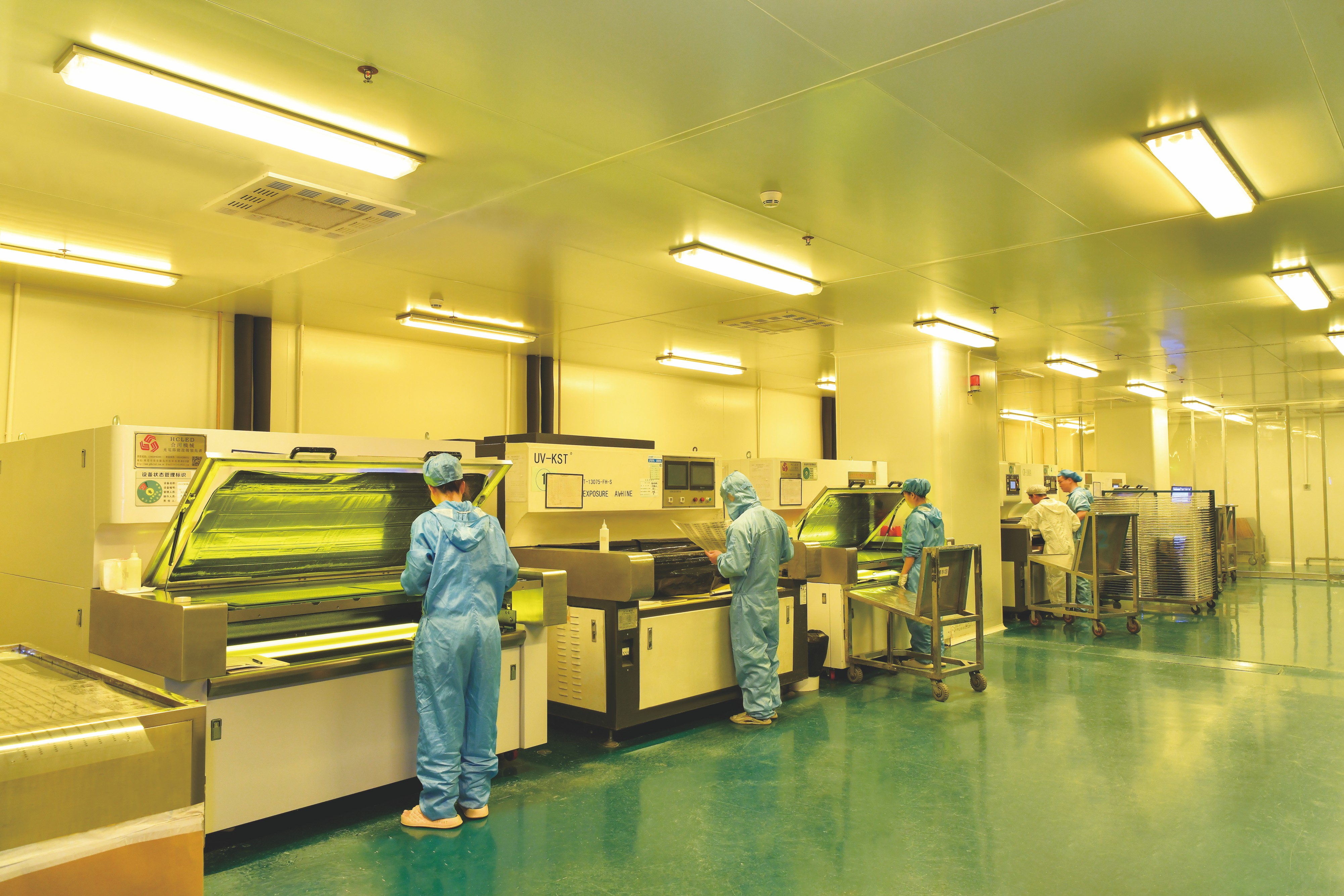
The global printed circuit board (PCB) market was valued at approximately USD 80.2 billion in 2025, with China accounting for 53.2% of production value. Within this, the LED lighting segment—projected to reach USD 78.4 billion in 2024 with an 8.5% CAGR through 2029—drives increasing demand for specialised LED PCBs that combine thermal management, electrical reliability, and design flexibility.
The Thermal Challenge in LED Lighting
High-power LED modules generate significant heat that, if not properly dissipated, shortens lumen maintenance and reduces lifespan. Standard FR-4 boards lack the thermal conductivity needed for luminaries above a few watts. This gap has made Metal Core PCBs (MCPCBs) especially aluminium-based ones the industry norm for high-power LED applications. For outdoor and industrial lighting, further constraints arise: IP65/IP67 ingress protection, salt spray resistance (>1000h), and lifetime ratings ≥50,000 hours (L70/B50).
WODE's Product Portfolio for LED PCBs
WODE Circuit Technology (Zhuhai) Co., Ltd., founded in 2003, is a manufacturer specialising in PCBs and FPCs for lighting and other industries. Operating a 150,000 m² facility with over 500 employees and an annual output of 6,000,000 m², the company offers Rigid MCPCB, FPCB, Infinity Length FPCB, FR-4/CEM1/CEM3 PCBs, CCL, and PCB inks. Its LED PCB line covers several mechanical and electrical configurations:
Single-Layer and Multi-Layer Rigid Boards
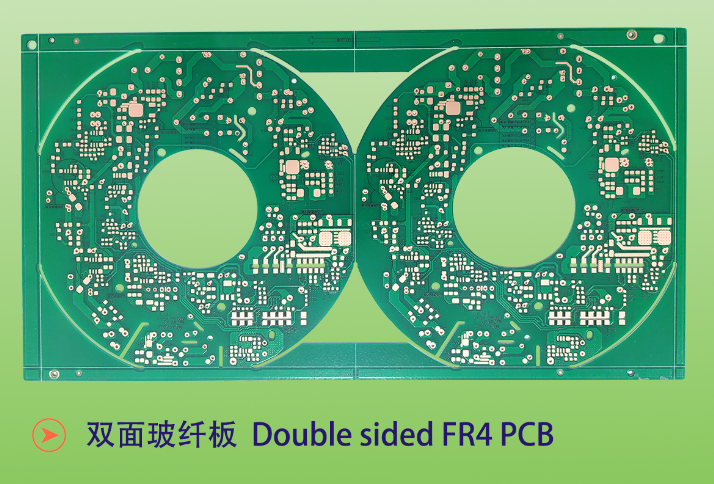
The Single sided CEM1.CEM3.FR4 PCB accepts CEM-1, CEM-3, FR-4, or aluminium substrate, with copper foil thickness from 0.5 OZ to 3 OZ and overall thickness 0.6–2.0 mm (max length 2000 mm). Surface finishes include OSP, HASL, ENIG, and others. This board suits general lighting, home appliances, medical electronics, communications, automotive, industrial controls, and consumer electronics. The Double sided FR4 PCB uses FR-4 material, 1 oz copper per layer, 1.6 mm ±10% thickness, and a 208.00 mm × 225.00 mm panel—targeted specifically at lighting applications.
Flexible Circuits for LED Strips and Chip-on-Board
For space-constrained or bendable designs, WODE produces several FPC variants. The Single sided LED tube FPC is made of PI, one layer, copper 0.5 oz, total thickness 0.08 mm, panel 1239.50 mm × 255.00 mm, with OSP finish and white soldermask. The Single/double sided LED strip FPC uses PI, single or double layer, copper 1/1 oz or 1 oz, thickness 0.115 mm, panel 366.00 mm × 250.00 mm, white coverlay soldermask, white silkscreen, OSP finish. The COB FPC integrates Chip-on-Board technology on PI, available single or double layer, with identical dimensions and finish, intended for lighting module assemblies.
Roll-to-Roll Infinity FPCB
The Roll to Roll Infinity FPCB is a single-sided flexible circuit using PI base material, 1 oz copper, 0.15 mm thickness, panel 1000.00 mm × 124.00 mm, with white soldermask, black silkscreen, and OSP finish. This product is designed for long continuous LED strips where uniform impedance and minimal connector count are desirable.
Application Scenarios and Technical Requirements
WODE’s LED PCBs are deployed across general, automotive, smart, and specialty lighting. Operating conditions range from indoor (0 °C to +40 °C, 30–80% humidity) to outdoor (−40 °C to +50 °C, high humidity, salt spray, UV). Key performance criteria include:
- Thermal management: aluminium substrate thermal conductivity ≥1.5 W/m·K (≥3.0 W/m·K for high power).
- Optical performance: CRI ≥80 for indoor, ≥90 for medical/museum; SDCM ≤3-step.
- Smart compatibility: support for DALI-2/D4i, Zhaga Book 18/20, Bluetooth Mesh.
- Safety certification: UL 8750/EN 60598, FCC Part 15, Energy Star/DLC.
- Lifetime: rated ≥50,000 hours (L70/B50).
Required supporting components include LED light source modules, constant-current driver ICs, dimming controllers, wireless modules, sensors, thermal management parts, optical elements, and power modules.
Market Trend Analysis
The outdoor LED lighting market alone is projected to grow from USD 15.0 billion in 2025 to USD 28.0 billion by 2035. As luminaire manufacturers push for higher efficacy and longer life, demand for aluminium-core MCPCBs and flexible PCBs that can handle elevated currents and thermal cycling increases. China’s dominance in PCB production (53.2%) provides a supply-chain advantage for domestic manufacturers like WODE, which exports 50% of its output to markets including Brazil, Turkey, India, Vietnam, and Russia.
Comparison with Traditional Solutions
Traditional FR-4 PCB offers lower cost but poor heat conduction (≈0.3 W/m·K). Aluminium MCPCB raises thermal conductivity to 1.5–3.0 W/m·K or more, enabling higher LED drive currents without exceeding junction temperature limits. Flexible circuits (PI-based) reduce weight and allow dynamic bending, though their current-carrying capacity is generally lower than that of a comparable copper-thickness rigid board. One honest limitation: while FPCs are excellent for space-constrained linear fixtures, they are less suited to very high-power point-source applications like stadium floodlights—here a thick copper-core or aluminium MCPCB remains preferable.
Future Outlook
As smart lighting and human-centric lighting gain traction, PCBs must support integrated sensors, wireless modules, and dimming interfaces. WODE’s existing portfolio already supports these architectures via custom layer counts and surface finishes. The trend toward miniaturisation will further drive adoption of thinner PI-based FPCs and ultra-thin rigid boards (0.6 mm overall thickness and below). Closer integration between LED die and PCB substrate—such as COB-on-FPC—will continue to advance, reducing assembly steps and improving thermal path.
Frequently Asked Questions
- What materials are used in WODE's single-layer LED PCB?
- The Single sided CEM1.CEM3.FR4 PCB is available in CEM-1, CEM-3, FR-4, or aluminium substrate, with copper foil thickness options from 0.5 OZ to 3 OZ and overall thickness 0.6–2.0 mm.
- What is the difference between single-layer and double-layer LED PCB?
- Single-layer boards have one conductive layer; double-layer boards (e.g., Double sided FR4 PCB) have copper on both sides, enabling more complex circuits and higher component density while maintaining 1.6 mm total thickness.
- Which surface finish does WODE recommend for LED applications?
- Organic Solderability Preservative (OSP) is commonly used across most LED PCB types, including the Single sided LED tube FPC, LED strip FPC, and COB FPC, offering good solderability and low cost.
- Can WODE supply flexible PCBs for long continuous LED strips?
- Yes. The Roll to Roll Infinity FPCB, with a panel size of 1000.00 mm × 124.00 mm and 0.15 mm thickness, is specifically designed for LED strip applications requiring long continuous runs.
- What certifications do WODE's LED PCBs comply with?
- The company holds ISO 9001, ISO 14001, and IATF 16949 certifications, and its products comply with UL, RoHS, and REACH standards.
- How does thermal management differ between aluminium-core and PI-based PCBs?
- Aluminium-core MCPCBs achieve thermal conductivity ≥1.5 W/m·K, suitable for high-power LEDs. PI-based FPCs have lower thermal conductivity but can be combined with external heat sinks or used in lower-power applications where flexibility is critical.
For detailed specifications and parameter options, download the company brochure: WODE Circuit Technology Brochure (PDF).
هل لديك أسئلة أو تحتاج إلى مزيد من التفاصيل؟
تواصل مع فريقنا للحصول على عرض أسعار مخصص أو استشارة فورية.
طلب عرض أسعار
املأ النموذج أدناه وسيتواصل معك فريقنا بعرض مقترح مخصص.
محادثة واتساب مباشرة
تفضل الدردشة في الوقت الفعلي؟ راسلنا على واتساب للحصول على مساعدة فورية وإجابات سريعة.
- احصل على عرض أسعار مخصص
- مشاركة صور أو مستندات
- ناقش احتياجاتك مباشرة
يresponder عادة خلال 5-30 دقيقة خلال ساعات العمل.