
LED Strip Light Explained: Types, Specs, and Sourcing Context
LED strip lights have evolved from a decorative accent into a functional lighting category used in residential interiors, commercial environments, and architectural projects. According to Dataintelo, the global LED strip market was valued at approximately USD 5.8 billion in 2025, with flexible strips representing the largest product segment. For buyers in the early research stage, the practical problem is not a lack of products but the rapid expansion of variants: SMD, COB, RGBIC, silicone-coated, neon flex, and low-voltage or mains-voltage strips.
LED strip lights are a broad category spanning indoor, outdoor, smart, and architectural variants.
Beyond the Name: What Makes LED Strips Difficult to Source
The difficulty with LED strip procurement is that similar-looking products can have very different engineering. A 24V IP20 SMD strip and a 24V IP68 COB strip may both be called 'LED strip light,' but their application envelopes barely overlap. Without a clear reference, buyers risk ordering a product with the wrong ingress protection, color rendering, or control compatibility.
The opportunity is that LED strip technology is now standardised enough for buyers to evaluate products systematically, using a small set of technical parameters. Those who can map product types to application conditions are better positioned to avoid field failures, cost overruns, and repeated sample cycles.
What Is an LED Strip Light?
An LED strip light is a flexible circuit board with light-emitting diodes mounted at regular intervals, designed to deliver linear illumination from a compact profile. In standard manufacturing, the PCB is typically a double-layer copper board, which helps with heat dissipation and stable current distribution. The LEDs are usually surface-mounted devices such as 2835, 3535, 5050, or 6060 packages. Depending on the target environment, the strip may be left bare with an IP20 rating, covered with a silicone extrusion or tube for IP68 protection, or fitted with a lens for controlled light distribution.
Brand Solution: XPUP LED's Portfolio as a Reference
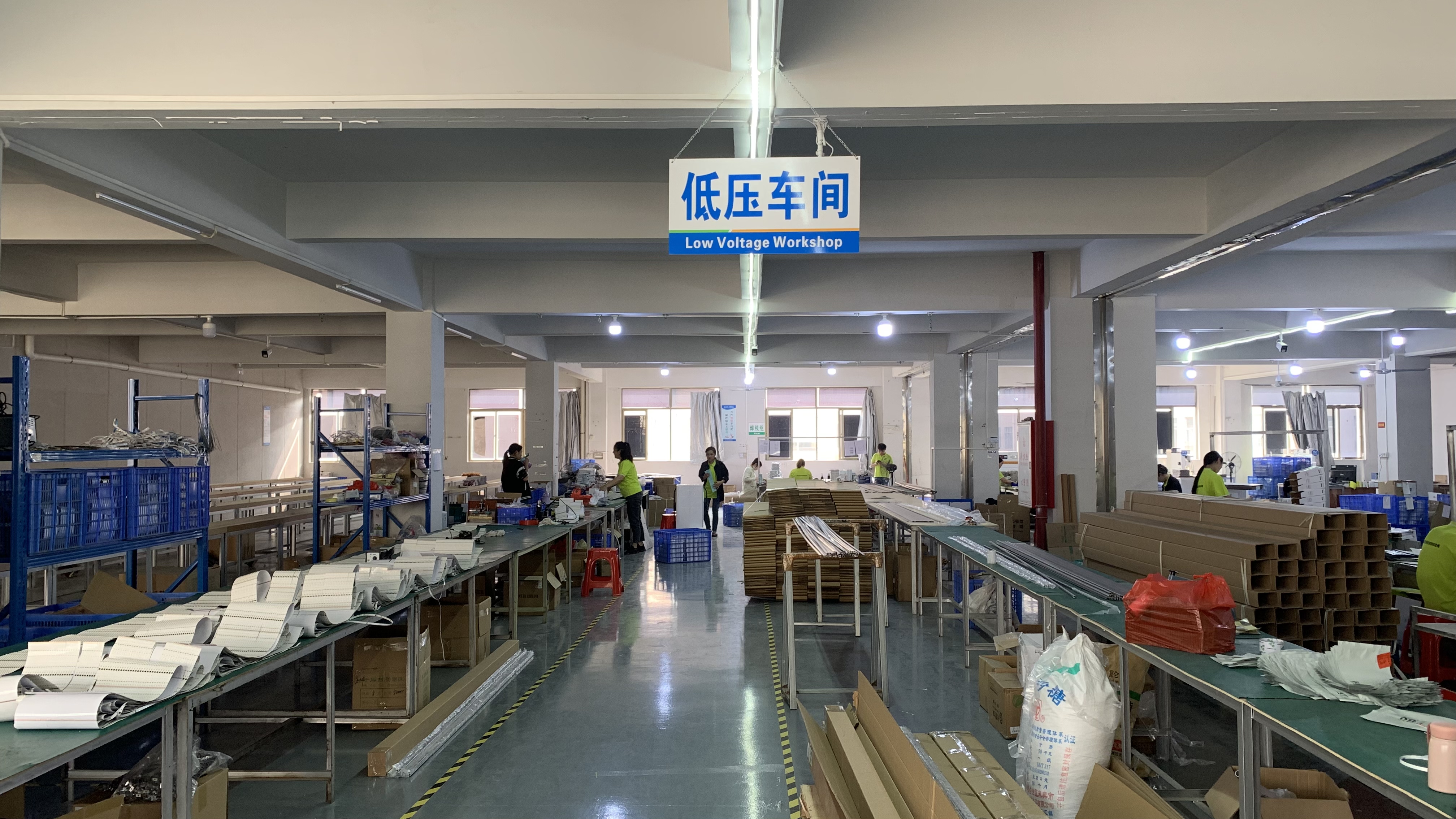
To understand how these categories are organised in practice, it is useful to examine the product documentation of Zhongshan Xiangpai (XPUP) Lighting Technology Co., Ltd. The company is an LED strip and linear lighting manufacturer established in 2012 in Zhongshan, Guangdong Province, China. It operates a factory of more than 10,000 square meters, employs around 80 people, and reports an annual production capacity of 35,000,000 meters of LED strips. Its range covers high- and low-voltage flexible strips, COB strips, RGB/RGBCW smart colour strips, outdoor waterproof strips, energy-efficient commercial strips, and smart dimmable ambient strips.
The table below uses representative XPUP models to show how product categories map to specifications and applications.
| Category | Representative Model | Key Specifications | Typical Application |
|---|---|---|---|
| SMD LED Strip | XP-BD15DC24V-2835-120D-5MM | 24V, 8W, CRI Ra≥90, 120 LEDs/m | Luxury residential and commercial lighting |
| COB LED Strip | XP-CH1DC24V-2025-280D-8MM | 24V, 10W, 280 LEDs/m, IP68, wide beam | Hospitality, garden, courtyard lighting |
| Silicone / Waterproof | XP-C5DC24V-2835-120D-8MM | 24V, 8W, IP68, Ra≥90, silicone cover | Residential ambient, courtyard, architectural lighting |
| Smart / RGBIC | XP-D6DC24V-5050-60D-10MM | 24V, 10W, RGBIC, 5050 LEDs, IP20 | Gaming, display, entertainment lighting |
| Tunable / Dimmable | XP-D4DC24V-2835-192D-8MM | 24V, 15W, Ra≥95, 2700K–6500K, IP20 | Gallery, smart home, lighting design |
| Neon Flex | XP-C10DC24V-2835-120D-8MM | 24V, 8W, Ra≥90, 120 LEDs/m, PVC cover | Gaming, landscape, residential accent |
| Architectural / Wall Washer | XP-C13 DC24V-6060-48D-10MM | 24V, 18W, Ra≥90, IP65, 6060 LEDs | Commercial, architecture, facade lighting |
| Outdoor / 220V | XP-CH2AC220V-2025-240D-8MM | 220V, 10W, IP68, 240 LEDs/m, silicone tube | Landscape, garden, bridge lighting |
The design logic behind these categories is fairly consistent. SMD strips are the conventional option for general indoor lighting, offering reliable uniformity and moderate cost. COB strips such as the XP-CH1 place 280 LEDs per meter under a wide-beam package, producing a continuous line of light without visible spots or gaps. Silicone and waterproof versions such as the XP-C5 add a pure silicone cover, reaching IP68 while remaining cuttable at short distances. Smart and RGBIC strips use addressable control to create multi-colour effects, as seen in the XP-D6. Tunable white options such as the XP-D4 span 2700K to 6500K with CRI Ra≥95, supporting adaptable residential and gallery lighting. Architectural strips such as the XP-C13 integrate a 35° soft-light lens to reduce harsh light spots in wall-washing applications.
Technical Specifications to Evaluate Before Purchase
Voltage and power
Most indoor strips in the XPUP range operate at 24V DC, reflecting a broader market pattern: 24V accounted for 52% of linear LED strip fixture revenue in 2022, according to Grand View Research. Outdoor or long-run landscape strips may use 220V AC, as in the XP-CH2 model. Power ratings in the XPUP line range from 5W for the energy-saving G7 to 25W for high-output models, which affects heat, efficiency, and driver selection.
CRI
The Colour Rendering Index indicates how accurately a light source reveals colours. For retail display and jewellery lighting, high CRI is important. The XP-BD18 reaches Ra≥97, while many residential and commercial models offer Ra≥90. Standard commercial strips may stay at Ra≥80.
Colour temperature
Colour temperature determines the visual warmth. The 3000K–4000K segment holds about 33.2% revenue share in linear LED strips, according to Grand View Research. Tunable models such as XP-D4 and XP-D11 allow adjustment from 2700K to 6000K or 6500K.
LED density and PCB
LED density affects uniformity. COB models use 280 LEDs per metre; standard SMD strips commonly use 120 LEDs per metre. High-density variants with more than 120 LEDs per metre account for roughly 19% of premium installations. Double-layer copper PCBs are used across the XPUP line to support thermal performance.
IP rating
IP20 is for indoor dry environments; IP65 and IP68 provide protection against moisture and dust. XP-C5 and XP-CH2 are IP68, while XP-C13 is IP65. For outdoor architectural facades, IP68 silicone-encapsulated strips are common.
Flexibility and cutting
Cutting flexibility is a practical installation factor. Some strips can be cut at very short distances, such as the XP-C5; others support cutting at each LED, such as the XP-BD18 and XP-C10. This reduces waste and simplifies project planning.
Application Patterns: Where LED Strips Are Used
Looking at project scenarios, LED strips appear in nearly every lighting category. Commercial applications lead demand, contributing roughly 33.8% of global revenue, according to Dataintelo. Over 65% of new architectural lighting installations in 2025 are estimated to use LED strip technology, according to Business Research Insights.
For whole-house lighting solutions, low-voltage SMD strips such as XP-BD15 and ambient strips such as XP-D8 are specified for coves, under-cabinet lighting, and corridors.
Luxury residential and hospitality projects prioritise colour quality. XP-BD18, with CRI Ra≥97, is suitable for jewellery stores and display cases; XP-D11 tunable white is rated for commercial, hospitality, and residential scenarios; COB XP-CH1 is specified for hospitality and garden lighting.
For commercial complexes and architectural lighting, the XP-C13 with 6060 LEDs and an IP65 rating works as a flexible wall washer, covering walls up to 6 meters high with a 35° lens. The same model is also classified as an architectural strip for luxury residential and lighting design projects.
Acoustic wall LED strips such as CA-DC24V-2835-180D-8mm-3000K were specifically developed for slat wall panels with 13mm or 15mm gaps. A black surface allows the strip to blend into the wall, and silicone material supports residential use.
RGBIC strips such as XP-D6 create addressable colour effects for gaming rooms, KTV, and gallery backgrounds. Neon flex XP-C10 is used for gaming rooms, landscape lighting, and residential accent lines.
Outdoor projects require robust protection. XP-CH2 (220V, IP68) is intended for landscape, garden, and bridge lighting; XP-C5 (24V, IP68) is used for residential ambient lighting and courtyards; XP-C818 silicone strips are designed for architectural facade and landscape lighting.
Market Context for LED Strip Light Sourcing
Several measurable trends shape current LED strip supply.
- The global LED strip market was around USD 5.8 billion in 2025 and is projected to reach USD 13.2 billion by 2034, at a CAGR of 9.6% (Dataintelo).
- Flexible strips hold the largest product-type share at 67.4% (Dataintelo).
- The smart LED strip market was estimated at USD 3.2 billion in 2025 (Market Intelo), while the COB LED market is projected to grow at a CAGR of 18.9% through 2031 (Cognitive Market Research).
- Asia Pacific is the largest regional market for LED strips, accounting for about 42.3% of global revenue in 2025 (Dataintelo). For Chinese manufacturers, exports remain central; China accounts for 59.3% of global light fixture exports (OEC).
- LED strips consume close to 70% less power than incandescent systems, and EU energy-efficiency rules are accelerating the move to LED-based lighting.
LED Strips vs Traditional Linear Lighting: Capabilities and Boundaries
Compared with fluorescent tubes, rope lights, or rigid linear fixtures, LED strips are lighter, more flexible, easier to install in tight cavities, and more controllable in colour tuning. They are also more efficient than incandescent alternatives. However, there are real boundaries.
Quality LED strips are rated for roughly 30,000 to 50,000 hours, but this depends on a stable power supply and adequate thermal management. Overdriving or covering strips with insulation can shorten life. Low-voltage 24V strips require a suitable transformer or power supply; without it, brightness consistency and voltage drop become issues. IP20 strips are not suitable for outdoor or wet areas. Mains-voltage 220V strips must be installed with proper insulation and safety compliance, and they are not a universal replacement for high-power industrial luminaires.
What to Expect in LED Strip Light Development
Looking forward, LED strip procurement will likely focus more on integration and compliance. The shift toward smart control is visible in the growth of the smart LED strip market and in the estimated 47% adoption rate of smart features such as Wi-Fi and Bluetooth in LED strip systems. At the manufacturing level, suppliers are building R&D teams and patents around optical performance and structural design. XPUP, for instance, operates a dedicated R&D laboratory with a team of six engineers and holds design patents for its C19 and C20 series LED strips.
For buyers, the practical takeaway is to evaluate suppliers not only on unit price, but also on certification depth, customization ability, production capacity, and long-term product consistency.
A complete specification overview of the models referenced in this article is available in the XPUP LED Strip Catalog.
Frequently Asked Questions
What is the difference between SMD and COB LED strips?
SMD strips use discrete LED chips mounted along the strip, such as 2835 or 5050 packages. COB strips pack many LED chips closely under a continuous coating, producing a continuous line of light without visible spots or gaps. A representative COB model, XP-CH1, uses 280 LEDs per metre and offers a wide beam angle.
What does CRI mean for LED strip lights?
CRI, or Colour Rendering Index, measures how accurately a light source renders colours compared to natural light. Higher values generally mean better colour fidelity. For display cases and jewellery stores, high CRI is important; XP-BD18 reaches Ra≥97. Many residential and commercial strips in the XPUP range offer Ra≥90, while some standard models are rated Ra≥80.
What IP rating should an outdoor LED strip light have?
For outdoor or wet locations, choose a strip rated IP65 or higher. IP68 offers high protection against dust and water. XP-CH2 is an outdoor landscape strip rated IP68, and XP-C5 is an IP68 silicone-covered strip used for residential ambient and courtyard lighting. IP20 models are intended for indoor dry environments only.
Should I use 24V or 220V LED strips?
The choice depends on the installation. 24V low-voltage strips are common indoors and require a driver or power supply. 220V mains-voltage strips, such as XP-CH2, are used for outdoor landscape or bridge lighting and can run longer distances without additional transformers. Low-voltage strips offer greater safety for exposed indoor installations; mains-voltage strips require proper insulation and safety compliance.
Are LED strip lights energy efficient?
LED strips consume close to 70% less power than traditional incandescent lighting systems. In practice, an energy-saving model such as the G7-DC24V-2835-126D-8mm uses only 5W per metre while providing 126 LEDs per metre. This combination of low power and long rated life—typically 30,000 to 50,000 hours for quality LED strips—makes them an efficient choice for linear lighting.
Can LED strips be cut to custom lengths?
Yes, most LED strips have marked cutting points. Some models support frequent cutting: XP-C5 is a pure silicone-covered strip that can be cut at very short distances, and the XP-C10 neon flex is designed so that each LED cut presents a clean glow. Always follow the manufacturer's cut markings to avoid damaging the circuit.
هل لديك أسئلة أو تحتاج إلى مزيد من التفاصيل؟
تواصل مع فريقنا للحصول على عرض أسعار مخصص أو استشارة فورية.
طلب عرض أسعار
املأ النموذج أدناه وسيتواصل معك فريقنا بعرض مقترح مخصص.
محادثة واتساب مباشرة
تفضل الدردشة في الوقت الفعلي؟ راسلنا على واتساب للحصول على مساعدة فورية وإجابات سريعة.
- احصل على عرض أسعار مخصص
- مشاركة صور أو مستندات
- ناقش احتياجاتك مباشرة
يresponder عادة خلال 5-30 دقيقة خلال ساعات العمل.