
LED Strip Light Specs & Certifications: Sourcing Reference for Buyers
LED Strip Light Specs & Certifications: Sourcing Reference for Buyers
Specification sheets for flexible LED strips contain far more than brightness numbers. For a lighting brand, engineering contractor, or wholesale buyer evaluating import supply, the practical question is not only how a strip lights a room, but whether its electrical, material, and compliance parameters match the project market and installation environment.
The global LED strip market is estimated at roughly USD 5.8 billion in 2025, with projections reaching USD 13.2 billion by 2034 at a CAGR of about 9.6% (Dataintelo). Europe is regarded as the fastest-growing regional linear LED strip market, with a forecast CAGR around 12.6%, while 24V fixtures account for a substantial share of specification demand worldwide. A buyer working across residential, architectural, outdoor, or hospitality projects therefore receives LED strip offers with a wide range of operating voltages, LED densities, CRI values, protection levels, and CE-related documents. Understanding how these parameters work together is essential to turning a product sheet into a reliable sourcing decision.
What “Certified LED Strip Light” Means in Practice
Certification statements appear on almost every export quotation. The more useful interpretation is not the phrase itself, but the scope and technical standards behind it. For the EU market, LED strip products are commonly documented through CE marking combined with LVD, EMC, and RoHS test evidence. Each of these covers different characteristics: electrical safety, electromagnetic behaviour, and restricted substances in materials. Buyers should check whether certificates are issued by a recognised testing body, whether the certificate explicitly covers low-voltage or high-voltage strip series, and whether the stated standards correspond to the product family being purchased.
XPUP LED, a Zhongshan-based source manufacturer operating since 2012, provides an instructive example of how such documentation appears on real product families. Its LED low-voltage and high-voltage light strip series have been tested by PTC TESTING, with CE certificates covering LVD and EMC requirements relevant to EU distribution. The LVD documentation references EN IEC 62031:2020 + A11:2021, IEC TR 62778:2014, and EN 62471:2008. The EMC documentation cites EN IEC 55015:2019+A11:2020, EN 61547:2009, EN IEC 61000-3-2:2019+A1:2021, and EN 61000-3-3:2013+A1:2019. RoHS test reports reference IEC 62321 series methods. For an EU-bound product range, this type of certificate trail is more informative than a generic “CE available” note on a quotation.
Beyond Europe, buyers should also note that the United States applies different frameworks to low-voltage strip lighting. Low-voltage LED strips are commonly evaluated under UL 2108 for installation in the US, while luminaires installed in certain storage spaces are referenced under UL 1598. A supplier exporting mainly to the EU may be fully compliant for Europe but not automatically prepared for North American market entry.
Key Technical Parameters That Shape Compatibility
Even with certification documents in order, a buyer still has to verify technical compatibility. Several parameters matter more than others in typical purchasing evaluations.
Voltage and drive architecture
Operating voltage affects installation safety, driver selection, and maximum run length. Many architectural and interior strip specifications use 24V DC, a voltage level that lowers shock risk and improves consistency across longer runs relative to higher-voltage line-connected strips. In the linear LED strip fixture segment, the 24V category represented over half of market revenue in recent years. Some outdoor or landscape lines use 220V AC variants with IP68 protection, reducing the need for multiple drivers in certain installations.
LED density, PCB width, and substrate material
Density is normally expressed in LED chips per metre. Values commonly range from 48 LEDs/m for wide-beam wall washing to 180 or 240 LEDs/m for continuous, high-uniformity lines. PCB width influences heat dissipation and ease of installation into channels or extrusions. Double-layer copper PCBs are frequently used in export-focused product ranges because they help distribute heat more effectively than single-layer boards.
XPUP’s product structure illustrates how density choices address distinct use cases:
| Model reference | Typical position in specification | Key characteristics stated by manufacturer |
|---|---|---|
| XP-BD18DC24V-2835-140D-8MM | High-colour-rendering interior line | 24V, 12W/m, CRI Ra≥97, 140 LEDs/m, IP20, double-layer copper PCB |
| XP-BD15DC24V-2835-120D-5MM | Compact SMD strip for furniture and display | 24V, 8W/m, CRI Ra≥90, 120 LEDs/m, IP20 |
| XP-D11DC24V-2835-120D-8MM | Tunable white architectural/residential | 24V, 11W/m, CRI Ra≥95, 2700K–6000K, cuttable at short intervals |
| XP-D4DC24V-2835-192D-8MM | Dimmable ambient lighting for smart environments | 24V, 15W/m, CRI Ra≥95, 192 LEDs/m, tunable dimming |
| XP-CH1DC24V-2025-280D-8MM | High-density COB with uniform light line | 24V, 10W/m, 280 LEDs/m, IP68, wide-beam light without visible dot spacing |
| XP-C818DC24V-2835-120D-8MM | Silicone-extruded outdoor/façade grade | 24V, 8W/m, full silicone cover, IP68 |
| XP-C5DC24V-2835-120D-8MM | Waterproof silicone strip for landscape/weatherproof areas | 24V, CRI Ra≥90, IP68, pure silicone cover |
| XP-C13DC24V-6060-48D-10MM | Commercial and architectural wall/façade accent | 24V, 18W/m, CRI Ra≥90, IP65, flexible silicone wall-washer format |
| XP-CH2AC220V-2025-240D-8MM | Outdoor line-fed installation | 220V, 10W/m, 240 LEDs/m, IP68 |
| XP-D6DC24V-5050-60D-10MM | Smart/RGBIC addressable effects | 24V, 10W/m, 60 LEDs/m, RGBIC, SPI protocol, IP20 |
This kind of range is common among manufacturers that avoid a one-size-fits-all strategy. Dense COB and chip-on-board lines are specified when designers need a continuous light line without visible point sources. SMD-based lines are selected for their flexibility and cost balance. Smart RGBIC strips rely on integrated controllers; white tunable strips require compatible dimming control systems.
CRI and colour appearance
Colour rendering index has become a decisive specification in retail, hospitality, and residential premium projects. A CRI of Ra≥80 is generally considered sufficient for functional spaces; Ra≥90 or Ra≥95 is more typical for design-sensitive installations; Ra≥97 approaches full-spectrum quality. XPUP’s high-CRI models include the XP-BD18 series at Ra≥97 and the tunable XP-D11 series at Ra≥95, covering display and colour-critical environments.
Colour temperature options also matter. White-strip ranges offering 2700K–6500K selections allow the buyer to serve warm hospitality schemes as well as neutral commercial lighting. Some newer tunable white models adjust from warm to cool in a single strip, which simplifies colour control in modern interiors.
Ingress Protection Levels and Their Limitations
Ingress protection (IP) ratings are frequently misunderstood in LED strip evaluation. IP20 is acceptable only for indoor dry locations. IP65 provides protection against dust and low-pressure water jets, but does not mean the strip is suitable for prolonged submersion. IP68 is a stronger rating used for outdoor, landscape, façade, and damp-area installations. However, an IP68 rating describes enclosure performance, not indefinite immunity to UV, chemical exposure, physical damage, or improper wiring. Junction points, connectors, and power supplies determine the real-world reliability of an outdoor installation.
The XP-C818 full-silicone and XP-C5 silicone-covered series are examples of IP68-rated products used in gardens, courtyards, architectural façades, and landscape lighting. The XP-C13 with its 35° lens and IP65 rating is designed for wall washing and architectural accent applications. Silicone material selection is relevant to homes because of lower odour and environmental concerns compared with some PVC alternatives.
How Certified Specs Support Procurement Decisions
From a buyer’s perspective, certification and parameter data should reduce uncertainty rather than simply decorate a quotation. Three validation steps are useful:
- Match the certificate scope to the product family. A CE certificate that names the low-voltage and high-voltage light strip series is more useful than a certificate received from an unknown or unrelated scope.
- Check the standards issue dates and market relevance. Standards evolve. The EU EMC documentation, for example, should reference current editions of EN IEC 55015, EN 61547, and EN IEC 61000-3-2/3-3.
- Evaluate the material and construction design. Double-layer copper PCB, LED vendor type, silicone quality, and controller configuration are part of product reliability, not just listing details.
XPUP’s manufacturing set-up supports these checks with over 10,000 m² of factory space, approximately 80 employees, and an annual output capacity of 35 million metres of LED strip. Its OEM/ODM system allows voltage, PCB design, colour temperature, and packaging adaptation; standard production lead times are usually 18–22 days with a 2,000-metre MOQ. Products are described as 100% tested before shipment. Frequent export markets include the EU, US, and Asia.
Market Trend Analysis Behind the Parameter Shift
Several market shifts make certification and specification knowledge more valuable for buyers. Commercial applications already contribute a leading share of LED strip revenues, and flexible strips represent the largest product segment. As projects become more intelligent, wired smart LED installations still dominate the smart lighting segment, with residential adoption increasing as smart-home integration spreads.
COB LED technology is expanding faster than average, with one analysis projecting a CAGR of 18.9% from 2024 to 2031. High-density strips above 120 LEDs/m account for a visible share of premium installations. This trend helps explain why buyers are seeing more COB and high-density SMD lines with detailed CRI specifications rather than simpler decorative strip offerings. The practical implication is that suppliers need greater control over LED binning, PCB quality, and optical uniformity, while buyers need enough technical literacy to compare them.
Meanwhile, EU energy-efficiency policy continues to push lighting purchases toward LED systems. Buyers sourcing for European projects should expect energy-efficiency expectations to become more tightly linked to product documentation.
Comparison with Traditional Solutions and Supplier Caveats
Compared to rigid bars, recessed modules, or traditional tube-based lighting, flexible LED strips offer thinner profiles, easier integration into coves and architectural details, and a wider range of CCT and control options. Silicone-coated and COB formats have narrowed the visual quality gap because they create continuous light lines with no obvious dot spacing.
However, one realistic limitation should shape purchase decisions: an LED strip is only as reliable as its complete installation system. Certification on the strip itself does not automatically validate the power supply, controller, connectors, or installation work. Voltage drop, poor thermal management in an enclosed aluminium channel, mismatched dimmers, and cheap connectors can undermine a strip that performs well in a factory test. Buyers should therefore evaluate the supplier’s technical guidance and system-level competence, not only the strip’s listed figures.
Another limitation appears in high-output configurations. Energy-saving models such as XPUP’s G7 series, rated at 5W/m with 126 LEDs/m, serve applications where lower power consumption is a priority. Ultra-bright lines such as the G10 series provide higher wattage per metre but demand more attention to driver sizing and heat sinking. No single model is universally suitable; performance claims must always be read against the target installation.
What This Means for Future Sourcing Decisions
The direction of the market favours buyers who can specify with precision. As commercial, architectural, and outdoor projects integrate lighting more deeply into digital controls, the demand will likely increase for strips that combine high CRI or tunable white quality with compatibility with smart control systems. Manufacturers that operate in-house trade, stock production capacity during low seasons, and maintain CE/RoHS documentation for broad product families are positioned to offer more consistent support for long engagement cycles.
For a sourcing manager, the decisive factor will not be a single certificate or a single parameter. It will be the supplier’s ability to connect product documentation, material quality, technical compatibility, and project-specific recommendations into one coherent package.
For reference, XPUP LED publishes its current product range and manufacturing overview in a downloadable catalogue: 2026 XPUP LED Strip Catalogue. Buyers can use the document to compare model families against their own project specifications.
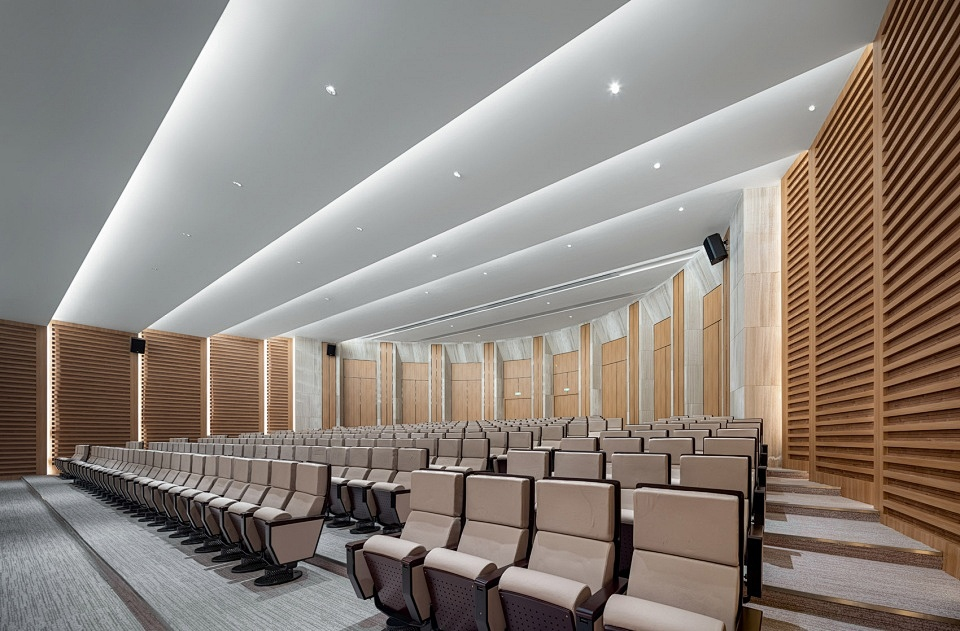
Energy-saving LED strip lines are increasingly specified for commercial projects where power consumption and installation flexibility both matter.
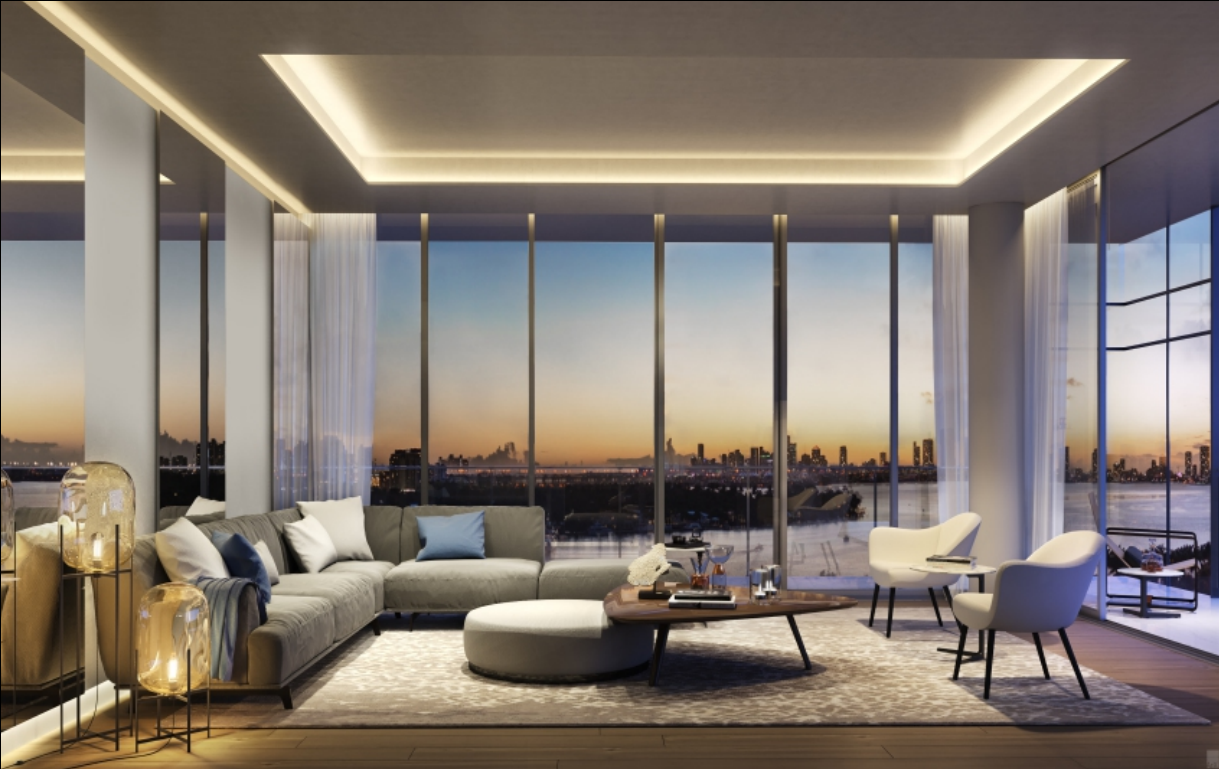
Dimmable high-CRI LED strip lights support residential ambient lighting schemes and smart lighting integration.
Frequently Asked Questions
Are XPUP LED strip lights CE certified?
XPUP states that its LED low-voltage and high-voltage light strip series are CE certified. The relevant CE documentation includes LVD and EMC testing performed by PTC TESTING and is intended for the EU market. The certification numbers cover the LED strip series rather than a single product only.
Which US safety standard usually applies to low-voltage LED strips?
Low-voltage LED strips (12V/24V) sold for US installation are commonly evaluated under UL 2108. Luminaires installed in certain storage spaces, such as clothes closets, are referenced under UL 1598. Buyers should verify whether a Chinese supplier’s EU-oriented certification set also matches the documentation required for the North American market.
What is the difference between CE, RoHS, and EMC certification for LED strips?
CE marking is the EU’s regulatory conformity marking. RoHS certification focuses on restricted hazardous substances in materials, usually tested according to IEC 62321 series methods. EMC certification covers electromagnetic compatibility, meaning the product operates correctly near other devices and does not generate unacceptable interference. LVD certification covers electrical safety. XPUP’s series documentation includes CE, LVD, EMC, and RoHS evidence from PTC TESTING for the EU market.
Which XPUP LED strip model is suitable for outdoor installations?
For outdoor and landscape scenarios, IP68-rated models such as XP-CH1DC24V-2025-280D-8MM, XP-C818DC24V-2835-120D-8MM, and XP-C5DC24V-2835-120D-8MM are relevant. The XP-C818 series uses a full silicone cover, while the XP-C5 series is a silicone-covered waterproof strip. For line-fed outdoor installations, the XP-CH2AC220V-2025-240D-8MM operates at 220V with IP68 protection.
Why does CRI matter when buying LED strip lights for interior projects?
CRI measures colour rendering against a reference light source. Standard LED strips with Ra≥80 are often used for general lighting. Ra≥90 provides more accurate skin tones and material colours, making it suitable for hospitality, retail, and residential projects. Ra≥95 or higher is preferred where colour discrimination is critical, such as luxury interiors, galleries, and display environments. XPUP includes Ra≥95 and Ra≥97 models in its product family for these interiors.
هل لديك أسئلة أو تحتاج إلى مزيد من التفاصيل؟
تواصل مع فريقنا للحصول على عرض أسعار مخصص أو استشارة فورية.
طلب عرض أسعار
املأ النموذج أدناه وسيتواصل معك فريقنا بعرض مقترح مخصص.
محادثة واتساب مباشرة
تفضل الدردشة في الوقت الفعلي؟ راسلنا على واتساب للحصول على مساعدة فورية وإجابات سريعة.
- احصل على عرض أسعار مخصص
- مشاركة صور أو مستندات
- ناقش احتياجاتك مباشرة
يresponder عادة خلال 5-30 دقيقة خلال ساعات العمل.