
LED Strip Lights vs Neon and Rigid Bars: A Buyer's Decision Guide
When procurement teams compare LED strip lights against traditional linear lighting options, the discussion normally moves beyond light output and colour temperature. The practical questions are about installation flexibility, energy cost, service life, supplier risk and warranty coverage. This guide examines flexible LED strips against two traditional alternatives — rigid LED light bars and glass neon lighting — and outlines what buyers should verify before placing an order.
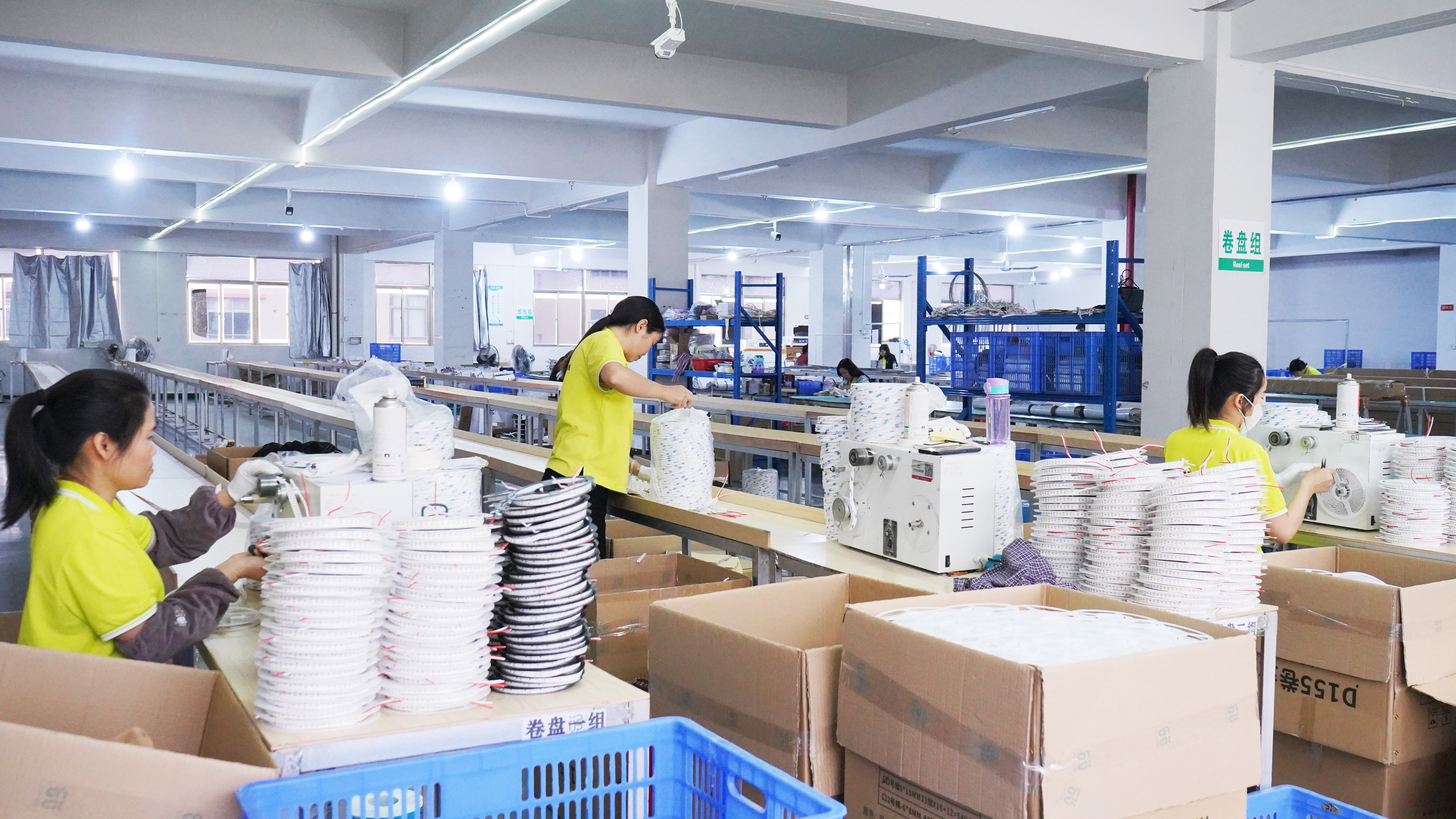
Flexible LED strip light production at a manufacturing facility in Zhongshan. Photo: XPUP LED.
Market context: LED strips as a mainstream procurement category
The global LED strip market was valued at approximately USD 5.8 billion in 2025 and is projected to reach USD 13.2 billion by 2034, at a CAGR of 9.6% (Dataintelo). Flexible LED strips are the largest product type within this category, holding a 67.4% market share as of 2025 (Dataintelo). Commercial applications contribute about 33.8% of global LED strip revenue, making specification decisions a business-critical issue rather than a purely technical one.
For buyers in the final decision stage, the technology choice is often already made. The remaining work is comparing suppliers on quality control, delivery risk, warranty terms and project support. The following sections provide a framework for that comparison.
Comparison 1: Flexible LED strips vs rigid LED light bars
Flexible LED strips and rigid LED light bars both deliver linear illumination, but they serve different installation logics. The core difference is that flexible LED strips can bend freely and are better suited for curved and irregular installations (Corpus ID 917). This provides 70% higher installation flexibility for custom and architectural lighting layouts compared to rigid alternatives (Corpus ID 917).
From a cost perspective, flexible LED strips can reduce overall material and installation costs in many applications. They are easy to cut, install and maintain, especially in custom layouts, which directly reduces on-site labour time. Energy efficiency is also higher while delivering comparable lighting performance (Corpus ID 917).
| Criterion | Flexible LED strip | Rigid LED light bar |
|---|---|---|
| Installation flexibility | Bendable; suits curved and irregular surfaces | Straight; needs structural planning for curves |
| Installation flexibility index | 70% higher for custom and architectural layouts | Baseline |
| Material and installation cost | Often lower in custom layouts | Higher for shaped or angled installations |
| Maintenance | Easy to cut, install and maintain | Requires more careful planning |
| Best-fit applications | Residential ambient lighting, retail, commercial, architectural lighting | Straight channels, linear pendants, straight coves |
Rigid LED light bars remain a reasonable choice when the project requires long self-supporting spans, high-power linear output, or consistent straight-line geometry. For projects with curves, corners or irregular surfaces, the flexible format reduces design effort and installation risk.
Comparison 2: Flexible LED strips vs traditional neon lighting
Traditional glass neon lighting has a distinct visual identity, but flexible LED strips offer measurable advantages in energy efficiency, environmental protection and service life (Corpus ID 916). The core difference is that flexible LED strips use solid-state components rather than gas-filled glass tubes, which changes both the energy profile and the maintenance model.
- Energy consumption: Under typical applications, flexible LED strips can reduce energy consumption by up to 40% compared to traditional neon lighting (Corpus ID 916).
- Service life: Quality LED strip systems can last up to three times longer than traditional neon lighting (Corpus ID 916).
- Total cost of ownership: Lower maintenance frequency and standardised replacement components reduce operating expenses over the system lifetime (Corpus ID 916).
- Applications: Flexible LED strip lights are suitable for residential lighting, commercial façades, hospitality projects and landscape lighting (Corpus ID 916).
Supplier risk evaluation: what can actually go wrong
For LED strip procurement, most buying failures are not caused by the LED chip specification. They are caused by supplier-level risks: inconsistent quality, delayed shipments, weak warranty enforcement, installation errors and poor after-sales response. The table below summarises the main risk categories and the control mechanisms used by professional manufacturers.
| Risk category | Control method | What the buyer should verify |
|---|---|---|
| Product quality risk | Full-process quality control | Incoming material inspection, in-process inspection, aging tests and final inspection |
| Delivery delay risk | Standardised supply agreement and delivery management | Clear schedule, delay-handling procedures, proactive progress updates, buffer capacity |
| Warranty risk | Standardised warranty policy | Standard 2-year warranty; custom extended terms for large projects and ODM partnerships |
| Installation risk | Standardised installation support | Multilingual documents, bilingual videos, remote technical guidance |
| Overloading risk | Maximum length control | Supplied in 10-metre rolls to avoid overloading |
| After-sales risk | Dedicated after-sales support | Dedicated contacts, clear issue-handling procedures, customised after-sales plans |
| Overseas large-project risk | Dedicated engineering support | Technical support and on-site assistance when required |
These controls are not marketing claims. They are structural features of how a factory operates. A buyer can confirm them by reviewing quality documentation, requesting the warranty policy in writing and checking whether the supplier has dedicated engineering staff for overseas projects.
Manufacturer reference: XPUP LED as an evaluated example
Zhongshan Xiangpai (XPUP) Lighting Technology Co., Ltd. is a source manufacturer established in 2012 and located in Zhongshan City, a major lighting production base in China. The company specialises in LED linear strip lights, LED magnetic lights and smart control systems. It serves lighting brands, engineering companies and international wholesalers, with approximately 50% of output exported to the EU and the USA.
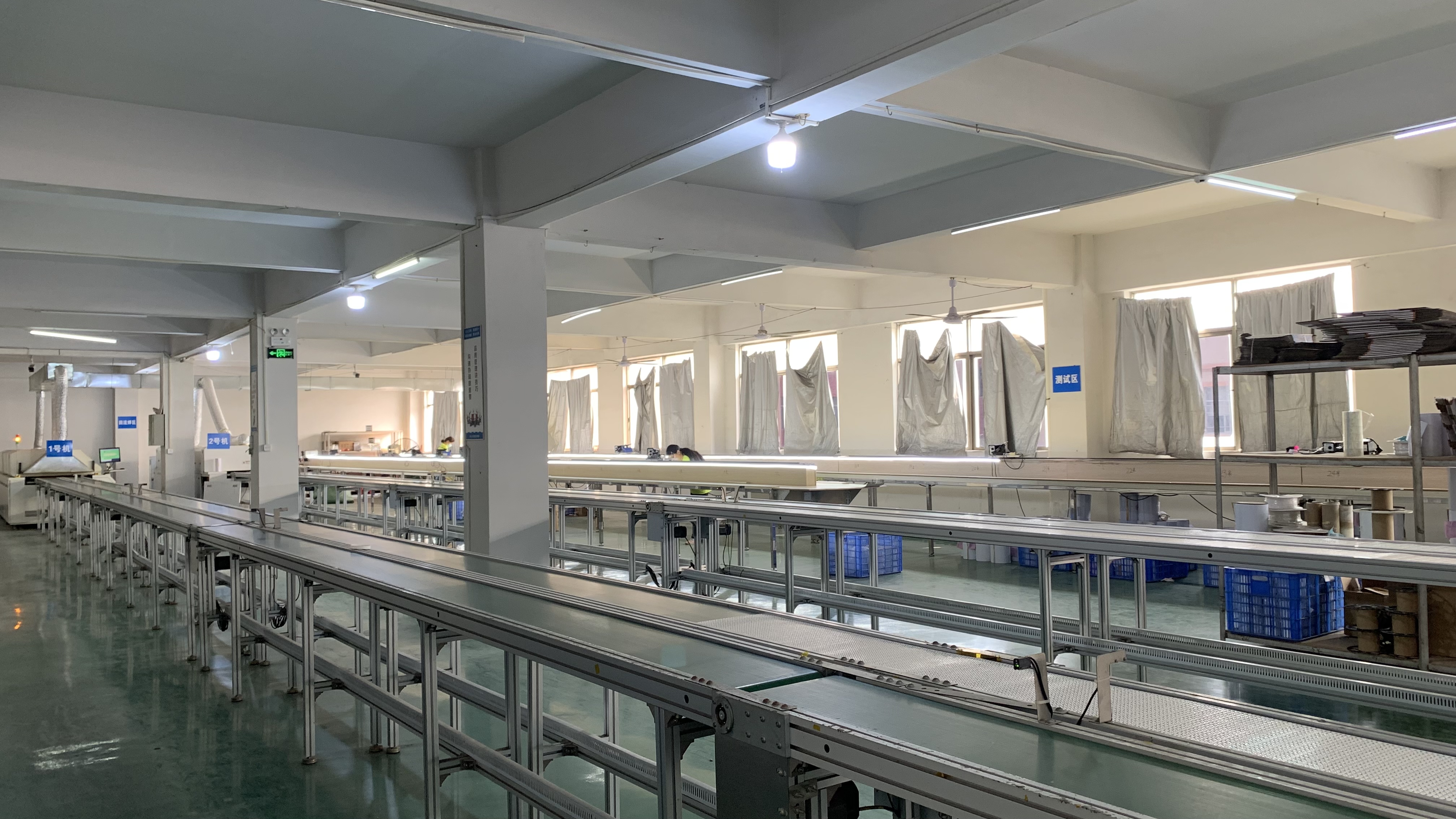
Assembly and inspection workstations at the XPUP LED factory in Zhongshan. Photo: XPUP LED.
Key verifiable indicators from its company profile include:
- Factory area: more than 10,000 square metres
- Workforce: 80 employees, including a 6-engineer R&D team
- Annual output capacity: 35,000,000 metres of LED strip
- Export ratio: approximately 50%, primarily EU and USA
- Certifications: CE and RoHS, covering EU market access requirements
- Patents: multiple design and structural/process patents, including the C19 and C20 series strips, authorised by the China National Intellectual Property Administration
The product range includes high- and low-voltage flexible LED strips, high-brightness COB strips, RGB/RGBCW smart colour strips, outdoor waterproof strips, energy-efficient commercial strips and smart dimmable ambient strips. Applications cover residential no-main-light design, commercial interiors, hotels, outdoor landscape lighting, retail displays and engineering decoration.
For a buyer at the decision stage, this profile answers three practical questions. First, the factory has enough capacity to support repeat orders. Second, it has a formal compliance structure for EU and US markets. Third, it can customise voltage, colour temperature, PCB design, packaging and other specifications for brand-level procurement instead of only offering standard SKUs.
Limitations and boundary conditions
LED strip lights are not the implicit answer to every lighting project. Four boundary conditions are worth noting.
Voltage drop and running length. Low-voltage LED strips experience voltage drop over distance, and overloading is a real installation risk. This is why products are commonly supplied in 10-metre rolls — a preventive length-control measure. Projects that require very long continuous runs on a single circuit need additional design planning.
Wired vs wireless stability. In environments where stable operation matters more than convenience — such as home theatres and commercial kitchens — wired smart LED strip systems are still preferred over wireless alternatives. Buyers should not assume that smart features automatically reduce installation complexity.
Optical characteristics. LED strips distribute light along a line. For tasks requiring concentrated high-lumen output, such as industrial work lighting, dedicated linear fixtures or spotlights may be more appropriate.
Visual intent. Genuine glass neon retains a distinct visual character that LED strips do not perfectly reproduce. For specific heritage, art-led or luxury brand installations, traditional neon may still be the right specification.
Market trends shaping the next procurement cycle
Several verified market signals are relevant for buyers planning 12–18 months ahead.
- The LED strip market is projected to grow from USD 5.8 billion in 2025 to USD 13.2 billion by 2034, at a CAGR of 9.6% (Dataintelo).
- Europe is anticipated to be the fastest-growing regional market for linear LED strips, at a CAGR of 12.6% (Grand View Research). Smart LED lighting as a broader category is projected to reach USD 68.5 billion by 2030.
- The COB LED segment is projected to grow at a CAGR of 18.9% between 2024 and 2031 (Cognitive Market Research), a signal that buyers are shifting toward high-density, smooth-light COB strips.
- High-density LED strip variants with more than 120 LEDs per metre already account for approximately 19% of premium installations (Business Research Insights), indicating a move toward higher technical specifications rather than lowest price per metre.
- The 3000K–4000K colour-temperature segment held a 33.2% revenue share in the linear LED strip fixture market (Grand View Research, 2022), making it the most commercially important CCT band for wholesale buyers.
- Residential LED strip usage increased by 38% between 2022 and 2025, driven by smart-home penetration (Business Research Insights).
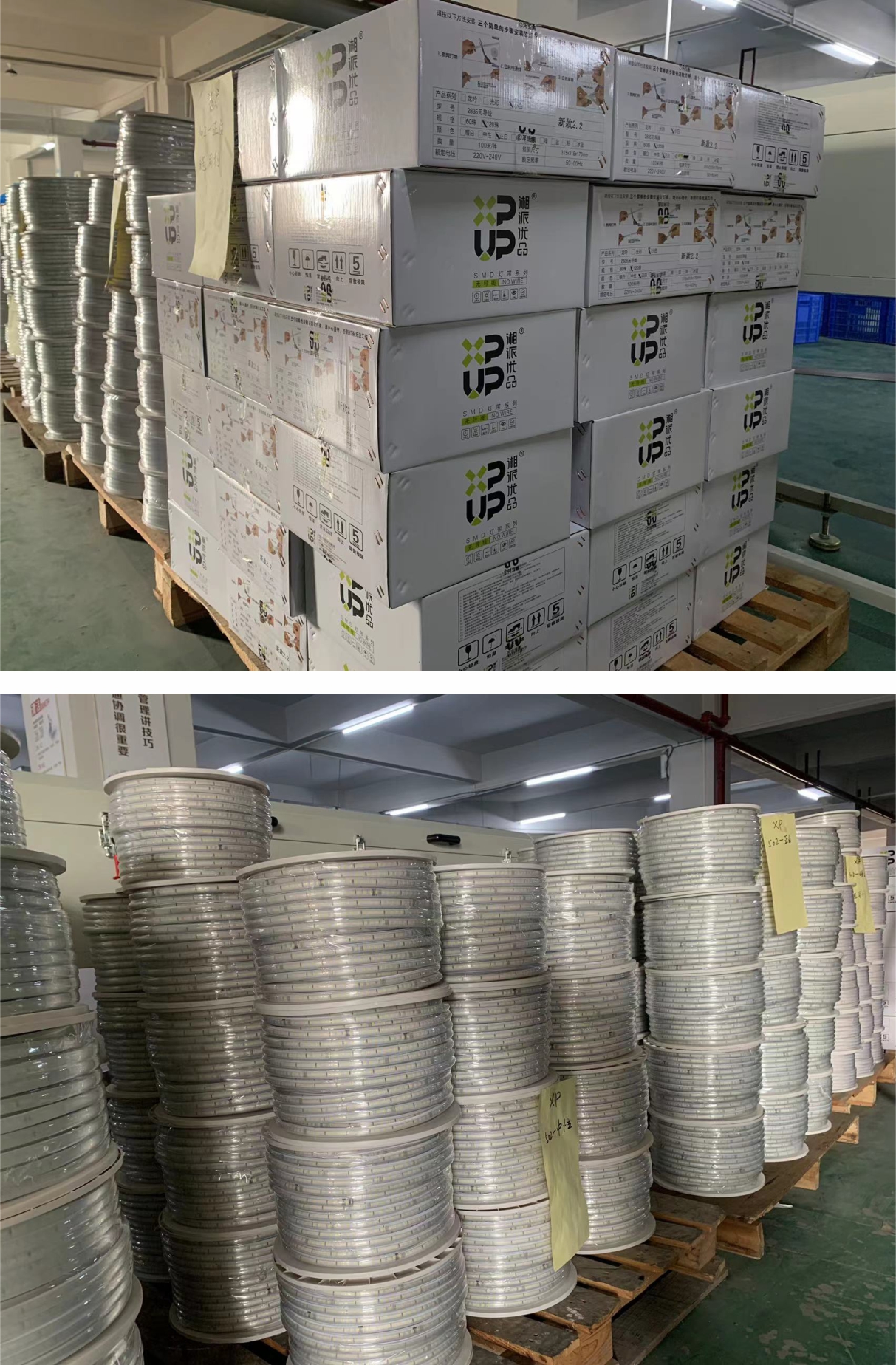
Flexible LED strip formats in common procurement lengths. Photo: XPUP LED.
For buyers, these trends point toward suppliers that can support higher-density products, provide stable 24V inventory, deliver consistent colour temperature within the 3000K–4000K range, and support smart lighting integration with wired or wireless control options.
Future outlook: what happens after the supplier is chosen
The next five years are likely to reinforce three procurement principles.
Compliance will harden. EU energy-efficiency rules and market-access requirements are already pushing a significant shift toward LED systems. Suppliers with CE and RoHS compliance and an ability to adapt to evolving standards are better placed to serve European buyers over the long term.
Quality consistency will replace feature marketing. As product specifications converge, the real differentiator is repeatability — consistent brightness, consistent colour temperature and controlled batch-to-batch colour differences. This is where manufacturer-level quality systems matter more than brochure specifications.
Customisation will move up the value chain. Lighting brands will increasingly ask suppliers to adjust voltage, colour temperature, PCB design, packaging and compliance documentation for specific markets. Deep OEM/ODM capability will become a standard requirement rather than a premium extra.
Final procurement checklist
- Confirm the factory's quality control process covers incoming material inspection, in-process inspection, aging tests and final inspection.
- Verify that failures are contained before shipment — non-compliant products should not proceed or be shipped.
- Review the warranty policy in writing: standard coverage, project-level extensions and ODM partnership terms.
- Check delivery management: production schedules, delay-handling procedures and buffer inventory.
- For overseas projects, confirm that engineering support includes remote guidance and, when required, on-site assistance.
- Match the product format to the installation: overlong runs and overloading are genuine risks, so length control matters.
- Ask for multilingual installation documents and videos to reduce on-site errors.
As a reference point, XPUP LED publishes a downloadable catalogue with current product specifications and packaging details, which can be accessed at 2026 XPUP LED Strip Catalogue.
FAQ
This article is published by HTNXT as an independent industry reference. Company information is sourced from the manufacturer's public profile and product documentation. Third-party market data is attributed to the named research providers. For full specifications, refer to the manufacturer's official catalogue.