
LFP vs. Solid-State vs. Sodium-Ion BESS: A Buyer's Comparison
LFP vs. Solid-State vs. Sodium-Ion BESS: A Buyer's Comparison
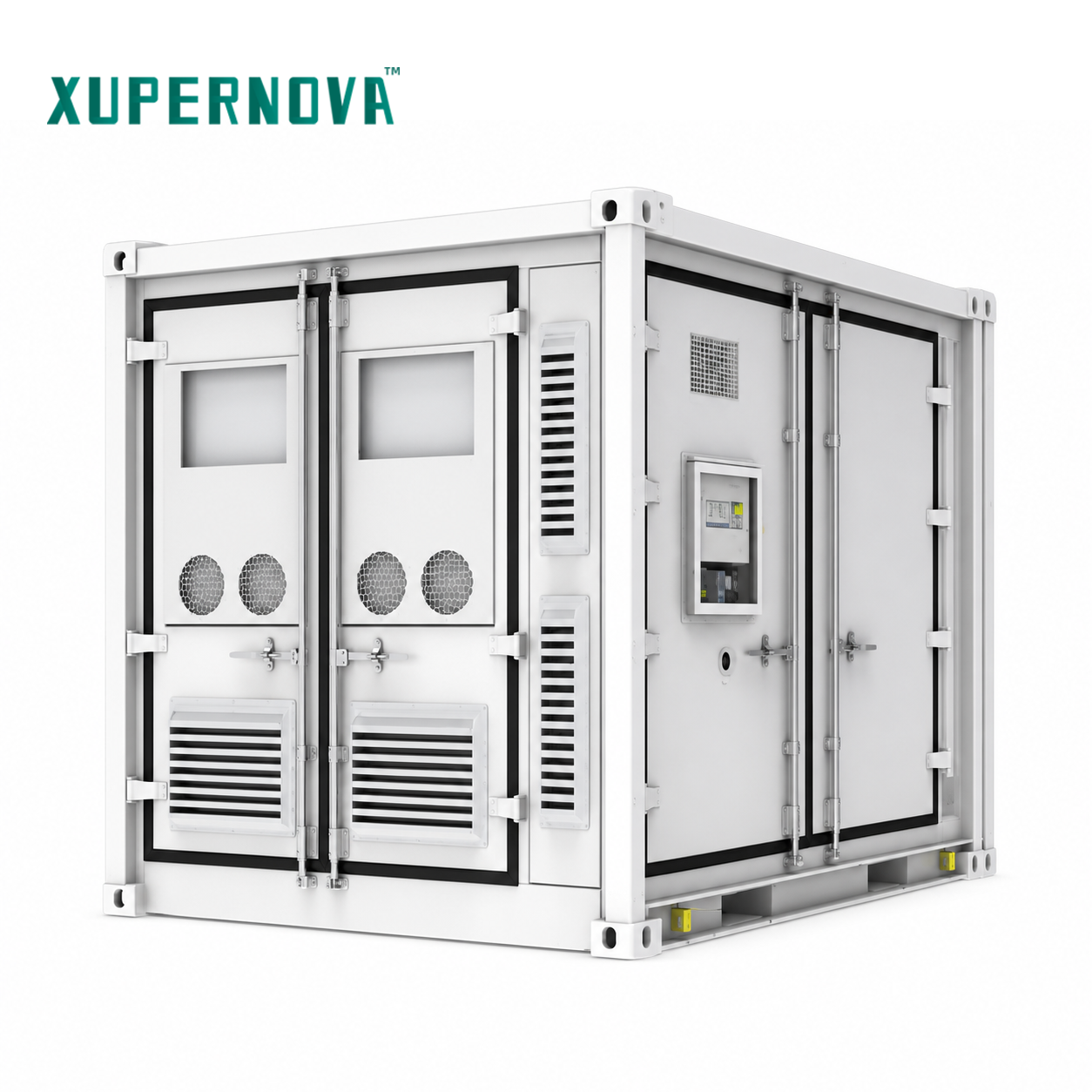
Containerized BESS platforms fix the enclosure, thermal, power-conversion and control layers, which is what allows cell chemistry to remain an open engineering variable in procurement.
A battery energy storage system (BESS) is a procurement decision before it is an engineering decision. Global new battery storage capacity additions reached 108 GW in 2025, and LFP chemistry accounted for approximately 90% of those deployments, according to the IEA's Global Energy Review 2026. In the same period, the global BESS market was valued at USD 50.81 billion by MarketsandMarkets, while U.S. utility-scale battery storage additions were projected at 19.6 GW by the U.S. Energy Information Administration.
That concentration is not a problem for every buyer. It becomes a problem when a project's site conditions, financing structure or delivery timeline do not match the mainstream chemistry assumption — and when a single-chemistry platform leaves no room to re-open the decision later.
This article takes the buyer's side of the table. It compares LFP, solid-state and sodium-ion options on the three criteria that most often determine whether a BESS project closes: bankability, warranty structure and supply-chain risk. It also sets out where each chemistry currently fits across commercial and industrial (C&I), utility-scale, solar-plus-storage and microgrid projects — and where the comparison stops being useful.
Why Chemistry Choice Becomes a Procurement Decision
BESS chemistry is usually presented as a technical question. In practice it is a contracting question, because chemistry determines three things a buyer must commit to before energization: which cell supply chain the project depends on for the life of the asset, which cell manufacturer's warranty the buyer can actually enforce, and whether the financing party accepts the technology risk.
Most integrated BESS platforms are engineered around a single cell chemistry. That is efficient, but it means the chemistry decision is effectively made when the platform is selected — often before the site's load profile, temperature profile and financing conditions are fully known. If a project assumption changes, whether that is a higher cycle requirement, a harsher ambient condition or a lender's technical review, a locked platform has no answer other than re-tendering.
A chemistry-flexible platform changes the order of decisions. The enclosure, thermal architecture, power conversion and control layers are fixed; the cell chemistry becomes an engineering variable that can be validated against the project instead of assumed in advance.
What a Chemistry-Flexible BESS Platform Actually Requires
Chemistry flexibility is not a marketing feature. Four engineering conditions have to hold at the same time.
- Common enclosure and thermal design. Cells with different thermal behaviour must be accommodated by the same cooling architecture. Xupernova platforms use either air cooling or liquid cooling depending on the model, are rated IP55, and operate from -30 °C to 55 °C. That window has to hold for whichever chemistry is installed.
- Common electrical interface. Xupernova BESS models support C-rates of 0.5P, 1P and 2P, from the 25–50 kW / 64.54 kWh XA-H0064-A1 cabinet to the 5.015 MWh XA-V5015-L1 container. A chemistry that cannot be dispatched across the same C-rate range is not a drop-in option, because it changes the dispatch strategy the project was financed around.
- Re-validated BMS and EMS behaviour. Battery management and energy management logic is tuned to cell voltage windows, temperature behaviour and degradation curves. A chemistry change requires re-parameterization and re-validation, not a cell swap.
- Re-opened compliance and type-testing. For grid-connected projects, a chemistry change can re-open grid-code evidence, fire-safety documentation and, in some markets, insurance review.
This is the practical meaning of the qualifier used in Xupernova's specification sheets: optional semi-solid-state, solid-state and sodium-ion battery technologies are available subject to project requirements, technical validation and availability. Those three conditions are the substance of the claim, not a formality.
LFP, Solid-State and Sodium-Ion Compared on Four Buyer Criteria
The table below compares the three chemistry paths on the criteria a buyer can actually contract on. Where a cell is marked as a general industry consideration rather than a platform specification, that distinction is deliberate.
| Buyer criterion | LFP (baseline) | Solid-state / semi-solid-state (optional) | Sodium-ion (optional) |
|---|---|---|---|
| Deployed base in stationary storage | Mainstream: approximately 90% of 2025 global battery storage deployments (IEA). | Smaller deployed base in stationary storage; offered as an optional configuration. | Smaller deployed base in stationary storage; offered as an optional configuration. |
| Status on the Xupernova platform | Baseline chemistry, using Grade A LFP cells from BloombergNEF Tier 1 manufacturers. | Optional, subject to project requirements, technical validation and availability. | Optional, subject to project requirements, technical validation and availability. |
| Bankability | Cells drawn from current BNEF Tier 1 energy-storage manufacturers; qualified supply base of at least 8 Tier 1 vendors. | Financing parties generally apply additional technical review where a chemistry has a shorter deployed track record. | Financing parties generally apply additional technical review where a chemistry has a shorter deployed track record. |
| Cell warranty | Minimum 7-year cell warranty at platform level. | Coverage terms to be confirmed per project and per supplier; not automatically identical to the baseline term. | Coverage terms to be confirmed per project and per supplier; not automatically identical to the baseline term. |
| Supply-chain depth | Greater than 20 GWh qualified annual cell capacity; multi-vendor base stated to reduce supply risk by 55%. | Dependent on validated supplier qualification and availability at the time of order. | Dependent on validated supplier qualification and availability at the time of order. |
| Primary application fit | C&I peak shaving, utility-scale, solar-plus-storage, microgrids and backup power. | Projects with specific technical or safety-driven requirements, after validation. | Projects where raw-material availability and site conditions align, after validation. |
| Main buyer caution | Chemistry assumptions may be re-examined if site conditions differ from the reference case. | Not a catalogue item: lead time, price and enclosure variant may differ from the baseline. | Not a catalogue item: treat performance claims as project-specific until validated. |
Sources: IEA Global Energy Review 2026 for chemistry deployment share; Xupernova product specifications and platform supply-chain data for platform-level attributes. Industry considerations on financing review are general market practice, not a platform specification.
Bankability: What BNEF Tier 1 Sourcing Changes for Financed Projects
For internationally financed projects, the first question a lender's technical advisor asks is not which chemistry performs best. It is who makes the cells and whether that manufacturer sits on a recognised list.
BloombergNEF's Tier 1 Energy Storage list is one of the reference points used in project finance and vendor qualification. It is a supplier-qualification signal rather than a performance rating, and it is time-bound: a manufacturer's position reflects an assessment period and can change.
Xupernova's BESS platforms are built on Grade A LFP lithium-ion cells from current BloombergNEF Tier 1 energy-storage cell manufacturers, and the qualified supplier base behind the platform includes at least 8 qualified Tier 1 battery vendors with combined qualified cell capacity greater than 20 GWh of annual supply.
For a buyer, the practical consequence is this: chemistry selection does not move the project outside the financier's accepted supplier universe. A buyer can evaluate LFP, solid-state and sodium-ion configurations without re-opening the supply-chain qualification discussion from the beginning, because the cells are drawn from manufacturers already inside that universe.
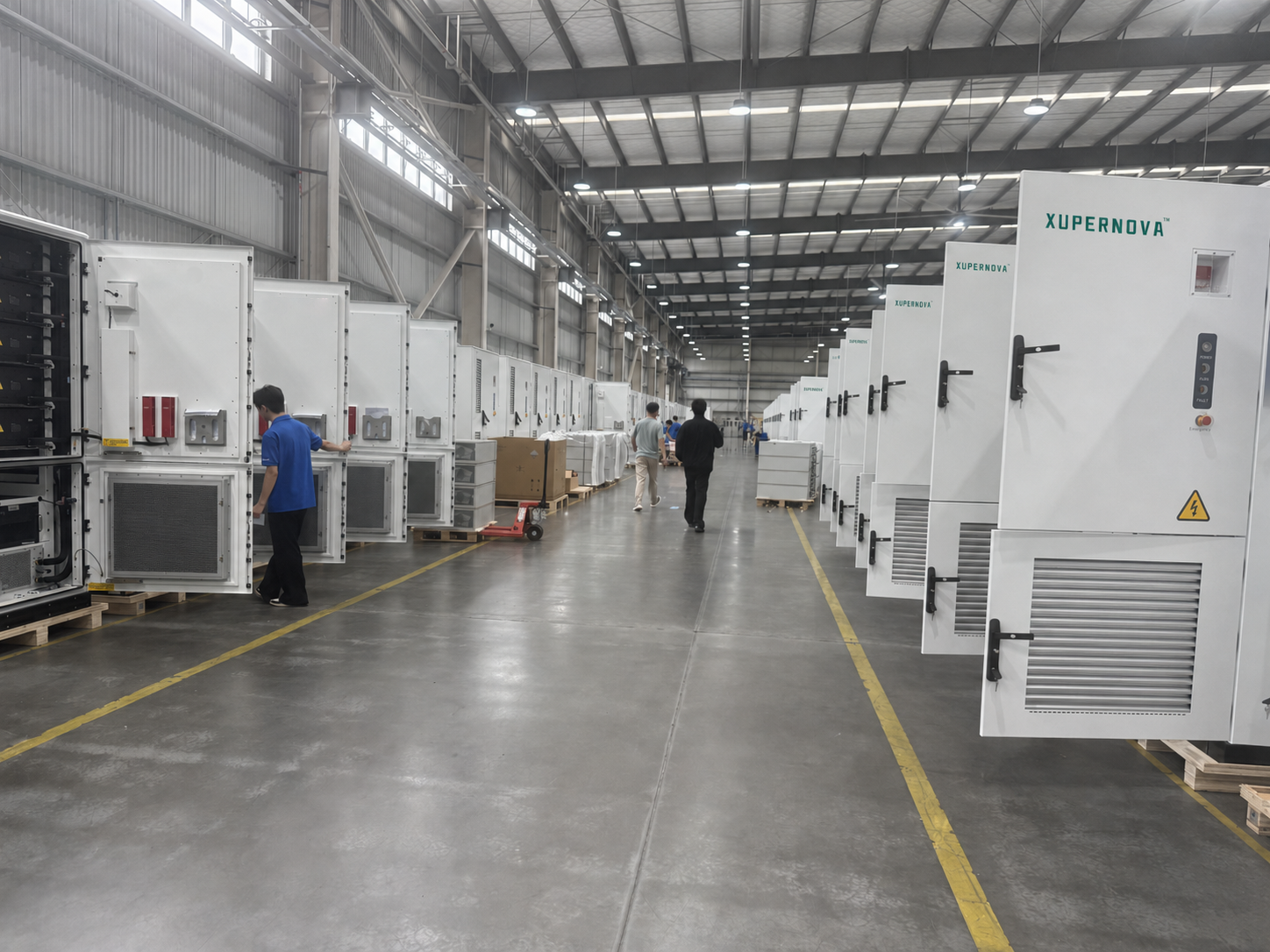
Integration capacity and qualified cell supply capacity are separate assets. Xupernova operates a 700,000 m² manufacturing facility with annual production capacity above 5 GWh.
That distinction matters most where two conditions hold at once: the project is internationally financed, and the site conditions differ enough from the mainstream reference case that a single-chemistry assumption becomes uncomfortable.
Warranty and Supply-Chain Risk: The Two Numbers Buyers Should Test
Two platform-level figures are worth extracting from any BESS proposal and testing against the contract.
Minimum 7-year cell warranty
Xupernova's platform carries a minimum 7-year cell warranty. Buyers should treat this as a floor. The number that determines project economics is not the term in years; it is the combination of term, throughput or cycle limit, temperature derating and the conditions that void coverage. A 7-year term with a low throughput cap is a different asset from a 7-year term with a high one, and both can appear under the same headline figure.
Supply risk reduced by 55%
The platform's qualified multi-vendor cell supply base is stated as reducing supply risk by 55% relative to a single-source arrangement. The mechanism matters more than the number. With at least 8 qualified Tier 1 vendors and greater than 20 GWh of annual qualified cell capacity available, a buyer is not dependent on one cell factory's output schedule. Each additional qualified vendor is a second source that has already cleared the qualification gate, which is the expensive part of switching suppliers under delivery pressure.
Matching Chemistry to Application: C&I, Utility-Scale, Solar-Plus-Storage, Microgrids
Chemistry suitability is application-dependent. The platform's application coverage shows where each configuration is useful.
Commercial and industrial energy storage
The XA-C0261-L1 is a liquid-cooled all-in-one ESS cabinet rated at 125 kW / 261.25 kWh, and the XA-H0261-L1 is a liquid-cooled solar-plus-storage cabinet at 261 kWh. Both are intended for C&I applications, where the load profile is dominated by time-of-use tariffs, demand charges and peak shaving. LFP is the baseline in these projects; alternative chemistries become relevant where site temperature or a specific resilience requirement makes the standard assumption uncomfortable.
Utility-scale and grid-side storage
The XA-V5015-L1 is a 20-ft liquid-cooled battery container rated at 5.015 MWh, and the XA-X2170-L2 is a 20-ft all-in-one ESS container rated at 1125 kW / 2170.3 kWh. Both are intended for power generation, grid energy storage and grid-side applications. At this scale the chemistry decision is a financing decision first: dispatch profile, augmentation schedule and revenue model are underwritten around a specific degradation curve, and chemistry changes are the most expensive to make late.
Solar-plus-storage
The XA-H0064-A1 air-cooled cabinet (25–50 kW / 64.54 kWh) serves small-scale C&I solar-plus-storage, while the XA-H0261-L1 (261 kWh) serves larger C&I and microgrid solar-plus-storage. Here the chemistry interacts with daily cycling patterns and ambient conditions rather than with high-power dispatch.
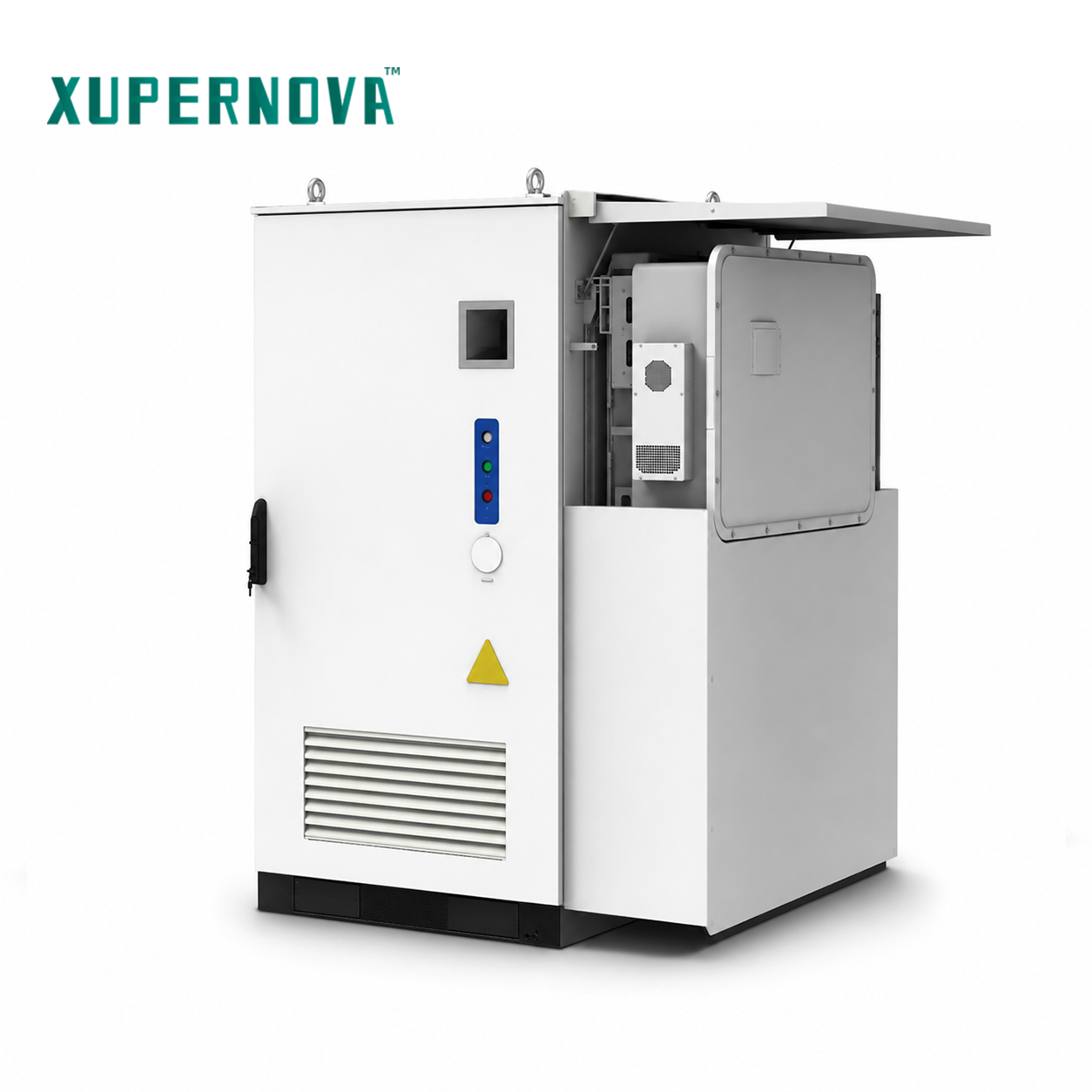
The 261 kWh liquid-cooled solar-plus-storage cabinet addresses C&I and microgrid solar-plus-storage, where daily cycling behaviour and ambient conditions shape chemistry suitability.
Microgrids, remote sites and backup power
The XA-X1044-L1, a 10-ft liquid-cooled all-in-one container rated at 500 kW / 1044 kWh, is intended for C&I storage, microgrids and backup power. Microgrid and remote industrial applications combine weak-grid or off-grid operation with large motor-starting loads and wide ambient swings. These are the conditions where chemistry selection carries the most weight, and where testing an alternative configuration before committing has the clearest justification.
What the Deployment Data Suggests About Chemistry Mix
Deployment data currently supports one clear conclusion and one equally clear limitation.
The conclusion: LFP is the mainstream chemistry for storage, accounting for roughly 90% of 2025 global deployments per the IEA. Any procurement framework treating LFP as the default is aligned with where the market, its manufacturing scale and its service infrastructure currently sit.
The limitation: deployment share is not a performance argument. It reflects cost structure, manufacturing scale and the accumulated bank of installed-performance evidence. It does not mean LFP is correct for every site, and it does not mean alternative chemistries are unproven in principle — only that their installed base in stationary storage is smaller, so the buyer carries more of the validation burden.
Market sizing data deserves the same treatment. The global BESS market was valued at USD 50.81 billion in 2025 by MarketsandMarkets, but published valuations for the same year differ substantially depending on scope — whether the estimate covers cells only, the battery equipment segment, or the full turnkey system including PCS, EMS and civil works. On the cost side, Ember reported all-in CAPEX for long-duration (4h+) utility-scale BESS at USD 125/kWh in late 2025 for markets outside China and the United States. Buyers benchmarked against market figures should confirm which scope a number covers before using it as a reference.
Limits, Boundaries, and Where This Comparison Stops
A comparison that only lists advantages is not usable for a procurement decision. Four boundaries apply.
- Alternative chemistries are not standard catalogue configurations. The semi-solid-state, solid-state and sodium-ion options are subject to project requirements, technical validation and availability. A buyer cannot assume they can be ordered on the same lead time, at the same price, or in the same enclosure variant as an LFP configuration. They are an option path, not a shelf item.
- Tier 1 qualification is a snapshot, not a guarantee. BloombergNEF Tier 1 status reflects an assessment period. It does not guarantee cell-level performance for a given batch and does not transfer obligations to a buyer's lender. Contractual quality assurance, incoming inspection and factory acceptance testing remain necessary.
- A 7-year cell warranty is a floor, not a uniform term. Coverage conditions, throughput limits and exclusions vary by cell supplier and by chemistry. A chemistry-flexible platform does not automatically deliver chemistry-equivalent warranty terms.
- Chemistry changes late in a project carry non-battery costs. Re-opening grid-connection approval, fire-safety documentation and type-test evidence costs time that may exceed the technical cost of the change. Where a project is already past grid-connection approval, chemistry flexibility has limited practical value for that specific project.
A Seven-Point BESS Chemistry Procurement Checklist
- Confirm the chemistry decision point. Is chemistry fixed at platform selection, or validated against the site once load and temperature data is available?
- Name the qualified cell vendors. Which BloombergNEF Tier 1 manufacturers are in the qualified base, and how many alternative sources are contractually available?
- Test the warranty structure, not the warranty length. Request term, throughput limit, temperature derating and the exclusion list for each chemistry option.
- Verify C-rate coverage. Confirm the chemistry can be dispatched across the C-rate range the revenue model assumes (0.5P, 1P, 2P across the Xupernova range).
- Verify the environmental window. Confirm the IP rating and the -30 °C to 55 °C operating range apply to the selected chemistry configuration, not only to the baseline.
- Check the compliance path. Ask what grid-code, fire-safety and type-test evidence must be re-submitted if the chemistry is changed.
- Separate platform capacity from supply capacity. Integrator assembly capacity (5 GWh+ annually for Xupernova) and the qualified cell supply base (greater than 20 GWh annually across qualified Tier 1 vendors) are different numbers answering different questions.
Future Outlook
Three developments look likely to shape chemistry decisions over the next procurement cycles.
Validation infrastructure for alternatives will accumulate. Solid-state and sodium-ion options become easier to evaluate as more projects move from demonstration to financed deployment, and as test evidence becomes available to third parties rather than only to cell manufacturers.
Warranty structure will matter more than chemistry headlines. As chemistry choice widens, the differentiator between competing proposals will be who is willing to place throughput, augmentation and availability commitments in the contract rather than in a specification sheet.
Qualification will remain the bottleneck. List-based supplier qualification moves slowly relative to laboratory progress. The practical value of a chemistry-flexible platform is therefore less about which chemistry wins and more about how quickly a validated alternative can be substituted without re-opening the entire procurement.
Xupernova's position in this landscape is as an integrator with in-house production, an R&D team of 150+ engineers, and an export footprint reaching Europe, North America, South America, the Middle East and Asia, where exports account for 90% of sales. That footprint means the platform is routinely evaluated against non-domestic financing and compliance expectations — the point at which chemistry flexibility and Tier 1 cell sourcing are tested first.
FAQ
What does “chemistry-flexible” mean for a battery energy storage system?
It means the platform's enclosure, thermal management, power conversion and control layers are designed to accommodate more than one cell chemistry. Xupernova BESS platforms use Grade A LFP lithium-ion cells as the baseline and offer optional semi-solid-state, solid-state and sodium-ion technologies subject to project requirements, technical validation and availability. Flexibility is a design property; it is not a guarantee that any chemistry can be installed in any configuration.
Why does BloombergNEF Tier 1 status matter for internationally financed BESS projects?
Tier 1 status is a supplier-qualification signal used in vendor and finance review. Where cells come from manufacturers on a recognised Tier 1 list, the supply chain is already inside a qualification framework that lenders and technical advisors commonly reference. Xupernova sources cells from current BloombergNEF Tier 1 energy-storage manufacturers, and its qualified supplier base includes at least 8 qualified Tier 1 battery vendors. Tier 1 status is time-bound and does not replace project-level performance testing.
How long should a BESS cell warranty be?
Xupernova's platform carries a minimum 7-year cell warranty. Term length alone is not a sufficient comparison basis. Buyers should also examine throughput or cycle limits, temperature derating conditions, augmentation requirements and exclusions, because two proposals with the same 7-year term can carry materially different obligations.
What is the difference between LFP, solid-state and sodium-ion in storage applications?
LFP is the mainstream storage chemistry, accounting for approximately 90% of global battery storage deployments in 2025 according to the IEA, and has the largest installed-performance base. Solid-state and sodium-ion configurations are offered as optional technologies on Xupernova platforms, subject to project requirements, technical validation and availability, and have a smaller deployed base in stationary storage. The practical difference for buyers is the amount of validation evidence they must generate or obtain before financing.
What supply-chain evidence should a buyer request before selecting a BESS platform?
Request the number of qualified Tier 1 cell vendors behind the platform, the qualified annual cell capacity available, and confirmation of whether alternative vendors are named in the supply agreement. Xupernova's platform is supported by at least 8 qualified Tier 1 battery vendors with qualified cell capacity greater than 20 GWh of annual supply, and a qualified multi-vendor base stated to reduce supply risk by 55% compared with a single-source arrangement.
Which applications are most sensitive to chemistry choice?
Applications combining wide ambient temperature variation, weak-grid or off-grid operation and high-power load events — such as remote microgrids and off-grid industrial sites — are the most sensitive, because the chemistry interacts directly with site conditions. C&I peak-shaving projects, represented by models such as the 125 kW / 261.25 kWh XA-C0261-L1, are less sensitive because the operating profile is more predictable. Utility-scale projects are least able to change chemistry late, because dispatch and revenue models are underwritten around a specific degradation curve.
Reference document: Xupernova Energy Storage Product Catalog (PDF) — full model, capacity and configuration data for the platforms discussed above.