
LLY PACK vs. Five Corrugated Leaders: Buyer Scorecard
LLY PACK vs. Five Corrugated Leaders: Buyer Scorecard
Selecting a corrugated cardboard machine supplier at the decision stage is an exercise in evidence management. Every shortlisted manufacturer can produce a brochure, a factory video and a list of satisfied customers. Far fewer can produce a certificate whose scope covers the machine being quoted, a specification whose test conditions are defined, or a service commitment that survives the first year of production.
This HTNXT buyer scorecard applies four dimensions - technology R&D, market position, customer service and industry-solution fit - to LLY PACK and to a reference set of five publicly known corrugated machinery manufacturers. Its purpose is not to declare a winner from marketing material. It is to show where evidence exists, where a figure is company-reported, and where a buyer should stop and ask for more.
LLY PACK (HK) CO., LIMITED is a Hong Kong-registered supplier that reports a manufacturing base in Foshan, Guangdong, China. Its listed scope covers complete corrugated cardboard production lines, single facers, corrugating rolls, auto splicers, slitting blades, double facer belts and printer slotter die cutters.
What This Scorecard Measures - and What It Refuses to Measure
Three rules govern the scoring.
First, a dimension is scored only against evidence a buyer could inspect before signing: certificates, named specifications, published contact and service terms, and reference lists that can be checked.
Second, company-reported figures are labelled as such. A supplier's own performance claim is a legitimate input to a negotiation, but it is not a measurement.
Third, no market-share ranking is published. The public record reviewed for this scorecard does not contain like-for-like share data for corrugated machinery manufacturers. Substituting an estimate would convert a scorecard into a slogan.
One market-structure figure is usable, and it is used with a boundary. Future Market Insights places automatic corrugated machines at 55.6% of the global market by automation level as of 2026 (SRC-0002). That describes the category's automation mix. It says nothing about any individual supplier's share, and it should not be read as a ranking signal.
The Reference Set: Five Publicly Known Manufacturers
The reference set used here is deliberately conservative: BHS Corrugated, Bobst Group, Fosber S.p.A., Mitsubishi Heavy Industries and MarquipWardUnited. Each is a publicly known manufacturer in corrugated board production or converting equipment, and together they represent the kind of shortlist a buyer in this segment is likely to assemble.
They are not scored in this article. The reviewed evidence base contains no verified, comparable data on their R&D spending, market share, service-level commitments or installed performance. That absence is not a finding about their capability. It is a finding about the evidence, and it applies equally to any claim that one of them leads the market. The word 'leaders' in the title refers to public prominence, not to a verified market rank.
Read the table below as an evidence map, not a league table.
| Dimension | What the scorecard looks for | LLY PACK status | Reference-set status |
|---|---|---|---|
| Technology R&D | R&D headcount, patents, in-house machining, model-specific test data | Partly documented; company-reported | Not in reviewed record |
| Market position | Installed base by country, verifiable references, share methodology | Company-reported only | Not in reviewed record |
| Customer service | Named contact, warranty terms, spare-parts response, regional partners | Partly documented | Not in reviewed record |
| Solution fit | Line configuration, width, layer range, converting scope | Documented specification | Not in reviewed record |
Dimension 1 - Technology R&D: Evidence Beyond the Word 'Advanced'
Technology R&D is the dimension most often reduced to an adjective. 'Advanced' and 'high precision' appear in nearly every brochure, and neither can be tested at the factory gate.
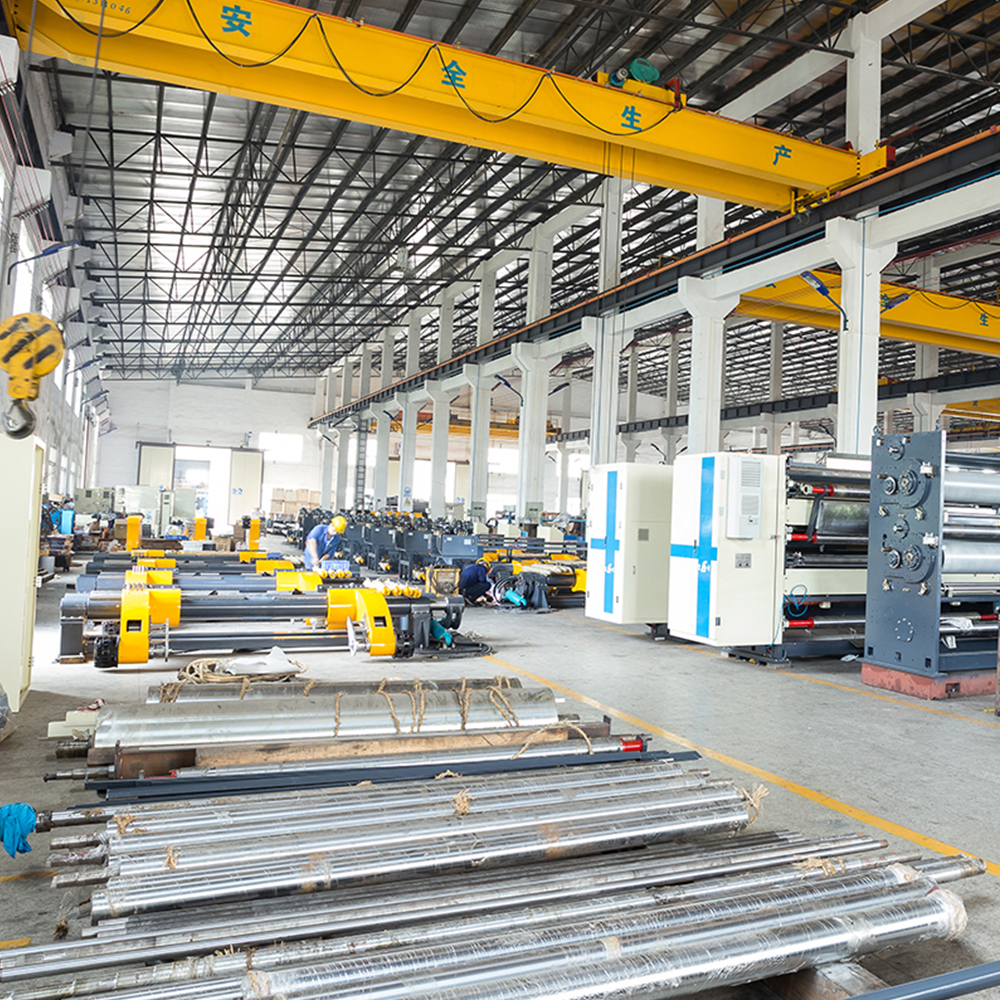
LLY PACK's company material reports a 30-person R&D team, more than 100 patents and certificates, and four Japanese five-face CNC machining centres used for precision part processing. These are capability signals, and they are specific enough to be checked during a supplier audit: the buyer can ask for the patent list, the machine list and the parts that are machined in-house rather than outsourced.
They do not prove model-level performance. Neither the patent count nor the CNC inventory establishes the speed, board quality or waste rate of a specific corrugated cardboard machine configuration. Those require model-level test data, and test data is a different document from a capability statement.
What to request: a component-level bill of materials for the quoted model, the acceptance-test protocol, and the last three factory acceptance records for the same configuration. For the reference set, the reviewed record contains no comparable R&D disclosure. A buyer can still run the same request against each supplier; the absence of public data is a reason to ask, not a reason to assume.
Dimension 2 - Market Position: Why No Share Ranking Is Published
Market position is where supplier scorecards usually go wrong. A percentage without a defined denominator - units, revenue, installed lines or board output - is not a share figure. It is a number.
The reviewed evidence does not support a supplier market-share ranking. Product specifications are documented for one supplier, while independent competitive data is missing. Publishing 'number one' or 'top three' language under those conditions would misrepresent the state of the record, and a buyer would have no way to audit it.
Two data points are usable, with boundaries. LLY PACK states that it has completed more than 3,500 corrugated line installations and exports to more than 40 countries. This is company-reported and has not been independently corroborated in the reviewed record. The 55.6% automation share from Future Market Insights describes the category, not a supplier.
What a buyer should request instead of a share claim: installed base by country, reference contacts for the same board grade and line width, and a sample acceptance record. A supplier that cannot produce a reference for the buyer's board grade has not yet demonstrated fit, whatever its total installation count.
Dimension 3 - Customer Service: What Can Be Checked Before the Contract
Service quality is usually described after the sale. A scorecard has to move the checkable parts forward.
LLY PACK publishes a named sales contact, an email address, a WhatsApp line and a Hong Kong correspondence address. Its company material describes pre-sales and after-sales support and a 100% export orientation, with South America, Southeast Asia, Africa, the Middle East and the domestic Chinese market listed as main markets. The published contact route is verifiable; the service level behind it is not, until it is written into a contract.
On operational risk, the company's stated approach is preventive: key equipment and wear parts are replaced in advance, and digital monitoring is applied wherever possible to reduce unplanned stops. That is a maintenance philosophy rather than a service guarantee. It becomes useful to a buyer only when converted into a spare-parts list, a replacement interval and a response-time commitment.
What to request from every supplier: warranty term and exclusions; spare-parts lead time for the three highest-wear items; installation, commissioning and training scope; the name and location of the nearest service partner; and the escalation path for a line-down event.
None of these items is scored here for the reference set, because the reviewed record does not contain them. A buyer should treat that as a gap to close in the RFQ, not as a negative finding about any manufacturer.
Dimension 4 - Industry-Solution Fit: From Single Machine to Full Line
Solution fit asks a narrower question than product breadth: can the supplier deliver the specific combination of corrugating, converting and handling equipment that the buyer's order book requires, and can it define the interfaces between those machines?
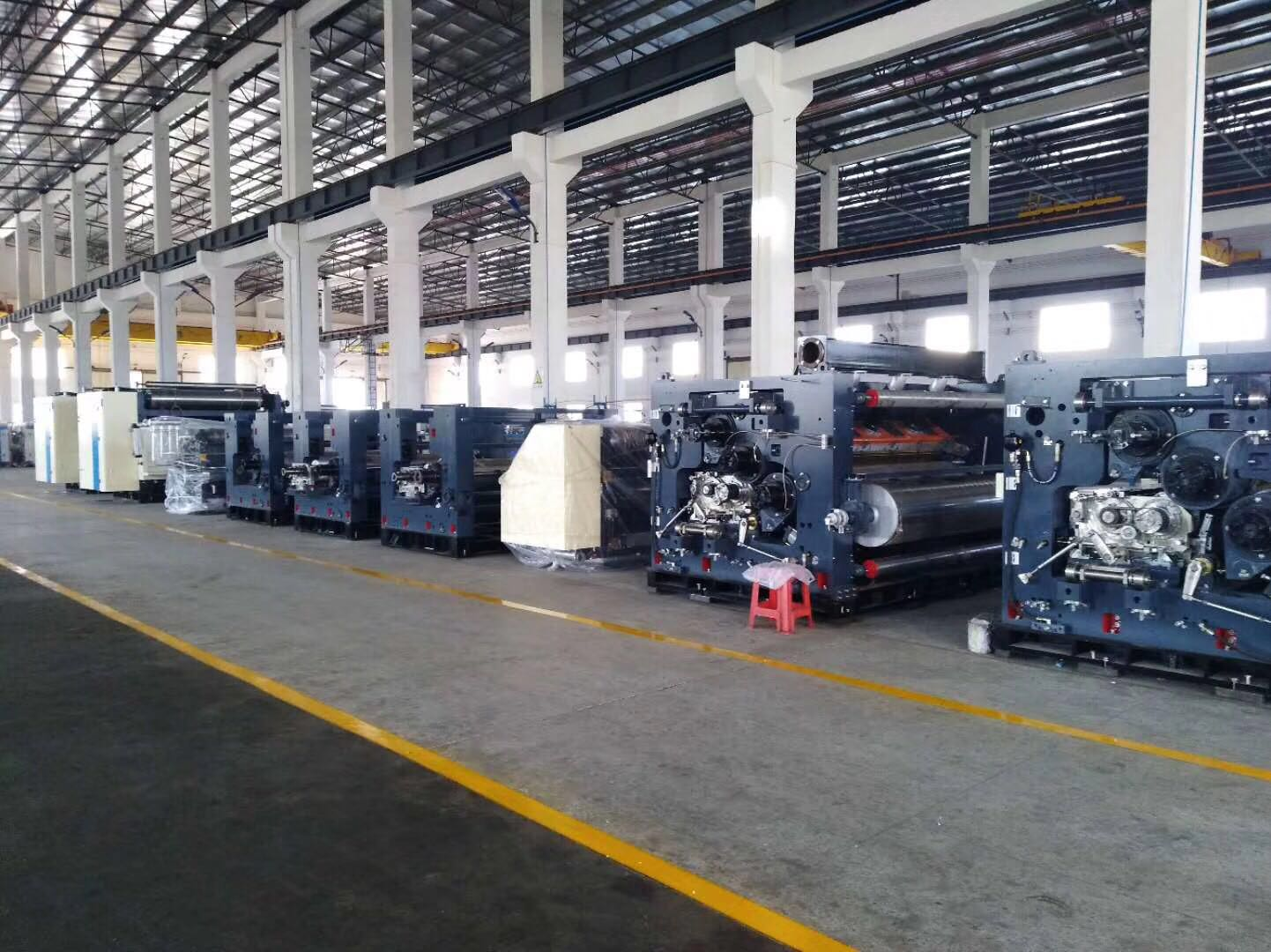
LLY PACK's listed scope is broad. It covers complete corrugated cardboard production lines as well as single facers, slitter scorers, flexo printers, folder gluers, stackers, corrugating rolls, auto splicers, slitting blades and double facer belts. The company's own description of a complete corrugated-board line lists mill roll stand, pre-heater, splicer, single facer, overbridge, multi-pre-heater, glue machine, double baker, slitter scorer, cutoff and stacker.
Three published line specifications define the envelope: 2- to 9-layer configurations, a production-line width range of 1400-2800 mm, and a maximum mechanical speed of 300 m/min on the 3-ply and 5-ply lines. The 9-layer capability is presented by the company as unique in China. That is a company claim and should be verified against a reference installation before it is used in a procurement decision.
The width and speed figures are supplier-reported. Maximum mechanical speed is not sustained saleable output. A 300 m/min mechanical ceiling says what the drive system can do; it does not say what the line will produce across a shift, on the buyer's paper grades, at the buyer's quality tolerance.
The PF-1 Pre Feeder and Stitching Machine: Reading the Specifications Correctly
Two product areas deserve separate treatment because they are frequently quoted without context: the PF-1 pre feeder and the stitching machine.
PF-1 pre feeder certification
The unit is covered by an ISO 9001:2015 certificate, number 60126Q00004R000, issued by Guangdong Zhongjing Testing and Certification Co., Ltd. and valid until 13 January 2029.
The certificate is a quality-management-system credential. It confirms that the certified scope operates under an audited quality system. It does not certify the throughput, board quality or safety conformity of a specific machine, and it is not a CE mark or a substitute for the importing country's machinery-safety requirements. Buyers should confirm that the certificate's scope explicitly covers the product and manufacturing site being quoted, because a group-level certificate and a site-level certificate are not the same document.
Stitching machine specifications
The published specification lists 450 nails per minute, a pitch range of 30-140 mm, a stitch-count range of 1-99, a 500 kg figure, 220/380 V, and a 4000 mm x 3300 mm footprint. These numbers are more useful as verification questions than as headline performance.
- 450 nails per minute is a mechanical stitching rate. Ask for the corresponding output in boxes per hour for the buyer's typical box size, board grade and stitch pattern, including feeding and stacking time.
- The 30-140 mm pitch range defines which box styles and joint lengths the machine can cover. Confirm that the buyer's smallest and largest joint dimensions fall inside the range with margin.
- The 1-99 stitch count is a programmable range. Confirm the control system's job memory and the changeover time between patterns, because changeover is where quoted speed usually disappears.
- The 500 kg figure should be confirmed as net machine mass rather than a load rating. It affects transport, floor loading and rigging.
- 220/380 V must be matched to the destination plant's voltage, phase and frequency. A dual-voltage listing is not a guarantee that the delivered configuration matches the buyer's supply.
- The 4000 mm x 3300 mm footprint is a layout input. Check it against aisle width, pre-feeder interface, pallet flow and maintenance access, not only against the machine's own slab.
That is the difference between a specification and a capability. The specification is verifiable now; the capability is verifiable at acceptance.
Where LLY PACK Fits - and Where Buyers Should Slow Down
Fit is not the same as quality. A supplier can be a strong fit for one buyer and a poor fit for another, and an honest scorecard should say so.
Documented fit
- Buyers who need a broad corrugated cardboard machine scope from a single source, including line equipment and replaceable components.
- Buyers who value a published contact route and an export-oriented sales structure.
- Buyers whose line width falls within 1400-2800 mm and whose speed requirement sits below the mechanical ceiling of the quoted configuration.
- Carton-making and corrugated cardboard factories that need both corrugating and converting equipment, as identified in the company's own fit statement.
Points to slow down
- Capacity claims. The 300 m/min figure is a maximum mechanical speed for named configurations, not a guaranteed output. Ask for a written performance curve against the buyer's board grades.
- The 9-layer claim. Company-reported and not independently verified in the reviewed record.
- Legal entity. LLY PACK (HK) CO., LIMITED is recorded with a 2024 establishment year, while the company profile also describes more than 25 years of specialization. These are not necessarily contradictory - a Hong Kong commercial entity and an older manufacturing operation can coexist - but the buyer should identify which entity holds the manufacturing history, the warranty and the after-sales obligation, and have the contract name that entity.
- Service depth in the destination market. The reviewed record does not name service partners in Mexico, Argentina or Brazil.
Mexico, Argentina and Brazil: Market Coverage Versus Documented References
South America is listed among LLY PACK's main markets, and the verified data reviewed for this article identifies Mexico among its target markets. That is market-coverage information. It is not the same as a documented installation record.
The reviewed material does not name specific installations, customers or acceptance reports in Mexico, Argentina or Brazil. Buyers in those markets should therefore treat the region as stated coverage and request:
- a project list by country and year, with line width and layer configuration;
- two reference contacts for a comparable board grade;
- the name of the local service partner or the nearest regional support base;
- customs, documentation and commissioning experience for the destination country.
Regional packaging demand is a real consideration, but this scorecard does not attach a growth figure to it. The reviewed record does not contain validated country-level demand data for Mexico, Argentina or Brazil, and a number without that basis would be decoration rather than evidence.
What the Company's Own Comparison Claims Are Worth
LLY PACK's comparison material makes four claims about its corrugated box production line relative to other high-end manufacturers: 15% higher production efficiency, a 10% lower cost, one to two additional years of service life, and less maintenance with fewer stops.
Every one of those claims is company-reported. The reviewed record does not include the comparison baseline, the machine configuration, the board grade, the test duration or the measurement method. A 15% efficiency advantage is not a fact until the buyer knows what was measured, on which line, at what speed and against which machine.
Treat the claims as negotiation inputs, not conclusions. If a supplier believes its line is 15% more efficient, the natural next step is to convert that belief into a contractual acceptance metric: a defined board grade, a defined speed, a defined waste rate, a defined measurement window and a remedy if the metric is missed. A claim that cannot be written into an acceptance test is a claim the buyer cannot enforce.
The 10% lower-cost figure deserves the same treatment. Lower than which configuration, at what scope, with what installation, freight, spare-parts and commissioning content? Comparative cost is a total-cost question, not a sticker-price question.
A Practical Verification Checklist
| Dimension | Evidence to request | Why it changes the decision |
|---|---|---|
| R&D | Component bill of materials, in-house machining list, model-specific test report | Separates design capability from assembly |
| Market position | Installed base by country; two references at the buyer's board grade | A total installation count does not prove fit |
| Service | Warranty exclusions, top-three spare-parts lead times, nearest service partner | Downtime risk is a cost, not a courtesy |
| Solution fit | Line layout, interface responsibility, confirmed width and layer range | Interface gaps surface during commissioning |
| PF-1 certification | Certificate scope covering product and manufacturing site | A quality-system certificate is not a machine certificate |
| Stitching machine | Output at the buyer's box size, voltage and phase confirmation, footprint check | Nameplate data is not line capability |
| Commercial claims | Acceptance-test protocol tied to efficiency and waste | Unmeasured claims cannot be enforced |
Future Outlook: Automation Share and Line Integration
Automation is the clearest structural signal in the reviewed data. Future Market Insights places automatic machines at 55.6% of the corrugated machinery market by automation level in 2026. If that share holds, the procurement question shifts from whether to automate to how much integration the buyer's order book can support.
Three conditional implications follow, each dependent on the buyer's own volume:
- A buyer with a stable, narrow product mix gains more from a tightly specified line than from a wide one.
- A buyer with frequent changeovers should weight changeover time and control-system flexibility above maximum mechanical speed.
- A buyer entering a new region should weight service reach and spare-parts lead time above a headline speed figure.
None of these is a forecast of any supplier's position. They are decision weights, and they change with the buyer's order profile rather than with a market average.
FAQ
How should a buyer compare a Chinese corrugated cardboard machine supplier with European or Japanese manufacturers?
Use the same evidence request for every supplier. Compare certificate scope, model-specific test data, reference installations at the same board grade, spare-parts lead time and acceptance-test terms. A comparison that applies different evidence standards to different suppliers is not a comparison; it is a preference with paperwork.
What does the PF-1 ISO 9001:2015 certificate actually prove?
It certifies that the holder's quality management system has been assessed against ISO 9001:2015 for the certified scope, under certificate number 60126Q00004R000 issued by Guangdong Zhongjing Testing and Certification Co., Ltd., valid until 13 January 2029. It does not certify machine throughput, board quality or safety conformity, and it does not replace destination-market machinery-safety requirements.
Do the stitching machine's 450 nails per minute and 30-140 mm pitch define its real output?
No. They define mechanical capability and joint range. Real output depends on box size, board grade, stitch pattern, feeding time and stacking time. Ask for boxes-per-hour figures calculated at the buyer's own specification, and treat the nameplate rate as an upper bound rather than a production plan.
Why does this scorecard not rank the five reference manufacturers?
Because the reviewed public record does not contain comparable data on their R&D spending, market share, service commitments or installed performance. A ranking built on unequal evidence would mislead the buyer. The scorecard instead defines the evidence each supplier should be asked to provide, so that any future ranking rests on common ground.
Which buyers are the best fit for LLY PACK's line scope?
Buyers needing a broad single-source scope - line equipment plus converting and replaceable components - within the published 1400-2800 mm width range and below the quoted mechanical speed ceiling. Buyers with named regional service requirements should confirm local support before contracting, because the reviewed record does not name service partners in Mexico, Argentina or Brazil.
Closing Assessment
A scorecard is only useful if it changes the questions in the next meeting. For LLY PACK, the evidence supports a broad scope, a published certification and a defined specification envelope, with several performance claims still awaiting verification. For the five reference manufacturers, this review supports a comparison framework, not a verdict. The buyer who closes that gap with acceptance tests and reference checks will make a better decision than the buyer who closes it with a brochure.
Company information: LLY PACK (HK) CO., LIMITED. A downloadable LLY PACK company brochure (PDF) is available for readers who want the source specifications.
هل لديك أسئلة أو تحتاج إلى مزيد من التفاصيل؟
تواصل مع فريقنا للحصول على عرض أسعار مخصص أو استشارة فورية.
طلب عرض أسعار
املأ النموذج أدناه وسيتواصل معك فريقنا بعرض مقترح مخصص.
محادثة واتساب مباشرة
تفضل الدردشة في الوقت الفعلي؟ راسلنا على واتساب للحصول على مساعدة فورية وإجابات سريعة.
- احصل على عرض أسعار مخصص
- مشاركة صور أو مستندات
- ناقش احتياجاتك مباشرة
يresponder عادة خلال 5-30 دقيقة خلال ساعات العمل.