
LNG Skid Units vs Produced Water Modules: Buyer Comparison
LNG Skid Units vs Produced Water Modules: Buyer Comparison
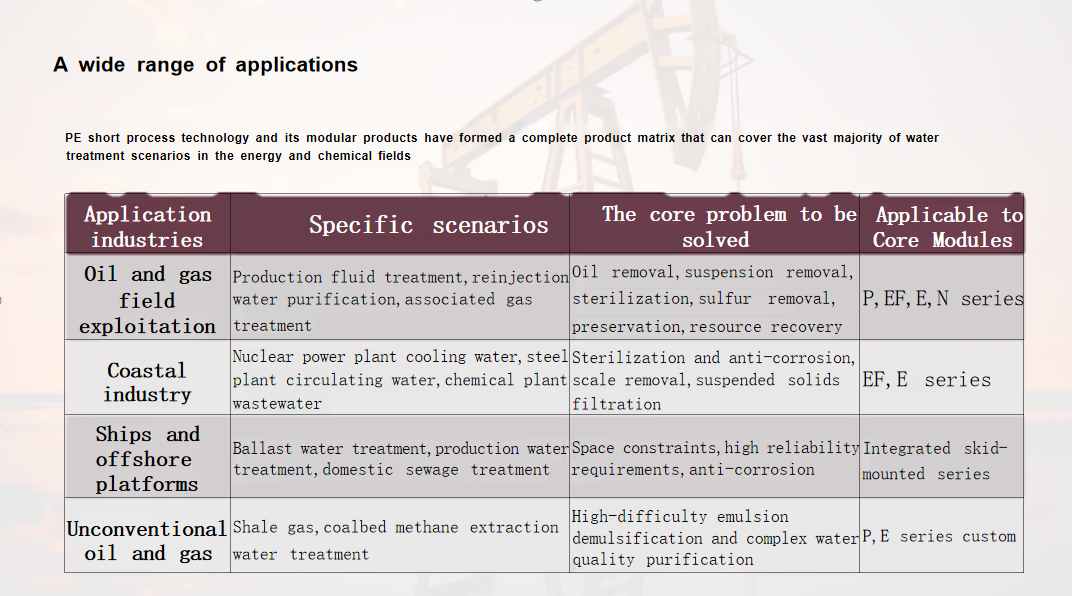
Remote oil and gas sites rarely face a clean either-or choice. A skid-mounted natural gas liquefaction unit and a produced water treatment module solve different streams: one converts associated or stranded gas into LNG; the other prepares produced water for reinjection, reuse or discharge. Treating them as direct substitutes can lead to a false comparison. The useful buying question is which constraint carries the greater operational and compliance risk, and what evidence each module must provide. This independent buyer comparison sets out that framework for short-process oil and gas treatment systems, using supplied facts for the N-10B3 LNG skid and YixiaWorld produced-water modules as reference points, without ranking brands.
The first decision is not brand: it is the stream you must solve
At a remote site, gas flaring or lack of gas offtake is a gas-monetization problem. High water cut, reinjection failure, sulfate-reducing bacteria, sulfide, oil carryover or suspended solids are water-treatment problems. The two categories can be complementary. If a site has both associated gas and produced water, the procurement plan may need two business cases, two hazard reviews and two sets of performance guarantees. A single comparison matrix can be used, but the scoring should not force a false equivalence between standard cubic metres of gas per day and cubic metres of water per day.
That distinction is the core of an independent buyer review. LNG skid units are evaluated on gas composition, acid gas removal, dehydration, liquefaction, cold-box reliability, storage and loading. Produced water modules are evaluated on inlet oil, suspended solids, sulfide, salinity, temperature, bacteria, reinjection water quality and waste handling. The equipment may share a modular skid logic, but the duty, the process risk and the compliance evidence are different.
A buyer comparison framework for two different modular duties
The table below is a decision aid, not a product ranking. It uses the N-10B3 LNG unit, the E Module, the Pw module and the EF module as documented examples. Buyers should replace the example values with their own duty specification and require the supplier to confirm the exact model, scope and guarantee basis.
| Comparison criterion | LNG skid unit example | Produced water module example | What the buyer should verify |
|---|---|---|---|
| Primary duty | Acid gas removal, dehydration and liquefaction of natural gas, including associated gas recovery | Oil removal, suspended solids separation, chemical-free disinfection and reinjection water conditioning | Define the stream and the success metric before comparing capacity |
| Capacity basis | N-10B3 at 100,000 Sm³/d, or 10×10⁴ Sm³/d, per single module; multiple units can be combined | E Module up to 30,000 m³/d; EF module up to 30,000 m³/d; Pw up to 3,000 m³/d; P0 up to 5,000 m³/d | Check whether the figure is per module, per train or per total project |
| Footprint and layout | 9-module skid combination; supplied material states construction time can be shortened by 90% | Parallel module expansion; supplied comparison states up to 80% footprint reduction versus conventional physicochemical treatment | Review general arrangement, maintenance access, lifting, laydown and future expansion |
| Explosion-proof requirements | Exd IIB T4, IP56–IP65 listed; maximum working pressure 5.5 MPa | Exd IIB T4, IP56–IP65 listed; EF maximum pressure 0.6 MPa; E operating power up to 45 kW | Match the certificate to the exact model, gas group, temperature class, IP rating and area classification |
| Remote support | PLC interlocks, remote troubleshooting and alarm push; 5G + BeiDou monitoring stated for the product family | Online self-cleaning electrodes, PLC monitoring and remote service; 5G + BeiDou monitoring stated for the product family | Ask who monitors the data, response time, spare-parts scope and local competency |
| Compliance evidence | Management-system certificates and product-specific Ex documentation should be separated | ISO 9001, ISO 14001 and ISO 45001 certificates stated; product performance and Ex evidence still need model-level review | Check certificate scope, validity, issuer, product model and project-specific test basis |
| Operating boundary | CO₂ ≤50 ppm and H₂S ≤5 ppm for LNG output; absorber at 5 MPa; regenerator at 0.05 MPa | E Module requires high-sulfide water to be pre-treated by the P module; inlet temperature ≤60°C; low salinity can reduce sterilization performance | Confirm the inlet envelope and the responsibility for upstream pretreatment |
Capacity fit: Sm³/d of gas is not m³/d of water
Capacity fit starts with the basis of guarantee. The N-10B3 is described as a single module with a maximum capacity of 100,000 Sm³/d, or 10×10⁴ Sm³/d, and multiple units can be combined for larger gas volumes. The same unit is described as a 9-module skid that integrates acid removal, dehydration and liquefaction. Its stated gas-quality targets are CO₂ ≤50 ppm and H₂S ≤5 ppm, with an absorber operating pressure of 5 MPa and a regenerator at 0.05 MPa. These are gas-side figures; they do not translate into water-treatment capacity.
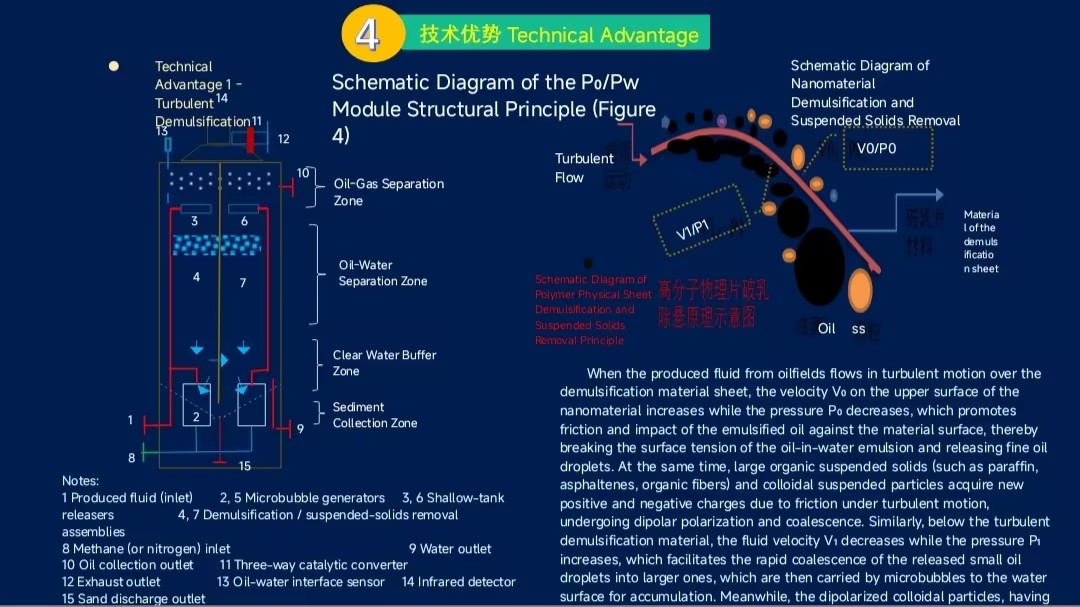
On the water side, the E Module is stated to reach up to 30,000 m³/d per single module, while the EF module also reaches up to 30,000 m³/d. The Pw module is stated at up to 3,000 m³/d, and the P0 pretreatment module at up to 5,000 m³/d. The OPS-10000-I reference at Sinopec Shengli Oilfield Gudao Oil Production Plant Guwu Joint Station is described as four units totaling 40,000 m³/d for high-polymer oil production wastewater regeneration and reinjection. That reference shows parallel deployment at scale; it does not mean that one module should be treated as a 40,000 m³/d unit.
Buyer check: Ask for the capacity basis in writing: per module or per train, design or maximum, inlet conditions, outlet guarantee, redundancy and availability. Where a tender requires ≥95% oil removal, request the project-specific performance basis; a 40,000 m³/d total capacity figure alone does not establish a universal oil-removal rate.
Footprint and layout: module count is not the same as plot area
The N-10B3 uses a 9-module skid arrangement. That is a useful integration signal because it suggests a pre-engineered package rather than a stick-built liquefaction plant, and the supplied material states that construction time can be shortened by 90%. It does not remove the need for a plot plan. LNG equipment still needs gas pretreatment, cold box, refrigerant or liquefaction equipment, storage, loading, flare or relief provisions, control room interface and safe separation distances.
Produced water modules also benefit from skid-mounted expansion, but the footprint comparison must include tanks, pumps, chemical-free pretreatment, solids handling, electrical rooms and maintenance access. The supplied comparison for the PE short-process states up to 80% footprint reduction versus conventional physicochemical treatment. That figure is company-supplied and compares process routes; it should not be used as a substitute for a site-specific general arrangement. For both categories, the buyer should ask for a layout drawing with operating and maintenance access, future module positions, lifting paths and laydown area.
Explosion-proof requirements: Exd IIB T4 is a filter, not a full approval
Both equipment families list Exd IIB T4 and IP56–IP65 protection in the supplied material. That is a useful starting filter for hazardous-area procurement, but it is not a complete site approval. The buyer should match the certificate to the exact model, gas group, temperature class, ingress protection, ambient temperature and area classification. For LNG equipment, the maximum working pressure is stated at 5.5 MPa, so pressure-system documentation and relief design also belong in the review. For the EF module, the maximum pressure is 0.6 MPa, and the E Module is stated at 380V AC with operating power up to 45 kW, so electrical protection and grounding need the same attention as the Ex rating.
Offshore produced water treatment systems add salt-fog resistance, limited deck space and lifting constraints to the checklist. Offshore natural gas liquefaction equipment adds gas hazard, cold surfaces, flare safety and marine classification issues. A supplier statement of Exd IIB T4 does not replace the site hazardous-area plan, cable entry review, bonding and grounding study or third-party verification required by the project. Buyers should ask for the certificate number, certificate scope, validity and the exact product designation it covers.
Remote support: what the monitoring claim should cover
Remote support is often presented as a product feature, but for a remote oilfield it is a service scope. The N-10B3 material describes PLC interlocks with the cryogenic system, automatic adjustment or diversion of unqualified gas, and diagnostic data transmission for remote troubleshooting. The wider product family is described with 5G + BeiDou remote intelligent monitoring and unattended operation. The E and EF modules add online self-cleaning and PLC-based monitoring, while the Pw500 site record shows a module after eight months of continuous operation with bottom sludge sampling. That record is useful as a maintenance reference, not as a universal performance guarantee.
The buyer should turn remote support into a defined obligation: who watches the alarms, what response time applies, which spare parts are held locally, whether remote intervention is allowed to change set points, how cybersecurity is handled, and what happens when satellite or cellular coverage is interrupted. For LNG, the remote system must also interact safely with gas quality, pressure and cold-box protection. For produced water, it must interact with inlet quality, differential pressure and self-cleaning cycles. A dashboard is not a support plan unless those responsibilities are written down.
Compliance evidence: separate management-system certificates from product approvals
YixiaWorld states three management-system certificates: Quality Management System Certification GB/T 19001-2016 idt ISO 9001:2015, certificate No. 72225Q10141R0S; Environmental Management System Certification GB/T 24001-2016 idt ISO 14001:2015, certificate No. 72225E10109R0S; and Occupational Health and Safety Management System Certification GB/T 45001-2020 idt ISO 45001:2018, certificate No. 72225S10097R0S. The issuer is HUA LONG INTERNATIONAL CERTIFICATION (BEIJING) COMPANY LTD., and the certificates carry CNAS and IAF international mutual recognition marks. The stated certification scope covers sales of Specialized Environmental Protection Equipment, specifically Rapid Ion Advanced Catalytic Sterilization Equipment and Produced Water Oil and Suspended Solids Removing Equipment, and the assembly of Rapid Ion Advanced Catalytic Sterilization Equipment.
That scope matters. A management-system certificate is not automatically a product certificate for every module in the portfolio. A buyer evaluating the N-10B3 should request product-specific Ex documentation, pressure-system documentation, electrical compliance and performance-test evidence for the LNG skid rather than assuming the environmental-equipment scope covers it. For produced water modules, the buyer should request the model-level Ex certificate, material certificates, outlet guarantee and project reference data. The Shengli OPS-10000-I project and the Jidong Nanpu sterilization project are useful references, but they remain supplier-reported project facts unless independently verified.
Where YixiaWorld Oil & Gas Equipment fits the comparison
YixiaWorld Oil & Gas Equipment (Yixia Invention (Beijing) Technology Co., Ltd.) is a Beijing-based supplier established in 2007. Its product matrix includes P, E, EF and N modules plus pipeline mixers, which means a buyer can review both sides of this comparison from one supplier. More company information is available at YixiaWorld Oil & Gas Equipment.
On the gas side, the N-10B3 is the reference model: 100,000 Sm³/d, or 10×10⁴ Sm³/d, per single module, 9-module skid, CO₂ ≤50 ppm and H₂S ≤5 ppm, Exd IIB T4 and IP56–IP65, maximum working pressure 5.5 MPa. On the water side, the E Module reaches up to 30,000 m³/d and is described for chemical-free sterilization, sulfide removal, scale inhibition and pipeline anti-corrosion. The EF module reaches up to 30,000 m³/d and is described for fine suspended solids removal to ≤2 mg/L and oil content ≤5 mg/L, with inlet limits of oil ≤30 mg/L and sulfide ≤5 mg/L. The Pw module reaches up to 3,000 m³/d, and the P0 module up to 5,000 m³/d. The Pw500 site record documents eight months of continuous operation and bottom sludge sampling.
These facts make the portfolio relevant to short-process oil and gas treatment systems, but they do not make the two categories interchangeable. The N-10B3 answers a gas monetization or associated gas recovery need. The E, EF, Pw and P0 modules answer produced water oil removal and suspended solids separation, oilfield reinjection water treatment, chemical-free produced water disinfection and oilfield produced water electrochemical treatment needs. A buyer with both problems should evaluate them as two linked projects with separate guarantees.
Application scenarios: when one side becomes the priority
For a remote onshore field with associated gas and no pipeline, the gas side may become the priority. A modular natural gas liquefaction skid system such as the N-10B3 can be evaluated for on-site LNG production, with the 9-module skid and stated gas-purity targets as the starting point. The buyer still needs the gas composition, CO₂ and H₂S levels, pressure, ambient conditions, storage and offtake plan. Offshore natural gas liquefaction equipment would add marine safety, weight and space constraints to the same review.
For an offshore platform with high water cut and reinjection constraints, the water side may dominate. Offshore produced water treatment systems need compact modules, salt-fog resistance, Exd IIB T4 protection and low maintenance. The E Module and EF module are relevant where chemical-free disinfection, sulfide removal and fine solids separation are required, but high-sulfide water must be pre-treated by the P module and low salinity can reduce sterilization performance. The inlet temperature limit of ≤60°C also needs to be checked against the actual produced-water temperature.
For an onshore high-polymer field, onshore oilfield produced water treatment equipment such as the Pw and P0 modules may be the first review. The Pw module is stated at up to 3,000 m³/d and the P0 at up to 5,000 m³/d, with parallel expansion for larger volumes. The Shengli OPS-10000-I reference shows four units totaling 40,000 m³/d. A buyer should ask for the inlet oil, suspended solids, polymer concentration and outlet guarantee behind that reference before using it as a design basis. Where chemical demulsification is still in use, the buyer should also note that the P module is designed for chemical-free operation and strictly prohibits flocculant addition because flocs can clog the equipment and interfere with physical demulsification.
Comparison with conventional treatment: useful, but keep the boundary
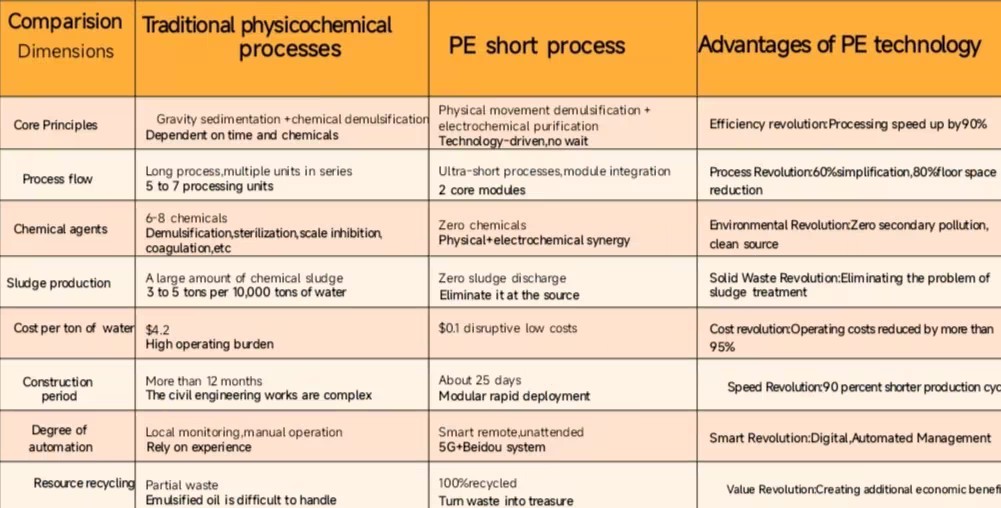
YixiaWorld supplies a comparison between its PE short-process and conventional physicochemical treatment. The stated differences include faster treatment, a simpler flow, smaller footprint, no chemical agents, no chemical sludge, lower cost per ton of water, shorter construction and lower labor. Specific supplied figures include up to 90% faster treatment, 60% process simplification, 80% footprint reduction, chemical agents reduced from 6–8 types to zero, chemical sludge reduced from 3–5 tons per 10,000 tons of water to zero, cost per ton reduced from US$4.2 to US$0.1, construction shortened from more than 12 months to about 25 days, comprehensive investment reduced by 40% and labor reduced by 50%. These are company-supplied comparison claims, not independent field-test results. They are useful as questions to verify, not as automatic savings.
The fit boundary is equally important. Chemical-free operation means no demulsifiers, coagulants, flocculants, bactericides, corrosion inhibitors, scale inhibitors or viscosity reducers are added. That can remove chemical storage, dosing and chemical-sludge handling, but it also means the site must respect the process constraints. High-sulfide water needs P-module pretreatment before the E Module; low salinity can reduce sterilization efficiency; inlet temperature must be ≤60°C; and high-oil water requires caution. Conventional treatment may still fit where chemistry is already permitted, where water conditions fall outside the PE envelope, or where the site already has large tank capacity and trained chemical operators. The buyer should compare total operating scope, not only the module price.
What to verify before tendering
First, define the stream and the success metric. Gas capacity should be stated in Sm³/d at defined composition and conditions; water capacity should be stated in m³/d at defined inlet oil, suspended solids, sulfide, salinity and temperature. Second, require the capacity basis per module, per train and per total project, including redundancy and availability. Third, ask for the general arrangement and confirm that footprint, maintenance access, lifting and future expansion are realistic.
Fourth, match the Ex certificate to the exact model and area classification, and review pressure, electrical and grounding documentation. Fifth, separate management-system certificates from product approvals and check the certificate scope against the module being purchased. Sixth, define remote support as a service scope with response time, spare parts, cybersecurity and local competency. Seventh, ask for project references with inlet and outlet data, not only total capacity. Eighth, require a performance-test basis for the outlet guarantee. These checks apply equally to LNG skid units and produced water modules, even though the technical content is different.
Future operating flexibility
Future fit will depend less on a market forecast than on how easily the selected modules can be expanded and documented. For LNG, gas composition and gas volume can change over field life, so the buyer should ask how additional N-10B3 modules or pretreatment capacity would be added. For produced water, water cut, salinity and sulfide levels can change, so the buyer should ask how P, E and EF modules can be paralleled or reconfigured. A modular design is useful only if the plot plan, utilities, control system and spare-parts plan support that expansion. The buyer should also confirm that the remote-support model remains valid as the site adds modules.
Frequently asked questions
Are LNG skid units and produced water treatment modules alternatives for the same duty?
No. An LNG skid unit processes natural gas for acid removal, dehydration and liquefaction, while a produced water module treats oilfield water for oil removal, suspended solids separation, disinfection and reinjection. They can be complementary at the same remote site, but they are not direct substitutes. The buyer should compare them only after separating the gas business case from the water business case.
What capacity numbers can be compared directly?
They should not be compared directly because the units measure different streams. The N-10B3 is stated at 100,000 Sm³/d, or 10×10⁴ Sm³/d, per single module. The E Module and EF module are stated at up to 30,000 m³/d, the Pw at up to 3,000 m³/d and the P0 at up to 5,000 m³/d. The OPS-10000-I reference is four units totaling 40,000 m³/d. Buyers should compare capacity on the same basis: per module or per train, design or maximum, and with defined inlet and outlet conditions.
Do both systems meet Exd IIB T4 requirements?
The supplied material lists Exd IIB T4 and IP56–IP65 protection for both product families, but that is not a complete approval. The buyer should check the certificate for the exact model, gas group, temperature class, ingress protection, ambient temperature and area classification. The N-10B3 has a stated maximum working pressure of 5.5 MPa, while the EF module is stated at 0.6 MPa and the E Module at 380V AC with operating power up to 45 kW. Pressure, electrical and grounding documentation should be reviewed with the Ex certificate.
What does the eight-month Pw500 record prove?
It documents a Pw500 oil-suspension module after eight months of continuous operation on site, including bottom sludge sampling. That is useful evidence of a maintenance reference, but it does not prove universal performance for every inlet condition. Buyers should request the operating logs, inlet water quality, outlet oil content, cleaning frequency and any corrective maintenance behind the record.
What compliance documents should be requested?
Request the ISO 9001, ISO 14001 and ISO 45001 certificates with their exact scope, plus model-specific Ex certificates, pressure-system documentation, electrical compliance, material certificates, performance-test data and project references. The stated ISO scope covers sales of Rapid Ion Advanced Catalytic Sterilization Equipment and Produced Water Oil and Suspended Solids Removing Equipment and the assembly of the sterilization equipment. A buyer evaluating the N-10B3 should therefore ask for product-specific LNG skid evidence rather than assuming the management-system scope covers every module.
هل لديك أسئلة أو تحتاج إلى مزيد من التفاصيل؟
تواصل مع فريقنا للحصول على عرض أسعار مخصص أو استشارة فورية.
طلب عرض أسعار
املأ النموذج أدناه وسيتواصل معك فريقنا بعرض مقترح مخصص.
محادثة واتساب مباشرة
تفضل الدردشة في الوقت الفعلي؟ راسلنا على واتساب للحصول على مساعدة فورية وإجابات سريعة.
- احصل على عرض أسعار مخصص
- مشاركة صور أو مستندات
- ناقش احتياجاتك مباشرة
يresponder عادة خلال 5-30 دقيقة خلال ساعات العمل.