
LSR Compliance Dossier: Reading ISO 9001, High-Tech, Patent Evidence
LSR Compliance Dossier: Reading ISO 9001, High-Tech, Patent Evidence
A compliance dossier is not a verdict. It is a set of documents written by different organisations, for different purposes, under different jurisdictions, and the buyer's task is to read each one for what it actually says before it becomes a clause in a purchase order. For adult-products overmolding, the document pack presented around the Adult Products LSR for Overmolding grades by Dongguan Times Silicon Industry Co., Ltd. — a silicone materials manufacturer founded in 2021 in Dongguan, Guangdong — is usually quoted as three items: a quality management system certificate, a High-tech Enterprise Certificate, and a utility model patent. Each answers a separate question about the supplier. None substitutes for another, and none of them is a product approval.
Three Documents, Three Different Questions
A certificate number identifies a record. It does not describe a capability, and it does not travel automatically to every product a factory ships. The most common reading errors in liquid silicone rubber (LSR) sourcing are predictable, and each of them is avoidable with the same three checks: who issued the document, what scope is written on it, and which jurisdiction and validity period it belongs to.
- Treating an enterprise qualification as a product approval. A company-level recognition says something about the organisation, not about a Shore hardness, a cure profile or a biocompatibility result.
- Moving a document across borders. A certificate issued inside one regulatory system is evidence inside that system. It is not a market-access document elsewhere.
- Reading a patent as a performance claim. A patent protects an exclusive right. It does not report measured properties, and it is not a test report.
The register below records what each document states, using the terms in which it is written rather than an interpretation of them.
| Document | Number | Issuer | Jurisdiction recorded | Scope as recorded | Validity |
|---|---|---|---|---|---|
| Quality Management System Certification | 25025Q12678R0S | ZhongQiu United International Certification (Beijing) Co., Ltd. | Global | Research and production of liquid silicone rubber, silicone glue and silicone treatment agent; production of silicone oil, platinum catalyst and silicone additives (excluding hazardous chemicals) | 2025-08-25 to 2028-08-24 |
| High-tech Enterprise Certificate | GR202444010636 | Ministry of Science and Technology, Ministry of Finance and State Taxation Administration (joint) | China | New materials | 2024-12-11 to 2027-12-11 |
| Utility model patent certificate | ZL202323622488.5 | National Intellectual Property Administration | Global | A silicone rubber treatment agent bonding device | 2024-09-03 to 2034-09-02 |
ISO 9001 Certificate 25025Q12678R0S: A Management System With a Written Boundary
Certificate 25025Q12678R0S is the only document in this pack that speaks directly to how the material you are buying is made and controlled. It is issued by ZhongQiu United International Certification (Beijing) Co., Ltd., runs from 25 August 2025 to 24 August 2028, and records conformity with the GB/T19001-2016 idt ISO9001:2015 standard.
The standard designation matters for an overseas buyer. The letters "idt" mean the Chinese national standard is identical to ISO 9001:2015: the requirement set is the same, while the certificate itself is issued under the Chinese standard by a Chinese certification body. A procurement team in Europe or North America therefore reads two things beyond the number — the issuing body and the scope statement.
The scope is unusually specific and should be read word by word, because it is also the boundary of what the certificate covers. It names the research and production of liquid silicone rubber, silicone glue and silicone treatment agent, and the production of silicone oil, platinum catalyst and silicone additives, with an explicit exclusion of hazardous chemicals. For an adult-products overmolding enquiry, that wording does place the LSR grades and the platinum catalyst inside the certified system. It does not extend to materials or processes outside the sentence, and the hazardous-chemicals exclusion is not a formality: anything falling outside that carve-out sits outside the certificate.
What the certificate does not contain is equally important. It reports no Shore hardness, no volatile content, no cure time, no tear strength and no biocompatibility outcome. Those values live in the product specification and in test data, and a quality system certificate confirms that a documented control process exists — not that any particular result was achieved. When the certificate goes into a purchase agreement, attach the scope page rather than the certificate number alone, otherwise the buyer and the supplier may be relying on different sentences.
High-tech Enterprise Certificate GR202444010636: Status Inside One Jurisdiction
Certificate GR202444010636 is a different class of document. It is issued jointly by China's Ministry of Science and Technology, Ministry of Finance and State Taxation Administration, carries the scope "new materials", and is valid from 11 December 2024 to 11 December 2027. The policy basis recorded against it is the current Document No. 32 of 2016 issued by the State Science and Technology Commission.
Read correctly, this is an enterprise-level recognition granted inside the Chinese innovation-support framework. It speaks about how the organisation is classified and supported as a technology enterprise working in new materials. It says nothing about a specific grade's hardness range, cure speed, volatile content or suitability for skin contact, and it does not function as a product certificate for any single item in the catalogue.
Jurisdiction is the second limit. The certificate's recorded market is China. A buyer distributing in North America, the European Union or Japan cannot use it as a market-access document, and it should not be presented as one; it is background on the supplier's technology standing in its home market, useful in a supplier evaluation file and irrelevant as a conformity argument elsewhere.
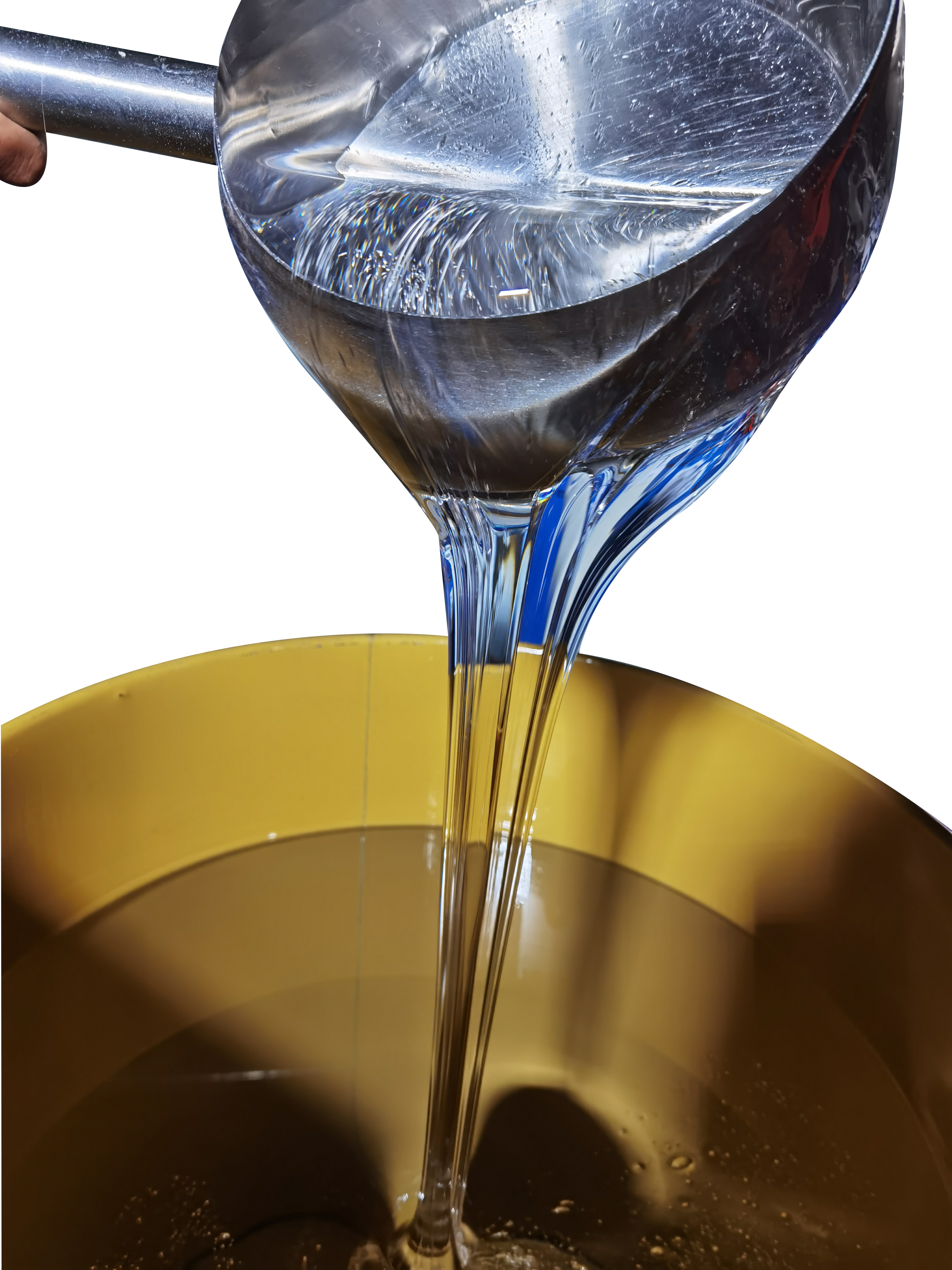
There is also a question of product linkage, because the dossier associates this certificate with the product lines on file, including Vinyl Silicone Oil. That association is record-keeping: it indicates which catalogue items the file was assembled around, not that each item has been individually certified. For Vinyl Silicone Oil the purchasable facts are the specification — a vinyl-terminated PDMS with clear appearance, viscosity from 35 to 50W, volatile content below 0.5 percent and vinyl content from 0.037 to 1.497, across the TVF-L-50, TVF-100, TVF-500, TVF-1000, TVF-2000, TVF-1W, TVF-6.5W, TVF-H-10W, TVF-H-20W and TVF-H-35W models.
Patent ZL202323622488.5: A Device Claim, Read as a Device Claim
Utility model patent ZL202323622488.5 was granted by the National Intellectual Property Administration, is dated 3 September 2024 and runs to 2 September 2034. The scope recorded is "a silicone rubber treatment agent bonding device", and the record field cites Work Guidelines No. 32 and No. 195 of 2016 issued by the Ministry of Science and Technology.
That wording defines the limit of the right. The patent covers a device. It is not a formulation patent, and it is not evidence that a material reaches a particular hardness, tear strength, volatile content, cure speed or biocompatibility result. A granted patent confirms that an exclusive right exists over a defined technical arrangement; it does not confirm that products made using that arrangement meet any specification. Buyers who treat a patent number as a performance credential are reading a legal instrument as if it were a laboratory report.
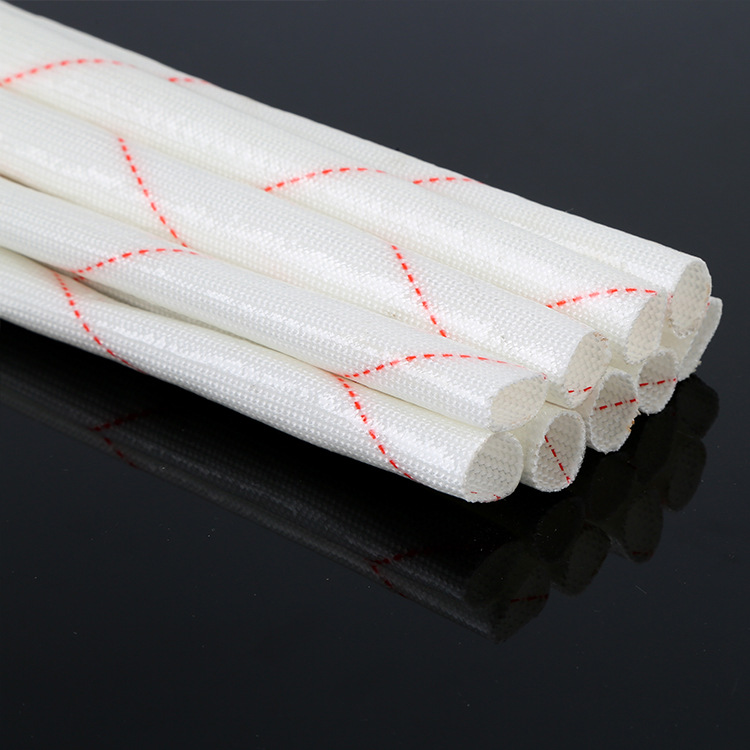
The dossier links this patent to several product lines, including Vinyl Silicone Oil and Fiber glass sleeve with silicone resin. The productive way to handle that link is to ask a direct question rather than to infer: is the patented device used in producing the grade I am buying, and if so, does it change any parameter I should test? For the fiberglass sleeve line, for example, the acceptance argument rests on the coating specification — a methylphenyl silicone resin coating for glass fibre insulating sleeves, resin content 100, viscosity 10,000 to 55,000, hardness 20 to 35, heat resistance 200 °C, hardening temperature −55 °C and brittleness temperature −73 °C — not on the patent.
Where "Document No. 32 of 2016" Sits — and What Actually Covers the Platinum Catalyst
In this pack the phrase "Document No. 32 of 2016" appears in two record fields: against the High-tech Enterprise Certificate as its policy basis, attributed to the State Science and Technology Commission, and in the patent record alongside Work Guidelines No. 195 of 2016 attributed to the Ministry of Science and Technology. In both places it is a reference to the policy framework behind a recognition or filing process.
It is therefore not a product certificate, and it does not certify the platinum catalyst. Buyers who need a documented basis for catalyst supply should look to two other things in the file. First, the ISO 9001 scope explicitly names the production of platinum catalyst and silicone additives within its certified boundary, excluding hazardous chemicals. Second, the technical basis is the catalyst specification itself: the TPL-1000, TPL-2000, TPL-3000, TPL-4000, TPL-5000, PTR-3000 and PTR-5000 models, with transparent appearance, viscosity from 320 to 1000, platinum content from 1000 to 5000, and volatile-matter bands recorded at 3, 3.5, 4, 7 and 10.
That distinction has practical weight because the catalyst is functionally central. In addition-cure systems it drives the hydrosilylation reaction on which the whole overmolding cycle depends, so a change of catalyst batch or grade can move cure speed, and with it cycle time and mould behaviour. Acceptance criteria for a catalyst therefore belong in the specification and in lot-level testing, where they can be measured, rather than in a policy document, where they cannot.
Mapping the Pack to Purchase Order Terms
The reason to read the dossier closely is that each document maps to a different clause. A single "certificates attached" line in a purchase order collapses three unrelated kinds of evidence into one, and usually leaves the buyer without the one document that actually governs the dispute.
| Purchase order element | Document to reference | Verification question to ask |
|---|---|---|
| Quality system requirement | ISO 9001 certificate 25025Q12678R0S with the scope statement | Does the scope wording cover this exact material and this exact process step? |
| Supplier technology standing | High-tech Enterprise Certificate GR202444010636 | Is the contract governed by China-market considerations, and is the "new materials" scope relevant to this grade? |
| Intellectual property clause | Utility model patent ZL202323622488.5 | What does the claim cover, and is the patented device used for this order? |
| Material specification | Grade datasheet values — hardness 7±1 to 38±1, viscosity 4000 to 25,000, clear appearance | Do the values come from the current approved revision, and is the test method stated? |
| Regulatory or market claim | Grade-level test reports cited in the company profile (RoHS, REACH, FDA, LFGB, halogen-related) | Which grade, which report version, which issuing laboratory, which date? |
| Commercial terms | MOQ of 1 kg for standard products and 5 kg for custom formulations; lead time of 7 to 10 working days for standard stock and 15 to 25 working days for custom or bulk orders | Do these terms reference the same revision of the dossier and the same grade code? |
| Contract duration | All three validity periods | Will any document expire inside the contract term, and who supplies the renewal? |
Two habits make this workable. First, quote the document number and the revision date of the datasheet in the order, not the phrase "as certified". Second, keep the scope page with the certificate; an unscoped certificate number is an identifier, and identifiers do not settle acceptance disputes.
What the Dossier Cannot Establish
Being explicit about the boundary protects both sides of the transaction. Four things sit outside this pack.
- Device-level biocompatibility. Material evaluation in a medical device submission is performed against the device and its contact conditions. A 2025 FDA 510(k) decision document for a B. Braun Medical device, for instance, identifies liquid silicone rubber among materials evaluated in accordance with ISO 10993-1; that record concerns one specific device submission, not a certification of a generic LSR grade. Adult-product manufacturers should expect the same logic to apply to their own technical file.
- Process outcomes in your tool. Overmolding results depend on two-component mixing ratio, dispensing, defoaming, cure temperature and mould design. A supplier certificate does not predict shrinkage, flash or bond strength in a mould it has never seen.
- Market access. Neither the Chinese High-tech Enterprise Certificate nor a management system certificate authorises placement on another market. Market access follows the destination's own conformity route.
- Replacement for incoming inspection. Documents describe intent and system capability; incoming inspection describes the batch in front of you.
The company profile also states that its products hold RoHS, REACH, FDA, LFGB and halogen-related approvals. Those statements are company-reported and broad. To use them commercially, ask for the grade-level report behind the claim, with its version and scope, and match it to the specific LSR code on the order. That is standard qualification practice rather than a criticism of the supplier, and it is the step that turns a marketing statement into an acceptance criterion.
Grade Fit Inside the Adult-Products Range
The Adult Products LSR for Overmolding range covers five addition-curing, platinum-cured grades: TS6807A/B, TS6825A/B, TS6830A/B, TS6835A/B and TS6838A/B. The declared parameters span hardness from 7±1 to 38±1 and viscosity from 4000 to 25,000, with a clear appearance, an overmolding process route and a material basis of vinyl polydimethylsiloxane with hydrogen-containing polysiloxane. Recorded applications cover the adult toy industry, daily necessities overmolding, the silicone products industry, and plastic and hardware overmolding processing.
The division of labour between documents and tests follows from that. The dossier narrows the supplier: it shows a certified management system with a stated scope, an enterprise technology classification in one market, and an IP record. The datasheet narrows the grade, because hardness and viscosity are the parameters that decide feel, drape and flow inside the cavity. Only the buyer's own trial run confirms the mould. For projects where the requirement includes a soft, flesh-like feel at the low end of the hardness span, the useful question is which of the five grades the supplier recommends for the specific wall thickness, and what cure condition was used to generate the quoted values.
Commercial terms recorded for the range are a minimum order of 1 kg for standard products and 5 kg for custom formulations, with lead times of 7 to 10 working days for standard stock and 15 to 25 working days for custom formulations or bulk orders. Production capacity is stated at 80 tons per month, scalable to 110 tons in peak seasons — a figure worth noting in a supply-continuity review rather than in a technical qualification.
Validity Windows and Renewal Planning
All three documents are in force as of November 2026, but they expire at different times, and that difference is itself a planning input. The High-tech Enterprise Certificate lapses first, on 11 December 2027. The ISO 9001 certificate follows on 24 August 2028. The patent runs to 2 September 2034 and is unaffected by the other two.
A practical routine is to record the three dates in the supplier master file, set a review trigger ninety days before each expiry, and require the renewal evidence before the next order release rather than after. It also helps to note explicitly that expiry of the enterprise certificate does not invalidate the management system certificate or the patent; the documents are independent, and treating them as a single renewable package causes unnecessary escalations on both sides.
Frequently Asked Questions
What does ISO 9001 certificate 25025Q12678R0S actually cover?
It certifies a quality management system conforming to GB/T19001-2016 idt ISO9001:2015, issued by ZhongQiu United International Certification (Beijing) Co., Ltd. and valid from 25 August 2025 to 24 August 2028. The recorded scope covers research and production of liquid silicone rubber, silicone glue and silicone treatment agent, plus production of silicone oil, platinum catalyst and silicone additives, excluding hazardous chemicals. It addresses process control within that scope, not the measured properties of any individual grade.
Does the High-tech Enterprise Certificate GR202444010636 certify the LSR product itself?
No. It is an enterprise-level recognition issued jointly by China's Ministry of Science and Technology, Ministry of Finance and State Taxation Administration, with a recorded scope of "new materials" and validity from 11 December 2024 to 11 December 2027. It describes the organisation's classification inside the Chinese innovation framework and its recorded market is China. It does not certify hardness, cure behaviour, volatile content or skin-contact suitability for a specific LSR grade, and it is not a market-access document for other jurisdictions.
What does utility model patent ZL202323622488.5 protect, and does it prove performance?
The patent, granted by the National Intellectual Property Administration and valid from 3 September 2024 to 2 September 2034, is recorded with the scope "a silicone rubber treatment agent bonding device". It protects a device-level technical arrangement. It does not protect a formulation and does not demonstrate any performance value such as tear strength, hardness or cure speed; those have to be evidenced by specification data and test reports. The dossier associates the patent with several product lines, which indicates relevance, not product-level approval.
Is "Document No. 32 of 2016" a certification for the platinum catalyst?
No. In this dossier the reference appears as the policy basis recorded against the High-tech Enterprise Certificate, attributed to the State Science and Technology Commission, and alongside Work Guidelines No. 195 of 2016 in the patent record. It is a policy reference attached to a recognition process. The platinum catalyst is addressed differently: it is named inside the ISO 9001 certified scope as production of platinum catalyst and silicone additives, excluding hazardous chemicals, and its technical acceptance rests on the catalyst specification — models TPL-1000 through TPL-5000 and PTR-3000 and PTR-5000, transparent appearance, viscosity 320 to 1000 and platinum content 1000 to 5000.
How should a buyer connect these documents to acceptance criteria?
Assign each document to the clause it can actually support: the ISO 9001 scope to the quality system clause, the High-tech Enterprise Certificate to supplier standing in the China market, and the patent number to the intellectual property clause. Then attach the grade datasheet with its revision date, request grade-level test reports behind any RoHS, REACH, FDA, LFGB or halogen-related claim, and record all three expiry dates in the contract review. Acceptance criteria should be written against measured parameters and stated test methods, with the certificates acting as supporting evidence rather than as the criteria themselves.
Conclusion: Read the Scope Before the Number
The value of this pack is not that it contains three documents; it is that the three documents can be separated cleanly. Certificate 25025Q12678R0S describes a certified management system with a written boundary that names liquid silicone rubber, silicone oil and platinum catalyst. Certificate GR202444010636 describes an enterprise classification inside one jurisdiction. Patent ZL202323622488.5 describes an exclusive right over a bonding device. A buyer who maps each one to the clause it supports, requests grade-level data for the parameters that matter, and diaries the 2027 and 2028 expiry dates will get more from the file than a buyer who counts certificates.
A fuller view of the manufacturer's silicone raw materials portfolio, including liquid silicone rubber, vinyl silicone oil, platinum catalysts and silicone resin for fiberglass sleeve coating, is available in the company brochure: Times Silicon product brochure (PDF).
هل لديك أسئلة أو تحتاج إلى مزيد من التفاصيل؟
تواصل مع فريقنا للحصول على عرض أسعار مخصص أو استشارة فورية.
طلب عرض أسعار
املأ النموذج أدناه وسيتواصل معك فريقنا بعرض مقترح مخصص.
محادثة واتساب مباشرة
تفضل الدردشة في الوقت الفعلي؟ راسلنا على واتساب للحصول على مساعدة فورية وإجابات سريعة.
- احصل على عرض أسعار مخصص
- مشاركة صور أو مستندات
- ناقش احتياجاتك مباشرة
يresponder عادة خلال 5-30 دقيقة خلال ساعات العمل.