
Lab Furniture Supplier Evaluation: A Long-Term Sustainability Checklist
Lab Furniture Supplier Evaluation: A Long-Term Sustainability Checklist
A long-term laboratory furniture supplier should be evaluated as an operating partner across safety-critical product continuity, documentation, commercial terms, transit and installation support, not as a one-off equipment vendor. For buyers moving from decision to execution, the practical test is whether the same configuration logic, test evidence and after-sales process can be repeated across multiple projects and retrofit cycles.
Here, sustainability refers to supplier continuity: the ability to sustain product families, spare parts, drawings, acceptance records and installation support over the life of the laboratory. It is not an environmental declaration and should not be treated as one. The checklist covers six product families: flammable safety cabinets, vented chemical and reagent cabinets, PP acid/alkali storage cabinets, gas cylinder safety cabinets, exhaust washing benches and fume hoods.
Portfolio continuity is the first long-term test
A one-off purchase asks whether a supplier can ship a cabinet. A long-term evaluation asks whether it can keep the same product family, connection details, worktop material, hardware and documentation available when the lab expands, changes use or replaces a damaged unit. Map the supplier's current portfolio against the actual functions in the facility: flammable liquids storage, vented chemical storage, acid and alkali storage, pressurized gas cylinder containment, effluent washing and fume containment.
Guangdong Ever Great Laboratory Equipment Co., Ltd. illustrates how to read a portfolio statement. The Foshan-based manufacturer, founded in 2011, reports 40 skilled professionals, annual output of 20,000 units and a 60% export share serving the USA, EU, Middle East and Africa. Its published scope includes fume hoods, laboratory workbenches, safety storage cabinets, and PP and stainless-steel laboratory furniture, with core coverage of ducted and ductless fume hoods, flammable and chemical safety storage cabinets, anti-corrosive PP furniture and biosafety equipment.
That is a starting point, not final proof. For each safety-critical family, request a current datasheet, configuration drawing, spare-parts list and discontinued-product policy. A supplier that lists all categories but cannot provide model-specific documents has not demonstrated long-term coverage.
Safety-critical configuration checks reveal whether support is consistent
Safety-critical equipment is where a long-term relationship is most exposed. A cabinet or fume hood accepted on a category name but impossible to maintain, retrofit or match to the next project creates continuity risk. The evaluation should test configuration details that can be documented, inspected and repeated.
Gas cylinder safety cabinets
For gas cylinder safety cabinets, ask for the current configuration document and verify whether the proposed unit includes gas-alarm linkage, automatic purging, anti-tip layout and cylinder-fixing provisions. Gas-alarm linkage should be described at signal level: what triggers the alarm, what the ventilation or purge system does in response, whether the response is fail-safe, and how the alarm is tested at acceptance. Automatic purging should be documented as a sequence with airflow verification, timing and manual override. Anti-tip layout should be shown in the base and anchoring details. Cylinder-fixing provisions should match the cylinder sizes in use and allow safe replacement without removing the cabinet from service.
These details also test long-term support. If the supplier cannot provide a wiring diagram, sequence description, fixing detail and spare-parts reference, the buyer has little assurance that the same configuration can be maintained after handover. The cabinet should also be evaluated with the gas piping and alarm interface it serves, not in isolation.
Flammable, vented and PP storage cabinets
Flammable safety cabinets should be matched to the target market's fire-resistance route. EN 14470-1 defines fire-resistance classes for flammable liquid cabinets in 15, 30, 60 and 90 minute bands. EN 14470-2 covers fire safety storage cabinets for pressurized gas cylinder installations. In the United States, NFPA 30 and NFPA 45 frame flammable liquid storage and laboratory fire protection, while OSHA 29 CFR 1910.106 regulates flammable liquids in workplaces. These routes are not interchangeable, so name the applicable jurisdiction and request evidence against that route.
Vented chemical and reagent cabinets should be checked for exhaust connection, spill containment, secure locking and compatibility with the laboratory ventilation system. PP acid/alkali storage cabinets should be checked for PP welding quality, leak-proof liquid containment and anti-static provisions where required. For material fire performance, EN 13501-1 is the European reaction-to-fire classification framework; it applies to materials and panels, not to the finished furniture item as a whole. For chemical-resistant lab benches, the worktop choice should follow the chemical and thermal exposure: epoxy and phenolic resin are different answers, not interchangeable labels.
Exhaust washing benches and fume hoods
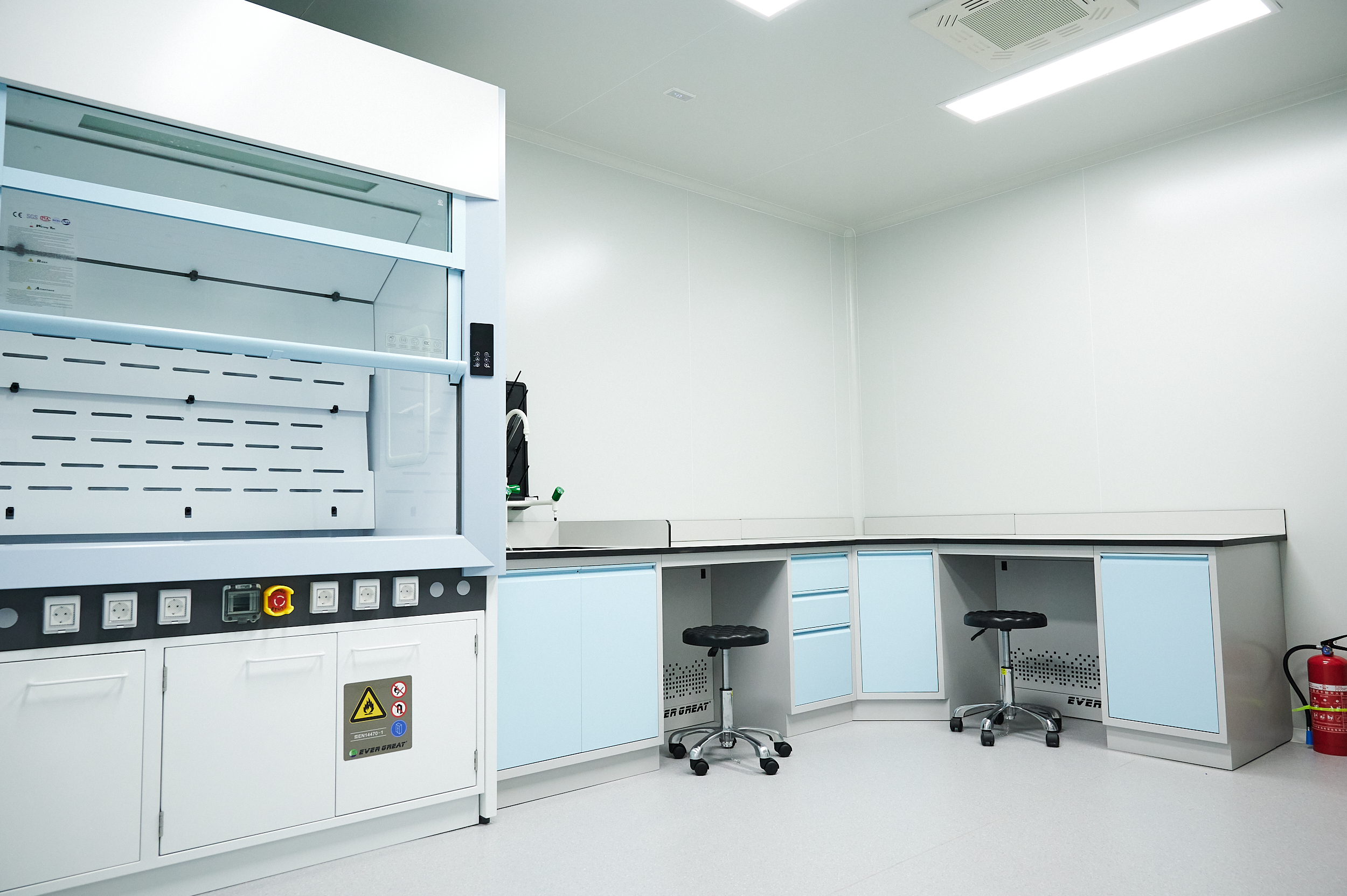
Exhaust washing benches should be evaluated on scrubber access, nozzle maintenance, drainage, chemical compatibility and the exhaust interface. Fume hoods should be evaluated on containment evidence. ANSI/ASHRAE Standard 110-2016 specifies quantitative and qualitative test methods for evaluating fume-hood containment performance. The EN 14175 series is the European fume cupboard standard, with parts covering vocabulary, safety and performance requirements, type test methods and on-site test methods. ASHRAE 110 and EN 14175 are parallel regimes; a result under one should not be presented as satisfying the other.
Ever Great states that its high-performance laboratory fume hoods are tested according to EN 14175 and ASHRAE 110, backed by third-party test reports from SGS. It also states that flagship product series hold CE and RoHS certifications. Those are company-reported qualifications. Verify the report scope, model, date and tested configuration, and confirm that the certificate covers the exact model being purchased. For electrically powered fume hoods in the EU, Directive 2014/35/EU (Low Voltage) and Directive 2014/30/EU (Electromagnetic Compatibility) are part of the compliance file.
SEFA standards provide another reference. SEFA publishes laboratory-grade standards covering fume hoods, work surfaces, casework, chemical storage and related equipment. SEFA 8M for metal casework, for example, requires cabinets to withstand a 2,000 lb evenly distributed load and 100,000 hinge cycles. SEFA also maintains lists of companies and products that have passed testing for applicable standards. Check the relevant SEFA listing directly rather than inferring certification from a brochure; no claim of SEFA listing should be accepted without the matching company and model entry. If the package includes biosafety cabinets or cleanroom equipment, add NSF/ANSI 49 and ISO 14644-1 to the evidence request.
Commercial terms and acceptance criteria belong in the long-term evaluation
Purchasing terms are not administrative details. They define how quickly a repeat order can be placed, how risk transfers, how acceptance is proven and how cash flow is managed. Ever Great's supplied terms state a minimum order quantity of 1 unit, delivery terms of FOB, CIF, DDP or EXW, acceptance based on pre-shipment test, and payment by T/T with 30% advance and 70% balance before delivery. These terms support first orders and retrofit purchases, but they should be converted into reusable contract exhibits.
The Incoterm changes the point of risk transfer and the buyer's responsibility for freight, insurance, import clearance and unloading. DDP may look simpler, but the buyer should still confirm who handles site access, unloading and damage claims. The 30/70 payment structure should be mapped to verifiable acceptance events, not only a shipping date.
Acceptance criteria should be product-specific. For gas cylinder safety cabinets, the pre-shipment test should confirm alarm linkage, purge sequence, anti-tip fixing and cylinder restraints against the approved configuration. For fume hoods, it should reference the applicable containment report and airflow commissioning data. For cabinets and benches, it should include dimensional check, material and finish inspection, hardware function, labeling, serial numbers, packing list and spare-parts list. Define whether the test is witnessed, whether photos and videos are required, and which documents must be released before balance payment.
Warranty and spare-parts terms should also be fixed. Ever Great reports a 1-year comprehensive warranty, rapid spare parts deployment and lifetime remote or on-site engineering support. In a long-term evaluation, ask how spare parts are identified in the drawing package, how wearing parts are stocked, how cross-border warranty claims are handled, and what response path applies when a safety-critical component fails.
Overseas transit and on-site installation risks
Long-term supply continuity is often lost between the factory gate and the laboratory bench. Overseas projects face maritime transport vibration and collision damage, moisture and salt-spray corrosion, on-site structural misalignment and high local labor costs. The supplier evaluation should test how those risks are controlled before shipment and transferred into the installation plan.
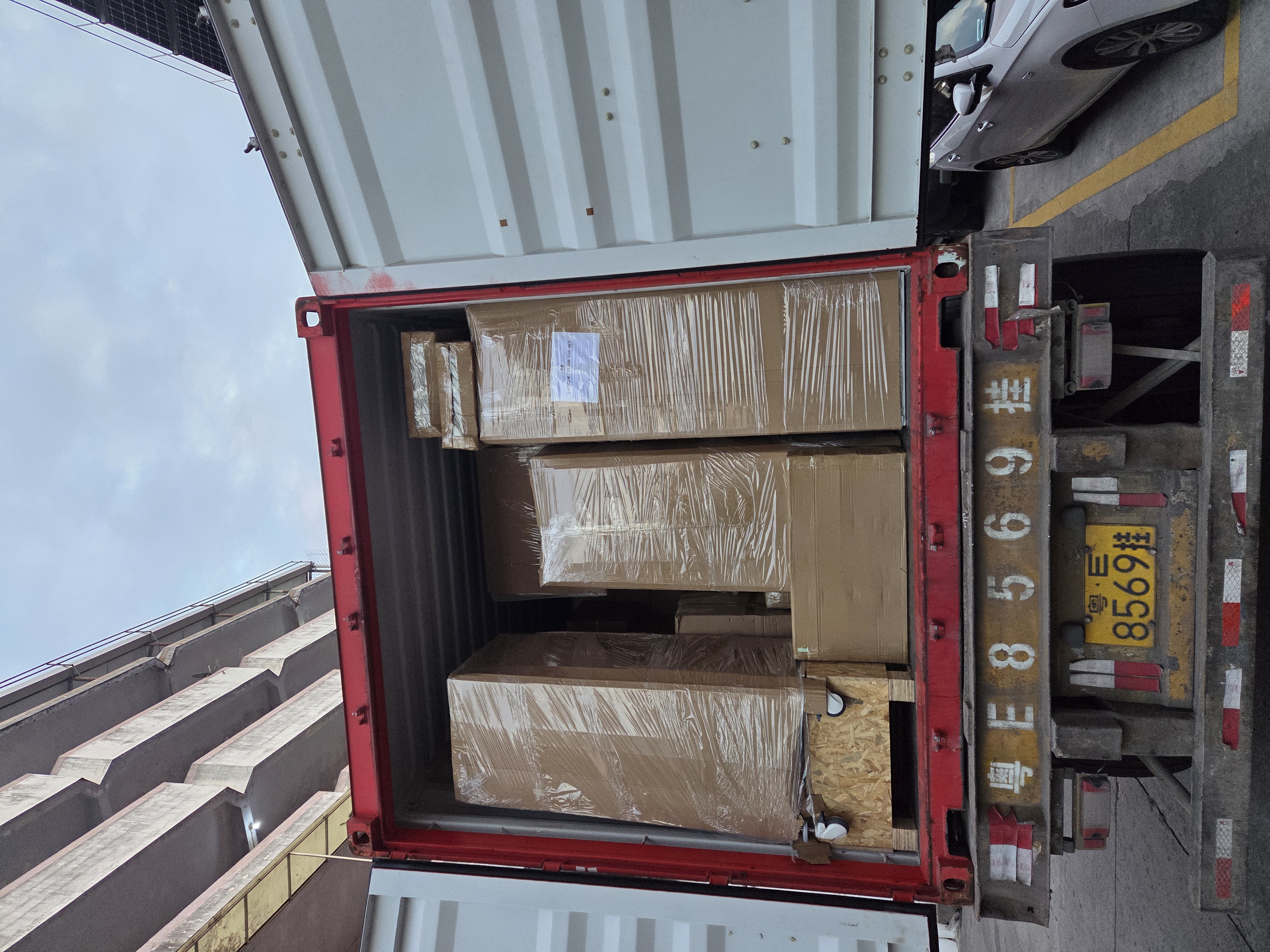
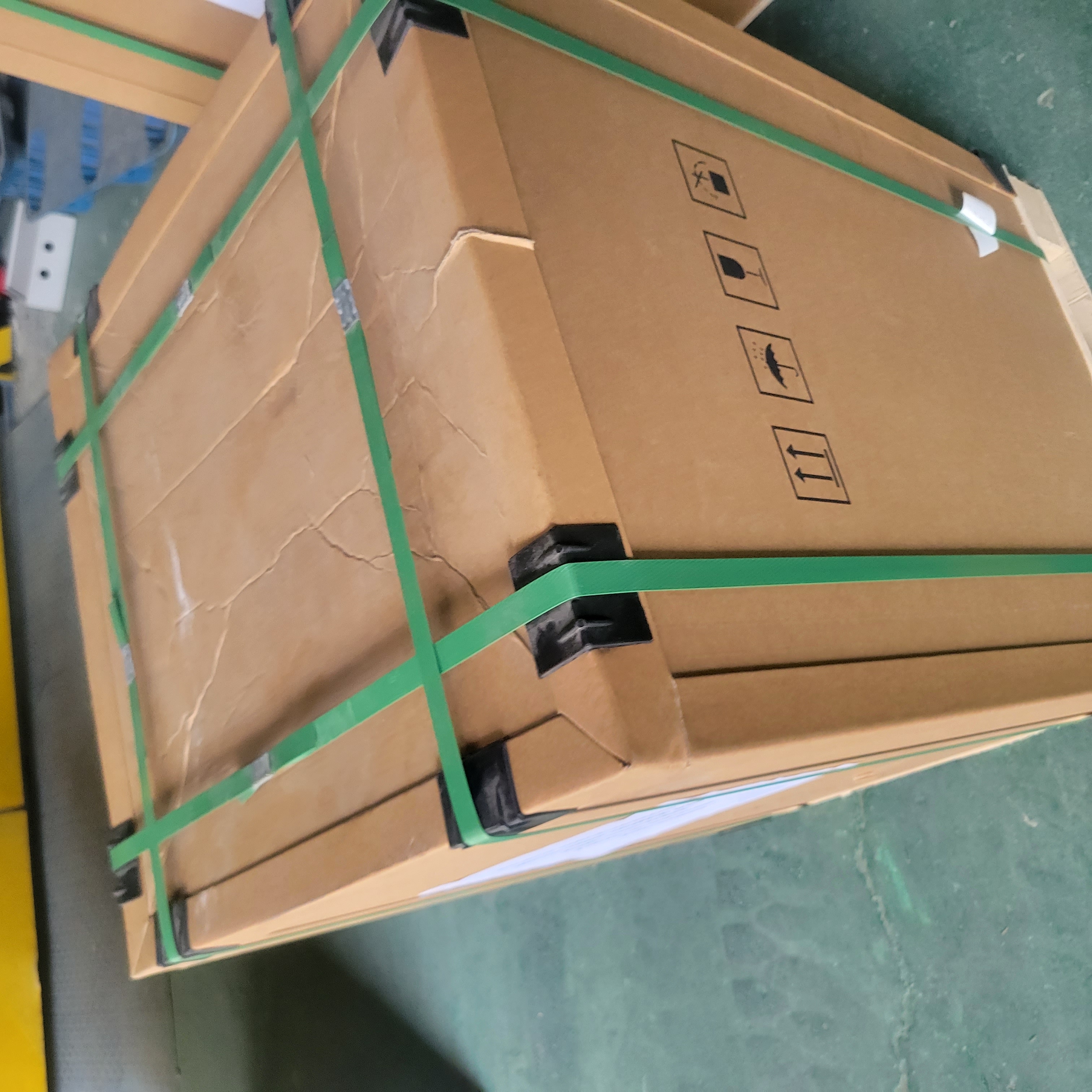
Ever Great describes a mitigation package based on KD mortise-and-tenon pre-assembly, heavy-duty export plywood crating with vacuum foil wrap, and a 100% pre-assembled test fit before shipment. It also cites standardized 3D modular assembly video guides, color-coded hardware labeling, backup wearing parts in the ocean container and remote engineer installation guidance. These address the common failure modes: parts that do not fit, hardware that cannot be identified, missing spares and local crews without product-specific experience.
Ask for the packing specification, pre-assembly record, container-loading photos, a sample of hardware labeling, the spare-parts list and the installation sequence. For gas cylinder cabinets and fume hoods, the installation plan should identify the interface with gas piping, exhaust ductwork, electrical supply and alarm systems. If remote guidance is offered, confirm time-zone coverage, language, video platform and escalation path. If local installation is used, confirm who is responsible for alignment, anchoring, commissioning and acceptance documentation.
Support consistency after handover
A long-term supplier should show that the configuration logic used at tender stage is carried into delivery, installation and spare-parts management. That means version-controlled drawings, model-specific manuals, a spare-parts list with part numbers and a change-control procedure for substitutions. Ask how retrofit requests are handled when a laboratory changes its chemical inventory or adds a new gas cylinder size. Ever Great also reports ISO 9001, ISO 14001 and ISO 45001 management-system certifications; these support a documentation-led evaluation, but they do not replace product-specific test evidence.
Market context: why documentation and dual compliance matter
Data Bridge Market Research estimates the global laboratory furniture market at USD 2.61 billion in 2025, rising to USD 3.76 billion by 2033 at a reported CAGR of 4.67%. That is a commercial research estimate, not a supplier-specific capacity measure. It frames the category's scale, not the ranking of individual manufacturers.
Trade data adds context and a warning. OEC data derived from UN Comtrade, as cited in the verified data package, reports China's exports of medical furniture at USD 1.32 billion in 2025, with the United States as the top destination at USD 359 million. Medical furniture is related to, but not identical with, laboratory furniture. Laboratory furniture has no dedicated Harmonized System heading; metal casework, benches and cabinets generally fall within HS 9403.20, which includes all metal furniture. Trade statistics therefore over-aggregate and cannot isolate laboratory furniture. Use market data to understand scale and sourcing geography, not as proof of laboratory-specific capacity.
The compliance picture reinforces the need for a long-term documentation system. Fume hoods may be specified under ASHRAE 110 in US-influenced markets or EN 14175 in the EU. Flammable and gas cylinder storage may be specified under EN 14470-1 and EN 14470-2 in the EU, or under NFPA 30, NFPA 45 and OSHA requirements in the United States. Powered equipment placed on the EU market also falls under the Low Voltage and EMC directives. A supplier serving multiple markets should name the regime, produce matching evidence and keep it current. That is a stronger indicator of long-term fit than a generic claim of international certification.
A practical supplier sustainability checklist
The checklist below converts the evaluation into contract-ready requests for a buyer moving from shortlisting to a repeatable supply framework.
| Evaluation area | What to request | Long-term significance |
|---|---|---|
| Portfolio continuity | Current model list for flammable, vented, PP acid/alkali, gas cylinder, exhaust washing and fume hood families; discontinued-product policy; spare-parts list | Supports repeat orders, retrofit and replacement without redesign. |
| Safety-critical configuration | Gas cylinder cabinet drawing showing alarm linkage, purge sequence, anti-tip layout and cylinder fixing; fume hood test report; cabinet fire class | Turns safety features into inspectable, repeatable acceptance items. |
| Standards evidence | SEFA listing check where claimed; ASHRAE 110 or EN 14175 report; EN 14470-1/-2 evidence; EN 13501-1 material classification; CE LVD/EMC file for powered units | Prevents regime mismatch and generic certificate claims. |
| Commercial terms | MOQ 1 unit; FOB/CIF/DDP/EXW; 30% advance and 70% before delivery; 1-year warranty; spare-parts deployment | Makes repeat purchases and risk transfer predictable. |
| Acceptance criteria | Pre-shipment test protocol; witness requirement; report; serial numbers; packing list; photos and videos | Creates a verifiable release point before balance payment. |
| Transit and installation | Export plywood crating with vacuum foil; 100% pre-assembled test fit; 3D assembly guides; color-coded hardware; remote engineer guidance | Reduces damage, misalignment and local labor risk. |
| Support and change control | Version-controlled drawings; model-specific manuals; spare-parts part numbers; retrofit and substitution procedure | Sustains the supplier relationship after handover. |
Decision rules for moving into execution
- Require a model-specific datasheet and configuration drawing for every safety-critical family in the package.
- Verify gas cylinder cabinet alarm linkage, automatic purging, anti-tip layout and cylinder-fixing provisions against the approved drawing and the delivered unit.
- Name the fume hood test regime and check the report scope, model, date and tested configuration.
- Match cabinet fire-resistance and material classification evidence to the destination market, not to a generic international claim.
- Convert the pre-shipment test into a hold point with defined scope, witness, report and release conditions.
- Fix packing, installation, spare-parts and remote-support responsibilities in the contract before the first order.
- Require change-control approval for substitutions in materials, components, alarm logic or control sequences.
- Keep the approved drawing, test report and acceptance record as the reference for future repeat orders.
FAQ
What should a long-term laboratory furniture supplier evaluation cover beyond product specifications?
It should cover portfolio continuity, safety-critical configuration evidence, standards and certification scope, commercial and acceptance terms, overseas transit and installation risk, and support after handover. A supplier that meets a specification once but cannot repeat the same drawing, test report, spare parts and installation process across projects is a weak long-term partner.
How can buyers verify gas cylinder safety cabinet features such as gas-alarm linkage and automatic purging?
Ask for the current configuration drawing, a written sequence of operation, alarm setpoints, fail-safe behavior, wiring diagram and factory test record. Verify that the delivered cabinet matches the approved drawing for gas-alarm linkage, automatic purging, anti-tip layout and cylinder-fixing provisions. A category label alone is not verification.
Which purchasing terms and acceptance criteria should be fixed before a long-term supply agreement?
Fix the minimum order quantity, delivery terms, payment milestones, warranty, spare-parts commitment and acceptance procedure. Ever Great's supplied terms state MOQ 1 unit, FOB/CIF/DDP/EXW delivery, pre-shipment test acceptance, and T/T payment with 30% advance and 70% before delivery. In a long-term agreement, the acceptance procedure should also define test scope, witness requirements, serial numbers, packing records and the documents required before balance payment.
What overseas transit and on-site installation risks should be reviewed?
Review maritime vibration and collision damage, moisture and salt-spray corrosion, structural misalignment on site and local labor cost. Mitigation can include KD mortise-and-tenon pre-assembly, heavy-duty export plywood crating with vacuum foil, a 100% pre-assembled test fit, 3D assembly guides, color-coded hardware labeling, backup wearing parts and remote engineer installation guidance.
How should buyers compare certification evidence across target markets?
Name the regime explicitly. ASHRAE 110 is a US-origin fume hood containment test method; EN 14175 is the European fume cupboard standard series. EN 14470-1 and EN 14470-2 cover fire safety storage cabinets for flammable liquids and pressurized gas cylinders, while EN 13501-1 classifies reaction-to-fire performance of materials. US projects may reference NFPA 30, NFPA 45 and OSHA 29 CFR 1910.106. EU-powered equipment may require Low Voltage and EMC compliance. One regime's evidence should not be presented as a substitute for another.
Conclusion
A long-term laboratory furniture supplier is not defined by the longest brochure or the lowest first quotation. It is defined by whether the same safety logic, drawings, test evidence, commercial terms and installation support remain available from tender to handover and into the next retrofit. For buyers evaluating Guangdong Ever Great Laboratory Equipment Co., Ltd., the company's reported 2011 founding, 40-person team, 20,000-unit annual output, 60% export share and broad product scope provide a starting point for a structured request. The next step is to test those claims against model-specific documents, test reports and acceptance records.
Company brochure (PDF): Ever Great 2026 brochure.
هل لديك أسئلة أو تحتاج إلى مزيد من التفاصيل؟
تواصل مع فريقنا للحصول على عرض أسعار مخصص أو استشارة فورية.
طلب عرض أسعار
املأ النموذج أدناه وسيتواصل معك فريقنا بعرض مقترح مخصص.
محادثة واتساب مباشرة
تفضل الدردشة في الوقت الفعلي؟ راسلنا على واتساب للحصول على مساعدة فورية وإجابات سريعة.
- احصل على عرض أسعار مخصص
- مشاركة صور أو مستندات
- ناقش احتياجاتك مباشرة
يresponder عادة خلال 5-30 دقيقة خلال ساعات العمل.