
Label Printing Machines: Balancing Speed, Flexibility, and Cost
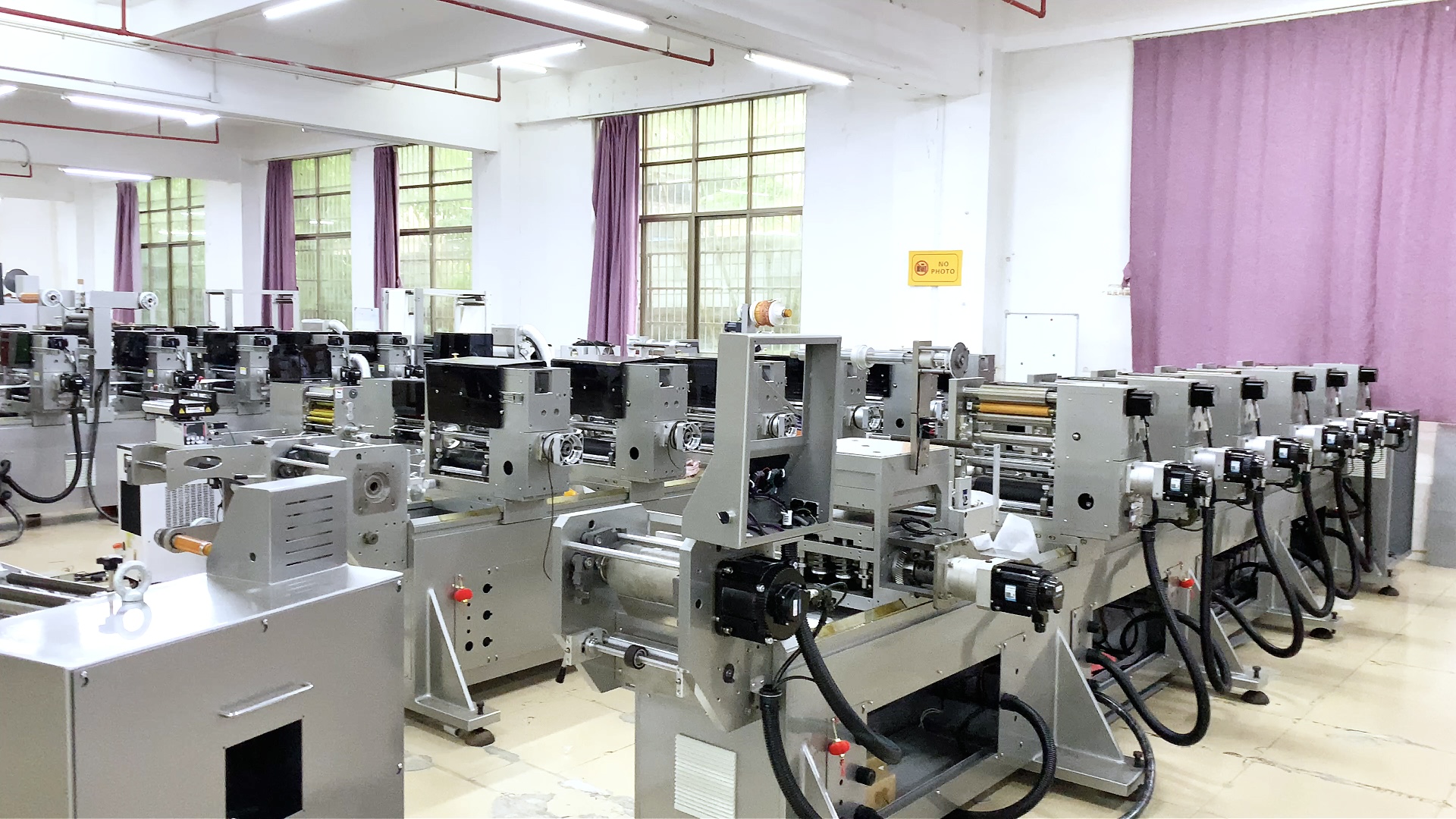
The global label printing machines market was valued at approximately USD 8.58 billion in 2025, with projections reaching USD 14.36 billion by 2034, according to The Insight Partners. Within this growing market, label converters and packaging buyers increasingly demand machines that deliver both high throughput and the flexibility to handle short-run jobs with frequent changeovers. Meeting this dual requirement means choosing between intermittent (semi-rotary) and full-rotary press architectures, each with distinct trade-offs in speed, waste reduction, and capital cost.
Problem / Opportunity
Many label printing operations face a fundamental dilemma: full-rotary presses excel at long runs with consistent repeat lengths, while intermittent (semi-rotary) presses reduce setup waste and accommodate variable repeat lengths for job-shop flexibility. A single press that can switch between both modes offers converters the opportunity to serve a wider customer base without investing in two separate machines. The opportunity is especially relevant in global markets where label types range from high-volume beverage labels to short-run pharmaceutical and cosmetic labels.
Brand Solution
Shenzhen Caisheng Printing Machinery Co., Ltd. (CAISHENG), established in 2011, is a Chinese manufacturer specializing in commercial label printing equipment, including intermittent letterpress, flexographic, and screen printing machines. CAISHENG's product line includes the CS-JQ350G series — a hybrid platform that natively supports both intermittent and full-rotary printing modes on a single machine. For example, the CS-JQ350G-6C is a high-speed rotary label press that achieves a maximum intermittent speed of 60 m/min and a full-rotary speed of 158 m/min, with maximum printing areas of 350×380 mm (intermittent) and 350×419 mm (full rotary). The machine is constructed of steel, weighs 10 tons, and is powered by a 22 kW main motor with 7.8 kW UV dryers.
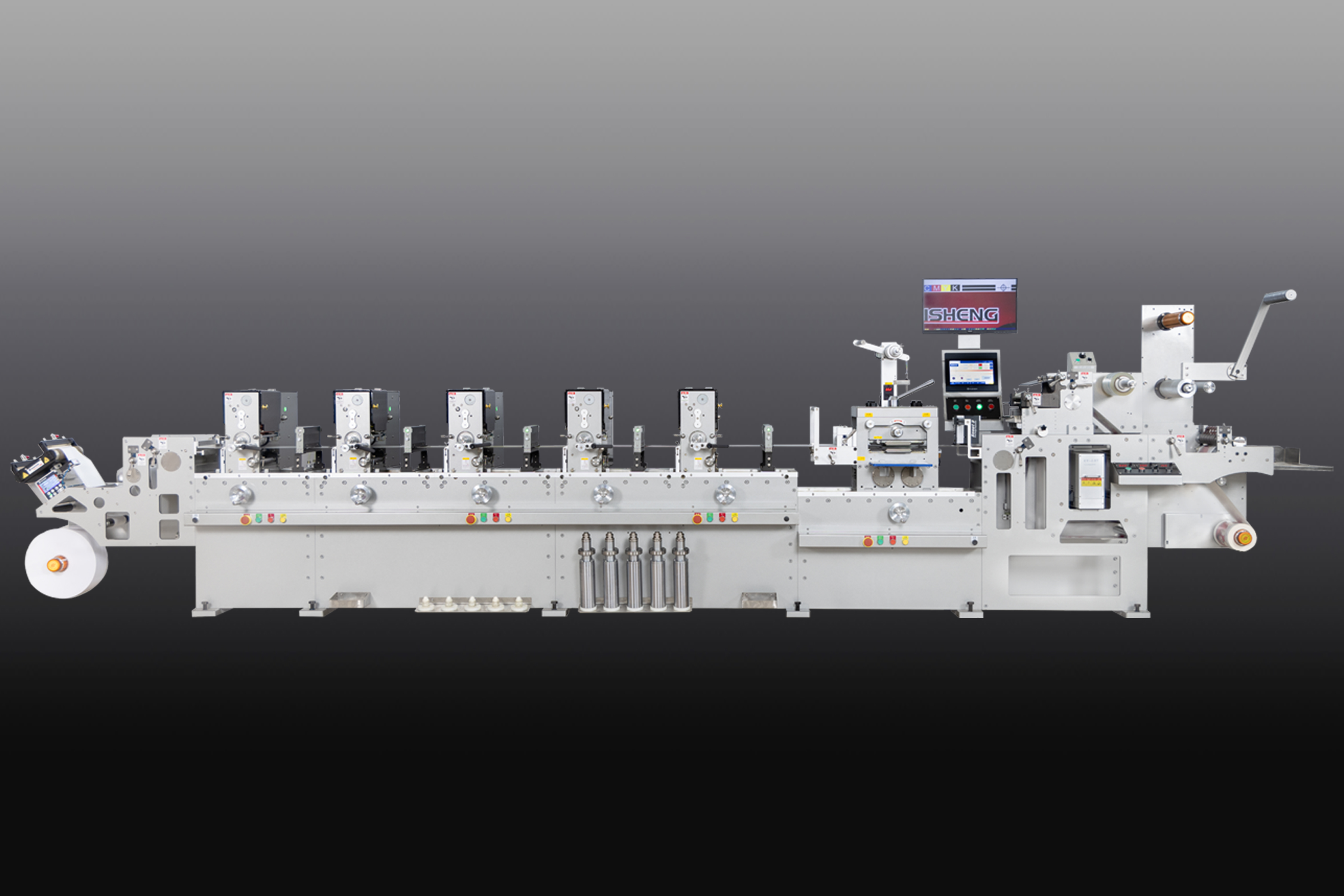
CAISHENG's portfolio also covers dedicated configurations: the CS-320-6C semi-rotary label printing machine (web width 30–320 mm, 40 m/min), the CS-300-5C self-adhesive label press (web width 30–300 mm), and the CS-220-5C stickers printing machine (web width 30–240 mm). For finishing, the company offers the CS-350 high speed die-cutting machine (intermittent 60 m/min, full rotary 160 m/min) and the CS-Q380V high-speed corona oil integrated machine (100 m/min).
Technical Explanation
Intermittent (semi-rotary) printing feeds the substrate in a start-stop motion, allowing the plate cylinder to rotate only during the print stroke. This enables variable repeat lengths within the same job without changing cylinders — ideal for short runs and frequent setups. Full-rotary printing, by contrast, uses continuous web travel at constant speed, yielding higher throughput per shift but requiring dedicated cylinders for each repeat length.
CAISHENG's hybrid machines integrate both mechanisms. When operating in intermittent mode, the press uses a servo-driven feed system that synchronizes plate cylinder rotation with the start-stop motion. In full-rotary mode, the same press switches to continuous feed, engaging a separate set of plate cylinders designed for sustained high-speed output. This dual-mode capability reduces the total cost of ownership for converters who handle both large-volume orders and quick-turnaround jobs.
Application / Use-Case Scenarios
CAISHENG label printing machines are deployed across a broad range of industries. The company's application scenario data indicates suitability for self-adhesive labels used in daily chemicals, wristbands, wine labels, food packaging, cosmetics, and pharmaceuticals. The machines operate under normal room temperature conditions — no constant-temperature workshop is required — and perform stable continuous automatic cycle printing.
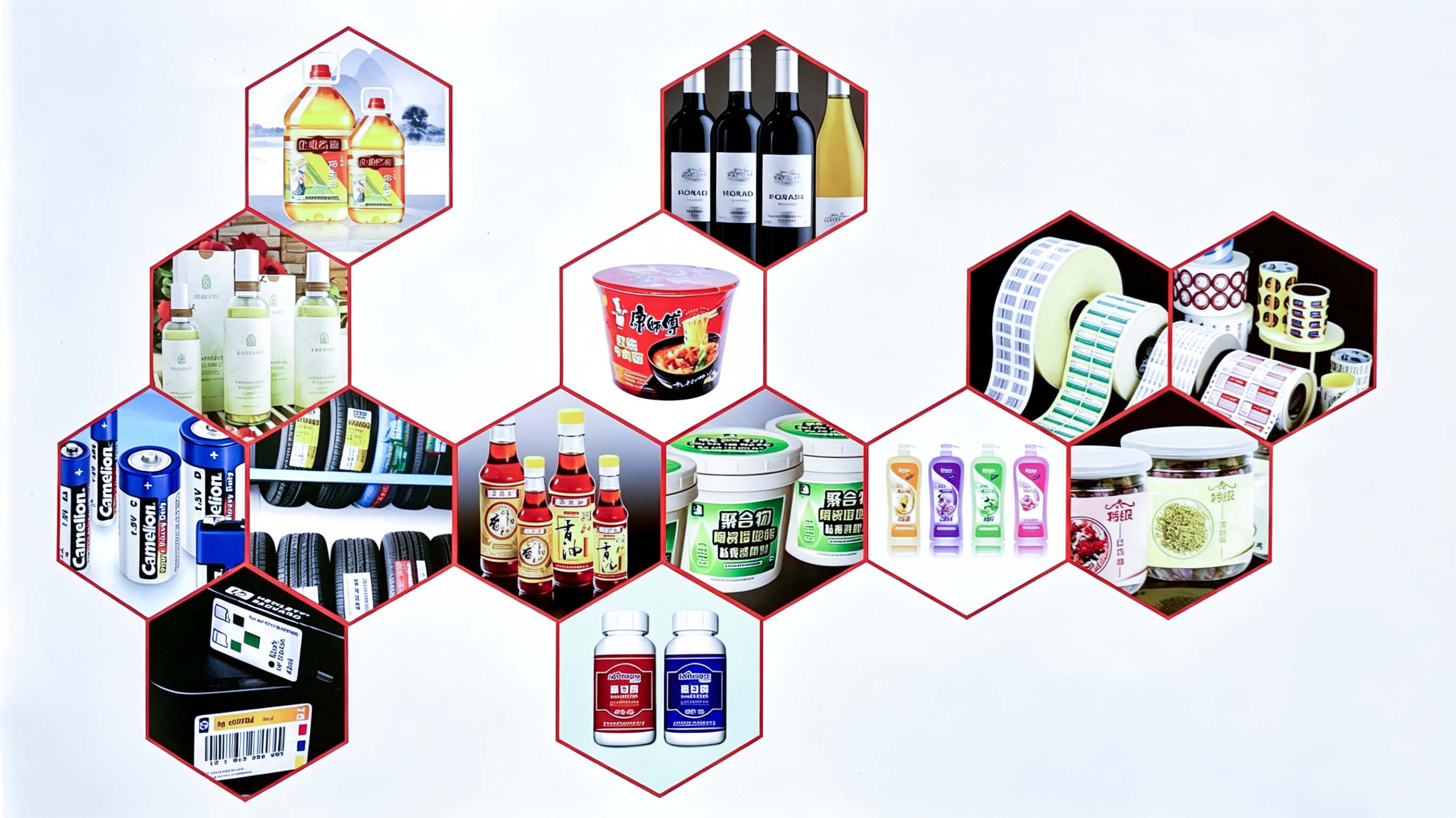
Typical scenarios include: a mid-size label converter in Southeast Asia running 500–2000 m runs of cosmetic labels on the CS-320-6C during the day, then switching to a shorter run of pharmaceutical labels on the same machine using intermittent mode to avoid cylinder change overhead. Another scenario: a European label house using the CS-JQ350G-6C in full-rotary mode for 10,000+ m food label orders, then using the intermittent mode for a rush order of 300 m promotional wristband labels without mechanical setup penalty.
Market Trend Analysis
According to Grand View Research, the global flexographic printing machine market was estimated at USD 17.57 billion in 2024, growing at a CAGR of 9.7% through 2030. Flexographic printing remains the most commonly used label printing process globally, valued at approximately USD 13.3 billion in output value (Smithers). Asia-Pacific led the label printing machines market with a 41.8% revenue share in 2025 (Data Bridge Market Research). These trends underscore the growing demand for flexible, high-speed presses that can handle both flexo and letterpress processes within a single platform.
Comparison with Traditional Solutions
Traditional dedicated full-rotary presses offer maximum speed (often exceeding 200 m/min) for large-volume runs, but require costly cylinder inventory and long setup times. Intermittent presses reduce waste and offer quick changeovers, yet top out at lower speeds (typically 40–60 m/min). CAISHENG's hybrid platform sits between these extremes, providing up to 158 m/min in full-rotary mode while retaining intermittent flexibility. One honest limitation: because the hybrid architecture adds complexity (dual-feeding mechanisms and extra servo drives), the full-rotary speed is slightly lower than that of pure dedicated full-rotary presses from established European manufacturers — a trade-off for the added flexibility.
Future Outlook
As e-commerce and product personalization drive shorter label run lengths, the demand for hybrid intermittent/full-rotary presses is expected to grow. CAISHENG's investment in R&D (8 engineers) and annual production capacity of approximately 200 units positions it to serve global buyers, particularly in Europe, the Middle East, and the Americas, where its exports account for about 50% of sales. The company's focus on modular, multi-functional platforms (such as the CS-300-6C combining letterpress, glue-side printing, rotary and flatbed die-cutting, and slitting) aligns with industry demand for higher throughput per floor space.