
Laboratory Furniture Buyer's Guide: Comparing Flammable, Vented, PP Acid, and Gas Cylinder Cabinets
Laboratory safety cabinets are not interchangeable. A flammable safety cabinet, a vented chemical cabinet, a PP acid and alkali cabinet, and a gas cylinder cabinet each address a different combination of fire load, vapor release, corrosive attack, and cylinder restraint.
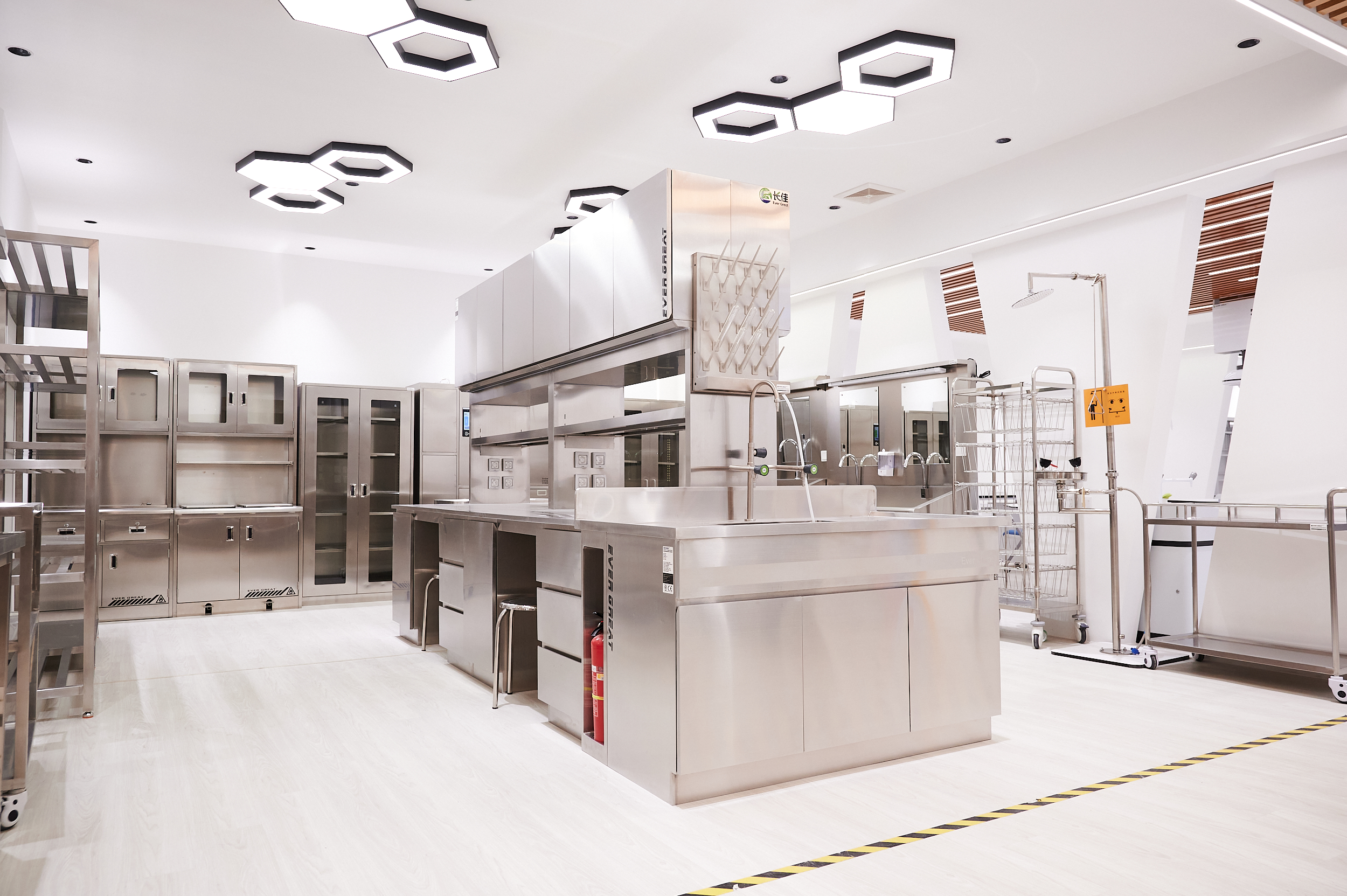
Cover image: laboratory furniture showroom used for project planning and cabinet selection discussions. Image source: Ever Great.
Procurement teams often meet these products under one broad label: safety cabinet. That label hides the decision that matters. The buyer is not simply choosing a steel box. The buyer is deciding how a chemical inventory will be separated, how vapors will leave the room, how a fire load will be contained, and how a compressed gas cylinder will be fixed in place.
The practical rule is to start with what is stored, then define how it must be contained, and only then compare cabinet construction. This guide sets out that comparison framework for laboratory furniture buyers at the research and evaluation stage.
The procurement problem: one label, four different risk profiles
A flammable liquid, a volatile reagent, a corrosive acid, and a pressurized cylinder do not create the same risk. A cabinet that is well suited to one may be unsuitable or incomplete for another. The common procurement error is to issue a single line item for safety cabinets and let suppliers interpret the requirement.
That approach creates four predictable problems. First, a steel cabinet may be specified for aggressive acids that attack metal. Second, a vented cabinet may be ordered without a confirmed exhaust connection. Third, a fire-resistant claim may be accepted without a model-specific classification. Fourth, a gas cylinder may be placed in a general cabinet without cylinder-fixing provisions, anti-tip layout, or gas alarm logic.
A better specification separates the cabinet schedule by storage function. Flammable liquids, corrosive liquids, volatile chemicals, and gas cylinders should appear as separate lines with separate evidence requirements. This is the difference between buying furniture and buying containment.
A practical comparison framework
The table below compares the four cabinet families by intended storage scenario, construction, safety features to verify, and the boundary that should be stated in the specification.
| Cabinet family | Best-fit storage scenario | Construction and containment | Safety features to verify | Boundary to state |
|---|---|---|---|---|
| Flammable safety cabinet, EG-SF-LB005 | Flammable liquids in chemical, manufacturing, and laboratory chemical-storage areas. | 1.2 mm double-wall steel; 38 mm air barrier; 51 mm sump; 45 gallon nominal capacity; dual flash-arrested vents. | Three-point latch; grounding provision; adjustable shelves; model-specific fire-resistance evidence. | Not a substitute for corrosive-liquid storage or for a verified fire-resistance classification. |
| Vented chemical and reagent cabinet, EG-S0-LB001 | Volatile chemicals and reagents in chemical, pharmaceutical, and analytical laboratories. | Double-wall steel; epoxy coating; tempered glass; four adjustable spill-retaining shelves; Dia. 110/150 mm exhaust connection. | Exhaust connection size; airflow and negative-pressure design; shelf spill retention. | Requires an exhaust system; it is not a standalone fume hood. |
| PP acid and alkali storage cabinet, EG-PP-CB003 | Corrosive acids and alkalis in chemical, electroplating, and acid-alkali laboratories. | 8.0 mm PP sheet; PP hardware; three adjustable spill-containment shelves; bottom sump; Dia. 110 mm exhaust port. | Metal-free construction; spill containment; exhaust port connection; shelf loading. | Selected for corrosion resistance, not as a fire-rated flammable cabinet. |
| Gas cylinder safety cabinet, EG-S0-CB005 | Gas cylinders in chemical, semiconductor, and industrial-gas laboratories. | 1.0 mm cold-rolled steel; powder coating; single-, double-, and triple-cylinder options. | Cylinder-fixing provisions; anti-tip layout; alarm/exhaust linkage; automatic purging option; gas-alarm linkage. | Not for liquid chemical storage; features depend on the selected configuration. |
Decision rule: do not compare cabinet types by price per unit alone. Compare them by the risk they are designed to control and by the evidence supplied for that specific model.
Flammable safety cabinets: fire load first, then chemical compatibility
The flammable safety cabinet is the starting point when the primary risk is a flammable liquid inventory. The Ever Great EG-SF-LB005 is a yellow fireproof chemical safety cabinet with an overall size of 1090 x 460 x 1650 mm and a 45 gallon nominal capacity. Its construction includes 1.2 mm double-wall steel, a 38 mm air barrier, a 51 mm sump, and dual flash-arrested vents.
For procurement, the meaningful features are not only the shell thickness. The three-point latch, grounding provision, spill sump, adjustable shelves, and flash-arrested vents each support a specific operating requirement. The sump addresses spill retention. The grounding provision supports static control. The vents support pressure equalization. None of these features alone proves fire performance.
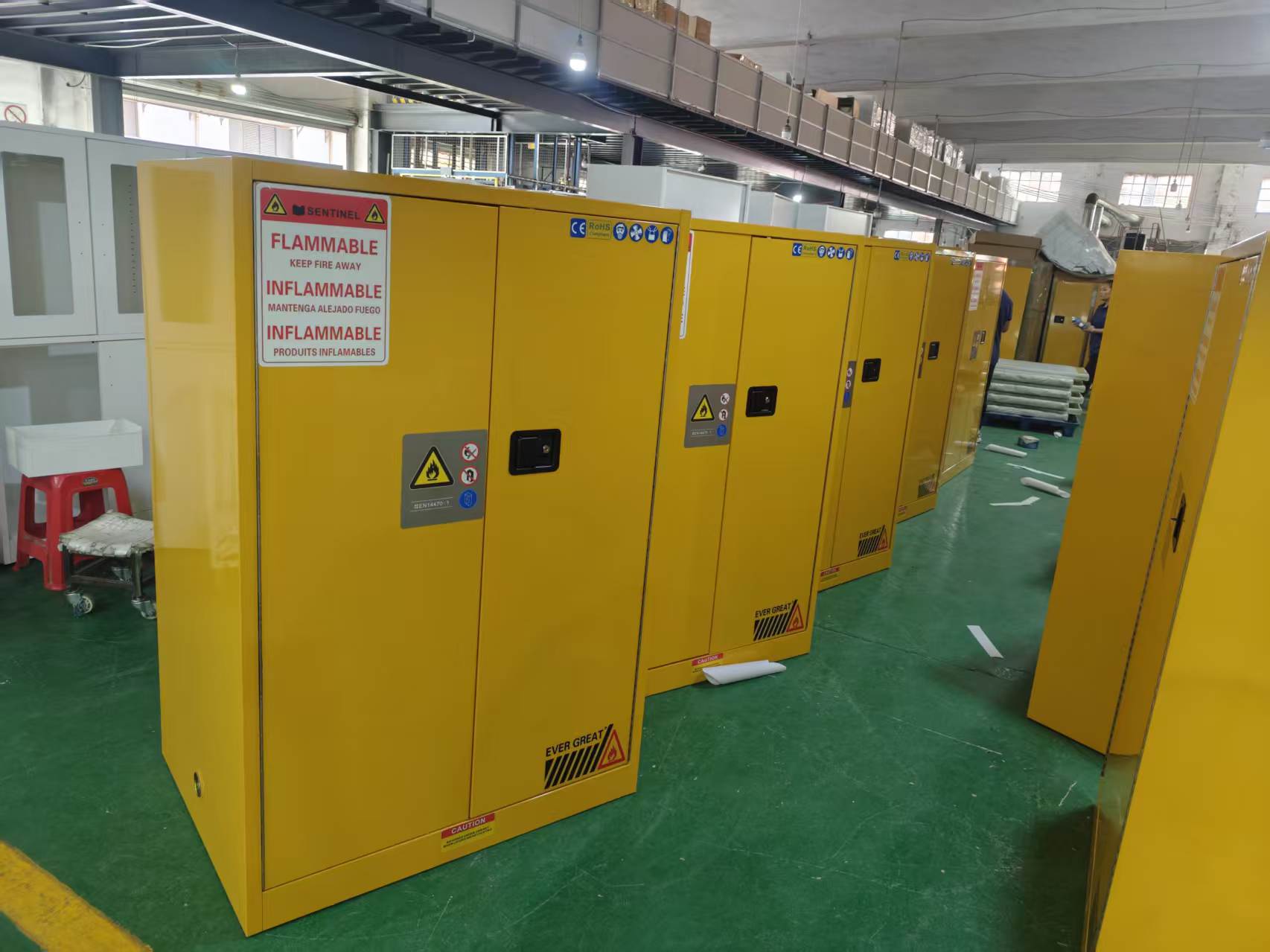
Figure 1: Flammable safety cabinet configuration with double-wall steel body and spill-containment provisions. Image source: Ever Great.
This is where buyers need to be precise. EN 14470-1 classifies fire-resistant safety cabinets into Type 15, 30, 60, and 90 minute classes based on the time taken to reach a defined internal temperature rise. The standard describes an internal temperature increase limit of 180 K or 200°C. A cabinet described as fireproof should be matched to a specific classification and a model-specific test document. The word fireproof alone is not a classification.
The limitation is equally important. A double-wall steel flammable cabinet is designed around fire load and spill containment. It is not the first choice for aggressive acids or alkalis that can attack metal. Those chemicals belong in a corrosion-resistant cabinet, with the ventilation strategy defined separately. Grounding and room exhaust also need to be designed into the installation rather than assumed.
Vented chemical and reagent cabinets: the exhaust connection defines the performance
A vented chemical and reagent cabinet is selected when the main concern is vapor release from stored chemicals, not fire load alone. The Ever Great EG-S0-LB001 is a full-steel exhausted chemical cabinet with an overall size of 900 x 500 x 1800 mm. It uses double-wall steel construction, an epoxy coating, tempered glass, four adjustable shelves, and a Dia. 110/150 mm exhaust connection.
The exhaust connection is the defining feature. A vented cabinet is only as effective as the exhaust system it is connected to. Before purchase, the project team should confirm the duct diameter, the available airflow, the negative-pressure relationship with the room, and whether the cabinet is interlocked with the laboratory exhaust. The cabinet should not be treated as a standalone fume hood for open handling of highly toxic materials.
The cabinet is relevant to chemical, pharmaceutical, and analytical laboratories because those settings often store reagents that release vapors during routine use. Adjustable spill-retaining shelves add a secondary containment function. However, the buyer should not assume that an exhaust connection alone solves chemical compatibility. The stored chemicals must still be checked against the cabinet materials, gaskets, and internal surfaces.
The boundary is clear: without ductwork and airflow, a vented cabinet does not provide vapor control. It also adds mechanical coordination to the project. The cabinet, exhaust fan, duct route, and room pressure balance need to be reviewed together, not purchased as unrelated items.
PP acid and alkali storage cabinets: corrosion resistance without metal
PP acid and alkali storage cabinets are selected when corrosive attack is the dominant risk. The Ever Great EG-PP-CB003 is a metal-free corrosive chemical storage cabinet with an overall size of 900 x 450 x 1800 mm. It uses 8.0 mm PP sheet, PP hardware, three adjustable spill-containment shelves, a bottom sump, and a Dia. 110 mm exhaust port.
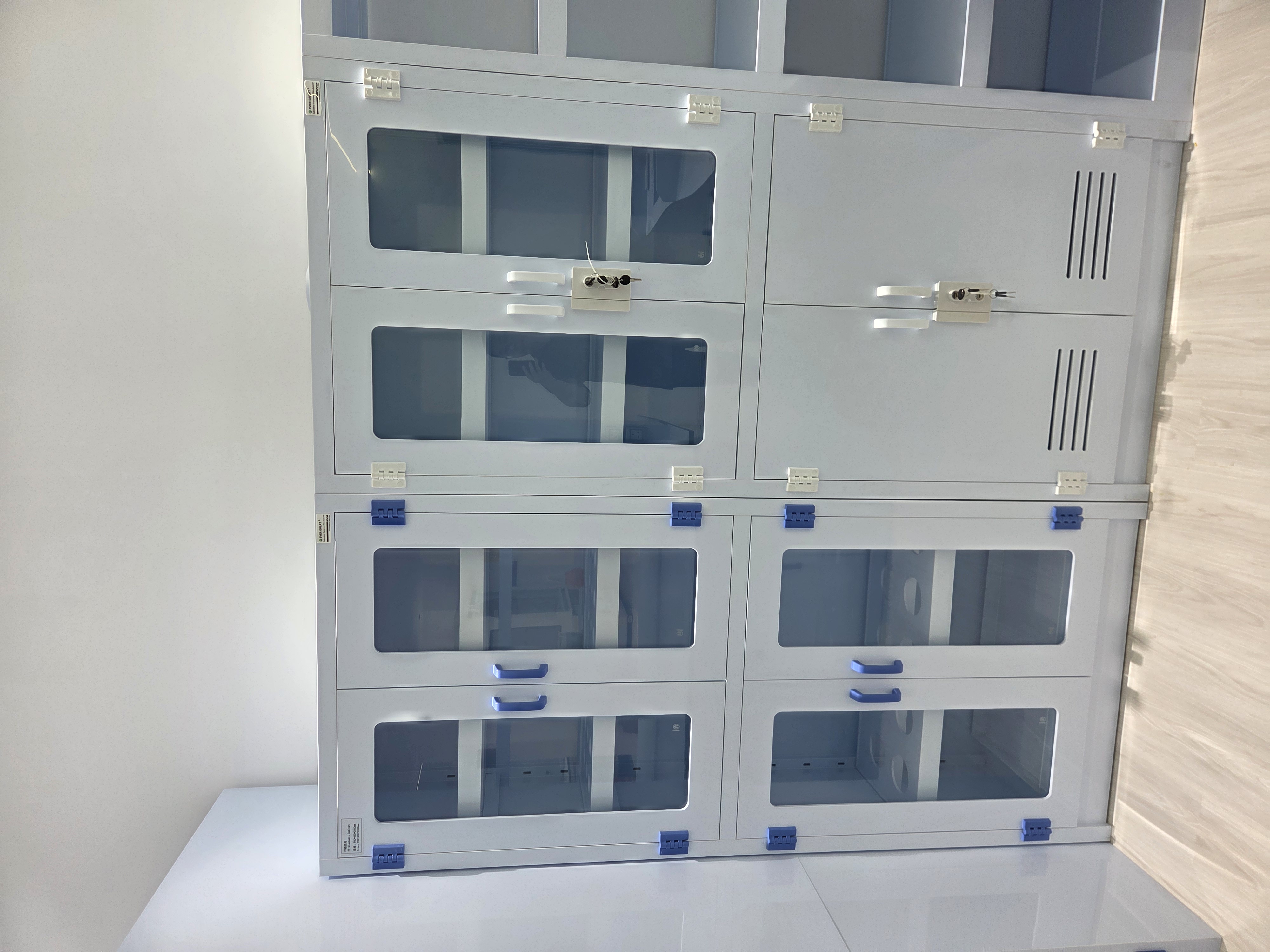
Figure 2: PP acid and alkali storage cabinet configuration with metal-free PP sheet construction and spill containment. Image source: Ever Great.
The material choice is the point. An all-PP, metal-free structure avoids the corrosion path that can affect steel cabinets in acid and alkali service. The spill-containment shelves and bottom sump support the storage of corrosive liquids, while the exhaust port allows connection to a ventilation system when vapor control is required.
Project data illustrates the intended use. A hazardous chemical storage compliance upgrade in Argentina called for 100% pure polypropylene seamless welding, a leak-proof liquid basin, and anti-static design, together with external exhaust ventilation ductwork, chemical spill trays, and safety padlocks. That combination shows the logic of PP storage: the cabinet is part of a corrosion-control and spill-control system, not a standalone answer to every chemical risk.
The limitation should be stated in the specification. PP is selected for corrosion resistance. It is not a fire-rated flammable liquid cabinet. If the inventory includes flammable solvents, those materials should be separated into a flammable safety cabinet. If the inventory releases vapors, the PP cabinet still needs an exhaust connection and a defined airflow path.
Gas cylinder safety cabinets: restraint, purging and alarm logic
Gas cylinder safety cabinets address a different problem: keeping pressurized cylinders fixed, separated, and monitored. The Ever Great EG-S0-CB005 is a steel gas cylinder cabinet with an overall size of 900 x 450 x 2000 mm. It uses 1.0 mm cold-rolled steel with a powder coating and is available in single-, double-, and triple-cylinder options.
The important features are mechanical and control-related. Cylinder-fixing provisions restrain the cylinder. An anti-tip layout reduces the risk of the cabinet moving or tipping. Alarm/exhaust linkage and a gas-alarm linkage configuration allow the cabinet to be integrated with the laboratory safety system. An automatic purging option is also available. These are configuration items, not universal features, so the buyer should verify exactly what is included in the quoted model.
The application fit is chemical, semiconductor, and industrial-gas laboratories. In those settings, the cabinet is a cylinder-handling device, not general chemical storage. The procurement checklist should include cylinder count, cylinder dimensions, restraint method, ventilation or purging sequence, gas detection logic, alarm interface, and the exhaust path. If the cabinet is placed in a room with other chemical storage, the separation and fire strategy should be reviewed together.
The boundary is that a gas cylinder cabinet does not replace a flammable liquid cabinet or a corrosive chemical cabinet. It solves cylinder restraint and gas-related containment. Mixing liquid chemical storage into a cylinder cabinet undermines the purpose of the separation.
Safety features that should not be assumed
The most useful procurement move is to turn safety features into explicit line items. The following items should be confirmed for the exact model and configuration:
- Alarm/exhaust linkage: confirm whether the cabinet is supplied with the linkage, what it controls, and how it fails.
- Automatic purging: confirm the sequence, controls, and whether the feature is included or optional.
- Anti-tip layout and cylinder fixing: confirm the restraint method and the load path for the cylinder size.
- Spill containment: confirm sump volume, shelf design, and whether shelves are adjustable and spill-retaining.
- Fire-resistance classification: confirm the specific EN 14470-1 class and model test evidence where a fire-rated claim is made.
- Grounding: confirm the grounding provision for flammable storage and the installer responsibility.
- Exhaust connection: confirm duct diameter, airflow, negative pressure, and interlock logic.
A company certificate does not replace a model-level test report. Cabinet-level fire, exhaust, and alarm performance should be documented for the exact model being purchased.
How Ever Great fits the comparison
Guangdong Ever Great Laboratory Equipment Co., Ltd. is a Foshan-based laboratory equipment manufacturer founded in 2011. The company operates a 6,000 m² production base with 40 employees and an annual output of 20,000 units. Its main products include fume hoods, laboratory workbenches, safety storage cabinets, and PP and stainless-steel laboratory furniture.
For the four cabinet families in this guide, the relevant Ever Great models are the flammable safety cabinet EG-SF-LB005, the vented chemical and reagent cabinet EG-S0-LB001, the PP acid and alkali storage cabinet EG-PP-CB003, and the gas cylinder safety cabinet EG-S0-CB005. This range allows a project team to separate the cabinet schedule by storage function instead of forcing one cabinet type to cover every chemical risk.
The company offers OEM/ODM and technical and specification customization. Its stated monthly capacity is 2,000 units, with lead times of 10-30 days, a minimum order quantity of 1 unit, and 100% testing. The company states ISO 9001 quality management certification, and its flagship product series hold CE and RoHS certifications. For ventilation products, the company states third-party test reports from SGS for fume hood performance against EN 14175 and ASHRAE 110 benchmarks.
Those company-level facts are useful for supplier evaluation, but they should not be stretched into cabinet-level claims. A buyer should still request the specific fire-resistance classification, exhaust compatibility, and alarm or purging configuration for the exact cabinet model. That is the correct division between supplier capability and product evidence.
Application fit: matching cabinet type to laboratory workflow
The same laboratory can need more than one cabinet family. The table below translates common workflow signals into a primary and secondary cabinet choice.
| Laboratory workflow | Primary cabinet choice | Secondary choice | Procurement reason |
|---|---|---|---|
| General chemical storage with flammable solvents | Flammable safety cabinet EG-SF-LB005 | Vented chemical cabinet EG-S0-LB001 for volatile reagents | Separate fire load from vapor release and spill retention. |
| Pharmaceutical or analytical laboratory with reagent storage | Vented chemical and reagent cabinet EG-S0-LB001 | Flammable safety cabinet for solvent storage | Exhaust-linked storage for volatile chemicals; separate flammable liquids. |
| Electroplating or acid-alkali laboratory | PP acid and alkali storage cabinet EG-PP-CB003 | Vented chemical cabinet for vapor control | Metal-free corrosion resistance and spill containment are the priority. |
| Semiconductor or industrial-gas laboratory | Gas cylinder safety cabinet EG-S0-CB005 | Vented chemical cabinet for process reagents | Cylinder restraint, anti-tip layout, and gas alarm logic are distinct from liquid storage. |
| Hazardous chemical storage compliance upgrade | PP acid and alkali storage cabinet EG-PP-CB003 | Vented cabinet and exhaust ductwork as required | Corrosion control, leak-proof containment, and documented ventilation are reviewed together. |
This mapping is not a substitute for a chemical inventory review. It is a way to structure the review before quotations are compared. A supplier can then respond to a defined storage function instead of guessing what the buyer means by safety cabinet.
Market context: a large, materials-diverse supply base
The cabinet decision sits inside a large laboratory furniture market. Dataintelo estimates the global laboratory furniture market at approximately USD 4.8 billion in 2025. The same source estimates that metal lab furniture held a 52.7% revenue share of the material segment in 2025. Metal remains the default for many structural and fire-rated applications, but it is not the universal answer for corrosive chemistry.
Trade data adds a supply-chain perspective. OEC reports that China exported over USD 4.15 billion under HS 940390 in 2024, a furniture-parts category that includes laboratory furniture components. For buyers, the implication is not that every supplier is equivalent. The implication is that the supply base is broad enough to require a disciplined comparison of materials, documentation, and configuration.
Market estimates also vary because definitions differ. Some studies include integrated laboratory services and high-end components; others focus on core furniture. Buyers should use market data as context for supplier screening, not as evidence that a particular cabinet meets a particular safety requirement.
Comparison with traditional storage: what changes and what does not
Compared with a generic storage cabinet, a purpose-built laboratory safety cabinet adds material specificity, containment features, exhaust provisions, or cylinder restraint. What changes is the ability to match the cabinet to the hazard. What does not change is the need for room-level safety design.
- A flammable cabinet does not remove the need for grounding, room ventilation, and fire planning.
- A fireproof label does not replace a specific EN 14470-1 classification and model test evidence.
- A vented cabinet does not work without ductwork, airflow, and a negative-pressure strategy.
- A PP cabinet does not become a fire-rated flammable cabinet because it is corrosion-resistant.
- A gas cylinder cabinet does not become general chemical storage because it has extra space.
- Alarm, purging, and linkage features add commissioning work; they should be tested, not only purchased.
The real limitation of specialized cabinets is coordination. They require earlier involvement of the chemical inventory owner, the ventilation designer, the electrical and alarm contractor, and the furniture supplier. A generic cabinet may look simpler to order, but the hidden cost appears later as added ductwork, missing restraints, or unverified fire claims.
Future outlook
Laboratory procurement is moving toward more explicit cabinet schedules. The reason is practical: safety reviews increasingly ask for model-specific evidence, not category-level descriptions. Buyers want to see how a cabinet is exhausted, how a cylinder is fixed, how a spill is contained, and how an alarm is linked to the room system.
Metal furniture is likely to remain dominant in structural and fire-rated applications, consistent with the 52.7% material share estimate for 2025. At the same time, corrosive chemistry will continue to justify PP construction, and gas-intensive laboratories will continue to require cylinder-specific containment. The cabinet category is therefore unlikely to consolidate into one product type.
The procurement implication is straightforward. Write the cabinet schedule by storage function. Require model-level submittals for fire classification, exhaust connection, alarm logic, purging, and cylinder restraint. Separate the cabinet purchase from the ventilation and alarm design only when the interfaces are clearly documented.
FAQ
What is the difference between a flammable safety cabinet and a vented chemical cabinet?
A flammable safety cabinet is built around fire load and spill containment, with double-wall steel, a sump, and flash-arrested vents. The EG-SF-LB005 uses a 1.2 mm double-wall steel body, a 38 mm air barrier, a 51 mm sump, and a 45 gallon nominal capacity. A vented chemical cabinet is built around exhaust-linked vapor control; the EG-S0-LB001 has a Dia. 110/150 mm exhaust connection and four adjustable spill-retaining shelves. They solve different risks and should not be treated as substitutes.
When should a laboratory choose a PP acid and alkali storage cabinet?
Choose PP when corrosive acids or alkalis are the main storage risk and metal corrosion is a concern. The EG-PP-CB003 uses 8.0 mm PP sheet, PP hardware, three adjustable spill-containment shelves, a bottom sump, and a Dia. 110 mm exhaust port. It is intended for chemical, electroplating, and acid-alkali laboratories. It remains a corrosion-control cabinet, not a fire-rated flammable liquid cabinet.
Does a vented chemical cabinet need ductwork?
Yes. The EG-S0-LB001 is a full-steel exhausted chemical cabinet with a Dia. 110/150 mm exhaust connection. Its vapor-control function depends on connection to a laboratory exhaust system with confirmed airflow and negative pressure. It should not be treated as a standalone fume hood for open handling of highly toxic materials.
What should be verified in a gas cylinder safety cabinet?
Verify cylinder-fixing provisions, anti-tip layout, cylinder count options, alarm/exhaust linkage, automatic purging if required, and gas-alarm linkage. The EG-S0-CB005 is available in single-, double-, and triple-cylinder options with 1.0 mm cold-rolled steel construction and powder coating. These features are configuration-dependent, so the quotation should state exactly what is included.
Can one cabinet type store all laboratory chemicals and cylinders?
No. Flammable liquids, corrosive acids and alkalis, volatile reagents, and gas cylinders create different risks. A practical cabinet schedule separates them into a flammable safety cabinet, a PP acid and alkali cabinet, a vented chemical cabinet, and a gas cylinder cabinet where each is applicable. The separation should be based on the chemical inventory and the room ventilation strategy, not on cabinet price alone.
Reference material
For project teams reviewing cabinet configurations and laboratory furniture options, the Ever Great 2026 brochure is available here: Ever Great 2026 brochure.
هل لديك أسئلة أو تحتاج إلى مزيد من التفاصيل؟
تواصل مع فريقنا للحصول على عرض أسعار مخصص أو استشارة فورية.
طلب عرض أسعار
املأ النموذج أدناه وسيتواصل معك فريقنا بعرض مقترح مخصص.
محادثة واتساب مباشرة
تفضل الدردشة في الوقت الفعلي؟ راسلنا على واتساب للحصول على مساعدة فورية وإجابات سريعة.
- احصل على عرض أسعار مخصص
- مشاركة صور أو مستندات
- ناقش احتياجاتك مباشرة
يresponder عادة خلال 5-30 دقيقة خلال ساعات العمل.