
Laboratory Furniture Factory Audits: Gas Cylinder Cabinets
A gas cylinder cabinet rarely sits on a project's critical path, yet it is one of the few pieces of laboratory furniture where a purchasing decision is also a safety decision. Because the unit is passive — it restrains, stores and ventilates rather than performing a visible function — its quality is difficult to judge after delivery. That is why buyers in late-stage evaluation increasingly ask for supplier capability evidence before the purchase order: the drawings, material records, factory process evidence and packing records that show a quoted cabinet can actually be built, checked and shipped.
This article examines that evidence through a deliberately narrow product lens: a gas cylinder safety cabinet, model EG-S0-CB005, and the questions a buyer should be able to answer from documents before an order is released. Guangdong Ever Great Laboratory Equipment Co., Ltd. (Ever Great) is the reference case. Ever Great is a laboratory infrastructure manufacturer founded in 2011 and based in Shishan Town, Nanhai District, Foshan City, Guangdong Province, China, operating a 6,000 m² manufacturing base and supplying fume hoods, laboratory workbenches, safety storage cabinets and PP and stainless steel laboratory furniture to markets including the USA, EU, Middle East and Africa.
Why the gas cylinder cabinet category exposes supplier capability
Stored gas cylinders concentrate energy in a small footprint. A cabinet's contribution to laboratory safety is structural and mechanical: it keeps cylinders upright, restrains them from moving, isolates them from ignition sources and, where the specification requires it, connects the interior volume to the room's exhaust system. None of that is visible in a delivered unit beyond surface finish and door alignment.
Three failure modes matter in practice, and each one maps to a different document request.
- Mechanical failure. Weak fixing points, an unstable base or a layout that shifts the centre of gravity when doors are open. The evidence is a dimensioned drawing plus the fixing and anti-tip specification.
- Corrosion failure. Coating breakdown in rooms with acid or solvent vapour, which shortens service life and weakens the steel. The evidence is the material callout and the coating process sequence.
- Ventilation failure. Stagnant gas accumulation where purging or exhaust linkage was assumed but not specified. The evidence is the option list and the interface description for the alarm and exhaust connection.
The commercial point is simple: a buyer comparing quotations on price alone is comparing four numbers that look identical and four products that may not be. Capability evidence is what converts a quotation into a defensible procurement decision.
The product evidence file: what an EG-S0-CB005 record should contain
For the EG-S0-CB005 gas cylinder safety cabinet, seven specification items form the backbone of the record a buyer can check line by line.
| Evidence item | Stated record for EG-S0-CB005 | What the buyer is verifying |
|---|---|---|
| Model designation | EG-S0-CB005 | That the drawing, quotation, test record and packing list all reference one identity |
| Cabinet construction | 1.0 mm cold-rolled steel with powder coating | Gauge continuity across load-bearing panels, not only door skins; coating sequence |
| External dimensions | 900 x 450 x 2000 mm | Footprint, aisle clearance, door swing and exhaust connection routing |
| Cylinder configurations | Single-, double- and triple-cylinder | That the fixing provisions scale with the chosen configuration |
| Stability | Anti-tip layout | Load distribution and how the unit is restrained in the room |
| Cylinder retention | Cylinder-fixing provisions | What is physically supplied and whether it matches the cylinder diameters in use |
| Ventilation and monitoring | Automatic purging option; alarm and exhaust linkage | Whether these are factory-fitted, field-retrofit, and who supplies the interface hardware |
Steel gauge and coating sequence
1.0 mm cold-rolled steel with powder coating is the stated construction of the EG-S0-CB005. The audit question is not whether the figure appears on the sheet but where it applies. A buyer should ask for a dimensioned drawing that marks gauge by panel — body, base, doors, shelves — because the base and shelf carry the cylinder load, while the doors carry only handling wear. Coating is equally procedural: Ever Great's production description specifies acid-wash phosphating followed by anti-corrosive epoxy powder coating, a sequence that prepares the steel before coating rather than coating over mill scale. Auditors should ask for the process sequence, not a colour swatch.
Dimensions and footprint planning
At 900 x 450 x 2000 mm, the cabinet is tall and shallow, which suits wall placement in a dedicated cylinder bay but demands attention to door clearance and to the vertical route of any exhaust connection. Buyers should reconcile these dimensions against the room layout drawing and against the height of any local extraction they intend to connect to.
Configuration range and fixing provisions
The single-, double- and triple-cylinder configurations exist to match the cylinder inventory rather than the room size. The useful audit question is whether the cylinder-fixing provisions change with the configuration — a triple-cylinder unit requires retention points that work across the full width, not a duplicated single-cylinder arrangement.
Anti-tip layout, purging and alarm linkage
An anti-tip layout describes how load is distributed and how the unit is intended to be restrained when cylinders are loaded and doors are open. The buyer should confirm what the supplier provides and what the site must provide. The automatic purging option and the alarm and exhaust linkage belong to the same conversation: both are interfaces between the cabinet and the building. Request an interface description stating which components are supplied with the cabinet, which are supplied by the exhaust contractor, and what triggers the alarm.
The factory evidence file: what to request in a supplier audit
Product documents prove intent; factory evidence proves the ability to repeat it. A structured audit of a laboratory furniture supplier covers six areas, and each has a document or a physical check attached to it.
1. Process route
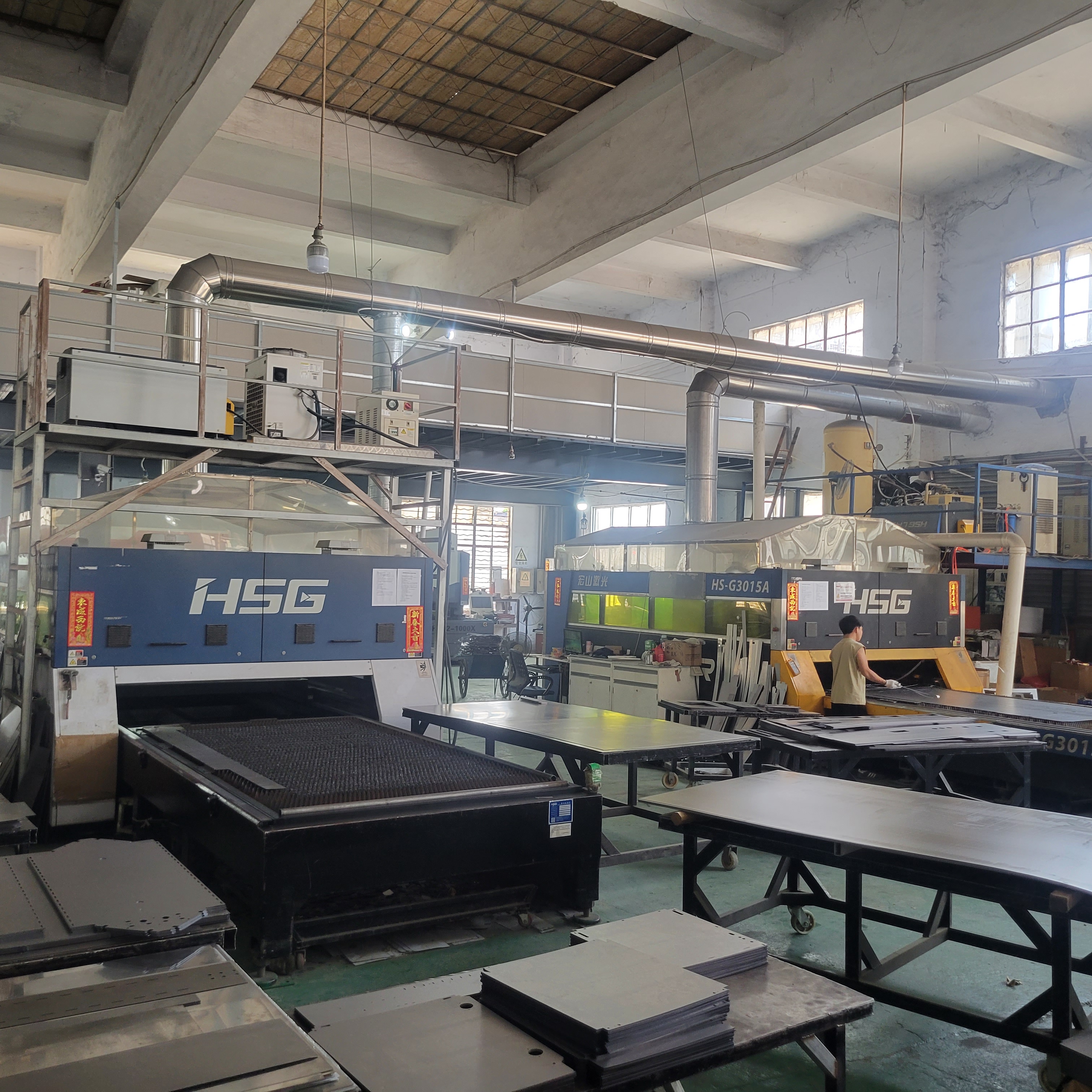
Ask for the routing of a cabinet body from raw sheet to crated unit: cutting, forming, welding, coating and assembly. Ever Great operates a 6,000 m² manufacturing base in Foshan with more than 40 skilled professionals, and reports annual output of 20,000 units with roughly 60% exported. Output figures are worth reconciling with what the audit actually observes — line layout, work-in-progress, and whether the stated process exists in-house or is subcontracted.
2. In-process quality control and pre-shipment test
Ever Great states pre-shipment test as its acceptance criterion. The audit request is the corresponding control plan: which characteristics are checked at which stage, and who signs off. For a cylinder cabinet the meaningful checkpoints are panel gauge, weld integrity on load-bearing joints, coating adhesion after curing, door and lock alignment, and the presence of all fixing components in the packed set.
3. Pre-assembly test fit
Ever Great uses a KD mortise-and-tenon pre-assembly structure and conducts a 100% pre-assembled test fit before shipment. For laboratory furniture shipped flat, this is the single most useful factory evidence a buyer can watch, because it catches the interface errors that would otherwise surface on site, at the buyer's cost.
4. Packing and labelling record
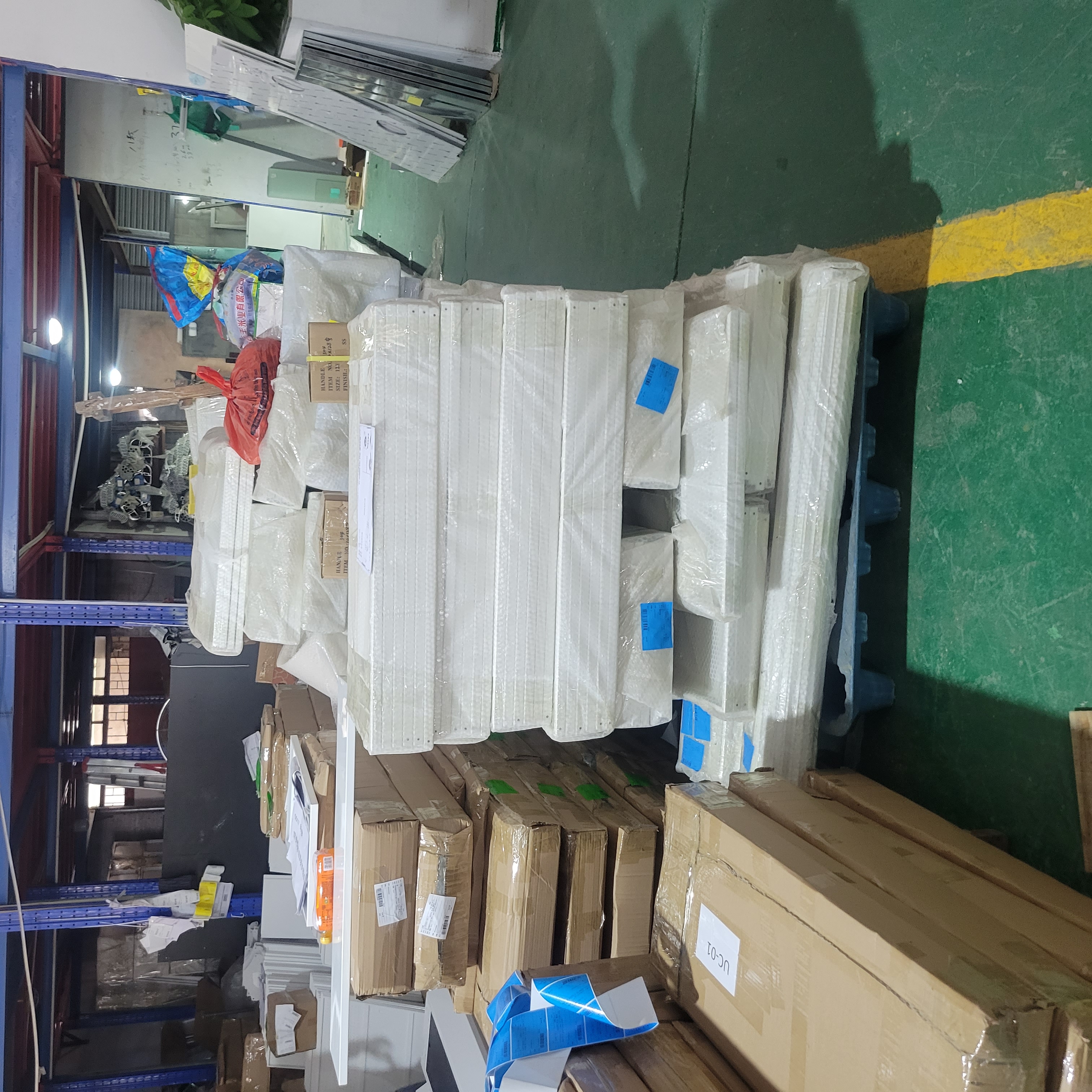
Ever Great describes heavy-duty export plywood crating with vacuum foil wrap, colour-coded hardware labelling, backup wearing parts inside the container, and 3D modular assembly video guides with remote engineer installation guidance. Each of these is verifiable during an audit: ask to see a packed set opened, and confirm that the hardware labelling corresponds to the assembly guide the buyer will receive.
5. Certification and test file
Ever Great holds ISO 9001, ISO 14001 and ISO 45001 management system certifications, with CE and RoHS certification for its flagship product series. Its ventilation and containment products, including laboratory fume hoods, are tested to EN 14175 and ASHRAE 110 benchmarks, with third-party reports from inspection bodies such as SGS. Buyers should request the certificate scope pages, not only the certificate covers, because scope is what determines relevance to a specific order.
6. Service and continuity commitments
Ever Great provides a 1-year warranty and lifetime remote or on-site engineering support. Auditors should ask how a spare-parts request is handled after the warranty period, and whether the same hardware labelling and assembly documentation remain available for units delivered years earlier.
Technical explanation: how the cabinet's safety logic becomes auditable
A gas cylinder cabinet is a controlled volume. The engineering logic runs in three layers, and each layer leaves a document behind.
The first layer is structure. Steel gauge, weld quality and base design determine whether the unit keeps its shape under a full cylinder load and over years of door cycling. The 1.0 mm cold-rolled steel construction with powder coating on the EG-S0-CB005 belongs here, together with the anti-tip layout and the cylinder-fixing provisions that keep stored cylinders in a defined position.
The second layer is atmosphere. Cylinder bays are ventilated, and the automatic purging option exists to clear the internal volume rather than relying on passive leakage. Whether purging is specified depends on the gas in use, the room's extraction capacity and the site's operating procedure — a point the supplier and the building services designer should settle together, because the cabinet cannot compensate for an undersized room exhaust.
The third layer is information. The alarm and exhaust linkage turns cabinet status into a signal the laboratory can act on. What the audit should establish is the boundary: which sensors and contacts ship with the cabinet, which belong to the exhaust contractor, and what the documented trigger condition is.
Application: matching audited evidence to real laboratory settings
Cylinder storage requirements differ sharply by environment, and the audit should be scoped to the one that applies.
In chemical and petrochemical laboratories, the dominant risk is corrosive atmosphere combined with frequent cylinder exchange. Here the coating sequence, the corrosion resistance of the fixing hardware and the door hardware durability carry most of the weight.
In semiconductor and industrial-gas facilities, cylinder bays are often small, tightly serviced rooms where purging and exhaust linkage matter more than storage volume, and where the interface between cabinet and building exhaust must be documented before installation, not after.
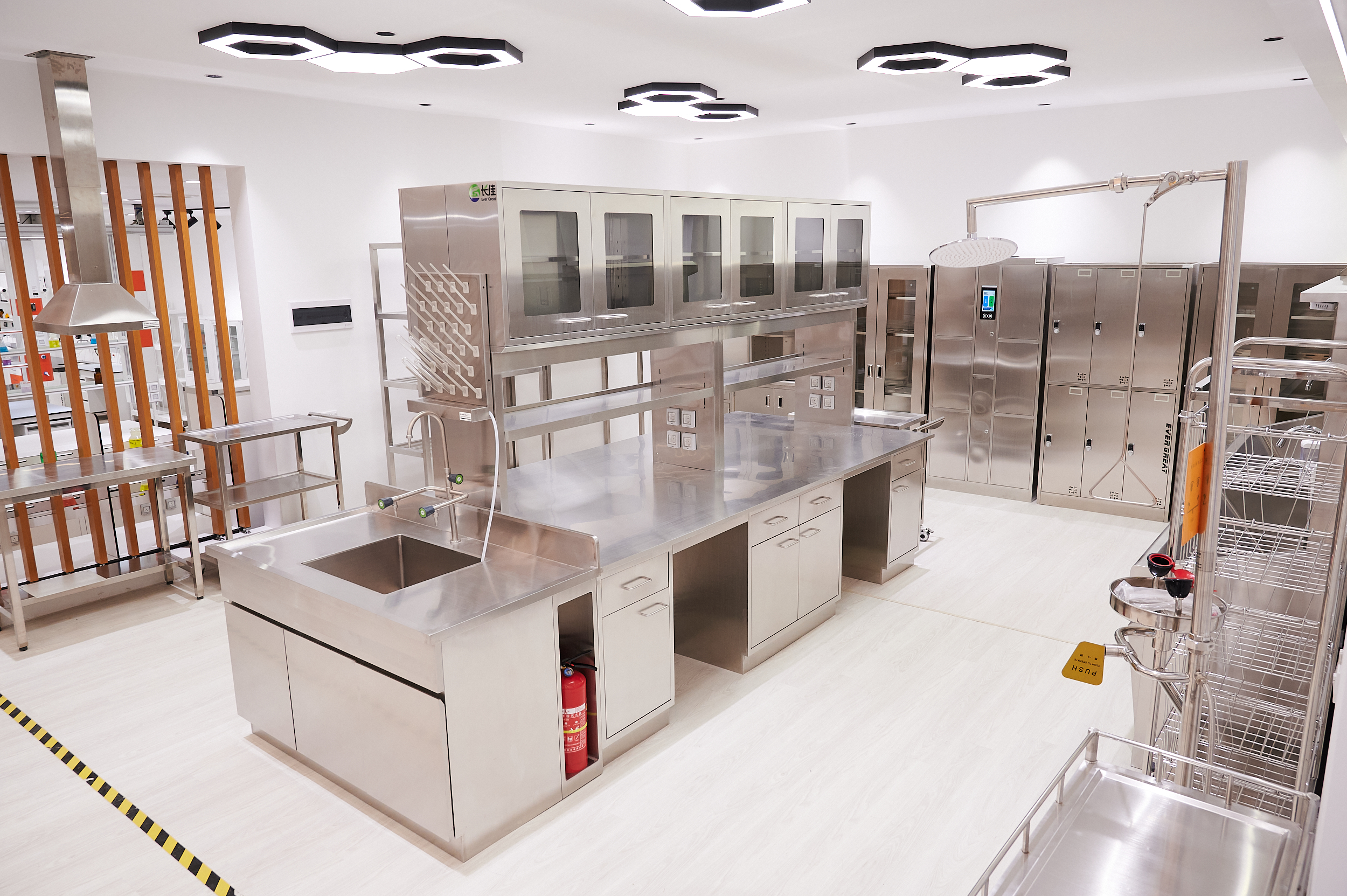
In pharmaceutical and QC environments, the cabinet is one item in a wider furniture package, and consistency of documentation across that package becomes the practical test of a supplier. A useful illustration is the exhaust washing bench EG-SS-LG002, built in 304 stainless steel with a 25 mm ceramic worktop, two PP sinks and two three-way gooseneck faucets. A supplier able to deliver both a 1.0 mm cold-rolled steel cylinder cabinet and a stainless bench with ceramic worktop and PP plumbing is demonstrating multi-material fabrication control — mild steel coating, stainless welding, ceramic slab handling and plumbing integration — which is exactly the capability that matters when a laboratory wants one accountable partner across a multi-year fit-out programme.
Market context: why documentation-led procurement is growing
The global laboratory furniture market was valued at approximately USD 4.8 billion in 2025, with metal furniture holding a 52.7% revenue share of the material segment in the same year, according to Dataintelo. China exported over USD 4.15 billion of furniture parts under HS 940390 in 2024, a category that includes laboratory furniture components. Market size estimates vary considerably between research houses because definitions differ — some include integrated laboratory services and high-end components such as gas piping, others count core furniture only — so buyers should treat any single headline figure as directional rather than definitive.
Two standards anchor the surrounding evidence culture. ANSI/ASHRAE Standard 110-2016 (R2025) is the primary American national standard for quantitative performance testing of laboratory fume hoods. In Europe, EN 14470-1 classifies fire-resistant safety cabinets as Type 15, 30, 60 or 90 minutes according to the time taken to reach the internal temperature limit, which the standard sets at a rise not exceeding 180 K or 200 °C. Both standards illustrate the direction of travel: performance claims in laboratory furniture are increasingly expected to be tied to a named method and a named report.
The practical consequence for gas cylinder cabinet procurement is that buyers are shifting from catalogue comparison to record comparison. In a market where metal construction dominates volume, differentiation moves to documentation quality, interface clarity and the supplier's ability to reproduce the same unit years later.
Comparison: specification-sheet purchasing versus audit-backed purchasing
The traditional approach treats the quotation sheet as the buying document. The audit-backed approach treats the quotation as one input among several. The differences are not philosophical; they show up at defined points.
| Dimension | Specification-sheet purchasing | Audit-backed purchasing |
|---|---|---|
| What is compared | Price, dimensions, cylinder count | Drawing, gauge by panel, coating sequence, fixing provisions, interface description |
| Risk discovery point | On site, during installation | During pre-assembly test fit and factory inspection |
| Handling of options | Purging and alarm linkage listed as line items | Scope split documented between cabinet, exhaust contractor and site |
| Service continuity | Assumed from the warranty statement | Spare-parts route and documentation retention checked for older units |
| Cost of the process | Lower upfront effort | Additional audit time and travel before the order |
The limitations deserve equal weight, because an audit is not a guarantee.
- Standards do not transfer automatically between product families. EN 14175 and ASHRAE 110 testing covers fume hood containment performance; it does not certify a gas cylinder cabinet. Where a project specifies a fire rating under EN 14470-1, the buyer must confirm the applicable classification for the specific cabinet separately.
- A warranty is a service commitment, not a performance prediction. A 1-year warranty with lifetime remote or on-site engineering support describes what happens after a problem, not whether one will occur.
- Remote installation guidance depends on local capability. Video guides, colour-coded labelling and remote engineer support reduce error rates but cannot fully substitute for skilled on-site labour, which remains a buyer-side variable.
- The audit cannot validate the room. Cabinet performance depends on the ventilation and handling practice of the space it is installed in; those conditions sit outside the supplier's scope.
Future outlook
Two developments are likely to shape how gas cylinder cabinets are bought over the next several years. The first is the normalisation of documentation as a deliverable: dimensioned drawings, coating process records, pre-assembly test-fit reports and interface descriptions becoming standard attachments to a purchase order rather than items a buyer has to negotiate for. The second is lifecycle thinking. As laboratories plan multi-phase fit-outs, the ability to reorder an identical cabinet, receive matching fixing hardware and obtain assembly documentation years after the original delivery becomes a selection criterion in its own right.
Neither trend requires new technology. Both require a supplier whose process is stable enough to be audited and documented — which is precisely what the factory audit is designed to establish.
FAQ
What documents should a buyer request before auditing a gas cylinder cabinet supplier?
A buyer should request the dimensioned drawing for the specific model, the material and coating process sequence, the cylinder-fixing and anti-tip specification, the option list covering automatic purging and alarm or exhaust linkage, the in-process quality control plan, and the pre-shipment acceptance record. Management system certificates should be requested with scope pages rather than covers only, since scope determines whether a certificate applies to the product being ordered.
How can a buyer verify the steel and coating specification of a gas cylinder safety cabinet?
Verification relies on the drawing and the process record. For the EG-S0-CB005, the stated construction is 1.0 mm cold-rolled steel with powder coating. The buyer should confirm from the drawing which panels carry that gauge, and confirm the coating sequence — Ever Great's production description specifies acid-wash phosphating followed by anti-corrosive epoxy powder coating — so that coating is applied over prepared steel rather than directly over mill scale.
What factory evidence shows that a laboratory furniture supplier can deliver a full project on schedule?
The most informative evidence is the pre-assembly test fit. Ever Great uses a KD mortise-and-tenon pre-assembly structure and conducts a 100% pre-assembled test fit before shipment, which surfaces interface errors in the factory rather than on site. This should be read together with the manufacturing footprint — a 6,000 m² base and reported annual output of 20,000 units — and with packing evidence such as export plywood crating with vacuum foil wrap and colour-coded hardware labelling.
What after-sales and spare-parts commitments are normal for laboratory furniture suppliers?
Commitments vary by supplier and should be read precisely. Ever Great provides a 1-year warranty and lifetime remote or on-site engineering support, and its overseas project practice includes backup wearing parts shipped inside the container, colour-coded hardware labelling, 3D modular assembly video guides and remote engineer installation guidance. Buyers with multi-phase programmes should additionally confirm how a spare-parts request would be handled after the warranty period ends.
What are the typical purchasing terms and acceptance criteria for laboratory furniture orders?
Ever Great's stated commercial terms are a minimum order quantity of 1 unit, delivery terms of FOB, CIF, DDP or EXW, pre-shipment test as the acceptance criterion, and payment terms of T/T with 30% advance payment and 70% balance payment before delivery. Because acceptance is tied to a pre-shipment test, the buyer and supplier should agree in advance which characteristics that test covers and what documentation is issued at sign-off.
Closing assessment
Supplier capability evidence is ultimately a reconciliation exercise. A gas cylinder cabinet record should agree with the factory process that builds it, the packing record that ships it and the service commitment that follows it. Where those four agree, the buying decision rests on documents a procurement team can defend internally — and where they do not, the gap is usually visible before the order rather than after installation.
The full Ever Great product and capability overview is available for public download: Ever Great 2026 brochure (PDF).
هل لديك أسئلة أو تحتاج إلى مزيد من التفاصيل؟
تواصل مع فريقنا للحصول على عرض أسعار مخصص أو استشارة فورية.
طلب عرض أسعار
املأ النموذج أدناه وسيتواصل معك فريقنا بعرض مقترح مخصص.
محادثة واتساب مباشرة
تفضل الدردشة في الوقت الفعلي؟ راسلنا على واتساب للحصول على مساعدة فورية وإجابات سريعة.
- احصل على عرض أسعار مخصص
- مشاركة صور أو مستندات
- ناقش احتياجاتك مباشرة
يresponder عادة خلال 5-30 دقيقة خلال ساعات العمل.