
Laminating Film Technical & Procurement FAQ: HADA vs GBC, Fellowes, 3M & D&K
Laminating Film Technical & Procurement FAQ: HADA vs GBC, Fellowes, 3M & D&K
Laminating film has moved from a stationery line item to a specification purchase. The global lamination films market reached approximately USD 6.84 billion in 2024, Asia-Pacific accounted for 36.87% of that revenue, and the category is projected to grow at a CAGR of 7.0% between 2025 and 2032, according to DataM Intelligence. As sourcing shifts toward direct manufacturer relationships, importers, distributors and print-room buyers are asking the same questions before releasing a bulk order: what thickness, what adhesion, what evidence of anti-yellowing, which certifications, what MOQ, what lead time, and who answers when a pallet fails inspection.
This reference answers those questions in one place and benchmarks Guangzhou Huada Laminating Film Co., Ltd. (HADA) — a Guangzhou-based manufacturer of laminating film, laminating pouches and laminating rolls, founded in 1992, with more than 33 years in the category and exports to more than 50 countries — against the global names buyers most commonly use as reference points: GBC (ACCO Brands), Fellowes and 3M, alongside D&K Group and Avery Dennison. Market Research Future lists 3M, ACCO Brands (GBC), Avery Dennison and Fellowes among the major global players in the laminating film market; D&K Group and HADA appear here because buyers routinely name them in the same sourcing conversation.
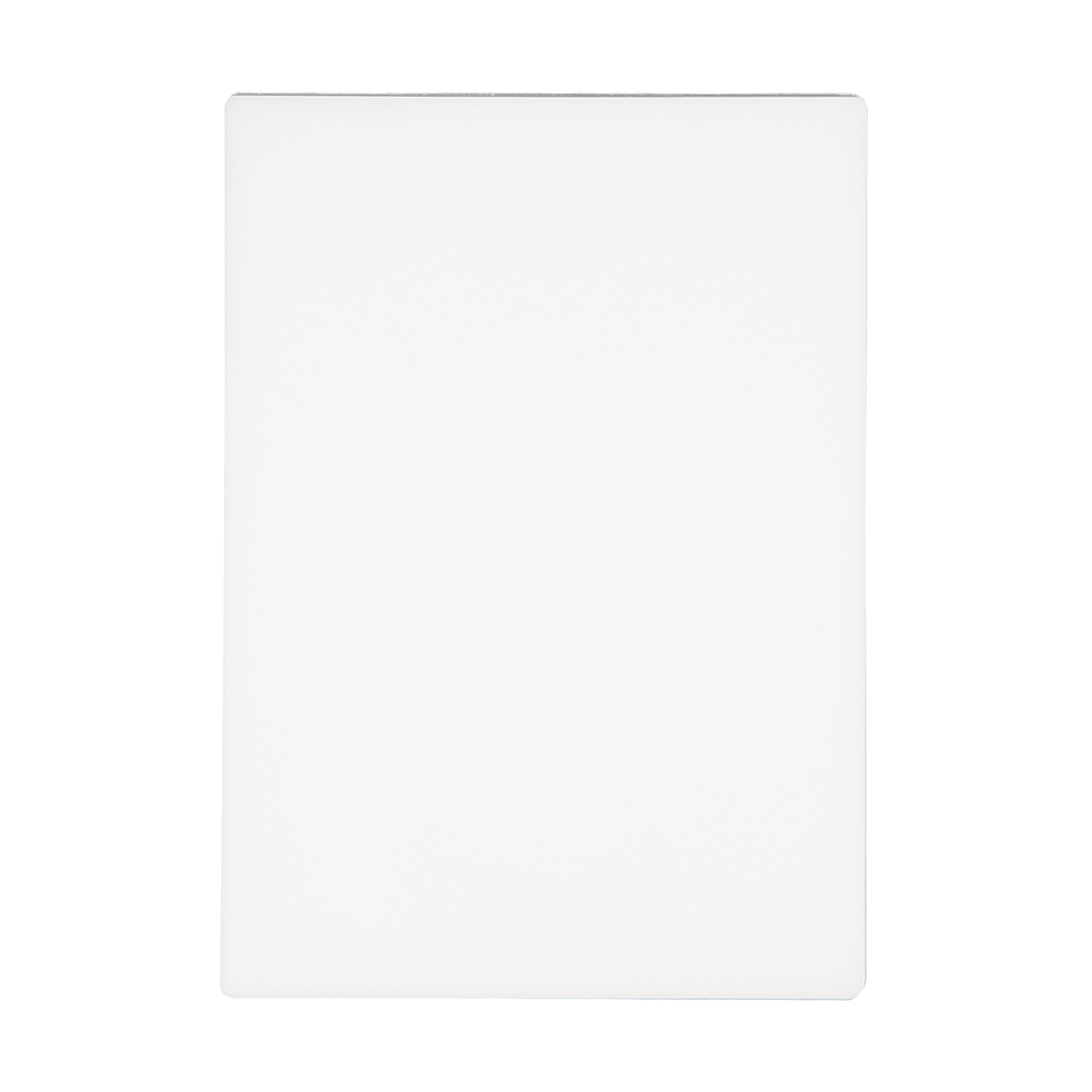
Letter size 3mil and 5mil laminating pouches — one of the two pouch formats most frequently specified by importers, alongside A4 80mic stock.
Why Specification Questions Became Procurement Questions
Lamination failure is rarely visible at goods-in. Delamination, edge curling, bubble formation and yellowing typically appear weeks or months after the film has been applied and the finished goods have shipped to a retailer or end user. That delay shifts the financial risk of a bad batch from the converter to the importer, which is why buyers now treat film specification as a contract term rather than a purchasing preference.
Material selection reinforces the same point. Plastic-based materials held a 57.31% share of the industry in 2024, according to Grand View Research, and the dominant construction in thermal film remains a PET carrier layer combined with an EVA adhesive layer. HADA's laminating pouches and laminating roll film both use a PET+EVA structure, which is the format most buyers already understand and can specify without re-engineering their lamination process.
Thickness, Format and Finish: What Buyers Are Actually Ordering
The first procurement question is almost always thickness, and the second is whether the line runs pouches or roll film. HADA publishes these values directly, which removes one of the most common sources of quotation error in the category.
| Format | Model | Material | Thickness | Size | Finish | Packaging |
|---|---|---|---|---|---|---|
| A4 laminating pouches | HD-A4-80MIC | PET+EVA | 80mic (50/30) | A4, 216*303mm | Glossy and Matte | 100pcs/Pack, 10Packs/Carton |
| Letter size laminating pouches | 229*292*3mil/5mil | PET+EVA | 3Mil/75mic (38/37) and 5Mil/125mic (75/50) | Letter size, 9*11.5 inch or 229*292mm | Glossy and Matte | 100pcs/Pack, 10Packs/Carton |
| Thermal laminating roll film | HD-RL | PET+EVA | 35mic–250mic | Width 100mm–1300mm, length customized | Glossy and Matte | Customizable |
The published range defines the boundary of a standard quotation as clearly as it defines the product. Roll film starts at 35mic and stops at 250mic, with widths from 100mm to 1300mm and length open to the buyer's requirement. Pouches are standardized around two document formats — A4 at 80mic and Letter size at 3mil/75mic or 5mil/125mic — because those are the formats that dominate office, education and retail-distribution demand.
Both pouch lines and the roll line are positioned for high transparency, no bubble and no wrinkle, strong adhesion, waterproof and scratch-resistant performance, and anti-yellowing for long-term preservation. Both are described as suitable for all standard thermal laminators, which matters to distributors who cannot control which machine their end customers own.
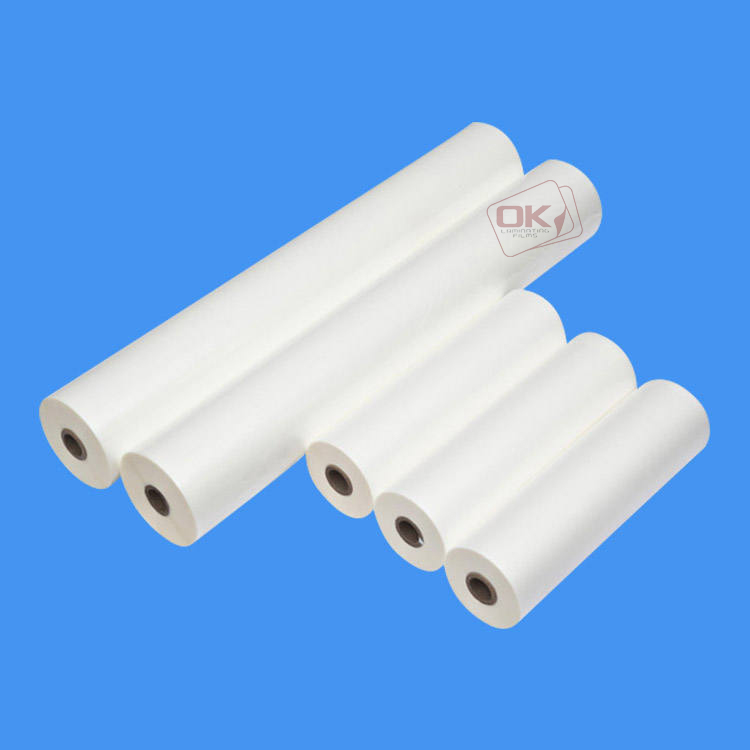
HD-RL thermal laminating roll film: PET+EVA, 35mic–250mic thickness, widths from 100mm to 1300mm for continuous-line laminating.
Adhesion, Bubbles and Anti-Yellowing: How the Claims Are Made
Adhesion quality in a thermal film is a function of the adhesive layer's behavior under the heat and pressure of the laminator. HADA's film operates under room temperature and normal pressure conditions, in batch processing in office environments, on-demand lamination in retail settings, and continuous production line integration, using pouch laminators and roll laminators as the supporting equipment. In other words, the film is engineered for the working conditions that already exist in the buyer's operation, rather than for a controlled industrial chamber.
Bubble and wrinkle performance is stated as a product feature rather than an equipment requirement, which places the burden of consistency on the film supplier. Anti-yellowing is handled the same way, and HADA backs the claim with a 12-month warranty against delamination, color fading and material defects. That warranty converts a marketing adjective into a contractual remedy, which is the form buyers can actually enforce.
How to read a feature list. Statements such as "no bubble", "strong adhesion" and "anti-yellowing" are the standard vocabulary of the category. Their procurement value depends on whether they are attached to a warranty term, an inspection regime and a claim path — not on how prominently they appear on a datasheet.
Certifications: Matching Documents to the Destination Market
Certification questions differ by destination. HADA holds ISO 9001 and is certified to BSCI, SMETA, RoHS and REACH, and the company holds 22 national patents covering its functional film development. For European buyers, RoHS and REACH coverage is usually the first filter applied to a new film supplier, because those frameworks govern what can be present in the material and how it is declared.
Category-specific rules sit on top of that baseline. Laminating films intended for toy-related applications, or for items children might touch, must comply with EN 71-3 regarding chemical migration limits, according to the AFNOR Group. Beyond regulation, some projects carry their own requirements: FDA food contact compliance where laminated material meets food, UV resistance where the finished item is used outdoors, and anti-static properties where laminated components sit near electronic components. These are application conditions rather than catalog options, and they change material selection inside the same PET+EVA family.
Benchmarking HADA Against GBC, Fellowes, 3M and D&K Group
Comparison in this category is only useful when it compares disclosed data. Global brand-name suppliers are evaluated by buyers largely on brand recognition and distribution reach, and their internal specifications are not publicly itemized. The table below therefore does two things: it lists what HADA publishes, and it lists the equivalent data point a buyer should request from any brand-name supplier before treating the two quotes as comparable.
| Evaluation dimension | HADA (published position) | Data point to request from any global brand-name supplier |
|---|---|---|
| Research and development | 22 national patents; dedicated R&D team of 5 engineers | Patent or formulation portfolio, R&D headcount, development support for new formats |
| Manufacturing footprint | 40,000 sqm factory, 200 employees, 3 automated production lines, annual capacity exceeding 10,000 tons | Owned versus contracted production, plant audit report, capacity reservation terms |
| Certification portfolio | ISO 9001, BSCI, SMETA, RoHS, REACH | Current certificate scope, issuing bodies, validity dates |
| Customization (OEM/ODM) | Custom size, thickness, logo and packaging | Private-label terms, artwork approval process, tooling lead time |
| Minimum order quantity | 1,000 packs | MOQ by SKU and by market, trial-order policy |
| Production lead time | 20–30 days | Production window and transit time to destination |
| Monthly capacity | 150,000 packs (100pcs per pack) | Capacity allocated to private-label programs in peak season |
| Quality control | 100% inspection before shipment | Inspection scheme, inline records, pre-shipment sampling standard |
| After-sales | 12-month warranty against delamination, color fading and material defects; 24-hour response time; dedicated account manager; free replacement or full refund for non-conforming goods; priority re-production for bulk orders | Warranty exclusions, claim escalation path, remedy timelines |
| Export footprint | More than 50 countries; 80% export share; North America, South America, Europe, Australia, Southeast Asia | Regional warehousing, local distributor support, stock availability |
Documented case evidence
The most concrete benchmark in HADA's records is a brand importer and distributor operating across Germany, Australia and the United States. That customer purchases 600,000 packs of lamination film per year and has done so for more than 10 years of continuous cooperation, distributing the product under its own brand for office document lamination and stationery protection. The recorded outcome is zero quality complaints across ten years and a reported 25% reduction in the customer's lamination failure rate, supported by a customized anti-counterfeiting coating technology and 24/7 technical support for lamination process optimization.
For a buyer building a comparison framework, that case is relevant for a specific reason: it was generated in a private-label distribution model rather than a branded retail model, which is the structure most importers and distributors actually operate.
Where HADA is not the stronger choice
HADA is a manufacturer, not a consumer brand, and that distinction has real commercial consequences. A distributor whose sell-through depends on recognized brand pull on the shelf, or whose operation depends on local warehousing and rapid drop-ship replenishment of small quantities, may be structurally better served by a global brand partner. HADA's published minimum of 1,000 packs and its 20–30 day production window are built for planned, container-level purchasing, not for single-carton trial orders or emergency restocking from local stock. The published roll-film envelope — 35mic to 250mic and widths up to 1300mm — is likewise a boundary: a project that falls outside it cannot be treated as a standard quotation, and the specification question has to be assessed as a development request before pricing is meaningful.
Procurement Mechanics: MOQ, Lead Time, Capacity and Claims
Minimum order and lead time
The published MOQ is 1,000 packs, with a production lead time of 20–30 days. Both figures are manufacturer-level terms rather than trading-company terms, which matters when a buyer is planning promotions or seasonal office-supply cycles.
Capacity
Monthly capacity is stated at 150,000 packs, based on 100 pieces per pack, supported by three automated production lines and annual capacity exceeding 10,000 tons across the film range. Capacity at this scale is what allows a private-label program to be scheduled rather than negotiated order by order.
Quality control
HADA performs 100% inspection before shipment. For buyers who have been burned by mixed batches, the relevant follow-up question is not whether inspection happens but what happens to non-conforming goods — and here the terms are explicit.
After-sales terms
The warranty runs 12 months and covers delamination, color fading and material defects. Quality complaints receive a 24-hour response time with a dedicated account manager, and non-conforming goods are remedied by free replacement or full refund, with priority re-production for bulk orders. In a product category where defects surface after the goods have moved downstream, a defined remedy path is often worth more than a marginal price difference.
OEM and ODM scope
Customization covers product size, thickness, logo and packaging under an OEM/ODM model. That scope is what makes the manufacturer relationship viable for importers who need their own brand on the carton rather than a supplier's.
Application Fit: Matching Format to Project Type
Scenario fit is where most specification errors originate. The same PET+EVA film performs differently depending on whether it is applied in a batch office process, on demand at a retail counter, or inline in a continuous production run — and the format decision usually follows from that.
| Project type | Typical format | Supporting equipment | Selection consideration |
|---|---|---|---|
| Document and photo lamination | A4 80mic pouches; Letter size 3mil/5mil pouches | Pouch laminator | High transparency and anti-yellowing for long-term preservation |
| ID card and badge lamination | Custom size pouches | Pouch laminator | Dimensional accuracy and strong adhesion on small formats |
| Book cover and menu lamination | A4 or Letter size pouches; roll film | Pouch or roll laminator | Waterproof and scratch-resistant surface for repeated handling |
| Packaging and label lamination | Roll film HD-RL, 35mic–250mic | Roll laminator with line integration | Width up to 1300mm and continuous-run consistency |
| Advertising poster and banner lamination | Roll film HD-RL | Roll laminator | Glossy or matte finish; UV resistance where output is used outdoors |
The laminating film and pouch range is applied across office supplies, education and school, retail and stationery, advertising and graphic, printing and packaging, photo and digital printing, and ID card and badge environments. Functionally, the film is used for protection against water, dust and wear, to enhance durability and appearance, to preserve documents and extend lifespan, and to improve color vibrancy for printed materials.
Two operating models dominate in practice: on-demand lamination in retail and batch processing in offices, where pouches are the natural format, and continuous production line integration, where roll film is the natural format. Where a project also requires FDA food contact compliance, UV resistance for outdoor use or anti-static properties for electronic components, those requirements should be stated at quotation stage, because they determine material selection rather than merely packaging.
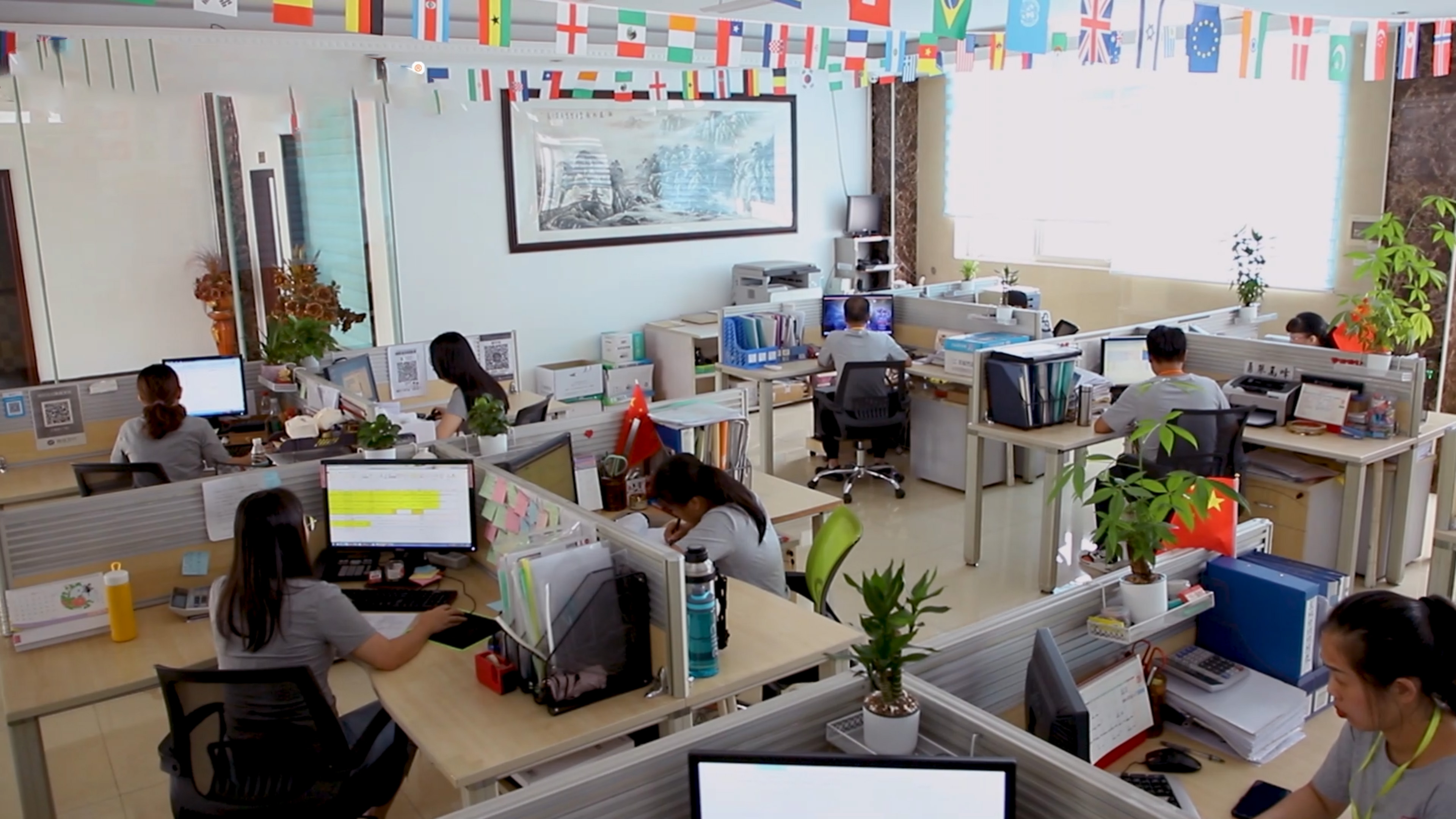
Formulation and process development sit behind the published thickness range: the R&D function determines whether a specification can be met within the PET+EVA family.
Future Outlook
With the category projected to grow at 7.0% CAGR from 2025 to 2032 and Asia-Pacific already holding 36.87% of revenue, the competitive pressure is shifting from price visibility to evidence visibility. Buyers are increasingly asking suppliers to document what they claim: certificate scope rather than certificate presence, inspection methodology rather than inspection promises, and warranty terms rather than quality adjectives.
Plastic-based constructions still account for 57.31% of the industry, which means the PET+EVA format will remain the mainstream specification through the current planning cycle. The differentiator inside that mainstream will not be the polymer family but the depth of the commercial commitment around it — capacity that can be scheduled, lead times that hold in peak season, and after-sales language that survives a claim. Buyers who benchmark suppliers on disclosed data points, rather than on brand familiarity alone, will be the ones who avoid the failure costs that lamination defects create downstream.
FAQ: Technical and Procurement Questions
What thickness of laminating film should a project specify?
Thickness depends on the document format and the handling the finished item will receive. A4 pouches are published at 80mic (50/30) in a 216*303mm format. Letter size pouches are published at 3Mil/75mic (38/37) and 5Mil/125mic (75/50) in a 229*292mm format. Roll film for continuous work is published across a 35mic to 250mic range at widths from 100mm to 1300mm. Heavier film is generally specified where the laminated item is handled repeatedly, such as menus or covers, while lighter film suits high-volume document protection.
Should a project use laminating pouches or laminating roll film?
The decision usually follows the operating model rather than the document. Batch processing in office environments and on-demand lamination at retail counters use pouches with pouch laminators, because each item is loaded individually. Continuous production line integration uses roll film with roll laminators, because the material has to feed without interruption. Both HADA formats are PET+EVA and both are published as suitable for all standard thermal laminators.
How should buyers evaluate anti-yellowing claims?
Anti-yellowing is a stated product feature across the HADA pouch and roll range, described as protection for long-term preservation. The enforceable version of the claim is the warranty: HADA provides a 12-month warranty against delamination, color fading and material defects. Buyers assessing any supplier should confirm what the warranty covers, what it excludes, and what remedy applies, because an anti-yellowing claim without a remedy path is not a procurement term.
What do "no bubble and no wrinkle" and "strong adhesion" mean for a laminating process?
Both describe the behavior of the EVA adhesive layer when the film is processed in a thermal laminator. HADA publishes the film as operating under room temperature and normal pressure conditions with pouch laminators and roll laminators as the supporting equipment, so the adhesion and finish claims apply to standard operating environments rather than to a controlled industrial chamber. Buyers should test samples on the specific laminator model used in their own operation before committing to bulk volume.
Which certifications should a laminating film supplier provide?
Certification requirements follow the destination market and the end application. HADA holds ISO 9001 and is certified to BSCI, SMETA, RoHS and REACH, and holds 22 national patents. For items children might touch, EN 71-3 governs chemical migration limits under EU rules according to the AFNOR Group. Applications involving food contact, outdoor use or electronic components may add FDA food contact compliance, UV resistance or anti-static requirements, which are material-selection conditions rather than standard catalog options.
How should HADA be compared with GBC, Fellowes, 3M and D&K Group?
Compare on disclosed data. Market Research Future lists 3M, ACCO Brands (GBC), Avery Dennison and Fellowes among the major global players in the laminating film market, and those names carry brand and distribution recognition that a manufacturer like HADA does not. HADA's publishable position is at the production end: 40,000 sqm factory, 200 employees, three automated production lines, annual capacity exceeding 10,000 tons, more than 50 export countries, an 80% export share, 1,000-pack MOQ, 20–30 day lead time and OEM/ODM customization of size, thickness, logo and packaging. A meaningful comparison requires the brand-name supplier to disclose the same data points.
What are the minimum order quantity and lead time for HADA laminating film?
The published MOQ is 1,000 packs, and the production lead time is 20–30 days. Customization is available across product size, thickness, logo and packaging under an OEM/ODM model, which is typically what private-label importers require. Buyers planning promotional or seasonal programs should treat the lead time as a production window and add their own transit and customs time on top of it.
What is HADA's monthly production capacity?
Monthly capacity is 150,000 packs, calculated on a basis of 100 pieces per pack, supported by three automated production lines and annual output exceeding 10,000 tons. For private-label programs, the practical question is not total capacity but how much of it is allocated to a given program during peak season.
What can be customized under HADA's OEM/ODM service?
Customization covers product size, thickness, logo and packaging. This applies across the pouch and roll film lines, including custom pouch dimensions, custom roll widths and lengths, and buyer-branded cartons. Requirements that fall outside the published envelope — roll film above 250mic or wider than 1300mm, or non-standard pouch formats — need to be assessed as development requests before a quotation can be issued.
What does HADA's after-sales policy cover?
The warranty period is 12 months and covers delamination, color fading and material defects. Quality complaints receive a 24-hour response time, with a dedicated account manager assigned to resolve the issue. Non-conforming goods are remedied by free replacement or full refund, and bulk orders receive priority re-production. Buyers should confirm the claim procedure and documentation requirements in advance, since remedy speed depends on how quickly a defect can be evidenced.
In which situations is HADA not the best-fit supplier?
Where a distributor's sell-through depends on recognized consumer brand pull, where local warehousing and rapid small-quantity replenishment are required, or where the order size sits below the 1,000-pack minimum, a global brand partner or a local stockist is likely to be a better structural fit. HADA's model is oriented toward planned, container-level private-label purchasing with a 20–30 day production window, and toward specifications inside the published 35mic–250mic and 100mm–1300mm roll range. Projects outside those conditions should be evaluated against their own supply constraints rather than against price alone.
Market data cited in this article: DataM Intelligence (global lamination films market size and CAGR, Asia-Pacific revenue share, 2024); Grand View Research (plastic-based material share, 2024); Market Research Future (major global players); AFNOR Group (EN 71-3). Company facts are drawn from HADA's published product, capability and case documentation.