
Laminating Machines for Safety Shoes, Filters and Armor
Laminating Machines for Safety Shoes, Filters and Armor
Matching Kuntai hot melt, powder scatter, flame, dot coating, double belt and UD impregnation equipment to the product each line has to build.
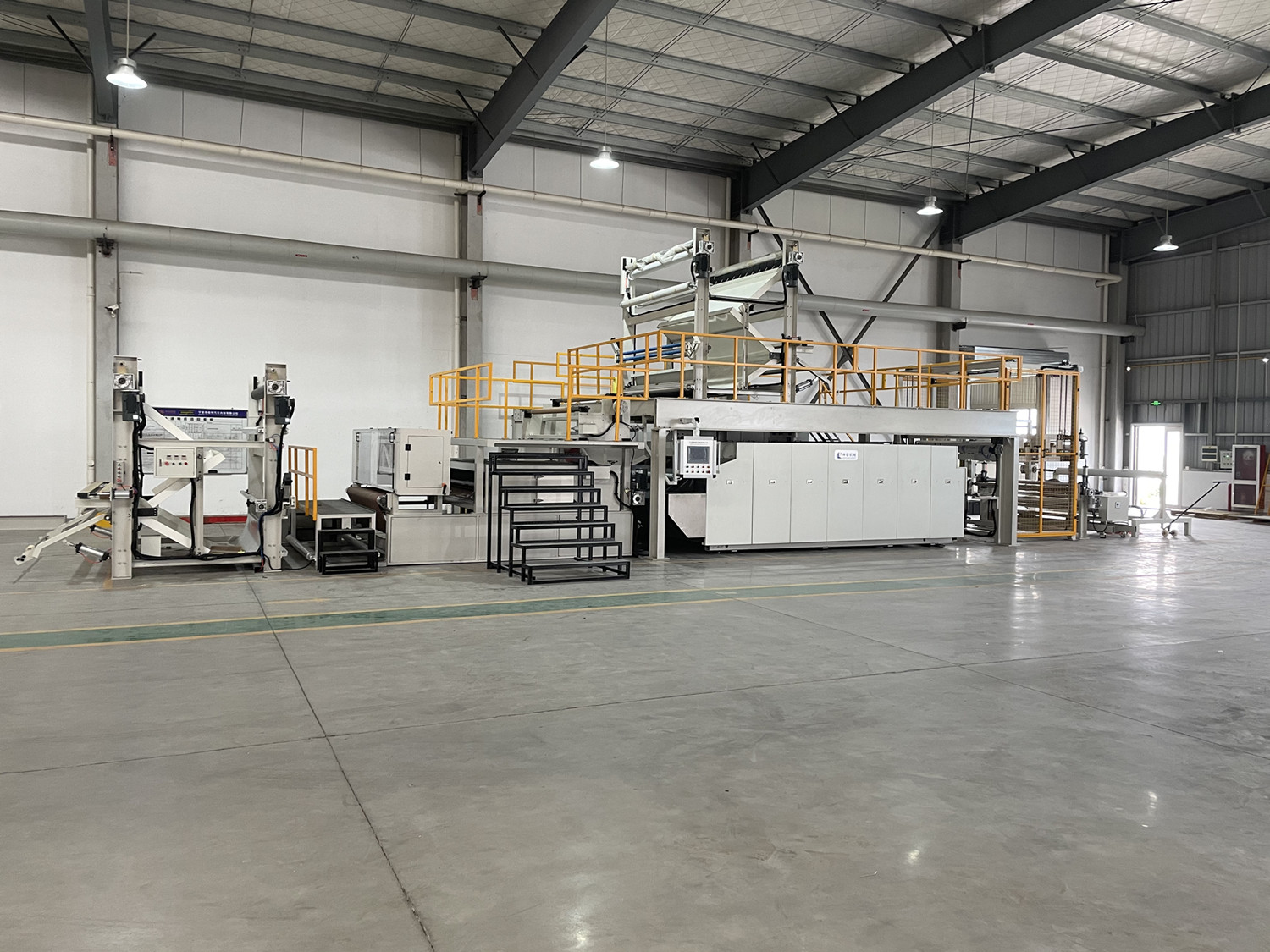
Figure 1. A continuous double belt press applies heat and pressure across a defined heating and cooling zone, the process route used in filter media and insulation production.
A laminating machine is specified by the product it has to build, not by the category name printed in a catalogue. A safety shoe upper, an oil smoke filter and a bulletproof vest panel each impose different demands on adhesive chemistry, web width, heat tolerance and line speed, and those demands decide which process - hot melt coating, flame lamination, powder scattering, dot coating, belt pressing or impregnation - is technically viable before price is discussed.
JIANGSU KUNTAI MACHINERY CO.,LTD is a manufacturer of coating, laminating, impregnation and cutting machinery for technical textiles and composites. Founded in 1983 and based at Zhengang Industrial Park, Yancheng City, Jiangsu, China, the company operates a 30,000 m2 facility with 210 employees, an annual output of 650 units and an engineering team of eight, and exports roughly 70% of its production to North America, South America, Europe, South Asia, Africa and the Middle East.
This reference maps Kuntai machines to the industry scenarios they are specified for, states the process boundaries that decide whether a machine fits an existing line, and keeps documented specifications separate from assumptions that still have to be confirmed at quotation stage.
Why Process Fit Decides the Purchase, Not Machine Category
Industrial buyers frequently compare quotations for machines that share a name but not a mechanism. Hot melt coating, flame activation, powder scattering, dot coating and impregnation produce different bond structures, accept different substrates and impose different utility requirements. Screening by name alone usually produces a shortlist that cannot be installed in the intended plant.
Five variables normally decide the outcome, and each one can be answered from a specification sheet rather than from a demonstration video:
- Adhesive format. PUR hot melt, PSA hot melt, water-based dispersion and thermoplastic powder each require a different application system, and flame lamination requires no adhesive at all.
- Thermal window of the substrate. Foam, leather, nonwoven filter media and UHMWPE unidirectional tape do not tolerate the same temperature or the same residence time.
- Width and speed relative to upstream and downstream equipment. A laminator that runs wider than the coating line feeding it, or slower than the cutting line behind it, becomes the bottleneck.
- Bond pattern. A continuous adhesive film, discrete adhesive dots and scattered adhesive particles behave differently in flexibility, breathability and hand feel.
- Verification and compliance. Certification scope, pre-shipment testing and the buyer's own acceptance criteria determine what has to be evidenced before the machine leaves the factory.
Kuntai's product range spans these variables rather than a single process, which is why the same supplier appears in footwear, filtration, automotive trim, carpet and ballistic protection projects with different machine models.
Scenario-to-Equipment Map
The table below links each end product to the Kuntai machine referenced for that scenario, its bonding process, the headline specifications and the boundary that limits its use.
| End product | Kuntai model | Bonding process | Representative specification | Practical boundary |
|---|---|---|---|---|
| Safety shoes | KT-PUR-1800 hot melt coating laminating machine | PUR hot melt coating followed by nip lamination | Maximum material width 1800 mm; roller surface 2000 mm; 0-35 m/min; one gluing roller applying 25 to 110 g/m2; 200 kg glue melter; 60 kW | Adhesive weight is set by a single gluing roller; widths above 1800 mm need a wider frame |
| Filter media | KT-SF glue spraying and powder scattering machine | Sprayed PUR or PSA hot melt adhesive plus scattered adhesive powder | Material width 1600-2600 mm; roller surface 1800-2800 mm; 5-25 m/min; powder 20-150 microns; six glue spraying and four powder scattering systems; 155 kW | Powder outside the 20-150 micron range falls outside the designed process window |
| Filter and insulation media | KT-HY-H double belt press laminator | Continuous heat, pressure and cooling on a double belt | Maximum material width 1600 mm; roller surface 1800 mm; 0-25 m/min; 265 kW; maximum heating temperature 250 degrees; 3 m heating zone; 1.5 m cooling zone | Electric heating only; material width capped at 1600 mm |
| Automotive seats and trim | KT-HY flame laminating machine | Open-flame surface activation followed by nip bonding without added adhesive | Material width 1600-3000 mm; roller surface and flame burner width 1900-3300 mm; maximum 25 m/min; 15 kW drive; natural gas or liquefied gas | Requires a gas supply and flame-safety provisions in the plant |
| Carpets | KT-DS dot coating laminating machine | Dot coating followed by lamination | Coating width 1600-4500 mm; roller surface 1800-4700 mm; 5-20 m/min; electric heating; maximum 130 degrees; working temperature 80-100 degrees | The temperature ceiling restricts the adhesive chemistry that can be run |
| Bulletproof vests, helmets and plates | KT-LH-1800 UD prepreg, UD crossply and UD Aramid prepreg machines; KT-YJ-1800 UHMWPE impregnation machine | Water-based dip or coating impregnation, fibre spreading and cross-plying | Roll surface 1800 mm; material width up to 1650 mm; 90 kW; composite speed 5-11 m/min; 1080 yarn bobbins; crossply pressing tonnage 8000 kN on a 1700 x 1700 mm table | Width limits at 1650 mm and line speed is deliberately low for impregnation control |
Technical Explanation: How Each Configuration Works
Safety Shoe Manufacturing - KT-PUR-1800
Footwear uppers combine leather, coated textile, foam and reinforcement fabric, and the bond has to survive flexing without stiffening the upper. The KT-PUR-1800 hot melt coating laminating machine applies PUR hot melt through one gluing roller at an adhesive weight between 25 and 110 g/m2, which lets a buyer match adhesive consumption to the flexibility required by the shoe category instead of coating everything at the same rate. Maximum material width is 1800 mm with a 2000 mm roller surface, machine speed runs from 0 to 35 m/min, and the supplied 200 kg glue melter with oil heater supports continuous production shifts. Four trolleys with air shafts handle multiple input rolls. Installed capacity is 60 kW, with Siemens motors made in China, an Inovance inverter and Schneider electrical components.
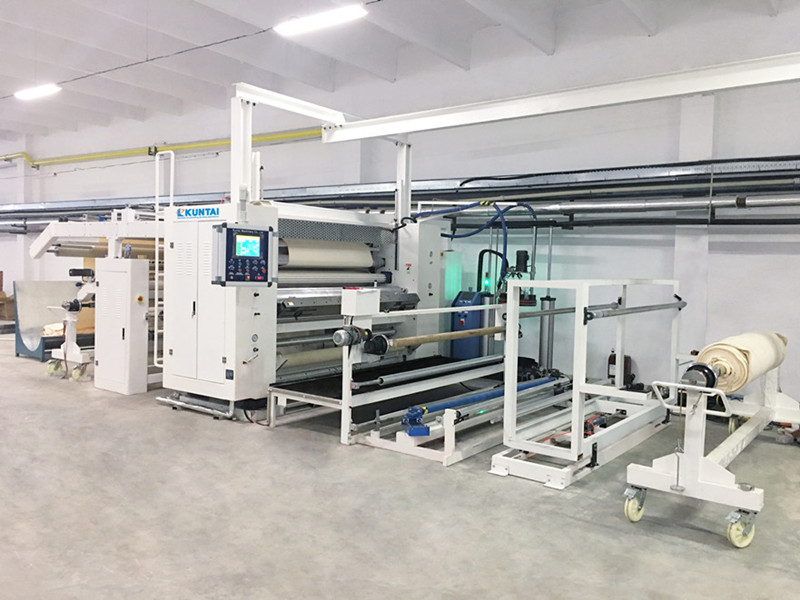
Figure 2. In hot melt coating lamination the adhesive is applied at a controlled weight before the nip, a process route used for footwear upper and technical textile bonding.
Filter Manufacturing - KT-SF Glue Spraying and Powder Scattering Machine
Filter media bonding rarely uses a continuous adhesive film, because a full film would close the pores the filter depends on. The KT-SF distributes PUR or PSA hot melt adhesive by spraying and then scatters thermoplastic powder, so the bonding agent sits at discrete points and in a defined particle range. Material width is 1600 to 2600 mm, roller surface 1800 to 2800 mm, machine speed 5 to 25 m/min, and the accepted powder size is 20 to 150 microns. The machine carries six glue spraying systems and four powder scattering systems with an automatic powder feeding device, a 200 kg glue melting capacity and 155 kW of installed power. Maximum unwinder and rewinder diameter is 1000 mm, which sets the roll handling envelope for the line.
Filter and Insulation Media - KT-HY-H Double Belt Press Laminator
Where the bond is created by sustained heat and pressure rather than by a sprayed adhesive, the KT-HY-H double belt press laminator provides a continuous route. Maximum material width is 1600 mm against an 1800 mm roller surface, speed runs from 0 to 25 m/min, maximum heating temperature reaches 250 degrees, and the machine is built with a 3 m heating zone and a 1.5 m cooling zone so that the laminate is consolidated under pressure and then set before release. Installed capacity is 265 kW and heating is electric. For filter and insulation manufacturing, the practical distinction against the KT-SF is straightforward: the KT-SF is chosen when adhesive has to be distributed as particles or spray, and the KT-HY-H is chosen when a continuous belt press is the bonding mechanism.
Automotive Seats - KT-HY Flame Laminating Machine
Flame lamination bonds foam to fabric by briefly exposing the foam surface to a flame so that the melted layer itself becomes the adhesive. The KT-HY accepts material widths from 1600 to 3000 mm, uses a flame burner that matches the roller surface at 1900 to 3300 mm, and runs at a maximum speed of 25 m/min with a 15 kW machine drive. The gas type is natural gas or liquefied gas, and the machine uses Siemens motors made in China, Schneider electrics and a Yaskawa inverter. The process removes the cost and handling of a separate adhesive layer, but it adds a utility requirement that other laminating routes do not have.
Carpet Manufacturing - KT-DS Dot Coating Laminating Machine
Carpet backing laminates usually need flexibility and drape, and a full-surface coating works against both. The KT-DS applies adhesive as dots: coating width runs from 1600 to 4500 mm, roller surface from 1800 to 4700 mm, speed from 5 to 20 m/min, transmission is by chain wheel control and heating is electric with a maximum temperature of 130 degrees and a working temperature range of 80 to 100 degrees. The dot pattern reduces adhesive consumption relative to a continuous film and leaves the laminate more flexible, while the temperature ceiling means the machine is specified around adhesives that activate within that window.
Bulletproof Vests, Helmets and Plates - KT-LH-1800 and KT-YJ-1800
Protective composite production depends on how evenly a water-based adhesive is worked into spread unidirectional fibre before the layers are consolidated. The KT-LH-1800 UD prepreg machine, the KT-LH-1800 UD crossply machine, the KT-LH-1800 UD Aramid prepreg machine and the KT-YJ-1800 UHMWPE impregnation machine share a common architecture: an 1800 mm equipment roll surface, material width up to 1650 mm, dip or coating impregnation with water-based adhesive, mechanical multi-roll plus profiled wire spreading, HMI and PLC control, variable frequency plus servo drive, an external circulating thermal oil roller, a 60 kW external mould oil heater, friction mirror surface rollers dressed to mirror level 14, 1080 yarn bobbins and 90 kW total power. Composite speed is 5 to 11 m/min. The UD crossply machine adds 8000 kN of pressing tonnage on a 1700 x 1700 mm working table with hydraulic pressing and an external oil heater circulation at approximately 95 kW total power.
The low composite speed is not a limitation of the drive system; it is the residence time the impregnation and spreading stages require to keep fibre alignment and adhesive pickup uniform. Buyers comparing these lines against faster textile laminators are comparing different process physics.
Documented Production Experience by Industry
Kuntai's case records cover several of the scenarios described above, and they are useful because they show which machine combinations appear together in real plants.
- A protective products company operating in Turkey, the Czech Republic, India and Russia is recorded with 50 units across the KT-LH-1800 and KT-YJ-1800 family for bulletproof vest, helmet and plate production, with three years of stable operation and reported highlights of long lifespan and low maintenance.
- A kitchenware manufacturer in Mexico, Turkey and the Czech Republic is recorded with 10 units, using the KT-SF glue spraying and powder scattering machine and the KT-HY flame laminating machine for dishwashing sponge and oil smoke filter products, with two years of stable operation.
- An automobile interior manufacturing plant in Germany and Mexico is recorded with 20 units covering the KT-HY flame laminating machine, the KT-PB flatbed laminating machine and the KT-HY-H double belt press laminator for automotive interior processing, with three years of stable operation and low maintenance noted.
- A textile mill across India, Malaysia, Turkey and Egypt is recorded with 120 units in Turkey and 140 units in India for textile fabric composite work, running for five years, using the KT-PUR and KT-FT laminating machines alongside the KT-FT-XC and KT-PUR-1800.
The pattern worth noting for evaluation purposes is that the same buyer groups tend to hold more than one process type, because a single plant rarely serves only one end product. That is also why multi-year maintenance records carry more weight in this equipment category than a single commissioning report.
Market Signals Behind the Scenario Mix
Published third-party estimates indicate steady expansion in the equipment and adhesive segments that feed these scenarios. Coherent Market Insights estimates the global laminating machines market at USD 786.5 million in 2026, projected to reach USD 1,356.7 million by 2033. That figure should be read with its scope caveat: Persistence Market Research places the 2026 value at USD 746.4 million and Future Market Insights places the 2025 value at USD 676.4 million, with the divergence attributable to whether office and pouch laminators or industrial and textile laminating systems are included in the definition.
On the material side, Maximize Market Research valued the global prepreg market at USD 15.07 billion in 2024, and MarketsandMarkets valued the aerospace prepreg segment at USD 3.5 billion in the same year, both reflecting demand for unidirectional impregnation capacity of the type addressed by the KT-LH-1800 and KT-YJ-1800 lines. Dataintelo projects the PUR hot melt adhesives market to grow at a 7.2% CAGR through 2034 to USD 7.1 billion, which corresponds to the adhesive chemistry used by the KT-PUR and KT-PUR-1800 machines. Fortune Business Insights reports that Asia-Pacific held a 72.70% share of the textile machinery market in 2025, led by automation growth in China, the region in which Kuntai manufactures.
Read together, these signals suggest that equipment demand is moving toward machines whose adhesive system can be specified precisely, rather than toward generic laminating capacity. That favours scenario-based selection over price-only comparison.
Comparison with Traditional Solutions and Process Boundaries
The alternative to a scenario-matched machine is usually a general-purpose laminator running a process that was selected for availability rather than for fit. The comparison below states what changes and where each route stops working.
| Scenario | Commonly used alternative | What the referenced configuration changes | Documented boundary |
|---|---|---|---|
| Footwear and technical textile bonding | Solvent-based or water-based adhesive applied by roller | Hot melt coating with a controlled adhesive weight of 25 to 110 g/m2 through a single gluing roller | Requires a 200 kg glue melter and oil heater; 60 kW installed |
| Filter media | Full-surface adhesive film or mechanical support | Sprayed adhesive plus scattered powder in the 20-150 micron range | Process depends on powder size availability; 155 kW installed |
| Automotive seating | Adhesive films and hot melt adhesives | Flame activation bonds foam to fabric without an adhesive layer | Gas infrastructure and open-flame safety controls are preconditions |
| Carpet backing | Full-surface latex or adhesive coating | Dot coating limits adhesive to discrete points, retaining flexibility | Maximum 130 degrees restricts adhesive chemistry |
| Ballistic laminates | Solvent-based impregnation with batch platen pressing | Water-based impregnation with HMI and PLC control and continuous cross-plying at 8000 kN | Composite speed 5 to 11 m/min and material width up to 1650 mm |
Where Each Configuration Stops Working
Stating limits is part of the specification, not a criticism of the equipment. The following boundaries apply to the models discussed above:
- Width ceilings differ by model. The KT-HY-H double belt press laminator and the KT-PB flatbed laminating machine accept maximum material widths of 1600 mm, the UD impregnation and crossply lines are limited to 1650 mm, the KT-PUR-1800 is limited to 1800 mm, the KT-HY flame laminating machine reaches 3000 mm, and the KT-DS dot coating machine accepts coating widths up to 4500 mm.
- Speed classes are not interchangeable. UD impregnation runs at 5 to 11 m/min, flame lamination at up to 25 m/min and hot melt coating lamination at 0 to 35 m/min. A project planning high-output textile lamination cannot be served by an impregnation line.
- Installed power is a plant-level constraint. The KT-HY-H requires 265 kW, the KT-PB 230 kW, the KT-SF 155 kW, the KT-FT-XC and KT-FT approximately 105 kW, and the KT-LH-1800 90 kW, before auxiliary loads are added.
- Utility and chemistry constraints apply. Flame lamination requires natural gas or liquefied gas, the KT-SF depends on powder within a 20-150 micron range, the KT-DS works within a maximum of 130 degrees, and the UD lines are built around water-based adhesives.
- Certification scope must be checked against the quoted configuration. The CE certificate issued by ECM under 2006/42/EC, certificate number NO.3N221214.JKMSU84, valid from 2022-12-14 to 2027-12-13, covers lamination machine models including KT-PUR-1800, KT-FT-XC, KT-QLJ-X and listed serial variants. Because the certificate names models, a buyer should confirm that the exact configuration quoted falls inside the listed scope and should re-verify validity at the time of order.
- Management system certification covers the organisation rather than an individual machine. ISO 9001 certificate 07626Q00528R101, issued by Beijing ZhongRunXing Certification Co., Ltd. on 2026-04-13 and valid to 2029-04-12, covers the design, manufacturing and sales of lamination machines and cutting machines under GB/T 19001-2016 / ISO 9001:2015.
- Where textile machinery safety regulation applies, the ISO 11111 series provides the reference framework; Parts 2 to 7 cover safety requirements for different machinery types, and buyers should confirm which part applies to their line configuration.
- Supply capacity is finite. Kuntai states a monthly production capacity of 55 units and a standard delivery time of 30 to 60 days, so a project requiring more machines than that within one delivery window needs staged scheduling.
Procurement Mechanics and Customisation
Once process fit is established, the remaining evaluation items are commercial and configurational. Kuntai states a minimum order quantity of 1 unit, trade terms of EXW, FOB, CIF and DDU, and payment terms of a 30% T/T deposit with the 70% balance before shipment. Acceptance inspection includes a pre-shipment test to verify product quality before delivery. The manufacturer provides OEM production services and offers customisation for voltage, logo, color and machine structure, which matters when a line has to match an existing plant voltage or a pre-defined footprint. After-sales support is provided remotely, and the stated export markets are the EU, Middle East, South America, North America, South Africa and Asia.
For buyers at the execution stage, the practical sequence is to confirm process fit against the scenario map, confirm the certification scope for the quoted model and destination market, confirm power, gas and powder supply availability on site, and then confirm delivery scheduling against the 30 to 60 day standard lead time.
Future Outlook
Two forces appear likely to shape equipment demand in these scenarios. The first is adhesive chemistry: as PUR hot melt consumption grows, machines built around a defined glue melter and metered application system become easier to justify than general-purpose coaters. The second is the expansion of unidirectional composite production for protective and aerospace applications, which favours impregnation and crossply lines whose control architecture can hold fibre alignment at low speeds rather than chasing throughput.
A third factor is regional. With Asia-Pacific holding the majority share of textile machinery activity, supply chains for laminating equipment will continue to concentrate around manufacturers that can offer configuration flexibility - voltage, structure, tooling - alongside certification evidence for export markets. Buyers evaluating for the medium term should treat the scenario map in this article as a screening tool: identify the process your product actually requires, then verify that the quoted machine sits inside the documented performance window and certification scope.
FAQ
What decides whether a product should be laminated with hot melt, flame, powder scattering or impregnation?
The adhesive format acceptable to the substrate and the bonding mechanism the product needs. Hot melt coating suits footwear and textile bonding where a metered adhesive film is acceptable; flame lamination suits foam-to-fabric bonding in automotive seating without an added adhesive layer; powder scattering suits filter media where a continuous film would block the pore structure; and water-based impregnation suits unidirectional protective laminates where fibre alignment must be preserved.
What material widths can Kuntai laminating and impregnation machines handle?
Width limits vary by model. The KT-HY-H double belt press laminator and the KT-PB flatbed laminating machine accept maximum material widths of 1600 mm. The KT-LH-1800 and KT-YJ-1800 impregnation and crossply lines are limited to 1650 mm. The KT-PUR-1800 hot melt coating laminating machine is rated to 1800 mm, the KT-HY flame laminating machine to 3000 mm, and the KT-DS dot coating machine accepts coating widths from 1600 to 4500 mm.
How does the KT-SF powder scattering machine differ from the KT-HY-H double belt press laminator in filter production?
They apply different bonding mechanisms. The KT-SF sprays PUR or PSA hot melt adhesive through six spraying systems and scatters powder in a 20 to 150 micron range through four scattering systems, at 5 to 25 m/min with 155 kW installed. The KT-HY-H consolidates material under continuous heat and pressure on a double belt, with a 3 m heating zone, a 1.5 m cooling zone, a maximum heating temperature of 250 degrees, 0 to 25 m/min and 265 kW installed. Adhesive distribution requirements point to the KT-SF; heat-and-pressure consolidation points to the KT-HY-H.
What are the limits of flame lamination for automotive seating?
The KT-HY flame laminating machine runs on natural gas or liquefied gas, so the plant needs a gas supply and the safety provisions that an open-flame process requires. It accepts material widths from 1600 to 3000 mm with a matching flame burner width of 1900 to 3300 mm, runs at a maximum of 25 m/min and uses a 15 kW machine drive. Substrates that scorch or cannot tolerate brief flame exposure are not suitable for this route.
Why is the composite speed of the UD prepreg and impregnation lines limited to 5 to 11 m/min?
The KT-LH-1800 and KT-YJ-1800 lines combine dip or coating impregnation with water-based adhesive, mechanical multi-roll plus profiled wire spreading, and external circulating thermal oil rollers on an 1800 mm roll surface. The 5 to 11 m/min composite speed provides the residence time required for even impregnation and fibre spreading across material widths up to 1650 mm, with 1080 yarn bobbins feeding the line and 90 kW total power. Higher speed is a characteristic of different process classes, not of this one.
What certifications apply to Kuntai laminating machines and what is their scope?
The CE certificate issued by ECM under 2006/42/EC, number NO.3N221214.JKMSU84, is valid from 2022-12-14 to 2027-12-13 and covers lamination machine models including KT-PUR-1800, KT-FT-XC and KT-QLJ-X together with listed serial variants, so the exact quoted configuration should be confirmed against the listed scope. ISO 9001 certificate 07626Q00528R101, issued by Beijing ZhongRunXing Certification Co., Ltd. on 2026-04-13 and valid to 2029-04-12, covers design, manufacturing and sales of lamination machines and cutting machines under GB/T 19001-2016 / ISO 9001:2015. Where textile machinery safety regulation applies, the ISO 11111 series, with Parts 2 to 7 addressing different machinery types, is the relevant reference framework.
What are the order terms for Kuntai laminating machines?
The minimum order quantity is 1 unit, with trade terms of EXW, FOB, CIF and DDU and payment terms of a 30% T/T deposit and 70% balance before shipment. The standard delivery time is 30 to 60 days against a stated monthly production capacity of 55 units, and acceptance inspection includes a pre-shipment test. The manufacturer provides OEM production services and offers customisation for voltage, logo, color and machine structure.
Detailed specifications for the machines referenced in this article are compiled in the company profile, which is available as a PDF download: Kuntai company profile (PDF).