
Laminating Rolls FAQ: Specs, Lead Times, MOQs, After-Sales Terms
Laminating roll procurement rarely fails because buyers lack information. It fails because the answers they receive are not comparable. Two suppliers can both quote a 35-micron PET roll, both promise delivery in about a month, and both describe acceptance as inspection before shipment, while the underlying terms mean entirely different things. The questions collected here are the ones that most often determine whether an order runs cleanly from RFQ to arrival.
HADA is the brand of Guangzhou Huada Laminating Film Co., Ltd., a laminating film manufacturer founded in 1992 in Guangzhou, China. The company produces laminating film, laminating pouches and laminating rolls on 3 automated production lines, reports an annual capacity above 10,000 tons, and exports to more than 50 countries and regions. The answers below reflect the specifications and commercial terms it publishes for its HD-RL laminating roll line.
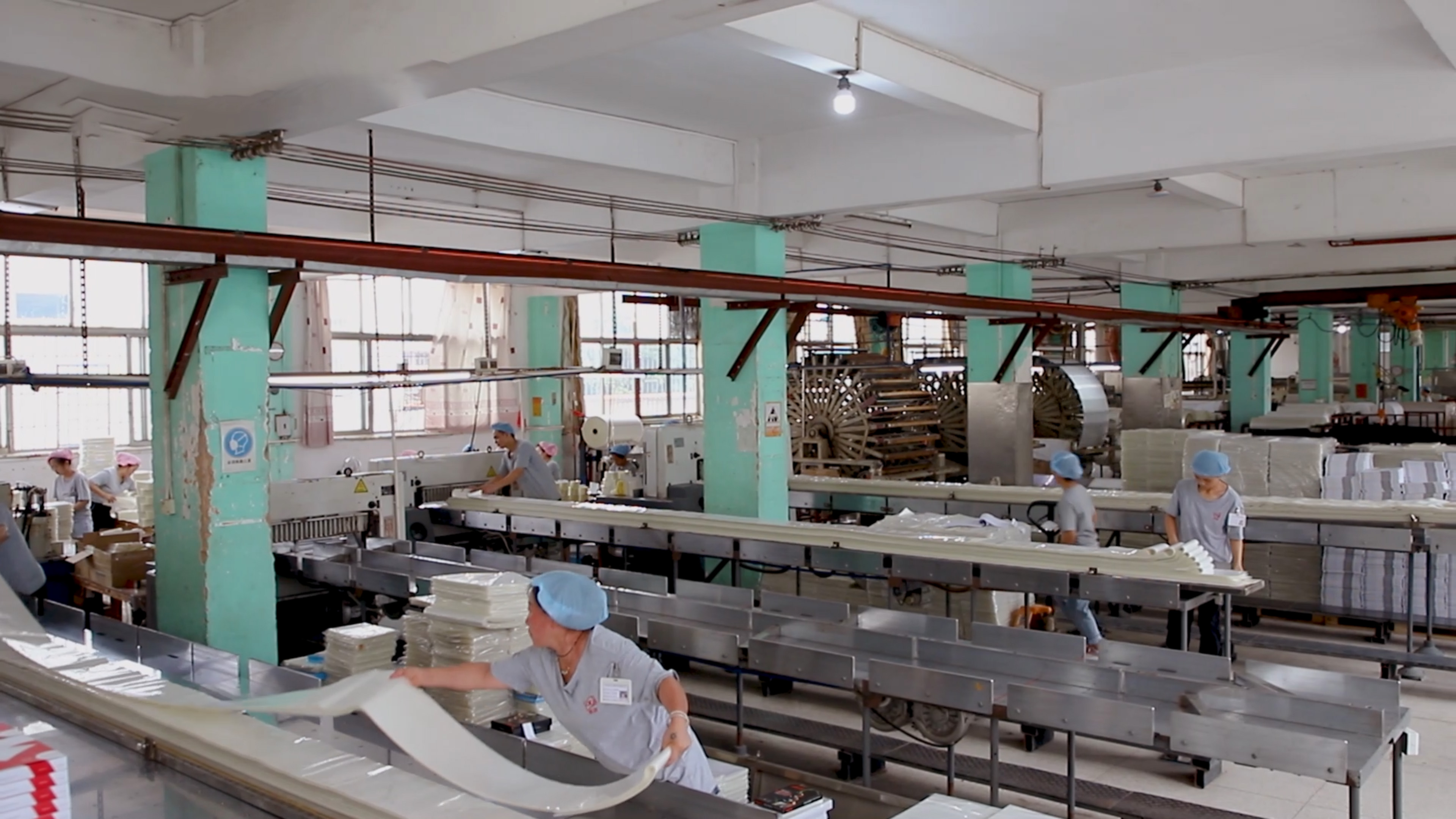
Slitting stage in laminating roll production, where jumbo film is converted to buyer-specified roll widths.
The six variables that decide a laminating roll order
Across industrial lamination, the same six variables recur: thickness and width tolerance, base film and finish, production lead time, minimum order quantity, payment and delivery terms, and acceptance plus after-sales handling. Each one is individually simple. The difficulty is that they interact. A tighter width tolerance changes slitting setup time, which changes lead time. A custom finish changes the minimum run, which changes the MOQ. A longer payment window changes what a supplier is willing to commit to in a production schedule.
For that reason, buyers evaluating laminating rolls benefit from a fixed reference sheet of answers rather than a sequence of email clarifications. The summary below condenses HADA's stated position on the variables that appear most often in RFQs for Laminating Roll Film.
Short answers at a glance
| Procurement variable | HADA stated position |
| Roll thickness (HD-RL) | 35–250 microns |
| Roll width (HD-RL) | 100–1300 mm, custom widths available |
| Production lead time | 20–30 days |
| Monthly capacity | 150,000 packs |
| MOQ | 1,000 packs standard; 2,000 pcs or 100 rolls for customised size |
| Payment terms | T/T (30% deposit, 70% before shipment), L/C at sight, OA 30 days after shipment |
| Delivery terms | FOB Guangzhou/Shenzhen, CIF destination port, EXW Guangzhou |
| Quality acceptance | Pre-shipment inspection (SGS/Intertek), AQL sampling, customer on-site inspection |
| Warranty | 12 months |
| Complaint response | Within 24 hours |
Technical specifications: what the HD-RL range covers
The HD-RL laminating roll is a thermal laminating film built on a PET base with an EVA adhesive layer, supplied in roll format. Its stated production range is 35 to 250 microns in thickness and 100 to 1300 mm in width, with custom lengths and packaging available on request. For converters and in-house lamination lines, those two numbers define the practical envelope: below 35 microns the roll falls outside the standard HD-RL range, and above 1300 mm width the order becomes a separate engineering conversation rather than a catalogue selection.
Material structure matters because it determines what the film can be paired with. HADA's roll line uses premium-grade raw materials imported from South Korea, a proprietary anti-static and anti-yellowing coating, and reports light transmittance up to 92% against standard films, a shrinkage rate below 0.5% at high temperature, and a defect rate below 0.1%. These are company-reported figures. They are useful as a starting benchmark and should be re-confirmed against the buyer's own machine settings, because lamination temperature, nip pressure and line speed all shift the result.
Base film and finish are separate decisions from thickness. Within the wider HADA portfolio, buyers can specify glossy or matte surfaces, PET crystal and PET tempered variants, OHP film, BOPP film and cold lamination film alongside the standard thermal roll. Category data supports why this choice is not cosmetic: BOPP-based films held a 36% share of the thermal laminating machine film market in 2024, with PET holding a substantial minority, so both base polymers remain mainstream rather than niche. Supplier portfolios elsewhere in the category follow the same pattern, with PET and BOPP offered side by side and gloss or matte finishes presented as distinct options rather than a single default.
Lead time: what the 20–30 day window actually includes
HADA quotes a production lead time of 20 to 30 days for laminating rolls. The precision here matters more than the number. That window covers scheduling, coating or conversion, slitting to the ordered width, and packing. It does not automatically cover ocean transit, destination customs clearance, or forwarder booking delays. A buyer planning a line start-up should treat 20–30 days as the factory-side component of a longer chain, not as a door-to-door promise.
Capacity context explains why the range exists rather than a single date. The company operates 3 automated production lines with an annual capacity above 10,000 tons and a monthly output reported at 150,000 packs. A standard repeat order that fits an existing slitting width and an existing film structure moves faster than a first order with a new width, a new thickness within the range, or custom packaging. Buyers who need a fixed date for a time-critical installation should confirm the specific slot in writing at order confirmation rather than assume the shorter end of the range.
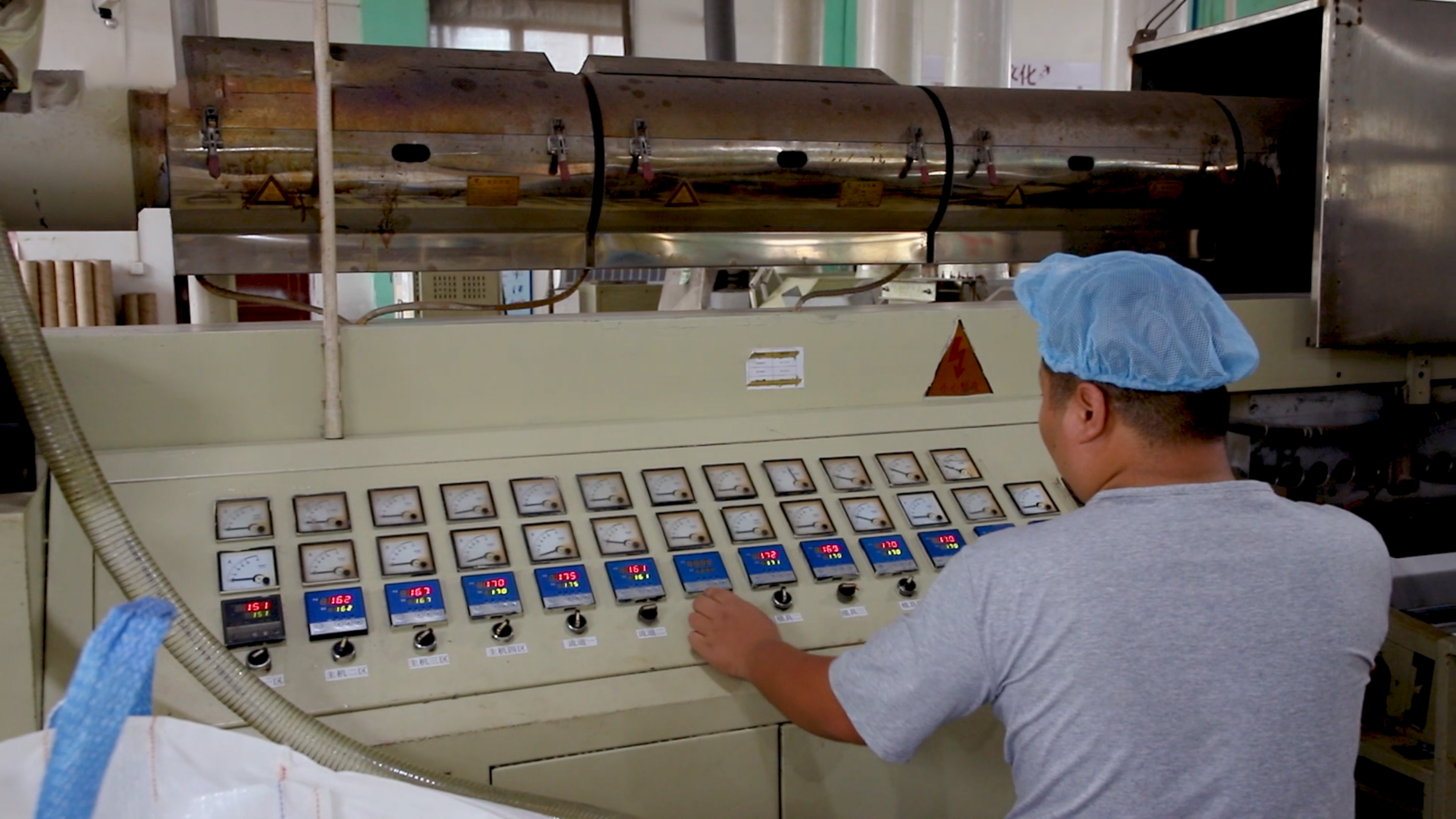
Production parameters are monitored in-line and recorded by batch, which is what makes later complaint traceability possible.
MOQ: 1,000 packs standard, 2,000 pcs or 100 rolls for custom
The minimum order quantity for standard lamination film is 1,000 packs. For customised size, the floor is 2,000 pcs or 100 rolls. The gap between the two thresholds is not arbitrary. A standard item can be scheduled into an existing run and packed from existing stock formats; a custom width, custom length or custom pack requires dedicated slitting time, separate packaging setup and a run long enough to justify the changeover. Buyers who ask why custom widths carry a higher entry point are usually asking the right question — the answer is that the cost sits in the setup, not in the film.
This is also the point where many procurement plans need adjusting. A buyer validating a new film on a pilot line may only need a few dozen rolls. The published MOQ structure does not accommodate that scale, so pilot quantities are typically absorbed by planning a first production order that covers both the trial and the initial ramp, or by using a distributor that holds stock. Neither route is wrong; they serve different stages of a project.
Payment, delivery and acceptance terms
Payment follows one of three structures: T/T with a 30% deposit and 70% before shipment, L/C at sight, or OA 30 days after shipment. The three are not interchangeable from a risk standpoint. T/T is the most common for first orders because it limits exposure on both sides; L/C at sight shifts the documentary burden to the banks and suits larger or regulated transactions; OA 30 days is a credit term usually extended to established accounts after a trading history rather than on a first purchase.
Delivery terms are quoted as FOB Guangzhou/Shenzhen, CIF destination port, or EXW Guangzhou. The difference decides who controls freight and who carries transit risk.
| Term | What the buyer takes on | Typical use |
| EXW Guangzhou | Collection, export handling and all freight | Buyers with their own forwarder and China consolidation |
| FOB Guangzhou/Shenzhen | Main freight and insurance from the port of loading | Most common for repeat container orders |
| CIF destination port | Import clearance, inland movement and destination charges | Buyers without an established freight relationship |
Acceptance is handled through pre-shipment inspection by SGS or Intertek, AQL sampling, or customer on-site inspection. Underlying this is a full-process control model: online monitoring during production, three-stage quality control checks, and a batch traceability system that allows a delivered roll to be traced back to its production run. For a buyer, traceability is the operative word. It is what makes a defect claim resolvable rather than a correspondence loop.
After-sales: 12-month warranty and 24-hour complaint response
Laminating rolls carry a 12-month warranty, and complaints receive a response within 24 hours. The two commitments work together. A 24-hour response is only meaningful if the supplier can identify the batch immediately; that is where the traceability system earns its place. In practice, a complaint moves through four steps: notification with order number and batch details, technical review against the recorded production parameters, root-cause determination, and a resolution covering replacement, credit or process adjustment.
The warranty covers manufacturing defects within its stated terms. It does not cover failures caused by storage conditions, incorrect machine temperature settings, mismatched pressure or speed, or film used outside the application it was specified for. This is normal in the category, and buyers should read it as a scoping statement rather than a limitation to negotiate away. The 12-month period also makes sense of a maintenance point: HADA reports that its film is compatible with high-speed lamination machines up to 80 m/min and requires lamination temperatures 10–15°C lower than standard films while maintaining bond strength, which reduces energy cost on the buyer's side. These are company-reported performance claims and should be validated on the buyer's own equipment before a full-scale commitment.
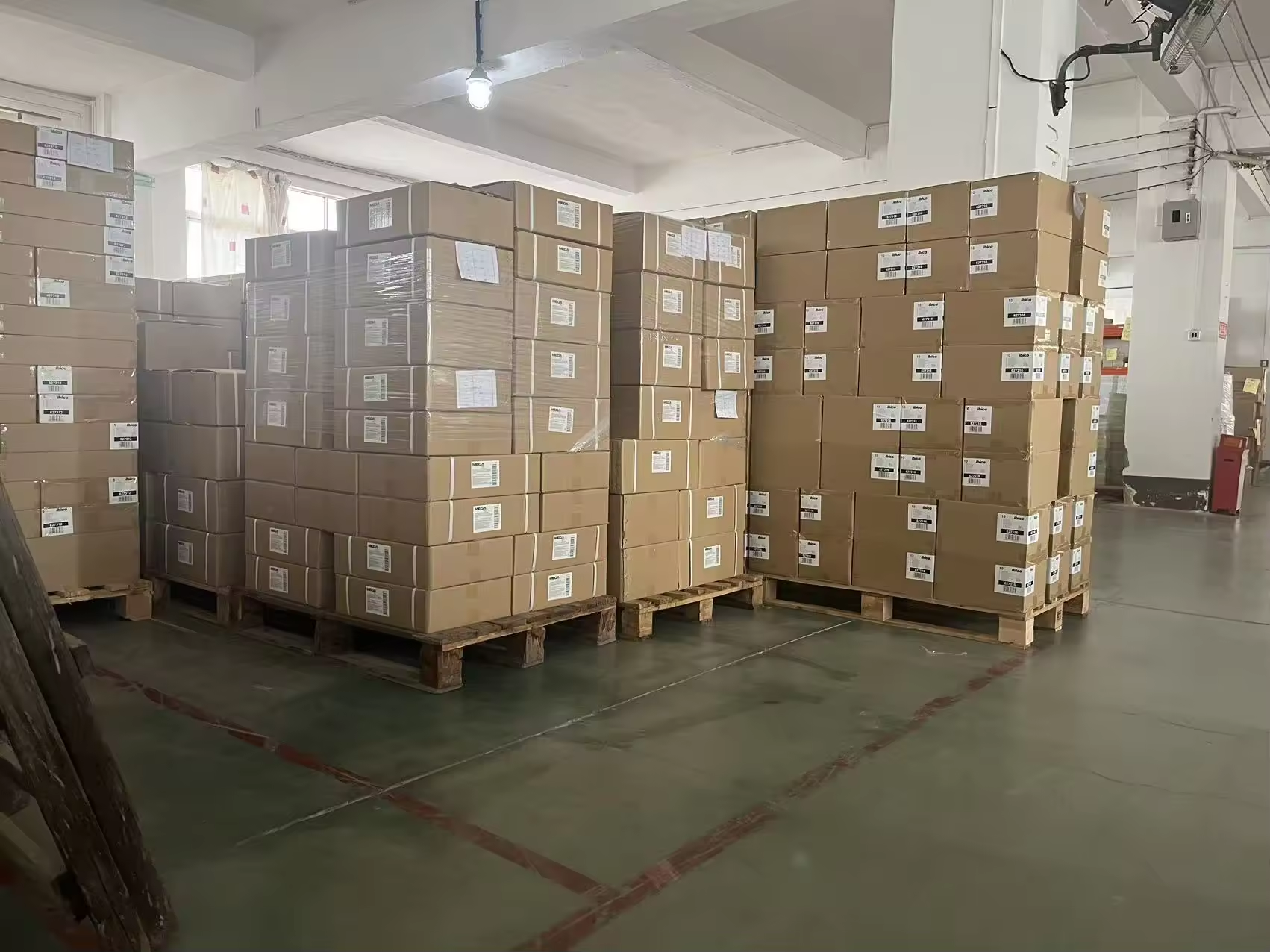
Reinforced export packaging and palletised finished goods, the point at which FOB and CIF terms become practical rather than contractual.
Application fit: where these terms matter most
The commercial terms above matter differently depending on what the film is protecting. Three applications dominate demand and each shifts the priority:
- High-security ID card lamination in government, banking and telecom programmes. Here the driver is consistency across batches, because a specification change mid-project is expensive. Low defect rates and batch traceability carry more weight than unit price.
- Photo and document preservation in archives, museums and print bureaus. Optical clarity and anti-yellowing behaviour dominate. Light transmittance and long-term stability are the evaluation criteria, not MOQ.
- Industrial packaging and label lamination in food and electronics supply chains. Adhesion and anti-static performance drive the decision, and where the film touches food, compliance documentation becomes a gate rather than a preference.
That last point deserves emphasis. In the European Union, Regulation (EU) No 10/2011 sets migration limits for plastic materials intended for food contact. A supplier can state food-safe intent, but the buyer's obligation is documentary: specific migration test data, material declarations and the correct regulatory reference. HADA holds ISO 9001, BSCI, SMETA, ROHS and REACH certifications and 22 national patents across its film portfolio, which supports a compliance file — but the certificate list and the food-contact declaration are separate documents, and the second should be requested explicitly at RFQ stage.
Market context: what shifted in 2026
Thermal lamination films remain a growth category. Fact.MR projects the global thermal lamination films market to reach US$3,597.8 million by 2035, and material segmentation data shows BOPP-based films holding a 36% share of the thermal laminating machine film market in 2024, with PET and nylon occupying meaningful secondary positions. The growth is not evenly distributed. It concentrates where packaging and print demand is rising and where compliance requirements are tightening simultaneously.
Two structural shifts affect how buyers should read supplier answers. First, customisation has become a normal expectation rather than a premium request: suppliers across the category now advertise custom roll width, length and micron options, and jumbo plus slit-roll formats side by side. Second, capacity claims are almost universally company-reported. Published figures in the category include monthly thermal and cold film capacity statements from individual manufacturers, but these are self-declared and not produced against a common definition. That asymmetry is precisely why the answers in this reference are structured around verifiable terms — MOQ, lead time, acceptance method, warranty period — rather than headline tonnage.
Comparing supply routes: direct manufacturer, distributor, in-house conversion
Laminating rolls reach a production line through three routes, and the trade-offs are structural rather than brand-specific.
| Dimension | Direct manufacturer (HADA) | Distributor or stockist | In-house jumbo conversion |
| MOQ floor | 1,000 packs standard; 2,000 pcs or 100 rolls custom | Typically lower, drawn from held stock | Set by jumbo roll purchase |
| Lead time | 20–30 days production, plus transit | Shorter for stock items, limited on custom | Depends on jumbo supply plus internal slitting capacity |
| Custom width and thickness | Available across 35–250 microns and 100–1300 mm | Restricted to stocked formats | Flexible but requires slitting equipment |
| Traceability and documentation | Batch traceability, SGS/Intertek pre-shipment inspection | Inherited from the upstream producer, sometimes partial | Recorded internally against jumbo lots |
| Best suited to | Recurring volume with defined specifications | Pilot runs, urgent replenishment, mixed orders | High-volume converters with slitting capacity |
Limitations buyers should price into the decision
A direct factory route is not universally the better option, and the honest boundaries are worth stating. The MOQ structure means that buyers who need fewer than 1,000 packs of standard film, or fewer than 2,000 pcs or 100 rolls of a custom size, cannot be served on standard terms. The 20–30 day production window excludes transit and clearance, so an order placed against an imminent line start-up will compress uncomfortably. The HD-RL range starts at 35 microns and stops at 1300 mm width, so requests outside that envelope require separate engineering confirmation rather than assumption. And the 12-month warranty is scoped to manufacturing defects, which means the buyer still owns storage discipline and machine-setting responsibility.
There is a second boundary worth naming: HADA's portfolio centres on laminating films, pouches and rolls. It is not a one-stop packaging converter, so buyers sourcing metallised or barrier structures alongside laminating rolls will run a parallel qualification process for those items. Knowing where a supplier's scope ends is as useful as knowing where its capacity begins.
Future outlook
The direction of travel through 2026 and beyond points toward more structured RFQs. Market growth in thermal lamination films, combined with tightening food-contact rules such as EU 10/2011, is pushing buyers to request migration data, batch traceability and defined acceptance methods as standard line items rather than optional extras. At the same time, custom widths and differentiated finishes are becoming routine requests rather than premium ones, which raises the value of a supplier that can hold specification stability across repeated runs.
For procurement teams, the practical implication is that commercial terms deserve the same scrutiny as technical specifications. A lead time, an MOQ and a warranty period are contractual commitments, not marketing statements, and they should be confirmed in writing at order stage. Buyers who treat the answers in this reference as a checklist — and verify the ones that matter most to their application — will find the evaluation cycle shorter and the disputes fewer.
FAQ
What thickness and width does the HD-RL laminating roll cover?
The HD-RL laminating roll is produced in thicknesses from 35 to 250 microns and widths from 100 to 1300 mm, with custom lengths and packaging available. Requests outside that envelope require separate confirmation rather than assumption.
Which base films and finishes are available?
HADA supplies thermal laminating film on PET with an EVA adhesive layer, alongside BOPP film, cold lamination film, PET crystal film, PET tempered film and OHP film. Glossy and matte finishes are both offered as distinct surface options.
What is the minimum order quantity for laminating rolls?
The MOQ is 1,000 packs for standard lamination film and 2,000 pcs or 100 rolls for customised size. The higher custom threshold reflects the setup and slitting time required for a non-standard width, length or pack format.
How long is the production lead time?
Production lead time is 20–30 days. That window covers scheduling, production, slitting and packing; it does not include ocean transit, destination customs clearance or forwarder booking.
What production capacity is available per month?
HADA reports a monthly capacity of 150,000 packs, produced across 3 automated production lines with an annual capacity above 10,000 tons.
How is quality acceptance handled before shipment?
Acceptance can be handled through pre-shipment inspection by SGS or Intertek, AQL sampling, or customer on-site inspection. Production is supported by online monitoring, three-stage quality control and a batch traceability system.
Which payment terms apply?
Payment is accepted as T/T with a 30% deposit and 70% before shipment, L/C at sight, or OA 30 days after shipment. Credit terms are typically extended against an established trading history.
Which delivery terms are offered?
Delivery terms are FOB Guangzhou/Shenzhen, CIF destination port, and EXW Guangzhou. The choice determines which party controls freight and carries transit risk.
What does the warranty cover and for how long?
Laminating rolls carry a 12-month warranty covering manufacturing defects within its stated terms. Failures caused by storage conditions, machine temperature settings or pressure and speed mismatches fall outside the warranty scope.
How quickly are complaints answered?
Complaints receive a response within 24 hours. The batch traceability system allows the affected roll to be matched to its production run and recorded parameters, which supports root-cause determination.
Can buyers order custom widths, thicknesses or printed film?
Yes. Custom thickness, width, length and packaging are offered within the stated ranges, and printing is available for OEM and ODM orders. Custom orders carry the 2,000 pcs or 100 rolls MOQ floor.
What documentation supports food-contact applications?
In the European Union, Regulation (EU) No 10/2011 sets migration limits for plastic materials intended for food contact. HADA holds ISO 9001, BSCI, SMETA, ROHS and REACH certifications; buyers should request the specific migration test data and material declaration separately, since a certificate list is not the same document as a food-contact declaration.
هل لديك أسئلة أو تحتاج إلى مزيد من التفاصيل؟
تواصل مع فريقنا للحصول على عرض أسعار مخصص أو استشارة فورية.
طلب عرض أسعار
املأ النموذج أدناه وسيتواصل معك فريقنا بعرض مقترح مخصص.
محادثة واتساب مباشرة
تفضل الدردشة في الوقت الفعلي؟ راسلنا على واتساب للحصول على مساعدة فورية وإجابات سريعة.
- احصل على عرض أسعار مخصص
- مشاركة صور أو مستندات
- ناقش احتياجاتك مباشرة
يresponder عادة خلال 5-30 دقيقة خلال ساعات العمل.