
Large-Volume Magnetic Bead Separation Racks: Certifications, Materials, and OEM Scalability for Industrial Bioprocessing
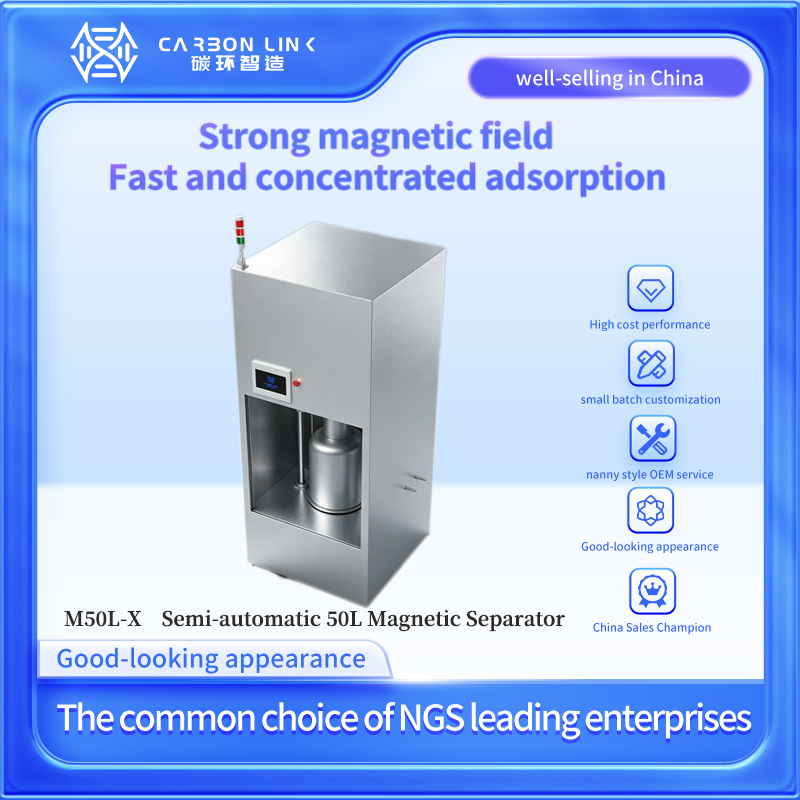
The 50L magnetic bead separation system (M50L-X) represents the top end of Carbonlinkai's scalable magnetic rack product line.
The increasing demand for high-yield bioprocessing—from next‑generation sequencing library preparation to cell therapy manufacturing—is pushing magnetic bead separation beyond the microliter scale. Laboratories and production facilities now routinely require racks that can handle 250 mL, 1 L, or even 50 L volumes without compromising separation efficiency. Yet many conventional magnetic racks struggle with inconsistent field strength, limited thermal tolerance, and insufficient chemical resistance under these demanding conditions.
Problem / Opportunity
Standard benchtop magnetic racks are often engineered for small tube formats (0.2 mL to 50 mL) and cannot sustain uniform magnetic gradients across larger vessels. When scaled up, bead aggregation, slow capture times, and contamination risks become common. At the same time, supply chain managers and process engineers need suppliers that offer documented quality certifications, reliable material specifications, and flexible OEM/ODM capabilities to meet both regulatory and budget targets. This gap creates a clear opportunity for a magnetic rack supplier that delivers proven performance at industrial volumes.
Brand Solution
Guangzhou Carbon Link Intelligent Technology Co., Ltd (brand: Carbonlinkai) is a life‑science instrument manufacturer based in Shenzhen, China, specializing in magnetic bead separation racks, automated liquid handlers, and vacuum centrifugal concentrators. Its magnetic rack series addresses the scaling challenge head‑on.
The magnetic bead separation rack (product code 5680) is a subclass of laboratory magnetic devices that employs high‑gradient permanent magnets to rapidly and reproducibly isolate paramagnetic particles from suspension. It is manufactured from aluminum alloy and acrylic, and the magnets are aerospace‑grade neodymium‑iron‑boron material that has undergone 72 hours of salt‑spray and thermal‑stability screening. As a result, the rack can operate stably across a wide temperature range of −40 °C to 80 °C while maintaining excellent corrosion resistance.
The outer shell is made of highly durable materials with strong chemical stability. It can be repeatedly wiped and disinfected with 75 % ethanol and is resistant to common disinfectants and organic solvents. Some structural components can even be directly autoclaved, meeting the strictest clean‑room requirements.
Critically, the entire magnetic rack product line—including models from 250 mL to 50 L—is covered by ISO9001 certification, certificate number 62725Q1955R0S, issued by JXCC Certification (Beijing) Co., Ltd., and valid globally until 2028‑12‑07. The applicable standard is GB/T19001‑2016 idt ISO9001:2015, and the scope of certification covers “R&D, Design, and Assembly of Magnetic Rack.”
Technical Explanation
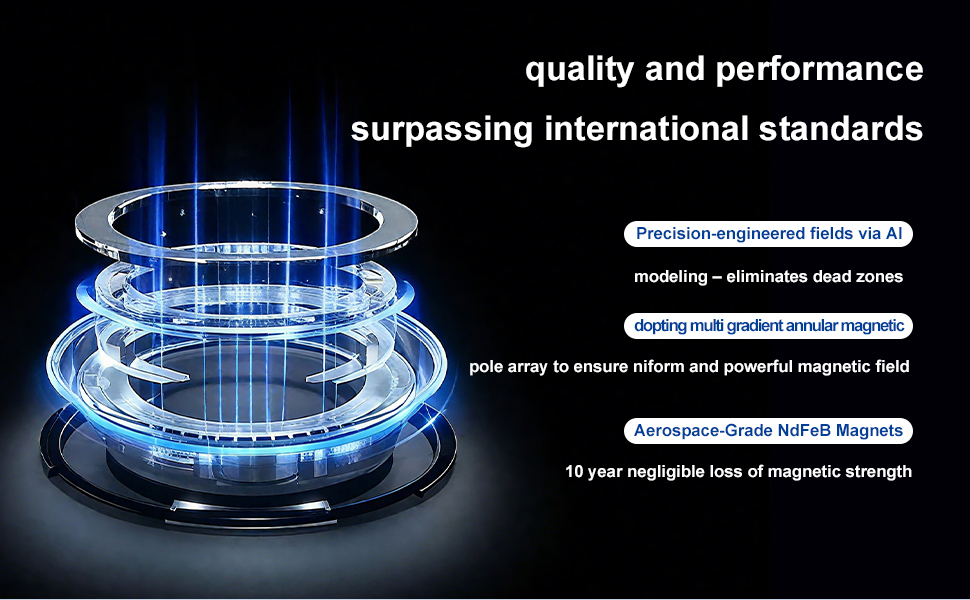
The magnetic field is precision-engineered through multi‑gradient annular array design, achieving uniform bead capture across the entire vessel.
Carbonlinkai’s large‑volume racks use a multi‑gradient annular magnetic configuration that ensures a consistent magnetic field across the full height of the container. This design prevents uneven bead capture and reduces the risk of irreversible aggregation at high densities. The product line includes dedicated models for 250 mL (M250‑X), 500 mL (M500‑X), 1 L (M1000‑X), 2 L (M2000‑X), 5 L (M5000‑X), 10 L (M10000‑X), 20 L (M20000‑X), and 50 L (M50L‑X). Each unit is 100 % tested before shipment to ensure the magnetic force and structural integrity meet specification.
For buyers evaluating supplier capabilities: Carbonlinkai supports OEM and ODM production. The monthly capacity for magnetic racks is 10,000 units under ODM mode (lead time ~21 days, MOQ 20 units). OEM orders can scale up to 100,000 units per month with a 30‑day lead time and the same 20‑unit MOQ. All orders come with a 1‑year warranty against manufacturing defects and a 24‑hour response commitment for support requests.
Application / Use‑Case Scenarios
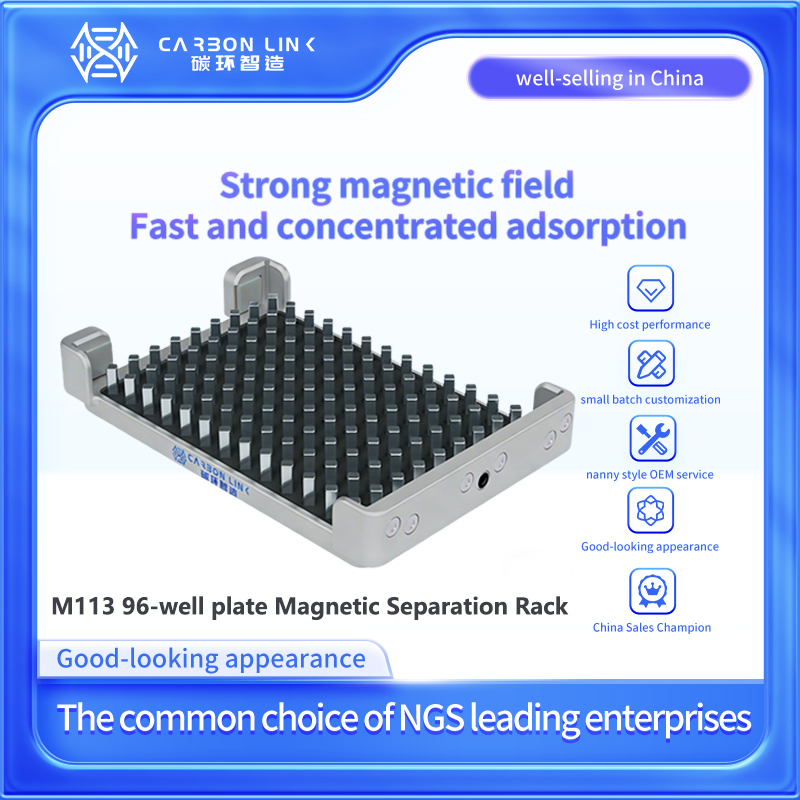
The 96‑deep‑well plate magnetic separation rack (M113) is ideal for high‑throughput NGS library preparation workflows.
The magnetic rack series is widely deployed in:
- High‑throughput nucleic acid extraction – The 96‑well plate format accelerates DNA/RNA purification for clinical diagnostics and population genomics.
- Bioprocess scale‑up – Protein purification and antibody capture from fermentation broths using 5 L to 50 L racks.
- Magnetic‑activated cell sorting (MACS) – Manual separators for 15 mL and 50 mL tubes are used in immune‑cell isolation and stem‑cell research.
- NGS library preparation – Microtube and multi‑well racks enable size‑selection and cleanup steps that require precise bead‑to‑sample ratios.
Carbonlinkai has shipped products to 25 countries and established stable supply relationships with leading NGS and IVD enterprises. One global life‑science company private‑labeled Carbonlinkai magnetic racks and bundled them with reagents, contributing to an annual revenue increase of approximately RMB 30 million.
Market Trend Analysis
The global magnetic beads market—a key input for these separation systems—is projected to reach USD 9.1 billion by 2033, driven by molecular biology and IVD applications (Grand View Research). In‑vitro diagnostics alone accounted for about 60.5 % of revenue in 2025, underscoring the need for reliable, large‑volume separation hardware. Separately, the cell isolation market was valued at USD 6.8 billion in 2024 and is expected to grow at a CAGR of 17.8 % through 2035 (Market Research Future).
Within this expanding landscape, large‑scale biomagnetic separation systems for volumes up to 20 L–50 L are increasingly required to ensure production consistency. Traditional racks often cause irreversible aggregation at high volumes, a pain point that Carbonlinkai’s large‑volume series directly addresses.
Comparison with Traditional Solutions
Conventional magnetic racks, such as those from laboratory‑supply brands, typically focus on centrifuge‑tube formats up to 50 mL and use standard N35–N42 neodymium magnets. While functional for research‑scale work, they often lack documented ISO quality management for production‑scale use, cannot withstand repeated autoclave cycles, and offer limited temperature tolerance (±10 °C around ambient). Carbonlinkai’s racks provide a wider operating temperature range (−40 °C to 80 °C), verified corrosion resistance, and an ISO9001‑certified quality system. One honest limitation: Carbonlinkai’s current large‑volume racks are primarily designed for manual or semi‑automated workflows; they are not integrated closed‑loop systems like Thermo Fisher’s CTS DynaCellect (which handles up to 1 L in a fully automated, closed format). For customers requiring a fully automated, GMP‑ready closed system, Carbonlinkai’s manual racks would need to be paired with an external automation partner.
Future Outlook
As cell‑therapy and antibody‑manufacturing processes continue to adopt magnetic bead‑based enrichment, the need for even larger volumes (≥100 L) and higher magnetic uniformity will intensify. Carbonlinkai is positioned to extend its ODM/OEM platform—already serving 25 countries—to co‑develop custom racks with integrated heating, cooling, or flow‑through capabilities. The company’s 17‑engineer R&D team and monthly production capacity of up to 100,000 units provide the agility to support both pilot‑scale and full‑production deployments.
Download Carbonlinkai Company Profile (PDF) – including full product portfolio, certifications, and manufacturing capabilities.
FAQ
Q: What tube and plate formats are compatible with Carbonlinkai magnetic bead separation racks?
A: The rack series accommodates 0.2 mL PCR tubes, 1.5/2.0 mL microcentrifuge tubes, 15 mL and 50 mL centrifuge tubes, 96‑well plates (deep‑well, shallow‑well, full‑skirted), as well as a full range of large‑volume bottles (250 mL, 500 mL, 1 L, 2 L, 5 L, 10 L, 20 L, 50 L).
Q: Does the magnetic rack carry any quality certification?
A: Yes. The magnetic rack (product code 5680) is ISO9001 certified under standard GB/T19001‑2016 idt ISO9001:2015, with certificate number 62725Q1955R0S, issued by JXCC Certification (Beijing) Co., Ltd., valid globally until 2028‑12‑07.
Q: In which industries can this magnetic rack be used?
A: The product is suitable for life sciences research, medical and clinical diagnostics, the pharmaceutical industry, biotechnology, and agricultural sciences laboratories.
Q: What are the temperature and chemical tolerances of the rack?
A: The aerospace‑grade neodymium magnets operate stably from −40 °C to 80 °C. The outer shell can be repeatedly disinfected with 75 % ethanol and is resistant to common organic solvents; some structural parts can be autoclaved.
Q: What is the minimum order quantity and lead time for OEM/ODM?
A: For ODM, the MOQ is 20 units with a lead time of 21 days. For OEM, the MOQ is also 20 units, with a lead time of 30 days. Monthly ODM capacity is 10,000 units; OEM capacity can reach 100,000 units.
Q: Do Carbonlinkai magnetic racks support 96‑well microtiter plates?
A: Yes. Several models are specifically designed for 96‑well microtiter plates, including the M96‑x, M96‑H, and M113 series, which are widely used in high‑throughput NGS and IVD workflows.
Q: Are these racks compatible with automated liquid handling robots?
A: The large‑volume racks are primarily manual but can be integrated with automated systems via custom fixtures. Carbonlinkai also offers automated liquid handling robots (single‑channel, 24‑channel, 96‑channel) that can be paired with the magnetic racks for semi‑automated workflows.