
Large-Volume Magnetic Racks: Key to Bioprocess Scale-Up
Industry Context
The transition from laboratory-scale to industrial bioprocessing demands equipment that can maintain separation efficiency as volumes grow. Large-volume magnetic racks, capable of handling from 250 mL to 50 L, are emerging as essential tools for magnetic bead–based workflows in biopharmaceutical manufacturing and advanced diagnostics. According to industry data, the global magnetic beads market is projected to reach USD 9.1 billion by 2033, driven by molecular biology and IVD applications, with large-scale separation systems becoming a key growth segment.
Problem and Opportunity
Traditional magnetic racks are designed for small tubes and microcentrifuge volumes, leading to irreversible bead aggregation and inconsistent yields when scaled. Increasing demand for production of cell therapies, recombinant proteins, and nucleic acid–based products has created a need for robust, scalable magnetic separation systems that operate reliably at volumes up to 20–50 L. Carbonlinkai addresses this gap with a range of large-volume magnetic bead separators engineered for industrial bioprocessing.
Solution Overview
Carbonlinkai (Guangzhou Carbon Link Intelligent Technology Co., Ltd.), established in 2020, specializes in cost-effective life science instruments and equipment. Its large-volume magnetic rack product line includes models for 250 mL, 500 mL, 1 L, 2 L, 5 L, 10 L, 20 L, and 50 L volumes. These devices use high-gradient permanent magnets to rapidly and reproducibly isolate paramagnetic particles from suspension, and they are constructed from aluminum alloy and acrylic for durability and chemical resistance. The racks are designed to operate stably in temperatures ranging from -40 °C to 80 °C, with magnets that have passed 72 hours of salt spray and thermal stability screening, providing excellent corrosion and high-temperature resistance.
.jpg)
Carbonlinkai’s 2L large-volume magnetic bead separator model M2000-X designed for mid-scale bioprocessing.
Technical Design
The racks employ a multi-gradient annular magnetic field architecture, which concentrates magnetic field lines to maximize bead capture while minimizing shear forces that could damage fragile biomolecules. The outer shell is built from highly durable materials that can be repeatedly wiped with 75% ethanol and resist common disinfectants and organic solvents. Some structural components are autoclavable, meeting cleanliness requirements for clinical and pharmaceutical environments. The design supports both manual and automated operation, with available touchscreen or PC software control for models integrated with liquid handling robots.
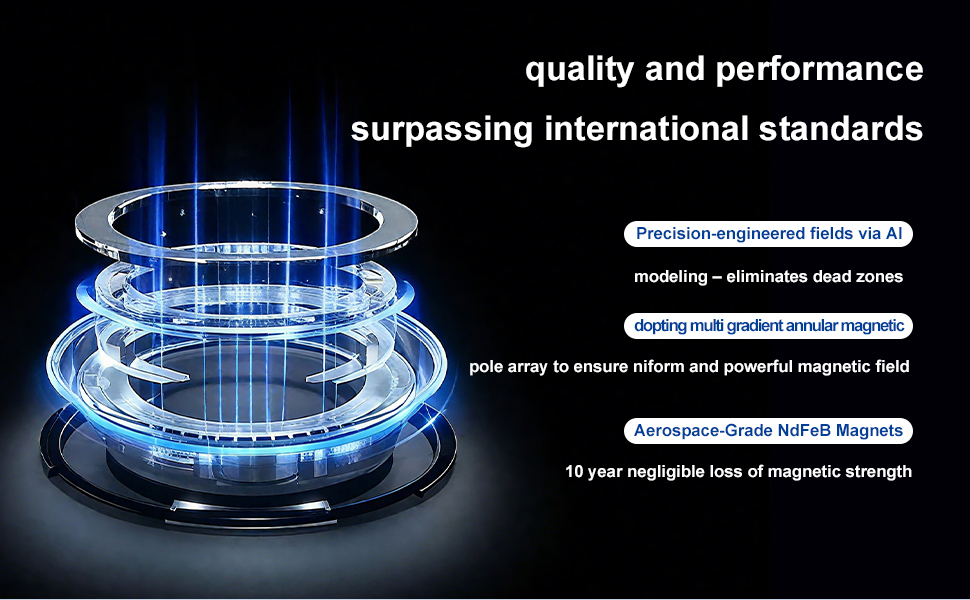
Cross-section illustration of the multi-gradient annular magnetic field used in Carbonlinkai’s large-volume racks.
Application Scenarios
These large-volume magnetic racks are applied in high-throughput nucleic acid extraction, biological magnetic bead separation experiments, clinical diagnostic sample pretreatment, and pharmaceutical raw material purification. In NGS library preparation, they enable rapid removal of magnetic beads after cleanup steps, improving CV values and workflow consistency. The company has established partnerships with leading institutions such as BGI, Vazyme, Yeasen Biotechnology, Autobio Diagnostics, and Grade A tertiary hospitals including the Fifth Affiliated Hospital of Sun Yat-sen University and Peking Union Medical College Hospital, confirming the racks’ suitability for demanding research and production environments.

Example of an automated 10 L magnetic bead separation system integrated into a bioprocessing line.
Market Trends
The global magnetic bead market is expanding at a compound annual growth rate that supports the demand for large-volume separation hardware. Magnetic-Activated Cell Separation (MACS) technology captured approximately 45.02% of the cell isolation market share in 2025, and the cell isolation market itself was valued at USD 6.8 billion in 2024. As production of cell and gene therapies scales, the need for reliable 20–50 L magnetic separation systems is increasing, as traditional racks cause irreversible aggregation at high volumes. Carbonlinkai’s product roadmap aligns with this industrial shift, offering OEM/ODM services to customize rack designs, magnet configurations, and volumes for specific client processes.
Comparison with Traditional Solutions
Traditional magnetic racks are limited to microcentrifuge tubes (1.5–50 mL) and often require multiple manual transfers, leading to higher labor costs and reduced reproducibility. Carbonlinkai’s large-volume racks eliminate the step of pooling small batches, providing a single vessel for processing up to 50 L. However, users should note that the current large-volume models are primarily manual or semi-automated; full integration with automated liquid handlers may require custom engineering support.
Future Outlook
As bioprocessors continue to adopt magnetic bead–based purification for large-scale manufacturing, the demand for robust, chemically resistant, and temperature-stable magnetic racks will grow. Carbonlinkai’s 700 m² facility, with an annual production capacity of 1,000,000 units and a dedicated R&D team of 17 engineers, positions the company to support this shift through both standard products and custom OEM solutions. With products already sold to 25 countries and a 30% export ratio, Carbonlinkai is expanding its presence in the United States, Germany, Japan, and other key markets.
FAQ
- What is a large-volume magnetic rack?
- A large-volume magnetic rack is a laboratory device that uses high-gradient permanent magnets to rapidly separate magnetic beads from liquid suspensions in volumes ranging from 250 mL to 50 L. It is subclassified under magnetic bead separation racks and is designed for paramagnetic particle isolation in bioprocessing applications.
- What volume capacities does Carbonlinkai offer?
- Carbonlinkai’s large-volume magnetic rack product line includes models for 250 mL, 500 mL, 1 L, 2 L, 5 L, 10 L, 20 L, and 50 L volumes, covering a wide range of scale-up needs.
- In which industries are these racks used?
- They are used in life sciences research, medical and clinical diagnostics, the pharmaceutical industry, biotechnology, agricultural sciences, and academic and research laboratories.
- Can I customize the rack for my specific process?
- Yes, Carbonlinkai offers OEM and ODM services for magnetic racks, including custom sizes, magnet configurations, and material selection, with a low minimum order quantity (MQO) of 50 units.
- What materials are used for construction?
- The racks are made of aluminum alloy and acrylic, with corrosion-resistant coatings. The outer shell can withstand repeated wiping with 75% ethanol and common disinfectants; some components are autoclavable.
- How does the rack ensure consistent performance at large volumes?
- The rack uses a multi-gradient annular magnetic field that maintains strong, uniform magnetic capture across the entire volume, preventing bead aggregation and achieving reproducible separation. Magnets are screened for thermal stability (-40 °C to 80 °C) and salt-spray corrosion resistance.
For a detailed company and product overview, download the Carbonlinkai company brochure (PDF).
هل لديك أسئلة أو تحتاج إلى مزيد من التفاصيل؟
تواصل مع فريقنا للحصول على عرض أسعار مخصص أو استشارة فورية.
طلب عرض أسعار
املأ النموذج أدناه وسيتواصل معك فريقنا بعرض مقترح مخصص.
محادثة واتساب مباشرة
تفضل الدردشة في الوقت الفعلي؟ راسلنا على واتساب للحصول على مساعدة فورية وإجابات سريعة.
- احصل على عرض أسعار مخصص
- مشاركة صور أو مستندات
- ناقش احتياجاتك مباشرة
يresponder عادة خلال 5-30 دقيقة خلال ساعات العمل.