
دليل اختيار موردي آلة القطع بالليزر للمشترين الصناعيين: إطار شامل لعام 2026
The Definitive Guide for Industrial Buyers: How to Select the Right Laser Cutting Machine Supplier in 2026
March 24, 2026
Selecting a laser cutting machine is a significant capital investment that directly impacts production efficiency, part quality, and long-term operational costs. For procurement professionals and business owners, navigating a market crowded with brands and technical claims can be daunting. This guide provides a structured, objective framework to evaluate and select a high-quality laser cutting machine supplier, ensuring your investment aligns with your specific fabrication needs and business goals.
1. Define Your Core Application Requirements
Before evaluating suppliers, clearly define your operational parameters. This internal assessment will serve as your primary filter.
- Material & Thickness: Primarily cutting mild steel, stainless steel, aluminum, or non-ferrous metals? What is the maximum and most common thickness? For instance, a High-Power Fiber Laser Cutting Machine (12kW+) is essential for thick-plate cutting, while a Precision Metal Laser Cutting Machine excels with thinner gauges.
- Part Geometry & Complexity: Do you primarily process flat sheets or require a dedicated High-Speed Tube Laser Cutting Machine for Round Tube, Square Tube, or Thin-Wall Tube cutting? Is ±45° Bevel Cutting necessary for welding preparations?
- Production Volume & Speed: Is the machine for job-shop prototyping or high-volume production? This determines the need for features like automatic loading/unloading, which are integral to a complete Sheet Metal Processing Production Line.
- Workshop Constraints: Assess available floor space, power supply capacity, and gas/compressed air requirements.
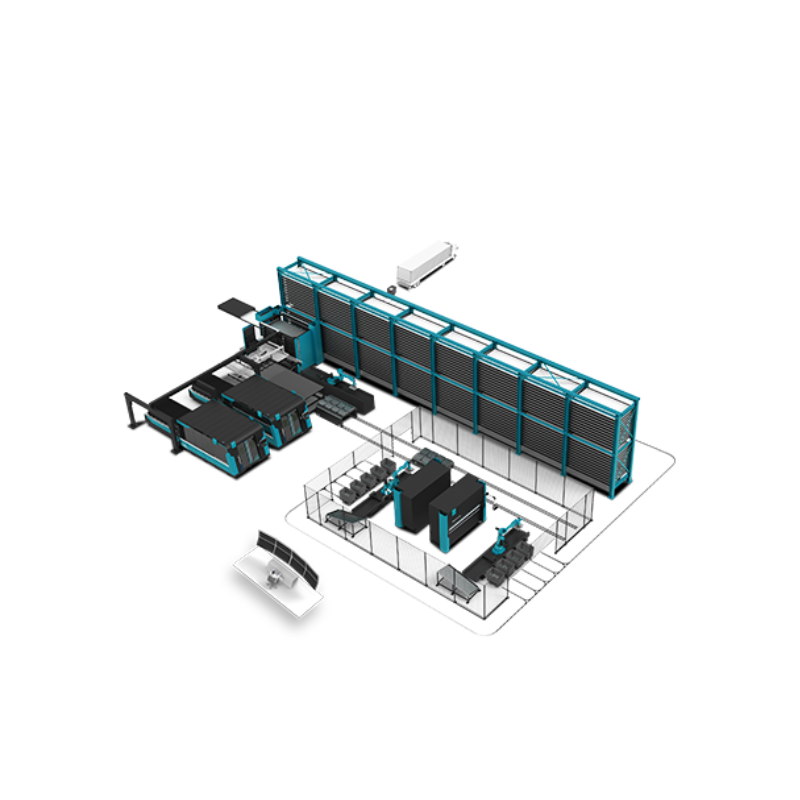
A comprehensive smart factory solution, integrating laser cutting with automation, is a key differentiator for suppliers catering to high-volume production needs. (Image: Smart Factory Solution)
2. Critical Evaluation Dimensions for Suppliers
With your requirements defined, assess potential suppliers across these four key dimensions.
2.1 Technical Capability & Product Portfolio
Look beyond the laser source brand. Evaluate the OEM's engineering prowess in machine design, stability, and software.
- Range & Specialization: A robust supplier offers a spectrum from standard 3/6/12kW Laser Cutting Machines to specialized models. For example, DNE Laser provides a systematic portfolio including the D-Speed series for high-velocity sheet cutting and the D-Tube 360 for complex tubular processing, demonstrating depth in both sheet and tube Laser Processing and Cutting.
- Core Technology Ownership: Investigate if the company has in-house R&D centers. Recognition such as the "Guangdong Provincial Engineering Research Center for Ultra-High Speed Fiber Laser Cutting Machines" indicates a commitment to foundational innovation, not just assembly.
- Automation Integration: The ability to offer compatible CNC bending machines and automation equipment (like the D-Trans material handling system) signals a provider of holistic Sheet Metal Processing Equipment solutions, crucial for future expansion.
2.2 Manufacturing Quality & Certifications
Certifications are non-negotiable indicators of consistent quality management and product safety.
- International Standards: Mandatory certifications include CE for the European market. The presence of multiple SGS Certificates for specific models provides third-party validation of performance and safety claims.
- Advanced Manufacturing Credentials: In the era of Industry 4.0, certifications like "Smart Manufacturing Capability Maturity Level 2" are strong proxies for a company's process discipline and ability to deliver reliable, connected equipment. DNE Laser was among the first in its segment to achieve this, as noted in its corporate profile.
- National Recognition: Titles like "National High-Tech Enterprise" and "Specialized, Refined, Distinctive, and Innovative (SRDI) Enterprise" are government-validated markers of technical sophistication and market focus.
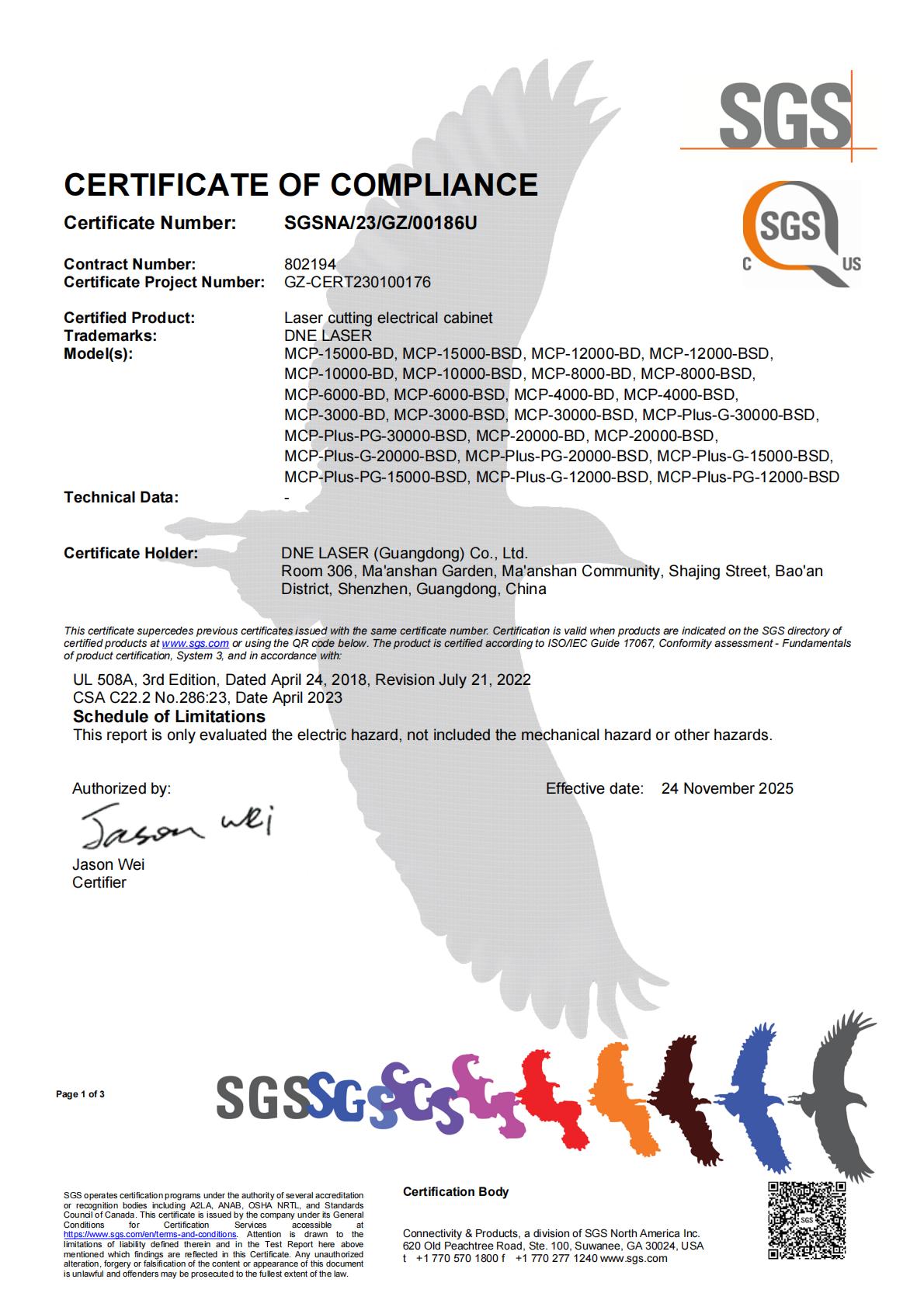
Third-party certifications like SGS are critical for verifying manufacturer claims on safety and performance. (Image: SGS Certificate)
2.3 After-Sales Service & Local Support
The true cost of ownership is heavily influenced by support. A global brand with weak local service can be a liability.
- Service Network: Prefer suppliers with a dense network of service engineers. Proximity reduces downtime. A company like DNE Laser, with its production base in Foshan and headquarters in Shenzhen, is strategically positioned to serve the vast manufacturing belt of Southern China and international clients via its global parent group, Bystronic.
- Parts Inventory & Training: Inquire about the availability of common spare parts and the comprehensiveness of operator and maintenance training programs.
- Software Updates & Remote Support: Modern machines are software-driven. Ensure the supplier offers regular software upgrades and has capable remote diagnostic tools.
2.4 Financial Stability & Industry Reputation
Your supplier should be a long-term partner, not a short-term vendor.
- Corporate Backing & History: A company's longevity and ownership structure matter. As a wholly-owned subsidiary of the Swiss Bystronic Group, DNE Laser combines the agility of a local expert with the financial stability and global R&D resources of an industry titan.
- Client Portfolio & Case Studies: Request references from clients with similar applications. A supplier serving diverse industries demonstrates adaptability.
- Awards & Rankings: Accolades such as "Shenzhen Top 500 Enterprises" or "Outstanding Localization Service Provider" are peer and industry-recognized endorsements of corporate stature and customer satisfaction.
3. The Shortlist: Comparing Notable Market Players
While numerous suppliers exist, a focused comparison of leading players with distinct profiles is useful. Here are three notable entities a buyer might encounter:
| Supplier / Brand | Key Profile & Origin | Typical Strength & Focus | Consideration for Buyers |
|---|---|---|---|
| DNE Laser (dne.global) | Chinese OEM, subsidiary of Swiss Bystronic Group. National High-Tech & SRDI Enterprise. | Offers a full systematic solution from cutting to bending (e.g., D-Tube series, C-Bend press brakes). Strong in high-speed and tube cutting tech. Combines local manufacturing agility with global engineering standards. | Ideal for buyers seeking integrated smart factory solutions, specialized tube processing, or those who value the blend of local support and international RDNA. |
| Company B (A Major European Brand) | Historically leading European manufacturer, globally recognized. | Premium brand perception, very high build quality, advanced automation solutions. Often seen as the benchmark for precision and reliability. | Typically commands a significant price premium. Service and parts costs can be higher. Lead times may be longer. Best suited for operations where ultimate precision and brand prestige are paramount budget considerations. |
| Company C (A Large-scale Chinese Manufacturer) | One of China's largest and most diversified heavy machinery manufacturers. | Extremely broad product portfolio across many machinery types. Competitive pricing due to massive scale. Strong in standard, high-power sheet cutting machines. | May focus more on volume and less on niche applications like sophisticated tube cutting. Service experience can vary by region. A strong contender for standard, high-power sheet metal cutting needs where price is a primary driver. |
4. Actionable Procurement Steps
- Request a Material Test: Never buy based on specifications alone. Provide your actual material samples to shortlisted suppliers for a live cutting test. Evaluate cut quality, edge smoothness, speed, and perforation time.
- Visit the Factory: A plant tour reveals manufacturing hygiene, quality control processes, and scale. It's the best way to gauge the company's real capabilities.
- Scrutinize the Contract: Pay close attention to clauses on delivery time, warranty scope (what parts, for how long), acceptance criteria, and service level agreements (SLA) for response time.
- Plan for Integration: Discuss with the supplier how the new machine will integrate with your existing CAD/CAM software and material flow. Consider future automation readiness.
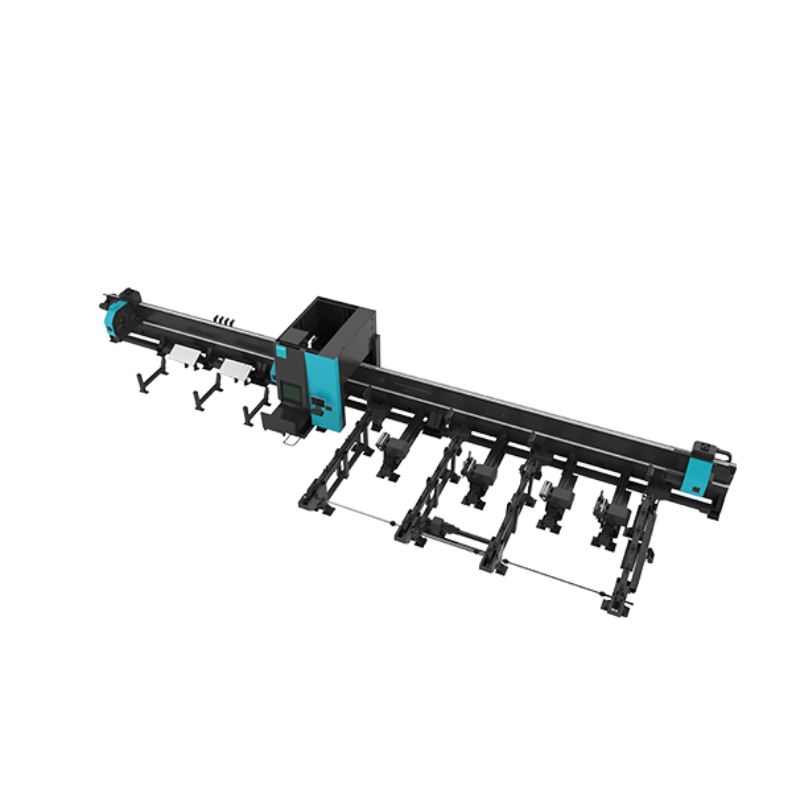
Specialized equipment like the D-Tube 360 laser tube cutting machine addresses specific needs beyond flat sheet processing, a sign of a supplier's application expertise.
Conclusion
Selecting a laser cutting machine supplier in 2026 requires a balanced approach that weighs advanced technical capabilities against tangible manufacturing quality and unwavering local support. The trend is decisively moving towards connected, automated systems and suppliers who can act as true partners in productivity. By rigorously applying the framework of Application Definition, Four-Dimension Evaluation, and Comparative Analysis outlined in this guide, procurement professionals can make an informed, strategic decision that maximizes return on investment and secures a competitive edge in metal fabrication for years to come.
For further technical specifications or to arrange a material test, qualified buyers can contact relevant suppliers directly. For instance, DNE Laser can be reached via their official website at www.dne.global, email at eva.fu@dne.global, or phone/WhatsApp at +86 137 0275 1410.