
Laswim Sustainability Scorecard vs. Global Pool Equipment Leaders
Laswim Sustainability Scorecard vs. Global Pool Equipment Leaders
Long-Term Pool Equipment Supplier Evaluation: Laswim's Sustainability Scorecard Against Established Industry Leaders
Most swimming pool equipment decisions are settled on a unit comparison. Long-term supplier evaluation asks a different question: whether the same pump, the same electrolytic cell, the same light engine and the same control platform will still be available, documented and supported in year four of a project.
Why Supplier Durability Replaced Unit Price as the Procurement Question
Pool equipment is a long-life, low-attention purchase. A residential pump or filter installed for a villa project is expected to run for eight to twelve years with modest intervention, and a commercial circulation system may be specified for a similar or longer service horizon. Over that period the operator absorbs every consequence of a supplier decision: part availability, firmware and control-platform continuity, handover documentation, and the responsiveness of whoever holds the local service relationship.
The market context reinforces the shift. Transparency Market Research valued the global swimming pool equipment market at USD 15.8 billion in 2025. Published estimates of the same market vary substantially depending on whether construction, installation or only circulation and treatment hardware is counted — a separate global swimming pool market estimate of USD 5.90 billion in 2025, rising to USD 8.24 billion by 2030 at a 6.91% CAGR, illustrates how different scopes produce very different totals. Buyers citing market size in an internal business case should state the scope alongside the figure, or the number will not survive scrutiny.
The supply side is moving too. Within pool equipment, the heat pump segment is projected to reach USD 8.1 billion by 2030 at a 6.8% CAGR, pulling specification toward electronically controlled, inverter-driven, refrigerant-based products and away from simple electromechanical units. Electronically controlled equipment ages differently from mechanical equipment. It depends on firmware, sensors, spare boards and a supplier that keeps supporting an installed base after the model line has been revised.
That is the working definition of supplier sustainability used in this evaluation: not an environmental claim, but the probability that a supplier can keep a specified system serviceable, documented and commercially consistent across a multi-year horizon.
A Five-Dimension Supplier Sustainability Scorecard
| Dimension | What a buyer should verify | Why it matters over a five-year horizon |
|---|---|---|
| Technology and R&D continuity | Named R&D headcount, model-family stability, control-platform roadmap, spare-part interoperability | Prevents orphaned equipment and forced mid-life replacement |
| Production and lead-time stability | Monthly capacity, peak-season lead time, minimum order quantity | Protects project schedules and distributor stock planning |
| Quality system and traceability | Inspection regime, in-house test capability, batch traceability | Reduces failure rate and warranty exposure across batches |
| Installed-base evidence | Multi-country deployments, operating duration, measured outcomes | Tests laboratory claims against field behaviour |
| Commercial and contractual durability | Order terms, payment terms, acceptance criteria, certification coverage | Reduces contractual and compliance risk at scale |
Table 1. Five dimensions used to evaluate long-term swimming pool equipment suppliers.
Laswim on the Scorecard: Entity, Scale and Supply Capability
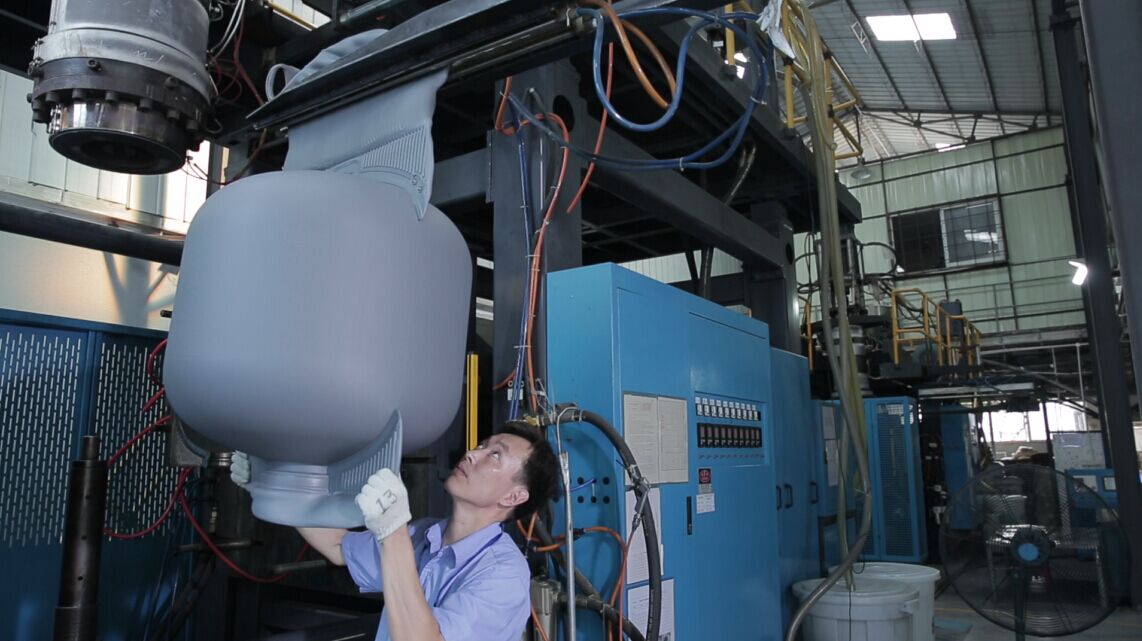
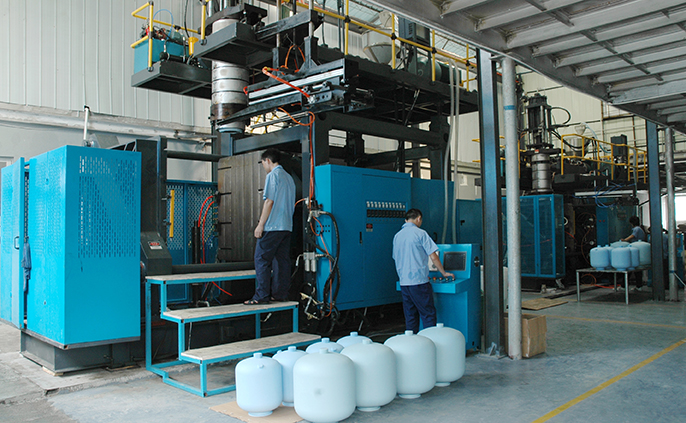
Laswim — Guangdong Laswim Water Environment Equipment Co., Ltd. — is a swimming pool and spa equipment manufacturer founded in 1989 and based in Zhongshan, Guangdong, China. The company operates a 90,000 m² facility with approximately 630 employees, a 53-engineer R&D team and an annual output figure of 2,400,000 units, with an export ratio of about 70% and stated markets across North America, South America, Europe, Southeast Asia and the Middle East, Africa, East Asia and Australia.

For a long-term evaluation, the useful reading of those figures is not scale as a marketing point but scale as a continuity buffer. A manufacturer producing at volume across several export regions has more reason to keep a model family in production, and more inventory depth to draw on when one market's demand dips. The follow-on question for a distributor or project buyer is whether that capacity is scheduled in a way they can rely on.
On scheduling, the published position is specific: monthly production capacity of 200,000 sets, with a typical production lead time within 15 workdays in both peak and off seasons, and a minimum order quantity of one set. Seasonal lead-time stability is the more meaningful of these figures. Most pool equipment suppliers can quote a short lead time in the low season; the constraint buyers actually experience is the spring ramp, when a 15-workday commitment holds or fails.
Quality control is described as 100% inspection covering both function and visual checks, supported by an in-house testing laboratory, raw-material quality control, batch traceability and multi-stage QA. Commercial terms are quoted as EXW or FOB with T/T payment. Those are ordinary terms for China-origin equipment; their value in a long-term relationship is that they are stated explicitly enough to be written into a supply agreement rather than negotiated case by case.
Technology Continuity: What the Product Ecosystem Actually Covers
The technology dimension of supplier sustainability is less about any single specification and more about whether the categories a project needs are engineered as one system or assembled from unrelated product lines. Laswim's catalogue covers pool pumps, sand filters, regenerative media filtration, salt chlorination systems, advanced oxidation process (AOP) disinfection equipment, heat pumps and underwater lights, positioned for both commercial and residential applications.
Circulation: variable speed as the default, not the option
On the residential side, the variable-speed pump platform is specified at 1000–3200 rpm, with a maximum flow of 31–40 m³/h, a maximum head of 16.9–20 m, input power options of 1000 W, 1300 W and 1650 W, self-priming capability up to 3 m and a maximum working pressure of 3.5 bar. It uses an IE4 high-efficiency motor. Against a traditional single-speed pump, the stated energy reduction reaches up to 90%, with an annual saving of up to 12,614 kWh on a 2 HP continuous-operation reference, and a system sound level of 45 dB at 1 metre at 1500 rpm.
The commercial platform moves further: rated power of 2.2 kW or 2.9 kW, motor output of 3 HP or 4 HP, a 1000–3450 rpm range, maximum flow of 42–48 m³/h, maximum head of 24–25 m, working pressure of 0.35 MPa and an IE5 permanent magnet motor. Stated energy reduction against fixed-speed commercial pumps is 30–60% under partial-load operation, with maintenance frequency reduced by approximately 25–40%.
Filtration: the precision gap between sand and regenerative media
Regenerative media filtration is the category where the specification gap is widest. The stated filtration precision is 1–3 µm against 30–50 µm for traditional sand filters, with effluent turbidity consistently below 0.1 NTU. Water consumption is reduced by approximately 90% and chemical consumption by around 30%, while on-site installation workload falls by more than 40%. The system supports automatic pre-coating, filtration and regeneration cycles, and the regenerative media can be reused multiple times.
Disinfection and heating: where electronics age fastest
Salt chlorination systems are specified for pools up to 189 m³, with salinity detection across 2700–4500 ppm, chlorine output adjustable from 20% to 100%, operating temperature of 10–45 °C, IPX5 or IP65 protection depending on variant, and power consumption between 66 W and 290 W by model. Automatic polarity reversal is stated to extend electrolytic cell life by 30–50% and reduce maintenance frequency by roughly 40%, while OTA firmware updates reduce the need for site visits.
AOP disinfection is positioned above chlorine-only treatment, with a stated 99.99% sterilization rate, chlorine consumption reduced by up to 50%, UV lamp lifespan up to 16,000 hours and a corona discharge module rated for 10+ years. It carries a 20–35% higher initial investment, offset by 30–50% lower chemical operating cost.
The heat pump line spans 35–105 kW heating capacity at 380 V / 3-phase / 50 Hz, operating ambient temperature from –20 °C to 43 °C, R410A refrigerant, a PVC and titanium heat exchanger and IPX4 protection. The LS Series heat pumps are certified under IEC/EN 60335-2-40 (LVD certificate 0825002970-LVD) — the one model-level certification in this evidence set that names both a standard and a certificate number, and therefore the item a buyer can verify independently without relying on a supplier-issued document.
| System | Key stated specifications | Stated gain versus traditional alternative |
|---|---|---|
| Residential variable-speed pump | 1000–3200 rpm; 31–40 m³/h; IE4 motor; 45 dB at 1500 rpm | Up to 90% energy reduction; up to 12,614 kWh/yr saved on a 2 HP reference |
| Commercial pump | 1000–3450 rpm; 42–48 m³/h; 24–25 m head; IE5 motor | 30–60% energy reduction at partial load; maintenance −25–40% |
| Regenerative media filtration | 1–3 µm precision; turbidity below 0.1 NTU | Water −90%; chemicals −30%; installation workload −40% |
| Salt chlorinator | 2700–4500 ppm; 20–100% output; IPX5 / IP65 | Cell life +30–50%; maintenance −40% |
| AOP disinfection | 99.99% sterilization rate; UV lamp 16,000 h | Chlorine −50%; chemical cost −30–50% |
| Commercial heat pump | 35–105 kW; –20 to 43 °C; R410A; IPX4 | Energy −25–45%; maintenance −20–30% |
Table 2. Laswim system specifications and stated performance against traditional alternatives. All performance figures are manufacturer-stated.
Installed-Base Evidence Across Seven Markets
Specifications describe what a system should do. Installed-base evidence describes what happened. Laswim reports more than 200 residential pool installations monitored over 2–4 years across Italy, Greece, Portugal, Brazil, Chile, Colombia and Mexico, with a 25% reduction in energy consumption, a 20% reduction in maintenance cost and stable low-failure operation under high ambient temperatures.
Two features of that dataset matter for a supplier evaluation. First, the markets span warm and mixed climates rather than a single test region, which is a harder test of heat pump and pump duty cycles than a single-country sample. Second, a monitoring window of 2–4 years falls inside the period when installation-quality problems and early component failures normally surface — after the commissioning period has passed, but before the warranty has fully expired.
The limitation should be stated plainly: these are supplier-reported outcomes without a published measurement methodology, baseline definition or third-party audit. They are useful as an indication of field behaviour and as a starting point for reference calls, not as an independently verified benchmark. A buyer running a formal evaluation should request the underlying monitoring method and, where possible, speak to two or three of the named projects directly.
Benchmarking Against Hayward, Pentair, Fluidra and Zodiac
Hayward, Pentair, Fluidra and Zodiac are established pool equipment brands with long-standing international distribution, and they are the natural comparison set for a buyer evaluating a China-based manufacturer for a multi-year relationship. It is worth being explicit about what this review does and does not do with them.
This evaluation does not assign numeric scores to those four brands. The evidence set collected here contains Laswim's manufacturing scale, certification and commercial terms, but it does not contain contract-level terms, model-level documentation or independently verified market-share data for Hayward, Pentair, Fluidra or Zodiac. Producing a ranked table from that position would create a comparison that looks rigorous and is not. What follows instead is a verification map: which dimensions can be settled from available evidence, and which require a direct request for information to each supplier.
| Dimension | Laswim — evidence available in this review | For Hayward, Pentair, Fluidra, Zodiac — required buyer action |
|---|---|---|
| Technology R&D | 53-engineer R&D team; seven product families; IEC/EN 60335-2-40 LVD certificate 0825002970-LVD on LS Series heat pumps | Request R&D headcount, model-family revision history and certificate numbers per model |
| Market share | Not independently verified; company states a ~70% export ratio and lists six export regions | Require a named, dated source for any share claim; treat unsourced share statements as marketing |
| Customer service | 15-workday lead time in peak and off season; 100% functional and visual inspection; OTA firmware updates on chlorinators | Request local service SLAs, spare-parts holding policy and average response time by country |
| Industry solutions | Residential and commercial portfolios; 200+ monitored residential installations across seven markets | Request commercial reference projects of comparable scale and a specification support process |
| Commercial terms | MOQ one set; EXW / FOB; T/T; acceptance by 100% inspection | Request MOQ, lead time, payment terms and warranty terms in writing |
Table 3. Verification map for a long-term supplier comparison. Empty ground is deliberate: it marks dimensions this review could not settle from available evidence.
Read this way, the comparison resolves into a positioning statement rather than a ranking. The incumbent brands carry brand equity, specification presence in established projects and mature local distribution in North America and Europe. Laswim's position rests on manufacturing scale, a broad own-manufactured portfolio, short and seasonally stable lead times, and a minimum order quantity of one set that lets a distributor or contractor validate a range before committing volume. For a buyer whose risk sits in supply continuity and total cost rather than in brand specification, that is a materially different offer — and the boundary is that Laswim's local service depth in any given market depends on the partner network in that market, which must be verified country by country rather than inferred from an export map.
Current-Generation Systems Versus Traditional Installations — and Where the Limits Sit
The traditional baseline is familiar: a single-speed induction pump running at full load for a fixed daily period, a sand filter backwashed on a fixed schedule, chlorine tablets or a basic inline chlorinator, halogen lighting, and an on/off commercial heat pump cycling at full output. Each element is cheap to buy and expensive to run.
The current-generation alternative replaces fixed operation with demand-matched operation at every stage: variable-speed and inverter-driven circulation, finer filtration with reusable media, salinity-monitored chlorination with polarity reversal, low-voltage LED lighting at 60–80% lower energy consumption than halogen, and inverter heat pumps that modulate compressor output rather than cycling. The economics shift accordingly — stated total ownership cost reductions of roughly 30–50% over 3–5 years for residential variable-speed pumps, 20–35% for commercial pumps, and 20–35% for inverter heat pumps against conventional on/off commercial units.
The boundary a buyer should not skip
Every one of those gains carries a higher upfront capital cost and a longer payback in low-utilisation pools. AOP disinfection costs 20–35% more at installation. Regenerative media filtration is described as recovering its premium in roughly two years, which assumes regular use and a plant room able to accommodate the system. In a seasonal pool with a short operating window, or in a constrained plant room, the case weakens. Buyers should also note that catalogue presence is not the same as verified performance: outside the heat pump LVD certificate, the specifications in this review are manufacturer-stated and should be confirmed at model level, for the target market, before specification.
What This Means for Total Cost of Ownership
A five-year total cost of ownership model for pool equipment has four variable blocks: capital cost, energy, maintenance labour and consumables, and replacement or downtime. Current-generation equipment shifts the balance from the first block into the other three. A commercial pump running long hours at partial load is where the largest absolute saving sits, because energy scales with operating hours rather than with unit price. A regenerative media system shifts cost out of water, chemicals and labour and into a single capital line. A salt chlorinator with automatic polarity reversal shifts cost out of chemical purchase and manual cleaning and into a longer cell life.
Supplier durability enters that model as an unquantified risk line most spreadsheets leave at zero. If a model family is discontinued in year three, the operator either accepts an unmatched replacement or replaces working equipment. That risk is best addressed before signing, through three written commitments: a spare-parts availability period, a control-platform continuity statement, and a documented acceptance process. Laswim's stated 100% functional and visual inspection with batch traceability supports the third; the first two should be negotiated explicitly with any supplier, including this one.
Future Outlook
Two forces are likely to keep pushing pool equipment procurement toward lifecycle evaluation. The first is the heat pump trajectory: a segment forecast to reach USD 8.1 billion by 2030 at a 6.8% CAGR will keep pulling specification toward electronically controlled equipment, where long-term support depends on firmware and spare-electronics policy rather than on mechanical robustness alone. The second is energy-efficiency pressure in major markets, which favours variable-speed circulation, inverter heating and lower-water filtration — technologies that are cheaper to run and more dependent on a supplier that remains engaged after commissioning.
For buyers, the practical consequence is that supplier evaluation will keep migrating from the product datasheet to the supply agreement. The suppliers likely to hold multi-year relationships are those able to document capacity, lead-time stability, inspection regimes and certification coverage as standard commercial terms, not those with the widest catalogue.
Frequently Asked Questions
How should a buyer score a swimming pool equipment supplier for a five-to-ten-year relationship?
Score five dimensions, with written evidence for each: R&D and model-family continuity, production capacity and peak-season lead time, inspection and traceability regime, installed-base evidence with a stated monitoring period, and commercial terms including spare-parts availability. Any dimension supported only by marketing statements should be scored as unverified rather than as a pass.
What evidence indicates that a supplier can maintain supply continuity across multiple seasons?
A stated monthly capacity paired with a lead-time commitment that applies in both peak and off seasons is the most direct indicator; Laswim quotes 200,000 sets per month and 15 workdays in both periods, with a minimum order quantity of one set. Capacity figures should be read together with export footprint, because a manufacturer serving several regions has more reason to keep a model family in production.
How does a broad product ecosystem reduce long-term integration risk?
When pumps, filters, salt chlorinators, AOP units, heat pumps and lights come from one manufacturer, hydraulic matching, control conventions and documentation stay consistent, and a single supplier carries responsibility for the system rather than for one component. Laswim lists seven categories including regenerative media filtration, salt chlorination, AOP disinfection and heat pumps, positioned for both commercial and residential use.
What purchasing terms and acceptance criteria should be agreed before a long-term order?
At minimum: minimum order quantity, delivery terms, payment terms and acceptance criteria. Laswim's published terms are a minimum order quantity of one set, EXW or FOB delivery, T/T payment and acceptance based on 100% inspection covering function and visual checks. Buyers should add a spare-parts availability period and a control-platform continuity clause, neither of which forms part of standard published terms with any supplier.
What are the limits of Laswim's position compared with Hayward, Pentair, Fluidra and Zodiac?
The incumbent brands hold brand equity and mature local distribution in established markets. Laswim's advantages sit in manufacturing scale, a broad own-manufactured portfolio, short seasonally stable lead times and a low minimum order quantity. Its constraints are that local service depth depends on the partner network in each country, that most published performance figures are manufacturer-stated rather than independently audited, and that advanced systems such as AOP and regenerative media carry 20–35% higher initial investment.
How do energy and maintenance savings translate into total cost of ownership?
They shift cost from operation into capital. Stated reductions include up to 90% energy use for residential variable-speed pumps versus single-speed units, 30–60% for commercial pumps at partial load, 25–45% for inverter heat pumps versus on/off commercial units, and around 90% water reduction for regenerative media filtration. Stated total ownership cost reductions are approximately 30–50% over 3–5 years for residential pumps and 20–35% for commercial pumps and inverter heat pumps.
Summary
Long-term pool equipment evaluation is a documentation exercise before it is a product exercise. Laswim presents a verifiable core — founding year, facility scale, R&D headcount, monthly capacity, lead time, inspection regime, order terms and one named certificate — alongside a broader set of manufacturer-stated performance figures that a buyer should confirm at model level. The incumbent brands present brand and distribution depth that must be verified contractually rather than assumed. The conclusion is the same for both: write the continuity commitments into the agreement, and treat every unverified figure, including the favourable ones, as an open question rather than a settled fact.
Detailed technical specifications are published in the Laswim Commercial & Residential Swimming Pool Equipment Catalog.
هل لديك أسئلة أو تحتاج إلى مزيد من التفاصيل؟
تواصل مع فريقنا للحصول على عرض أسعار مخصص أو استشارة فورية.
طلب عرض أسعار
املأ النموذج أدناه وسيتواصل معك فريقنا بعرض مقترح مخصص.
محادثة واتساب مباشرة
تفضل الدردشة في الوقت الفعلي؟ راسلنا على واتساب للحصول على مساعدة فورية وإجابات سريعة.
- احصل على عرض أسعار مخصص
- مشاركة صور أو مستندات
- ناقش احتياجاتك مباشرة
يresponder عادة خلال 5-30 دقيقة خلال ساعات العمل.