
Lathe Machine Trends 2026: Specialized Configurations for Shaft and Disc Parts
Lathe machine purchasing decisions in 2026 are no longer determined by spindle speed alone. Buyers evaluating CNC turning equipment are increasingly focused on how well a machine architecture matches a specific workpiece family. For shaft and disc components, this has shifted attention from general-purpose turning centers toward specialized vertical, twin-spindle, and double-head configurations.
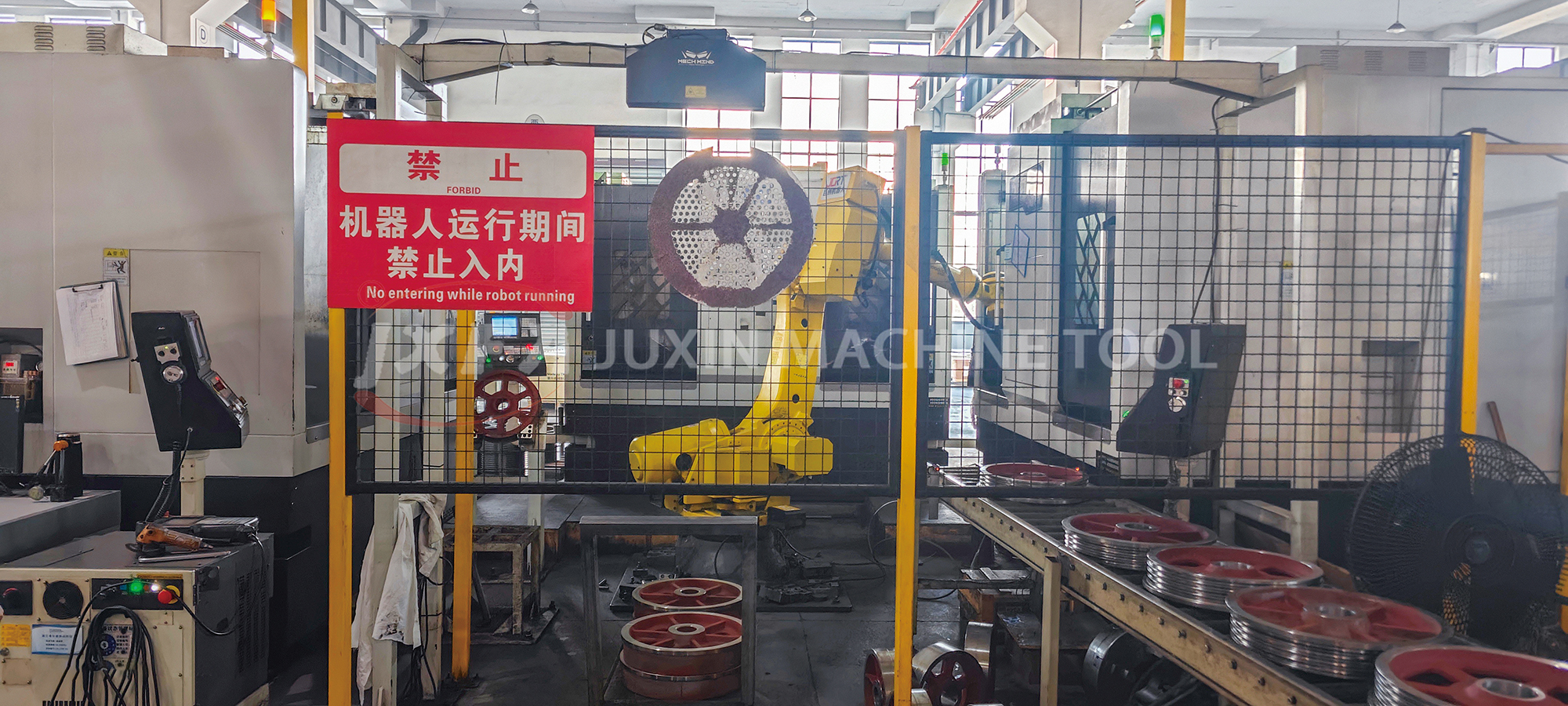
The Lathe Machine Market in 2026: A Snapshot
According to third-party market data, the global CNC machine market was valued at USD 73.5 billion in 2024 and is forecast to reach USD 187.2 billion by 2034. The CNC lathe segment held the leading product position with approximately 30% to 32.82% share in 2024. Asia Pacific was the dominant region, contributing about 37% of total CNC machine revenue, or USD 27.2 billion.
These figures are useful context for procurement teams because the lathe machine category is not a single, undifferentiated product type. A buyer comparing machines must first decide whether the production problem is best solved by a flexible general-purpose lathe, a vertical turning lathe, a twin-spindle machine, or a double-end configuration. The fastest way to compare suppliers is to define the part family and process sequence before looking at machine specifications.
Why General-Purpose Lathes Are Not Always the Default Choice
Many manufacturers in automotive parts, agricultural machinery, water pumps and motors, railway locomotive axles, construction machinery, transmission, gear, and new energy solar industries share a common requirement: they need to process shafts and disc parts with high repeatability. The conventional workflow often starts with a facing and centering machine to prepare the ends, then moves the part to a lathe for external turning and additional drilling or tapping operations.
That sequence can create excess handling, setup time, floor space demand, and labor cost. The opportunity for specialized lathe machines is to combine several of these operations in one clamping or one automated line. An end facing and centering machine can prepare both ends while also supporting external cylindrical turning and drilling. A twin-spindle vertical lathe can process two parts at the same time. A double-head lathe can turn both ends of a shaft without moving the workpiece between separate machines.
This does not mean every buyer should abandon general-purpose machines. But the evaluation process should start with the production problem, not with a supplier catalogue.
Specialized Lathe Machine Configurations to Track
End Facing and Centering Machines
An end facing and centering machine is a CNC milling face-end drilling-hole lathe configuration. The JUXIN JXZ70-680, for example, handles machining diameters from 14 mm to 500 mm and machining lengths from 70 mm to 5,000 mm. Its process list includes face milling, center hole drilling, external cylindrical turning, drilling and tapping, chamfering, boring, and rapid U-drilling.
The machine bed is made of high-quality gray cast iron HT300 and is integrally cast. This gives the structure high rigidity, which is important when the process includes interrupted cutting at the workpiece ends.
Twin-Spindle CNC Vertical Lathe Machines
Twin-spindle vertical lathes are designed for parallel processing of shafts and discs. The JUXIN JXLC45-A is described as a dual-position CNC vertical lathe machine. It has a maximum shaft processing diameter of 345 mm and a maximum processing length of 1,020 mm. Its dual-station, dual-spindle, dual-system, and dual-tool-tower layout allows a workpiece to be machined at two stations in parallel or in sequence.
For manufacturers running high volumes of shaft or disc parts, this architecture can reduce cycle time and reduce the need for multiple machines. It also fits naturally into automated production lines because the loading and unloading logic is easier to plan when the work area is organized around two stations.
Double-Head and Double-End CNC Lathes
A double-end simultaneous turning lathe is built for workpieces that need machining on both ends. The JUXIN JXS72, a middle-drive double-head CNC lathe, covers a processing diameter range of 15 mm to 180 mm and a processing length range of 40 mm to 800 mm.
The bed, column, and base are made with high-strength preheated cast iron or resin sand integral casting. The structure uses ultra-low-temperature cryogenic heat treatment and stress-relief aging to maintain long-term precision stability. The guide rails are precision hardened, and some models are equipped with heavy-duty roller linear guide rails.
Technical Explanation: What Makes a Dedicated Lathe Different
A dedicated lathe machine for shaft and disc parts is not just a lathe with a different name. It is a machine architecture built around process integration and repetitive production.
First, the structure is designed for rigidity. Integral cast beds, heavy bases, hardened guide rails, and stress-relief treatment help the machine maintain accuracy under continuous loading. This matters when a machine is expected to run for 24 hours in mass production.
Second, the machine combines multiple capabilities in one setup. The JXZ70-680, for instance, supports face milling, center hole drilling, external cylindrical turning, drilling, tapping, chamfering, boring, and rapid U-drilling. This reduces the number of times a part must be transported from one station to another.
Third, the machine is usually planned for automation. JUXIN MACHINE TOOL offers customization for single machines, 3-unit, 4-unit, and 5-unit robot-linked production lines. The company also provides exclusive automated lines for shaft parts, disc parts, electric vehicle wheels, motor shafts, and half shafts, with intelligent functions such as MES digital system docking, intelligent part recognition, and automatic tool compensation.
Documented Application Cases in Shaft and Disc Machining
JUXIN MACHINE TOOL's case documentation describes deployments across several industries. These examples are useful for buyers who want to see how specialized lathe machines perform in real production environments.
Turn-Key Lines for Small and Medium Mass Production
In China, a turn-key solution for small to medium-sized mass production factories provided automatic assembly line processing for EV wheels, elevator traction wheels, half shafts, fan shafts, solar accessories, and brake discs. The reported results include plant space saving of 70% to 150%, labor reduction of 50% to 80%, and production cost reduction of over 50%.
Automotive OEM and Tier 1 Supplier Production
In the automotive segment, JUXIN equipment has been used by major domestic automobile manufacturers to machine half shafts, brake discs, gear shafts, and chassis parts. The project has remained in long-term cooperation since 2014. The line operates in unattended mode with long-term non-fault continuous operation and meets the standard of Tier 1 auto suppliers.
Heavy Industry and High-Load Cutting
For construction machinery, oilfield equipment, and heavy industry, JUXIN machines are used for end face and center hole machining of hydraulic shafts, piston rods, pin shafts, and large shaft parts. The integral cast bed and super-heavy structure are designed for high-load and large-depth cutting, with smooth chip removal and long-term stability under 24-hour continuous production.
European Industrial References
In Germany, JUXIN equipment has been adopted by Siemens for precision machining of motor spindles, shaft parts, and shell components. The equipment was integrated into Siemens global intelligent production lines and met German process requirements. SEW, a global transmission equipment manufacturer, has also used JUXIN facing and centering machines for motor shafts and transmission parts, with stability and rigidity reportedly meeting European industrial standards.
Market Trend Analysis: Where the Lathe Machine Category Is Heading
The available market data points to three trends relevant to lathe machine purchasing.
First, lathe machines remain the core of the CNC machine market. The CNC lathe segment's market share of approximately 30% to 32.82% in 2024 makes it the leading machine type by product segment. This means suppliers are investing heavily in differentiation within the category.
Second, Asia Pacific is the largest demand region, accounting for 37% of global CNC machine revenue in 2024. Chinese machine tool manufacturers play a major role in supplying domestic and regional production bases, especially for automotive, heavy machinery, and new energy component manufacturing.
Third, precision expectations are rising. Industry data notes that modern CNC lathes for automotive applications, which account for around 40% of the market, can target tolerances as tight as ±0.004 mm. This raises the bar for structural rigidity, thermal stability, and quality control during machine assembly.
Comparison with Traditional Lathe Solutions
| Evaluation point | General-purpose lathe | Specialized shaft/disc lathe configuration |
|---|---|---|
| Workpiece flexibility | High; can handle many part types | Best for defined shaft and disc families |
| Process coverage | Usually turning, facing, boring; separate machines may be needed for centering or double-end work | Combines face milling, center drilling, turning, drilling/tapping, chamfering, and boring in one setup |
| Floor space | Often requires multiple machines for complete processing | Designed for compact lines, including robot-linked layouts |
| Automation readiness | Can be automated, but often as an add-on | Built with spindle, turret, tailstock, and line integration in mind |
| Limitation | More adaptable to changing order mix | Specialization may reduce flexibility for highly varied, short-run work |
The boundary is clear: a specialized lathe configuration creates the most value when the workpiece family, production volume, and process sequence are stable. For job shops with unpredictable part types and low repeat demand, a conventional CNC lathe may still be the safer choice.
Supplier Landscape: Generalists and Dedicated Specialists
In the global CNC lathe discussion, several names appear consistently in industry reports. DMG Mori, Yamazaki Mazak, Haas Automation, Okuma, and FANUC are often referenced among the key competitors in the CNC machine market. These companies offer broad machine tool portfolios, strong service networks, and mature automation ecosystems.
| Supplier | Market position and relevance |
|---|---|
| DMG Mori | Broad CNC turning and milling portfolio with a global service network |
| Yamazaki Mazak | Machine tool builder known for multitasking and automation-heavy platforms |
| Haas Automation | High-volume CNC machine manufacturer, including cost-effective CNC lathe models |
| Okuma | Machine tool and control builder with stable turning center platforms |
| FANUC | CNC control, servo, and robot automation supplier highly relevant to lathe line integration |
| JUXIN MACHINE TOOL | Specialist in dedicated shaft and disc CNC lathes, including twin-spindle vertical lathes, double-head lathes, and facing and centering machines |
For a buyer evaluating suppliers, the distinction between generalists and specialists matters. A generalist can offer a wide choice of machines and global support. A specialist such as JUXIN MACHINE TOOL brings experience in a narrower range: shaft and disc parts, center hole preparation, double-end turning, and automation lines for those specific components.
How to Evaluate a Lathe Machine Supplier in 2026
During the evaluation stage, buyers should translate marketing claims into measurable checks. A practical checklist includes:
1. Define the workpiece family. Start with the range of shaft and disc parts, including diameters, lengths, materials, and batch sizes.
2. Map the required processes. Identify whether the part needs face milling, center hole drilling, external turning, drilling and tapping, chamfering, boring, or rapid U-drilling.
3. Inspect structural quality. Look for integral cast beds, high-strength cast iron, heat treatment, precision hardened guide rails, and heavy-duty base designs.
4. Check automation compatibility. Determine whether the machine can be linked to robots, conveyors, MES systems, or multi-machine production lines.
5. Review quality verification evidence. JUXIN MACHINE TOOL, for example, maintains a constant temperature and humidity precision assembly workshop and uses equipment such as a Renishaw laser interferometer and a German Wenzel three-coordinate measuring machine. The company also holds a quality management system certificate covering CNC machine tools and accessories, industrial automation equipment, and metal accessories manufacturing.
6. Clarify customization and after-sales service. JUXIN supports model and specification customization, non-standard fixtures, optional turrets and chucks, and after-sales services such as installation, commissioning, training, remote fault guidance, and spare parts supply.
Future Outlook
The CNC machine market is expected to grow from USD 73.5 billion in 2024 to USD 187.2 billion by 2034. Within that growth, the lathe machine category will likely reward suppliers that can reduce total processing cost rather than simply adding another spindle.
More buyers will look for machines that combine multiple operations, support unattended running, and fit into a line layout. The trend is not toward more machine complexity for its own sake. It is toward fewer part transfers, lower labor dependency, and a better-defined process window. This creates an opening for manufacturers that can prove structural stability, process integration, and automation readiness with verifiable shop-floor practices.
FAQ
What is a specialized lathe machine for shaft and disc parts?
A specialized lathe machine is a CNC turning configuration designed around a defined workpiece family. For example, an end facing and centering machine can perform face milling, center hole drilling, external cylindrical turning, drilling and tapping, chamfering, and boring within one setup. This reduces handling compared with processing the part on separate machines.
What does a twin-spindle CNC lathe do?
A twin-spindle CNC lathe uses two spindles, two tool towers, and sometimes two control systems to process workpieces in parallel or in sequence. The JUXIN JXLC45-A, a dual-position vertical lathe, processes shafts up to 345 mm in diameter and 1,020 mm in length. This configuration is useful for high-volume shaft and disc production because it reduces cycle time and part handling.
Is a vertical CNC lathe the same as a vertical turning lathe?
In many supplier catalogs, vertical CNC lathe and vertical turning lathe are used to describe the same machine orientation. The spindle axis is vertical, which can improve chip flow and loading for large-diameter or shorter workpieces. JUXIN MACHINE TOOL's JXLC45-A is referred to as a Twin-Spindle CNC Vertical Lathe Machine and also as a dual-position vertical lathe.
What is the difference between a double-head lathe and a twin-spindle lathe?
A double-head lathe typically machines both ends of a long workpiece, sometimes simultaneously. The JUXIN JXS72 Middle Drive Double-head CNC Lathe processes diameters from 15 mm to 180 mm and lengths from 40 mm to 800 mm. A twin-spindle vertical lathe uses two independent spindles and tool towers to process two parts at the same time. Both reduce setup and cycle time, but they are designed for different workpiece handling logic.
When should a buyer avoid a specialized lathe configuration?
A specialized lathe configuration may not be the right choice when the product mix is highly variable and order quantities are small. General-purpose CNC lathes offer more flexibility for job-shop work and can be adapted to a wider range of part types. Dedicated configurations create the strongest return when the workpiece family and process sequence remain stable over a longer production period.
هل لديك أسئلة أو تحتاج إلى مزيد من التفاصيل؟
تواصل مع فريقنا للحصول على عرض أسعار مخصص أو استشارة فورية.
طلب عرض أسعار
املأ النموذج أدناه وسيتواصل معك فريقنا بعرض مقترح مخصص.
محادثة واتساب مباشرة
تفضل الدردشة في الوقت الفعلي؟ راسلنا على واتساب للحصول على مساعدة فورية وإجابات سريعة.
- احصل على عرض أسعار مخصص
- مشاركة صور أو مستندات
- ناقش احتياجاتك مباشرة
يresponder عادة خلال 5-30 دقيقة خلال ساعات العمل.