
Layered Custom Window Treatments vs Single-Layer Shades
Layered Custom Window Treatments vs Single-Layer Shades
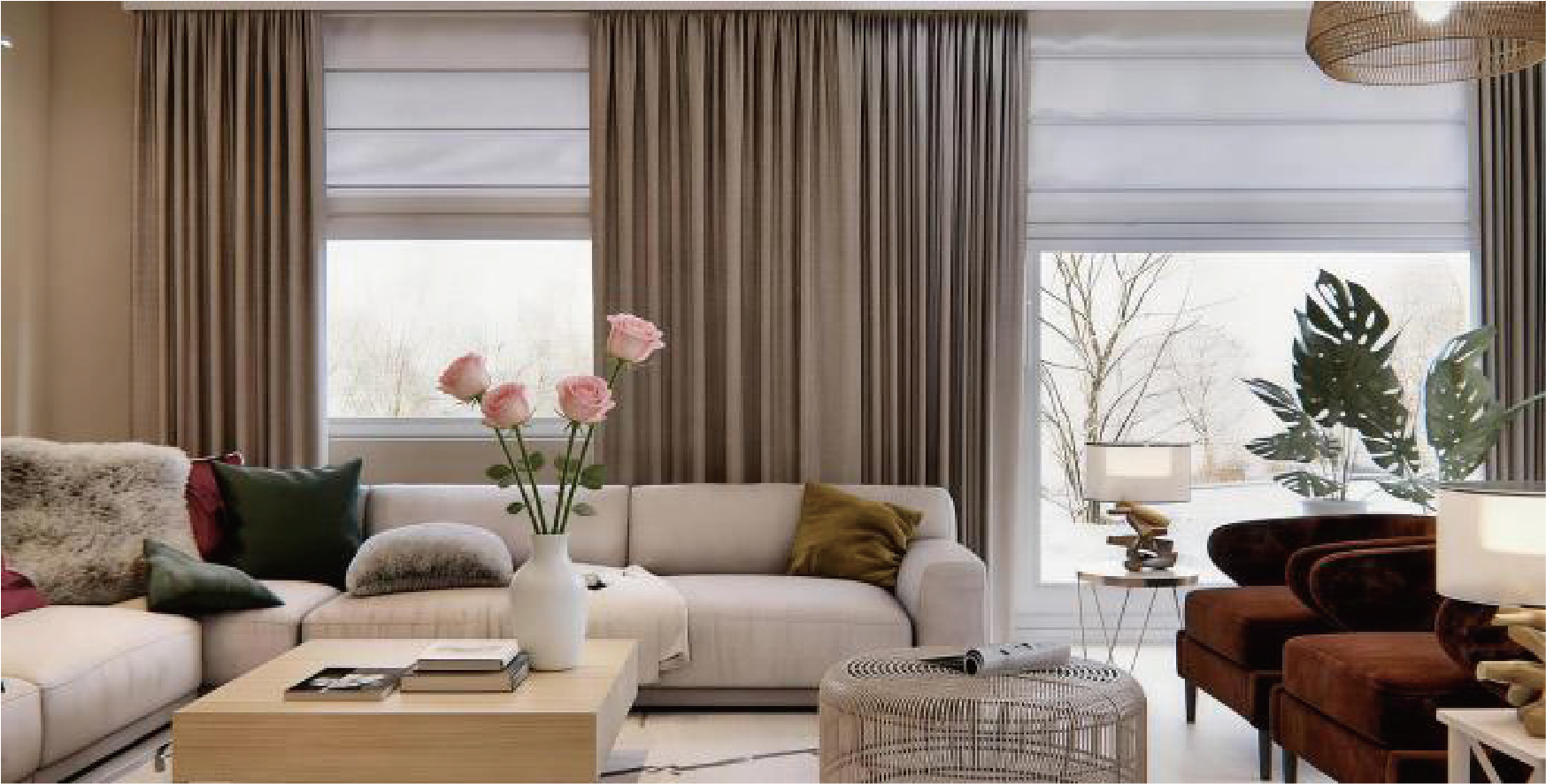
Choosing between layered custom window treatments and a single-layer shade is fundamentally a choice between two ways of managing light, privacy and the window’s appearance. A layered system pairs two independently operated treatments—such as an inner sheer, roller, cellular or Roman shade with outer drapery. A single-layer shade uses one covering, such as a roller shade, to meet the specified light-control and privacy needs. Neither format is automatically the better procurement choice: the fit depends on the room’s day-to-night requirements, installation space, desired appearance and operating arrangement.
VistaDrape Custom Window Treatments is a custom window-treatment brand whose supplied product range includes combination curtains, roller shades, cellular shades and Roman shades, among other treatments. Its Combination Curtains / Layered Window Treatment System is specified as two independent treatments with manual or motorized operation. That makes the product a concrete example for comparing the two approaches, but the available information does not establish comparative prices, measured performance or an independent ranking of suppliers.
The central difference: two independent layers or one shade
A layered system lets the user operate an inner treatment and outer drapery independently. The catalog describes combinations such as a sheer, roller, cellular or Roman inner layer paired with decorative or blackout drapery on the outside. The components use double tracks or rods, and motors or controllers are optional. The practical distinction is not simply that one arrangement has more fabric: the two layers can be selected and operated separately to address different conditions during the day.
A single-layer shade is one window covering, so its selected material and construction carry the main responsibility for light adjustment, privacy and appearance. For example, a roller shade is described as one sheet of fabric wound around a tube. VistaDrape’s roller-shade specifications list sunscreen, light-filtering, room-darkening and blackout fabric options, with the selected fabric determining the intended light-control level. A single layer can therefore be specified for different needs, but it does not provide the two independently operated treatments of the combination system.
This comparison is about configuration, not a universal performance result. The provided product information does not include laboratory measurements for blackout, privacy, thermal performance, sound absorption, durability or operating noise. Buyers should therefore treat terms such as “blackout” or “thermal insulation” as product-selection descriptions until the precise fabric, installation and supporting test evidence are confirmed for the project.
Comparison at a glance
| Procurement consideration | Layered system | Single-layer shade |
|---|---|---|
| Basic construction | Two independent treatments: an inner shade or sheer plus outer drapery. | One treatment; a roller shade, for example, uses a single fabric sheet around a tube. |
| Operation | The inner and outer layers can be operated separately; manual and motorized versions are listed. | One treatment is raised, lowered, tilted or otherwise adjusted according to its mechanism and product type. |
| Day-to-night use | Can combine a light-filtering inner layer with outer drapery selected for privacy or room darkening. | The selected fabric and shade construction must address the intended range of light and privacy needs. |
| Installation planning | Requires coordination of two layers, double tracks or rods, dimensions and sufficient installation depth and clearance. | Requires accurate measurements and a suitable inside- or outside-mount choice; requirements vary by product. |
| What the available evidence does not establish | No comparative price, quantified performance or maintenance advantage is supplied. | No general cost, performance or service-life advantage over layered treatments is supplied. |
Where layering adds a distinct control option
The principal supported advantage of layering is the ability to use two treatments independently. In the supplied application description, the inner layer supports filtered daylight while the outer layer can be drawn for nighttime privacy or darkness. The combination system is listed for bedrooms, living rooms, hotel suites and upscale residences, including projects that seek both functional control and coordinated décor. For a buyer, this is most relevant when the same window must serve different conditions over the course of a day.
That flexibility depends on specifying the layers as a coordinated system. The application material identifies sufficient installation depth, clearance between layers, coordinated dimensions and fabric or color approval as project requirements. A design that allows two treatments in principle may still be unsuitable if the available recess or track arrangement cannot accommodate them. Before ordering, the buyer should confirm the measured opening, mounting method, track or rod configuration, layer clearance and the intended relationship between the inner and outer fabrics.
Layering also gives the specifier more than one material and visual surface to coordinate. The supplied product unit pairs inner shade or sheer materials with outer drapery fabric. The inner component can be selected from roller, cellular, Roman or sheer options, while the outer component can be decorative or blackout drapery. That assortment supports a broader configuration choice, but it does not mean every material, color or control combination is automatically available in every project. The buyer should confirm the exact pairing and operating configuration on the quotation and product schedule.
VistaDrape’s catalog lists manual and motorized layered systems, with optional motors and controllers. Motorization should not be treated as a default inclusion: it is an option, and the project description calls for compatible motor and control configuration. Where automation is specified, procurement should confirm power provision, control requirements and commissioning responsibilities. These checks are especially relevant when a project includes multiple windows or expects controls to work with a particular system; the supplied facts do not establish protocol compatibility for every motor or controller combination.
When a single-layer shade may be the more direct fit
A single-layer format is a practical candidate when one treatment can meet the room’s specified functions and the project does not require separate inner and outer controls. This is a decision rule, not a claim that every single-layer product is simpler, cheaper or easier to maintain. Those outcomes depend on product, installation and project terms that are not documented in the available evidence.
Roller shades offer a clear example of a single-layer construction. The supplied knowledge answer defines them as a single fabric sheet that rolls around a tube to adjust light and privacy. VistaDrape’s product specifications list sunscreen, light-filtering, room-darkening and blackout fabric choices, along with chain, cordless or motorized operation and inside- or outside-mount options. For a project team, the central selection task is to match the fabric and mounting arrangement to the actual opening and desired control—not to assume that the word “custom” alone guarantees a particular outcome.
Other single-treatment formats solve different design or control needs. Cellular shades are listed with light-filtering, room-darkening or blackout fabric options and with cordless, top-down/bottom-up or motorized operation. Roman shades have flat-fold or soft-fold styles and may be specified unlined, with privacy lining or with blackout lining. These examples show why “single-layer shade” is a useful comparison category but not one uniform product: construction, fabric, operating method and intended use vary by model.
For example, a room requiring a defined fabric appearance and a specified lining may be evaluated for a Roman shade, while a project prioritizing a compact roller format may evaluate a roller shade. These are conditional selection examples grounded in the product descriptions, not evidence that one format performs better in a particular room. Buyers should compare the actual proposed configuration against the window dimensions, mounting conditions, desired light control and privacy needs.
Hospitality, apartment and residential project implications
In hotel guestrooms and suites, a layered treatment can be relevant where the brief calls for filtered daylight during the day and privacy or darkness at night, together with coordinated drapery. The supplied scenario also identifies living rooms with expansive glass walls, master bedrooms and lounge spaces. For these applications, the buying question is whether two separately usable layers justify the added coordination of tracks, clearances and dimensions. The available material does not report hotel deployments, customer outcomes or project-level cost comparisons, so the fit should be assessed from the project specification rather than inferred from a claimed track record.
For apartments, the window schedule may include different opening sizes, mounting conditions or room functions. Custom sizing is listed for the relevant products, but custom-made does not remove the need to verify each opening and configuration. A single-layer solution may be considered where one fabric or shade mechanism can satisfy the use requirement. A layered arrangement may be considered when the brief expressly needs separate daylight filtering and outer drapery control. The supplied evidence does not establish a standard apartment-wide specification, so each space should be assessed against its own dimensions and functions.
In residential projects, particularly bedrooms and living rooms, the choice can turn on whether the user values independent treatments or prefers one product to carry the required functions. A cellular shade is described for light control, privacy and added insulation, but the source provides no measured thermal value. A roller or Roman shade can be specified with different fabric or lining options, but no quantified blackout value is given. If a performance target is essential, the procurement document should identify the required test evidence and ask for values tied to the selected fabric and complete installation.
For office and commercial interiors, the relevant comparison is similarly configuration-specific. Product units list roller shades for offices and meeting rooms, cellular shades for offices, and layered systems for premium interiors. These listings indicate stated application scope; they do not establish that a product meets a particular commercial building code, fire requirement, duty cycle or project specification. Buyers should treat application lists as an initial product-family screen, then verify the requirements that apply to the destination market and building.
How to evaluate the supplier and product offer
VistaDrape’s supplied portfolio spans custom drapes, sheers, roller shades, Roman shades, cellular shades and motorized curtain systems. The Combination Curtains / Layered Window Treatment System adds a defined two-layer configuration with several listed inner-treatment choices and decorative or blackout outer drapery. This is useful for initial product mapping: a buyer can assess whether the supplier’s catalog covers both layered and single-shade approaches rather than treating the comparison as a choice between unrelated vendors.
That product breadth is not, by itself, proof of factory scale, quality consistency, delivery performance, certification, price competitiveness or suitability for a particular project. The supplied company information includes operational claims, but it does not provide independent audits, project references, comparable quotations or product test reports for this comparison. An industry-reference assessment can therefore identify a relevant product fit, but it cannot responsibly rank VistaDrape against other suppliers or claim a verified position in the wider market.
For a procurement team, the next step is to turn the desired configuration into comparable specification lines. For a layered option, record the inner treatment, outer drapery, fabric or lining selections, separate operation requirements, track or rod arrangement, installation depth and clearance. For a single-layer option, record the shade type, selected fabric or lining, mounting method, dimensions and control mechanism. Request the same project assumptions for each alternative so that supplier responses can be evaluated on equivalent scope rather than on different product configurations.
Where motorization is included, specify the control arrangement as well as the treatment. VistaDrape lists manual or motorized layered systems and lists several control options for motorized curtains in a separate product unit. The available information does not prove that every motorized curtain control option is compatible with every layered system. Buyers should request confirmation for the exact motor, track, controller, power provision and operating configuration being quoted.
For U.S. procurement, operating-cord safety is also a relevant screening item. The supplied regulatory evidence identifies 16 CFR Part 1260 as a U.S. federal safety standard for operating cords on custom window coverings, effective May 30, 2023. This is a jurisdiction-specific point, not a worldwide rule or a product certification. Buyers sourcing for the United States should ask for documentation applicable to the exact product and configuration; purchasers in other markets should identify the requirements applicable to their own destination.
Limitations buyers should keep in view
Layered systems have a clear functional distinction—two independently operated treatments—but the available information does not quantify how much additional darkness, privacy, insulation or sound absorption a specific combination achieves. Nor does it quantify the extra installation space, project labor or total cost compared with a single shade. Those are material procurement questions, and they should remain open until the supplier provides configuration-specific documentation and a comparable quotation.
Single-layer shades are not a single performance class either. A roller fabric described as blackout, a light-filtering cellular fabric and a lined Roman shade represent different product choices. Their actual behavior depends on the selected product and installation. Buyers should not infer complete room darkness from a fabric label alone, or assume measured energy savings from a general insulation description. The supplied data contains no independent test results or performance thresholds that would support those conclusions.
Finally, the comparison does not settle questions of durability, maintenance, warranty, lead time, minimum order quantity or project pricing. These factors can materially affect a commercial decision, but none is established for the compared VistaDrape configurations in the supplied evidence. A complete supplier evaluation should therefore separate the documented design and operating options from commercial and performance claims that still require verification.
Buyer decision framework
- Start with the use condition. Identify whether the window needs one treatment or separate daytime and nighttime control. Layering is a candidate when independent inner and outer operation is part of the brief.
- Check physical fit. Confirm opening dimensions, mounting method, installation depth and the clearance needed between two treatments. The supplied layered-system scenario explicitly identifies these as planning requirements.
- Define the actual light and privacy requirement. Specify the fabric or lining and request supporting product information for any essential blackout, privacy or thermal target. Do not substitute qualitative labels for measured evidence when the project requires it.
- Choose the operating method. Compare manual and motorized options only after documenting the required controls, power and compatibility. Optional motorization should not be assumed to be included.
- Compare equivalent offers. Ask suppliers to quote the same dimensions, layers, fabrics, hardware and operating scope. Without comparable project terms, price or value conclusions are not reliable.
- Verify market-specific requirements. For U.S. orders, include applicable operating-cord safety documentation in supplier review; identify separate requirements for other destinations and project types.
Conclusion: select by control requirement, not by format label
Layered custom window treatments and single-layer shades serve different specification needs. The layered approach combines two independently operated treatments, which can support a planned transition between filtered daylight and outer-layer privacy or darkness. A single shade offers one treatment whose fabric, construction and mechanism must be selected to meet the room’s needs. The appropriate choice depends on whether the project needs independent layers and can accommodate their installation requirements.
VistaDrape is relevant to this comparison because its supplied catalog includes both a two-layer combination system and single-shade products such as roller, cellular and Roman shades. That establishes product-category fit for initial evaluation, not independent proof of market leadership or project performance. The sound procurement conclusion is conditional: shortlist the layered configuration when separate controls and coordinated drapery are required; consider a single-layer shade when one treatment is sufficient; and verify the precise fit, operating arrangement, performance evidence, compliance documentation and commercial terms before making a final selection.
FAQ
What is a single-layer roller shade?
A roller shade is a window covering made from one sheet of fabric that rolls around a tube. Its light-control and privacy characteristics depend on the selected fabric and installation.
What is a layered window treatment system?
A layered window treatment system uses two independent treatments. In VistaDrape’s listed combination system, an inner sheer, roller, cellular or Roman treatment is paired with outer decorative or blackout drapery; the system is specified for manual or motorized operation.
Does a layered system guarantee blackout or thermal performance?
No quantified blackout or thermal-performance result is provided for the layered system. The selected fabric, lining and installation need to be confirmed, and any required performance target should be supported by documentation for the specified configuration.
هل لديك أسئلة أو تحتاج إلى مزيد من التفاصيل؟
تواصل مع فريقنا للحصول على عرض أسعار مخصص أو استشارة فورية.
طلب عرض أسعار
املأ النموذج أدناه وسيتواصل معك فريقنا بعرض مقترح مخصص.
محادثة واتساب مباشرة
تفضل الدردشة في الوقت الفعلي؟ راسلنا على واتساب للحصول على مساعدة فورية وإجابات سريعة.
- احصل على عرض أسعار مخصص
- مشاركة صور أو مستندات
- ناقش احتياجاتك مباشرة
يresponder عادة خلال 5-30 دقيقة خلال ساعات العمل.