
Leather Goods Factory Scenario Fit: Feiteng vs. LV, Hermès, Gucci, Coach, Michael Kors
Industry Reference · Leather Goods Sourcing
Leather goods demand is not one market. A factory that supplies a fashion retailer's seasonal bag programme is not automatically suited to a corporate gifting order, a travel-goods line, or a wholesale catalogue that must hold stock across a full year. Scenario fit — the match between a factory's product range, materials, customization depth and production rhythm and the use case a buyer sells into — is a more useful evaluation criterion than brand adjacency.
Why luxury brands are the wrong starting point for factory selection
Buyers routinely begin factory evaluation with a brand reference: how close is the stitching to Hermès, how close is the hardware to Gucci, how does the leather compare with a Louis Vuitton travel piece. This comparison is intuitive but structurally misleading. Luxury houses manage brand-controlled retail models where design, distribution and pricing are held in-house. A factory sells production capacity, customization and repeatability.
The practical consequence is two evaluation errors. The first is over-weighting brand aesthetics that a contract manufacturer cannot legally or commercially replicate, which pushes buyers toward specifications that inflate cost without improving sell-through. The second is under-weighting the operational variables that determine whether a programme actually ships — minimum order quantity, material availability across three material families, hardware durability, lead time, and the depth of customization a factory can execute consistently across reorders.
This article uses Louis Vuitton, Hermès, Gucci, Coach and Michael Kors as scenario reference points for how leather goods categories behave in different retail contexts. They are not treated as manufacturing competitors to a Chinese OEM/ODM factory, and no claim is made that any factory matches their brand position.
The scenario problem: one factory, four different buying rhythms
Four scenarios dominate leather goods procurement, and each imposes a different requirement set on the supplier.
| Scenario | Typical buyer | Product focus | What the factory must deliver |
|---|---|---|---|
| Retail fashion | Fashion accessory retailers, online stores, boutique chains | Hand bags, tote bags, crossbody and shoulder bags, underarm and crescent bags, wallets, card holders, bag charms | Trend-aligned styling, colour and craft variation, repeatable quality across reorders |
| Wholesale | Importers, distributors, bag shops, cross-border e-commerce sellers | Broad bag and wallet ranges held as catalogue stock | Capacity stability, consolidated product range, consistent specification across SKUs |
| Travel | Travel retail, hotel and airline gifting, luggage accessory sellers | Luggage tags, passport holders, travel bags | Durable hardware, compact construction, personalization at low unit complexity |
| Gifting | Enterprises, jewellery and accessory trade, promotional buyers | Leather jewellery boxes and bags, keychains, charms, card holders, luggage tag sets | Logo embossing and print, packaging-ready finishing, short-run flexibility |
The opportunity is that a single supplier covering all four scenarios reduces the coordination cost of running parallel programmes — one material library, one hardware standard, one quality process. The risk is that buyers assume range breadth equals scenario depth. Breadth has to be tested against MOQ, lead time and customization evidence.
Where Dongguan Feiteng Leather fits
Dongguan Feiteng Leather Co.,Ltd is an OEM/ODM leather goods manufacturer established in 2005 and based in Liaobu Town, Dongguan, Guangdong Province, China. The company produces leather bags, leather wallets, leather travel goods and leather accessories, and reports that roughly 70% of output is exported to Europe, Australia, Canada, the Middle East and the United States.
Its reported operating profile is a 2,500 m² facility with 105 employees, an annual output of 840,000 pieces, and a six-person sample-making team. The company states that it holds ISO 9001, SEDEX and BSCI certifications or assessments; those claims are company-reported and should be verified against certificate documents, issuing bodies, scope and expiry dates before they are used in a buyer's qualification file.
The product scope spans four families that map directly onto the scenario table above:
- Leather bags — bucket bags, tote bags, crossbody bags, shoulder bags, underarm and crescent bags, backpacks, clutch bags, briefcases and travel bags.
- Wallets — women's wallets, men's wallets, card holders and purses.
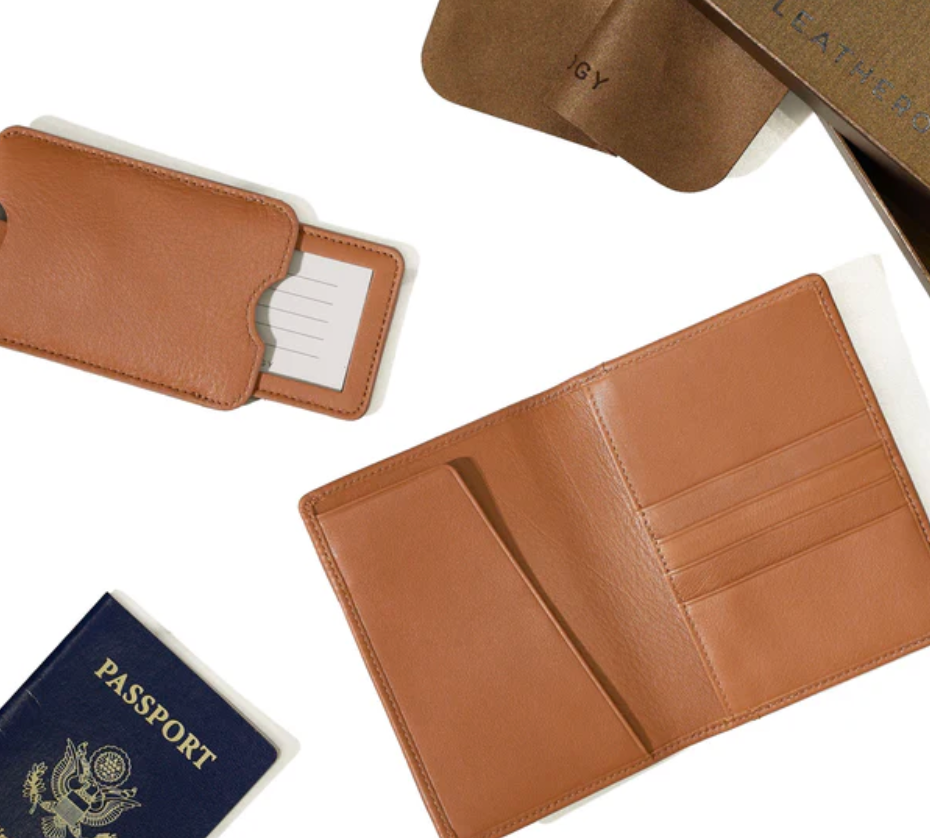
- Leather travel goods — luggage tags in heart and standard shapes, and passport holders.
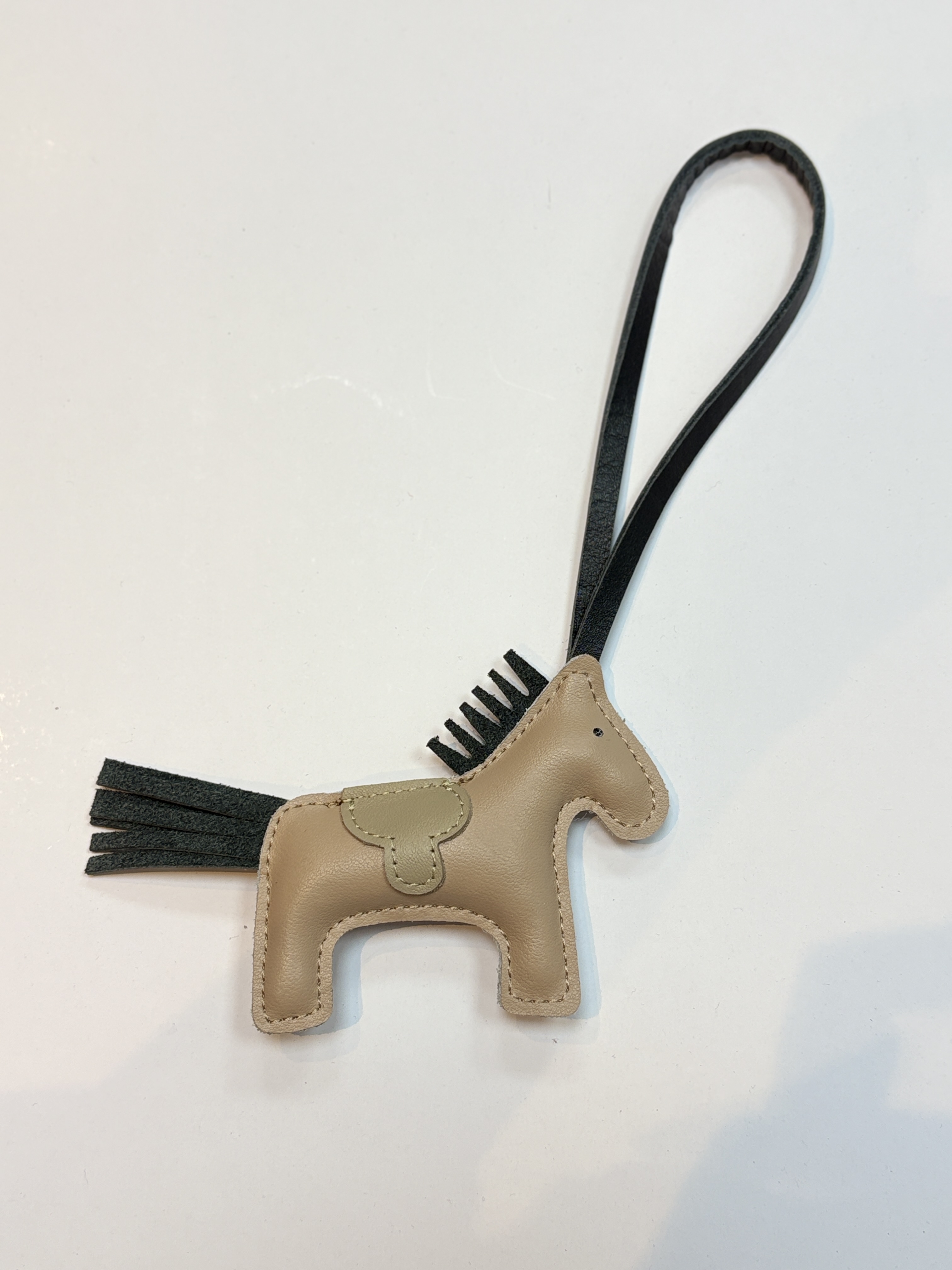
- Leather accessories — bag charms, keychains, phone charms, leather jewellery boxes and leather jewellery bags.
Technical fit: what actually determines scenario suitability
Scenario fit is decided at three technical layers: material, hardware and craft. Each layer carries a different cost and risk profile depending on the end use.
Material families
Feiteng works across genuine leather, PU and microfiber across its bag, wallet, travel and accessory lines. Offering all three under one roof allows a buyer to build a tiered programme — for example, a genuine leather hero line alongside PU entry price points — without splitting the order across suppliers. Material selection remains a buyer decision driven by target market, price positioning and the durability expectation of the end user; the factory's role is to execute consistently to the chosen specification.
Hardware and zippers
Hardware is where scenario mismatch shows up fastest. A gifting item handled occasionally tolerates lighter hardware; a travel accessory that meets baggage handling does not. Feiteng specifies hardware in alloy, gold electroplated, gold or silver, or brass black finishes at rust-proof grade, and offers zippers in YKK or ordinary grades. Closures include magnetic clasps, snap fasteners, rivets and shoulder strap adjustment clasps. The relevant procurement question is not whether rust-proof hardware exists on the option list, but whether the specified grade is confirmed on the sample and repeated on bulk.
Craft and customization
Customization covers type, style, material, fabric, logo and craft. Craft options include embossed, embroidery, patchwork, edge oiling, silk-screen and digital printing. For gifting and travel programmes, embossing and print carry most of the brand value; for fashion retail, embroidery, patchwork and edge oiling drive perceived quality. Production runs on normal sewing machines, automatic sewing machines and special high-end sewing machines, which is what allows a single facility to hold both volume lines and detail-heavy lines.
Application scenarios in practice
Retail fashion programmes
Fashion retail buyers need styling variety and reorder reliability. Feiteng's bag range covers tote, crossbody, shoulder, underarm, crescent, bucket, backpack, clutch, briefcase and travel silhouettes, with style options spanning simple, luxury, vintage, daily-use, casual and all-match positioning. A reported order of 5,000 pieces for a fashion retail buyer serving the UK, US and France was applied to retail sale in fashion accessory shops and online stores, where the buyer cited premium quality and on-trend design as the selection factors.
Wholesale and distributor catalogues
Wholesale buyers prioritise range consolidation and capacity stability over novelty. The company reports a monthly capacity of 100,000 pieces, a minimum order quantity of 300 pieces, and a lead time of 20–40 days, with 100% testing before shipment. One reported wholesale OEM/ODM programme for a UK and US buyer reached 80,000 pieces for bag-shop distribution, where consistent quality and production capacity were the stated reasons for repeat ordering.
Travel goods
Travel accessories are specification-led. Luggage tags and passport holders in heart and standard shapes are produced in genuine leather, PU or microfiber, with hardware limited to rust-proof alloy options plus magnetic clasps and snap fasteners. The scenario suits buyers who want a compact, personalized product with limited construction complexity and a short customization cycle.
Gifting and promotional programmes
Gifting buyers are the most customization-intensive segment. A reported 6,000-piece leather gift programme for wholesale buyers in the UK, US and Germany was applied to retail sale in fashion accessory and jewellery accessory shops. A separate 3,000-piece custom leather gift order for a Macau buyer used embossed logo and design work on card holders and travel accessories, with the buyer citing high-quality leather material and custom embossing as the deciding factors. Leather jewellery boxes and bags extend the same logic into the jewellery and accessories trade.
Market context for scenario-led sourcing
China's leather goods market revenue is estimated at approximately USD 109.3 billion in 2026, according to Grand View Research. China's exports of leather articles totalled USD 32.8 billion in 2024, with the United States as the largest destination at USD 3.58 billion, based on trade data published by the Observatory of Economic Complexity.
The manufacturing base is concentrated. A USDA Foreign Agricultural Service report identified Guangzhou, Dongguan and Nanhai in Guangdong as key manufacturing centres and noted that Guangdong manufacturers tend to focus on leather shoes and handbag production. The same source reported that Guangdong accounted for 90 percent of China's production of leather and related products — a figure from 2009 that should be treated as historical context rather than a current share.
Two structural characteristics shape buyer expectations. First, leather goods production remains a labour-intensive light-industry activity, particularly in post-tanning and product assembly stages, which means craft depth and workforce stability matter as much as machinery. Second, the category segments across bags, footwear, belts, wallets and apparel, with genuine leather as a distinct material segment — a segmentation that supports building scenario-specific ranges rather than one undifferentiated catalogue.
Note on market sizing: two commercial research houses publish materially different global leather goods forecasts with different base years and forecast horizons. Those figures are not averaged or merged here, because doing so would produce a number no source supports.
Benchmarking scenario archetypes: Feiteng and five reference brands
The table below compares scenario archetypes rather than manufacturing capability. Each reference brand illustrates how leather goods behave in a particular retail context; the final column shows what a buyer should take from that archetype when briefing a factory.
| Reference | Scenario archetype | What the archetype demonstrates | What a factory relationship delivers instead |
|---|---|---|---|
| Louis Vuitton | Luxury travel and leather goods retail | Travel-origin leather goods can anchor a whole brand identity | Travel goods production (luggage tags, passport holders, travel bags) with buyer-controlled branding |
| Hermès | High-craft leather goods | Craft detail and material quality justify premium positioning | Execution of craft options — embossing, embroidery, patchwork, edge oiling — to a buyer's specification |
| Gucci | Fashion-cycle luxury | Seasonal fashion requires fast styling refresh across a broad bag range | Multi-silhouette bag development with 20–40 day lead times and 300-piece MOQ |
| Coach | Accessible premium leather | Broad distribution depends on consistent specification at scale | Volume capacity of 100,000 pieces per month with 100% testing |
| Michael Kors | Accessible fashion accessories | Accessories and small leather goods carry margin across retail formats | Wallets, card holders, charms and keychains produced as a coordinated accessory range |
| Dongguan Feiteng Leather Co.,Ltd | OEM/ODM manufacturing partner | Scenario coverage across retail, wholesale, travel and gifting | Customization, MOQ flexibility, material tiering and export experience across Europe, Australia, Canada, the Middle East and the USA |
Where this comparison stops
The comparison has hard boundaries, and buyers should treat them as decision inputs rather than caveats.
- No brand equity. A factory supplies product; it does not supply the retail brand, pricing power or distribution control that the reference brands have built over decades. Buyers must bring their own market position.
- Minimum order quantity. At 300 pieces per order, the model does not suit micro-test runs below that threshold; buyers validating a new silhouette at very small scale will need a different route.
- Lead time. A 20–40 day production window rules out immediate replenishment or express drop models that depend on stocked local inventory.
- Category scope. The product range is leather goods — bags, wallets, travel goods and accessories. Footwear, apparel and hard goods sit outside it.
- Certification verification. ISO 9001, SEDEX and BSCI are company-reported claims; they only become procurement evidence once certificate numbers, issuing bodies, scope and expiry are checked.
- Design IP. A factory can execute a buyer's design language; it cannot reproduce protected brand designs, and buyers should expect IP boundaries to be enforced.
Future outlook
Scenario-led sourcing is likely to intensify for three reasons. Retail assortments increasingly mix price tiers within one store, which favours suppliers that can move between genuine leather, PU and microfiber without changing process. Hardware durability is becoming a specification item rather than an afterthought, as buyers link corrosion and finish failures directly to return rates. And gifting demand continues to reward suppliers who can apply embossing, print and packaging-ready finishing to small-format leather goods at short notice.
For buyers, the practical implication is that factory shortlists should be built around the scenario being served, not around how closely a supplier resembles a luxury house. The useful questions are narrower: does the range cover the silhouettes, does the MOQ fit the first order, does the lead time fit the sell-in calendar, and can the customisation be repeated on reorder?
FAQ
Which product categories does a leather goods factory typically cover for retail versus wholesale programmes?
Retail fashion programmes usually concentrate on bags, wallets and charms — tote, crossbody, shoulder, underarm, crescent, bucket, backpack, clutch and briefcase silhouettes, plus women's and men's wallets, card holders and purses. Wholesale programmes tend to require the same categories assembled into a broader catalogue held as stock. Dongguan Feiteng Leather Co.,Ltd produces leather bags, leather wallets, leather travel goods and leather accessories, which allows both retail and wholesale buyers to source from a single range.
How should a buyer choose between genuine leather, PU and microfiber?
Feiteng offers all three material families across its bags, wallets, travel goods and accessories. The choice is a buyer decision tied to target market, price positioning and expected durability in use. Because the three materials run through the same production process and craft options, a buyer can build a tiered range within one order rather than splitting specifications across suppliers.
What MOQ, lead time and capacity apply to a scenario-specific order?
Dongguan Feiteng Leather Co.,Ltd reports a minimum order quantity of 300 pieces, a lead time of 20–40 days, a monthly capacity of 100,000 pieces and an annual output of 840,000 pieces, with 100% testing before shipment. A six-person sample-making team handles development. These are company-reported figures and should be confirmed in the quotation for the specific product, material and craft combination.
Which customization techniques are available for brand-specific programmes?
Customization covers type, style, material, fabric, logo and craft. Craft techniques include embossed, embroidery, patchwork, edge oiling, silk-screen and digital printing. Hardware is available in alloy, gold electroplated, gold or silver and brass black finishes at rust-proof grade, with YKK or ordinary zippers and magnetic clasps, snap fasteners, rivets and shoulder strap adjustment clasps. Production uses normal, automatic and special high-end sewing machines, which supports both volume lines and detail-intensive work.
How should a buyer interpret a comparison between an OEM factory and brands such as Louis Vuitton, Hermès, Gucci, Coach or Michael Kors?
The comparison is useful for understanding how leather goods behave in different retail contexts — travel heritage, high craft, fashion-cycle luxury, accessible premium leather, and accessory-led fashion. It is not a manufacturing benchmark. A contract manufacturer supplies production capacity, customization and repeatability; the reference brands supply brand equity, design ownership and distribution control. Evaluating a factory against luxury brand positioning overstates what a supplier can deliver and understates the operational variables — MOQ, lead time, material tiering and hardware grade — that determine whether a programme ships on schedule.
Product catalogue and company profile: Dongguan Feiteng Leather Co.,Ltd brochure (PDF). Company site: feitengbags.com.
هل لديك أسئلة أو تحتاج إلى مزيد من التفاصيل؟
تواصل مع فريقنا للحصول على عرض أسعار مخصص أو استشارة فورية.
طلب عرض أسعار
املأ النموذج أدناه وسيتواصل معك فريقنا بعرض مقترح مخصص.
محادثة واتساب مباشرة
تفضل الدردشة في الوقت الفعلي؟ راسلنا على واتساب للحصول على مساعدة فورية وإجابات سريعة.
- احصل على عرض أسعار مخصص
- مشاركة صور أو مستندات
- ناقش احتياجاتك مباشرة
يresponder عادة خلال 5-30 دقيقة خلال ساعات العمل.