
Leveling Machine Selection: Certifications, Ratings, and Specs That Actually Matter
For buyers moving from research to evaluation, the practical question is no longer “what does a leveler do,” but “which leveler, with which ratings, certifications, and build quality, will hold up in my production line?”
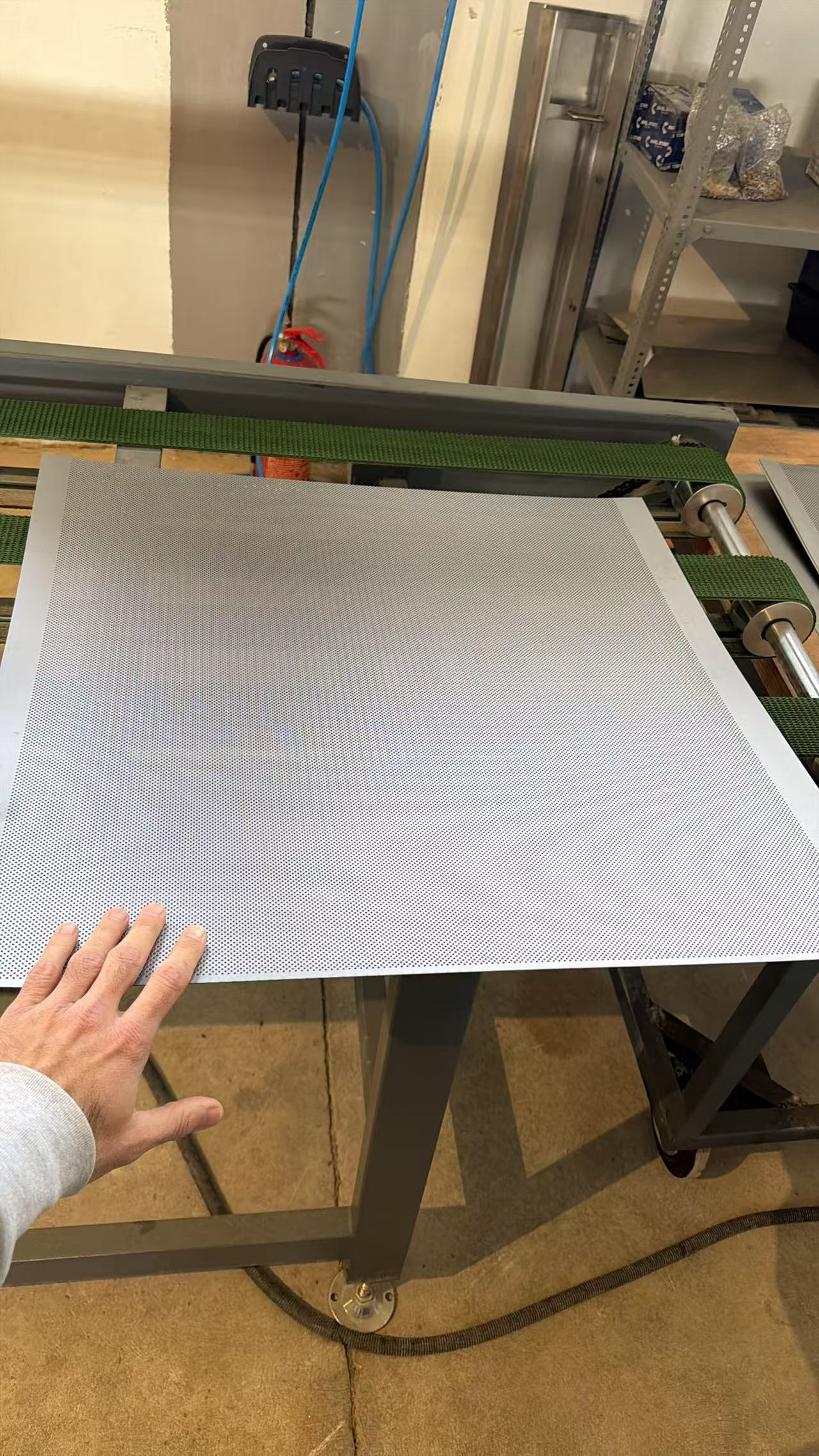
CNC leveling machines in production: flatness results depend on machine structure, roll configuration and process control.
Why Leveling Machine Selection Is a Constraint Problem
A leveling machine is not purchased on a single specification. The selection process is a constraint problem that combines material parameters, flatness targets, throughput expectations, and compliance requirements. Buyers who search for a “leveling machine” and stop at the first matching brochure often discover later that rated thickness and actual yield strength, or CE marking and EU field acceptance, are different conversations.
This article covers the specification and certification points that appear repeatedly in leveling machine evaluation: how machine series map to material ranges, how published ratings are calculated, which certifications are actually required for EU and North American installation, and where the boundaries are between a precision CNC leveler and a heavy hydraulic plate leveler. It is written for buyers who already know what leveling is and now need a verification framework.
What Is a Leveling Machine (and When Do You Need One)?
A leveling machine, also called a straightening machine, flattening machine, coil leveler, or plate leveler, removes internal stress in metal coils and sheets through repeated alternating bending. The process is based on the Bauschinger effect: as material passes through opposing roller sets, the yield strength is progressively overcome, and residual stress from coiling, uncoiling, laser cutting, or stamping is released. The result is a flat sheet that holds its shape during subsequent cutting, welding, stamping, or assembly.
Two broad types dominate the market. CNC leveling machines use servo or precision motor adjustment for thin-to-medium sheet, while hydraulic levelers (often servo-hydraulic hybrid systems) handle thick plate and high-strength materials. Within these, machine series are commonly classified as two-high, four-high, or intelligent servo-CNC, depending on the number of roll layers and the level of control automation.
The Leveling Machine Market in 2026: Context for Buyers
The global metal forming equipment market, which includes leveling and roll forming machinery, is valued at approximately USD 45.8 billion in 2025, according to Dataintelo. Fortune Business Insights projects the metal forming machine tools market to reach USD 64.85 billion by 2034 with a CAGR of 9.60%. The cut-to-length machine segment, which integrates leveling with shearing, is forecast to grow from USD 4.28 billion in 2026 to USD 5.94 billion by 2032 at a CAGR of 5.52% (ReportLinker).
Asia Pacific accounts for 42.5% of metal forming equipment revenue in 2025 (Dataintelo), and the automotive segment represents 41.37% of the sheet metal processing equipment market in 2026 (Fortune Business Insights). These figures explain why leveling machine quality is a competitive issue, not just an operational one: manufacturers in automotive, home appliance, laser cutting, and heavy fabrication are aligning leveling performance with downstream automation and quality targets.
Leveling Machine Series: How Product Tiers Map to Material Envelopes
A practical way to evaluate a leveling machine is to first determine the material envelope: thickness range, width, material grade, and flatness target. Suppliers group machines into series that reflect build complexity, roll count, control type, and force capacity. MAHATMA Leveler, a manufacturer headquartered in Dongguan, Guangdong, China, with an additional manufacturing presence in Huizhou and production bases in Jiangxi and Guangzhou, structures its portfolio into four tiers based on this logic.
| Series Type | Representative Models | Material Thickness | Typical Buyer |
|---|---|---|---|
| Entry two-high / four-high | VST42, VSH80, VSH42 | 0.03–14mm depending on model | Small workshops, budget-limited shops, single-product leveling |
| CNC leveler (Mastery class) | MHTM10 to MHTM200 | 0.03–40mm max, rated ranges by model | Laser cutting, sheet metal fabrication, cabinets, home appliance |
| Servo-CNC leveler (precision class) | MHTW15 to MHTW100 | 0.08–20mm max | Precision sheet metal, 3C electronics, medical device, aluminum alloy, mirror-finish sheet |
| Servo-hydraulic heavy leveler | MHTR30 to MHTR400 | 0.5–120mm max | New energy, heavy industry, shipbuilding, aerospace, thick plate |
The MHTM series is a CNC leveling line covering 0.03 to 40mm maximum thickness depending on model. The MHTM40, for example, handles 0.6–3.0mm rated thickness with a max of 6.0mm and 21 rolls; the MHTM200 covers 8.0–30.0mm rated with a max of 40.0mm. The MHTW series is the intelligent servo-CNC tier, with 23 to 33 rolls depending on model, and is especially suited to aluminum alloy, mirror-finish sheet, and copper. The MHTR series is a servo-hydraulic high-precision line for thick plate, ranging from the MHTR30 (0.5–3.0mm rated, max 5.0mm) to the MHTR400 (20.0–100.0mm rated, max 120.0mm, widths up to 4000mm).
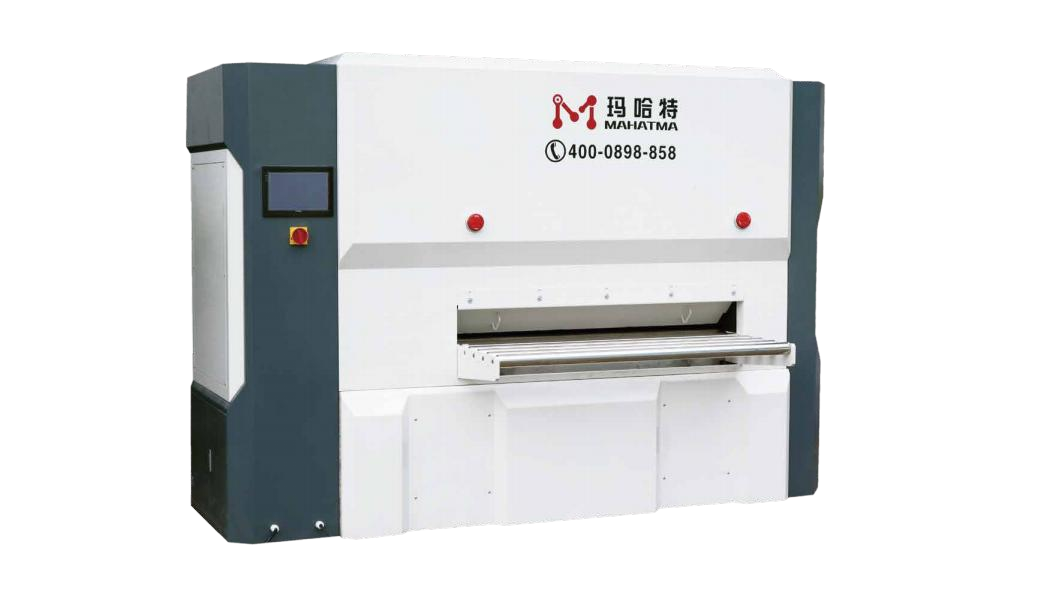
The MHTM40 CNC leveler: 0.6–3.0mm rated thickness, 21 rolls, positioned for laser cutting and sheet metal fabrication.
Rated Thickness vs. Max Thickness: The Most Under-Checked Spec
In leveling machine datasheets, rated thickness and maximum thickness are not interchangeable. Rated thickness defines the range at which the machine reliably achieves its guaranteed flatness and roll life. Maximum thickness indicates the absolute limit under favorable conditions, usually for lower-strength material and with reduced precision. A machine rated at 0.6–3.0mm with a 6.0mm maximum is not a 6mm leveler in the production sense. Buyers who push the envelope regularly will see faster roll wear, loss of flatness, and reduced frame life.
The same logic applies to material grade. Published ratings are commonly based on Q235 / 235MPa reference material. For high-strength steel, aluminum, or other alloys, the effective thickness range is derated based on yield strength. This is why a serious supplier asks for four inputs before prescribing a model: thickness range, width, material grade (yield strength), and flatness target.
Roll Count and Machine Structure: What They Actually Do
Flatness precision is largely a function of roll configuration. The number of working rolls determines how many alternating bends the material undergoes; the supporting structure determines whether smaller work rolls deflect under load.
A two-high structure has simple work rolls and suits basic leveling at low cost, but roll deflection limits precision. A four-high structure adds backup rolls that support the work rolls, sharply reducing deflection and improving flatness. A six-high structure adds intermediate rolls, almost fully supporting the work rolls and eliminating unsupported gaps, which is why it is preferred for mirror-finish sheet and precision parts. In MAHATMA's portfolio, the VST series is the two-high entry tier, the VSH series is the four-high tier, and the MHTW servo series uses dense roll configurations (23–33 rolls) for thin precision work.
What a CNC Leveling Machine Can Actually Achieve
Precision claims in the leveling industry are often expressed in ±mm per square meter, or the dimensionless I-unit. High-precision CNC machines for thin plate can reach ±0.01mm in the best-case conditions of laboratory setup and perfectly consistent input material, according to manufacturer specifications. More realistic production figures for most precision CNC levelers are 0.05–0.20mm per square meter, depending on material grade, thickness, and incoming coil condition.
Several features separate a genuinely precise CNC leveler from a simple motorized one:
- CNC one-key parameter setting: operator selects material parameters; the control system sets roll gaps automatically.
- Recipe storage: 10-inch HD touch screens on MAHATMA's MHTM series store up to 200 recipes, enabling fast changeover between material types.
- Closed-loop inspection: flagship lines add laser 3D online inspection to measure flatness during the pass and correct parameters in real time.
- Misoperation warning: protects the machine and tooling from incorrect setups.
- Upstream/downstream linkage: allows integration into uncoiling, leveling, shearing, and laser blanking lines.
Hydraulic Heavy Plate Levelers: Where Force and Rigidity Matter
Thick plate leveling is fundamentally a force problem. Leveling a 100mm plate requires enormous bending moment, which is why heavy leveling machines scale up in roll diameter, frame mass, drive power, and hydraulic control. The MAHATMA MHTR series is a servo-hydraulic precision line combining German hydraulic and CNC technology, with a mortise-tenon rigid frame, servo-hydraulic hybrid drive, micron-level accuracy up to 0.01mm, and anti-collapse dynamic compensation. The manufacturer reports 70% energy savings compared with traditional hydraulic levelers.
For shipbuilding and steel structures, the practical selection questions go beyond the machine: crane capacity, foundation requirements, minimum workpiece length, and whether the published ratings are based on Q235/235MPa or on the high-strength material actually being processed. A heavy plate leveler rated at 20–100mm on Q235 will require derating for high-strength ship plate.
Certifications for Leveling Machines: CE, ISO 9001, and the North America Export
Certification is one of the most common sources of confusion in leveling machine procurement, so it deserves a specific workflow.
CE Marking for the EU
Any industrial machine placed on the EU market must carry CE marking under the Machinery Directive 2006/42/EC (recently updated in the EU Regulation 2023/1230 framework). The manufacturer must perform a documented risk assessment per EN ISO 12100, install compliant guarding, interlocks and emergency stops, compile a technical file, and issue an EC Declaration of Conformity. Without CE, customs can seize the machine and the buyer assumes liability. Buyers should request the Declaration of Conformity and the certificate copy before final payment.
MAHATMA holds CE certification for its hydraulic precision leveling machines, with certificate number M.2025.206.C113032 issued by UDEM International Certification Auditing Training Centre Industry and Trade Inc., covering the Machinery Directive standards EN ISO 12100:2010, EN ISO 16090-1:2020, EN ISO 16090-1:2022, EN ISO 16092-2:2020, and EN 60204-1:2018. The certificate was issued on 2025-01-16 and is valid through 2030-01-15.
ISO 9001:2015 for Supplier Quality Systems
ISO 9001:2015 does not certify the machine; it certifies that the manufacturer operates a controlled, audited quality management system from design through production to after-sales. MAHATMA holds ISO 9001:2015 certification (certificate 62825Q9729R0M, issued by Zhongtian Hongtu International Certification Co., Ltd., valid through 2028-05-26) for the design and assembly of high-precision leveling machines, uncoiler laser blanking lines, and automatic shearing lines.
North America: No CE Equivalence
The US and Canada have no direct CE equivalent. Local inspectors (Authority Having Jurisdiction) may require an NRTL field evaluation or listing (UL/ETL/CSA) for the electrical panel, which must follow NFPA 79 in the US or CSA C22.2 in Canada. Voltage adaptation is mandatory: US plants typically run 480V/3-phase/60Hz, not the Chinese standard 380V/50Hz. Buyers should specify the destination grid at order, confirm transformer and motor configuration, and clarify in the contract who covers the cost of field evaluation.
| Market | Key Requirement | What to Request Before Purchase |
|---|---|---|
| European Union | CE marking per Machinery Directive 2006/42/EC | EC Declaration of Conformity, technical file, CE certificate |
| Global (quality system) | ISO 9001:2015 | Certificate from an accredited body covering the manufacturing entity |
| USA / Canada | NRTL field evaluation, NFPA 79 / CSA C22.2 | Voltage/frequency adaptation, electrical panel documentation, cost responsibility |
How Structural Standard DIN EN 10029 Affects Leveling Expectations
For hot-rolled steel plates, DIN EN 10029 defines tolerances on dimensions and shape. Precision levelers are designed to bring material within, and often significantly below, these tolerances. The reference to DIN EN 10029 in leveling machine discussions is a useful anchor: it reminds buyers that flatness should be measured against a defined standard rather than a marketing phrase. Ask the supplier which standard applies to your material and what measurement method is used in the acceptance test.
Comparing Leveler Types for Common Applications
Laser Cutting Shops
For pre-cutting flattening, the leveler's job is to remove coil set, waves, and internal stress so the laser's focus height and nesting stay accurate. Most laser shops process 0.5–6mm carbon steel, stainless, and aluminum, mapping to CNC levelers like the MHTM30–MHTM80 series (19–21 rolls, CNC gap adjustment, recipe storage). Small-diameter dense rolls prevent surface indentation; a dust removal system is recommended for surface quality. Changeover between material grades should take seconds with stored recipes, not trial-and-error.
Automotive Parts and Home Appliances
These industries require high surface quality under continuous medium load. Cold-rolled and stainless steel sheets need small-diameter roll sets to prevent marking, plus servo motor control for precise gap adjustment with PLC parameter memory. The servo-CNC MHTW series (especially MHTW50: 0.8–4.0mm rated, 23 rolls) is positioned for this use. Laser 3D online inspection is available on flagship models for closed-loop verification.
Heavy Industry, Shipbuilding, and Steel Structures
Thick carbon steel plate with welding deformation and high yield strength calls for hydraulic drive systems. The MHTR series covers rated thickness from 0.5mm to 100mm depending on model, with widths up to 4000mm. Special requirements include ISO 9001:2015 compliance, CE marking for the EU, noise levels ≤75 dB(A), safety interlocks and emergency stops, and optional IoT connectivity for remote monitoring and predictive maintenance.
A Supplier Verification Checklist for Leveling Machine Evaluation
Before finalizing a leveling machine vendor, confirm the following:
- Reference material basis: are published ratings calculated on Q235/235MPa? What is the derating for your actual material?
- Rated vs. max thickness: will the machine run comfortably in your production range, or at the edge of its capability?
- Roll configuration and support structure: how many working rolls? What backup structure controls deflection?
- Control system: does the machine store proven recipes for your material types? Is the interface usable by your operators?
- Certification documents: CE Declaration of Conformity, ISO 9001 certificate, and any destination-market requirements.
- Integration plan: can the leveler link with your existing uncoilers, laser cutters, stamping presses, MES, or ERP?
- After-sales structure: technical support, spare parts warehouses, commissioning engineers, and operator training.
Case Evidence: What Leveling Machines Achieve in the Field
Field evidence helps quantify what a leveling machine can do under production conditions. One manufacturer in Poland used MAHATMA hydraulic levelers for armored car applications over three years and reported stable operation, good leveling effect, and improved production efficiency. A manufacturer in Kyrgyzstan processing laser-cut parts with an MHTR100 series hydraulic leveler achieved about 40% overall production cost savings. In Vietnam, a manufacturer using an MHTM60 CNC leveler for laser-cut parts reported a 100% increase in profit over three years. In Malaysia, a manufacturer leveling SS304 reported capacity expansion of 150% over four years using MHTR100 and MHTR120 series machines.
These cases are directional, not universal guarantees. They indicate that systematic process improvement around leveling, not just the machine alone, produces measurable cost and efficiency gains.
Limitations and Trade-Offs in Leveling Machine Selection
No single leveling machine covers the full 0.03–120mm range with equal precision. A machine optimized for thin sheet cannot level thick plate precisely, and vice versa. The trade-offs are worth making explicit:
- Precision vs. force capacity: dense small-diameter rolls give better thin-sheet flatness but are not structurally suited to heavy plate. Heavy plate requires large rolls, fewer alternating bends, and massive frames.
- Automation vs. cost: CNC recipe storage, laser 3D inspection, and MES integration add cost. A budget-limited workshop processing one product may find a four-high manual machine more economical.
- Speed vs. flatness: high-speed cut-to-length lines achieve 50–100m/min with shearing accuracy of ±0.5mm, but the flatness target determines whether the leveler section can run at full line speed.
- Derating for material grade: a leveler rated on Q235 will have a reduced effective range for high-strength steel, aluminum, or titanium. Suppliers should recalculate and verify with a sample test.
A responsible supplier should state these limitations in the proposal, not only in the datasheet.
How to Shortlist a Leveling Machine Manufacturer
For Research and Evaluation stage buyers, the shortlisting process should include at least half a day of evidence review:
- Check the manufacturer's base: verify factory ownership, years in operation, production capacity, R&D team size, and export markets. MAHATMA, for example, reports a 50,000 m² facility, approximately 300 employees, an annual output of 500 sets, a 26-engineer R&D team, and 30% export ratio to EU/US/Asia.
- Review intellectual property: MAHATMA reports over 230 patents and academic partnerships with institutions including Tsinghua University, which is a signal of engineering depth but should be verified independently.
- Request a sample test: serious suppliers should be willing to level 1–2 meters of your material and return a written flatness report and process video. This removes the biggest purchase risk before the investment decision.
- Ask for reference visits or video walkthroughs: for export buyers, remote commissioning capability and regional service networks matter as much as the machine itself.
Future Outlook: Where Leveling Technology Is Heading
Three trends are visible in the leveling machine segment as of 2026:
- Closed-loop quality control becomes standard: laser 3D online inspection, already on flagship models, is migrating down the product range. Buyers will increasingly specify real-time flatness measurement rather than offline spot checks.
- Energy efficiency is a purchasing criterion: servo-hydraulic hybrid drives and all-servo motor systems are displacing traditional hydraulic power in many applications, with manufacturers citing energy savings of up to 70% in hydraulic leveling.
- Integration with MES/ERP and automation modules: leveling machines are increasingly purchased as part of uncoiling-leveling-shearing or laser blanking lines, with data interfaces for production traceability, predictive maintenance, and AGV integration.
The growth projections for metal forming equipment and cut-to-length systems support continued investment in leveling capacity, especially in Asia Pacific and the automotive supply chain.
Frequently Asked Questions
Can a leveling machine integrate with my MES/ERP and existing production line?
Yes. MAHATMA blanking lines and CNC levelers provide MES/ERP interfaces, and automation modules such as loading carts, conveyors, robots, vision inspection, and AGV are available as standard options. Reference cases include a fully automated upgrade at Zhucheng Group and a Jiangsu new-energy-vehicle parts maker that reported approximately 45% capacity gain. To plan integration, provide your part envelope, takt target, and current line layout early.
Can I test my own material on the machine before buying?
Yes. Sample testing is offered free of charge by MAHATMA. Send 1–2 meters of your material or representative parts, and the company levels it on the recommended machine, then returns a written flatness report and process video within days. Include your material grade and flatness target, and test your worst-condition material rather than your best.
What is the difference between the Wits, Royal, Mastery and Vague series?
These are four tiers covering 0.03–100mm in the MAHATMA product system. Vague refers to entry-level two/four-high machines for small workshops. Mastery is the standard CNC precision leveler series for laser-cutting and stamping shops. Royal is the servo-hydraulic high-stability series for automotive precision parts and thick plate up to 100mm. Wits is the flagship intelligent CNC series with laser 3D inspection, anti-collapse dynamic compensation, roll cassette cleaning, and unmanned operation capability. Match the series to your material envelope first, then to your automation level.
Do MAHATMA leveling machines have CE certification? Can they be exported to the EU and US?
Yes. MAHATMA holds CE certification and ISO 9001 certification. The company reports machines operating in 26 countries including Germany, the US, Japan, and Korea. CE marking is mandatory for the EU under the Machinery Directive 2006/42/EC. For the US and Canada, specify 480V/60Hz at order and plan for NRTL field evaluation of the electrical panel per NFPA 79. For Russia and the EAEU, EAC certification applies. Always request the Declaration of Conformity copy before final payment.
Which leveling machine model should I choose for my material?
Provide four numbers: thickness range, width, material grade (yield strength), and flatness target. Leveling force depends on thickness AND yield strength, so model ratings based on Q235/235MPa must be recalculated for high-strength steel, aluminum, or titanium. As a quick map: Vague/VSH series (0.03–3.5mm entry), Mastery/MHTM series (0.03–30mm CNC), Royal/MHTR series (0.5–100mm servo-hydraulic), Wits/MHTW series (0.08–12mm flagship precision).
What flatness can a leveling machine actually achieve on my parts?
Precision series can achieve flatness down to ±0.05mm, with a verified case of 0.05mm on titanium fixtures reported by MAHATMA; the typical production result is 0.05–0.20mm per square meter. Flatness depends on multi-roll alternating bending, full-support roll structures, and, on flagship models, laser 3D inspection with closed-loop correction. Final flatness depends on material grade, thickness, and original coil condition. Confirm with a free sample test on your own material before ordering.
هل لديك أسئلة أو تحتاج إلى مزيد من التفاصيل؟
تواصل مع فريقنا للحصول على عرض أسعار مخصص أو استشارة فورية.
طلب عرض أسعار
املأ النموذج أدناه وسيتواصل معك فريقنا بعرض مقترح مخصص.
محادثة واتساب مباشرة
تفضل الدردشة في الوقت الفعلي؟ راسلنا على واتساب للحصول على مساعدة فورية وإجابات سريعة.
- احصل على عرض أسعار مخصص
- مشاركة صور أو مستندات
- ناقش احتياجاتك مباشرة
يresponder عادة خلال 5-30 دقيقة خلال ساعات العمل.