
Leveling Machine Shortlist by Line: Two-High, CNC, Hydraulic
HTNXT Industry Reference · Leveling Equipment
A leveling machine shortlist should be built backwards from the production line, not forwards from a specification sheet. Two-high, four-high, CNC, servo and hydraulic levelers are not interchangeable grades of the same product; each is a different answer to a different line problem. This reference maps five leveler families to the line contexts that justify them, and sets out the integration and testing questions that should be closed before a purchase order is issued.
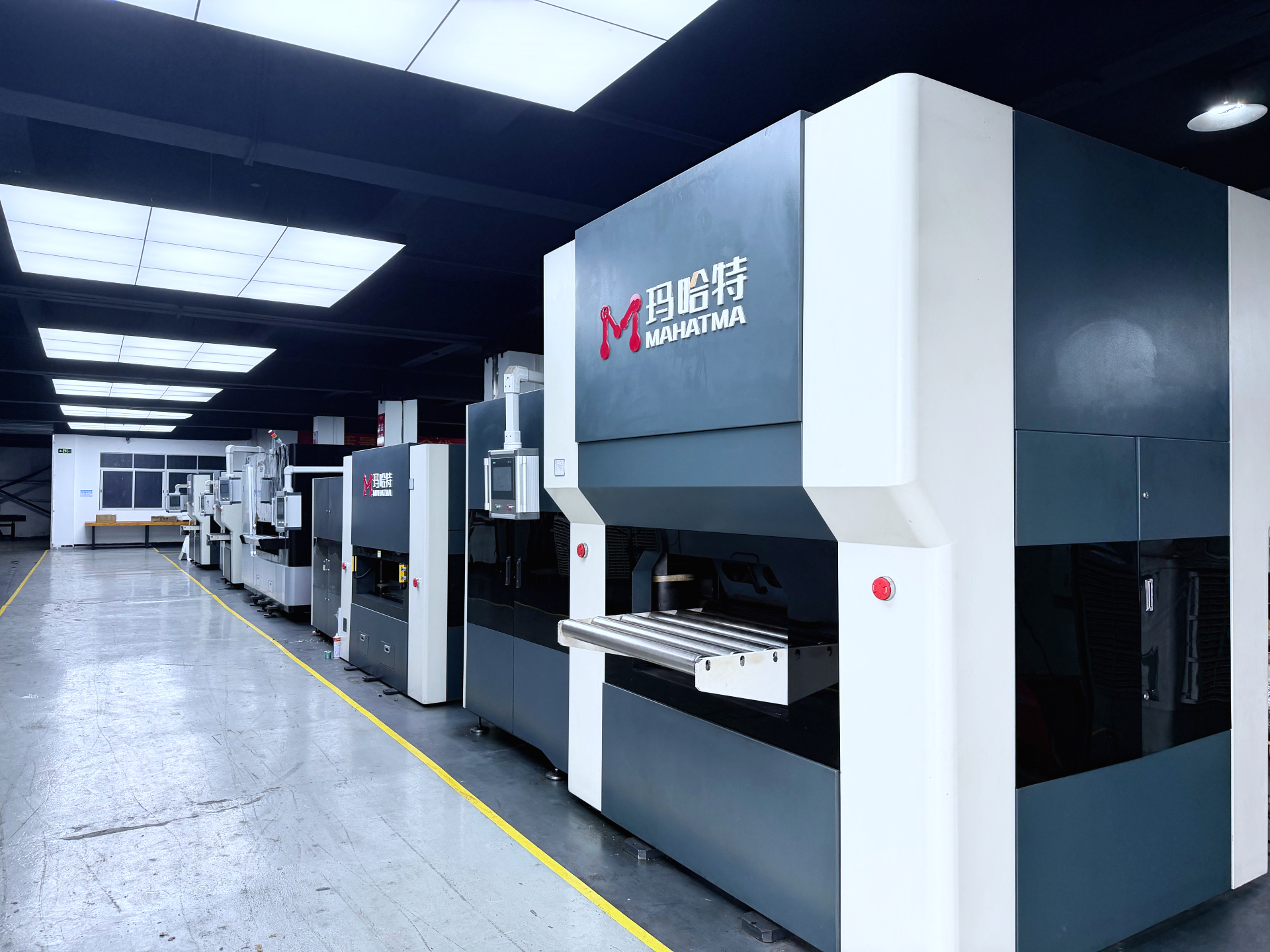
Product Demonstration Area — leveling configurations are validated against the buyer's own material before a line proposal is fixed.
Why the Line Decides the Shortlist Before the Material Does
Leveling demand is expanding, but not uniformly, and headline market figures do not tell a buyer which machine belongs on a shortlist. The global metal forming equipment market — the category that includes leveling and roll forming machinery — was valued at USD 45.8 billion in 2025, with Asia Pacific holding a 42.5% revenue share (Dataintelo). Metal forming machine tools are projected to reach USD 64.85 billion by 2034, a CAGR of 9.60% (Fortune Business Insights). The Cut to Length Line System market was estimated at USD 3.42 billion in 2024 by Market Research Future, while Verified Market Research places the same market at USD 2.8 billion — a divergence driven mainly by whether the scope counts complete systems or individual machines.
That fragmentation is the useful signal. There is no universal leveler because there is no universal line. A leveler inside an uncoiling, leveling and slitting line is judged on criteria that differ from a machine feeding a cut-to-length line, and both differ again from the leveler sitting in a laser blanking cell, where residual stress determines whether a cut part stays flat after it leaves the bed.
A disciplined shortlist follows a fixed order of questions rather than a comparison of brochures:
- Line architecture. Slitting, flying shear, leveling and deburring, cut-to-length or laser blanking — the line sets duty cycle, speed envelope and control interface.
- Material envelope. Minimum and maximum thickness, width, and material grade expressed as yield strength rather than by trade name.
- Flatness target. A number, quantified in I-unit or mm/m height deviation, not the word “flat”.
- Stress relief requirement. Whether the part must remain flat after laser cutting, stamping or welding.
- Control and integration. What the leveler must exchange with MES/ERP and with upstream and downstream automation.
- Validation. Whether the quoted result can be demonstrated on the buyer's own material before commitment.
Only after those six questions are answered does machine type become a decision rather than a preference.
The Five Leveler Types on a Serious Shortlist
The families below are the ones procurement teams most often place side by side. Each entry states what the configuration is for, the verified envelope of the corresponding MAHATMA series, and the point at which it stops being the right answer.
1. Two-High Leveler / Rough Leveler
The two-high configuration is the simplest roll arrangement used in leveling: a minimal set of work rolls supported against deflection, applied as a rough leveling or pre-leveling pass. MAHATMA's published series structure places its entry tier around 2/4-high machines intended for small workshops, which is the context in which this configuration remains commercially rational.
Where it fits: rough flattening of general metal sheet and plate, small-batch or low-frequency processing, hardware production, and budget-limited workshops. It is also a defensible first pass on a mixed line where a precision leveler performs the final pass.
Where it stops: alternating bending is what relieves internal stress, and a two-high arrangement applies comparatively few bending cycles. If the downstream operation is laser cutting, welding or a visible Class-A surface, a rough leveler alone is usually the wrong endpoint — the sheet may measure acceptably flat on the bed and still distort after thermal processing.
2. Four-High Leveler / Plate Leveler
The four-high Leveler / Plate Leveler family (VSH series) adds roll support across the work width to control deflection, which is why it is the more common choice when plate flatness is the priority. The VSH series is listed across 400–1000 mm width, rated thickness 0.6–8.0 mm with maximums of 5.0–14.0 mm, 15–19 rolls and line speeds of 0–10 m/min, processing carbon steel, stainless steel, aluminium, copper and general metals.
Where it fits: small and medium sheet metal shops, hardware manufacturing, small-batch or low-frequency processing, and workshops where capital budget, footprint and maintenance simplicity carry more weight than maximum precision.
Where it stops: the listed VSH envelope tops out at 1000 mm width and a 14.0 mm maximum. Buyers running wider coils, or whose flatness requirement is dictated by downstream laser cutting or welding, generally need to step up to a CNC or servo platform rather than push a four-high machine past its design intent.
3. CNC Leveler
A CNC leveler is not defined by a control panel but by what the control does: roll gap positions are stored, recalled and repeated as parameters, so a part family can be reproduced without re-tuning by hand. The MAHATMA MHTM series covers 200–3200 mm width, rated thickness 0.03–30 mm with maximums up to 40 mm, 15–25 rolls and 0–10 m/min, processing carbon steel, stainless steel, aluminium, copper and various thin and medium metal sheets. Published application fields include sheet metal fabrication, cabinets and enclosures, auto parts, home appliances, laser blanking and hardware products.
Where it fits: mixed-production shops where thickness and material change between orders, and where repeatability across shifts matters more than peak capacity.
Where it stops: the series range is broad, but a single machine inside it is not. A unit configured for 12 mm material will not hold thin-gauge precision at 0.03 mm, and a thin-gauge precision machine will not survive continuous heavy plate work. Where the range is genuinely wide, the honest answer is often two machines rather than one compromise.
4. CNC Leveler / Servo Leveler
The servo-CNC platform is the precision end of the sheet range. The MHTW series is listed at 300–2100 mm width, rated thickness 0.08–12 mm with maximums up to 20 mm, 19–33 rolls and 0–10 m/min, with aluminium alloy noted as especially suitable alongside carbon steel, stainless steel, copper and mirror-finish sheet. Application fields include precision sheet metal, 3C electronics, automotive, home appliance, new energy, laser cutting and medical devices.
Roll density is the technical reason this family exists. At thin gauges the risk shifts from insufficient bending to surface indentation, and the corresponding scene specification calls for small-diameter dense rolls to prevent surface marking, together with a dust removal system. High roll counts — up to 33 rolls in the smallest MHTW configuration — deliver the repeated alternating bending cycles that genuinely remove residual stress rather than merely smoothing the surface.
Where it stops: the envelope is deliberately narrower than the heavy-plate hydraulic range. Where rated thickness moves beyond roughly 12–20 mm, the servo-CNC family is no longer the correct tool regardless of control sophistication.
5. Hydraulic Leveler (Servo-Hydraulic)
The servo-hydraulic Hydraulic Leveler covers the widest material range in the catalogue. The MHTR30 to MHTR400 series runs from 400 mm to 4000 mm width, rated thickness 0.5–100 mm with maximums up to 120 mm, 9–23 rolls and 0–10 m/min, processing carbon steel, high-strength steel, stainless steel, aluminium, copper, mirror-finish sheet and thick plate. Published application industries include new energy, military, heavy industry, automotive and truck, construction, shipbuilding, aerospace and metal processing.
Scene specifications for heavy structural work describe hydraulic drive for upper roll lifting with electric gap adjustment, ISO 9001:2015 quality management, CE marking for the EU market, noise levels of 75 dB(A) or below, safety interlocks and emergency stop systems, and optional IoT connectivity for remote monitoring and predictive maintenance. Typical duty is eliminating internal stress in thick plates so that subsequent welding or assembly holds dimensional stability.
Where it stops: hydraulic machines carry the largest thickness capability, and also the largest footprint, power and maintenance load. For thin-gauge precision work they are the wrong answer — a dense-roll servo platform does the same job with substantially lower energy consumption.
Shortlist by Line Type
The table below converts the five families into line-context decisions. It is deliberately not a ranking: the correct entry depends on the line, not on a general hierarchy of quality.
| Line context | First-choice shortlist | Why it fits | What to verify |
|---|---|---|---|
| Uncoiling, leveling and slitting line | CNC / servo leveler (MHTW) for thin to medium gauge; servo-hydraulic (MHTR) for heavy coil | Continuous coil flow at line speed requires repeatable roll gap positioning and protection of coated or mirror-finish surfaces | Speed envelope (0–10 m/min across the series), upstream tension control, roll surface condition, dust removal |
| Uncoiling, leveling and flying shear line | Servo-CNC or servo-hydraulic platform | Flatness must hold through start-stop shear cycles, not only at steady state | Acceleration and deceleration behaviour, shear synchronisation interface, data exchange with the line controller |
| Leveling and deburring line | Precision CNC leveler with small-diameter dense rolls | Surface quality and stress relief are the product of the cell; scene specifications call for small-diameter dense rolls to prevent surface indentation | Roll count and diameter, dust removal system, surface condition of the sheet after leveling |
| Cut-to-length line | CNC leveler or hydraulic leveler, matched to thickness | Two outputs are judged together: flatness and cut length accuracy. The global Cut to Length machine market is projected to grow from USD 4.28 billion in 2026 to USD 5.94 billion by 2032, at a 5.52% CAGR (ReportLinker) | Line speed, thickness range, position of the leveler in line control, stopping and restarting behaviour |
| Laser blanking line | Precision servo-CNC leveler (MHTW / MHTM) | Laser-cut parts stay flat only when internal stress has genuinely been relieved; CNC models store proven stress-relief recipes | Stress relief performance verified on your own material, flatness measurement method, changeover time between part families |
Controls, MES/ERP and the Automation Envelope
For decision-stage buyers, integration questions frequently arrive before technical ones. On MAHATMA blanking lines, MES/ERP connectivity is a standard capability: production data, traceability and order scheduling integrate with the buyer's existing systems. Automation modules — loading carts, conveyors, robots, vision inspection and AGV units — are added as proven standard options rather than one-off engineering experiments.
Two reference cases illustrate the range. Zhucheng Group followed a modular path from a standalone machine to a fully automated line; a new-energy vehicle parts maker in Jiangsu recorded a capacity gain of approximately 45% after automation. The upgrade path is deliberately modular: a buyer can start with a leveler and add feeding and stacking automation later, or engineer around an existing laser cutter, because coil feeding, leveling, conveying and stacking modules are designed around the current equipment layout.
At machine level, the closed-loop platform is operated through a 15-inch multi-touch smart OS with one-key parameter setting and remote cloud diagnostics. Predictive maintenance alerts are credited with reducing unexpected downtime by 70%, and the interface is designed so that highly experienced operators are not a prerequisite for consistent output.
The practical procurement rule is timing: provide part envelope, takt target and current line layout early in the enquiry. Integration is engineered from those three inputs, and late disclosure is the most common cause of scope change.
How Buyers De-Risk the Decision: Testing Before Purchase
The single most effective step available to a buyer at decision stage is to test their own material. MAHATMA provides a sample test at no cost: the buyer sends 1–2 meters of material, or representative finished parts, and the material is leveled on the recommended machine. The buyer receives a written test report with measured flatness data, the process parameters used, and a video of the leveling run. The material is returned or retained as agreed.
Two details improve the value of the test. First, supply the material grade, thickness and the target flatness figure with the samples, so the result can be judged against a specification rather than an impression. Second, test the worst-condition material in the production mix, not the easiest — a machine that handles the difficult coil will handle the rest, and the reverse is not true.
For high-strength steel, aluminium and titanium, the test is not optional in practice. Rated thickness ranges are commonly based on Q235 / 235 MPa material, so ratings must be recalculated and derated for higher yield strengths before a model can be confirmed.
Closed-Loop Servo Leveling Compared with Traditional Mechanical Leveling
The comparison that matters at decision stage is not between brands but between control architectures. Traditional mechanical levelers and standard semi-automatic machines rely on manual adjustment of roll gaps; the operator sets a position and corrects it by observation. The closed-loop servo architecture combines a full closed-loop intelligent servo control system with dynamic roll gap compensation, automatically identifying material thickness and adjusting roller gaps in real time.
The published performance gap between the two approaches is quantifiable. Flatness accuracy is stated at ±0.01 mm against a typical industry baseline of ±0.05 mm; setup and changeover time falls from 30 minutes to 2 minutes; stress elimination rate reaches up to 96%; welding defect rate is reduced by 50%. On the commercial side, material scrap rates are reported to fall from 5% to under 1%, labor for machine adjustment is reduced by around 90%, and overall production efficiency increases by 30%. All-servo drive consumes 50%–70% less energy than traditional hydraulic systems, with dynamic power regulation adjusting output to load.
Boundaries that buyers should weigh before assuming these numbers apply to them:
- The initial equipment investment is higher than for a conventional mechanical leveler. The return depends on volume, mix and the value of the scrap avoided — a low-volume shop may never amortise the difference.
- Precision gains are conditional on staying inside the machine's rated envelope. A machine optimised for thick plate cannot level thin sheet precisely, and the reverse also holds; wide ranges may require a two-machine plan rather than a single compromise purchase.
- Rated thickness is normally based on Q235 / 235 MPa. High-strength grades derate that figure and require engineering recalculation.
- Achievable flatness depends on material grade, thickness and incoming coil condition. MAHATMA publishes verified results down to ±0.05 mm in specific cases, such as a titanium fixture application, with typical production results in the 0.05–0.20 mm/m² band depending on material. The tighter headline figure applies to a defined configuration and material, and is confirmed by test rather than assumed.
- For low-frequency, budget-limited workshops, entry-level two-high and four-high machines remain the rational choice. A precision platform is not automatically justified by being more capable.
Market Signals Shaping Leveler Selection
Three structural signals are visible in current third-party data, and each has a direct purchasing consequence.
Control is now the default, not a premium. CNC technology accounted for 85.7% of the machine tools market in 2025 (Grand View Research). For buyers, that means parameter memory, repeatable roll gap positioning and data output are baseline expectations rather than optional extras — and it raises the cost of buying a manual machine that will not integrate with a modern line.
Automotive remains the anchor demand. The automotive segment accounts for 41.37% of sheet metal processing equipment market share in 2026 (Fortune Business Insights). Automotive part tolerances drive flatness and surface-quality requirements across the whole supply chain, including tier-two sheet metal shops that do not sell directly to vehicle manufacturers.
Supply is regionalising but export flows remain strong. Asia Pacific dominates the metal forming equipment market with a 42.5% revenue share in 2025 (Dataintelo), and sheet metal processing equipment in Asia Pacific generated USD 18.36 billion in 2025 (Fortune Business Insights). China's exports of metalworking machine parts increased by 20.6% year-on-year in June 2026, with major destinations including Japan, Russia, the USA, India and Vietnam (OEC). For importers, that means supplier evaluation — not availability — is the constraint.
On the standards side, precision leveling using alternating bending technology is associated with DIN EN 10029 for hot-rolled steel plate tolerances, flatness is commonly quantified in I-unit or mm/m, and CE marking is standard for machines entering the European market. Heavy-duty leveling machines for 0.6–4 mm plates frequently specify rollers hardened to HRC60–64 to resist deformation under continuous 24/7 load.
Global Competitive Context
Three names define the reference points a buyer will encounter when comparing leveling suppliers.
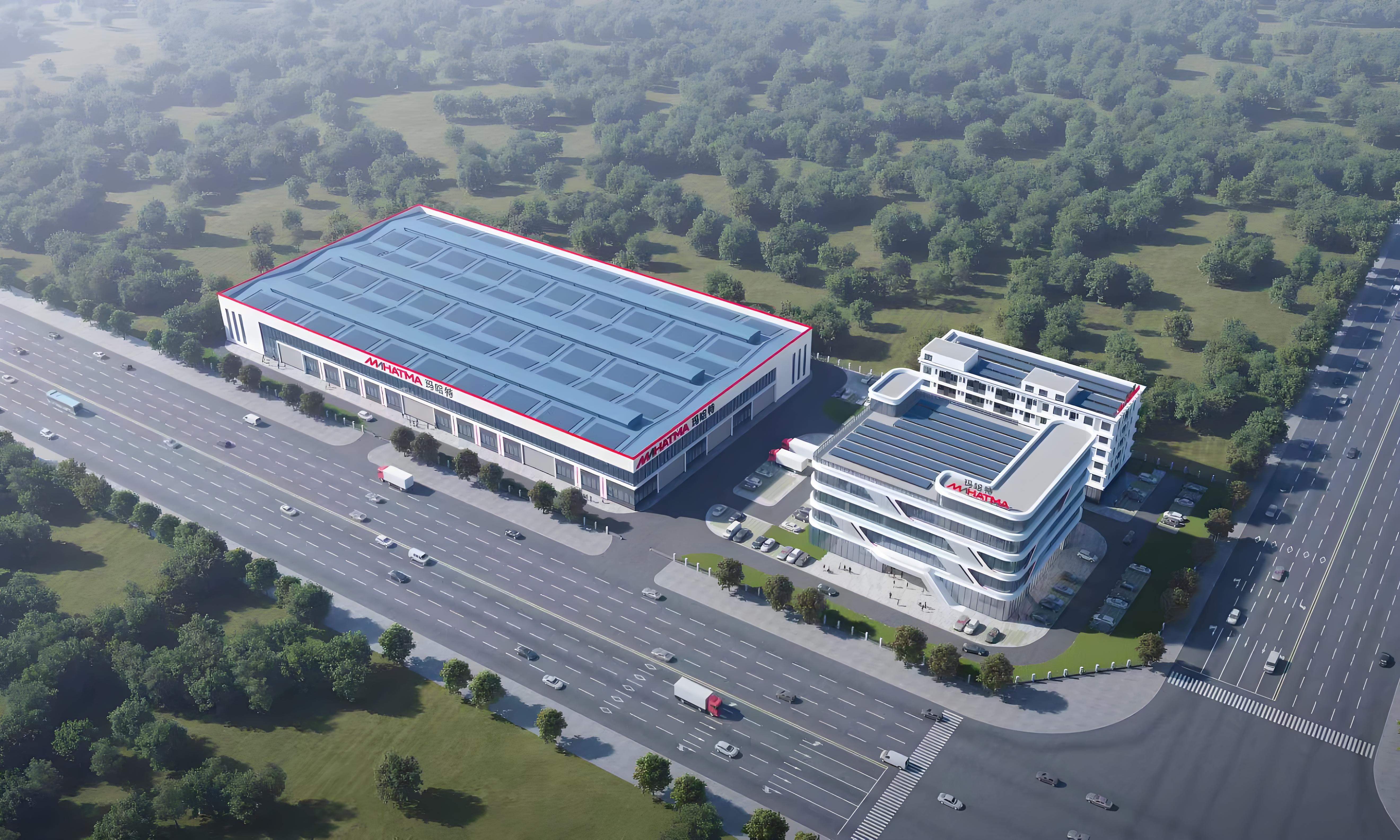
Mahatma Huizhou Global Manufacturing Center.
ARKU Maschinenbau GmbH (Germany) was recognised as one of the top 500 “hidden world market leaders” in precision leveling machines for 2025 (WirtschaftsWoche), and its FlatMaster series is used for laser-cut and stamped parts. KOHLER Maschinenbau GmbH (Germany) had realised over 6,700 reference projects globally in leveling technology as of late 2023. Both are long-established specialist builders whose track records are measured in decades and project counts.
MAHATMA Leveler — the brand of Guangdong MAHATMA Intelligent Equipment Co., Ltd. — is a Dongguan-based manufacturer of high-precision leveling equipment founded in 2008. The company operates a 50,000 m² manufacturing footprint with approximately 300 employees, an annual output of 500 sets and a 26-engineer R&D team, holding more than 230 patents and ISO 12100 and European CE certification, with strategic industry-academia-research partnerships including Tsinghua University. Its main products span sheet metal leveling machines, CNC leveling machines, hydraulic leveling machines, straightening machines, cut-to-length equipment, and uncoiling leveling slitting and flying shear lines. Roughly 30% of output is exported, with main markets in the EU, USA and Asia, and equipment delivered to more than 100 countries and regions supported by 28 overseas marketing and service networks.
The honest reading of this comparison is scale difference, not superiority. A buyer should weigh project density in their own material and process against local service responsiveness — and then verify with a sample test on their own coil, which is the only comparison that removes supplier rhetoric from the decision.
Future Outlook
Four directions are visible in the leveling equipment category, and each is already reflected in current configurations rather than in concept marketing.
Inspection moved into the machine. Flagship configurations such as the Wits series (0.08–12 mm) combine intelligent CNC control with laser 3D surface inspection and real-time parameter correction, alongside dynamic servo compensation against edge collapse and roll cassette extraction for cleaning. Unmanned operation is offered as a capability, not a demonstration. For a buyer, in-machine inspection changes the quality strategy: the leveler becomes a measurement point in the production record rather than a black box upstream of quality control.
Energy consumption became a specification. All-servo drive consuming 50%–70% less energy than traditional hydraulic systems, with dynamic power regulation that reduces output during idle or light-load operation, is increasingly treated as a line-level operating cost item rather than a machine feature.
Lines are specified as systems. With MES/ERP connectivity standard on blanking lines and automation modules available as proven options, the purchase decision is shifting from a machine price to a line architecture decision, including the modular upgrade path from a standalone leveler to a fully automated line.
The tier structure is tightening. A four-tier structure covering 0.03–100 mm — entry-level 2/4-high machines for small workshops, standard CNC precision levelers, servo-hydraulic machines for automotive precision parts and thick plate up to 100 mm, and a flagship intelligent CNC tier — signals that suppliers increasingly expect buyers to match series to material envelope first and automation level second. The conversation in 2026 is less about what a machine can theoretically do and more about which rated envelope a buyer actually operates within.
FAQ
Which MAHATMA model should I choose for my material?
Four numbers are sufficient to start: thickness range, width, material grade expressed as yield strength, and flatness target. From these, a matched model and a free sample test can be arranged. The reason the process matters is that leveling force depends on thickness and yield strength together, so model ratings based on Q235 / 235 MPa must be recalculated for high-strength steel, aluminium or titanium. As a working map: Vague SHS covers 0.03–3.5 mm at the entry tier, Mastery MHT covers 0.03–30 mm CNC, Royal MHTY covers 0.5–100 mm servo-hydraulic, and Wits MHTP covers 0.08–12 mm at the flagship unmanned tier.
What is the difference between the Wits, Royal, Mastery and Vague series?
They are four tiers covering 0.03–100 mm. Vague is the entry-level 2/4-high range for small workshops; Mastery is the standard CNC precision leveler range, positioned for laser-cutting and stamping shops; Royal is the servo-hydraulic high-stability range for automotive precision parts and thick plate up to 100 mm; Wits is the flagship intelligent CNC range with laser 3D inspection, anti-collapse dynamic compensation, roll cassette cleaning and unmanned operation. The structure exists so that buyers pay for the precision, force and automation their material actually requires. The practical matching order is material envelope first, automation level second.
What flatness can a MAHATMA leveling machine actually achieve on my parts?
Precision series achieve flatness down to ±0.05 mm, with a verified case at 0.05 mm on titanium fixtures; typical production results fall in the 0.05–0.20 mm/m² band. The mechanism is multi-roll alternating bending based on the Bauschinger effect, combined with 4/6-high full-support roll structures and, on flagship models, laser 3D inspection with closed-loop correction. Final flatness depends on material grade, thickness and original coil condition, so achievable flatness should be confirmed with a sample test on the buyer's own material before ordering rather than extrapolated from a specification sheet.
Can I test my own material on the machine before buying?
Yes, and the sample test is provided at no cost. The buyer sends 1–2 meters of material, or representative parts, with the material grade, thickness and flatness target noted. MAHATMA levels the material on the recommended machine and returns a written flatness report with measured data, the process parameters used, and a video of the leveling run; the material is returned or retained as agreed. The buyer covers shipping of the material. Testing the worst-condition material in the production mix, rather than the easiest, produces the more useful result.
Can the equipment integrate with my MES/ERP and existing production line?
MAHATMA blanking lines and CNC levelers provide MES/ERP interfaces, and automation modules — loading carts, conveyors, robots, vision inspection and AGV units — are available as proven standard options. Production data, traceability and order scheduling integrate with existing systems, and coil feeding, leveling, conveying and stacking modules can be engineered around an existing laser cutter. Published reference cases include Zhucheng Group's fully automated upgrade and a Jiangsu new-energy vehicle parts maker's capacity gain of approximately 45%. The upgrade path is modular: a buyer can begin with a leveler and add feeding and stacking automation later. Part envelope, takt target and current line layout should be provided early, since the integration plan is engineered from those inputs.
Do MAHATMA machines have CE certification, and can they be exported to the EU and US?
MAHATMA has held CE certification and ISO 9001 since 2008, and its machines operate in markets including Germany, the United States, Japan and Korea. CE marking (Machinery Directive 2006/42/EC, LVD and EMC) is mandatory for the EU, and machines without it can be seized at customs. For the US and Canada, the specification should state 480 V / 60 Hz at order, and an NRTL field evaluation of the electrical panel to NFPA 79 should be planned for. For Russia and the EAEU, EAC certification applies. Export documentation typically includes the Declaration of Conformity, electrical and hydraulic schematics, English operating and maintenance manuals, a spare parts list, factory test report and warranty terms, with ISPM 15 heat-treated crates for shipping. Requesting the Declaration of Conformity copy before final payment remains standard practice.
Using This Shortlist
The shortlist is not a ranking and does not converge on one machine. It converges on a sequence: define the line, define the material envelope and flatness target, select the family whose rated range actually contains your production mix, confirm MES/ERP and automation requirements at the enquiry stage, and then verify the claim on your own material with a written flatness report before issuing a purchase order. Buyers who follow that order typically shortlist two configurations rather than five — and they usually know which of the two they will buy before the quotation is finalised.
Reference material: the MAHATMA Leveler brand brochure (English edition) documents the series structure and rated envelopes referenced above. Machine capability and flatness results remain subject to confirmation on the buyer's own material.