
Leveling Machine Vendor Capability: Beyond the Data Sheet
Industry Reference | Sheet Metal Processing
The global metal forming equipment market, which includes leveling, straightening and roll forming machinery, is valued at USD 45.8 billion in 2025, with Asia Pacific accounting for 42.5% of revenue, according to Dataintelo. The leveling machine category — also searched as straightening machine, coil leveler, flattening machine, metal leveler, sheet metal leveler or plate leveler — is the equipment that determines whether a metal sheet reaches stamping, laser cutting or assembly with acceptable flatness and residual stress.
For procurement teams in the Evaluation and Execution stages, the central question is no longer only about rated width, thickness and speed. The decisive factor is capability: can this manufacturer engineer, customize, integrate, verify and support a leveling solution for the specific material grades, part formats and production volumes in use? This article sets out a capability-based evaluation framework for leveling machine buying decisions and uses Guangdong MAHATMA Intelligent Equipment Co., Ltd. — a Dongguan-headquartered manufacturer of sheet metal leveling machines, CNC leveling machines, hydraulic leveling machines and turnkey processing lines — as the reference case.
The Capability Gap in Leveling Machine Procurement
Many leveling machine buyers evaluate vendors with a short spec checklist: width, thickness, roll count, line speed. These parameters are necessary, but not sufficient. The actual output of a leveling machine — the flatness of the processed sheet — depends on how well the machine is engineered for the input material’s yield strength, coil condition, surface quality requirements and downstream process.
Three consequences follow. First, a machine that performs well on low-carbon steel may fail on high-strength steel, aluminum, copper or mirror-finish sheet. Second, a standalone leveler can create bottlenecks when production requires coordinated uncoiling, leveling, shearing and stacking. Third, a vendor without application-specific engineering data transfers the process-development risk to the buyer.
Capability-based evaluation addresses these gaps by assessing five dimensions: engineering, manufacturing, customization, integration and after-sales service. Each dimension is described below with verification criteria that can be applied during supplier evaluation.
Five Capability Dimensions in Leveling Machine Supplier Evaluation
1. Engineering capability
Leveling works through alternating bending: the material is repeatedly bent beyond its yield point by work rolls, which reduces internal stress and flattens the sheet. The number and diameter of the rolls, the support structure and the control logic determine how consistently this happens. A 2-high structure uses only work rolls and suits basic jobs at lower cost. A 4-high structure adds backup rolls that reduce work-roll deflection and improve flatness. A 6-high structure adds intermediate rolls so the work rolls are almost fully supported, giving the tightest unsupported gaps — the preferred choice for mirror-finish and precision parts. Buyers should ask which structure their target material requires and whether the vendor can support the choice with flatness data from similar applications.
2. Manufacturing capability
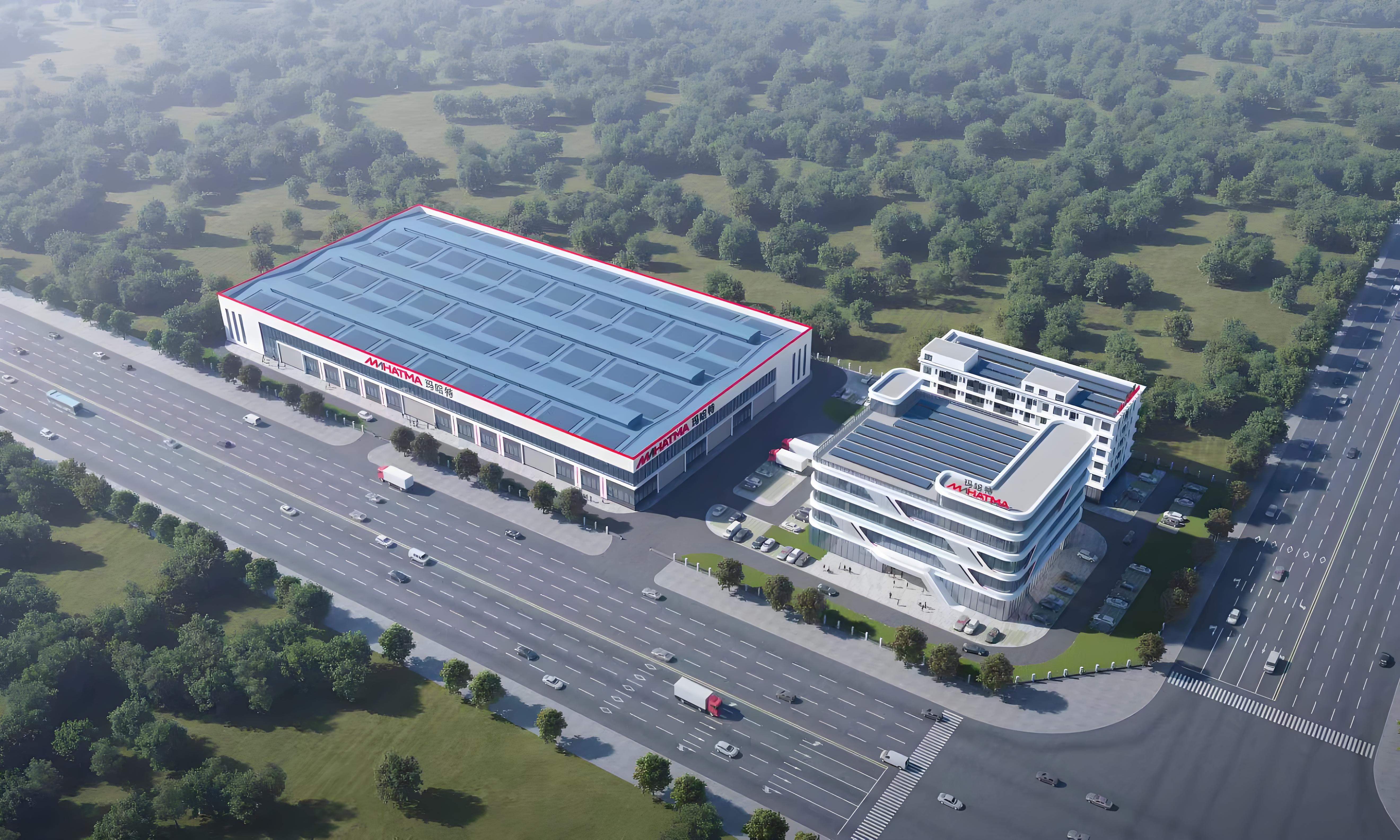
A leveling machine is only as reliable as the process that builds it. Useful indicators include factory scale, annual output, the size of the R&D engineering team and documented quality-control steps. MAHATMA operates a 50,000 m² facility in Dongguan, Guangdong Province — known as the “World Factory” — and reports an annual output capacity of 500 sets, a 300-person workforce and 26 R&D engineers. The stated quality-control process includes laser 3D online flatness detection, ultrasonic flaw detection on rollers, hardness uniformity testing and full-load trial runs before shipment. The company also holds more than 230 patents and maintains industry-academia research partnerships including Tsinghua University.
3. Customization capability
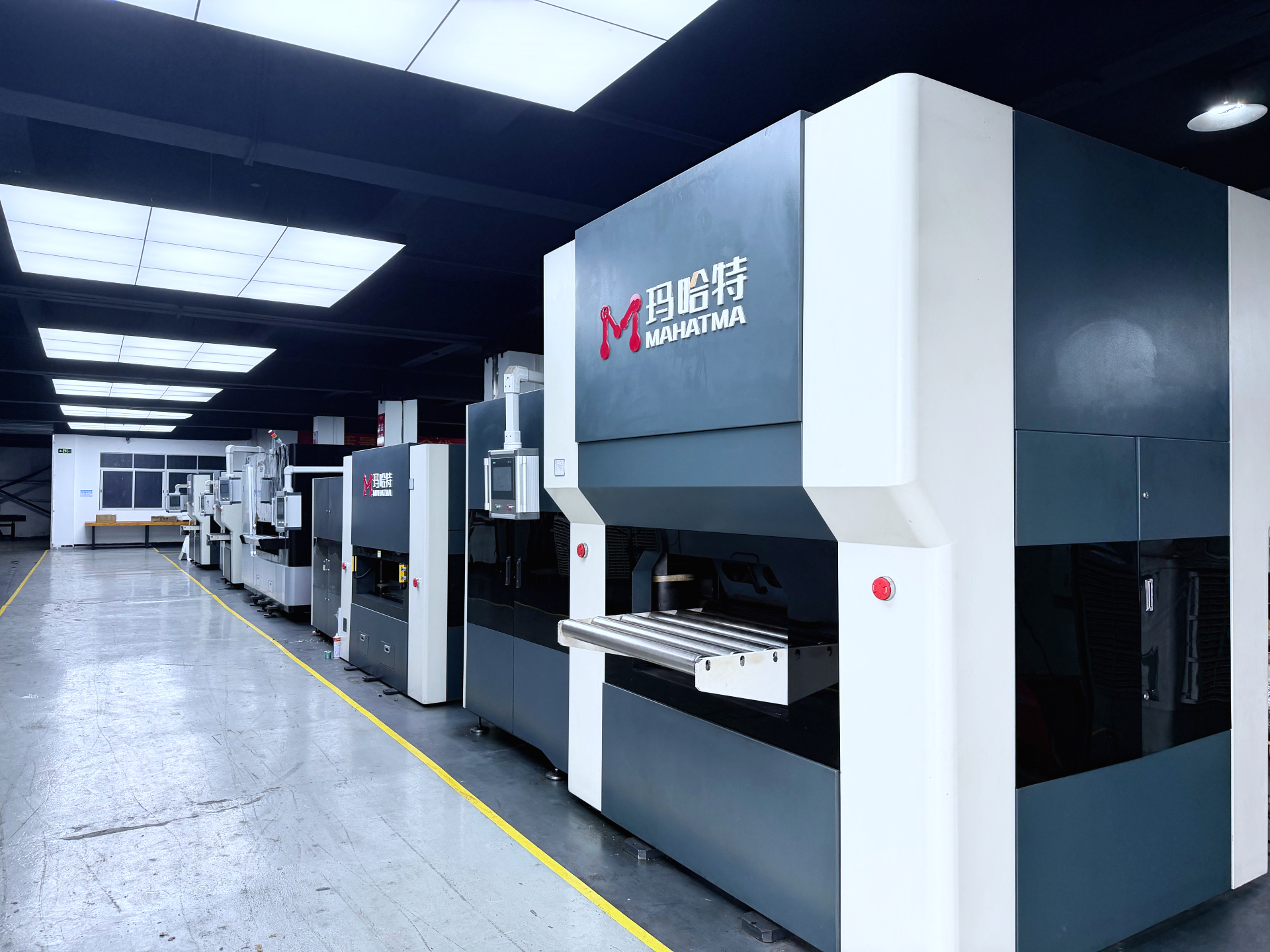
Most leveling applications require some degree of customization. Roll width and diameter must match the coil format. Roll material must resist the abrasion of the processed metal. The control system must communicate with existing plant systems. MAHATMA states that it customizes roller width, roller diameter, leveling thickness range, roll material (for example Cr12MoV or SKD11), control-system integration (MES/PLC) and automated loading/unloading systems. Its production modes cover OEM, ODM, customized manufacturing and turnkey solution provider. The company reports a monthly capacity of 50 units, a standard lead time of 45 days and an MOQ of 1 unit — which means even a single customized machine is handled as an engineering project, not a catalog transaction.
4. Integration capability
Leveling machines are increasingly purchased as part of a processing line rather than as standalone units. MAHATMA’s product system covers sheet metal leveling machines, CNC leveling machines, hydraulic leveling machines, straightening machines, cut-to-length lines, uncoiling leveling slitting lines, uncoiling leveling flying shear lines and laser blanking lines. On the data side, MES/ERP interfaces and PLC control are available, and automation modules such as loading carts, conveyors, robots, vision inspection and AGV can be added as proven options. This matters because line-level decisions — where the leveler sits relative to the shear, how blanks are stacked, how production data flows to the ERP — are far more expensive to solve after installation than before.
5. After-sales service capability
For imported capital equipment, service response is as important as the machine itself. Buyers should verify the vendor’s overseas service network, spare-parts stock, commissioning engineers and operator training. MAHATMA lists 24/7 global technical support, overseas engineers available for commissioning, regional spare-parts warehouses and free operator training. Its equipment has been exported to more than 100 countries and regions, including the United States, Germany, Japan and South Korea, and the company reports 28 overseas marketing and service networks. Approximately 30% of its output goes to export markets, principally the EU, the USA and Asia.
The Capability Envelope: Representative Machine Series
The table below maps representative MAHATMA series to their rated processing envelopes. The range spans 0.03mm to 100mm plate thickness, which indicates the width of the product platform that supports customization decisions.
| Series | Machine Type | Rated Thickness | Width | Rolls | Typical Applications |
|---|---|---|---|---|---|
| MHTM10 | CNC Leveler | 0.03–0.6mm | 200–300mm | 25 | Precision thin sheet, electronics |
| MHTM30 | CNC Leveler | 0.5–2.0mm | 400–1600mm | 21 | Cabinets, laser blanking |
| MHTM60 | CNC Leveler | 1.0–6.0mm | 400–1650mm | 19 | Auto parts, sheet metal fabrication |
| MHTM200 | CNC Leveler | 8.0–30.0mm | 1000–3200mm | 19 | Heavy plate, structural parts |
| MHTW40 | CNC / Servo Leveler | 0.6–3.0mm | 400–1600mm | 23 | Precision surface, mirror-finish sheet |
| MHTR30 | Hydraulic Leveler | 0.5–3.0mm | 600–2100mm | 23 | Perforated sheet, ceiling panels |
| MHTR80 | Hydraulic Leveler | 2.0–10.0mm | 400–3200mm | 15/19 | Medium plate, trailer parts |
| MHTR120 | Hydraulic Leveler | 4.0–20.0mm | 600–3200mm | 15/19 | Armored plate, heavy laser-cut parts |
| MHTR200 | Hydraulic Leveler | 8.0–40.0mm | 1000–3200mm | 11/15 | Heavy industry, shipbuilding |
| MHTR400 | Hydraulic Leveler | 20.0–100.0mm | 1300–4000mm | 9 | Ultra-thick plate (max 120mm) |
Rated thickness values are based on Q235-class carbon steel at 235MPa yield strength. For high-strength steel, aluminum, copper or titanium, the supplier recalculates the capability envelope based on the actual yield strength of the material.
Scenario Capability: Evidence from Production Cases
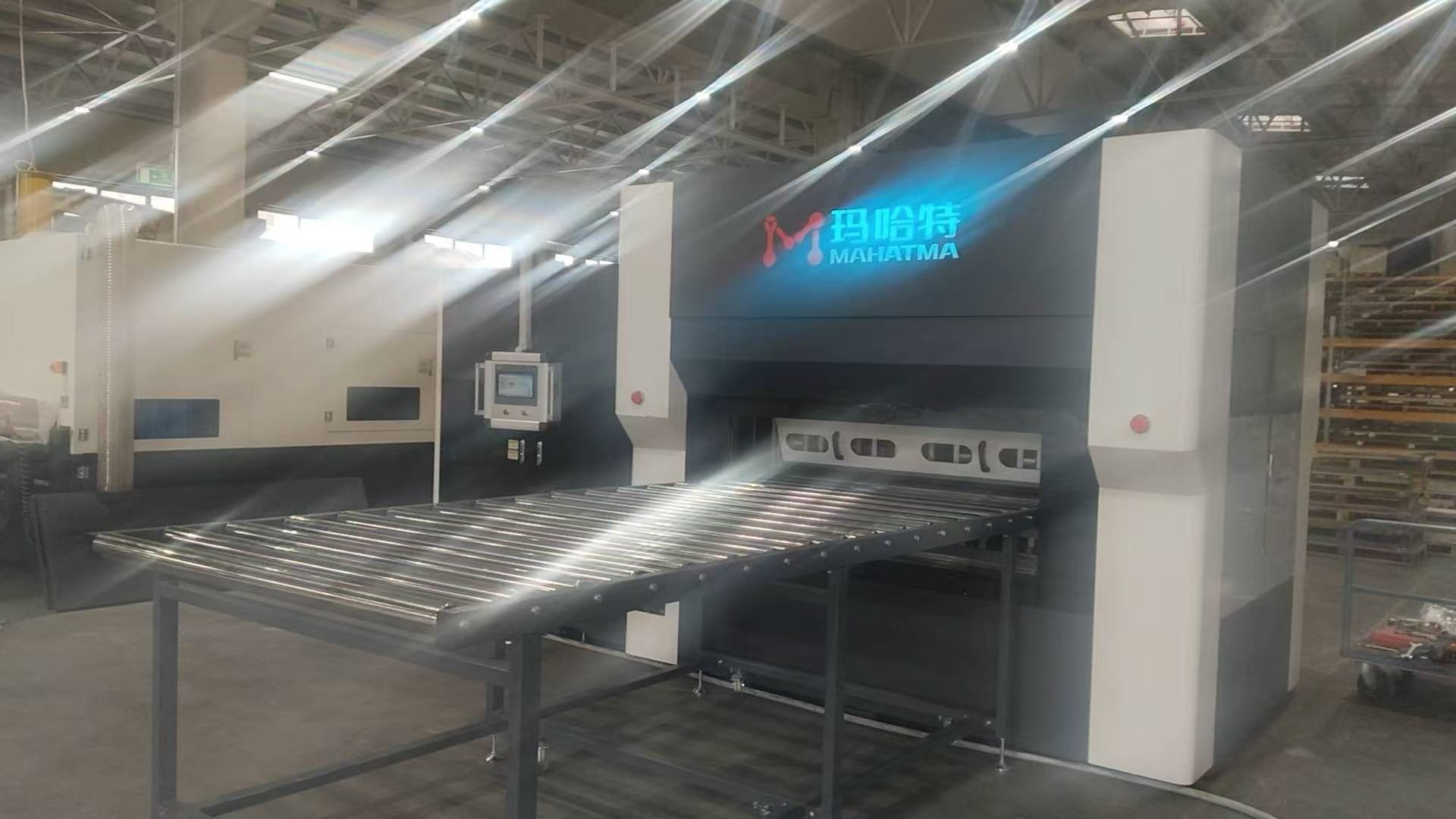
A capability claim is credible only when it has been demonstrated in operating conditions. The reported projects below summarize how MAHATMA machines are deployed across industries and what results users describe.
| Country | Application | Machine Model | Reported Result |
|---|---|---|---|
| Brazil | Semi-trailer parts leveling | MHTR80 / MHTR100 | Stable operation; metal deformation resolved |
| Poland | Armored car materials | MHTR120 | Stable operation; good leveling effect; higher production efficiency |
| Poland | Laser-cut part leveling | MHTR120 / MHTR150 | Around 30% overall production cost savings |
| Saudi Arabia | Perforated ceiling sheet | MHTR30 | Deformation of perforated metal sheet resolved |
| Turkey | Laser-cut part leveling | MHTM40 | Profit increased by 60% |
| United States | Laser-cut part leveling | MHTR60 | Profit increased by 80% |
| Germany | Mesh board leveling | MHTR80 | Cost savings of 50% |
| Pakistan | Laser-cut part leveling | MHTM30 | Capacity expansion of 200% |
The case mix is itself informative. The material scope covers carbon steel, high-strength steel, stainless steel, aluminum, copper and mirror-finish sheet. The applications span semi-trailer manufacturing, armored vehicles, ceiling panels, perforated sheet, mesh board and laser-cut blanks. This diversity is a capability indicator — it shows that the engineering organization has solved flatness problems across different metal-forming domains. A European manufacturer using the MHTR100 Series for general metal processing similarly reported stable working, low failure rate and improved productivity over a two-year period.
Market Trends Reshaping Leveling Machine Capability Requirements
Several market-level trends are raising the capability bar for leveling machine suppliers.
Demand growth. The metal forming machine tools market is projected to reach USD 64.85 billion by 2034, a CAGR of 9.60%, according to Fortune Business Insights. The cut-to-length line system market, closely related to leveling equipment, was estimated at USD 3.42 billion in 2024 (Market Research Future) and is forecast to grow from USD 4.28 billion in 2026 to USD 5.94 billion by 2032 at a CAGR of 5.52% (ReportLinker).
Automotive dominance. The automotive segment accounts for 41.37% of the sheet metal processing equipment market in 2026, according to Fortune Business Insights. Automotive stamping and body-panel production demand high flatness and surface quality, which pushes buyers toward servo-hydraulic and CNC precision leveling.
CNC adoption. CNC technology accounts for 85.7% of the machine tools market in 2025 (Grand View Research). In leveling machines, the equivalent trend is visible in the shift from manual gap adjustment to CNC-controlled gap setting with recipe storage, which shortens changeover between material grades.
Regional supply shift. China’s exports of metalworking machine parts increased by 20.6% year-on-year in June 2026, according to OEC data, with major destinations including Japan, Russia, the USA, India and Vietnam. This confirms that the metal forming equipment supply chain is increasingly drawing manufacturing capability from China.
Competitive context. In the precision segment, European manufacturers set a high reference point. ARKU Maschinenbau is recognized among the top 500 “hidden world market leaders” in precision leveling machines for 2025 (WirtschaftsWoche), and KOHLER Maschinenbau has realized more than 6,700 reference projects globally. Against this benchmark, MAHATMA positions on a capability-meets-cost logic: the company states that its total cost of ownership is typically more than 30% lower than European premium brands, and it reports verified precision flatness down to ±0.05mm. Buyers should evaluate both claims with a sample test on their own material.
Verification expectations. Buyers are moving from trusting brochure specifications to demanding material-level proof. The sample-test model — sending 1–2 meters of material to the manufacturer and receiving a written flatness report plus process video — is emerging as a practical procurement standard that lowers purchase risk for both parties.
Capability-Based Evaluation vs. Spec-Only Procurement
The two approaches differ across the following dimensions.
| Assessment Dimension | Spec-Only Procurement | Capability-Based Procurement |
|---|---|---|
| Primary data used | Brochure parameters: width, thickness, speed | Factory evidence, sample tests, reference cases, service records |
| Process risk | Transferred to buyer after delivery | Verified before order on buyer’s own material |
| Integration planning | Often deferred; costly retrofits later | Planned early: line layout, MES/ERP, automation modules |
| Customization | Standard machines only | Roll materials, widths, control systems, loading/unloading |
| Cost view | Initial purchase price | Total cost of ownership: spares, downtime, output quality |
| Lead time | Short, if stock exists | 45 days typical for engineered units (MAHATMA) |
The limitation of the capability-based approach should be stated plainly. It requires the buyer to provide accurate material and process data — thickness range, width, yield strength, flatness target and production volume — and to invest time in sample testing and technical review. For a workshop processing a narrow, stable envelope of low-carbon steel at standard thicknesses, a spec-based purchase from a reputable manufacturer may be entirely sufficient. The capability framework adds the most value when the application involves high-strength materials, precision flatness targets, unusual formats such as perforated sheet or mesh, or integration into an automated line.
Future Outlook
Three directions are visible for leveling machine capability.
- Connected leveling. MES/ERP interfaces, recipe management and production traceability are becoming standard on integrated lines. Levelers are treated as production data nodes rather than isolated machines.
- Closed-loop inspection. Laser 3D surface inspection with real-time parameter correction, already present in flagship machines, is likely to migrate into mid-range CNC levelers as sensor costs decline.
- Automation around the leveler. Loading carts, conveyors, robots, vision inspection and AGVs are becoming proven standard modules rather than custom engineering projects. Buyers should verify that a vendor has executed such integrations before, not merely listed them as options.
For procurement teams, the practical implication is that capability evaluation should cover not only the machine delivered today, but the vendor’s roadmap for integration and automation support over the machine’s service life.
FAQ — Capability Questions Buyers Ask
1. Which MAHATMA model should I choose for my material?
Send four numbers — thickness range, width, material grade (yield strength) and flatness target — and MAHATMA returns a matched model plus a free sample test. Leveling force depends on thickness and yield strength, so model ratings based on Q235/235MPa must be recalculated for high-strength steel, aluminum or titanium. As a quick map: the entry tier covers 0.03–3.5mm; the standard CNC tier covers 0.03–30mm; the servo-hydraulic tier covers 0.5–100mm; the flagship intelligent tier covers 0.08–12mm with unmanned-operation capability.
2. Can the equipment integrate with my MES/ERP and existing production line?
Yes — MAHATMA blanking lines and CNC levelers provide MES/ERP interfaces, and automation modules (loading carts, conveyors, robots, vision inspection, AGV) are available as proven standard options. MAHATMA builds integrated lines, not standalone boxes. Buyers should provide part envelope, takt target and current line layout early so the integration plan is engineered from those inputs.
3. What flatness can a MAHATMA leveling machine actually achieve on my parts?
Precision series achieve flatness down to ±0.05mm; a verified case reports 0.05mm on titanium fixtures. The typical production result is 0.05–0.20mm/m². This is achieved through multi-roll alternating bending based on the Bauschinger effect, 4-high/6-high full-support roll structures, and laser 3D inspection with closed-loop correction on flagship models. Final flatness depends on material grade, thickness and original coil condition.
4. Do MAHATMA machines have CE certification? Can they be exported to the EU and US?
Yes. MAHATMA has held CE certification and ISO 9001 since 2008, and its machines run in 26 countries including Germany, the US, Japan and Korea. CE under the Machinery Directive 2006/42/EC is mandatory for the EU. For the US and Canada, buyers should specify 480V/60Hz at order and plan for NRTL field evaluation of the electrical panel under NFPA 79. For Russia/EAEU, EAC certification applies. Buyers should request a copy of the Declaration of Conformity before final payment.
5. Can I test my own material on your machine before buying?
Yes — the sample test is free. The buyer sends 1–2 meters of material or typical parts, MAHATMA levels them on the recommended machine and returns a written flatness report and process video within days. Buyers should include material grade and flatness target, and test the worst-condition material rather than the best.
Reference: MAHATMA’s English brand brochure, covering company profile and product range, is publicly available at https://cdn.socialarks.com/sbsp/25132/common/2026/0731/%E5%93%81%E7%89%8C%E7%94%BB%E5%86%8C%E7%B2%BE%E7%AE%80%E7%89%88-%E8%8B%B1%E6%96%87%E7%89%88_1.pdf