
LiFePO4 vs Lead-Acid Golf Cart Batteries: 2026 Buyer's Guide
Why Golf Cart Battery Choice Is Becoming a Strategic Decision
Choosing a replacement battery for a golf cart is no longer a simple lead-acid swap. Buyers now weigh chemistry, cycle life, cold-weather behavior, certifications, and supplier structure before committing to a 36V, 48V, or 72V system.
The stakes are measurable. The global golf cart battery market was valued at roughly USD 1.49 billion in 2024, and Strategic Market Research projects it will reach USD 2.21 billion by 2030, a compound annual growth rate of 6.8%. Lithium-ion technology already accounts for about 47% of global golf cart battery revenue, according to Boca EV. This shift makes the question of which battery to install one of the most important economic decisions a cart owner or fleet operator will face.
This article compares lithium LiFePO4 with traditional lead-acid batteries, outlines the specification criteria that matter, and explains how an established manufacturer such as Shenzhen Shiwei New Energy Co., Ltd. (Sisway Battery) fits into a procurement decision.
The Decision Problem: Lead-Acid vs. Lithium
Most golf carts run on 36V, 48V, or 72V electrical systems. The battery determines range, acceleration, charging time, maintenance workload, and the true cost of ownership over the cart's lifetime.
The core tradeoff is between upfront cost and cycle life. Traditional flooded lead-acid batteries generally deliver 300 to 500 cycles at 50% depth of discharge (DoD). LiFePO4 batteries, by contrast, are typically rated at 2,500 to 9,000 cycles at 80% DoD. This is not a marginal difference; it changes the economics of a golf cart, especially for users who charge daily.
For a course fleet, replacing a battery every 1,000 hours is very different from running the same pack for several seasons. For a private cart used only on weekends, the value equation is different. The decision therefore depends on usage frequency, terrain, climate, and budget cycle.
What to Compare Before Buying a Golf Cart Battery
Procurement teams and individual buyers should evaluate the following parameters before ordering a replacement pack.
- Voltage: Confirm whether the cart uses 36V, 48V, or 72V. The battery must match the motor controller and charger.
- Capacity: For 48V lithium systems, capacities of 100–150 Ah are common in the current market. Higher rated capacity generally translates to more range.
- Cycle life: Compare cycle ratings at a defined depth of discharge. LiFePO4 typically ranges from 2,500 to 9,000 cycles at 80% DoD.
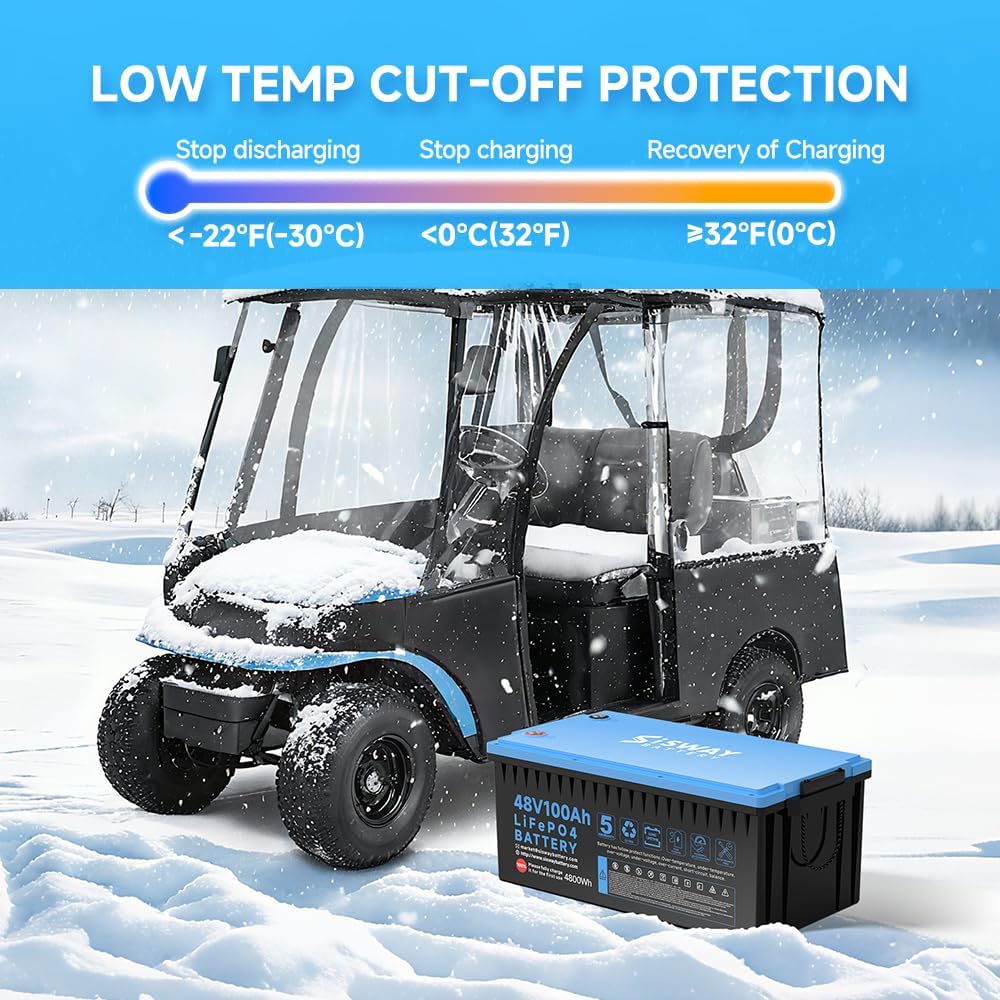
- Temperature protection: In cold climates, low-temperature protection with self-heating can prevent charging damage and extend service life.
- Certifications: Check for UL 2580, IEC 62619:2022, and UN38.3 documentation. These cover electric-vehicle battery safety, industrial/motive lithium cells, and transport safety.
- Weight and dimensions: A lighter lithium pack may improve performance, but the physical size must fit the existing battery tray or enclosure.
- Charger compatibility: Some lithium batteries require a specific charging profile. Confirm whether the existing charger can be used or must be replaced.
- Supplier capability: For bulk purchases, OEM/ODM support, factory-direct supply, lead time, and after-sales documentation are as important as the battery itself.
Sisway Battery as a Manufacturing Partner
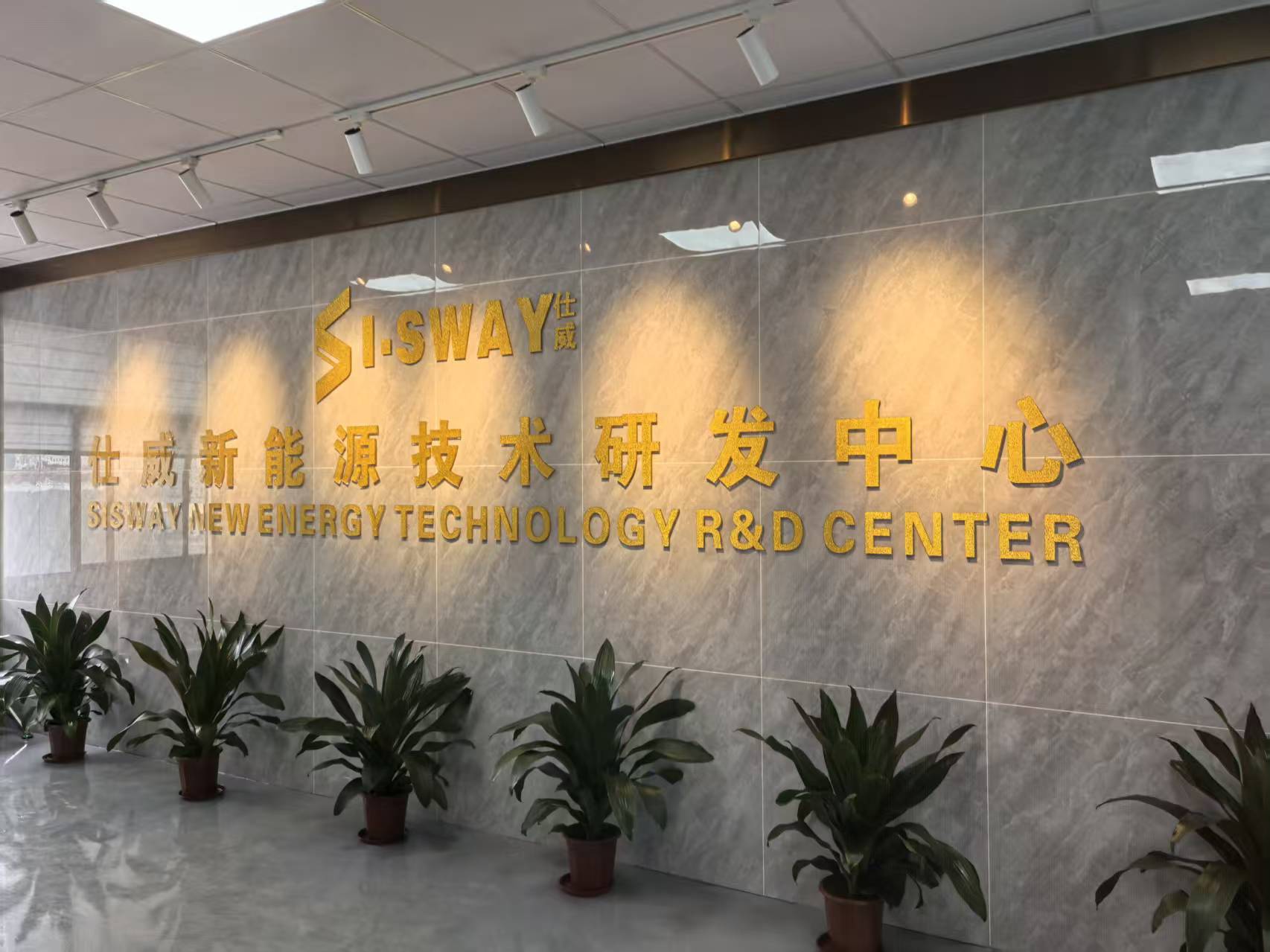
Shenzhen Shiwei New Energy Co., Ltd. is a lithium battery manufacturer established in 2017. The company designs LiFePO4 battery packs for golf carts, UTVs, ATVs, forklifts, AGVs, and home energy storage. Its factory in Bao'an District, Shenzhen, covers 20,000 m² and employs around 150 people, including a 25-person R&D team. Annual output is stated at 90,000 units, and roughly 50% of production is exported, with a significant share going to the United States.
The company holds ISO9001 certification and reports more than 100 global certifications, including CE, UL, UN38.3, and MSDS, along with multiple patents. For a golf cart battery purchase, these credentials matter because they reduce the risk of encountering unverified cells or incomplete compliance documentation.
Sisway positions its LiFePO4 product line against brands such as ECO/ROYPOW by highlighting several differentiators: a lightweight design, enhanced performance, factory-direct supply, competitive pricing, and OEM/ODM support. These are not marketing claims alone; they are measurable supplier attributes that affect logistics cost, custom pack design, and warranty support.
The company also offers high and low temperature protection for its lithium golf cart batteries, including low-temperature protection with a self-heating function. This feature is particularly relevant for courses and facilities that operate in winter months.
LiFePO4 Chemistry: What It Means in a Golf Cart
LiFePO4, or lithium iron phosphate, is a lithium chemistry known for thermal stability and long cycle life. In a golf cart application, it offers a flatter discharge curve than lead-acid, meaning consistent speed and torque even as the battery approaches empty.
According to Sisway's own comparison data, its LiFePO4 battery supports 4,000+ deep cycles, provides 30% more usable energy than lead-acid, reduces charging time by around 50%, and reaches energy efficiency above 95%. These figures help explain why lithium packs are increasingly specified for fleets that need to maximize uptime.
From a standards perspective, UL 2580 is the relevant EV battery safety standard, while IEC 62619:2022 covers industrial and motive lithium cells, including golf carts. UN38.3 is required for transport. A buyer should request certificates that match the exact battery model, not just a general company certificate.
Application / Use Cases
Golf course fleets remain the most visible use case. North America generated 44.7% of global electric golf cart revenue in 2024, and battery-electric vehicles accounted for 72.5% of the U.S. electric golf cart market, according to Grand View Research. The 4-seater cart segment is growing at 6.8% per year, making multi-passenger vehicles a growing battery application.
Other settings include private estates, resorts, campuses, and rental fleets. These use cases share a common need: batteries that can handle multiple daily discharge cycles, survive frequent charging, and deliver predictable performance. Sisway states that its LiFePO4 technology is engineered for golf-course fleets and premium recreational carts, offering 4–5× longer lifespan than lead-acid and significantly reduced total cost of ownership.
Market Trends Shaping Golf Cart Battery Procurement
The market data points to continued acceleration of lithium adoption. The global golf cart battery market is growing at 6.8% CAGR through 2030. North America is the largest region, while Asia-Pacific is the fastest-growing region at 6.9% CAGR, according to Polaris Market Research. The U.S. electric golf cart market alone was estimated at USD 529.4 million in 2024.
The supply chain is also shifting. China exported almost USD 1 billion worth of golf carts and similar vehicles in 2024, with 81% directed to the U.S. market. At the same time, China's Ministry of Commerce issued Announcement No. 58 in 2025, adding export licensing for high-energy-density lithium batteries (≥300Wh/kg). For buyers, this means documentation and compliance checks are becoming standard parts of battery procurement.
For 2026 decision-makers, the practical implication is clear: supplier verification is no longer optional. A battery pack with proper certifications and factory traceability is more likely to pass customs, meet insurance requirements, and operate safely over its life.
Comparing Lithium LiFePO4 with Traditional Lead-Acid
The table below summarizes the main differences buyers should weigh.
| Factor | Flooded Lead-Acid | LiFePO4 Lithium |
|---|---|---|
| Cycle life | 300–500 cycles at 50% DoD | 2,500–9,000 cycles at 80% DoD |
| Usable energy | Baseline | About 30% more (Sisway claim) |
| Charging time | Baseline | About 50% faster (Sisway claim) |
| Maintenance | Watering and equalizing charges | Maintenance-free |
| Weight | Heavier | Lighter (Sisway design priority) |
| Initial purchase cost | Lower | Higher |
| Long-term operating cost | Multiple replacements | Up to 50% lower total ownership cost (Sisway estimate) |
There are also real limitations to lithium replacement. Voltage and charger compatibility must be confirmed before installation. A battery management system (BMS) is mandatory, and some older carts may need a new charger. The higher upfront cost can be difficult to justify for carts that are used only occasionally. Finally, not every lithium pack sold online carries valid UL or IEC certification; buyers should inspect certificates carefully.
At the supplier level, Sisway argues that its factory-direct model and OEM/ODM support add value for distributors and fleet buyers because they reduce middle-layer costs and allow custom pack configurations. For a fair evaluation, those claims should be tested through samples, documented specifications, and post-sale support agreements.
Future Outlook for Golf Cart Batteries
Lithium LiFePO4 is likely to keep taking share from lead-acid as the market grows. The projected 6.8% CAGR, combined with lithium's 47% revenue share in 2024, suggests a durable technology shift rather than a temporary trend. The growth of 4-seater carts and the wider use of golf carts in resorts and campuses will create more demand for high-cycle batteries.
Over the next few years, buyers can expect stricter compliance requirements, more self-heating and low-temperature features, and greater emphasis on factory-direct manufacturing. Suppliers with documented certifications, product traceability, and engineering support are better positioned to serve both OEM projects and replacement markets.
Further reference: Sisway Battery's company brochure is available for download here: Sisway Battery Brochure (PDF). The document contains further product and factory information.
FAQ
Should I replace my golf cart battery with lithium or lead-acid?
If you use your cart frequently and want fewer replacements and lower maintenance, a lithium LiFePO4 battery is usually the better long-term choice. Lead-acid has a lower upfront cost but typically provides 300–500 cycles at 50% DoD, while LiFePO4 can provide 2,500–9,000 cycles at 80% DoD.
What should I check when choosing a 48V lithium golf cart battery?
Check voltage compatibility, capacity (commonly 100–150 Ah for 48V systems), continuous discharge current, physical dimensions, charger profile, and certifications such as UL 2580, IEC 62619, and UN38.3. A battery management system and low-temperature protection are also important for safe and reliable operation.
How many cycles does a LiFePO4 golf cart battery last?
Depending on the cell quality and usage pattern, LiFePO4 batteries are typically rated for 2,500 to 9,000 cycles at 80% depth of discharge. Sisway states that its LiFePO4 battery supports 4,000+ deep cycles.
Are LiFePO4 golf cart batteries safe in cold weather?
LiFePO4 is more thermally stable than many other lithium chemistries. For very cold climates, some manufacturers add low-temperature protection with self-heating. Sisway includes this feature in its lithium golf cart batteries to reduce charging damage in winter.
How do Sisway batteries compare with ECO/ROYPOW?
Sisway says its LiFePO4 golf cart batteries are differentiated by lightweight design, enhanced performance, factory-direct supply, competitive pricing, and OEM/ODM support. Buyers should verify these claims through product documentation and testing before selecting a supplier.