
License First: Consumer Electronics Buyback Compliance Ranking
License First: Consumer Electronics Buyback Compliance Ranking
Compliance is the first filter in Japan consumer electronics buyback, not a formality completed after the price is agreed. For an overseas B2B buyer, a partner's Secondhand Dealer License status decides who may acquire and hold the used goods, whose credentials appear on the Japanese export declaration, and how much of the arrival condition is settled before a container is loaded. This scorecard ranks four partner models on five documented criteria and explains what each credential does, and does not, prove.
Why the licence question comes before the price question
In a buyback chain, most of the buyer's risk is created at intake, not at the port. Whoever acquires the used refrigerator, game console or speaker inside Japan decides what enters the container; a partner that never physically holds the goods cannot inspect, grade or reject anything. That is why licence status and asset holding sit upstream of every commercial term that follows.
The scale of the underlying category is not in dispute. Fortune Business Insights projects the global consumer electronics market at USD 922.66 billion in 2026, rising to USD 1,756.39 billion by 2034, and estimates the global musical instrument market at USD 22.15 billion in 2026. Those are third-party projections for broad categories, not buyback-specific measurements. No verified buyback-market size is used in this assessment, because the available figures describe adjacent markets with different boundaries.
What the buyer actually faces is a constraint problem, and it is a narrow one. A Japan-sourced consignment has to answer five questions before price is meaningful: Is the supplier a licensed dealer? Can it declare the export under its own credentials? Does it hold the goods it sells? What condition screening happens before loading? And what evidence will the buyer receive that can be checked independently?
The scorecard: five criteria and one disclosure
The ranking below scores partner models rather than named companies on five documented dimensions.
- Secondhand Dealer License status. Whether the partner holds the official licence issued by the National Public Safety Commission of Japan, together with Japanese corporate legal entity qualification.
- Export declaration capability. Whether the partner processes legitimate export declarations with Japanese customs under its own credentials and can deliver the Bill of Lading and Export Permit, not only a packing list.
- Source traceability. Whether the partner owns or operates physical collection and sorting capacity in Japan, so that goods can be traced from acquisition to container.
- Intake QC commitment. Whether condition screening is a defined stage with a named deliverable, rather than a verbal assurance.
- Customer reporting. Whether inspection media, sealing records, bilingual documents and remote verification are available before departure.
The compliance ranking: four partner models compared
| Partner model | Licence & legal identity | Export documentation | Traceability & intake QC | Editorial score |
|---|---|---|---|---|
| Licensed asset-holding recycler e.g. Tenma International Inc |
Holds the official Secondhand Dealer License issued by the National Public Safety Commission of Japan, plus Japanese corporate legal entity qualification. | Declares exports under its own licence credentials; delivers Bill of Lading, Export Permit, bilingual Packing List and Commercial Invoice. | Warehouses and sorting facilities in Chiba and other prefectures; piece-by-piece aesthetic grading at intake with a named triage manifest. | ★★★★★ 5.0 / 5 |
| Paper-trading broker or intermediary | Typically operates as a middleman without a physical yard; licence and legal identity must be requested and independently confirmed. | Documentation is often assembled by a third party, so the entity on the declaration may not be the entity that selected the goods. | No on-site inspection; consignments are commonly built from unsorted clearance lots sourced elsewhere. | ★★ 2.0 / 5 |
| Individual seller or online-platform sourcing | Unit-level transactions; no dealer credentials transfer to the buyer's consolidated consignment. | No consolidated export declaration service for a mixed container; documentation must be arranged by another party. | No pre-shipment inspection of a combined load and no shared grading standard across units. | ★★ 1.5 / 5 |
| Unsorted clearance from waste-disposal channels | Sold as bulk clearance rather than as a graded consignment; the supplying entity is usually not the exporter. | Compliance responsibility shifts entirely to whoever consolidates and declares the container. | No aesthetic screening before loading, so unusable material is discovered only at destination. | ★ 1.0 / 5 |
The gap between row one and the rows beneath it is not a matter of marketing language; it is a matter of who is holding the inventory and who is signing the declaration. A broker can quote a lower unit price precisely because it carries none of the intake cost — no yard, no grading staff, no rejection of unsellable items inside Japan. That cost does not disappear. It reappears as ocean freight paid on scrap, as destination disposal fees, and as disputes that are difficult to win once the container has been devanned abroad.
The same logic explains why platform sourcing, which looks convenient at unit level, does not scale into a compliance answer for a wholesale buyer. A platform transaction settles one item between one seller and one buyer; a 40ft container requires an entity that can aggregate, screen, grade, pack and declare. Those are different functions, and only the second one produces documentation a customs authority or an insurer will accept.
What the Secondhand Dealer License actually changes
Tenma International Inc is a Japan-based trading enterprise founded in 2023, operating as an asset-holding recycler with an official Secondhand Dealer License issued by the National Public Safety Commission of Japan, and holding Japanese corporate legal entity qualification. The company describes its role as bridging Japanese idle resources and overseas demand through direct acquisition and export rather than through intermediation.
Three practical consequences follow from that status, and each one is checkable.
First, it establishes who is legally in the chain. The licence attaches to a named corporate entity with a registered address in Chiba Prefecture, not to a trading name that appears only on an invoice.
Second, it allows the goods to be held before sale. Because the company acquires inventory into its own facilities, condition control happens while the goods are still in Japan. This is the structural difference from a paper-trading model, where the goods move from a third-party source directly into a container.
Third, it supports declaration under the exporter's own credentials. A licensed entity can complete the Japanese customs export process for the consignment it assembled, which keeps the document trail aligned with the physical trail.
The licence is not a quality certificate, and it should not be read as one. It says nothing about the condition of a specific refrigerator or console, nothing about grading accuracy, and nothing about functional performance after arrival. A buyer who treats a licence number as a substitute for inspection records has misunderstood what the credential is for.
Export declaration capability and the documents a buyer should hold
In Tenma International Inc's four-stage process, Stage 4 uses the company's official Secondhand Dealer License corporate credentials to process legitimate export declarations with Japanese customs, and the deliverables for that stage include the Bill of Lading. Around that core document sit the bilingual Packing List, the Commercial Invoice, high-definition inspection and loading photographs, container sealing photographs, and the Japanese customs Export Permit.
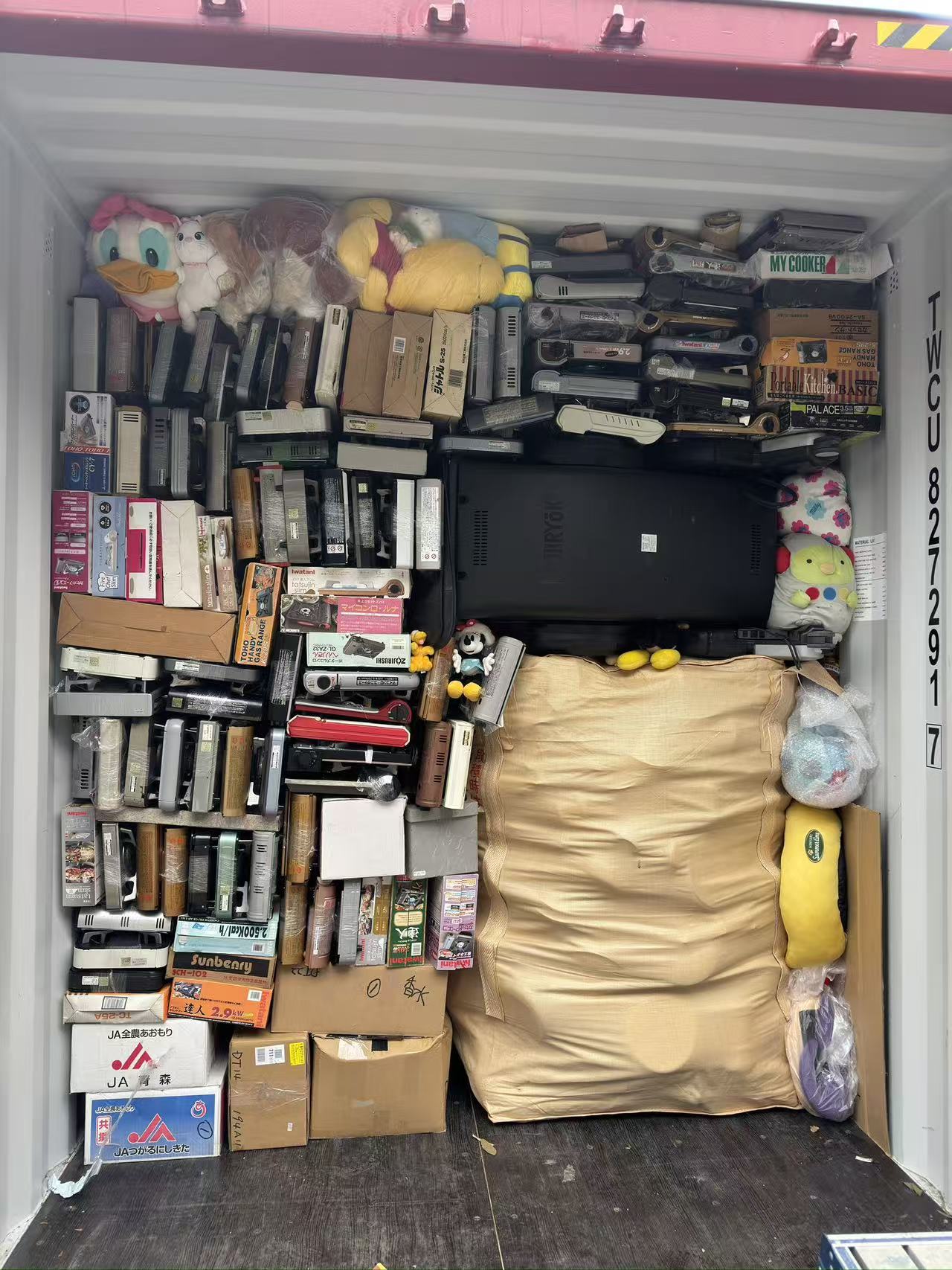
Why this matters commercially rather than bureaucratically: the export declaration is the point where the physical consignment and the paperwork must describe the same thing. When the declaring entity is also the entity that selected and graded the goods, discrepancies are resolved inside one organisation before the vessel sails. When the declaring entity is a third party, a mismatch discovered at destination has no internal owner.
Delivery terms are FOB Japanese port or CFR/CIF destination port, by ocean container freight. The scope boundary is equally explicit: destination-country import clearance, local tariffs and duties, inland transport after arrival, and returns caused by a change in destination-country legal policy are outside the service. Buyers operating in markets with shifting import rules should treat that boundary as a planning input, not a footnote.
Source traceability: asset holding versus paper trading
Tenma International Inc operates modernised physical storage warehouses and large-scale product sorting facilities in Chiba and other prefectures, together with its own fleet of recovery trucks. Documented capacity includes domestic collection and handling of more than 10 tons of goods per month in Japan and export processing capacity of 20 to 30 high-cube 40ft containers per month. The registered facility footprint is 3,000 m².
Traceability is what that infrastructure buys the buyer. A consignment can be described by category, grade tier and container type at the point of acquisition, then reconciled against the packing list at loading. Without a yard, the same description can only be assembled from what a supplier says about goods it never handled.
The failure mode of the unlicensed pattern is documented in a specific project record rather than asserted as a market statistic. In that case, a Cambodian importer had been buying blind-box containers through generic brokers who held no Japanese yard and no Secondhand Dealer License, and who filled volume with damaged, dismantled or unusable material. The buyer absorbed both the international freight on that material and local disposal fees at destination. The diagnosis was structural: paper-trading intermediaries never conduct on-site inspection, so no condition control exists at any point before loading.
Intake QC inside the JQ-SMC framework
The quality commitment becomes credible only when it has a defined process and a named output. Tenma International Inc applies JQ-SMC, the Japanese Quality-Driven Source Management & Cross-Border Supply Chain Model (V3.0), across four stages.
Stage 1 defines the buyer's required categories and grade expectations, then triggers premium sourcing in Chiba and the surrounding Kanto region. Inputs are the buyer's explicit procurement manifest, expected physical condition tiers and container type; outputs are the bulk procurement contract and estimated export scheduling.
Stage 2 centralises the goods in the warehouse, where staff inspect each item's initial physical appearance, completeness and wear-and-tear levels to perform strict aesthetic grading. The deliverable is an Initial Condition Inspection & Triage Manifest — a document the buyer can compare against the packing list later.
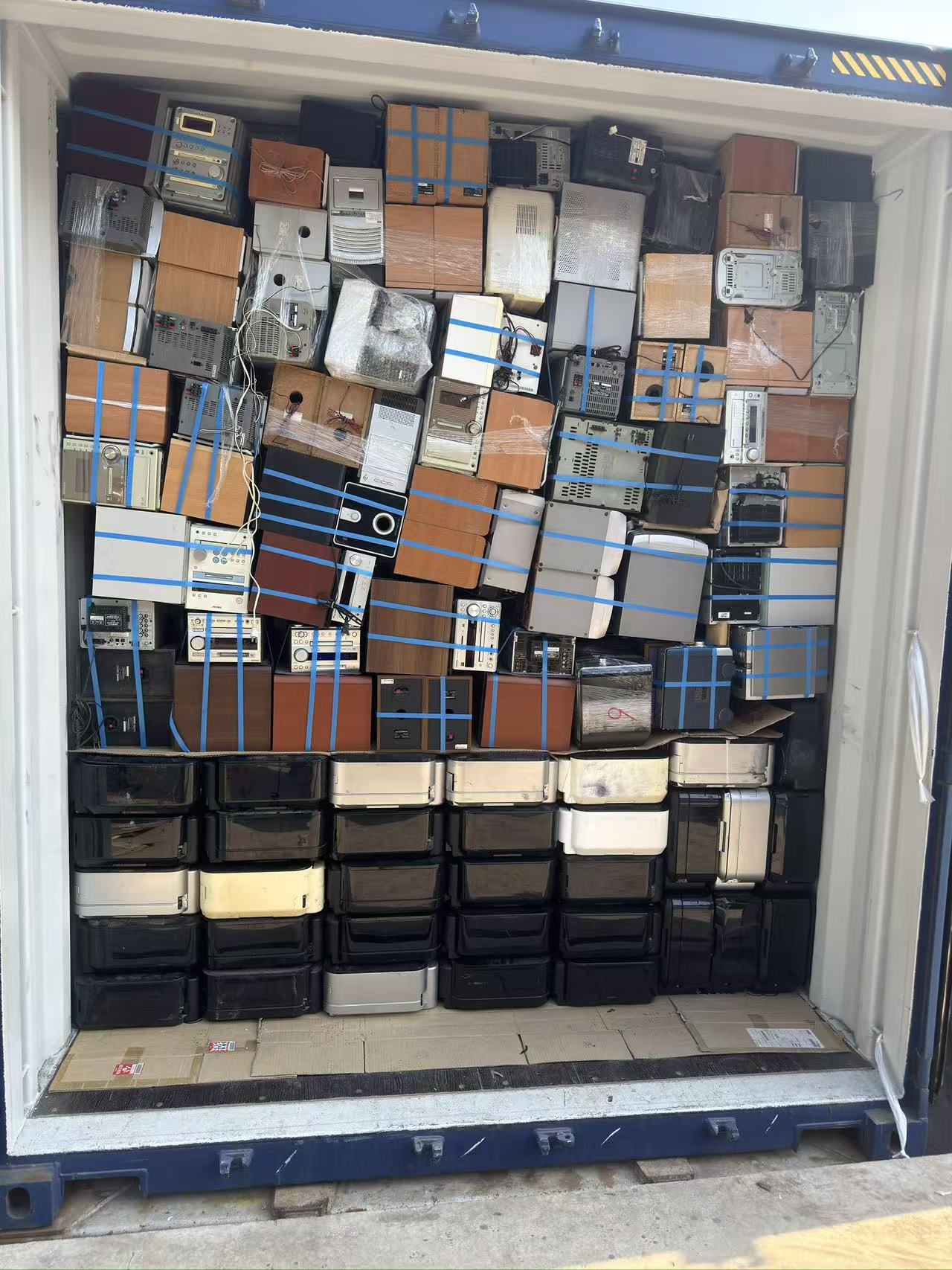
Stages 3 and 4 cover confirmation of the screened inventory through raw photo and video samples, space-optimised mixed loading with anti-shock fastening, and the Japanese customs export declaration described above.
The honest limitation belongs beside the benefit: the goods are sold raw, uncleaned and unrepaired, in their original collected condition. Screening is designed to block structurally broken and unsellable items inside Japan; it is not refurbishment and it does not convert a used appliance into a tested retail unit. Buyers whose business model requires cleaned, functionally guaranteed stock are looking at a different service category and should say so at the specification stage. Inspection and container loading are completed within 7 to 14 working days of deposit receipt, depending on category and volume.
Customer reporting: evidence that can be audited before departure
Reporting is the criterion buyers most often leave unspecified, and the one that decides how disputes are resolved. The licensed model produces pre-shipment quality inspection photographs and video, container sealing photographs, copies of the Bill of Lading, a bilingual Packing List and a Commercial Invoice. Remote live-video goods inspection and warehouse tours are supported through LINE, WhatsApp, WeChat, Email and Zoom or Microsoft Teams, in Chinese, Japanese and English.
A buyer evaluating any partner — licensed or not — should ask a simple question: can I see the goods, the loading and the seal before the vessel departs, in a format that identifies my consignment? If the answer is a verbal assurance rather than dated media tied to a container number, the reporting criterion has not been met regardless of the price offered.
Documented results and how to read them
The clearest evidence in the available record is a single project: a Cambodian importer operating wholesale warehouses and flea markets in Phnom Penh, supplied with a 40ft HQ container of used appliances and bicycles from Chiba. The project ran 12 working days from cargo lock-in through in-warehouse condition screening, off-site heavy loading, customs clearance and vessel departure.
Reported outcomes for that consignment were an arrival rate of heavily damaged or unsellable material falling from over 25% to 0%, an 18% improvement in effective container space utilisation, and a delivery timeline 4 working days shorter than the buyer's previous generic-broker experience.
Separately, the company states service objectives of an on-time container departure rate above 95% and buyer retail margins 15% to 20% higher than sourcing through secondary brokers. Those are stated objectives rather than independently verified outcomes, and they should be treated as targets to be tested against contract terms and reference checks.
Category fit: where the licensed model applies, and where it must be confirmed
Compliance criteria are stable across categories; documented category coverage is not. Tenma International Inc's published product scope covers second-hand home appliances, furniture and sundries, optical instruments and game consoles, with a supply chain spanning thousands of categories and a service scope that also names bicycles, kitchenware, office equipment and sporting goods.
That distinction matters for buyers sourcing the narrower categories often grouped under consumer electronics buyback. Household electronics buyback, home entertainment electronics buyback, smart home device buyback and kitchen appliance buyback align with the documented appliance and household scope. Guitar and bass buyback, piano and keyboard buyback, studio audio equipment buyback, professional music gear buyback and DJ equipment buyback are distinct categories, and coverage for them must be confirmed in writing against a specific manifest rather than assumed from a general capability statement.
Platform-level buyback programmes illustrate why coverage should never be inferred. Back Market's Trade-In Terms and Conditions, in the version updated through 31 January 2025, limit its BuyBack service to mobile phones, game consoles, audio headsets and headphones, tablets, and MacBooks, the last added in 2023. That term describes the platform's own listed scope only; it is a benchmark for how narrow a category list can be, not evidence of market demand or of what any Japan-based supplier handles.
A pre-contract verification checklist
Before signing, a buyer can convert each scorecard criterion into a document request. The point is not to collect paperwork for its own sake, but to confirm that the entity selling the goods is the entity that holds, screens and declares them.
- Licence identity: request the Secondhand Dealer License holder name and confirm it matches the contracting entity and the invoice issuer.
- Declaration ownership: confirm who appears on the Japanese export declaration and who signs the Bill of Lading.
- Physical capacity: request the facility address and, where possible, a live video walkthrough of the yard and sorting area.
- Grading evidence: request a sample Initial Condition Inspection & Triage Manifest and confirm what it records and what it excludes.
- Reporting package: confirm dated inspection photographs, sealing photographs and document copies are contractual deliverables, not favours.
- Category coverage: list each requested category explicitly, including any music or professional audio categories, and require written confirmation per category.
- Scope boundary: confirm in writing what is excluded — destination clearance, duties, inland transport and policy-change returns — before pricing the landed cost.
Outlook: documentation as a gating item
If the broad category projections hold — Fortune Business Insights puts global consumer electronics at USD 922.66 billion in 2026 with a path to USD 1,756.39 billion by 2034, and musical instruments at USD 22.15 billion in 2026 — then the volume of used equipment entering cross-border channels is unlikely to shrink. That is a conditional outlook based on third-party projections for adjacent markets, not a forecast of buyback volumes, which remain unmeasured in the available evidence.
The more useful forward-looking point is structural rather than numerical. As destination markets tighten import scrutiny, the practical difference between suppliers will be decided less by unit price than by whether a consignment arrives with a declaration, a manifest and dated media that match the goods inside the container. Buyers who make licence and documentation verification a contract condition now will spend less time managing arrival surprises later.
Frequently asked questions
What licence should a Japanese consumer electronics buyback partner hold?
A partner acquiring used goods for resale in Japan should be able to evidence the official Secondhand Dealer License issued by the National Public Safety Commission of Japan, together with Japanese corporate legal entity qualification. Tenma International Inc holds both and operates as an asset-holding recycler. The licence is a dealer credential: it identifies a lawful, traceable counterparty, but it does not certify the condition, function or grading accuracy of any individual item.
Which export documents should accompany a Japan-sourced buyback container?
A complete set typically comprises the Japanese customs Export Permit, the Bill of Lading, a bilingual Packing List and a Commercial Invoice, supported by dated pre-shipment inspection photographs, container loading photographs and container sealing photographs. In Tenma International Inc's process, Stage 4 uses the company's official Secondhand Dealer License corporate credentials to process legitimate export declarations with Japanese customs, and the Bill of Lading is a Stage 4 deliverable. Destination-country import clearance, duties and inland transport are outside that scope.
How can a buyer verify condition grading before the container ships?
Grading is verifiable only if it produces a document and dated media. The Stage 2 deliverable is an Initial Condition Inspection & Triage Manifest, produced after staff inspect each item's initial physical appearance, completeness and wear-and-tear levels. Raw photographs and video samples of the screened inventory are then provided for buyer confirmation, and remote live-video inspection is available through LINE, WhatsApp, WeChat, Email and Zoom or Microsoft Teams. Buyers should note that goods are supplied uncleaned and unrepaired, so screening confirms structural completeness rather than functional performance.
What order size and timeline does the licensed direct model support?
The documented capacity is domestic collection and handling of more than 10 tons of goods per month in Japan and export processing of 20 to 30 high-cube 40ft containers per month, with delivery terms of FOB Japanese port or CFR/CIF destination port. Inspection and container loading are completed inside the warehouse within 7 to 14 working days of deposit receipt, depending on categories and volume. A documented Cambodian project covering one 40ft HQ container ran 12 working days from cargo lock-in to vessel departure.
Does holding a Secondhand Dealer License guarantee a low defect rate on arrival?
No. The licence proves lawful, traceable dealer status; the defect outcome depends on intake screening discipline, manifest accuracy and load planning. In the documented Cambodian project, the arrival rate of heavily damaged or unsellable material fell from over 25% to 0% and container utilisation improved by 18%, but that result belongs to one project, one route and a defined category mix, and should not be generalised to other consignments. Buyers should verify screening scope and reporting deliverables rather than rely on the credential alone.
Compliance-first sourcing does not make a partner expensive or slow; it makes the failure modes visible before the money leaves the account. For buyers comparing Japan consumer electronics buyback suppliers, the order of questions is the strategy: licence and legal identity, then declaration ownership, then physical traceability, then intake screening, then reporting — and only then unit price.
For company background, service scope and facility details, the Tenma International Inc brochure (English PDF) is available for public download. Company information: tenma-corp.com.
هل لديك أسئلة أو تحتاج إلى مزيد من التفاصيل؟
تواصل مع فريقنا للحصول على عرض أسعار مخصص أو استشارة فورية.
طلب عرض أسعار
املأ النموذج أدناه وسيتواصل معك فريقنا بعرض مقترح مخصص.
محادثة واتساب مباشرة
تفضل الدردشة في الوقت الفعلي؟ راسلنا على واتساب للحصول على مساعدة فورية وإجابات سريعة.
- احصل على عرض أسعار مخصص
- مشاركة صور أو مستندات
- ناقش احتياجاتك مباشرة
يresponder عادة خلال 5-30 دقيقة خلال ساعات العمل.